Articles by author: Evelyn Smith

  • Career opportunity: Head, User Services & Engagement

    Brock University Library invites applications for the full-time, permanent position of Head, User Services & Engagement.

    Learn about Brock University Library, the responsibilities of the role, qualifications required, and compensation by viewing the full posting. Apply by 12:01 am on June 7, 2026.

    Tags:
    Categories: Main

  • On display: Modern Languages, Literatures, and Cultures

    “Broad, wholesome, charitable views of men and things cannot be acquired by vegetating in one little corner of the earth all one’s lifetime.”  ― Mark Twain, The Innocents Abroad.

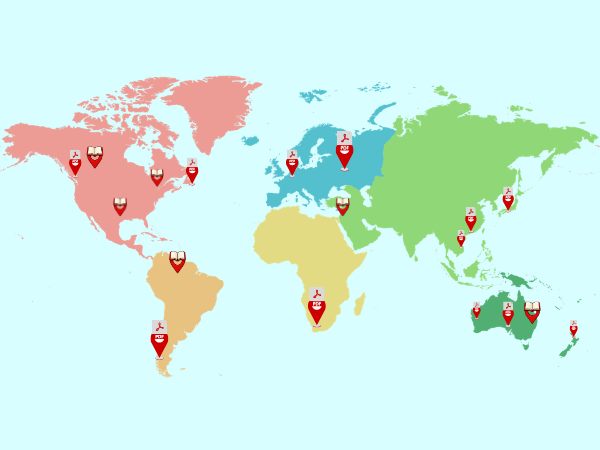
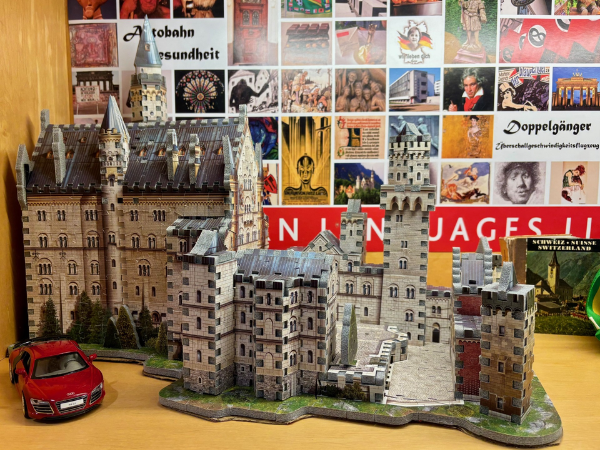
    The Department of Modern Languages, Literatures and Cultures (MLLC) welcomes you to browse through its latest exhibit in the Library and at the Thistle entrance to the Learning Commons. The display exemplifies the languages and unique cultures explored by students in our courses. May your curiosity be piqued! Perhaps some of the questions rooted in the history of these cultures will be raised by the materials on display.

    The exhibit runs from May 4 to 22, 2026.

    Tags:
    Categories: Learning Commons, Main

  • Exploring Law, Policy, and Migrant Justice

    Brock Library thanks Dorothy Sierra-Gutierrez, recent graduate, Teaching Assistant, and Researcher for this display and blog post. Visit Dorothy’s exhibit in the Matheson Learning Commons and at the Thistle entrance until May 1.

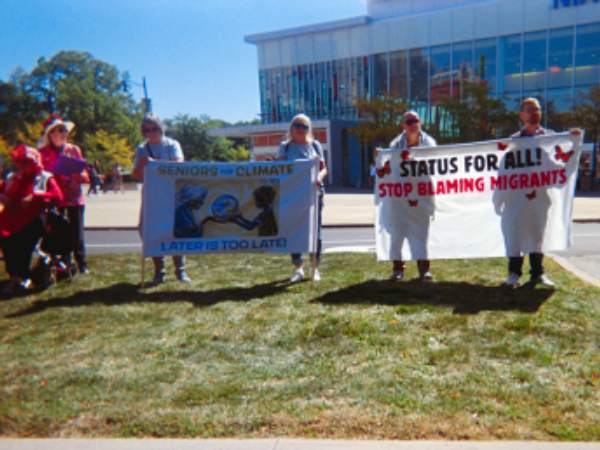
    This community display is named after my directed studies project, Exploring Law, Policy, and Migrant Justice, supervised by Dr. Julie Ham in the Department of Sociology and Criminology. This project examines the legal, social, and cultural dimensions of migrant farmworkers in Canada, with a focus on the Niagara Region. It emphasizes research ethics, reflexivity, and the student-researcher experience, guiding learners through the creation of a practical toolkit for ethical engagement, alongside recommendations for how Brock students can better recognize and support migrant workers in the region.

    What began as an academic interest quickly became something much more personal, grounded in lived experiences, community relationships, and a deeper understanding of how essential yet underrepresented migrant workers are in Canada.

    Through my studies, it became clear that migrant farmworkers play a critical role in sustaining our food systems. Across Canada, many workers from Mexico, the Caribbean, and Central America labour in agriculture through programs such as the Seasonal Agricultural Worker Program (SAWP). In regions like Niagara, their contributions include planting, harvesting, and pruning in agricultural sectors such as wineries. Yet despite their essential role, many face precarious working and living conditions, limited access to healthcare, and systemic barriers tied to their temporary immigration status.

    My interest in this topic deepened through my involvement with the Migrant Farmworkers Project in Niagara. While volunteering at the community hub, I supported the distribution of food, clothing, and hygiene products, and connected with workers in Spanish. These experiences allowed me to better understand the needs of migrant workers in the region, as well as the important role that local organizations and community partners play in supporting them.

    Through this directed studies project, I wanted to create something that was not only academic, but also accessible and practical. The result is an annotated bibliography and a Migrant Farmworker Justice Toolkit, now featured as part of the Brock University Library display. The annotated bibliography reviews key literature on migrant issues and policy developments, while also including prompts to encourage deeper student engagement. The Justice Toolkit brings together research, community knowledge, and practical resources to help students learn about migrant workers’ experiences and the broader systems that shape them.

    The toolkit explores key questions: Who are migrant farmworkers in the Niagara context? What challenges do they face? How can student researchers ethically engage with and learn from migrant communities? It also highlights local organizations and initiatives that support migrant workers. Importantly, the project centers both academic research and experiential knowledge, recognizing that meaningful understanding requires listening to those directly affected.

    One of my main goals was to challenge dominant narratives that portray migrant workers solely as vulnerable or passive. While vulnerability is an important part of the conversation, it is equally necessary to recognize migrant workers’ resilience, agency, and contributions. This project aims to move beyond simplified narratives and instead offer a more nuanced and humanizing perspective.

    Creating this toolkit also pushed me to reflect critically on my own role as a researcher. How do we engage ethically with communities? How can research be mobilized in ways that extend beyond the classroom? These questions shaped both the content of the project and its presentation in this display, designed to invite reflection, learning, and action.

    By sharing this work, I hope to contribute to a broader understanding of migrant justice and encourage others to think more critically about the systems that shape our agricultural food systems and immigration policies.

    If you have the chance, I invite you to visit the display, engage with the toolkit and annotated bibliography, and reflect on how Brock University, as an institution, can contribute to advancing migrant justice in the Niagara Region.

    Bio:
    Brock University Teaching Assistant, Dorothy Sierra-Gutierrez
    Dorothy Sierra-Gutierrez

    Teaching Assistant
    NCLC Board Member
    Brock University
    Undergraduate Sociology (Honours) Co-op
    Concentration in Criminology
    Double Minors in French Studies and Women and Gender Studies


    Tags: ,
    Categories: Learning Commons, Main

  • Student Exhibit: Notions of Niagara

    Brock Library thanks Dr. Keri Cronin and the students of HAVC 2P90 for this exhibit and blog post.  

    Notions of Niagara, a new exhibit in the Library and at the Thistle entrance to the Matheson Learning Commons, features a selection of items from Brock’s Archives & Special Collections chosen by Visual Arts students in HAVC 2P90 (19th Century Visual Culture).

    Each student selected an item from the collection to research for this exhibit. The selection of objects and images in this exhibit present a range of ways to think about the histories of Niagara. There are images relating to public spectacles (e.g. images of daredevils and “stunters”), items drawn from daily life (e.g. a bank note, a placecard used for a dinner party), and objects that give us a glimpse of the private lives of people who once lived here (e.g. photo albums, miniature portraits, and a collection of lockets of hair). Taken together, these items speak to the dynamism of this region’s histories and the ways that visual culture can help us explore these stories.

    You can learn more about this exhibit at the following website: https://ecampusontario.pressbooks.pub/notionsofniagara/

    Notions of Niagara will be on display until April 2nd.

    Categories: Archives, Learning Commons, Main

  • Learning Commons exhibit explores women in sports

    Brock Library thanks Isobel Flindall, Graduate co-op student librarian in Collections Services for this exhibit and blog post. Visit the display in the Matheson Learning Commons until February 27. 

    With teams in the Professional Women’s Hockey League (PWHL), Women’s National Basketball Association (WNBA), and Northern Super League (NSL), Canada’s professional women’s sports reached a “critical mass” in 2024 (Spencer, 2024). This is exciting for those of us who enjoy spectating hockey, basketball, and soccer games – but also for youth and student athletes, for whom the goal of playing professionally is now “much more tangible” (Stober, 2024).

    The rise of women’s participation in professional team sports is associated in part with identified consumer potential (Boer, 2025; Pegoraro & Taylor, 2021; Stober, 2024). While the implication that the industry’s commitment to women’s sports is dependent on their profitability is disappointing, it also shows that we as consumers can make a difference.

    A featured collection of books, e-books, and a/v materials accompanies the exhibit and is an invitation for the reader to get thinking about women’s sports. To celebrate successes, like Canada establishing professional women’s teams in the PWHL, WNBA, and NSL, without overlooking the persistence of sexism in the sports industry (Hindman & Walker, 2020; Milner & Braddock, 2017).

    Sources:

    Boer, T. D. (2025, July 4). Women’s sports are booming. Why now? CBC Sports. https://www.cbc.ca/sports/womens-sports-growth-north-america-why-now-1.7569708

    Hindman, L. C., & Walker, N. A. (2020). Sexism in Professional Sports: How Women Managers Experience and Survive Sport Organizational Culture. Journal of Sport Management, 34(1), 64–76. https://doi.org/10.1123/jsm.2018-0331

    Milner, A. N., & Braddock, J. H. (2017). Women in Sports: Breaking Barriers, Facing Obstacles. Bloomsbury Publishing USA. http://ebookcentral.proquest.com/lib/west/detail.action?docID=4923027

    Pegoraro, A., & Taylor, T. (2021). Editorial: Women’s Professional Sport: Understanding Distinctiveness. Frontiers in Sports and Active Living, 3, 806247. https://doi.org/10.3389/fspor.2021.806247

    Spencer, D. (2024, December 25). Canada’s women’s pro sports landscape transformed in 2024 with arrival of PWHL, NSL, WNBA. CBC Sports. https://www.cbc.ca/sports/year-in-review-canada-womens-pro-sports-1.7418973

    Stober, E. (2024, April 6). Women’s pro sports is a ‘global phenomenon’—And Canada is finally joining in. Global News. https://globalnews.ca/news/10406205/womens-sports-canada-project-8/

    Tags:
    Categories: Learning Commons, Main

  • Love Data Week is back with a full slate of workshops! 

    Love Data Week (February 9–13) is an annual, worldwide initiative that promotes data literacy, builds data skills, and showcases data repositories. In alignment with this year’s theme, “Where’s the Data?”, the Library has organized a week of virtual workshops highlighting data resources and research practices. Workshops will introduce databases that provide access to full datasets, explore strategies for preserving data you produce in your own research, and develop foundational GIS and data visualization skills, no prior experience required! The program also includes a workshop in partnership with Statistics Canada on locating published historical data, as well as a session focused on developing a Data Management Plan.

    To view the full program at Brock, and register for workshops, visit: https://experiencebu.brocku.ca/organization/library

    For a list of all global events and workshops, visit: https://www.icpsr.umich.edu/sites/icpsr/about/news-events/international-love-data-week/events

    Tags: ,
    Categories: Main, MDGL

  • Students helping students focus of new exhibit

    Six James A. Gibson Library student assistants unveiled an engaging new display in the Learning Commons this month. From Our Perspective offers guidance on such topics as:

    • the best Omni hacks
    • finding library streaming video databases
    • librarian support for research projects
    • finding course readings
    • navigating exam season
    • developing the practice of asking questions, and
    • expanding horizons with the Brock study-abroad program

    Visit the exhibit until February 6 located in display cases at the Thistle entrance and inside the Learning Commons across from the Badger Books Collection.


    Tags: , ,
    Categories: Learning Commons, Main

  • Celebrate GIS Days at Brock!

    Every November marks a special time to celebrate Geographic Information Systems (GIS)—and this year is no different! Brock students, faculty, and staff are invited to take part in a FREE virtual conference, “GIS Days,” running from Monday, November 17 to Thursday, November 20. Check out the schedule and register here: https://gisdays-westernu.hub.arcgis.com/

    GIS combines software, people, and data to answer spatially charged questions. It’s used in research across many faculties at Brock—and in the “real world” to identify tornado damage, track coyote sightings, map health care gaps, and more. The tools and skills that GIS provides can make all the difference in your studies and future career.

    On Wednesday, November 19, the Brock Library will host an exciting morning of festivities, including free cake (courtesy of Brock Library), free pizza (courtesy of the Tourism and Geography Society—TAGS), and a workshop on boosting your résumé with GIS training, job connections, and scholarship opportunities.

    📍 In-person activities: Rankin Family Pavilion 214/215, 10:00 a.m. – 12:00 p.m.
    🍰 10:00 a.m. – Cake!
    🗺️ 10:30 a.m. – Put yourself on the map!
    🍕 11:45 a.m. – Pizza!

    For more details about GIS Day at Brock, visit this StoryMap.

    Still have questions? Email [email protected].

    Tags: , , , , ,
    Categories: Main, MDGL

  • Holocaust Education Week, 2025

    Brock Library thanks Brooke Braverman and Perla Zaltzman of Brock Chabad for this exhibit and blog post. Visit the display in the Matheson Learning Commons until November 14. 

    Places can be deceiving. Where grass and trees now grow, once were scenes of unspeakable horror — killing fields where more than 2 million people 
were murdered before the creation of concentration camps. “Holocaust by
Bullets” documents this lesser-known side of the Holocaust. This exhibit makes sure that the victims won’t be forgotten.

    Between 1941 and 1944, thousands of killings took place across seven Soviet republics. The estimated number of Jews exterminated was at least 2.2 million. This included 1.6 million victims in Ukraine, 500,000 in Belarus and at least 120,000 in Russia. Over 80% of the victims were shot, while the rest were deported or murdered in the death camps or in gas vans. The death of Soviet Jews was not called “Holocaust by Bullets” for nothing. The statistical murder by shooting was used in Eastern Europe, in small towns or in a large Soviet occupied city. Often these shootings were done outside of villages and towns, against women, men and children.

    During Holocaust Education Week, Chabad at Brock presents “Holocaust by Bullets,” an exhibit featured in the Thistle Corridor and the Learning Commons of the Brock University Library. Curated by Perla Zaltzman and Brooke Braverman, this display brings together the “Holocaust by Bullets” story in the Thistle Corridor from Yahad in Unum, while highlighting the Brock students who are descendants of Holocaust survivors, in the Learning Commons. Through these narratives, we reflect on the fallen Jewish people forgotten during the Soviet Holocaust, while commemorating the resilience needed to carry the memories of the survivors.

    In the Thistle Corridor, the organization, Yahad in Unum, devotes its research to the Holocaust, fighting antisemitism, and fostering relations between Catholics and Jews. By combining both Catholic and Jewish relations, the organization uses “Yahad”, which is the Hebrew word for “Together”, while in Latin, “In Unum” means “in one”. The organization seeks to uncover the lesser-known chapter of history, “Holocaust By Bullets”, which has been silent for too long.

    Additionally, the library has curated a collection of books to support Holocaust Education Week, offering historical insights, survivor testimonies and scholarly perspectives on antisemitism and resilience.

    We invite you to explore and reflect on the stories, messages and meaning of the exhibits. In bearing witness to this history, we commit to fighting antisemitism, hatred, bigotry and silence, wherever they may appear.


    Tags: ,
    Categories: Learning Commons, Main

  • A reflection on Islam’s timeless love of learning and beauty

    October is Islamic History Month in Canada. In celebration, the Brock Muslim Students’ Association has developed an exhibit at the Learning Commons Thistle entrance highlighting the work of Islamic scholars and artists throughout history. Visit the exhibit until October 31.

    Brock Library thanks the Muslim Students’ Association for this blog post. 

    Knowledge as Light

    Guided by the Quran’s call to “seek knowledge”, a duty for men and women alike, Muslim scholars sparked a civilization of learning.

    Between the 8th and 14th centuries, cities like Baghdad, Cairo, and Cordoba became centers of ideas, where scholars preserved ancient knowledge, and expanded it with new discoveries in medicine, astronomy, and mathematics.

    It is widely argued that the European Renaissance was primarily made possible due to the Islamic Golden Age.

    Knowledge as Light – the Quran

    The Qur’an teaches Muslims to seek knowledge as a lifelong duty and a form of worship. From the first revelation — “Read in the name of your Lord” (Qur’an 96:1) — believers are urged to learn, reflect, and understand the world as a way of recognizing Allah’s signs. It promises high ranks for those who gain knowledge (Qur’an 58:11) and reminds us that true understanding deepens faith (Qur’an 35:28). In Islam, learning isn’t limited to religious study; it includes all knowledge that benefits humanity. By seeking wisdom with sincerity, Muslims grow closer to Allah and help build a more enlightened and just society.

    Al-Khwarizmi (c. 780–850) – Father of Algebra

    His Kitab al-Jabr introduced systematic solutions to linear and quadratic equations and gave us the word ‘algorithm’.

    Ibn al-Haytham (c. 965–1040) – The Scientific Method

    Through experiments on light and vision, he laid the groundwork for modern optics. His studies helped shape the design of cameras and lenses centuries later.

    Ibn Battuta (1304–1369) – The greatest traveller of the medieval world

    Over 30 years, he journeyed across Africa, Asia, and Europe, documenting cultures and geography in vivid detail. His Travels expanded the world’s understanding of global civilizations.

    Art & Architecture

    Islamic art includes not only religious works like mosques and their furnishings but also the rich art and architecture created across Muslim lands. Drawing on Byzantine, Sasanian, and Greco-Roman traditions, it evolved a distinctive visual language under the guidance of faith.

    A defining feature is aniconism (the avoidance of human or animal figures in religious contexts) which encouraged artists to explore abstract designs, intricate geometric patterns, and the flowing beauty of Arabic calligraphy.

    Arabesque & Patterns

    Islamic art heavily involves patterns, especially arabesques, with repeating geometric shapes and flowers. They symbolize the endless and perfect nature of God, and sometimes small “mistakes” are left on purpose to show humility. These designs make walls, doors, and floors feel alive with movement and rhythm.

    Islamic Calligraphy

    A central pillar of Islam is the belief in one God; therefore, any form of idolatry is forbidden. Muslims avoid depicting humans and animals mainly to prevent idolatry, as creating living forms is considered a unique act of God. This led to a greater focus on incredibly intricate Arabic calligraphy, written in beautiful, flowing styles on books, walls, and objects. Calligraphy serves both as decoration and as a way to highlight the importance of the words themselves.

    Islamic Architecture & Mosques

    Mosques are the heart of Islamic cities, inspired by Muhammad’s home in Medina. They mix Roman, Byzantine, and local styles, with big domes, tall minarets, and open courtyards. Famous examples like the Dome of the Rock and the Blue Mosque with both beauty and clever design.

    For More on Islamic Art & Architecture


    Tags: , ,
    Categories: Learning Commons, Main