Learning Commons

  • Resources for a mindful new year

    Mindfulness and wellness practices invite us to nurture ourselves, and cultivate self-compassion.  Some of the easily accessible resources for the Brock community to live mindfully include:

    • Taking a walk through the forest. The Bruce Trail runs behind the Brock campus.
    • Jotting down what you are thankful for, concerned about.
    • Curling up with a good book and a hot beverage.
    • Taking a Library Yoga session in the comfort of your own room. The playlist is at bit.ly/LibraryYoga
    • Thinking of others, helping when you can.
    • Nurturing a new houseplant.

    This month, our print book display and e-book collections are full of strategies and inspiration to help you be the best version of yourself.

    Browse the featured titles now, and note the special sub-collections on the topics of Yoga, Breath, and Movement Practice, Inspiration and Reflection, and Mindfulness for Stress and Anxiety.

    Tags: , ,
    Categories: Featured Collections, Learning Commons

  • December thematic book (and film) collections focus on visible and invisible disabilities

    On Dec. 3, 2022, we recognize International Day of Persons with Disabilities, a day that was first launched by the United Nations in 1992 “to promote an understanding of disability issues and mobilize support for the dignity, rights and well-being of persons with disabilities.”  

    One way we can learn more about disabilities is to read a book! Check out our selection of titles at our print book display, and online in Omni. A sub-collection of films is also available. These titles feature works by and about people with visible and invisible disabilities.  

    On December 7, join the University community for ‘Engaging and Celebrating with Disability Communities’. This event will take place from noon to 2 p.m. in Pond Inlet, and will feature a presentation by Nathan Shipley, a disability self-advocate, activist and public speaker, as well as interactive roundtable experiences with disability community members. 

    The event is organized in collaboration with the Office of Human Rights and Equity, the Brock-Niagara Centre of Excellence in Inclusive and Adaptive Physical Activity, and the Anti-Ableism and Mental Health (AAMH) Committee, which is a working group of the President’s Advisory Committee on Human Rights, Equity and Decolonization. 


    Tags: , ,
    Categories: Featured Collections, Learning Commons

  • Learning Commons open late

    Late night study hours have resumed in the Matheson Learning Commons.

    Details:

    • Open to 2:30 AM Sunday through Thursday.
    • Approximately 400 study spots are available.
    • The Ask Us desk and floors 5-10 will close at regular times (9 PM on Sunday, 11 PM Monday – Thursday).
    • Library services, such as borrowing and research help will not be available during Late Night Study hours.
    • Friday & Saturday closing times remain the same (some exceptions during the exam period).
    • BUSU are kindly providing students with a late night ride service via Zoom Zoom.

    Tags: , ,
    Categories: Learning Commons, Main

  • Exploring nearly two centuries of photography

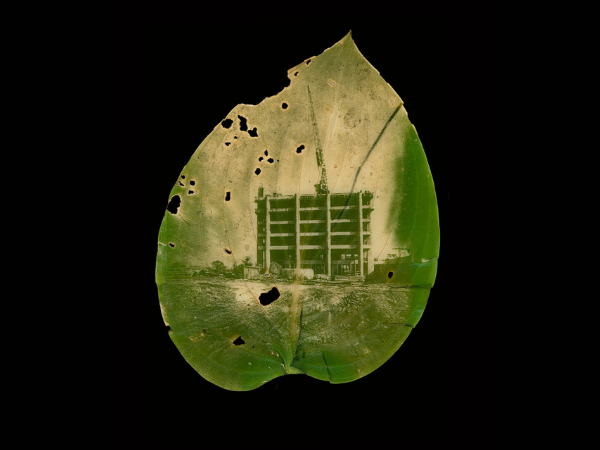
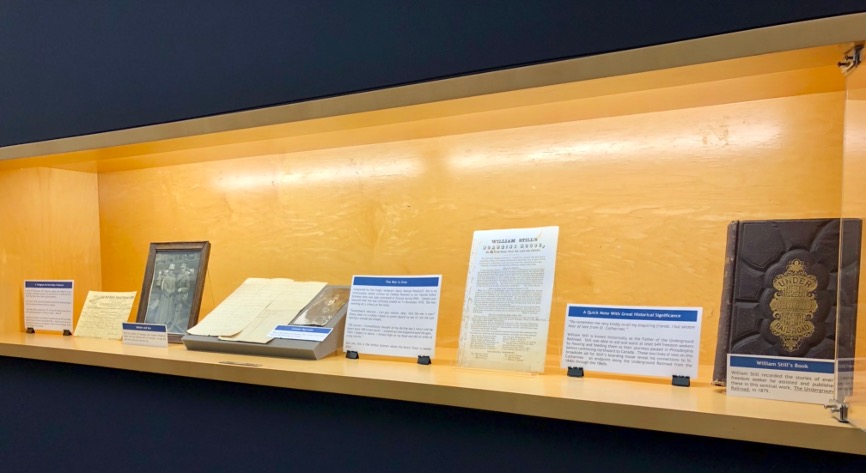
    This month’s display in the Learning Commons cabinets features aspects of early photography and contemporary analogue and experimental image making. With the use of images from Brock’s Archives and Special Collections and vintage cameras from the Department of Visual Arts, the display offers a glimpse into early photographic processes from the 19th century and early 20th century.

    The camera originates from an ancient device known as the camera obscura (meaning “dark room”). Light traveling through a small pinhole into a darkened room will project the image on the other side of the hole, upside down – seriously, give it a try! The earliest record is found in the work of Mozi, a Chinese philosopher (470 – 390 BCE). This simple technique is the foundation for all pre-digital photography.

    The arrangement of photographs in the display may seem to present the development of photography as a steady linear progression of advancements with one building on the previous, however this is not the case at all. There were many inventors and entrepreneurs in the 19th century working in different locations who each had a goal of permanently fixing an image made with a camera. The early experiments were costly and time consuming. For example, the first known photograph by Joseph Nicéphore Niépce (1765–1833) in 1827 took several days of exposure in the sun for an image to render permanently. In 1839, Louis Daguerre (1787 – 1851) was the first to share his chemical formula of affixing an image permanently, though it too was costly (using a sheet of copper coated with silver), it only took minutes for it to render an image. An example of a “daguerreotype,” which he named after himself, is on display in the cabinet. As beautiful as these photographs were, it is important to note that these images were one-of-a-kind and not reproducible.

    At the same time, Henry Fox Talbot (1800 – 1877), an English inventor and entrepreneur, was also experimenting with chemical processes though he was focused on reducing the exposure time and creating an image that could be reproduced. In 1840, he found a way that met both requirements in what he called a “calotype” (from the Greek kalos, meaning beautiful). Not only did it take mere seconds for the image to render, Talbot’s use of paper on which to apply his chemical formulation made this a cheap and widely available option. This is the basis on which Talbot would create the negative-positive process whereby multiple copies of a single photograph could be made. This remains the basis of all most analogue photography today.

    By the end of the 19th century, George Eastman, founder of the Eastman Kodak Company, created easy-to-use portable cameras, making photography more accessible. Thus began the era of the amateur photographer. A few of Kodak’s early cameras are on display in the Learning Commons cabinets alongside other 20th century analogue cameras.

    The photograph (which means drawing with light) is created by applying a light sensitive emulsion to a surface (e.g., paper, glass etc.) that changes when exposed to light. Today there is a resurgence in these early photographic techniques as well as interest in new experimental methods of image creation. The hallway cabinets display examples of a variety of analogue methods of image creation with the aid of photosensitive emulsions. Among the methods are the anthotype which use plant-based dyes, lumen prints using silver gelatin coated paper, and the cyanotype, another 19th century discovery, using a mixture of ferric ammonium citrate or ferric ammonium oxalate, and potassium ferricyanide.

    Stop by when you have a moment to check it out.

    Many thanks to Archivist David Sharron for loaning some of the amazing photographs from Brock Archives and Special Collections for the display, Professor Amy Friend from Department of Visual Arts for the loan of cameras and to Dr. Linda Steer also from the Department of Visual Arts for lending her expertise in the history of early photography for the creation of this exhibit. Finally, thank you to my collaborator Charity Blaine for being willing to play and learn together!


    Tags:
    Categories: Learning Commons, Main

  • Photography

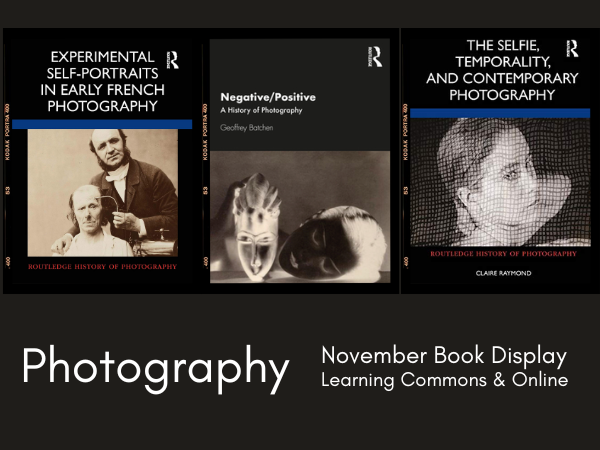
    Our November book displays (online and in print) are on the topic of photography – a complement to the very special photography exhibit in our Library and Learning Commons display cases. We’ve chosen to include a wide array of sub-topics including the uses of photography to call attention to environmental degradation, to tell the story of child labour, and to bring Victorian history to life. Alongside these socio-historical topics, the collection includes practical handbooks and technical guides for the budding photographer.

    Browse this photography collection online and in-person at our book display shelves next to the Ask Us desk.

    Tags: ,
    Categories: Featured Collections, Learning Commons

  • Food and Cookery

    This month we invite you to work up an appetite and don your aprons. We have amassed a multi-disciplinary collection of books on food history, science and chemistry, culture, and cookery. Our print cookbooks feature cost-saving resources such as Budget Bytes, simple recipe collections like The Best 3-Ingredient Cookbook, and Indigenous recipes from the far North.

    In addition to the books in this Omni Collection, we recommend a closer look at the Food and Drink in History database. This primary source collection includes cookbooks, advertisements, and government documents. The collection is global in scope and covers the 16th to 21st centuries. Brock University has access to Module 1.

    Browse the October Omni collection now.

    Tags: ,
    Categories: Featured Collections, Learning Commons

  • The Wellness Book Club returns with an in-person option this October

    Registration for the Autumn Wellness Book Club is now open.  Reading fiction has so many benefits for emotional wellbeing, from reducing stress to better sleep!  This term, we will be reading Delia Owens’ 2021 novel Where the Crawdads Sing.   

    Described by the New York Times Book Review as “a painfully beautiful first novel that is at once a murder mystery, a coming-of-age narrative and a celebration of nature,” the book was also a feature film this past summer.   

    The Book Club will be hosted by Liaison Librarian, Justine Cotton, who is passionate about sharing the positive impact of reading and discussing books.  You can contact her with any questions at [email protected]  

    Meetings will be held in-person in October (with an option to meet virtually, if preferred).  As a part of the Club, members may choose to participate in a research study on the benefits of reading “for fun” on stress levels in university students. 

    Sign up at: bit.ly/autumnbookclub22 

    Tags: , , ,
    Categories: Learning Commons, Main

  • Experience community, join the public library

    We love libraries! All kinds. So we are delighted to announce on-campus visits by staff from the St. Catharines and Thorold Public Libraries.

    Getting a card is easy, and free. Fill in a form, present some ID, and then you’ll be all set to borrow video games, join book clubs, experience adult craft nights, and more. Online resources such as popular magazines, audio books, streaming videos and music are also available, and offer the perfect complement to our more scholarly collections.

    Who: St. Catharines Public Library
    Where: Matheson Learning Commons (Library main floor)
    When: Tuesday, September 20, 12-4 pm.

    Who: Thorold Public Library
    Where:
    Matheson Learning Commons (Library main floor)
    When:
     Thursday, September 22, 1:30-3:30. 

    Tags: , ,
    Categories: Learning Commons, Main

  • University Life

    Whether you are a new or returning student, a first-time instructor or long-tenured faculty, this selection of books will have useful insights for you.

    Browse this collection of e-books and explore such topics as:

    • writing guides
    • learning mindfully
    • diversity in higher education
    • educational administration
    • the mechanics of teaching
    • supporting student well-being
    • career development, and more.

    This collection features online and print titles. Find the print book display next to the Ask Us desk on the main floor.

    Tags:
    Categories: Featured Collections, Learning Commons

  • Brock Library services and resources highlighted in new exhibit

    New and returning students are invited to stop by and view a new exhibit in the Library and Learning Commons display cases. The exhibit features unique items from Brock’s Archives and Special Collections, the Makerspace, and Map, Data & GIS Library. A guide to study spots, research basics, and the various ways to get help from the library are also featured.  Welcome to Brock University Library runs to Friday, September 16.

    Tags: , , , ,
    Categories: Archives, Learning Commons, Main, Makerspace, MDGL