Articles from:September 2019

  • Reducing Our Water Footprint By Living Sustainably

    Canada is blessed with many lakes, rivers, and streams and has an abundance of water for its small population size. However, 60 per cent of Canada’s water flows northward, making it unavailable to southern Canada, where the majority of the country’s population lives. The Niagara Region, for example, only has access to a very limited amount of water for personal, industrial and agricultural purposes. What’s worse is that climate change further limits freshwater availability due to droughts and other extreme weather events.

    Approximately 30 per cent of Canadian households rely on groundwater sources for water. Since most of these sources must be recharged from the surface, changes in river flows and land use can significantly impact the amount of water available to these households. As climate changes continues to make our water supply more limited, we need to be vigilant about how we use our water and for what purposes.

    Our water footprint is the amount of water we consume in our daily life. This includes the water used to grow the food we eat and to produce the energy and products in our daily life (our books, music, house, car, furniture, clothes, etc.). The global average water footprint was 1.4 million litres per person per year in 2017. However, water footprints vary greatly depending on where you live. The average water footprint for a Canadian is approximately 6400 litres of water per person per day. On the other hand, residents of countries like China and India consume only 3000 litres of water per day.

    Our water footprints vary significantly based on the types of food products we consume. For instance, a 250 millilitre cup of tea has a water footprint of 30 litres, whereas the same amount of coffee has a water footprint of 280 litres. The location where our food is produced also impacts its water footprint. Locally produced broccoli, for example, requires one tenth the amount of water that is required to produce avocados. A 100 gram bar of chocolate requires a whopping 2400 litres of water to produce! With that in mind, it is understandably more sustainable to consume locally produced food products if we want to minimize our water footprint on the planet.

    Virtual water is the amount of water needed for each commodity or service that you receive.

    The water required for producing goods that are imported into Canada is an example of virtual water, such as the more than 10,000 litres required to manufacture one pair of jeans. Understanding where water comes from and how it is used can help us better understand challenges both globally and locally in the era of climate change.


    The researchers involved with the MEOPAR project are working to raise awareness about the impacts of climate change and how communities can effectively adapt, and increase resilience, to these changes. Follow along with our articles every week (written by researchers Liette Vasseur, Meredith DeCock, Bradley May and Pulkit Garg) to learn more about the project and how you can get involved. You can also visit our website at brocku.ca/unesco-chair or email us at ​[email protected]​.

    Categories: MEOPAR-Lincoln Blog, Updates of the Chair

  • MEOPAR BLOG: Call for Photographs

    CALL FOR PHOTOS EXTENDED

    We have discussed what climate change is and the importance of adapting to the environmental changes occurring and anticipated. But how can we be sure that some of these changes are truly a result of climate change? MEOPAR team member Meredith DeCock is hoping to demonstrate just that with her master’s thesis.

    Brock University Master of Sustainability Science and Society Candidate, Meredith DeCock is conducting an analysis of the Lincoln shoreline of Lake Ontario to see how it has changed since the 1930’s. As part of her research project, she is asking for help from the community. She is interested in acquiring electronic copies of historical photographs anyone may have of the shoreline to help visualize how it has changed over time. Photographs are important visuals in climate change research to help tell the story over time. It is a way of sharing your local knowledge and contributing to the research project.

    Don’t miss out on an opportunity to participate in a local research project!

    Photos are now being accepted until October 31, 2019. 

    Find out more information on the project and how to submit your photographs here.
    *Please remember to sign a waiver (found at the web address above) and submit it with your photograph(s)*

    Continue to monitor this page to read new blog posts every week. These posts are written by the MEOPAR Research Team, comprised of Liette Vasseur, Meredith DeCock, Bradley May and Alex Marino. For more information about the project, contact us using this form, or, via email at [email protected]@brocku.ca


    Tags: , , , , , , , , , ,
    Categories: MEOPAR-Lincoln Blog, Updates of the Chair

  • MEOPAR Blog: Mitigation will not be enough: we need to adapt

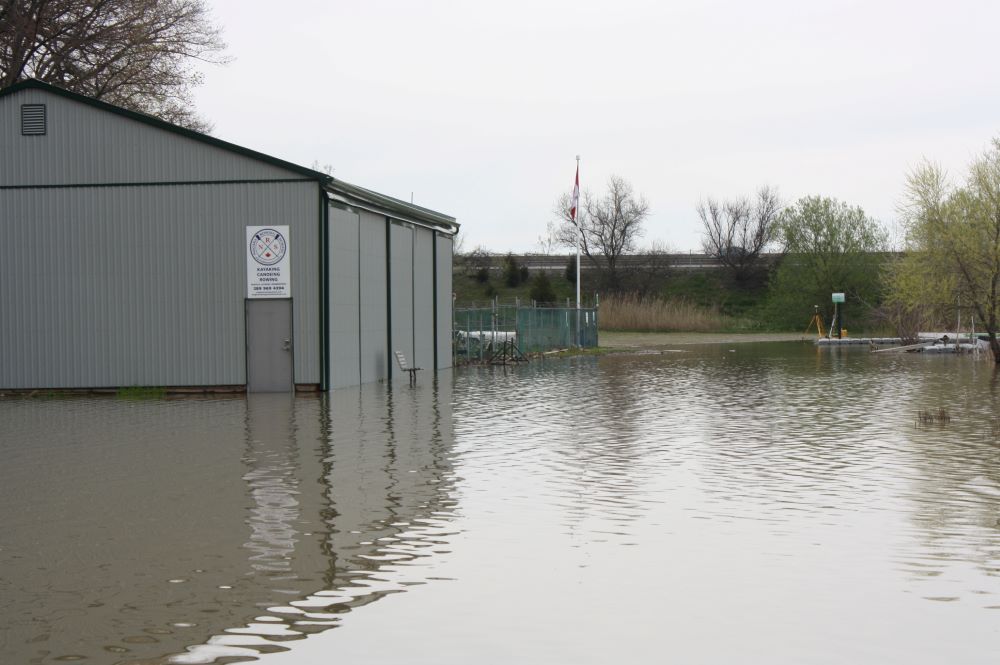
    Flood waters rise up to the Niagara Rowing School and Paddlesport Centre at the Jordan Harbour Conservation Area, June 2019.


    What is adaptation and why is it important?

    The top scientists around the globe know our climate is changing at a faster rate than Earth has ever experienced—largely as a result of the actions taken by humans since the industrial revolution. This is resulting in changes to the Earth’s natural processes, including our climate, and action needs to be taken to slow down and deal with these changes.

    These actions can take on two different forms: mitigation or adaptation. Mitigation refers to actions taken to slow down climate changes, mainly targeted at reducing greenhouse gas emissions, for example. Adaptation, on the other hand, goes even further: acknowledging that even if we halted 100% of all emissions right now, we will still inevitably see some of the effects of climate change for decades. Adaptation means preparing for the inevitability of these changes by engaging in actions or strategies to better respond to the risks of climate change. Strategies may be either reactive (drying out your basement and preventing mould after you’re have been flooded) or proactive (relocating entirely because your house is getting too close to the shoreline).

    Adaptation actions may include:

    • flood prevention
    • relocation
    • land use changes
    • health programs
    • restoration of shorelines and forests
    • smart building design

    To successfully tackle the complex challenge of climate change, a combination of mitigation and adaptation efforts need to be prioritized by everyone: from federal to municipal governments, as well as local agencies, businesses and community members. Using the Town of Lincoln as a case study, the MEOPAR-Lincoln research project focuses on how communities can adapt to changing environmental conditions, and what will ultimately motivate citizens to get involved and start moving into action.

    A wide range of community voices will be needed to complete this study, as there will be a wide range of impacts to be addressed and strategies to be examined.

    Continue to monitor this page to read new blog posts every week. These posts are written by the MEOPAR Research Team, comprised of Liette Vasseur, Meredith DeCock, Bradley May and Alex Marino. For more information about the project, contact us using this form, or, via email at [email protected]@brocku.ca

    Tags: , , , , , , , ,
    Categories: MEOPAR-Lincoln Blog, Updates of the Chair

  • MEOPAR Blog: Mitigation, A fancy way to say “Reduce the use of fossil fuels!”

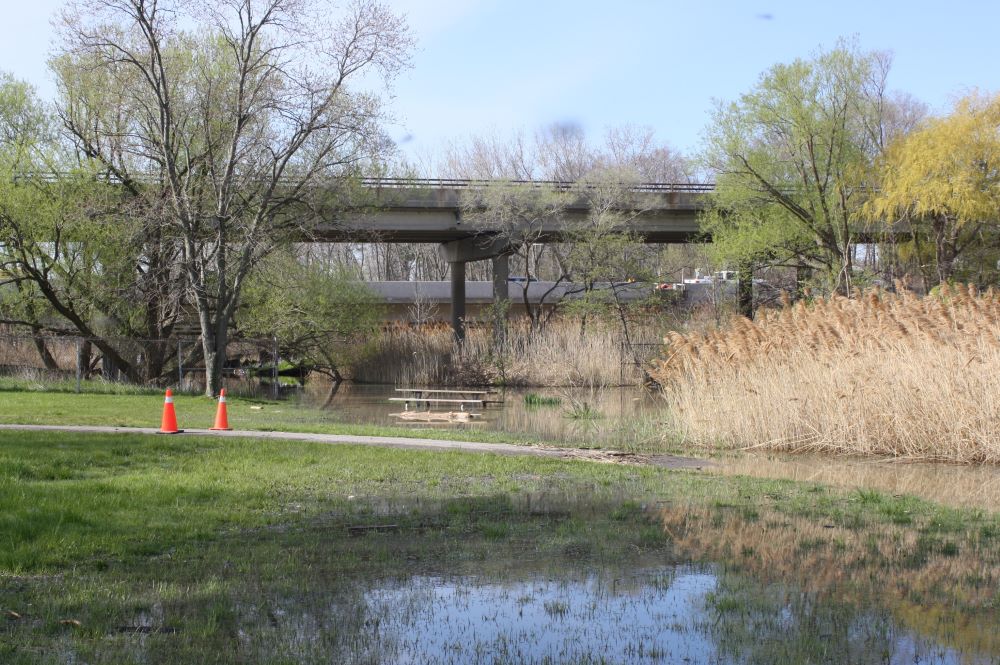
    Flooding under the Queen Elizabeth Way (QEW) leads to partial closures of Charles Daley Park, Spring 2019.


    How much do you like driving your car or turning up the heat in your home on a frigid winter day? How often are you awake long after the sun has gone down, relying on the flick of a light switch in order to go about your evening routine? While many of these things are considered a common part of life, have you ever wondered where the energy comes from to do everything that we often take for granted?

    Many of the modern conveniences we rely on every day require the use of natural gas or gasoline—both of which emit a lot of greenhouse gases. The more of these gases that get pumped into the air, the greater the impact to our climate and our overall health and well-being. As convenient as it is to jump in our cars and zip from Point A to Point B, the ozone emitted by those cars creates smog that causes major health issues, like asthma and cancer, prompts our government to issue air quality advisories and cautions us from spending too much time outdoors.

    So, what can we do?

    We can start by committing to making a few, little lifestyle changes today. If we want future generations to enjoy life the way that we have, spending time outdoors engaging in Canadian summer pastimes like hiking and boating, we can’t afford to wait.

    A good place to start is by having open, honest and intergenerational discussions about our consumption patterns and over-use of resources. Think about whether your next potential purchase is a want or a need, for example. Do you really need a new car or a new cell phone, or do you just want to keep up with the latest update and features and your current device still does the trick? Do you need a new house of several thousand square feet for only two people, or, would a more modest dwelling suffice? If your initial response is that yes, you need it, then ask yourself why? While it’s nice to have the newest technology or an extra bedroom or two in our home, these material possessions and status symbols won’t be worth much when our forests and waterways are gone and there’s no clean air to breathe.

    It doesn’t have to happen all at once and no one is expecting you to relinquish all your possessions and decide to stop driving your car overnight. However, we all need to commit to doing our small part to mitigate greenhouse gas emissions now before it’s too late. It won’t be easy, and we’ll all need to put in the work because it’s not only up to governments to do something—we are all responsible for making changes. Even if we can only commit to small, incremental changes at first.

    It’s time to rethink the future we want and the steps we can take to mitigate the impacts of climate change. We have to do this only for us, but also for our children, our grandchildren, and all other future generations on this planet we share.

    Continue to monitor this page to read new blog posts every week. These posts are written by the MEOPAR Research Team, comprised of Liette Vasseur, Meredith DeCock, Bradley May and Alex Marino. For more information about the project, contact us using this form, or, via email at [email protected]


    Tags: , , , ,
    Categories: MEOPAR-Lincoln Blog, Updates of the Chair