Articles from:May 2018

  • Research on long-term care facilities in mid-size cities published

    Liette Vasseur was among the authors of Evergreen’s recently released 2018 Mid-Sized Cities Research Series, which highlights important conversations and trends underway in Canadian cities. Those include the fact that our urban population is growing, leadership is changing, municipalities need to be smart and open, and inclusion is a must.

    Ten discussion pieces were prepared by researchers from across Ontario to demonstrate these perspectives through the lens of Canada’s mid-sized cities, with the goal of supporting Ontario’s city-builders in creating inclusive, innovative, and regenerative cities of the future.

    Vasseur was a contributor to this compendium with a paper entitled “Connecting memories with nature: opportunities for residents of long-term care facilities in mid-sized cities.”

    She co-authored the paper with Christopher Fullerton, Marcie Jacklin and Kerrie Pickering, all of the Environmental Sustainability Research Centre at Brock University.

    In the paper, the authors discuss the advantages and opportunities for mid-size-cities to develop a positive and attractive system of long-term care (LTC) facilities that can enhance quality of life for residents by having the capacity to be located close to a natural environment. They elicit the longer-term benefits that such planning can bring to these cities. Mid-size cities are uniquely positioned as locations for long-term care facilities, the authors note, because of the array of health services nearby, being in close proximity to large centres with specialized services, and having a large pool of elderly residents requiring LTC facilities.

    Mid-size cities often have more flexibility in their urban planning as they do not have the same development pressures as large cities, allowing for the development of LTC facilities that are more nature-friendly and attractive.  To speak further to this, the authors also included a case study on the Woodlands of Sunset Long-Term Care Facility in Welland in the paper to showcase how having a connection with nature can help boost the morale of LTC residents. Christopher Fullerton, as part of the core group of the UNSCO Chair, also presented on behalf of the authors at the Mid-Sized Cities Researcher + Practitioner Roundtable in London, ON, on May 16.

    Categories: Updates of the Chair

  • Liette Vasseur presents at launch of Sustainable Development Solutions Network (SDSN), Canadian chapter

    Liette Vasseur was at the University of Waterloo on Tuesday, May 8, where she presented at a lecture that took place as part of the launch of the university’s new Sustainable Development Solutions Network (SDSN), Canadian chapter. Vasseur presented on behalf of the Canadian Commission for UNESCO.

    The SDSN Canada is part of a global SDSN movement to build a network of universities, research centers, civil society organizations, and knowledge institutions. With over 700 participating institutions worldwide, SDSN members work together, to promote practical solutions for sustainable development, including the implementation of the United Nations Sustainable Development Goals (SDGs) and the Paris Climate Agreement.

    It was officially launched in Waterloo on Monday, May 7, and has become one of 24 other SDSN networks world-wide who are harnessing the capacity of the people and organizations determined to solve global problems like poverty, climate change, gender equality and clean water.

    Learn about the SDSN Canada.

    Categories: Updates of the Chair

  • Brock-Lincoln Living Lab research project to examine Lake Ontario shoreline flooding

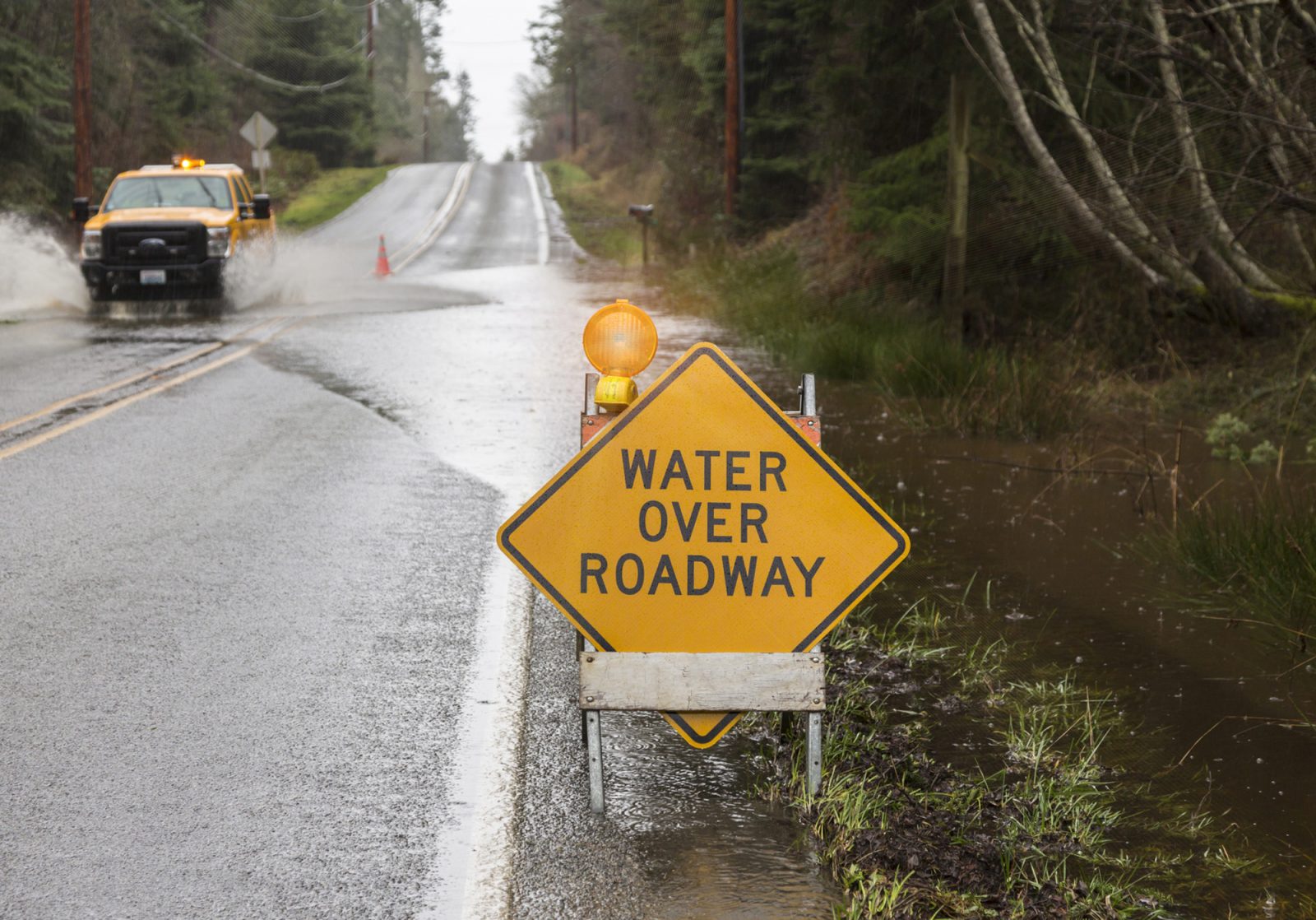
    The flooding of coastal communities along Lake Ontario last year caused major damage and made people realize that century floods aren’t nearly as rare as the name implies.

    A new research collaboration between Brock University and the Town of Lincoln is aimed at helping the community understand how to deal with the impacts of climate and environmental changes and examining potential avenues of solutions for future development along the shore. It’s the first externally funded project as part of the Brock-Lincoln Living Lab partnership announced in October 2017.

    Brock UNESCO Chair in Community Sustainability Liette Vasseur is leading the three-year research study for the Ontario component of a larger project by Université du Québec à Rimouski, which is examining how various coastal communities can deal with and share ideas on the impacts of climate and environmental changes.

    Brock UNESCO Chair in Community Sustainability Liette Vasseur

    “Communities are becoming more and more exposed to different hazards,” said Vasseur, who has been involved in similar research initiatives in other communities in Atlantic Canada and Ecuador. “With climate change, these types of events are coming faster and more often.”

    The project has received $280,000 in funding from the Marine Environmental Observation Prediction and Response Network (MEOPAR), with additional support from the Town of Lincoln and Brock. MEOPAR is an independent, not-for-profit organization funded by the federal government as a National Centre of Excellence that supports research and trains students in the area of marine risk and resilience.

    Lincoln suffered around $1 million in damage as a result of back-to-back spring storms in 2017 that caused massive flooding from Lake Ontario. The storms led to the Town’s first-ever voluntary evacuation notice for residents living near the Lake Ontario shoreline, and caused significant damage to Charles Daley Park and sewer systems in Jordan Station and Campden.

    Vasseur said climate change scenarios over the next decade are projecting continuous sea level rise and increases in extreme weather events. This will amplify the severity and frequency of flooding in coastal communities like Lincoln, which is continually growing with more people living near the Lake Ontario waterfront.

    “People were always talking about 100-year events. Now it’s more like one every five years,” she said. “It shows that we need to be more prepared. When we’re planning things like residential developments, we need to plan in a way that we’re going to survive with these types of events.”

    For the Town of Lincoln, the research will provide crucial information about current and future risks.

    “In 2017, Lincoln experienced the real and harsh effects of severe weather on critical infrastructure in our community,” said Lincoln CAO Mike Kirkopoulos. “As another benefit of the Brock-Lincoln Living Lab, this research is grassroots to our community, helping us better understand the conditions for collective ownership of adapting to climate change as an organization and community.”

    Vasseur said the research team will include a postdoctoral fellow and a master’s student, who will collect data in Lincoln, and share information and ideas with other researchers and communities along the St. Lawrence Seaway.

    “It will be a very good learning experience for the students, while helping the communities at the same time,” she said. “We’re hoping that by the end, the data we’re going to get can be used by communities all along the coastline.”

    Lincoln Mayor Sandra Easton said municipalities like hers are learning that more frequent smaller floods — not just rare major flooding events — can have a big impact on resources.

    “Climate change and the impact on municipal infrastructure is top of mind for our council,” Easton said. “With the growing municipal infrastructure funding gap, municipalities have a responsibility for long-term planning and mitigation of the effects of climate change. This research is critical for council to understand how we can better identify actions toward climate change adaptation.”

    Written by: 
    Read about it in the Brock News here.


    Categories: Updates of the Chair

  • Non-Linear Paths of Women in STEM: The Barriers in the Current System of Professional Training

    Mature women in science, technology, engineering, mathematics (STEM), and trades are increasingly present but face many challenges.

    This reflection paper originates from discussions and questioning at the Gender Summit 11 in Montréal, in November 2017. It first briefly describes the current situation of women who are not taking the usual linear path from high school to university and professional life. It examines how the current system may overlook their capabilities and highlights the potential that they have to significantly contribute to the Canadian job market and economy. It summarizes the challenges they face and proposes potential avenues for solutions and strategies that may help improve their chances of contributing to Canadian innovation.

    The data show that mature students are becoming a large part of Canadian higher education institutions and in general have a better graduation rate than students coming directly from high school, or cégep, in Québec. Barriers can be numerous for mature women who are interested in returning to higher education, and include entry requirements and admission criteria, lack or limited support (e.g. financial, childcare, etc.), and marginalisation and negative perceptions. Establishment of networks or support groups for mature women in STEM and trades, as well as changing institutional culture, are among some of the strategies that were put forward in the three round tables that were organized to discuss the issue.

    It is expected that this reflection/policy paper will help funding agencies, governments and institutions such as colleges and universities to develop solutions for the better inclusion of people (especially women) not following the usual path from high school, or cégep, and universities to careers in STEM.

    Download and read the full reflection paper here.

    Categories: Updates of the Chair

  • Brock-Lincoln Living Lab research project to examine Lake Ontario shoreline flooding

    3 May 2018
    R00094


    The flooding of coastal communities along Lake Ontario last year caused major damage and made people realize that century floods aren’t nearly as rare as the name implies.

    A new research collaboration between Brock University and the Town of Lincoln is aimed at helping the community understand how to deal with the impacts of climate and environmental changes and examining potential avenues of solutions for future development along the shore. It’s the first externally funded project as part of the Brock-Lincoln Living Lab partnership announced in October 2017.

    Brock UNESCO Chair in Community Sustainability Liette Vasseur is leading the three-year research study for the Ontario component of a larger project by Université du Québec à Rimouski, which is examining how various coastal communities can deal with and share ideas on the impacts of climate and environmental changes.

    “Communities are becoming more and more exposed to different hazards,” said Vasseur, who has been involved in similar research initiatives in other communities in Atlantic Canada and Ecuador. “With climate change, these types of events are coming faster and more often.”

    The project has received $280,000 in funding from the Marine Environmental Observation Prediction and Response Network (MEOPAR), with additional support from the Town of Lincoln and Brock. MEOPAR is an independent, not-for-profit organization funded by the federal government as a National Centre of Excellence that supports research and trains students in the area of marine risk and resilience.

    Lincoln suffered around $1 million in damage as a result of back-to-back spring storms in 2017 that caused massive flooding from Lake Ontario. The storms led to the Town’s first-ever voluntary evacuation notice for residents living near the Lake Ontario shoreline, and caused significant damage to Charles Daley Park and sewer systems in Jordan Station and Campden.

    Vasseur said climate change scenarios over the next decade are projecting continuous sea level rise and increases in extreme weather events. This will amplify the severity and frequency of flooding in coastal communities like Lincoln, which is continually growing with more people living near the Lake Ontario waterfront.

    “People were always talking about 100-year events. Now it’s more like one every five years,” she said. “It shows that we need to be more prepared. When we’re planning things like residential developments, we need to plan in a way that we’re going to survive with these types of events.”

    For the Town of Lincoln, the research will provide crucial information about current and future risks.

    “In 2017, Lincoln experienced the real and harsh effects of severe weather on critical infrastructure in our community,” said Lincoln CAO Mike Kirkopoulos. “As another benefit of the Brock-Lincoln Living Lab, this research is grassroots to our community, helping us better understand the conditions for collective ownership of adapting to climate change as an organization and community.”

    Vasseur said the research team will include a postdoctoral fellow and a master’s student, who will collect data in Lincoln, and share information and ideas with other researchers and communities along the St. Lawrence Seaway.

    “It will be a very good learning experience for the students, while helping the communities at the same time,” she said. “We’re hoping that by the end, the data we’re going to get can be used by communities all along the coastline.”

    Lincoln Mayor Sandra Easton said municipalities like hers are learning that more frequent smaller floods — not just rare major flooding events — can have a big impact on resources.

    “Climate change and the impact on municipal infrastructure is top of mind for our council,” Easton said. “With the growing municipal infrastructure funding gap, municipalities have a responsibility for long-term planning and mitigation of the effects of climate change. This research is critical for council to understand how we can better identify actions toward climate change adaptation.”

    For more information or for assistance arranging interviews:

    * Dan Dakin, Media Relations Officer, Brock University [email protected], 905-688-5550 x5353 or 905-347-1970

    Brock University Marketing and Communications has a full-service studio where we can provide high definition video and broadcast-quality audio.

    – 30 –

    Categories: Media releases