Articles from:August 2020

  • How is COVID-19 affecting agriculture and research?

    An image commonly seen today throughout the world as a response to COVID-19, April 2020 (Photo: shutterstock.com).


    While we adapt to the new social norms that have been adopted by leaders around the world to mitigate the impacts of COVID-19, it is imperative to also understand how essential services, such as farming, are affected by these changes.

    At the farm level, the pandemic has added to the already complex nature of the agricultural industry. Farming is a physically laborious job with many risks and occupational hazards involved, such the dangers associated from the use of heavy machinery, exposure to various chemicals, and working long hours of intense physical activity in varying weather conditions. The industry also relies heavily on an external workforce; approximately 20,000 of Ontario’s highly specialized field and greenhouse workers are migrants who travel to the province specifically for the duration of the growing season.

    As well as considering the logistics of ensuring these important individuals can safely travel to Canada, farm operators must also enact new protocols to keep them safe and healthy once they arrive. Living quarters and field practices have to be reconfigured to ensure proper physical distancing, for example, and operators must assess their varying needs for personal protective equipment. Operators also have to develop a plan to safely and efficiency enact the self-isolation measures that need to be taken when the workers first arrive, and, if they were to fall ill with the virus while working. Management strategies are being developed and improved in real time to ensure the safety measures put forward by the government are being met, while, at the same time, still maintaining the province’s food supply chain. Having to juggle the task of completing the same amount of work with fewer individuals and less interaction between farm personal is a challenge not to be taken lightly.

    Similar activities are also unfolding in the research sector, particularly for projects and programs involving agriculture and field work. Research is an important component of all essential services, as well for the guidelines that are developed during times of crisis. Without research, agricultural activities or policy decisions risk being uninformed or, at worst, counterproductive and detrimental. Agricultural research is also a long process as countless variables must be taken into consideration, like annual changes in weather patterns and changes in pests or seed varieties. With the added complexity of COVID-19 and social distancing, both the 2020 growing season and the research taking place to support it have been challenging. As part of the Organic Cluster, we have been working tirelessly with our granting agency, farm operators and Brock University to ensure that research can continue in the safest way possible during these challenging times, while continuing to obtain data that are essential to our understanding of vineyard ecology and production.

    This blog section will be ongoing throughout the duration of the project with bi-weekly updates provided by Liette Vasseur, Heather VanVolkenburg, Kasia Zgurzynski, Habib Ben Kalifa, and Diana Tosato (see research team). We will be providing research activity updates as well as informative pieces that delve into agricultural concepts and important global issues as they relate to agricultural sustainability and climate change. Stay tuned for regular updates!

    Categories: Organic Science Cluster 3 Blog

  • Creative Kitchens: Alternatives to plastic for kitchen use

    Glass containers, beeswax wrap and food storage bags are a few of the many sustainable alternatives to plastic for kitchen use.


    From daunting news reports to the removal of straws from restaurants and the five cent bag tax, awareness around the impacts of plastic pollution is increasing. More than one billion tons of plastic have been produced over the past fifty years, and less than nine per cent of that has been recycled. As it takes centuries for plastic to decompose, most of that plastic ends up in the natural environment — including our oceans and lakes. This type of pollution is now present all over the world, contributing to overflowing landfills and the death and contamination of many aquatic species.

    The amount of plastic products in your kitchen alone (often used for eating, drinking and transporting and storing food) is staggering. One trillion single-use plastic bags are used annually across the globe. In 2016, there were more than 480 billion plastic bottles sold worldwide—that’s nearly two million every minute. There are also several other plastic waste producers in your kitchen that you might not think about, such as plastic containers, food wrap, and storage bags.

    There are some simple and cost-effective switches you can make to create a more sustainable kitchen, however. Reusable fabric grocery bags and water bottles made of metal or glass can help you cut back on your plastic consumption. While the bottles may take more energy to produce initially, they are generally reused more times than a single-use water bottle and are more sustainable in the long-run. If you choose bottled water over tap water because you’re concerned about the water quality, you can always purchase a water filtration or reverse osmosis system to treat your water. Tap water, however, is generally of excellent quality and is required to meet strict provincial safety standards.

    Saving leftovers in the fridge is another great way to reduce food waste and save money, but it’s also important to look at the sustainability of your food preservation system. Consider shifting from plastic to glass containers, for example, and replacing plastic food wrap with a natural and compostable product, such as beeswax wraps or bags. Another perk to using beeswax is that it allows for produce and fresh food to breathe, which will prevent it from spoiling as quickly. All you have to do to reuse your beeswax wraps and bags is to wash them with cold water and mild soap, and then dry them thoroughly. These products are becoming more readily available and affordable, and can be purchased on the internet, at your local farmers’ market or in certain grocery stores.

    If possible, buying in bulk can also help reduce the amount of disposable containers and plastic waste that you are purchasing. In some cases, doing so can also save you money.

    These are just a few great examples of how you can reduce our footprint and reduce waste. Small actions play a big role in climate action, and it is crucial to find sustainable alternatives for everyday use in order to help reduce greenhouse gas emissions and our contribution to climate change. The suggestions listed above are affordable and easy ways to begin reducing plastic use at home, move toward a circular economy, and practice the 5 R’s: rethink, refuse, reduce, reuse, and lastly, recycle.

    The researchers involved with the MEOPAR project are working to raise awareness about the impacts of climate change and how communities can effectively adapt, and increase resilience, to these changes. Follow along with our blog every week (written by researchers Liette Vasseur, Meredith DeCock, Bradley May, Pulkit Garg, Sam Gauthier and Jocelyn Baker) to learn more about the project and how you can get involved. You can also visit our website at brocku.ca/unesco-chair or email us at [email protected]


    Categories: MEOPAR-Lincoln Blog, Updates of the Chair

  • Community Gardens

    Depending on its size, a community garden can produce enough food to fulfill a portion, if not all, of the gardeners’ fresh produce and herb needs during the growing season. The Brock University community garden, pictured here, is a great example of what companion planting may look like.


    Community gardens are a great way for families and individuals to grow fresh and healthy produce and connect with other passionate greenthumbs in their area. They contain individual and / or shared plots for growing a variety of fruits, vegetables and other desireable plants (including flowers). They are gardened by a group or a community of people which are usually volunteers. Community gardens can be located in a variety of locations such as schools, parks, churches, community housing properties and even private properties. The Niagara Region has more than 70 community gardens, including one at Brock University.

    The success and sustainability of community gardens relies on community support and a variety of people getting involved. If you don’t have a greenthumb, there are many other opportunities to volunteer or get involved with your local community garden. Taking on some of the maintenance of the garden, donating materials or leading workshops are a few of the many ways to contribute. Every member of the community brings their own strengths, knowledge, and experience to the garden, which serves to increase its overall productivity.

    Many community gardeners look to use healthy and sustainable techniques to increase the success and productivity of their plots. One of the most common techniques is known as companion planting, which involves placing a crop (e.g., kale) in combination with another crop (e.g. onion) for benefits, such as reducing pest infestation. Companion planting can also involve the use of flowers. This method, also called diversification, helps with pest control, pollination, maximizes the use of space and increases crop productivity.

    While there are thousands of successful plant combinations, here is a small list of common crops grown together and their benefits:

    • Planting onions in between lettuce and carrots will help to keep away rabbits.
    • Marigolds are often planted with lettuce, bean plants and tomatoes to prevent a variety of pests.
    • Lemon balm can be planted near flowering crops, such as apples, to help attract bees and encourage pollination.
    • Planting basil near asparagus will attract beneficial insects such as ladybugs. Ladybugs help to fight off unwanted pests such as aphids or leafhoppers.
    • Beans are generally a great companion to all crops as they help to increase healthy nutrients in the soil such as nitrogen.

    Gardens can be managed at a very low cost while also utilizing vacant green spaces.  As well as allowing members to get to know and interact with their neighbours, a garden can also help to partially address the food security of a community. They also promote local produce and help to reduce our energy footprint, which is a mitigation action to climate change. Finally, community gardens have the opportunity to address several of the sustainable development goals (SDGs) and, through these goals, create a healthier and more sustainable environment for our communities.

    The researchers involved with the MEOPAR project are working to raise awareness about the impacts of climate change and how communities can effectively adapt, and increase resilience, to these changes. Follow along with our blog every week (written by researchers Liette Vasseur, Meredith DeCock, Bradley May, Pulkit Garg, Sam Gauthier and Jocelyn Baker) to learn more about the project and how you can get involved. You can also visit our website at brocku.ca/unesco-chair or email us at [email protected]


    Categories: MEOPAR-Lincoln Blog, Updates of the Chair

  • OSCIII BLOG: The importance of supporting local consumption and research

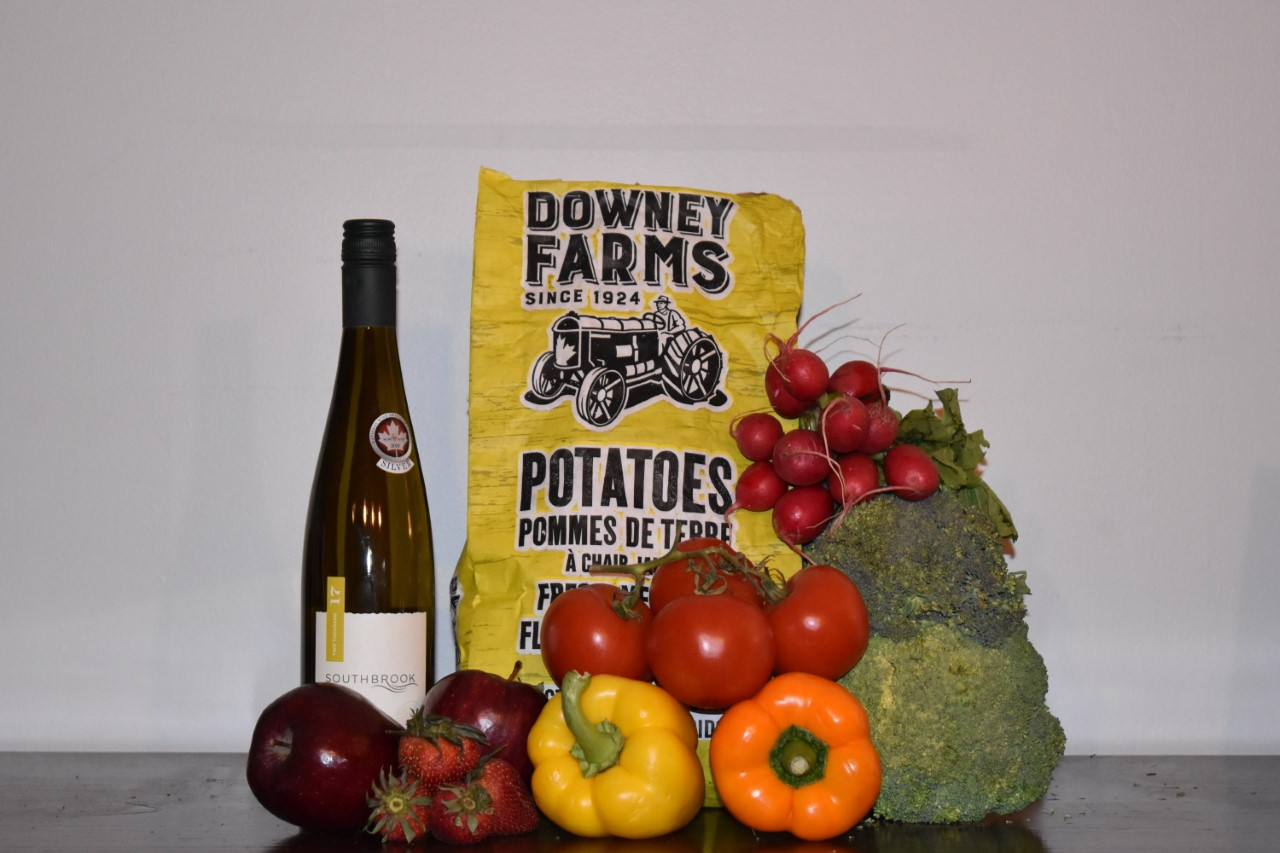
    Locally sourced produce grown here in Ontario, May 2020 (Photo: Abby VanVolkenburg).


    Where does our food come from? If your answer was the local grocery store, think again! As we talked about in last week’s blog, much of the food found in grocery stores comes from somewhere other than Canada. This causes challenges such as heightened emissions, attributed to shipping, as well as food chain supply disruptions, especially in times of  uncertainty, such as during the current COVID-19 pandemic. Now, more than ever, we need to consider supporting our local farmers to allow them, in turn, to support us. The relationship is reciprocal, with both parties standing to gain a great deal from one another’s support. Supporting local growers means supporting their livelihoods as well as our overall quality of life. There are also countless environmental benefits of supporting local.

    So how does one support local growers? At first the answer may seem obvious: We need to educate ourselves on where our food comes from and try  to buy locally sourced products whenever possible. Yet, there is so much more to it than that! Aside from selling what they produce, farmers are also faced with many uncertainties in terms of how they produce. Extreme weather events that result from climate change, such as temperature and wind fluctuations and more intense periods of heavy rain or prolonged dry periods, present challenges for farmers. In addition, they also face increasing pressure from pesticide/herbicide resistant organisms, depleted soil fertility, and dwindling (not to mention expensive) synthetic fertilizer options. Farmers need management options that utilize approaches to farming that are more sustainable.

    Sustainable farm management options already exist; many of which have been utilized in the past, before industrialized agriculture became a dominant figure on the landscape. From supporting beneficial organisms, to utilizing non-synthetic fertilizers and increasing cropland diversity, there is no shortage of alternate management options. What is missing, however, is guided research that investigates those different options, and combinations of options, to help farmers apply the best option to suit their own unique situations. Research is not only an important part of understanding farm management techniques, but also in policy making decisions, as well. Policy can either support or work against management choices that are connected to our food supply chain.

    In many ways, farmers are supported by policy and policy is created based on current research data. Anecdotal information is not enough to dictate or change policy (which often works against more sustainable farming practices). There is a need to support both our farmers  and local research efforts to ensure that solutions to today’s sustainable agriculture challenges, both environmental and social, are possible. The OSC3 here at Brock is one such research project that embraces farmers’ knowledge, sustainable practices and the investigation of novel crop management strategies for the future of Canadian food security.

    This blog will be ongoing throughout the duration of the project with bi-weekly updates provided by Liette Vasseur, Heather VanVolkenburg, Kasia Zgurzynski, Habib Ben Kalifa, and Diana Tosato (see research team). We will be providing research activity updates as well as informative pieces that delve into agricultural concepts and important global issues as they relate to agricultural sustainability and climate change. Stay tuned for regular updates!
    Categories: Organic Science Cluster 3 Blog, Updates of the Chair

  • MEOPAR BLOG: Circular economy

    A circular economy is an alternative to our traditional linear economy where we use products, services and resources for as long as possible and then recover and regenerate them at the end of their service life. In a circular economy, everything from concept design through to disposal is assessed, including the energy consumed to produce the item, the materials used, and its impacts on the environment. The process involved in making an item may also be changed to reduce energy or material needs. For example, some items can be made from a more substantial proportion of recycled material. To optimize the use of resources, some components can also be used and reused for multiple purposes. The manure from livestock, for example, can be used as fertilizer for agriculture and then, during composting, the biogas generated can be retained and used as energy. In a circular economy, what may have initially been looked at as waste can instead be reused in a cyclical fashion, extending the life span of our resources and reducing pollution.

    There are three principles in a circular economy: The first looks at how to preserve our natural resources as much as possible and reduce waste and pollution; the second principle aims to optimize the usage of any item or product that we buy or use by regenerating, sharing or even looping the item back into the cycle for reuse; the last principle promotes the minimization of waste and leakage from the production system, which may relate to energy, water use, or the material itself.

    A circular economy is also sometimes labelled as Cradle to Cradle economy. It reinvents waste in such a way that it is eventually considered to be a new source of material, instead of something to be put in a landfill site. Cradle to cradle economy also re-examines the traditional “3 R’s”; so instead of reducing, reusing, recycling, it now includes refuse as the first option. Circular economies can help reduce greenhouse gas emissions, thus mitigating and adapting to climate change by rethinking our life and how we consume. Think about it: Do you really need a new pair of boots every winter or to replace your cell phone as soon as a newer model hits the market? Or, would you be willing to try and trade in the throwaway culture you’ve come accustomed to in exchange for a system that optimizes everything in our lives to ensure a waste-free, sustainable future?

    The researchers involved with the MEOPAR project are working to raise awareness about the impacts of climate change and how communities can effectively adapt, and increase resilience, to these changes. Follow along with our blog every week (written by researchers Liette Vasseur, Meredith DeCock, Bradley May, Pulkit Garg, Sam Gauthier and Jocelyn Baker) to learn more about the project and how you can get involved. You can also visit our website at brocku.ca/unesco-chair or email us at [email protected]


    Categories: MEOPAR-Lincoln Blog, Updates of the Chair