
Shared gardens for adaptation to climate change
Des jardins partagés d’adaptation aux changements climatiques
About the project
In Morocco and Benin, in poorly mechanized and poor agricultural enterprises, droughts and weakened ecosystems destroy crops and threaten food security and incomes. In Canada, farmers are facing more frequent extreme weather events such as droughts, hail and ice. The project aims to characterize the vulnerabilities of smallholder agricultural businesses and develop adaptation options, while equipping farmers with tools to reduce climate risks. The initiative is led by Principal Investigator Diane Pruneau, of the University of Moncton and brings together 8 agricultural or agroforestry cooperatives and 16 Canadian, Moroccan, German and Beninese researchers (respectively in engineering, economics, hydrology, agronomy, forestry, biology, geography, climatology, pedology, education).
Framed by design thinking, a participatory approach focused on the needs of farmers, cooperatives from Morocco, Benin and Canada will share in sub-groups (women, men, adolescents) their vulnerabilities and the adaptations already implemented. The cooperatives of the three countries, in tandem with the scientific team (Canadian, German, Moroccan or Beninese or Benin) will then look for solutions to increase their resilience. Digital tools will facilitate the process: Facebook groups (for exchanging solutions and experiences), webcams (to see situations), drones and GIS (to detect nutrient deficiencies, water stress, etc.), “immersive” serious games (to simulate possible adaptation measures on the phone). Regenerative, community-based and nature-based solutions will be shared between participants from the three countries and scientists. Incorporating the best solutions found, adaptation measures will be tested on 8 local plots (the “Shared Gardens”) and then discussed between the international participants. A multi-criteria grid co-constructed with the cooperatives will evaluate the measures implemented and the “The Most Important Change” technique will detect improvements in skills and practices.
Solutions that are appropriate in the context of these smallholders will emerge from the project, through exchange of knowledge and the use of prediction tools: design thinking, drones, GIS, webcams, Facebook group for problem solving, and serious games. To disseminate winning practices, training programs will be offered to agricultural associations, in collaboration with government organizations. Finally, the participants will discuss with local elected officials’ policies related to agriculture and agroforestry.
PROJECT UPDATES
Visit to the cooperatives in Canada
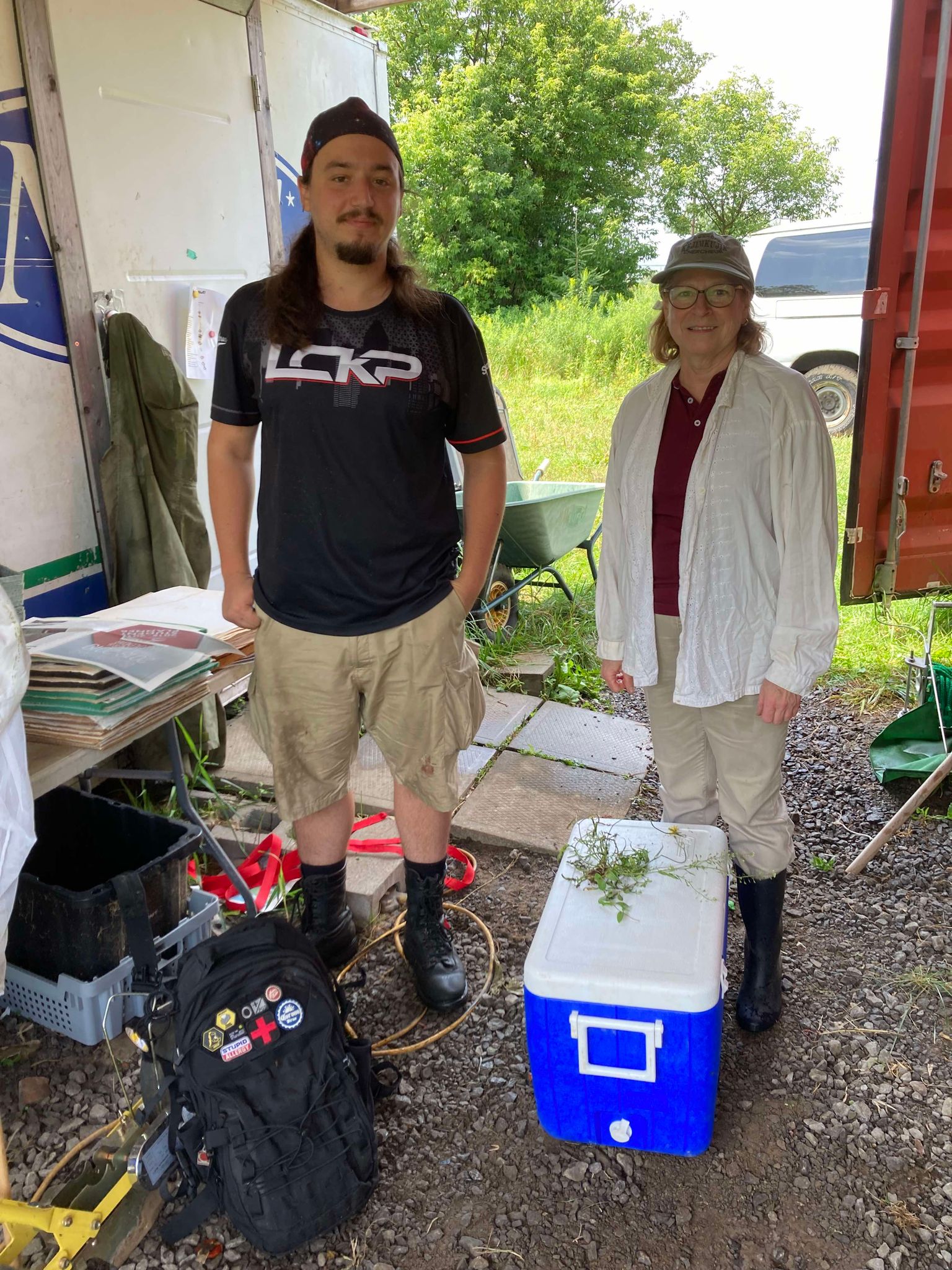
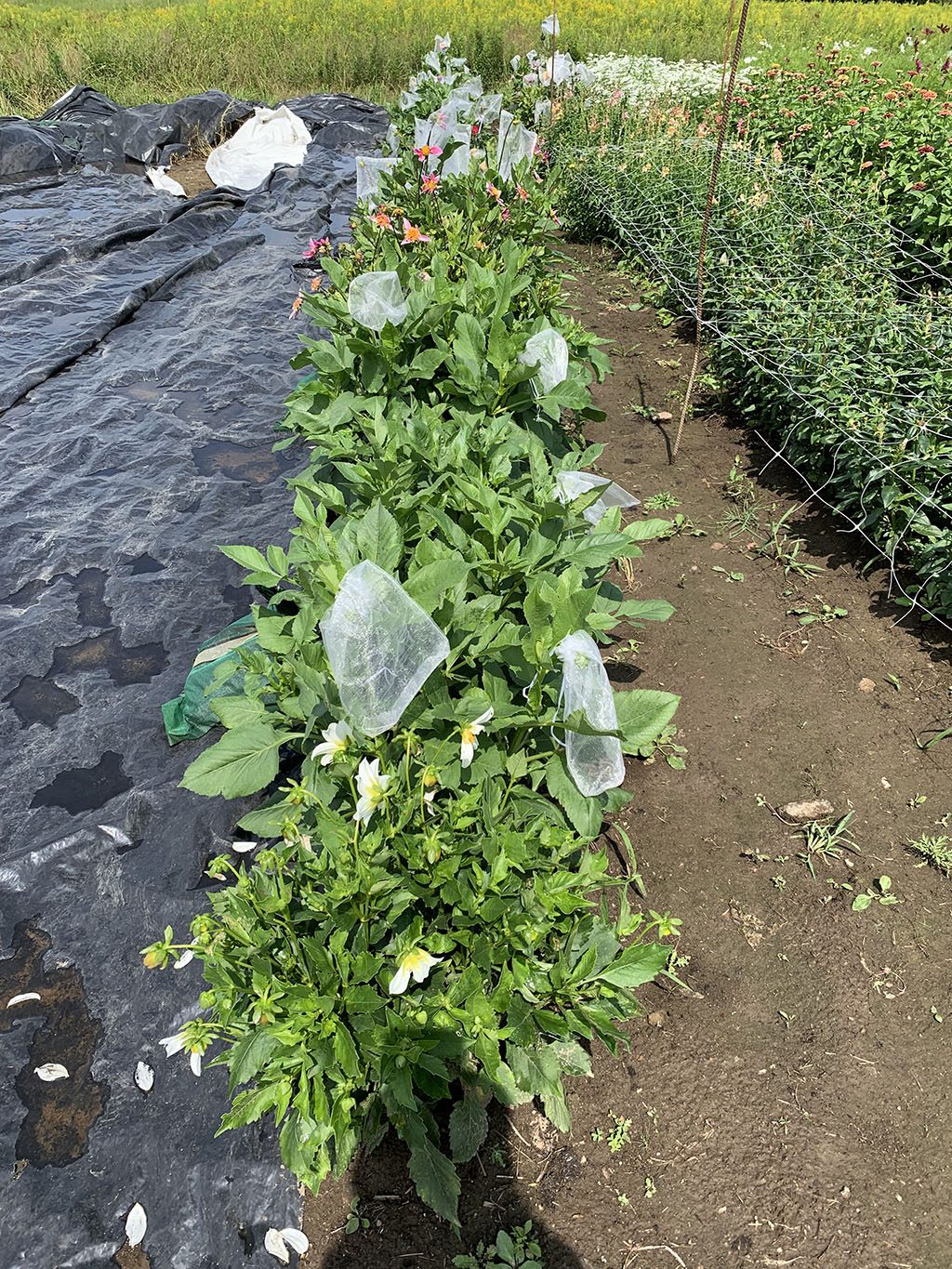
In July 2024, Liette Vasseur with Alex Popescu (Master student in Biological Sciences) visited the farms to do an inventory of all the plant species within the fields and the perimeters. In addition, they collected insects with sweep nets and soil samples for analysis. They also took photos of birds and other wildlife. Over 50 plant species were identified in both farms, some species like chicory, plantain and pigweed being common to both farms. Insects are now being identified.
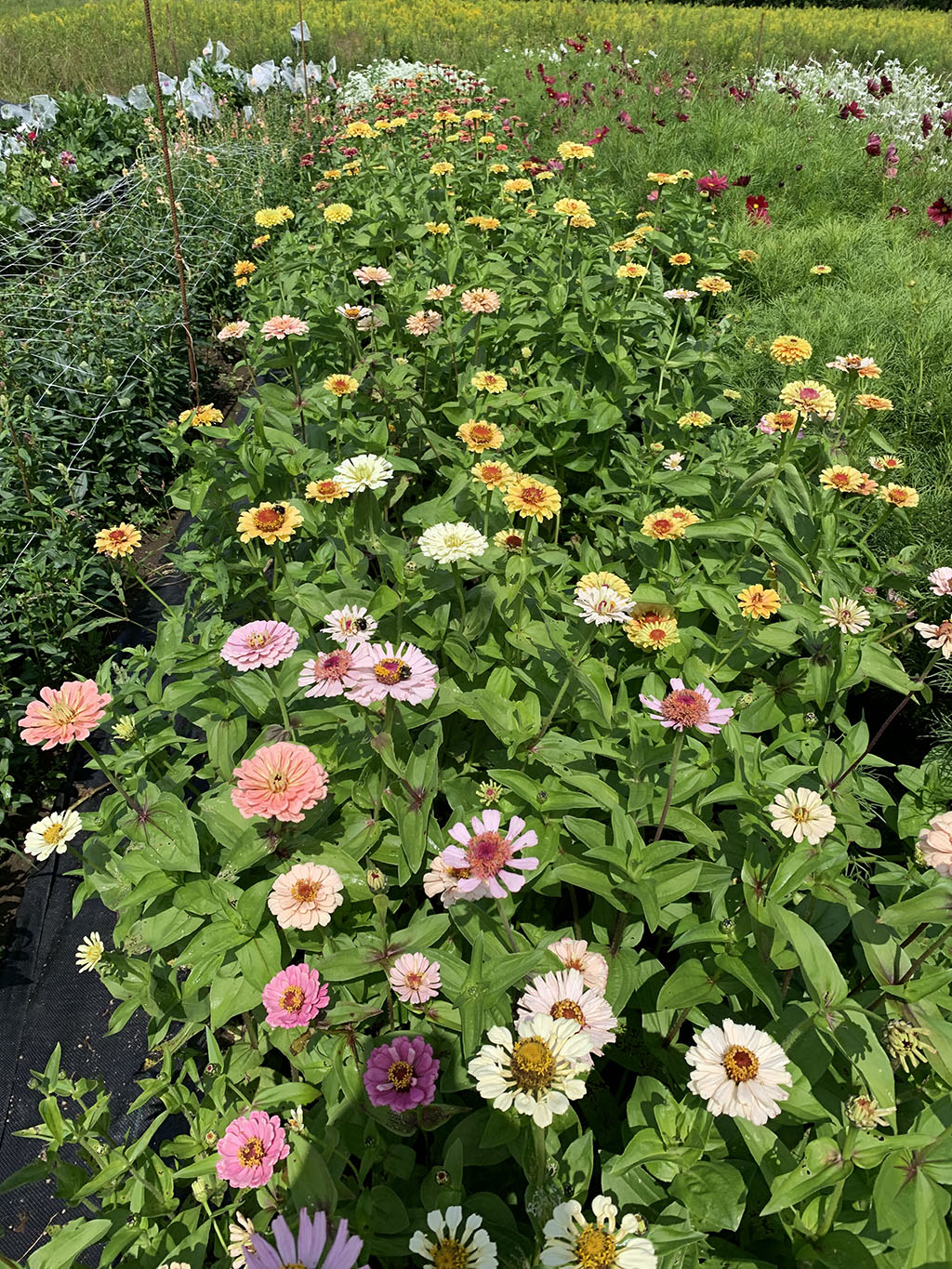
The highlight was to meet the growers and volunteers who really love what they are doing and are proud of their production, which is quite impressive.
From hosting the virtual Symposium on Agricultural and Agroforestry Solutions in the Face of Climate Change, which brought together over 80 participants from diverse regions to discuss strategies for building climate-resilient farming systems, to hosting a series of free online events exploring approaches to climate change adaptation in agriculture and agroforestry, the project group has been actively engaging with community and participants from diverse regions to discuss strategies for building climate-resilient farming systems.
Read more about the group’s recent activities in this newsletter: Green Gardens Newsletter
The team has been very busy in producing publications, communications, and events over the first year of the project!
Publications, communications, dissémination et événements du projet «Des jardins partagés d’adaptation aux changements climatiques»
1. Articles
Khattabi, A., Lahssini, S., Sakanya, S. et Pruneau, D. (submitted). Sustainable use of medicinal plants in Azilal (Central High Atlas, Morocco) for climate resilience. Proceedings of the 5th World Symposium on Climate Change Adaptation (WSCCA- 2025), Florianopolis, Brésil, novembre 2025.
Achbah, M., Khattabi, A., Boumeaz, T. et Pruneau, D. (submitted). Contribution of forest cooperatives to the adaptation of rural communities to climate change impacts in the Béni-Mellal-Khenifra region, Morocco. Proceedings of the 5th World Symposium on Climate Change Adaptation (WSCCA- 2025), Florianopolis, Brésil, novembre 2025.
Pruneau, D., Khattabi, A., Vasseur, L., Kovaleva, M., Laroche, A.-M., Leal Filho, W., Weissenberger, S., Therrien, J. et al. (submitted). Designing adaptation solutions in agriculture WITH/BY/FOR farmers. Proceedings of the 5th World Symposium on Climate Change Adaptation (WSCCA- 2025), Florianopolis, Brésil, novembre 2025.
Aboudeyab, O., El Hazouali, H., Satrani, B. et Khattabi, A. (en préparation). The effect of Azilal provenance on the yields and chemical composition of Lavandula dentata, Salvia officinalis and Artemisia herba-alba.
Hamdan F., Nabil, H. et Khattabi, A. (en préparation). From decline to cultivation: germination trials to domesticate two priority Aromatic and Medicinal Plants (Capparis spinosa L. and Anacyclus pyrethrum var. pyrethrum).
El Gotbi C., El Haouzali H., Khattabi, A. et Pruneau, D. (en préparation). Identification of key challenges in the Aromatic and Medicinal Plants value chain: A Design Thinking approach applied to the Nissae Aska and Timeddahine cooperatives in Azilal Province.
Agyei-Appiah, A., Lahssini S. et Khattabi, A. (en préparation). Production potential of AMPs and prospects for sustainable management of the Aït Bouguemez Forest.
Sakanya S., Lahssini, S. et Khattabi, A. (en préparation) Evaluation of the production potential and mapping aromatic and medicinal in the Azilal Forest for sustainable management.
Ali, M. R., Zaher, H. et Khattabi, A. (en préparation). Effects of the Domestication of Thymus pallidus and Anacyclus pyrethrum on Soil Quality in the High Atlas of Morocco.
Benamr, W., Lahssini, S., Khattabi, A. et Saliha, D. (en préparation). Plantes aromatiques et médicinales : un levier d’adaptation climatique pour les communautés forestières d’Ait M’Hamed (Azilal).
Laroche, A.-M. et al. (en préparation) Sustainable Agriculture and Climate Adaptation: Perspectives of Farmers and Consumers in Cooperatives from Benin, Canada, and Morocco.
Achbah M., Khattabi, A. et Boumeaza, T. (2025). La place des coopératives du secteur forestier dans l’économie sociale et solidaire de la Région Beni Mellal-Kénifra. Dans K. Lebdaoui, S. Igamane, M. Fadil et M. El Hassani (Eds.) Économie sociale et solidaire au Maroc. À la lumière des expériences internationales. Fez, Maroc : Université de Fez.
Achbah, M., Khattabi, A. et Boumeaza, T. (2024). Les écosystèmes forestiers de la région Béni Mellal Khénifra : Enjeux et défis pour leur conservation. Les ressources naturelles dans la région de Béni Mellal-Khénifra : évaluation, gestion et valorisation. Pp : 208-218. ISBN : 978-9920-691-11-6 ISBN : 978-9920-691-11-6 -163.
Achbah M., Khattabi, A., Pruneau, D. et Boumeaza, T. (2024). Vulnérabilité des populations au changement climatique en zone montagneuse. Cas de la région Béni Mellal-Khénifra. VertigO, 24 (2).
2. Communications présentées à des congrès ou conférences avec comité de lecture
Sakanya, E. S., Lahssini, S., Khattabi, A., Pruneau, D. et Diarra, S. (2025). Évaluation du potentiel de production et cartographie des Plantes aromatiques et médicinales dans la forêt d’Azilal pour un aménagement durable. IXᵉ Colloque de l’Association Francophone de Géographie Physique (AFGP), Casablanca, Maroc, octobre 2025.
Achbah, M., Khattabi, A. et Boumaeza, T. (2025). Gouvernance des coopératives forestières comme mesure d’adaptation au changement climatique. Région Beni Mellal Khénifra. IXᵉ Colloque de l’Association Francophone de Géographie Physique (AFGP), Casablanca, Maroc, octobre 2025.
Achbah, M., Khattabi, A., Boumeaz, T. et Pruneau, D. (2025). Contribution of forest cooperatives to the adaptation of rural communities to climate change impacts in the Béni-Mellal-Khenifra region, Morocco. Communication au 5th World Symposium on Climate Change Adaptation (WSCCA- 2025), Florianopolis, Brésil, novembre 2025.
Khattabi, A., Lahssini, S. et Sakanya, S. (2025). Sustainable use of medicinal plants in Azilal (Central High Atlas, Morocco) for climate resilience. Communication au 5th World Symposium on Climate Change Adaptation (WSCCA- 2025), Florianopolis, Brésil, novembre 2025.
Pruneau, D., Khattabi, A., Vasseur, L., Kovaleva, M., Laroche, A.-M., Leal Filho, W., Weissenberger, S., Therrien, J. et al. (2025). Designing adaptation solutions in agriculture WITH/BY/FOR farmers. Communication au 5th World Symposium on Climate Change Adaptation (WSCCA- 2025), Florianopolis, Brésil, novembre 2025.
Wolf, F. (2025). Understanding the health impacts of climate change on female farmers in Africa. Communication au GreenGardens Webinar Series – Edition #2: Impacts of climate change on health and well-being of women farmers, En ligne, septembre 2025.
Achbah, M. (2025) When climate disrupts the social and solidarity economy (SSE): Women’s ooperatives in Béni Mellal–Khénifra region. Communication au GreenGardens Webinar Series – Edition #2: Impacts of climate change on health and well-being of women farmers, En ligne, septembre 2025.
Weissenberger, S., Pruneau, D., Agbohessou, M., Pineault, P-I., Laroche, A. M. et Agossou, J.M. (2025). Impacts of climate change on women’s well-being in agricultural cooperatives in Benin and Canada. Communication au GreenGardens Webinar Series – Edition #2: Impacts of climate change on health and well-being of women farmers, En ligne, septembre 2025.
Vasseur, L. (2025). Biodiversification in agriculture: enhancing ecosystem services for resilience. Communication au Tropentag 2025: Reconciling land system changes with planetary health, En ligne, septembre 2025.
Pruneau, D. et Laroche, A.-M. (2025). Design thinking as a tool for climate resilient farming. Communication au GreenGardens Webinar Series – Edition #1: Design Thinking for Climate Resilient Farming, En ligne, juin 2025.
Vasseur, L., Pruneau, D., Laroche, A.-M., Louis, N. et Weissenberger, S. (2025). Partager ses idées pour répondre aux défis climatiques des petites coopératives rurales. Communication à l’ACFAS, Colloque 31, Montréal, mai 2025.
Saliha, D., Lahssini, S. et Khattabi, A. (2025). Impacts du changement climatique sur les plantes aromatiques et médicinales (PAMs). Cas de la province d’Azilal. Communication à International Conference on Climate-Adapted Agriculture – Marrakesh, avril 2025.
Khouldia, N. et Khattabi, A. (2025). Vers une gestion résiliente de l’eau dans le bassin Oued El Khder face au défi climatique. Communication à International Conference on Climate-Adapted Agriculture – Marrakesh, avril 2025.
Ayoub, S., Lahssini, S. et Khattabi, A. (2025). Aménagement forestier et neutralité carbone au Maroc: Stratégies optimisées pour la résilience climatique de la forêt d’Azilal à l’Horizon 2050. Communication à International Conference on Climate-Adapted Agriculture – Marrakesh, avril 2025.
Sakanya, S., Agyai Appiah, A., Lahssini, S et et Khattabi, A. (2025). Évaluation du potentiel de production et cartographie des produits non ligneux. Cas de la forêt d’Azilal, Ait Bouguemez et Ait M‘Hamed. Communication à International Conference on Climate-Adapted Agriculture – Marrakesh, avril 2025.
Agossou, J,-M. et Alimagnidokpo, C.F. (2025). Des pratiques agricoles respectueuses pour un écosystème prospère. Communication à International Conference on Climate-Adapted Agriculture – Marrakesh, avril 2025.
Achbah, M., Khattabi, A. et Boumeaza, T. (2025). La place du secteur coopératif forestier dans l’ESS de la région Beni Mellal- Khenifra. Communication à International Conference on Climate-Adapted Agriculture – Marrakesh, avril 2025.
Achbah, M., Khattabi, A. et Boumeaza, T. (2025). Les écosystèmes forestiers de la région Béni Mellal Khenifra: Enjeux et défis pour leur conservation. Communication à International Conference on Climate-Adapted Agriculture – Marrakesh, avril 2025.
Alaoui, C. M., Eddelani, O, Khattabi, A. et Pruneau, D. (2025). Innovation institutionnelle et résilience territoriale, INDH et coopératives agricoles d’Azilal face au changement climatique. Communication à International Conference on Climate-Adapted Agriculture – Marrakesh, avril 2025.
El Gotbi, C. , Hazouali, H. et Khattabi, A. (2025). Analyse de la filìère avale des PAM valorisées par les coopératives de la province d’Azilal. Communication à International Conference on Climate-Adapted Agriculture – Marrakesh, avril 2025.
Leal, W. et Kovaleva, M. (2025). Agriculture régénératrice et adaptation au changement climatique. Communication à International Conference on Climate-Adapted Agriculture – Marrakesh, avril 2025.
Vasseur, L. (2025). Solutions fondées sur la nature (SFN) Importance dans les communautés rurales. Communication à International Conference on Climate-Adapted Agriculture – Marrakesh, avril 2025.
Ali Massama, R., Zaher, H, et Khattabi, A. (2025). Potentiel de production des plantes aromatiques et médicinales spontanées et domestiquées en fonction de la qualité des sols dans la région d’Azilal. Communication à International Conference on Climate-Adapted Agriculture – Marrakesh, avril 2025.
Hamdan, F., Nabil, H. et Khattabi, A. (2025). Évaluation du potentiel de domestication des plantes aromatiques et médicinales spontanées. Communication à International Conference on Climate-Adapted Agriculture – Marrakesh, avril 2025.
Aboudeyab,O., Khattabi, A. et Satrani, B. (2025). Rendement et composition chimique des huiles essentielles issues des PAM exploitées par les coopératives. Communication à International Conference on Climate-Adapted Agriculture – Marrakesh, avril 2025.
Laroche, A.-M. (2025). Coopératives maraîchères canadiennes : enjeux, constats et pistes d’adaptation. Communication à International Conference on Climate-Adapted Agriculture – Marrakesh, avril 2025.
Vasseur, L. (2025). Inventaire de la première saison. Communication à International Conference on Climate-Adapted Agriculture – Marrakesh, avril 2025.
Pruneau, D. et Kerry, J, (2025). Des options d’adaptation au changement climatique en agriculture. Communication à International Conference on Climate-Adapted Agriculture – Marrakesh, avril 2025.
Weissenberger, S. et Agossou, J,-M. (2025). Jardins partagés pour l’adaptation aux changements climatiques. Volet Bénin. Communication à International Conference on Climate-Adapted Agriculture – Marrakesh, avril 2025.
Alaoui, C. M., Eddelani, O., Khattabi, A. et Pruneau, D. (2025). Innovation institutionnelle et résilience territoriale : INDH et coopératives agricoles d’Azilal face au changement climatique. Communication au Symposium on Agricultural and Agroforestry solutions in face of climate change. En ligne, mars 2025.
Laroche, A.-M. (2025). Resilient farms in Eastern Canada: Adapting to climate change. Communication au Symposium on Agricultural and Agroforestry solutions in face of climate change. En ligne, mars 2025.
Pruneau, D. (2025). Adaptation options towards climate resilient farming. Communication au Symposium on Agricultural and Agroforestry solutions in face of climate change. En ligne, mars 2025.
Achbah M., Khattabi, A. et Pruneau, D. (2024). Adaptation to climate change of rural communities with the help of forestry cooperatives. Béni-Mellal-Khénifra region, Morocco. Communication à la conférence Landscape 2024, Berlin, septembre 2024.
Pruneau, D. et Khattabi, A. (2024). Les approches-design pour coconstruire un avenir sain: pensée design, design de conservation, design régénératif… Communication à l’ACFAS, Colloque 637, Ottawa, mai 2024.
3. Livres, guides pédagogiques
Kerry, J., Pruneau, D., Leal, W., Todome, L., Therrien, J. et al. (2025, en préparation). Des solutions d’adaptation aux changements climatiques en agriculture et en agroforesterie.
4. Thèses et mémoires publiés
Khouldia, N. (2025). Raréfaction des ressources en eau dans le bassin versant de l’Oued El Abid : dynamiques d’étiage anthropique, tarissement, modélisation et impacts socio-économiques. Thèse de doctorat, Université de Beni-Mellal, Maroc.
Kiampi, O. K. (2025). Jardins adaptés au climat : Analyse des systèmes de gestion des ressources en eau dans les coopératives agricoles canadiennes, le cas de Terre Partagée et de la Baigneuse à l’aide de l’outil CROPWAT 8.0. Mémoire de Maîtrise, Université Senghor, Alexandrie et Université de Moncton.
Sakanya, S. (2025). Évaluation du potentiel de production et cartographie des produits non ligneux. Cas de la forêt d’Azilal, Ait Bouguemez et Ait M‘Hamed. Mémoire de Maîtrise. École Nationale Forestière d’Ingénieurs, Rabat, Maroc.
El Gotbi, C. (2025). Analyse de la filière avale des PAM valorisées par les coopératives de la province d’Azilal. Mémoire de Maîtrise. École Nationale Forestière d’Ingénieurs, Rabat, Maroc.
Ali Massama, R. (2025). Potentiel de production des plantes aromatiques et médicinales spontanées et domestiquées en fonction de la qualité des sols dans la région d’Azilal. Mémoire de Maîtrise. École Nationale Forestière d’Ingénieurs, Rabat, Maroc.
Hamdan, F. (2025). Évaluation du potentiel de domestication des plantes aromatiques et médicinales spontanées. Mémoire de Maîtrise. École Nationale Forestière d’Ingénieurs, Rabat, Maroc.
Aboudeyab, O. (2025). Rendement et composition chimique des huiles essentielles issues des PAM exploitées par les coopératives. École Nationale Forestière d’Ingénieurs, Rabat, Maroc.
Agyai Appiah, A. (2025). Potential of Aromatic and Medicinal Plants and Sustainable Management Prospects for the Aït Bouguemez Forest (Azilal Province, Morocco). École Nationale Forestière d’Ingénieurs, Rabat, Maroc.
5. Dissémination de la recherche
Laroche, A.-M. (2025). Rencontre internationale de l’équipe de recherche sur les Jardins adaptés au climat à Marrakech. Infolettre. Université de Moncton, Mai 2025.
Tafraouti, M. (2025). Vers une agriculture capable de s’adapter aux changements climatiques. Journal Bayane El Yaoum, 11 mai 2025.
Émission Heure de Pointe, Radio Canada, Entrevue avec M. Jean-Eudes Chiasson, Coopérative Ferme Terre partagée, 6 mai 2025. https://ici.radio-canada.ca/ohdio/premiere/emissions/l-heure-de-pointe-acadie/segments/rattrapage/2063028/pratiques-agricoles-adaptees-aux-changements-climatiques
Tafraouti, M. (2025). Le projet Jardins adaptés au climat. ´ الحركة’¨†6 mai 2025.
Chiasson, J.-E. (2025). Voyage au bout de la terre. L’Acadie nouvelle, 5 mai 2025.
Kiampi, K. (2025). La pensée design et les projets de développement. Poster scientifique sur le groupe Facebook du projet, Moncton, 1ier mai 2025.
Kiampi, K. (2025). Culture intercalaire et gestion des mauvaises herbes. Poster scientifique sur le groupe Facebook du projet, Moncton, 13 avril 2025.
Tafraouti, M. (2025). Conference in Marrakesh on Climate-Adapted Agriculture. Morocco Media News, Marrakech, 24 avril 2025. https://www.moroccomedianews.ma/en/2025/04/international-conference-in-marrakesh-on-climate-adapted-agriculture/
Tafraouti, M. (2025). Agroecology as a Bridge for Climate Change Adaptation Climate-Adapted Gardens: A Model for Sustainable Agricultural Development. Morocco Media News, Marrakech, 30 avril 2025.
Pruneau, D. (2025). Impliquer les familles et les municipalités dans la formation d’écocitoyens. Entrevue de chercheuse avec l’organisme Espace Muni, Ste-Brigitte de Laval, 26 février 2025.
Pruneau, D. (2024). Entrevue à la radio de Radio-Canada, Émission Heure de pointe à Radio-Canada Acadie, Moncton, 13 juin 2024.
Pruneau, D. (2024). Entrevue au Téléjournal de Radio-Canada Atlantique, Moncton, 9 juin 2024.
Richardson, M. (2024). UdeM : Plus d’un million de dollars pour la recherche sur les changements climatiques, Acadie Nouvelle, 8 juin 2024.
Publications LinkedIn
– Introducing our project Shared Gardens for Climate Change Adaptation / Jardins adaptés au climat
https://www.linkedin.com/posts/projectgreengardens_jardins-adapt%C3%A9s-au-climat-activity-7226071478029475840-XTgg?utm_source=share&utm_medium=member_desktop&rcm=ACoAABnnnC0B2JzgYgzR0TbTaCop9evmOQVJAM8
– Towards Climate Resilient Farming
https://www.linkedin.com/posts/projectgreengardens_jardins-adapt%C3%A9s-au-climat-activity-7231310594438569984-Un4D?utm_source=share&utm_medium=member_desktop&rcm=ACoAABnnnC0B2JzgYgzR0TbTaCop9evmOQVJAM8
– Our Canadian Partner and Cooperatives! https://www.linkedin.com/posts/projectgreengardens_climatechange-sustainability-greengardens-activity-7236937216931844096-MuTO?utm_source=share&utm_medium=member_desktop&rcm=ACoAABnnnC0B2JzgYgzR0TbTaCop9evmOQVJAM8
– Introducing ACED Benin!
https://www.linkedin.com/posts/projectgreengardens_les-jardins-communautaires-un-moyen-de-r%C3%A9duction-activity-7233763081779052545-59S4?utm_source=share&utm_medium=member_desktop&rcm=ACoAABnnnC0B2JzgYgzR0TbTaCop9evmOQVJAM8
– Project GreenGardens represented at the LANDSCAPE 2024 Conference! https://www.linkedin.com/posts/projectgreengardens_landscape2024-agroforestry-sustainability-activity-7246943729628958720-BXQc?utm_source=share&utm_medium=member_desktop&rcm=ACoAABnnnC0B2JzgYgzR0TbTaCop9evmOQVJAM8
– Introducing the Benin Cooperatives
https://www.linkedin.com/posts/projectgreengardens_sustainableagriculture-communitydevelopment-activity-7264988690412654593-Isxf?utm_source=share&utm_medium=member_desktop&rcm=ACoAABnnnC0B2JzgYgzR0TbTaCop9evmOQVJAM8
– Introducing the Moroccan Cooperatives
https://www.linkedin.com/posts/projectgreengardens_sustainableagriculture-communitydevelopment-activity-7302696709778776064–tNl?utm_source=share&utm_medium=member_desktop&rcm=ACoAABnnnC0B2JzgYgzR0TbTaCop9evmOQVJAM8
– Project GreenGardens (Towards Climate Resilient Farming/ Des jardins partagés d’atténuation et d’adaptation aux climatic changes) hosts Symposium https://www.linkedin.com/posts/projectgreengardens_project-greengardenstowards-climate-activity-7303038770092630017-RtGg?utm_source=share&utm_medium=member_desktop&rcm=ACoAABnnnC0B2JzgYgzR0TbTaCop9evmOQVJAM8
– Call for Abstracts: Symposium on Agricultural and Agroforestry solutions in face of climate change
https://www.linkedin.com/posts/projectgreengardens_fill-activity-7289967676045582336-6OgE?utm_source=share&utm_medium=member_desktop&rcm=ACoAABnnnC0B2JzgYgzR0TbTaCop9evmOQVJAM8
– A First Meeting of the Two Canadian Cooperatives
https://www.linkedin.com/posts/projectgreengardens_sustainablefarming-climateresilience-agroecology-activity-7312438604859957249-C453?utm_source=share&utm_medium=member_desktop&rcm=ACoAABnnnC0B2JzgYgzR0TbTaCop9evmOQVJAM8
– Meetings with the two cooperatives in #Benin!
https://www.linkedin.com/posts/projectgreengardens_benin-sustainableagriculture-climateresilience-activity-7317568641103716353-mLyd?utm_source=share&utm_medium=member_desktop&rcm=ACoAABnnnC0B2JzgYgzR0TbTaCop9evmOQVJAM8
– International Conference on Climate-Adapted Agriculture in Marrakesh
https://www.linkedin.com/posts/projectgreengardens_greengardens-activity-7322868440199753729-CR7Z?utm_source=share&utm_medium=member_desktop&rcm=ACoAABnnnC0B2JzgYgzR0TbTaCop9evmOQVJAM8
– Exploring agricultural innovation with intercropping
https://www.linkedin.com/posts/projectgreengardens_greengardens-agriculturalresearch-sustainability-activity-7325279172551970817-0RIs?utm_source=share&utm_medium=member_desktop&rcm=ACoAABnnnC0B2JzgYgzR0TbTaCop9evmOQVJAM8
– GreenGardens Webinar Series – Edition #1: Design Thinking for Climate Resilient Farming
https://www.linkedin.com/posts/projectgreengardens_greengardens-webinar-series-edition-activity-7327703869231095808-NNhD?utm_source=share&utm_medium=member_desktop&rcm=ACoAABnnnC0B2JzgYgzR0TbTaCop9evmOQVJAM8
– Agroecology as a Bridge for Climate Change Adaptation https://www.linkedin.com/feed/update/urn:li:activity:7333032285841129474
– GreenGardens Newsletter #1/2025 is out now! https://www.linkedin.com/feed/update/urn:li:activity:7336304450497667072
– Le Bulletin GreenGardens n°1/2025 est désormais disponible ! https://www.linkedin.com/posts/projectgreengardens_greengardensnewsletterfrench-activity-7340751211274383362-
_Zv3?utm_source=share&utm_medium=member_desktop&rcm=ACoAABnnnC0B2JzgYgzR0TbTaCop9evmOQVJAM8 –
The GreenGardens project team is happy to share that six students from the École Nationale Forestière d’Ingénieurs have successfully defended their final research theses, marking the completion of their Forest Engineering degrees! https://www.linkedin.com/feed/update/urn:li:activity:7358484501238366208
– Workshop Invitation: Sustainable Solutions for Climate-Resilient Agriculture https://www.linkedin.com/feed/update/urn:li:activity:7364744371121852416
– GreenGardens Webinar Series: #2 Climate change, health and well-being of women farmers https://www.linkedin.com/feed/update/urn:li:activity:7368934342355513345
6. Événements organisés par le projet
(Décembre 2025) 4th World Ph D Students Symposium “Meeting the challenges of Climate Change 2025”, en ligne.
(Novembre 2025) 5th World Symposium on Climate Change Adaptation (WSCCA- 2025), Florianopolis, Brésil, novembre 2025.
(Septembre 2025) GreenGardens Webinar Series – Edition #2: Impacts of climate change on health and well-being of women farmers, en ligne.
(Juin 2025) GreenGardens Webinar Series, Edition #1 : Design Thinking, en ligne.
(Avril 2025) International Conference on Climate-Adapted Agriculture, Marrakech.
(Mars 2025) Symposium on Agricultural and Agroforestry solutions in Face of Climate Change, en ligne.
Related Updates
Symposium on Agricultural and Agroforestry solutions in the face of climate change
The Symposium will facilitate discussions that reflect the progress, opportunities and challenges on the implementation agricultural and agroforestry practices, adaptation strategies and carbon farming, among the others. It will serve as a critical platform to address the interconnected challenges in terms of climate variability, agricultural production and various adaptation practices including agroforestry, The symposium will also provide an avenue for influencing policy at various, ensuring that agricultural and agroforestry solutions are informed by scientific evidence and case-studies.
The event organised as part of the Project ” Towards Climate Resilient Farming (Des jardins partagés et d’adaptation aux changements climatiques)” (Green Garden/Jardins adaptés au climat), jointly funded by the Government of Canada’s New Frontiers in Research Fund (NFRF) and by the Deutsche Forschungsgemienschaft (German Research Foundation, DFG) https://www.umoncton.ca/jardins-climat/en.
Learn more:
Additional information
Morocco; Benin; Canada
Three years
Nominated Principal Investigator: Pruneau, Diane, University of Moncton
Co-Principal Investigators: Khattabi, Abdellatif; Leal, Walter; Weissenberger, Sebastian
Co-Applicants: Boko, Michel; Codjia, Claude; Eddelani, Oumhani; El Haouzali, Hafida; Gbaguidi Gouvidé Jean; Kahime, Kholoud; Kovaleva, Marina; Lahssini, Said; Laroche, Anne-Marie; Louis, Natacha; NNafia, Khouldia; Vasseur, Liette; Wolf, Franziska; Zaher, Hafida
Other local collaborators: Centre d’Action pour le Développement Équitable (ACED)
New Frontiers in Research Fund 2023 International Joint Initiative for Research in Climate Change Adaptation and Mitigation.
- The New Frontiers in Research Fund (NFRF) supports world-leading interdisciplinary, international, high-risk / high-reward, transformative and rapid-response Canadian-led research.
The general approach of the project: design thinking

