Organic Science Cluster 4 Blog

  • The ecosystem approach: how can we take care of the place we live?

    The following is a blog related to the organic science cluster 4 project: Promoting an Integrative Landscape Approach in Vineyards for Greater Resilience in the Face of Climatic and Environmental Changes. Follow along with updates as the project progresses, and learn more about the research HERE.


    By: Matthew Summerville

    The place where we, humans and nonhumans, live is called an ecosystem. An ecosystem includes the living organisms (including plants, animals, fungi, and microorganisms like bacteria) interacting with each other and with their non-living environments. Ecosystems are functional and complex systems. They can be natural or managed by humans.

    We generally don’t think of the possibility of “ecosystems” being endangered or extinct, but that is far from the truth. In many instances around the world, ecosystems are being threatened with collapse by human activities. In fact, two ecosystems, the Aral Sea in Central Asia and the Central Ayeyarwady palm savanna in Southeast Asia, are considered to be officially collapsed, according to the IUCN (International Union for the Conservation of Nature) Red List of Ecosystems. This means that they are non-functional and species, including humans, cannot really benefit from them.

    In Southern Ontario, urban and rural land development threatens biodiverse natural ecosystems such as forests and prairies, displacing local native animals and plant populations. Agriculture, along with urbanization, is one such human development that can greatly impact natural systems. We need to grow crops, but we must find a way to do so in a sustainable manner to mainly at least some of these natural ecosystem components.

    This is where the ecosystem approach comes up. It is a framework first adopted at the Conference of Parties (COP) of the Convention on Biological Diversity (CBD) in 2000. If the term COP sounds familiar but you just aren’t sure what it means, don’t feel bad, I myself just learned more about it while researching for this blog post. The Conference of Parties is the meeting of all the signatory nations governing and implementing international conventions, such as the CBD and the United Nations Framework Convention on Climate Change (UNFCCC). The Convention on Biological Diversity (CBD) was first introduced in 1992 at the Rio de Janeiro Earth Summit in Brazil and the COPs are held every two years since 1994. The next COP meeting will be in October 2026 in Armenia.

    The CBD ecosystem approach of management is formally defined as “a strategy for the integrated management of land, water, and living resources that promotes conservation and sustainable use in an equitable way” (https://www.cbd.int/decision/cop?id=7148). The definition of this approach is further broken down into twelve principles, but for the sake of this blog post, here are the first five principles (https://www.cbd.int/ecosystem/principles.shtml):

    “Principle 1: The objectives of management of land, water and living resources are a matter of societal choices.”

    Ecosystems should be managed matching the rights and interests of the Indigenous people and landowners inhabiting these lands. Therefore, economic, societal, and cultural elements have to be considered in conjunction with biological diversity.

    Principle 2: Management should be decentralized to the lowest appropriate level.

    Decentralized systems may lead to greater efficiency, effectiveness and equity. Management should involve all stakeholders and balance local interests with the wider public interest. The closer management is to the ecosystem, the greater the responsibility, ownership, accountability, participation, and use of local knowledge.

    Principle 3: Ecosystem managers should consider the effects (actual or potential) of their activities on adjacent and other ecosystems.

    Management interventions in ecosystems often have unknown or unpredictable effects on other ecosystems; therefore, possible impacts need careful consideration and analysis. This may require new arrangements or ways of organization for institutions involved in decision-making to make, if necessary, appropriate compromises.

    “Principle 4: Recognizing potential gains from management, there is usually a need to understand and manage the ecosystem in an economic context.”

    Economics plays an important role in land management. There will always be a way to maximize profit with land use, but this generally has disproportionately negative impact on ecosystems and biological diversity. Incentives that provide benefit must be considered to promote sustainable land use for landowners.

    “Principle 5: Conservation of ecosystem structure and functioning, in order to maintain ecosystem services, should be a priority target of the ecosystem approach.”

    In order to protect an ecosystem, its key parts, including both living and non-living environment must be protected. This means that management must consider solutions that protect and, in some cases, restore ecosystem function.

    Dr. Vasseur’s lab collaborates with farmers in Canada (and even throughout the world) and engages each of the twelve principles of the ecosystem approach when conducting ecological research. For example, considering Principle 1, it is important to remind ourselves that the ecosystem where we do research belongs to a farmer or owner. Therefore, the lab must continue to consider their interests when suggesting ecological solutions. This ties into Principle 4: it is important to ensure that ecological solutions do not impact farming but still providing incentives to promote their implementation. Finally, ecological solutions need to contribute to conservation and restoration of ecosystem structure and function, meaning biological diversity has to be reintroduced in agricultural spaces to provide greater ecosystem services (nature’s contributions to people).

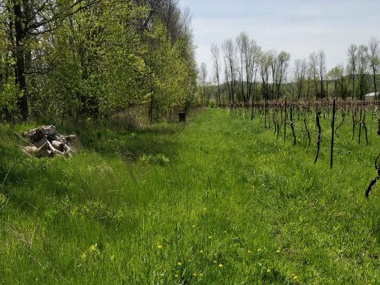
    Tying these principles together may be challenging, especially when working with agroecosystems. However, there are ways to improve biodiversity in managed systems through reintroducing native species, without disrupting farming practices. In vineyards, this can be done between rows of grapevines where there is no crop being grown. The idea behind introducing native flowers is to increase diversity at the plant level, which will hopefully entice other organisms, including bees, butterflies, and even insects that can contribute to natural pest control, to take up residence. This not only has the potential to increase biodiversity in these agricultural spaces but can contribute benefits to farmers (such as increased pollination of crops or the control of pest species).

    Categories: Organic Science Cluster 4 Blog

  • The Influence of Perimeter Plantings on Vineyards

    The following is a blog related to the organic science cluster 4 project: Promoting an Integrative Landscape Approach in Vineyards for Greater Resilience in the Face of Climatic and Environmental Changes. Follow along with updates as the project progresses, and learn more about the research HERE.

    By: Andrea Hebert

    Niagara is the largest grape growing jurisdiction in Ontario, making it no surprise that land use in the region is dominated by viticulture. Driving through Niagara’s wine country, you are likely to see many vineyards in close proximity to one another, with properties often separated by fence-like rows of vegetation known as perimeter plantings.

    Wine country is a crucial part of the local community and economy, but vineyards remain vulnerable to extreme weather events and pest pressures. As monocultures, vineyards are poor in local plant diversity and lack the resilience of naturally occurring ecosystems. Landscape features, together with chemical use practices, are known to influence the structure of ecological communities in agricultural systems. Landscape simplification of industrial agriculture has been a major contributor to biodiversity loss on a global scale.

    This lack or diversity leads to reduced ecosystem services. Which brings challenges such as pest control, water quantity and quality, soil compaction and erosion, and weed competition. Many agricultural pest species have evolved to feed on a narrow range of plant species and have adapted to locate and colonize crops in simplified habitats rather than complex ones. This has led farmers to rely heavily on the use of synthetic pesticides to protect their livelihoods, but this approach comes with its own pitfalls.

    As climate change persists, these agricultural systems struggle with pest resistance and further biodiversity loss, bringing into question their long-term viability. Organic vineyards (a less popular management system in the region) rely on a sustainable approach, focusing on enhancing biodiversity and avoiding the use of synthetic chemicals for pest control and soil management. This approach while minimizing environmental harm, requires innovative management techniques to safeguard its vines. Potential for this innovation lies in the perimeter plantings of the surrounding landscape.

    The use of perimeter plantings in agriculture has existed in multiple countries for thousands of years, Notable examples include in Ireland, England, and Portugal, the latter of which has actually had historic practice of integrating vineyards into perimeter forests. Perimeter plantings are often remnants of previous forests, or in many cases, a farmers deliberate choice to plant a vegetative border with an understanding that they have the potential to be valuable elements of the agricultural landscape. Perimeter plantings typically contain greater plant diversity than surrounding crop fields and therefore provide a variety of ecosystem services.

    At the landscape-scale, greater proportions of natural vegetation, non-crop land and landscape variety surrounding rural farms have proven to promote the biological control of pests.  Increased plant diversity and habitat complexity can regulate pests and pathogens, as well as increasing resistance to invasion. Perimeter plantings support a wider range of primary and secondary consumers, providing food and overwintering habitat for parasitic wasps, predatory beetles, and spiders which all contribute to pest control. These effects can extend several kilometres from a focal field, with plantings containing native species such as flowering trees and shrubs providing the strongest ecological benefit. Managing perimeter plantings can help maintain a functional mix of plant species that can potentially attract beneficial insects while simultaneously minimizing the attraction of pest species.

    Beyond pest control, perimeter plantings provide several additional benefits for vineyards. They can serve as protective barriers between properties, filtering the airborne seeds of vagrant species from neighbouring farms and reducing drifting snow during winter storms. They also act as natural buffers that help reduce nutrient and water runoff. The above-ground density of perimeter plantings can also reduce wind damage to grapevines and limit wind-driven soil erosion. Because wind is a major driver of moisture loss, these plantings can also help vineyards retain soil moisture during dry conditions.

    While perimeter plantings offer significant benefits, the vegetation within these hedgerows can also present risks if not properly maintained. For instance, protecting and expanding certain landscape elements, targeting specific weeds which may provide habitat for pest species or removing wild grapevines as they can attract the grape berry moth, a common vineyard pest. Understanding which plant species dominate local perimeter plantings and how they influence insect communities is essential. Insights like these can help guide management strategies.

    Many factors still need to be explored about the influence of the landscape structure to determine its influence on vineyards and their insect communities. Such as the diversity of land use, spatial arrangement and connectivity between ecosystems can play a major role in our landscape. By putting these pieces together, we aim to support Ontario grape growers in the stewardship of their land, in a way that minimizes harm, promotes a resilient landscape, and offers economic and environmental benefit.

    Categories: Organic Science Cluster 4 Blog

  • Cover Crops and Perimeter Plantings: Building Resilient Vineyard Ecosystems

    The following is a blog related to the organic science cluster 4 project: Promoting an Integrative Landscape Approach in Vineyards for Greater Resilience in the Face of Climatic and Environmental Changes. Follow along with updates as the project progresses, and learn more about the research HERE.

    Vineyard flood management plays a crucial role in vine vigor, soil health, and long-term sustainability. Recent research highlights the value of integrating cover crops between vine rows and diverse perimeter plantings to improve soil function while supporting biodiversity.

    Cover crops such as grasses and legumes have been shown to significantly increase soil organic carbon, nitrogen levels, and microbial activity when compared with conventional tillage systems. In multi-year vineyard studies, grass cover crops increased soil carbon by over 100 precent and nearly double microbial biomass, strengthening nutrient cycling and soil structure. These improvements help reduce erosion, enhance water infiltration, and improve soil resilience under climatic stress.

    Perimeter plantings (including native grasses, flowering forbs, and shrubs) adds another layer of ecological benefit. Research suggests that these plantings support beneficial insects, enhance pollinator habitat, and may reduce pest pressure by increasing functional biodiversity. Some native species have also been linked to reduced soil pathogen presence, offering a promising biological complement to disease management strategies.

    For vineyard managers, combining in-row cover crops with well-planned perimeter vegetation creates a more stable and self-regulating agroecosystem. Starting with small trial areas and selecting species adapted to local climate and soil conditions can help maximize benefits while minimizing risk.


    Categories: Organic Science Cluster 4 Blog

  • Research Highlights at the Grape Tailgate Tour 2025

    Contributors: Kim Duffin

    The following is a blog related to an event as part of the organic science cluster 4 project: Promoting an Integrative Landscape Approach in Vineyards for Greater Resilience in the Face of Climatic and Environmental Changes. Follow along with updates as the project progresses, and learn more about the research HERE.

    Knowledge mobilization is the movement of knowledge into active use (Green, 2008).  It is our goal to ensure that our research is useful to community partners, policy makers, governments, institutions, and individuals and families. The transfer of knowledge to these users is an important component of our research. Knowledge mobilization is a means rather than end. The goal is not to only distribute the knowledge, but to share it is such a way that it is easily accessible, useful and ultimately used.

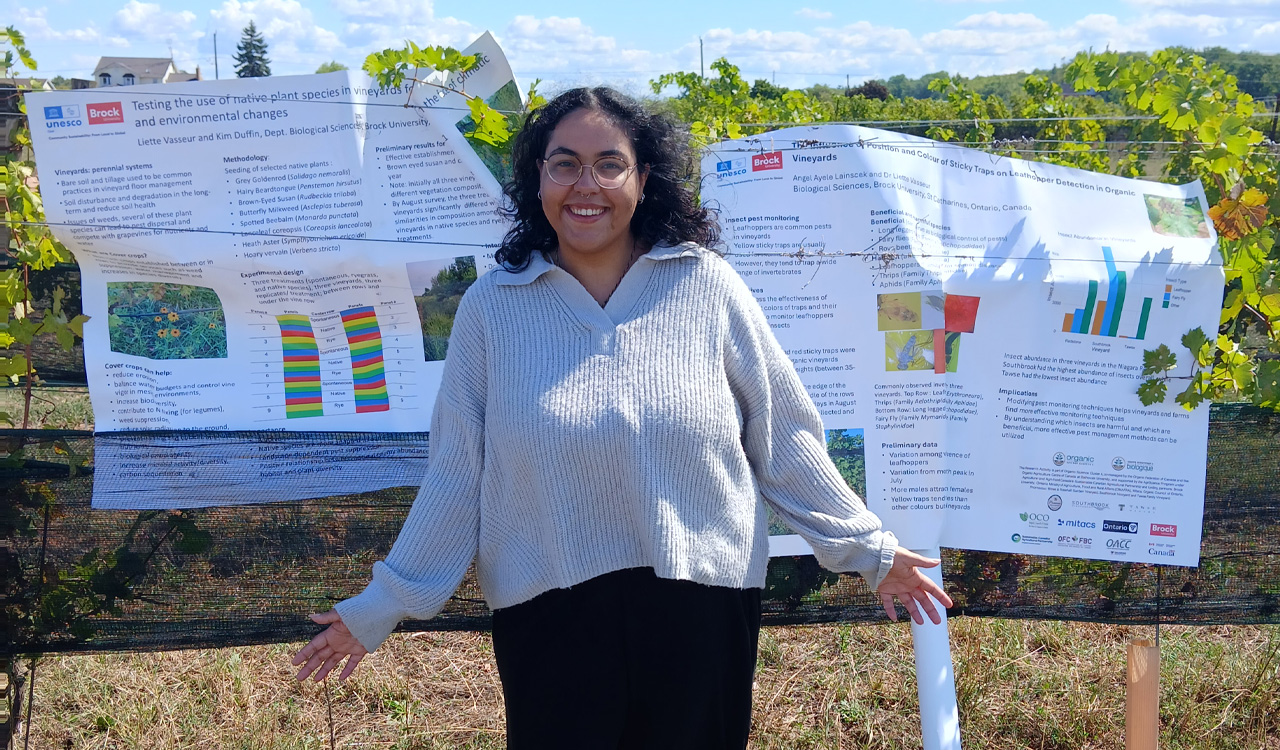
    For these reasons, we were excited to be part of the Grape Tailgate Tour led by Dr. Wendy McFadden-Smith from OMAFA this past summer where attendees got the chance to learn about the latest viticultural research in Niagara. Dr. Liette Vasseur’s team was on hand at Redstone Winery to share updates on the ongoing research on native plant species as cover crops in vineyards. Angel Lainscek, a research assistant in Dr. Vasseur’s lab shared with farmers how native species have been found to help increase beneficial invertebrate populations as a means of biocontrol and how this theory is currently being tested in three vineyards in the Niagara Region. Coloured pieces of sticky traps are placed in the vineyards over the past two summers at different positions and using different colours.

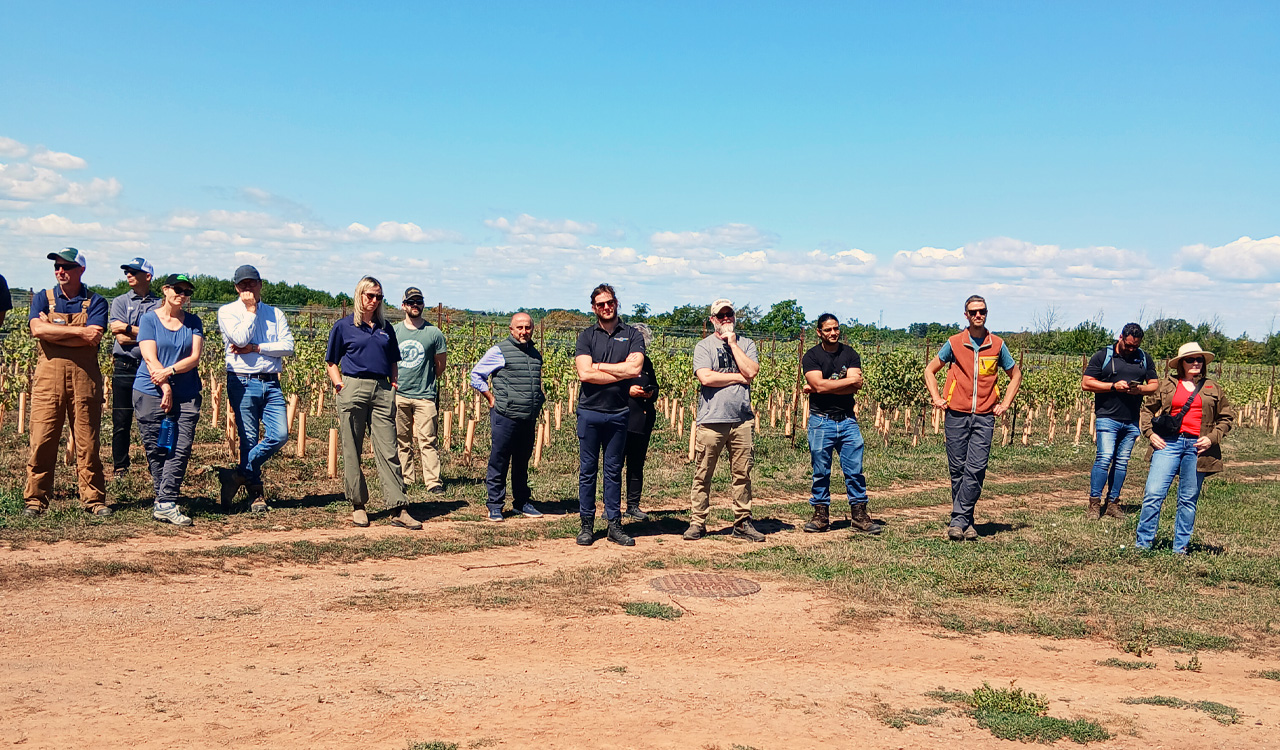
    Group of people stand in a vineyard

    Dr. Liette Vasseur’s research team was on hand at Redstone Winery to share updates on the ongoing research on native plant species as cover crops in vineyards.

    The experiment highlights the importance of specialized monitoring approaches.  Differences were observed when analyzing each vineyard as a whole compared to analyzing the two sampled rows within each vineyard separately. Each assessed parameter revealed significant differences in leafhopper populations at least once. The 2025 summer data are currently being analyzed.  Participants of the Grape Tailgate Tour got the opportunity to ask questions regarding this research and all seemed to agree that this new and useful research on pest management has the potential to make a big impact on grape production. A robust discussion of the environmental benefits of this type of pest management ensued with many farmers contributing their own experiences and how they might use this information in their vineyards. As part of the knowledge mobilization team, I was delighted to witness the collaborative efforts of the research team and all of the attendees to develop ways in which this research will be put into action.

    A sincere thank you to Dr. Wendy McFadden Smith for providing this opportunity for researchers and end users to connect and collaborate. This “in the field” event where researchers hear from farmers and other community members/partners goes a long way to not only ensuring the research addresses issues that are relevant to the end users but will provide a clearer path to ensure implementation of research findings and recommendations.


    *Green, L.W. (2008). Making research relevant: if it is an evidence based practice, where’s the practice-based evidence? Family Practice, 25.

    Categories: Organic Science Cluster 4 Blog

  • Wine, Native Plants and the Science Behind the Sip: Feet on Farms Tour

    Contributors: Kim Duffin

    The following is a blog related to an event as part of the organic science cluster 4 project: Promoting an Integrative Landscape Approach in Vineyards for Greater Resilience in the Face of Climatic and Environmental Changes. Follow along with updates as the project progresses, and learn more about the research HERE.

    On July 27, Dr. Liette Vasseur and members of her research team were thrilled to be a part of an event organized with the Organic Council of Ontario at Southbrook Vineyards in Niagara-on-the-Lake. Attendees were offered a guided tour by Len Van Hoffen, the vineyard manager, and Liette presented the innovative research which explores the use of native plants in pest management.

    As I reflect on my role as a knowledge mobilizer for the project, I am struck by the fact that this field visit highlights the importance of sharing research findings with a wider audience through various means. In essence, knowledge mobilization is about bridging the gap between research and practice, ensuring that research findings are not just accessible to all but also used to create positive change for the greater good in the world. In Dr. Vasseur’s case, we are moving research from her laboratory into the hands of people and organizations who can put it to practical use.

    As I participated in this event I was aware of the diversity of people gathered and curious about their circumstances and how they planned to utilize this new knowledge. Much to my delight, I found the participants more than willing to share their thoughts on what they perceived as ‘key takeaways’ and ‘food for thought’.

    I would like to start with Bill Redelmeirer, the owner of Southbrook Vineyards, who expressed to me his hopes for hosting the event was to grow the organic community. Redelmeirer states that “organic producers can feel as if they are on their own, with no support” and in his eyes the event was a success as it created a network of supporters.  Next, I would like to turn to a couple who attended the event in the hopes of learning more about Liette’s research on native plants and integrated pest control. These attendees told me that they learned practical ways to manage pests in their quest to develop a thriving organic garden in their backyard. Along these same lines, I interviewed an individual who is in the process of transitioning from using chemicals on their family farm with hopes of developing it into an organic agriculture operation. I also spoke to a representative of the Organic Council of Ontario who also shared valuable information with attendees and remarked on the importance of industry partners demonstrating the way that we can change our approach to vineyard management. These are only a few examples of the rich interactions and activities that promoted the awareness of native plants as there were numerous stories that individuals shared with me on how they intended to use the information that they received.

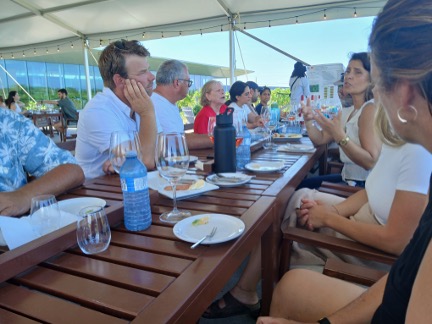
    During this event I took numerous pictures, but if I had to select one photo to share, it would be the one below where we all sat down and continued the conversation over food and wine. In my mind, this photo exemplifies the engagement of all attendees (researchers, farmers, industry partners, concerned citizens). I believe that these informal gatherings create a space where new ideas coming from different sources can lead to the development of innovative strategies for practical application and future research.

    I had the privilege of getting to know some of our ‘knowledge users’ by attending this event.  These are people who will use this research on native plants and pest management to make informed decisions and take action related to their own contexts while helping to spread the word on a much larger scale. It was a joy to witness the value and impact of Dr. Vasseur’s research — this delightful gathering paired with a glass of organic Chardonnay was knowledge mobilization in motion!

    Categories: Organic Science Cluster 4 Blog

  • Native species: Why not use our own local species?

    Contributors: Liette Vasseur

    The following is the first in a series of blogs related to the organic science cluster 4 project: Promoting an Integrative Landscape Approach in Vineyards for Greater Resilience in the Face of Climatic and Environmental Changes. Follow along with updates as the project progresses, and learn more about the research HERE.

    When you go for a walk in nature, do you look at the plant species along the trails? Have you realized that many species may have been here for a very long time: before the first humans coming to this land and since the last glaciation, in most cases.

    As plants don’t travel and migrate like most animals, they migrated since the last glaciation northward at a slow pace. This long period of time allowed them to adapt to the new climatic and environmental conditions. They are more resistant and resilient to variability than new plant species that we intentionally or accidentally introduced to our country. You may have tried to plant an exotic plant in your garden, only for it to be dead the following year due a cold winter.

    Native plants have co-evolved with the fungi, soil microorganism, and animals that are found in their ecosystem. For many species, this co-evolution has led to a strong mutual relationship for pollination, nutrient acquisition from the soil, etc. They also attract different insects that are predators of pests. For some insects, our native plant species (sometimes considered as weeds) are essential for their reproduction. For instance, the monarch butterfly in Canada relies on milkweed for its reproduction. Milkweed species used to be listed as a weed until researchers realized that the monarch needed milkweed for its reproduction in Canada. There are now efforts to reestablish the milkweed populations in Canada.

    Native species have many advantages as many of them are perennial, meaning that they live for many years or can reseed themselves. Because of this, the maintenance is less than that of many exotic species that are annual. While the initial costs of using native species may be slightly higher than commercial annual plants, in the long term, they are not more expensive.

    Another advantage of native perennial species is the variation in the flower blooms; some flower early summer while other not until the fall, like the goldenrod. They can also be planted in various conditions from full sun to shady conditions.

    In this project, we are planting native species either from regional locations or from North America to promote biodiversification in the vineyards. Biodiversification is when we add native species that should or could have been in this environment in the past. Vineyards, like most agricultural lands, are monoculture of one crop. But, by adding native species between rows as cover crops, it is possible to increase plant diversity, hopefully leading to a more functional ecosystem that can enhance soil health and diversity, buffer against weather extremes, prevent erosion, and attract predators of insect pests.

    While the project is relatively new, preliminary observations suggest that leafhoppers, a pest in vineyards, may be attracted to these native cover crops, reducing the pressure on the vines. With the variety of flowers these native species can also attract pest enemies such as parasitoid wasps.

    Native species can also be added in many other agroecosystems as buffer zones along the agricultural ditches or field edges. For crops that require pollinators (vine are self pollinated), this may be of a great advantage, especially when we think about fruit trees and many other corps requiring pollinators for fruit production.

    Categories: Organic Science Cluster 4 Blog

  • A bird’s view of the land

    Contributors: Liette Vasseur

    The following is the first in a series of blogs related to the organic science cluster 4 project: Promoting an Integrative Landscape Approach in Vineyards for Greater Resilience in the Face of Climatic and Environmental Changes. Follow along with updates as the project progresses, and learn more about the research HERE.

    If you have taken a plane and looked at the window, you have certainly seen the various blocks of lands with their different functions and ecosystems, such as an agricultural field, a forest or an industrial park. The composition of all the blocks, or ecosystems, is what forms a landscape. Landscape can be quite diverse (especially in regions such as southern Ontario) or quite uniform with the same type of ecosystem, such as in the prairies with field of monocultures of wheat or canola.

    What is interesting is that what is happening in one ecosystem can influence what is happening in another ecosystem. In some cases, even small ecosystems, like hedgerows, may have an impact on the adjacent agricultural land by bringing pests or pest enemies. The composition of plants and animals in each ecosystem can vary in terms of diversity and abundance. The patchwork of different types of land cover is called a mosaic.

    The landscape approach recognizes the importance of spatial heterogeneity in the environment and the organisms’ responses to that variation. It is looking at a larger scale than just an agricultural field at the time. So, the size, shape, and structure of ecologically distinct block or mosaic are all attributes to be looked at. It is possible to analyze the influence of the landscape on an ecosystem by assessing diversity of different groups of species, plants, animals, fungi or microorganisms. The first element to look at is the landform, which is the geology of the landscape including surface shape, elevation, and slope. Soil abiotic types and conditions as well as the climatic conditions also influence the landscape.

    Some elements or ecosystems within a landscape can be unique and include physical and biological factors that make a particular locale different from others in the landscape. Even within a forested landscape, it is possible that some communities are younger than others due to a forest fire or harvesting. Therefore, in this case, the mosaic can be quite diverse. Having a diverse patchwork of communities may also influence the movement or dispersal of species. Awide river will limit the dispersal of plants between each side of the river but not for birds.

    In this project, we are examining the role of the various patches around the organic vineyards to determine how they may affect the diversity and abundance of plants and insects (pest and pest enemies). With climate change and the greater movement of species northward, as well as intentional or accidental introduction of new species, understanding how these patches can reduce or promote new invasive species is important to ensure the sustainability of the vineyards.

    Categories: Organic Science Cluster 4 Blog