Contributors: Kim Duffin
The following is a blog related to an event as part of the organic science cluster 4 project: Promoting an Integrative Landscape Approach in Vineyards for Greater Resilience in the Face of Climatic and Environmental Changes. Follow along with updates as the project progresses, and learn more about the research HERE.
On July 27, Dr. Liette Vasseur and members of her research team were thrilled to be a part of an event organized with the Organic Council of Ontario at Southbrook Vineyards in Niagara-on-the-Lake. Attendees were offered a guided tour by Len Van Hoffen, the vineyard manager, and Liette presented the innovative research which explores the use of native plants in pest management.
As I reflect on my role as a knowledge mobilizer for the project, I am struck by the fact that this field visit highlights the importance of sharing research findings with a wider audience through various means. In essence, knowledge mobilization is about bridging the gap between research and practice, ensuring that research findings are not just accessible to all but also used to create positive change for the greater good in the world. In Dr. Vasseur’s case, we are moving research from her laboratory into the hands of people and organizations who can put it to practical use.
As I participated in this event I was aware of the diversity of people gathered and curious about their circumstances and how they planned to utilize this new knowledge. Much to my delight, I found the participants more than willing to share their thoughts on what they perceived as ‘key takeaways’ and ‘food for thought’.
I would like to start with Bill Redelmeirer, the owner of Southbrook Vineyards, who expressed to me his hopes for hosting the event was to grow the organic community. Redelmeirer states that “organic producers can feel as if they are on their own, with no support” and in his eyes the event was a success as it created a network of supporters. Next, I would like to turn to a couple who attended the event in the hopes of learning more about Liette’s research on native plants and integrated pest control. These attendees told me that they learned practical ways to manage pests in their quest to develop a thriving organic garden in their backyard. Along these same lines, I interviewed an individual who is in the process of transitioning from using chemicals on their family farm with hopes of developing it into an organic agriculture operation. I also spoke to a representative of the Organic Council of Ontario who also shared valuable information with attendees and remarked on the importance of industry partners demonstrating the way that we can change our approach to vineyard management. These are only a few examples of the rich interactions and activities that promoted the awareness of native plants as there were numerous stories that individuals shared with me on how they intended to use the information that they received.
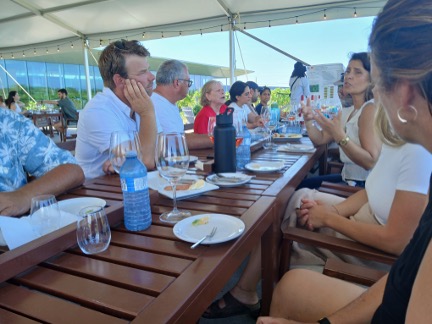
During this event I took numerous pictures, but if I had to select one photo to share, it would be the one below where we all sat down and continued the conversation over food and wine. In my mind, this photo exemplifies the engagement of all attendees (researchers, farmers, industry partners, concerned citizens). I believe that these informal gatherings create a space where new ideas coming from different sources can lead to the development of innovative strategies for practical application and future research.
I had the privilege of getting to know some of our ‘knowledge users’ by attending this event. These are people who will use this research on native plants and pest management to make informed decisions and take action related to their own contexts while helping to spread the word on a much larger scale. It was a joy to witness the value and impact of Dr. Vasseur’s research — this delightful gathering paired with a glass of organic Chardonnay was knowledge mobilization in motion!
