News

  • Do you listen when we perform our Eco-Anxiety?

    Contributor: Soji Cole, Interdisciplinary Humanities PhD program at Brock University, Ontario Canada.

    The title of this reflection appears as a question because the issues around anthropogenic activities call for constant questioning. There have been multifarious and complex interventions from climatologists, and there is a broad spectrum of ongoing campaigns from scientists, artists, humanists, spiritualists and even religionists; all in the bid to trigger changes in human activities to minimize the effect of the climate crisis. The results have not been very impressive, and so, questioning the conditions and activities around the issue of sustaining the global ecosystem and preventing it from further destruction must be an ongoing debate. In the introduction to the book, Eco-Anxiety and Pandemic Distress: Psychological Perspectives on Resilience and Interconnectedness (2023), Douglas Vakoch and Sam Mickey argue that; “Past researchers have proposed varied definitions for eco-anxiety— for example, “a chronic fear of environmental doom” (Clayton et al., 2017, p. 68) and “the generalized sense that the ecological foundations of existence are in the process of collapse” (Albrecht, 2012, p. 250)” (p. 2). Taking cues from these definitions, eco-anxiety is the consequence of a general fear, arising from an imagined human future without the support of non-human natural eco-system that could sustain that future. This premonition is sustained by the overwhelming negative impacts of humans on the non-human natural ecosystem.

    Over the last couple of years, I have made contributions to the subject of sustainability and the global ecosystem. My special focus has been to explore how drama and theatre performance can generate impactful meaning in the global understanding of the human ecosystem as well as how to mitigate further climate disasters. This is important as it is increasingly apparent that the arts and the humanities can fill some gaps left by science and technology in enhancing actions toward a sustainable earth.

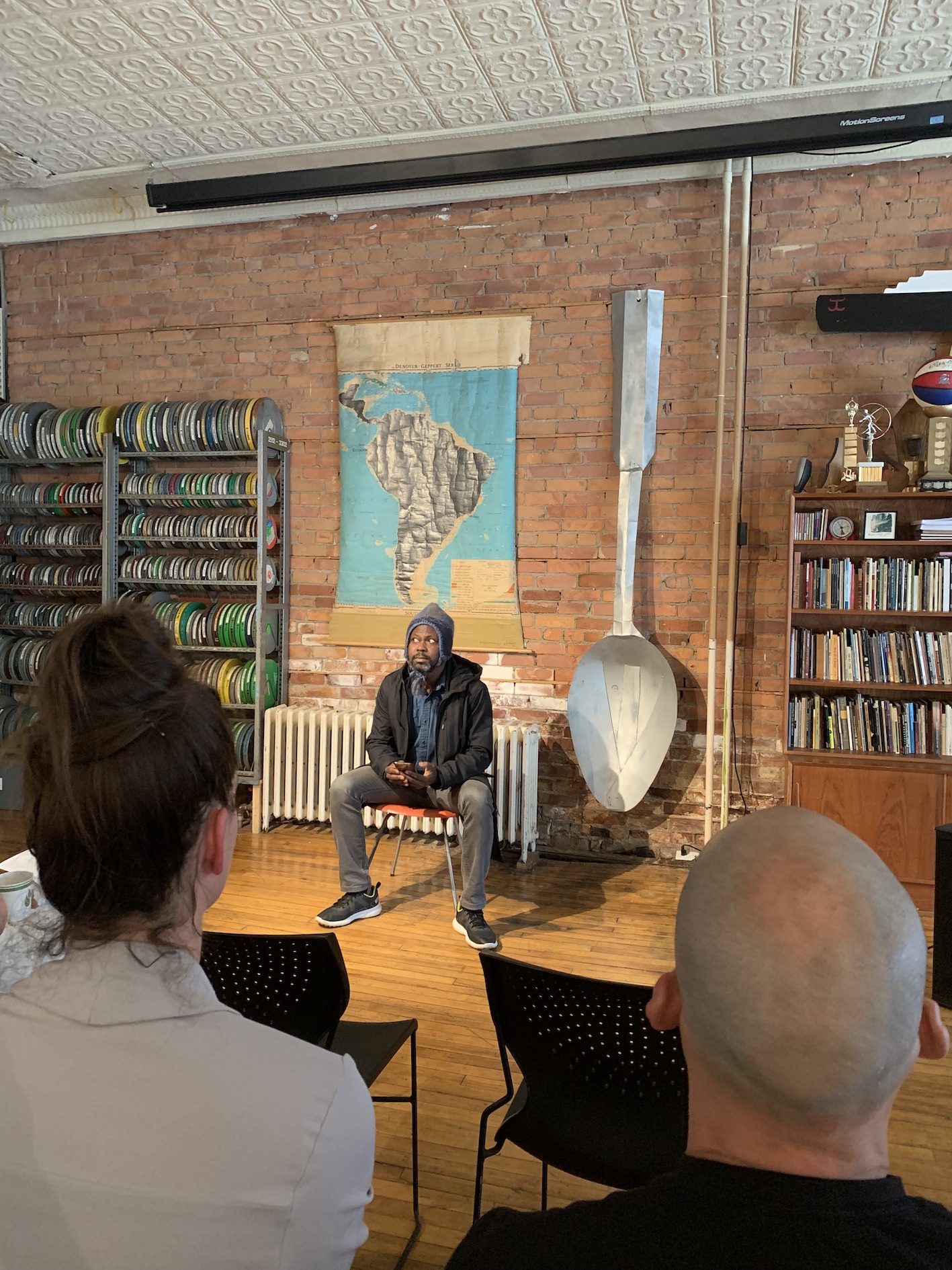
    I contributed as a co-author to a climate change essay which appeared in a published book of essays entitled Theatre Pedagogy in the Era of Climate Crisis, edited by Conrad Alexandrowicz and David Fancy, in 2021. The book was published in the Routledge Educational Series. My intention (with the co-author) in the essay was to bring to global awareness how Nigerians and Africans are using drama to respond to the climate crisis. In the last days of October, and the first few days of November in 2022, I was part of a collective (a theatre ensemble) production, initiated and led by David Fancy (drama professor at Brock University), and hosted by the Department of Dramatic Arts at Brock University. The stage production, titled AnthropoScene, was supported by the “Beyond Sustainability—Radical Transformation Through Systems Thinking” project. My position combined as an actor, a learner, as well as an advocate of sustainability on the platform of the Young Professional (in research) Exploration Group (YPEG), an offshoot of the “Beyond Sustainability Project”. Over several weeks of rehearsals and drawing multiple perspectives (most of which focused on the issues of climate crisis and sustainability), the stage performance eventually ran for four days in a theatre packed full of curious audience. A round-table discussion program was organized on an alternate day, by the “Beyond Sustainability—Radical Transformation Through Systems Thinking” project to discuss the stage performance and the connection to issues on sustainability and climate crisis. In May 2023, I was one of the YPEG artists/scholars that made artistic presentations in the “Transforming environment awareness with Artistic Interventions” event.  The artistic presentation was hosted and funded by the “Beyond Sustainability Project”, and it was presented to the public at the Niagara Artists Center, in the city of St. Catharines. The intervention followed series of brainstorming between three artists—who are PhD students in the Interdisciplinary Humanities program of Brock University, and who are also members of the YPEG. Over several months, we planned, researched, and eventually concluded that we might be able to generate a multifaceted form of spectacle if we focused on each participant’s specific area of artistic strength. Naturally, I stuck to drama. I drafted a script and titled it: “Are we really aware?” In the public presentation, I played a solo character who was listening to the voice of a more powerful and invisible character. The subject of the conversation was simply how the climate crisis could be curtailed by the intervention of the most important persons—you and me!

    Against the backdrops of all these interventions, the problematics of three constant questions are prevalent: 1) whether through science or arts, what kind of audience do we have when we discuss issues of climate crisis? For this question, an argument could be raised that the medium or strategy ought to be more important first of all than the audience to whom the message is targeted. This argument leads to a more generative conversation, but my concern has always been that, in the age of technological multi-tasking, knowing the kind of audience you intend to appeal to is the first most important thing than the strategy or medium of such appeal. 2) Can arts offer a serious intervention in a subject such as the climate crisis, which is predominantly science encumbered? This is not a new question. This question has spanned several decades of critical assessments of human knowledge, with constant claims of epistemic segregation of other knowledge routes by the discipline of science. 3) Do you listen when we perform our Eco-Anxiety? This question is the most important one to me. Apart from being an artist who utilizes drama as a tool, I keep a mental refrain that the crux of drama is entertainment, and as such, it provides one of the most liberal means of education and discerning of information. So, if drama can provide veritable sources of education for climate crisis intervention, why are we not listening? Why are there still dangerous trends of anthropogenic activities around us? Why are there still conscious wastages of natural resources? Why is there prevalence of conspicuous consumption around us? Why?

    Let me quickly negotiate the three main questions posted above.

    Question 1: Whether as scientists, humanists, or artists, it may be important to ask what kind of audience we deal with when we discuss climate crisis and sustainability. Working through drama reflection in an earlier paper, I (as a co-author) suggest that there are usually three categories of audiences in the framework of climate change awareness; (1) “The informed and the concerned” (“Anthropogenic Anxiety…” p. 108). This set of audience considers appraisal of gaps in climate knowledge and anthropogenic activities and are inspired to further think and take necessary actions for change. Progress towards mitigating climate crisis is slow because this kind of audience is scanty. (2) “The informed and unconcerned” (p. 108). This category of audience has awareness of the inimical consequences of anthropogenic activities, yet they do not show concern or efforts to join the crusade against the impending disaster. Their belief is that; “…such occurrences are bound to happen anyway and there is nothing that can be done about it” (p. 109). (3)  “The absolute ignorants” (p. 109). This set of audience do not even believe that human actions could cause a tip in the natural order of the environment. Ignorance is sometimes placed on the pedestal of spirituality. “For this category of people, any such disaster only happens if a certain divine force is angry with the desires of humans” (p. 109). In my participation in the drama projects of “AnthropoScene” and “Are we really aware”, I have had to constantly think of how devised dramatic strategies can connect with each strand of audience among the three different types listed above.

    Question 2: Can arts (drama) offer serious intervention in such subject as the climate crisis, which is predominantly science encumbered? It is important to start out a response to this question by asserting that conflicting modes of knowledge production should not constitute a disregard for strategies and methods with which different disciplines generate knowledge. Arts (drama) have methodological strategies and insights that have potential to fill the gaps left by science. For example, the power of narrative can only be fully extracted through methodologies inherent in the humanities and arts. Narrative is important in the consciousness of the public in times of global stress (as we witnessed during covid), and during our eco-anxious times. Artistic intervention such as drama, in the subject of climate crisis, will serve to complement and contribute to efforts in the campaign towards eco-justice and sustainability. It produces audio-visual perspectives that enhance the scientific narrative of human crises. In reference to pandemics, Priscilla Wald (2008) takes account of the importance of the intervention of arts in producing fictional narratives to promote public understanding. She reflects that, “[f]ictional accounts of outbreaks did more than reflect and convey the lessons of science; they also supplied some of the most common points of reference, which influence social transformation and diseases emergence in their own right” (p. 31). In essence, the beauty of arts (drama) is that it plays both synergistic and complementary roles with other disciplines—including science. Such intervention promotes interdisciplinarity, and the advantage is such that approaches and knowledge from different disciplines might not only shed new light on a problem, but it will also give allowances for a more comprehensive understanding of the problem.

    Question 3: Do you listen when we perform our Eco-Anxiety? For me, this question continues to be generative on the issue of climate crisis. It subsumes so many other questions: Why is the world recording slow progress in the battle against climate crisis? What is happening with all the information on the climate crisis that we have access to? What are the limitations between this information and the taking of meaningful actions that are suggested and often requested, in the information? Despite evidence that there is progress in controlling emissions, why does global warming still exceed the expected range? Why are concrete actions taken so far on the climate crisis not making as much of a substantive impact as hoped? Even when scientific findings on the subject of climate crisis are transformed into arts (film, drama, literature etc.), to enhance a more liberal means of information perception, why is the world still witnessing snail-paced progress? There is no one way to respond to all these questions. Maybe we need to slow down the fear of urgency that we associate with the climate crisis so that people can “listen” better. Perhaps we need to deploy more strategies instead of calling for more urgency in the politics of transformation towards sustainability. Maybe it’s okay to consider the argument of Håvard Haarstad, Jakob Grandin, Kristin Kjærås and Eleanor Johnson? They suggest that;

    Perhaps haste is precisely what we do not need. When in haste, we make more mistakes, we overlook things, we get tunnel vision. Instead, is there a case for what we call a ‘slow politics of urgency’? Rather than rushing and speeding up, maybe the sustainable future is better served by us challenging the dominant framings through which we understand time and change in society. Transformation to meet the climate challenge requires multiple temporalities of change, speeding up certain types of change processes but also slowing things down (pp. 1-2).

    Maybe it is time to understand that resolutions to the climate crisis will not be characterized only by scientific mixtures, data, and epidemiological models, but also by processing the economical, communicative, cultural, and cognitive conditions around which the problems manifest. Perhaps it is time to truly consider the meaningful impacts that disciplines in the arts and humanities can have in the climate crisis resolution. I have been part of this journey, and I call myself a witness, to boldly assert that, it is time to pay good attention to drama and theatre in this journey of sustainability and restoration of our world. “It’s easy to feel overwhelmed, and to feel that climate change is too big to solve. But we already have the answers, now it’s a question of making them happen” (Green Peace-https://www.greenpeace.org.uk/challenges/climate-change/solutions-climate-change/).


    Works cited

    Cole, S. and G. Asoloko. “Anthropogenic anxiety and the pedagogy of climate crisis in Wake Up Everyone”. Theatre Pedagogy in the Era of Climate Crisis. (Conrad Alexandrowicz and David Fancy (Eds.) Routledge, 2021. pp. 102-114, ISBN:  978-0-367-54154-4

    Haarstad, H., J. Grandin, K. Kjærås and E. Johnson. “Why the haste? Introduction to the slow politics of climate urgency”. Haste: The slow politics of climate urgency, (Håvard Haarstad, et al. eds.). UCL Press, 2023.

    Green Peace-https://www.greenpeace.org.uk/challenges/climate-change/solutions-climate-change/

    Vakoch, D. and S. Mickey. Eco-Anxiety and Pandemic Distress: Psychological Perspectives on Resilience and Interconnectedness. Oxford University Press, 2023.

    Wald, Priscilla. Contagious: Cultures, Carriers, and the Outbreak Narrative. Duke University Press, 2008.

    Categories: Beyond Sustainability Blog

  • Join us for this Celebration of Nations event

    Click here for more information.

    Full programme: NEBN_CoN_program 2023_V3

    Categories: Updates of the Chair

  • Webinaire: Défis reliés au changement climatique dans les communautés rurales

    Dans le cadre du partenariat entre la Chaire UNESCO en viabilité des communautés: du local au global de Brock University (Canada) et la Chaire UNESCO en Éducation et Développement Durable de l’Ecole Normale Supérieure de Bamako (Mali)


    Présentations:
    • Dr Sigame Maiga , chaire Mali (introduction et contexte)
    • Dr Liette Vasseur, titulaire de la Chaire Canada (introduction et enjeux climatiques)
    • Saliha Diarra, doctorant, Ecole Nationale Forestière d’Ingénieurs, Maroc (défis climatiques des communautés rurales au Maroc)

    Date: 11 juin à 8:30 h EST ou 12:30 h au Mali

    Join: https://teams.microsoft.com/meet/257679526470166?p=2BgQO3ejgzk6z39MP2

    Categories: Updates of the Chair

  • The ecosystem approach: how can we take care of the place we live?

    The following is a blog related to the organic science cluster 4 project: Promoting an Integrative Landscape Approach in Vineyards for Greater Resilience in the Face of Climatic and Environmental Changes. Follow along with updates as the project progresses, and learn more about the research HERE.


    By: Matthew Summerville

    The place where we, humans and nonhumans, live is called an ecosystem. An ecosystem includes the living organisms (including plants, animals, fungi, and microorganisms like bacteria) interacting with each other and with their non-living environments. Ecosystems are functional and complex systems. They can be natural or managed by humans.

    We generally don’t think of the possibility of “ecosystems” being endangered or extinct, but that is far from the truth. In many instances around the world, ecosystems are being threatened with collapse by human activities. In fact, two ecosystems, the Aral Sea in Central Asia and the Central Ayeyarwady palm savanna in Southeast Asia, are considered to be officially collapsed, according to the IUCN (International Union for the Conservation of Nature) Red List of Ecosystems. This means that they are non-functional and species, including humans, cannot really benefit from them.

    In Southern Ontario, urban and rural land development threatens biodiverse natural ecosystems such as forests and prairies, displacing local native animals and plant populations. Agriculture, along with urbanization, is one such human development that can greatly impact natural systems. We need to grow crops, but we must find a way to do so in a sustainable manner to mainly at least some of these natural ecosystem components.

    This is where the ecosystem approach comes up. It is a framework first adopted at the Conference of Parties (COP) of the Convention on Biological Diversity (CBD) in 2000. If the term COP sounds familiar but you just aren’t sure what it means, don’t feel bad, I myself just learned more about it while researching for this blog post. The Conference of Parties is the meeting of all the signatory nations governing and implementing international conventions, such as the CBD and the United Nations Framework Convention on Climate Change (UNFCCC). The Convention on Biological Diversity (CBD) was first introduced in 1992 at the Rio de Janeiro Earth Summit in Brazil and the COPs are held every two years since 1994. The next COP meeting will be in October 2026 in Armenia.

    The CBD ecosystem approach of management is formally defined as “a strategy for the integrated management of land, water, and living resources that promotes conservation and sustainable use in an equitable way” (https://www.cbd.int/decision/cop?id=7148). The definition of this approach is further broken down into twelve principles, but for the sake of this blog post, here are the first five principles (https://www.cbd.int/ecosystem/principles.shtml):

    “Principle 1: The objectives of management of land, water and living resources are a matter of societal choices.”

    Ecosystems should be managed matching the rights and interests of the Indigenous people and landowners inhabiting these lands. Therefore, economic, societal, and cultural elements have to be considered in conjunction with biological diversity.

    Principle 2: Management should be decentralized to the lowest appropriate level.

    Decentralized systems may lead to greater efficiency, effectiveness and equity. Management should involve all stakeholders and balance local interests with the wider public interest. The closer management is to the ecosystem, the greater the responsibility, ownership, accountability, participation, and use of local knowledge.

    Principle 3: Ecosystem managers should consider the effects (actual or potential) of their activities on adjacent and other ecosystems.

    Management interventions in ecosystems often have unknown or unpredictable effects on other ecosystems; therefore, possible impacts need careful consideration and analysis. This may require new arrangements or ways of organization for institutions involved in decision-making to make, if necessary, appropriate compromises.

    “Principle 4: Recognizing potential gains from management, there is usually a need to understand and manage the ecosystem in an economic context.”

    Economics plays an important role in land management. There will always be a way to maximize profit with land use, but this generally has disproportionately negative impact on ecosystems and biological diversity. Incentives that provide benefit must be considered to promote sustainable land use for landowners.

    “Principle 5: Conservation of ecosystem structure and functioning, in order to maintain ecosystem services, should be a priority target of the ecosystem approach.”

    In order to protect an ecosystem, its key parts, including both living and non-living environment must be protected. This means that management must consider solutions that protect and, in some cases, restore ecosystem function.

    Dr. Vasseur’s lab collaborates with farmers in Canada (and even throughout the world) and engages each of the twelve principles of the ecosystem approach when conducting ecological research. For example, considering Principle 1, it is important to remind ourselves that the ecosystem where we do research belongs to a farmer or owner. Therefore, the lab must continue to consider their interests when suggesting ecological solutions. This ties into Principle 4: it is important to ensure that ecological solutions do not impact farming but still providing incentives to promote their implementation. Finally, ecological solutions need to contribute to conservation and restoration of ecosystem structure and function, meaning biological diversity has to be reintroduced in agricultural spaces to provide greater ecosystem services (nature’s contributions to people).

    Tying these principles together may be challenging, especially when working with agroecosystems. However, there are ways to improve biodiversity in managed systems through reintroducing native species, without disrupting farming practices. In vineyards, this can be done between rows of grapevines where there is no crop being grown. The idea behind introducing native flowers is to increase diversity at the plant level, which will hopefully entice other organisms, including bees, butterflies, and even insects that can contribute to natural pest control, to take up residence. This not only has the potential to increase biodiversity in these agricultural spaces but can contribute benefits to farmers (such as increased pollination of crops or the control of pest species).

    Categories: Organic Science Cluster 4 Blog

  • The Influence of Perimeter Plantings on Vineyards

    The following is a blog related to the organic science cluster 4 project: Promoting an Integrative Landscape Approach in Vineyards for Greater Resilience in the Face of Climatic and Environmental Changes. Follow along with updates as the project progresses, and learn more about the research HERE.

    By: Andrea Hebert

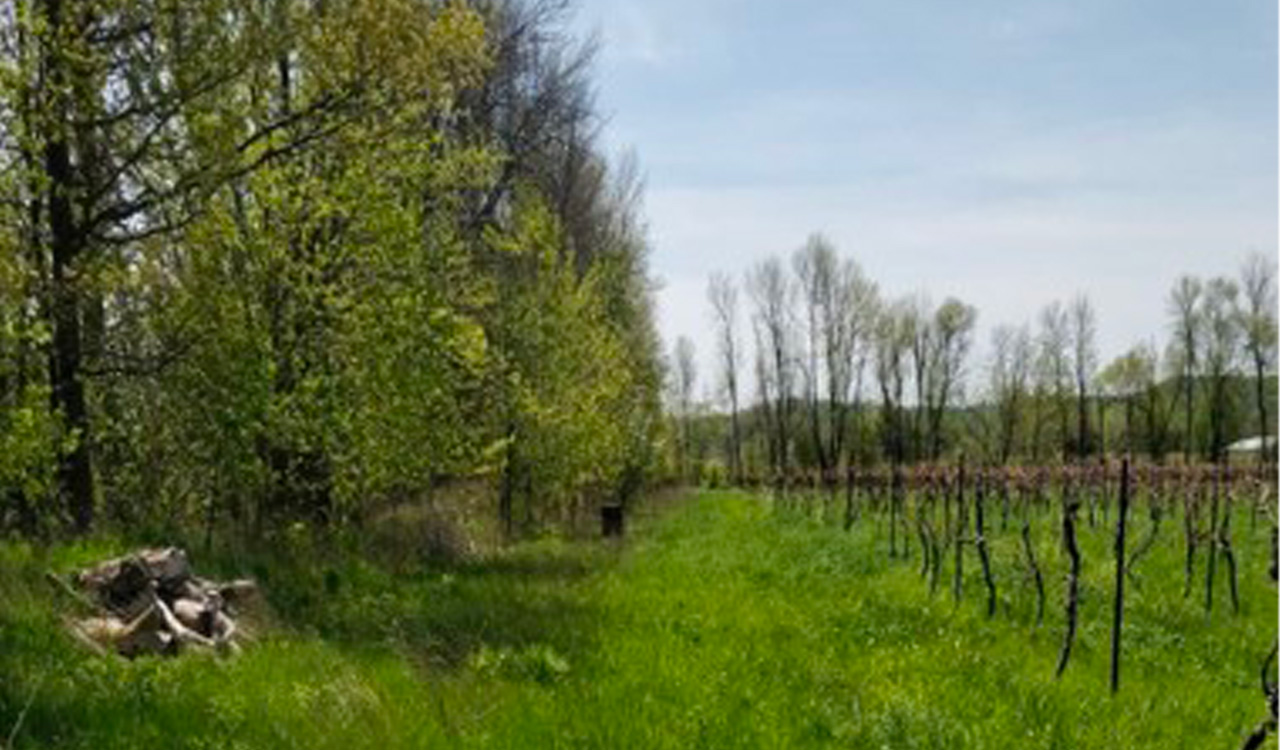
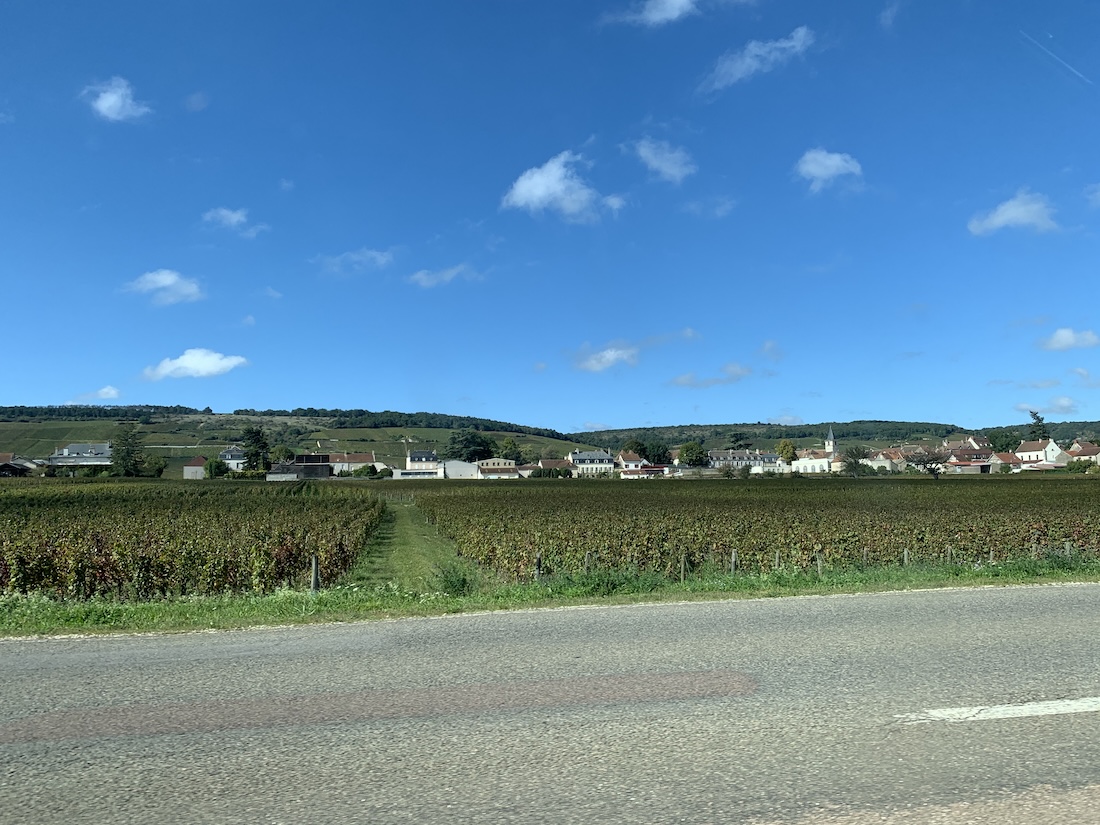
    Niagara is the largest grape growing jurisdiction in Ontario, making it no surprise that land use in the region is dominated by viticulture. Driving through Niagara’s wine country, you are likely to see many vineyards in close proximity to one another, with properties often separated by fence-like rows of vegetation known as perimeter plantings.

    Wine country is a crucial part of the local community and economy, but vineyards remain vulnerable to extreme weather events and pest pressures. As monocultures, vineyards are poor in local plant diversity and lack the resilience of naturally occurring ecosystems. Landscape features, together with chemical use practices, are known to influence the structure of ecological communities in agricultural systems. Landscape simplification of industrial agriculture has been a major contributor to biodiversity loss on a global scale.

    This lack or diversity leads to reduced ecosystem services. Which brings challenges such as pest control, water quantity and quality, soil compaction and erosion, and weed competition. Many agricultural pest species have evolved to feed on a narrow range of plant species and have adapted to locate and colonize crops in simplified habitats rather than complex ones. This has led farmers to rely heavily on the use of synthetic pesticides to protect their livelihoods, but this approach comes with its own pitfalls.

    As climate change persists, these agricultural systems struggle with pest resistance and further biodiversity loss, bringing into question their long-term viability. Organic vineyards (a less popular management system in the region) rely on a sustainable approach, focusing on enhancing biodiversity and avoiding the use of synthetic chemicals for pest control and soil management. This approach while minimizing environmental harm, requires innovative management techniques to safeguard its vines. Potential for this innovation lies in the perimeter plantings of the surrounding landscape.

    The use of perimeter plantings in agriculture has existed in multiple countries for thousands of years, Notable examples include in Ireland, England, and Portugal, the latter of which has actually had historic practice of integrating vineyards into perimeter forests. Perimeter plantings are often remnants of previous forests, or in many cases, a farmers deliberate choice to plant a vegetative border with an understanding that they have the potential to be valuable elements of the agricultural landscape. Perimeter plantings typically contain greater plant diversity than surrounding crop fields and therefore provide a variety of ecosystem services.

    At the landscape-scale, greater proportions of natural vegetation, non-crop land and landscape variety surrounding rural farms have proven to promote the biological control of pests.  Increased plant diversity and habitat complexity can regulate pests and pathogens, as well as increasing resistance to invasion. Perimeter plantings support a wider range of primary and secondary consumers, providing food and overwintering habitat for parasitic wasps, predatory beetles, and spiders which all contribute to pest control. These effects can extend several kilometres from a focal field, with plantings containing native species such as flowering trees and shrubs providing the strongest ecological benefit. Managing perimeter plantings can help maintain a functional mix of plant species that can potentially attract beneficial insects while simultaneously minimizing the attraction of pest species.

    Beyond pest control, perimeter plantings provide several additional benefits for vineyards. They can serve as protective barriers between properties, filtering the airborne seeds of vagrant species from neighbouring farms and reducing drifting snow during winter storms. They also act as natural buffers that help reduce nutrient and water runoff. The above-ground density of perimeter plantings can also reduce wind damage to grapevines and limit wind-driven soil erosion. Because wind is a major driver of moisture loss, these plantings can also help vineyards retain soil moisture during dry conditions.

    While perimeter plantings offer significant benefits, the vegetation within these hedgerows can also present risks if not properly maintained. For instance, protecting and expanding certain landscape elements, targeting specific weeds which may provide habitat for pest species or removing wild grapevines as they can attract the grape berry moth, a common vineyard pest. Understanding which plant species dominate local perimeter plantings and how they influence insect communities is essential. Insights like these can help guide management strategies.

    Many factors still need to be explored about the influence of the landscape structure to determine its influence on vineyards and their insect communities. Such as the diversity of land use, spatial arrangement and connectivity between ecosystems can play a major role in our landscape. By putting these pieces together, we aim to support Ontario grape growers in the stewardship of their land, in a way that minimizes harm, promotes a resilient landscape, and offers economic and environmental benefit.

    Categories: Organic Science Cluster 4 Blog

  • Connecting urban and rural landscapes: New IUCN publication rethinks ecosystem governance

    Liette Vasseur, in her role as the CEM Chair of the IUCN, has co-authored a new publication.

    Titled Urban-rural linkage: an ecosystem governance perspective, it focuses on ecosystem governance in the context of urban-rural linkages, analysing nine case studies to develop principles for ecosystem governance.


    “With 70% of the global population expected to live in cities by 2050, urban areas face growing pressures. Yet their rising demand for food, energy and raw materials means that rural ecosystems are also increasingly affected. A new IUCN publication explores the connections between urban and rural environments, and how improved governance principles can help balance social and economic development with environmental protection.

    The new publication “Urban-rural linkage: an ecosystem governance perspective”, launched by the IUCN Commission on Ecosystem Management (CEM), examines the challenges arising from urban-rural interactions and proposes practical governance solutions, particularly at the local and regional levels.

    “Looking at IUCN’s new programme for the next four years, we see that the issues of urban biodiversity and agricultural systems are becoming increasingly important. We also know that most sustainability targets related to these areas must be achieved at the local and regional levels,” said Liette Vasseur, CEM Chair and one of the publication’s editors. “This new CEM publication offers local governments, decision-makers and practitioners a viable model for governing urban and rural areas in ways that support ecosystem restoration, improve biodiversity and ensure the inclusion of all relevant stakeholders.”

    Read the complete article about the publication.

    Access the publication.

    Categories: Updates of the Chair

  • The Potential Benefits of Managed Perimeter Plantings in Orchards

    The following is a blog related to the OMAFA PROJECT: Promoting the adoption of integrative landscape approaches in agriculture. Follow along with updates as the project progresses, and learn more about the research HERE.

    Perimeter plantings are patches of woody and herbaceous plants that border and intersect agricultural land. These perimeters are sometimes called hedgerows. In Niagara, hedgerows are often composed of plant species, like sumac or red-osier dogwood, that act as early successors on disturbed land from previous agricultural use or clearing of a forested area. Sometimes, these patches are composed of a mix of species, predating the disturbance or planted intentionally afterwards. A farmer might have an existing perimeter planting near an orchard, or plant one on purpose.

    Maintaining perimeter plantings, like hedgerows, alongside orchards can provide significant ecological and agronomic benefits.  Orchards are generally monocultures, with only one or a few species grown as commercial crops. Perimeter plantings have been shown to increase the overall biodiversity of plant and insect species in the farm landscape, which in turn increases the functional diversity and health of the orchard [1]. Functional diversity here refers to the range of ecosystem services that can be offered by the plant and insect species associated with perimeter plantings. The patches that parallel the orchard can help with services like the regulation of pests and the pollination of cultivated crops. They can contain food and habitats for beneficial predators, like spiders and parasitoid wasps, and pollen sources for native pollinators in early spring before fruit trees are flowering [2] [3] [4]. They can also act as migration corridors and overwintering habitats for these important actors in ecosystem regulation.

    Hedgerows and other perimeter plantings have also been used to help control soil erosion and to buffer against high winds and spray drift from neighbouring orchards or croplands. As such, perimeter plantings are important patches of the farm landscape, particularly for organic operations, as they can reduce the risk of contamination while offering other ecosystem services.

    While there are significant benefits to perimeter plantings, the quality and health of these patches matter. The plants growing in these hedgerows can offer benefits or risks if not properly maintained. Although they may appear wilder than the cultivated crops that make up the bulk of the orchard, they still require careful stewardship to reap the full benefits of pest management and pollination services. Studies have shown that perimeter plantings with native species, especially flowering trees and vegetation, offer the strongest benefits. Not only are these species more adapted and resilient to local climate and environmental conditions, but they are also better suited to attracting native pollinators and predators [3] [5] [6] [7].

    Careful stewardship is also needed to mitigate the risks of perimeter plantings spreading invasive plant species and hosting invasive insects and pathogens. The spotted lanternfly is an invasive pest of particular concern for Niagara’s orchards and vineyards. Aside from wild and cultivated fruit crops, the spotted lanternfly also uses the following species as host and food plants: cedar, pine, walnut, oak, poplar, willow, maple, sycamore, tulip tree, and cork tree [8]. The risk of spotted lanternflies should not necessarily deter from the planting of the mentioned species. Rather, these species, if found in perimeter plantings, should be included in routine inspections for invasives as part of a farm pest management and prevention strategy.

    Perimeter plantings, like hedgerows, are part of a landscape approach to orchard management that could offer significant benefits to the agronomic efforts of Niagara farmers. These plantings should be considered as an extension of the orchard, that if properly stewarded can act as sources of functional diversity that regulate pests, increase populations of beneficial predators and pollinators, and control erosion and spray drift.

    This project is funded in part by the Governments of Canada and Ontario under the Sustainable Canadian Agricultural Partnership (Sustainable CAP), a five-year, federal-provincial-territorial initiative.


    This project is funded in part by the Governments of Canada and Ontario under the Sustainable Canadian Agricultural Partnership (Sustainable CAP), a five-year, federal-provincial-territorial initiative.

    References:

    1. Hughes, M. M. (2020). Characterization of plant, leafhopper, and spider communities in perimeter plantings and vineyards in the Niagara region. [Master’s thesis, Brock University]. Brock University Digital Repository. https://brocku.scholaris.ca/items/65a5f769-48c9-47fa-b28f-b6cbe27efd90
    2. Zgurzynski, K. (2025). Testing Northeastern North American Native and Introduced Plants as Cover Crops in an Organic Vineyard. [Master’s thesis, Brock University]. Brock University Digital Repository. https://brocku.scholaris.ca/items/ecc3250b-0e11-42e2-b891-c40cb7f8c455
    3. Bishop, G. A., Fijen, T. P. M., Desposato, B. N., Scheper, J., & Kleijn, D. (2023). Hedgerows have contrasting effects on pollinators and natural enemies and limited spillover effects on apple production. Agriculture, Ecosystems & Environment, 346, 108364. https://doi.org/10.1016/j.agee.2023.108364
    4. Peñalver-Cruz, A., Alvarez, D., & Lavandero, B. (2020). Do hedgerows influence the natural biological control of woolly apple aphids in orchards? Journal of Pest Science, 93(1), 219–234. https://doi.org/10.1007/s10340-019-01153-1
    5. Von Königslöw, V., Fornoff, F., & Klein, A. (2022a). Wild bee communities benefit from temporal complementarity of hedges and flower strips in apple orchards. Journal of Applied Ecology, 59(11), 2814–2824. https://doi.org/10.1111/1365-2664.14277
    6. Von Königslöw, V., Fornoff, F., & Klein, A.-M. (2022b). Pollinator enhancement in agriculture: Comparing sown flower strips, hedges and sown hedge herb layers in apple orchards. Biodiversity and Conservation, 31(2), 433–451. https://doi.org/10.1007/s10531-021-02338-w
    7. Dittman, T. H. (2023). Enhancing hedgerow systems in peach tree production to improve beneficial insect diversity and abundance (30692797). [Master’s thesis, University of Georgia]. ProQuest Dissertations & Theses Global. http://proquest.com/docview/2917435938/540898F9B1EF4B64PQ/1?accountid=9744&sourcetype=Dissertations%20&%20Theses
    8. Canada Food Inspection Agency. (2025). Scientific fact sheet: Lycorma delicatula. https://inspection.canada.ca/en/plant-health/invasive-pests-and-plants/insects/spotted-lanternfly/spotted-lanternfly


    Categories: OMAFA: Integrative Landscape Approaches Blog

  • Ground Covers for Orchards and Croplands: Managing Soil Health Under Shade

    The following is a blog related to the OMAFA PROJECT: Promoting the adoption of integrative landscape approaches in agriculture.. Follow along with updates as the project progresses, and learn more about the research HERE.

    Unlike vineyards, orchards and many perennial croplands face unique challenges when it comes to ground cover management. Tree canopies create shaded conditions, root competition, and moisture variability, requiring ground covers that are shade-tolerant, low-growing, and resilient.

    Well-chosen ground covers can significantly improve soil structure, organize matter content, and microbial and fungal activities, even under reduced light conditions. By maintaining continuous soil cover, orchard ground covers reduce erosion, suppress weeds, and support beneficial soil organisms essential for nutrient cycling.

    Shade-adapted species (such as certain native grasses, clovers, and low-growing legumes) are quite valuable in orchard systems. These plants establish beneath tree canopies without competing aggressively with crop roots, helping stabilize soil moisture and temperature. Legumes present in ground covers may also contribute nitrogen to the system, reducing fertilizer requirements over time.

    In croplands, native plant species can support greater diversity while protecting soil from erosion, evaporation, and excessive heating during hot summer days. When used as intercrops, flowering species can also enhance pollination by attracting beneficial pollinators. In organic production systems, this approach provides an effective way to restore pollinator biodiversity.

    Successful implementation in orchards and croplands depends on thoughtful management. Growers are encouraged to consider canopy density, irrigation availability, and equipment access when selecting species. Mowing height and timing can further optimize ground cover benefits while avoiding competition with crops.

    Overall, shade-adapted ground covers offer orchardists and crop producers a practical pathway toward healthier soils, improved ecosystem services, and more sustainable production systems.


    This project is funded in part by the Governments of Canada and Ontario under the Sustainable Canadian Agricultural Partnership (Sustainable CAP), a five-year, federal-provincial-territorial initiative.


    Categories: OMAFA: Integrative Landscape Approaches Blog

  • Better to look at more than a field: The importance of the landscape in management

    The following is a blog related to the OMAFA PROJECT: Promoting the adoption of integrative landscape approaches in agriculture. Follow along with updates as the project progresses, and learn more about the research HERE.

    What is a landscape?

    It is the composition of different ecosystems (lands of different functions) that can interact together. Landscapes can be quite diverse — especially in regions such as southern Ontario — or quite uniform with the same type of ecosystem, such as in the prairies with fields of monocultures of wheat or canola.

    What happens in one ecosystem can influence what is happening in another ecosystem. In rural communities like Niagara, orchards and vineyards are sometimes connected with other similar ecosystems. In other cases, completely different ecosystems are adjacent to an orchard or a vineyard. Small ecosystems, such as hedgerows, can also influence the adjacent agricultural land by bringing some pests or pest enemies with them. The composition of plants and animals in each ecosystem can vary in terms of diversity and abundance. The patchwork of different types of land cover is called a mosaic.

    The landscape approach recognizes the importance of spatial heterogeneity in the environment and the organisms’ responses to that variation. There is no wall between ecosystems, and one orchard may influence the vineyard adjacent to it. Hedgerows can also play a role, such as connecting two ecosystems. For example, a wooded hedgerow can connect two forested areas that are separated by an orchard. By looking at a larger scale than just an agricultural field at the time, we can better understand how species of plants and animals can move and influence various ecosystems. Measuring the size, shape, and structure of ecologically distinct blocks or mosaics can help determine the influence of each ecosystem. Assessing diversity of different groups of species, plants, animals, fungi or microorganisms at the landscape level can help better managethe introduction of new species. A wide river will limit the dispersal of plants between each side of the river, but that is not the case for birds. The landform, which is the geology of the landscape (including surface shape, elevation, and slope) is important to assess as it will affect what can grow and where. Soil abiotic types and conditions, as well as the climatic condition, also influence the landscape.

    Some ecosystems within a landscape can be unique and include physical and biological factors that allow for better growth of vine or apple, for example. Even within a forested landscape, it is also possible for some communities to be younger than others due to a forest fire or harvesting, for instance.

    In this project, we aim to promote an integrative approach to sustainable agriculture by looking at different ways to bring about positive changes and improve resilience to environmental and climatic changes. With climate change and the greater movement of species northward, as well as intentional or accidental introduction of new species, understanding how these patches can reduce or promote new invasive species is important to ensure the sustainability of the farming industry. One aspect that we also want to promote in future blogs is biodiversity enhancement for pest control, for example.


    This project is funded in part by the Governments of Canada and Ontario under the Sustainable Canadian Agricultural Partnership (Sustainable CAP), a five-year, federal-provincial-territorial initiative.

    Categories: OMAFA: Integrative Landscape Approaches Blog

  • Cover Crops and Perimeter Plantings: Building Resilient Vineyard Ecosystems

    The following is a blog related to the organic science cluster 4 project: Promoting an Integrative Landscape Approach in Vineyards for Greater Resilience in the Face of Climatic and Environmental Changes. Follow along with updates as the project progresses, and learn more about the research HERE.

    Vineyard flood management plays a crucial role in vine vigor, soil health, and long-term sustainability. Recent research highlights the value of integrating cover crops between vine rows and diverse perimeter plantings to improve soil function while supporting biodiversity.

    Cover crops such as grasses and legumes have been shown to significantly increase soil organic carbon, nitrogen levels, and microbial activity when compared with conventional tillage systems. In multi-year vineyard studies, grass cover crops increased soil carbon by over 100 precent and nearly double microbial biomass, strengthening nutrient cycling and soil structure. These improvements help reduce erosion, enhance water infiltration, and improve soil resilience under climatic stress.

    Perimeter plantings (including native grasses, flowering forbs, and shrubs) adds another layer of ecological benefit. Research suggests that these plantings support beneficial insects, enhance pollinator habitat, and may reduce pest pressure by increasing functional biodiversity. Some native species have also been linked to reduced soil pathogen presence, offering a promising biological complement to disease management strategies.

    For vineyard managers, combining in-row cover crops with well-planned perimeter vegetation creates a more stable and self-regulating agroecosystem. Starting with small trial areas and selecting species adapted to local climate and soil conditions can help maximize benefits while minimizing risk.


    Categories: Organic Science Cluster 4 Blog

  • Research Highlights at the Grape Tailgate Tour 2025

    Contributors: Kim Duffin

    The following is a blog related to an event as part of the organic science cluster 4 project: Promoting an Integrative Landscape Approach in Vineyards for Greater Resilience in the Face of Climatic and Environmental Changes. Follow along with updates as the project progresses, and learn more about the research HERE.

    Knowledge mobilization is the movement of knowledge into active use (Green, 2008).  It is our goal to ensure that our research is useful to community partners, policy makers, governments, institutions, and individuals and families. The transfer of knowledge to these users is an important component of our research. Knowledge mobilization is a means rather than end. The goal is not to only distribute the knowledge, but to share it is such a way that it is easily accessible, useful and ultimately used.

    For these reasons, we were excited to be part of the Grape Tailgate Tour led by Dr. Wendy McFadden-Smith from OMAFA this past summer where attendees got the chance to learn about the latest viticultural research in Niagara. Dr. Liette Vasseur’s team was on hand at Redstone Winery to share updates on the ongoing research on native plant species as cover crops in vineyards. Angel Lainscek, a research assistant in Dr. Vasseur’s lab shared with farmers how native species have been found to help increase beneficial invertebrate populations as a means of biocontrol and how this theory is currently being tested in three vineyards in the Niagara Region. Coloured pieces of sticky traps are placed in the vineyards over the past two summers at different positions and using different colours.

    Group of people stand in a vineyard

    Dr. Liette Vasseur’s research team was on hand at Redstone Winery to share updates on the ongoing research on native plant species as cover crops in vineyards.

    The experiment highlights the importance of specialized monitoring approaches.  Differences were observed when analyzing each vineyard as a whole compared to analyzing the two sampled rows within each vineyard separately. Each assessed parameter revealed significant differences in leafhopper populations at least once. The 2025 summer data are currently being analyzed.  Participants of the Grape Tailgate Tour got the opportunity to ask questions regarding this research and all seemed to agree that this new and useful research on pest management has the potential to make a big impact on grape production. A robust discussion of the environmental benefits of this type of pest management ensued with many farmers contributing their own experiences and how they might use this information in their vineyards. As part of the knowledge mobilization team, I was delighted to witness the collaborative efforts of the research team and all of the attendees to develop ways in which this research will be put into action.

    A sincere thank you to Dr. Wendy McFadden Smith for providing this opportunity for researchers and end users to connect and collaborate. This “in the field” event where researchers hear from farmers and other community members/partners goes a long way to not only ensuring the research addresses issues that are relevant to the end users but will provide a clearer path to ensure implementation of research findings and recommendations.


    *Green, L.W. (2008). Making research relevant: if it is an evidence based practice, where’s the practice-based evidence? Family Practice, 25.

    Categories: Organic Science Cluster 4 Blog

  • Water is Life: Rain gardens, barrels and bioswales

    Contributors: Mike Hallé and Liette Vasseur

    The following is a blog related to an ongoing Urban biodiversity project. 

    Every drop of rain carries potential for life. It can nourish life and recharge the earth, but, if left unchecked, can also flood streets and backyards and pollute waterways. In Niagara, where changing weather patterns are bringing heavier rains and longer dry spells, water stewardship has become a local art. This is true not only for agriculture, but also at home in our own backyards.

    Melting ice and snow floods a residential street.

    Rain gardens and bioswales are simple yet powerful ways to slow water down, let it sink in, and filter it naturally. A rain garden catches runoff from a rooftop and channels it into native plants that have deep roots and can absorb and clean the water. A bioswale (a shallow, grassy trench) guides excess water flow through soil instead of storm drains, and filters out oil, salt, and debris before it reaches local creeks or Great Lakes. Rain barrels are great for catching water that can be used later to water the gardens. They also reduce the need to use city water and save money.

    These small interventions can add up. When one person makes a change by, for instance, adding a rain barrel, that can then inspire another person to do the same. Most cities in the Niagara region, such as in Niagara-on-the-Lake, are building bioswales along community trails and in parks. Homeowners in Niagara can also build and link barrels and gardens to create miniature water cycles of their own.

    Water connects everything — from soil microbes to songbirds, from gardens to the Great Lakes. Each raindrop we capture, store, or filter is a promise to future generations because clean water is essential for life.

    Categories: Biodiversity in Urban Centres Blog