Articles from:May 2020

  • MEOPAR Blog: Transformation: The Next Level of Climate Change Adaptation

    We talk a lot in the academic world about transformation—climate change adaptation on steroids! But what does it mean and how would we go about it? At its most basic level, transformation is thinking about how we move from where we are now, toward a more sustainable future. It is not so much about reacting to changes as they happen (reactive adaptation) but rather about thinking of adaptation and resilience-building as a proactive and long-term planning process. The movie “The Current War” (about Thomas Edison, George Westinghouse and Nikola Tesla’s race to bring convenient and easy access to power and light to the masses), is a great example of the technological, societal and behavioural changes needed for large scale transformation.

    Transformation means that we may have to do things in fundamentally different ways. Transformation, or transformative adaptation, as some people call it, may need to occur when gradual or incremental adaptation may not be enough. For instance, rebuilding infrastructure year after year after extreme weather events is considered adaptation. But what if that becomes too cost-prohibitive and more innovative solutions are needed? Transformation often happens when changes take place faster than expected. Transformation requires a long-term vision of what is more sustainable, while, at the same, also time planning for short-term gains. When we look at a community, it also means ensuring strong engagement and communication among partners and stakeholders, and removing barriers to change by empowering citizens and communities to take action. It may sound like a tall order, but think what things would be like if we began to use a transformation mindset.

    For example, think about a field of vacant land in your neighbourhood. What is its history? Who owns it? Why does it exist the way it does and Is it okay the way it is? Does someone have future plans for it and, if so, what are they and what could they use the land for? All of these great questions lead us to envision the many positive uses for this land: greenspace, a playground, community garden, or organic farm, for example.

    Now think even bigger. Increase the scale from one vacant lot to an entire waterfront where flooding is occurring more frequently with increased storms. As the size of the area changes, so does the complexity, but the questions remain the same. In previous blog posts we have focused on a number of ideas, such as the global sustainability goals, tree planting, biodiversity protection, swales, agricultural ditches, greenspace, and shoreline protection. All of these areas could be used as a focus for transformation. Innovation and innovative thinking are key ingredients for transformation to happen. So ask yourself this: Are you an innovator?

    The researchers involved with the MEOPAR project are working to raise awareness about the impacts of climate change and how communities can effectively adapt, and increase resilience, to these changes. Follow along with our blog every week (written by researchers Liette Vasseur, Meredith DeCock, Bradley May, Pulkit Garg and Sam Gauthier) to learn more about the project and how you can get involved. You can also visit our website at brocku.ca/unesco-chair or email us at [email protected]
    Categories: MEOPAR-Lincoln Blog, Updates of the Chair

  • MEOPAR Blog: Rooftop Solar: A Ray Of Hope For Canada’s Environmental Sustainability

    Investment in rooftop solar systems might be an attractive proposition to meet our energy demands in the future


    Have you ever noticed solar panels mounted on buildings of neighbours’ houses and wondered how they work? Or have you considered installing them at your own home?

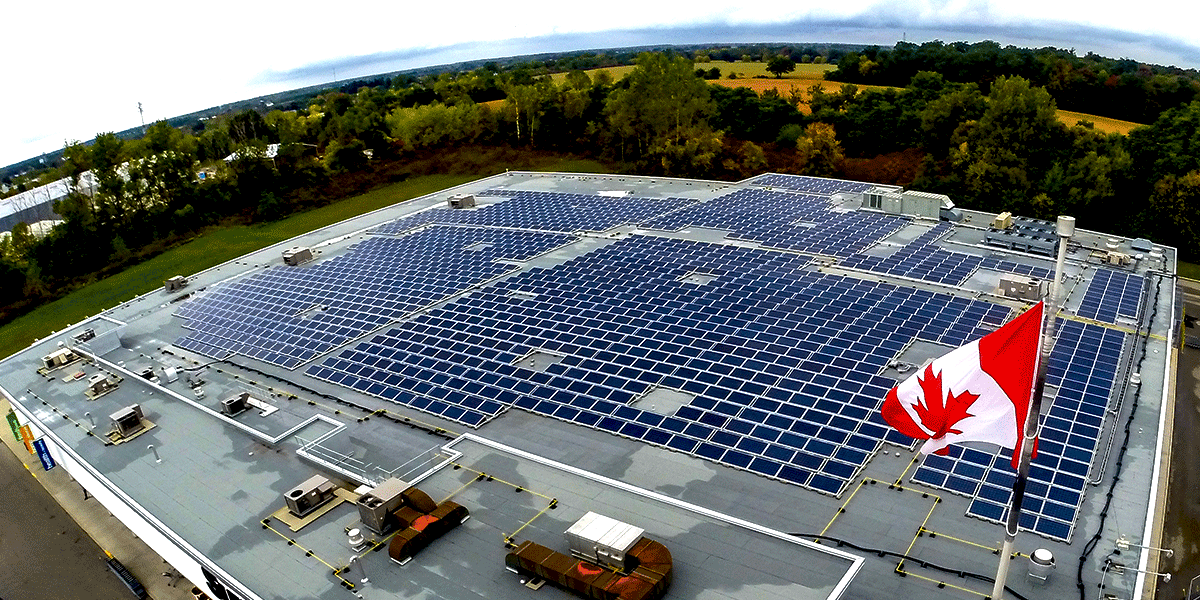
    Rooftop solar systems are composed of a few parts. The main component is the solar panel or a series of solar panels. The panels convert the rays from the sun into electricity, which can be stored in batteries or be used directly in the house for things like heating water in the boiler. Interestingly, in the summer, the same rooftop solar panels can also reflect some of the rays of the sun, cooling down the house an average of 2o C.

    There has been an increase in uptake in many countries, and that increase in demand has driven the cost of these systems down and made them more affordable. This growing solar energy industry is also generating new employment opportunities in Canada, with the potential to generate employment for 65,000 people annually in the manufacturing, operation, and maintenance of solar panels.

    In Canada, solar energy currently represents one per cent of the country’s total energy production. However, it is still significant as it removes approx. 1.5 million tonnes of greenhouse gas (GHG) emissions per year from the atmosphere (the equivalent of removing 250,000 cars and trucks off the road each year).

    Canada’s latitude and climatic conditions can pose some challenges to solar power generation in northern regions where there is less solar potential. The farther north you go, the sharper the angle the sun’s rays hit the panels, so the system can’t utilize the sun’s full potential. Canada also does not have a solar energy policy at the federal level which means that prices vary significantly among provinces and territories. Challenges aside, solar panels can represent a sustainable renewable source of energy in the years to come, especially for us in the Niagara region. They show promising potential as an effective climate change mitigation and adaptation plan when utilized for homes and industry.

    The researchers involved with the MEOPAR project are working to raise awareness about the impacts of climate change and how communities can effectively adapt, and increase resilience, to these changes. Follow along with our blog every week (written by researchers Liette Vasseur, Meredith DeCock, Bradley May, Pulkit Garg and Sam Gauthier) to learn more about the project and how you can get involved. You can also visit our website at brocku.ca/unesco-chair or email us at [email protected]


    Categories: MEOPAR-Lincoln Blog, Updates of the Chair

  • MEOPAR Blog: Creative kitchens: helping meet global sustainability goals

    Day three of romaine lettuce grown in a windowsill.


    With the arrival of spring, many of us are spring cleaning, planning our gardens, and starting our seeds. But what about those of us who don’t have a backyard, live in an apartment without a balcony or patio, or don’t have the physical ability to be on our hands and knees gardening all day? The good news is that there are many fun and creative ways to grow and prepare food.

    Did you know that you can re-grow lettuce you bought in a grocery store? All you need to do is to save the bottom 2.5 to 3.5 cm of the lettuce stem and place it in a small dish of water! Remember to replace the water every day or two, and about two weeks later, you will have the perfect sandwich-sized helping of new lettuce. You will not have an unlimited supply with this method but seeing how much you can get from one stem can be a fun experiment, especially with children. You can also try this same method with celery or green onions. For green onions, you simply plant the white bulb and roots in a small pot with potting soil and you will soon have a never-ending supply! You can simply cut off what you need, and the plant will continue producing. This cuts down on food waste for those who struggle to use all of their store-bought green onions before they expire!

    There are lots of other ways to be more creative in the kitchen while also minimizing waste. Many of our fridge contents have plenty of unexpected uses! Take leftover pickle juice, for example, which is actually a great meat tenderizer! The brine can also be used as a vinegar substitute for salads and dips, or to extend the life of vegetables that are about to go bad in your fridge. Adding some sliced-up beets to pickle brine and storing them in the fridge makes for an easy and colorful addition to salads and sandwiches.  It’s important to note that you should never reuse pickle brine to make new pickles that you intend to can and store in a pantry, however, and to always keep it in the fridge. The diluted brine also won’t last forever and can only be safely reused a limited number of times — so plan on using it sooner than later.

    We have talked about the United Nation’s Sustainable Development Goals, or the SDGs, in many of our blog posts. Although they may seem intimidating or too globally spread for any one individual to do anything to help, when you get into the nitty-gritty of each of the 17 goals, they are actually broken down into many small, measurable goals that are easy for individuals to contribute to. By being creative in our kitchens, minimizing food waste, and doing things like re-growing our lettuce and celery, we are actually contributing to not only one, but several of the SDGs!

    Helping meet the global goals can be fun if you are using your innovative spirit, and we encourage you to try out some fun, new kitchen adventures of your own!


    Categories: MEOPAR-Lincoln Blog, Updates of the Chair

  • MEOPAR Blog: How practicing mindfulness can create a more sustainable future

    Practicing mindfulness, such as yoga, is a great way to add a sense of calm and peace to our daily routines.


    Being present and finding joy in small things is known to be good for our mental and physical
    health.

    One of the best ways to calm our minds and enjoy the present is by practicing mindfulness: focusing our attention on the present moment — exactly what is happening right now — and accepting it without judgment. This includes paying attention to our thoughts and feelings while we are experiencing them.

    Mindfulness can help us better handle the uncertainty of the future and reduce anxiety, as
    practicing mindfulness exercises can help direct attention away from negative or stressful
    thoughts. It can also train your brain to be more alert (as long, deep breaths bring more oxygen to the brain), lower stress levels, increase happiness, lower blood pressure, and improve sleep.

    What does mindfulness look like? Exercising mindfulness can be as simple as taking time to
    pause and breathe when the phone rings, instead of rushing to answer it. Another good
    practice is to notice sights, sounds, smells, tastes, and touches while doing daily tasks;
    experiencing the moment fully with no urgency to move to the next task. Mindfulness can also
    be very helpful while waiting in long lines at the grocery store — especially in these stressful
    times when grocery shopping can be somewhat daunting. Instead of worrying about rushing
    through the line at the checkout (or to get into the store in the first place), take the time to feel
    gratitude that you have food to stock your cupboards and were able to make it to the grocery
    store that day.

    Another form of mindfulness is meditation. Being still with your eyes closed, either repeating a
    phrase or mantra or focusing your attention on your breathing, is one form of mediation. This
    method encourages you to let your thoughts to come and go, without being bothered by them,
    and to focus on being present in the current moment and space. Yoga is another excellent way
    to practice meditation as the movements in a yoga sequence focus on breathing and being
    present in each pose, with no urgency to move on to the next.

    Mindfulness is also a great way to engage with the natural world around us and can even help us shift to a more sustainable society. Mindfulness can even influence how we respond to the
    climate change crisis because it allows us to change the way we process information and can
    even help increase our motivation. When we practice mindfulness, we can gain a better
    appreciation for both people and nature and become more compassionate towards each other—helping to build a more sustainable future as a result.

    The researchers involved with the MEOPAR project are working to raise awareness about the
    impacts of climate change and how communities can effectively adapt, and increase resilience, to these changes. Follow along with our blog every week (written by researchers Liette Vasseur,
    Meredith DeCock, Bradley May, Pulkit Garg, and Sam Gauthier). Visit our website
    at brocku.ca/unesco-chair or email [email protected].


    Categories: MEOPAR-Lincoln Blog, Updates of the Chair