Articles from:June 2022

  • Systems Thinking: A Science for Life and Sustainability 

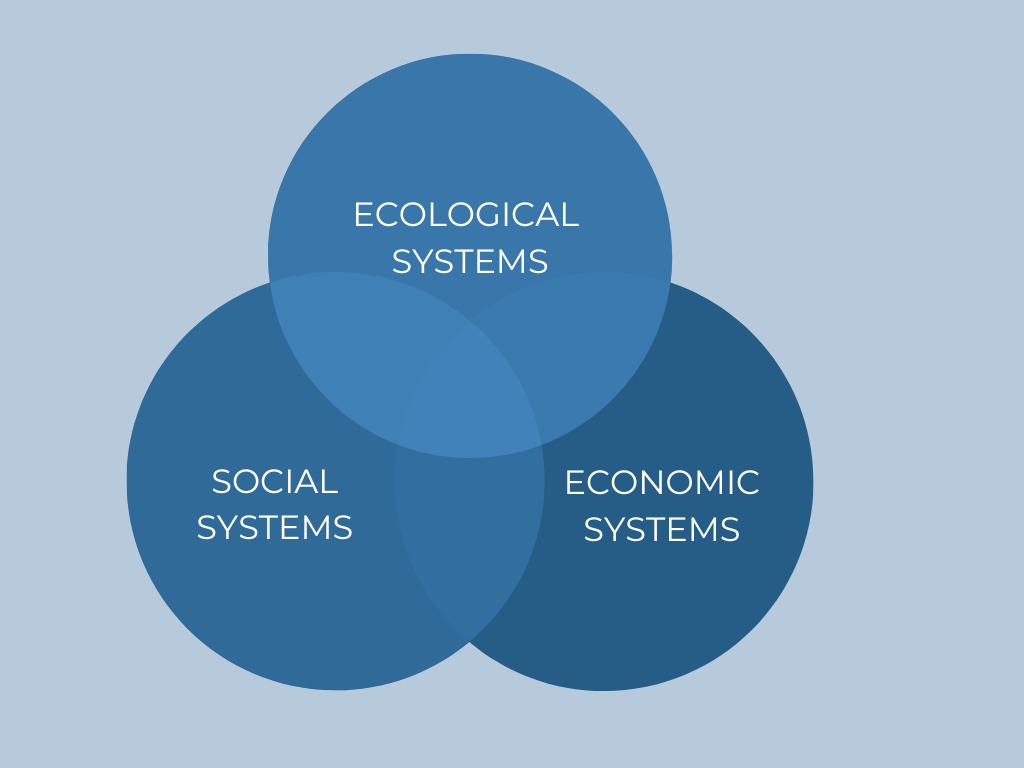
    Systems thinking requires an understanding of the fact that all parts of a system work together, creating effects that are greater than the sum of the parts of that system.

    Contributors: Mike Jones and Liette Vasseur 


    Since the 15th Century, western science has been based on the idea that people and nature work like machines and can be understood in terms of simple cause-effect relationships. This mechanistic view assumed that the behaviour of living systems could be predicted with deterministic research (preconditions dictate outcomes), and that living systems are no more than the sum of their parts. This scientific perspective was accompanied by the belief that humans were separate from—and could control—nature. The mechanical view of life also influenced the social sciences. This led to the development of simplistic economic theories that externalized the costs of exploiting nature for financial gain and the contributions of households and communities to the economy. This means that the significant contributions of people and nature to the economy are considered “free” (gratis) resources. The mechanistic perspective of life and economy provides the technology and exploitative worldviews necessary for industrialization, globalization, and consumption. It has resulted in an endless growth mindset and the accumulation of economic power by industrial societies, corporations, and individuals. While modern science and technology have produced many benefits, both have also increasingly isolated people from nature. Each has also served to enhance the belief that people can dominate nature, and that nature (and all of its benefits) can be replaced or replicated by human ingenuity and technology. 

    The modern industrial worldview stands in marked contrast to older philosophies of Ancient Greece, Buddhism and Taosim, and the cosmologies of Indigenous People who view humans as an interdependent part of the community of life. In these worldviews, the relationship between people and the rest of nature is based on reciprocity (of giving, as well as taking) in order to achieve balance and well-being for all. It is not the one-way flow of exploitation needed to support the goal of endless economic growth. These older systems of worldviews and ethical values have enabled people to survive for thousands of years, drawing on knowledge passed down as oral traditions from one generation to the next. Many remnants of these old cultural systems still persist today, in concepts such as “buen vivir” (or good living), which is incorporated into the constitution of Bolivia and Ecuador, for example.  

    Linear thinking as the foundation of modern western science gave us the industrial revolution: both the benefits from it and the undesirable environmental consequences that followed. We now know, however, that everything is connected through systems. Indeed, systems are everywhere and affect every aspect of our lives. To a large extent, we use and live in these systems without even being aware that we are doing so. Systems vary from the simple mechanical systems that regulate the temperature in our home to the highly complex laws and policies that regulate our lives. We also have systems of values and beliefs that define acceptable behaviour within society.  

    Systems are comprised of interacting parts that relate to each other through reinforcing or balancing “feedback”. Reinforcing feedback increases the effects of one part on another. For example, the development of new technology supports economic growth, and economic growth, in turn, supports investment in technology. Balancing feedback brings a system to a desired goal, such as policy that sets the quantity of greenhouse gases that can be permitted in the atmosphere. Biological and bio-economic systems are complex and self-organizing. Feedback and non-linear patterns of behaviour are always present—even if we don’t see it. This means that we should never think about living systems as linear and simple.   

    Systems thinking is profoundly different. It requires us to understand that all the parts of a system work together, creating effects that are greater than the sum of the parts of that system. Systems thinkers consider how a change in one component may have major effects on the system in its entirety. Using climate change as an example, the release of carbon from fossil fuels into the atmosphere has warmed the Earth’s climate with profound effects on almost every aspect of life on the planet. Learning how to think in systems is an essential skill for finding our way back to sustainability. Online courses that teach the basics of feedback are also becoming more common and are even being promoted as basic education for elementary school-aged children. Systems thinking, as it applies to our understanding of the process of life, only emerged in the 1970’s. With new mathematical theories and models that enable us to understand the patterns and processes of change in the evolution of life, however, we can now reflect the way that our actions may have consequences not only on us, but also on other people — or even the world.  


    1 Francis Bacon (1561-1626) was the ”father” of empirical science that would improve life for people by giving them power over nature https://hesiodscorner.wordpress.com/2018/07/11/francis-bacons-conquest-of-nature/

    2 Raworth “Doughnut Economics: Seven Ways to Think Like a 21st Century Economist” Random House, Business.

    3 Weak sustainability versus Strong Sustainability https://sustainabledevelopment.un.org/content/documents/6569122-Pelenc-Weak%20Sustainability%20versus%20Strong%20Sustainability.pdf

    4 https://www.rapidtransition.org/stories/the-rights-of-nature-in-bolivia-and-ecuador/

    5 The dominant influence of Descartes (1596-1650) and Newton (1642-1727) on the philosophy of western science that viewed nature as a machine is described by Capra and Luisi 2014 “The Systems View of Life” Cambridge University Press

    6 https://futurice.com/blog/systems-thinking-and-sustainability#:~:text=What%20is%20systems%20thinking%20in,create%20and%20how%20we%20innovate.

    7 http://www.clexchange.org/

    Categories: Beyond Sustainability Blog

  • An Indigenous Youth’s Perspective on Attending the UNPFII

    Cassandra Carlson has been a representative of the United Nations Permanent Forum on Indigenous Issues (UNPFII) since March 2022 and recently attended the Forum in New York. 

    Contributor: Cassandra Carlson, member of the Young Professionals (in research) Exploration Group (YPEG).


    Did you know that the United Nations has a high-level advisory body that is mandated to deal specifically with issues impacting Indigenous peoples?

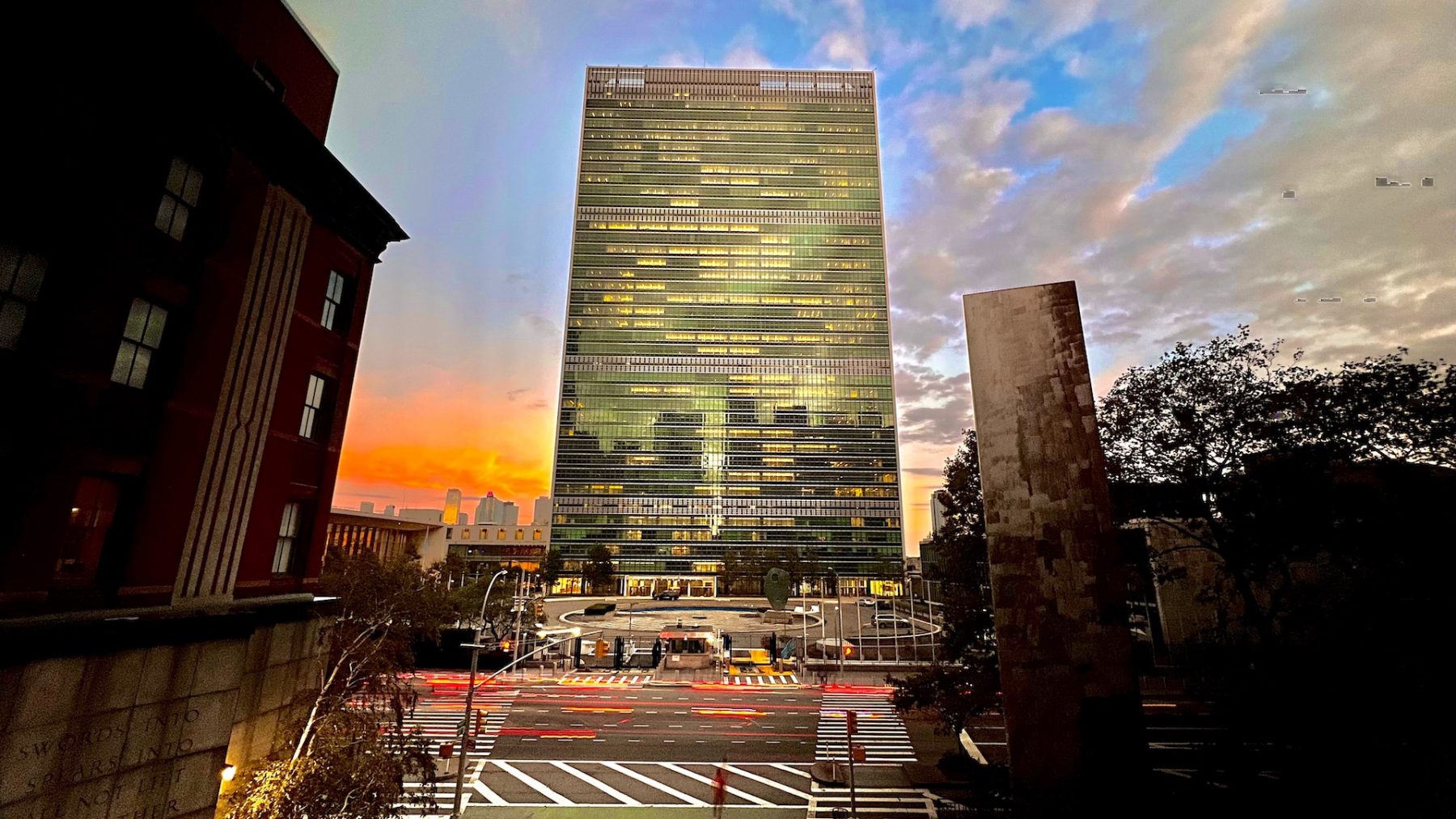
    Created in July 2000, the United Nations Permanent Forum on Indigenous Issues (UNPFII) held its first meeting in 2002 and now meets annually to raise awareness and explore recommendations for addressing Indigenous issues within the UN system. This current generation of Indigenous youth are the first to grow up with, and see the progress and initiatives provided by this forum. We have watched the UNPFII shape our future.

    I became a new representative in this space in March 2022. Since then, I have been transiently working within two avenues: A learning avenue where I have started to gain a better understanding of the dynamics of the UNPFII, and an avenue where I promote a youth perspective that describes and highlights the unique parameters of society that I’ve grown up within. This balances the history of my people — that I must carry with me— and the drive to use my voice to shape recommendations that will determine my future and the futures of other Indigenous youth. 

    Headshot of Cassandra Carlson

    Cassandra Carlson.

    One of the biggest learning curves I have encountered in this process is figuring out how to use this platform more efficiently as a tool to promote actionable initiatives among Indigenous peoples. The enigma about the UNPFII is that Indigenous peoples must work within the same colonial structures that they are to promote their own sovereignty and autonomy in decision-making processes. The speaking times are also allotted to only three minutes. For many, this is the only time where organizations have a chance to present their work, issues, and recommendations on an international stage — which is difficult to do in only three minutes. Member states — the colonially created states responsible for the dissemination of Indigenous peoples’ community and culture — also have priority in speaking at the forum, followed by Indigenous peoples’ organizations. This includes the member states that do not currently recognize the Indigenous peoples living within their region.  

    While Indigenous peoples share similar colonial patterns that impact their regions, the problems we face are diverse and incomparable to each other. In an instance where my delegation was granted the opportunity to speak under time given by the Canadian delegation, that luxury is not afforded to all Indigenous people’s organizations, youth, or people that attended the forum. I have to recognize where I am privileged in this space, and who I am really fighting against. It has made me realize that the international stage is being treated as the tip of the iceberg; of it you want one of the many vegetables in the bowl of soup. That is, the availability of the international stage is so small that we are left competing against each other to gain access to that space. 

    But once we get access to that space, what exactly do we talk about? How will promoting areas of concern at this level provide meaningful impacts to the communities we return to, the communities we live with day by day? 

    Recognizing that the UN is a colonial space, there is very limited opportunity to celebrate Indigenous culture, resilience, strength, and perseverance. Many speakers from Indigenous organizations highlight the ongoing suffering that their peoples are currently enduring as a way to make people listen, while member states frequently promote ‘how far they have come’ and applaud their ongoing work. Before coming to New York, I initially thought that this forum would be different from other forums, in that everyone in the room, on some level, recognizes the reconciliation that is needed with Indigenous peoples. While I was right in that respect, I was wrong to assume that the scope of the United Nations has the capacity to sustain the dynamism that Indigenous peoples need. Put frankly, it should not take an international stage for states to listen to the needs of their local Indigenous communities, nor should an international stage be necessary to hold member states accountable for their actions. A three-minute speech simply cannot display the interwoven affairs that make problem-solving something as simple as access to clean water a complex problem. With regards to the UN, there is a certain level of autonomy granted to member states in how they run the governments within their countries. There is a need to create ethical processes and space to hold them accountable to international policies.  It will be interesting to see how this year plays on and the progress of this year’s recommendations. 

    One of the biggest limitations this year was that many of the side events had to be virtual. I’ve found that the greatest progress occurred instead in the coffee rooms, at lunch, and in informal conversations with people. We need to connect with each other on a real and authentic level to truly to understand how important it is to help each other. For me, this is how I develop relationships and why they have importance to me. 

    My relationship and connection with the Earth are why I am so passionate about climate change justice. If I did not care so deeply about the environment, I would not have as much drive to put forth solutions. That goes the same with human relationships. I cannot expect the people I talk to or ask for support to care as deeply about the same initiatives I do if they do not first develop a relationship with my goals in a way that resonates with them and is derived from their own independent perspective. 

    While the forum carries colonial baggage and barriers to providing real solutions, there is another piece of the puzzle that has yet to be discussed: its growth. Since 2000, the UNPFII has served as a tool for Indigenous peoples to raise awareness, bring forth policy changes to other UN bodies, and influence the implementation of Indigenous rights on a local and national level. I question how the UNPFII has influenced change over the past 20 years. If anything, the greatest accomplishment the UNPFII has provided is the colonial documentation on the progress of reconciliation throughout the regions. One of the largest limitations in this theme is that there is a lack of youth engagement. Why is this important? Youth are the future leaders and change-makers in these spaces. Moreover, we deserve to have a say in the future that we will be living in, because if we wait 10-15 years, it will be too late. 

    There is also a unique subset of parameters within our society that hasn’t been present ever before. In under a minute, I can hear and have access to any sort of world problem, where I can see real, on-the-ground footage of any event. Whether it be a bombing occurring in the Middle East, changes to current policies on a local level, advocacy work of climate activists, there has never been a generation of youth who have been able to hear events in real time the way we do today. The revolution of human rights works at warp speed, in that the way we treat each other is often creating more problems than solutions. There is simply not enough time or people to provide an adequate assessment of why these solutions have not progressed. 

    From my perspective, this isn’t a new issue. This issue has been prevalent for so long that we’ve seen such an expansion of organizations made by Indigenous peoples to deal with each revolution. But what is the solution? Well, it certainly does not limit us (Indigenous people) by having a specific technical committee of sorts whose only capacity is coming up with solutions related to one issue. However, we subject ourselves to restrictions due to the fact that one of the biggest barriers Indigenous peoples face is the lack of proper inter-jurisdictional cooperation. As more organizations coming about, that also requires an increase in scope in terms of project management and assessment processes. 

    We simply do not have a proper structure in place to assess and account for each other enough in these spaces in terms of level of engagement, the successes and downfalls of partnerships, the limitations of resources that can be provided, and the capacity certain organizations have to complete a certain task. For example, many individuals come to this space as volunteers, with the responsibilities of their main jobs limiting their availability to work on themes of the forum full-time. 

    So, I am left with these questions: Has this space has grown at the same speed as the generation it serves? Will it ever be able to account for the ‘warp speed’ of events we have to live in? Do local communities reap the benefits of the forum, or is the forum reaping the benefits of the community? Which is more important, the popularity of the UNPFII or the subjects it discusses? 

    Should we really be promoting the space of the UN and the international policies it provides to assist us, or should the UN being doing more to promote the goals of local Indigenous communities and grow with the current social environment? 


    The Young Professionals (in research) Exploration Group (YPEG) was assembled to advance the work of the Beyond Sustainability: Radical Transformation through Systems Thinking project research team. The goal of the YPEG is to leverage the student perspective to engage in meaningful discussions on sustainability and transformation, including (but not limited to) brainstorming public opportunities for participation and assessing the role of the next generation in these projects.

    Categories: Beyond Sustainability Blog