Articles from:March 2020

  • MEOPAR Blog: The Pledge For Planting Two Billion Trees By 2030

    Planting two billion trees by 2030 will be a crucial step towards achieving net-zero carbon emissions by 2050.


    During the 2019 election campaign, Prime Minister Justin Trudeau joined teen activist Greta Thunberg at the Climate Strike in Montreal, where he promised that his Liberal government would plant two billion trees over the next 10 years. This pledge is a $3 billion effort to harness the power of nature to fight climate change and reach net-zero greenhouse gas (GHG) emissions by 2050. Net-zero GHG emissions are balanced by absorbing an equivalent amount from the atmosphere.

    Adding two billion new trees could reduce greenhouse gas emissions by millions of tonnes annually. A hectare of mature trees, for example, can remove up to 6.4 tonnes of emissions per year from the atmosphere. This is the equivalent of driving 30,000 kilometres in a mid-sized car. The program would also help restore and protect our forests, grasslands, agricultural lands, wetlands and coastal natural areas, which help clean our air, safeguard our water, and provide crucial wildlife habitat. Along with the environmental benefits, the program may also help our economy. The federal government estimates that 3,500 seasonal tree planting jobs will be created to grow and plant the young trees.

    It is important to note that these new trees, which are promised to be planted by 2030, are not meant to replace trees that are cut down by timber companies or cities, but will add to the current tree count. There must also be careful planning, implementation and monitoring of this program to ensure we do not replace land that is already forested, or wetlands that are essential for water irrigation, flood prevention, and water filtration. Trees also need to be planted in places where they can survive and flourish. This means planting in geographically suitable areas as well as considering the future climatic conditions of those areas. Trees planted today will still be standing in 80 to 120 years, which means there needs to be consideration for how climate change will impact the future temperature and precipitation in the places where these trees are planted.

    You can learn more about this program on the Liberal Government’s website.

    The researchers involved with the MEOPAR project are working to raise awareness about the impacts of climate change and how communities can effectively adapt, and increase resilience, to these changes. Follow along with our blog every week (written by researchers Liette Vasseur, Meredith DeCock, Bradley May, Pulkit Garg and Sam Gauthier) to learn more about the project and how you can get involved or email us at [email protected].


    Categories: MEOPAR-Lincoln Blog, Uncategorised

  • MEOPAR Blog: Spring Migration of Birds in the Niagara Region

    During the spring months we often see beautiful birds, such as the Rose Breast Grosbeak shown above. Photo courtesy of Marcie Jacklin.


    The Niagara Region and its 12 municipalities are located between Lake Ontario and Lake Erie, making it an ideal corridor for migrating birds. The various habitats in the region support an exceptional diversity of migratory birds during the spring and fall.

    Many species will come through Niagara during the spring migration. In fact, with the warmer temperatures we have been experiencing in the region this spring, many of these species are already back.  Spring migration is unique because we begin to see some of the amazing songbirds that only visit the region for a short time, such as the Scarlet Tanager, Rose Breasted Grosbeak, and Blackburnian Warbler. Some of these species also come here for the summer to breed.

    Aside from the songbirds, there are also many other species of birds whose migration patterns can be observed during this period. Some of the first birds to return are different types of waterfowl that visit Lake Ontario. A number of these migrant birds, such as the Northern Shoveler and the Blue Winged Teal, are only present for one to two weeks—so make sure you watch for them and check them off your birding list!

    Niagara is home to many different bird watching areas, and with the mild weather we have been having this spring, birdwatching is a great way for people of all ages to pass the time and learn something new while practicing social distancing.

    The Niagara River Corridor, Port Weller East Pier, and wooded areas along the Lake Erie and Lake Ontario shoreline are great locations for spotting some of the region’s most amazing birds.  Many local conservation parks and trails, such as Beamer Memorial Conservation Area and Mud Lake Conservation Area, currently remain open for passive recreational use and are also perfect places for birdwatching (all buildings within the parks, including public washrooms, are presently closed, however).

    There are also great resources online if you want to learn more about local bird populations from home. The All About Birds resource from Cornell, for example, has a searchable bird database and other great resources for new or veteran birdwatchers alike.  The National Audubon Society website is another great resource, providing information about ecosystem-wide conservation initiatives and local bird populations, as well as hosting citizen science initiatives like the Christmas Bird Count.

    Niagara Birds by John Black and Kayo Roy can also be accessed online, offering 25 articles and 368 species accounts authored by professional ornithologists and highly experienced amateur birders.


    Categories: MEOPAR-Lincoln Blog, Updates of the Chair

  • MEOPAR Blog: Bring back the bank swallows

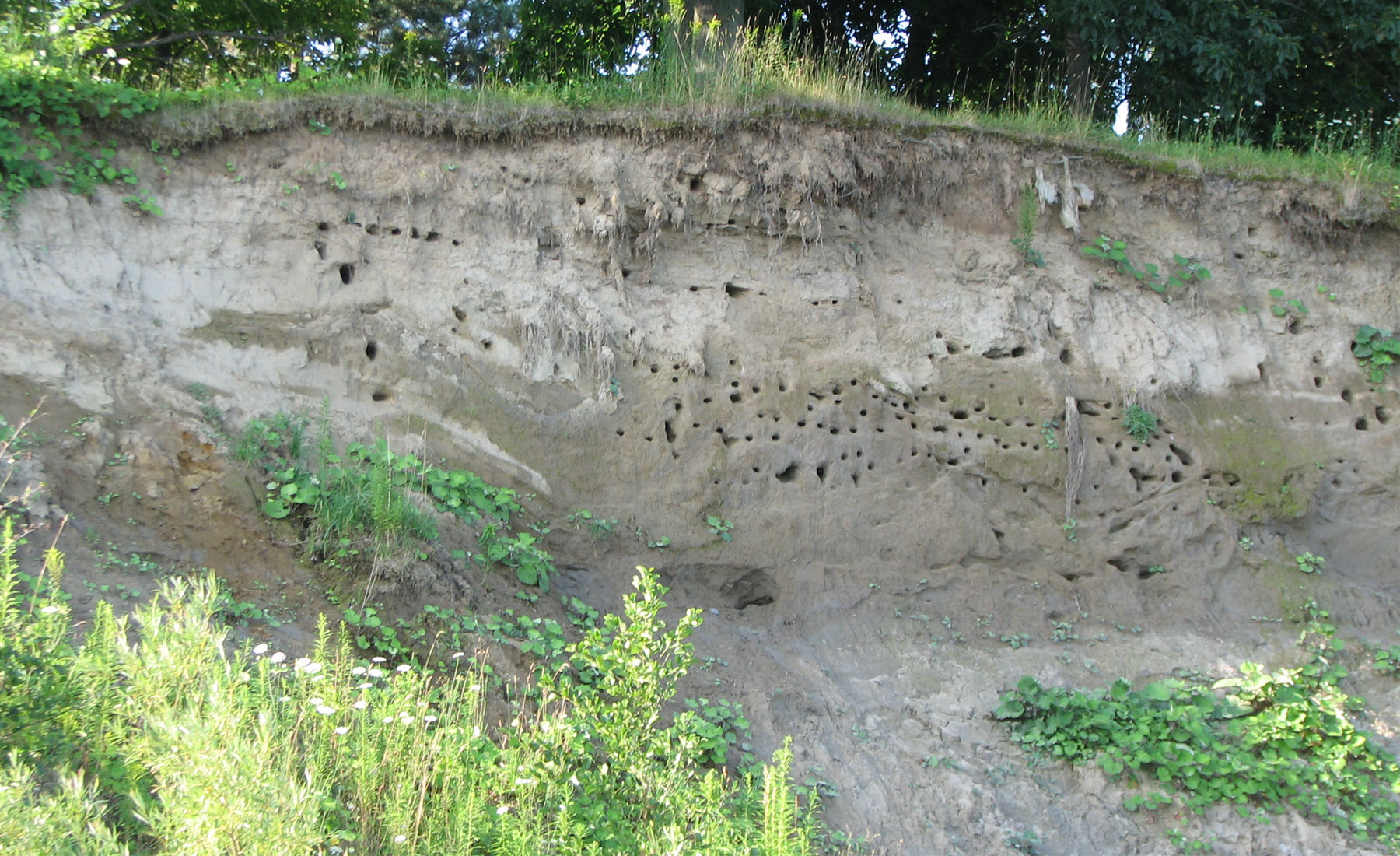
    Photo Caption: Shoreline bird nests along the banks of the Lincoln coastline are at risk as the shoreline continues to erode. 


    Many people living in coastal communities have likely been lucky enough to experience the magic of bank swallows zipping through the air, showing off with an aerial display of acrobatics. Bank swallows are widely distributed across the world and can be found on every continent except for Australia and Antarctica.  Canada’s largest populations of bank swallows occurs between Lake Erie and Lake Ontario.  These birds migrate through the Greater Niagara Region during the spring and summer months and can often be spotted in the Town of Lincoln. Unfortunately, their population has been declining since 1970, and they are now considered a threatened species in North America.

    Several factors are believed to be responsible for the decline in bank swallow populations. These birds prefer to nest in burrows along the shoreline (or banks) of rivers and lakes with vertical faces of silt and sand deposits. With the effects of climate change on shorelines causing erosion and land degradation, this is a major contributor to the decline of bank swallow populations. Coastal development and the addition of hard infrastructure along the shores have accelerated this phenomenon. This loss of breeding, nesting and foraging habitats for these shorebirds forces them to look elsewhere for these resource-rich areas. Many of these birds are now also found in sand and gravel pits where the banks remain suitable, although not ideal. This also presents many challenges to the species as activities in gravel pits, such as digging and movement of trucks, may affect their survival.

    Due to the Species at Risk status of bank swallows, they are protected by the government to ensure their populations do not continue decreasing. The population of bank swallows is beneficial for the community as increasing biodiversity results in healthier ecosystems. As individuals, you can help encourage their conservation by protecting their habitat. With proper adaptation strategies used to protect shorelines, you can increase the survival of bank swallows. Homeowners living on the shoreline may even be eligible for stewardship programs that support the protection and recovery of Species at Risk and their habitats, which is a great way for coastal communities to contribute to the conservation and restoration of their shorelines.


    Categories: MEOPAR-Lincoln Blog, Updates of the Chair