Articles from:November 2018

  • Mature female STEM students face many barriers

    28 November 2018
    R00211


    Mature female students pursuing Canadian university degrees in science, technology, engineering and math (STEM) subjects face discrimination and other barriers, says a Brock-authored Canadian Commission for UNESCO research report.

    “Most women return to school because they know they have the capacity and ability to contribute to society,” says the report, researched and written by Brock University Professor of Biology Liette Vasseur and Brock Biology master’s student Heather VanVolkenburg.

    “These people are usually highly motivated and efficient in their studies, in part because of their level of maturity,” says the report, which also applies to women in college programs in the trades. “Unfortunately, they face several barriers that they most likely never anticipated.”

    These barriers include things like inadequate daycare, ineligibility for scholarships and a belief that mature female students won’t produce as much research because of family commitments, says the report, titled “The Non-Linear Paths of Women in STEM: The Barriers in the Current System of Professional Training.”

    The report defines ‘mature students’ as being 25 years of age and older.

    Vasseur, who holds the UNESCO Chair on Community Sustainability: From Local to Global, presented the report at a conference in Ottawa Tuesday, Nov. 27. Following Vasseur’s keynote address, a panel discussion was held on equity and inclusion in post-secondary STEM learning that included Canada’s Chief Science Advisor Mona Nemer.

    The report identifies six reasons why people don’t pursue a ‘linear’ university educational path, which typically moves from undergraduate to master’s to PhD with no or little break:

    • New career options
    • Need for more credentials
    • Delay due to family reasons
    • Need for family support
    • Career prospect improvement
    • Self-interest
    • Unlike their male counterparts, many female mature students delayed further studies because of a widespread perception that raising a family and pursuing academic degrees and careers were incompatible goals, says the report.

    This perception results in an “unconscious bias” that manifests itself in many ways, explains Vasseur.

    “One woman told me she was given a less-important research project because it was believed that she wouldn’t return the next year, as she was expecting,” says Vasseur.

    In another case, a mature woman had a similar experience, but in her case she was given a less-important project because she was close to retirement age.

    Female students with young children may find it difficult or impossible to attend an 8 a.m. or evening class when daycare centres open at 8:30 or 9 a.m. and end by 5 or 6 p.m., Vasseur says.

    Regarding financial support, the report notes that many student scholarship and employment opportunities are limited to people 30 years old and under. There are similar age caps in some postgraduate employment recruitment and retention programs.

    Ironically, despite these and other barriers, mature female students have a graduation rate of 70 per cent, compared to a graduation rate of 56 per cent for male mature students, says the report.

    And, the graduation rate of all mature students was four times higher than for young students in the years leading into 2015, says the report.

    Most universities are not particularly welcoming to mature students in general, says Vasseur.

    That’s because many universities in Canada were set up in the 1950s and 60s for a new generation of youth who needed to be educated in a booming post-war job market.

    The report makes a number of recommendations, including:

    • Improve information for mature students, especially on things like specific awards
    • Take work experience more into account for mature student admissions
    • Offer more online options, especially for early morning or evening classes
    • Train professors and admissions staff on unconscious bias
    • Remove age limits for scholarships and student employment programs
    • The report, “The Non-Linear Paths of Women in STEM: The Barriers in the Current System of Professional Training,” can be found on the Canadian Commission for UNESCO website.

    For more information or for assistance arranging interviews:

    * Dan Dakin, Manager Communications and Media Relations, Brock University [email protected], 905-688-5550 x5353 or 905-347-1970

    – 30 –

    Categories: Media releases

  • Brock researchers to introduce coastal research project to Lincoln residents and stakeholders

    26 November 2018
    R00209


    A research project examining how coastal communities can deal with the impacts of climate change will formally launch in the Town of Lincoln this week.

    The town suffered around $1 million in damage as a result of back-to-back spring storms in 2017 that caused massive flooding from Lake Ontario. Announced in May, Brock University Professor and UNESCO Chair in Community Sustainability Liette Vasseur is leading a three-year research study that will focus on Lincoln as the Ontario component of a wider project by Université du Québec à Rimouski.

    The local research is being funded through a $280,000 grant from the Marine Environmental Observation Prediction and Response Network (MEOPAR) with additional support from the Town of Lincoln and Brock.

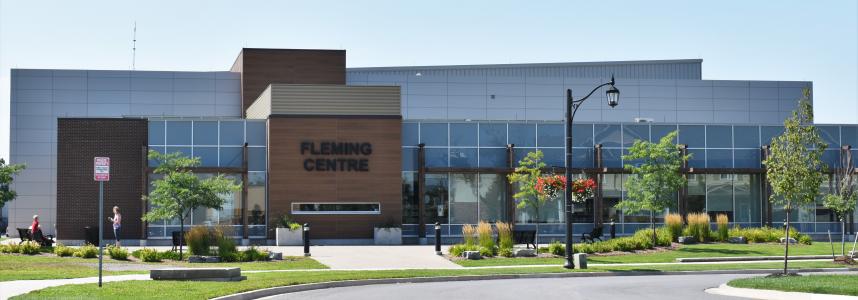
    The Lincoln research will officially be launched on Thursday, Nov. 29 from 6:30 to 8 p.m. in the Fleming Centre in Beamsville. Interested residents and landowners will be able to meet Vasseur and her research team and learn more about how they can participate in the project. There will also be a short discussion to learn more about the experiences of those in attendance around climate change and extreme weather events in the town.

    “Our strong partnership with Brock enables these types of on-the-ground research opportunities, informing and providing evidence-based decisions for our community,” said Town of Lincoln CAO Michael Kirkopoulos.

    Vasseur said she hopes the end result of the research will be sustainable options for the future such as how to help slow down and prevent shoreline erosion or any other impacts on the town.

    “With this project, we want to help the community and the town contribute to solutions and strategies to adapt to climate change,” she said.

    What: MEOPAR Town of Lincoln Research Project Launch

    When: Thursday, Nov. 29, 6:30 to 8 p.m.

    Where: Fleming Centre, Room A, 5020 Serena Dr., Beamsville

    Who: Open to all

    For more information or for assistance arranging interviews:

    * Dan Dakin, Manager Communications and Media Relations, Brock University [email protected], 905-688-5550 x5353 or 905-347-1970

    – 30 –
    Categories: Media releases

  • Students experience sustainability science in the field

    Liette Vasseur, far right, speaks to Master of Sustainability students in the core zone of the Niagara Escarpment Biosphere Reserve at Brock University.


    Thursday, November 22, 2018 | by 
    From: The Brock News 

    As a group of Brock students recently learned, sustainability science is all around us.

    It can be found along the Niagara Escarpment, in the waste-sorting stations of Guernsey Market and on the properties of the Niagara Parks Commission.

    Students in the Sustainability Science and Society graduate program got a taste of sustainability initiatives in action during a series of field trips in October.

    The Master of Sustainability program has always encouraged students to think critically about the theories behind sustainability science. Developing a sound theoretical understanding is essential, but practical application also plays a major role, said Ryan Plummer, Director of the Environmental Sustainability Research Centre (ESRC) and Professor of Foundations of Sustainability Science and Society.

    “We train students to be leaders in sustainability. They need more than just classroom instruction to prepare them to take on leadership positions when they graduate,” Plummer says.

    A series of three field trips added an experiential education component to the program this year, giving students a first-hand look at how sustainability science is implemented on Brock’s main campus and in the wider Niagara community.

    “Sustainability science extends beyond the classroom and the University campus,” says Plummer. “Modifying the curriculum in our foundational course to include an ‘experiencing sustainability’ module enables new ways to connect theory and practice.”

    On the first trip, Liette Vasseur, Professor of Biology and Environmental Science and UNESCO Chair of Community Sustainability, led an outdoor education-based exploration of the Niagara Escarpment, a UNESCO Biosphere Reserve. Lisa Gribinicek, Senior Strategic Advisor with the Niagara Escarpment Commission, also spoke with students about the area.

    The second trip focused on sustainability efforts at higher learning institutions and included a tour of Brock’s Central Utilities Building. Scott Johnstone, Associate Vice-President of Facilities Management, and Ryan Stewart, Energy Manager of Maintenance and Utilities Services, demonstrated how current University initiatives contribute to the Brock University Project Charter on environmental sustainability. Students learned how Brock is working towards its goals of low emissions and an overall sustainable campus.

    At Guernsey Market, students visited the waste-sorting area to see what happens behind the scenes to the scraps and recyclable containers left behind after a cafeteria meal. Bryan Boles, Associate Vice-President of Ancillary Services, and Malcolm Dale, Associate Director of Operations, described the sustainability challenges faced in Dining Services.

    The final trip focused on the ESRC’s innovative partnerships with the Town of Lincoln and the Niagara Parks Commission, and included a tour of the Vineland Research and Innovation Centre.

    “Seeing how the world works outside of the classroom is an invaluable experience,” says Meredith DeCock, a candidate in the Master of Sustainability program.

    Each field trip in the series was “unique and engaging” according to DeCock. “I even presented my research to the Town of Lincoln,” she says.

    Readings and assignments took precedence but, beyond the serious work of learning, there was also time for some fun. In Niagara Falls, students enjoyed the famed Journey Behind the Falls.

    “When an experiential learning session includes a trip to Niagara Falls, you really can’t go wrong,” says DeCock.

    “The thoughtful development and execution of the field study modules is a perfect example of why Brock is such a leader in experiential education,” says Carolyn Finlayson, Experiential Education Co-ordinator for the Faculty of Social Sciences. “Bringing to life course theories and concepts outside the classroom is what we do best.”

    The trips were organized with financial support from a Teaching Learning and Innovation grant.

    Tags: , , , , , , , , , , , , ,
    Categories: Updates of the Chair

  • Brock researchers to introduce coastal research project to Lincoln residents and stakeholders

    A research project examining how coastal communities can deal with the impacts of climate change will formally launch in the Town of Lincoln this week.

    The town suffered around $1 million in damage as a result of back-to-back spring storms in 2017 that caused massive flooding from Lake Ontario. Announced in May, Brock University Professor and UNESCO Chair in Community Sustainability Liette Vasseur is leading a three-year research study that will focus on Lincoln as the Ontario component of a wider project by Université du Québec à Rimouski.

    The local research is being funded through a $280,000 grant from the Marine Environmental Observation Prediction and Response Network (MEOPAR) with additional support from the Town of Lincoln and Brock.

    The Lincoln research will officially be launched on Thursday, Nov. 29 from 6:30 to 8 p.m. in the Fleming Centre in Beamsville. Interested residents and land owners will be able to meet Vasseur and her research team and learn more about how they can participate in the project. There will also be a short discussion to learn more about the experiences of those in attendance around climate change and extreme weather events in the town.

    “Our strong partnership with Brock enables these types of on-the-ground research opportunities, informing and providing evidence-based decisions for our community,” said Town of Lincoln CAO Michael Kirkopoulos.

    Vasseur said she hopes the end result of the research will be sustainable options for the future such as how to help slow down and prevent shoreline erosion or any other impacts on the town.

    “With this project, we want to help the community and the town contribute to solutions and strategies to adapt to climate change,” she said.

    What: MEOPAR Town of Lincoln Research Project Launch

    When: Thursday, Nov. 29, 6:30 to 8 p.m.

    Where: Fleming Centre, Room A, 5020 Serena Dr., Beamsville

    Who: Open to all


    Tags: , , , , , , , , ,
    Categories: Updates of the Chair

  • 2019 Sustainability Poetry Contest celebrates International Year of Indigenous Languages

    Language plays a critical role in the daily lives, histories and identities of people around the world.

    Despite the important connections tied to the words we speak, UNESCO has identified more than 2,000 languages spoken by Indigenous peoples around the world that are in serious danger of disappearing.

    In an effort to recognize the important contribution these languages play in our cultural diversity, Brock’s UNESCO Chair in Community Sustainability has declared the theme of its annual Sustainability Poetry Contest to be aligned with the International Year of Indigenous Languages.

    Every year, the contest calls for writers from the local community to submit unpublished poems and artwork on themes related to sustainability.

    The contest is open to all residents of Niagara (inclusive of members of First Nations, Métis and Inuit communities and Six Nations), and will operate in co-operation with Indigenous groups and stakeholders across the region.

    UNESCO Chair Liette Vasseur said the contest will raise awareness about the need to preserve, revitalize and promote Indigenous languages and knowledge around the world.

    “I believe this is one small step that contributes to the sharing of knowledge with and about Indigenous peoples of Canada,” she said. “Their knowledge and languages are essential to understanding where we come from as a society and the sustainability of the environment around us.”

    The contest also seeks to promote the steps being taken by UNESCO, other United Nations agencies and stakeholders around the world to support, access and promote Indigenous languages in co-operation with the people who speak them.

    In Canada, every effort should be made to contribute to the Truth and Reconciliation Call for Action, Vasseur said — and little steps count.

    UNESCO has been celebrating March 21 as World Poetry Day since 1999. The contest uses poetry as a tool to bring awareness to social issues, give a voice to the community, promote linguistic diversity and change the way people view their place in the world.

    Vasseur said this year’s poetry contest has an especially important role to play in the promotion and preservation of linguistic diversity, culture and identity for vulnerable Indigenous communities in Canada.

    Poems can be submitted online until 5 p.m. on Friday, Feb. 15. Click here to submit a poem.

    Prizes such as books and gift cards will be awarded in each of four categories: elementary student; high school student; college/university student; and general public.

    Winners will be announced at the UNESCO World Poetry Day celebration at 6:30 p.m. on Friday, March 21 at Mahtay Café in downtown St. Catharines. The event is free and open to the public, but registration will be required as space is limited. Register here. 


    Tags: , , , , ,
    Categories: Updates of the Chair

  • Poetry contest celebrates International Year of Indigenous Languages

    21 November 2018
    R00206


    Language plays a critical role in the daily lives, histories and identities of people around the world.

    Despite the important connections tied to the words we speak, UNESCO has identified more than 2,000 languages spoken by Indigenous peoples around the world that are in serious danger of disappearing.

    In an effort to recognize the important contribution these languages play in our cultural diversity, Brock’s UNESCO Chair in Community Sustainability has declared the theme of its annual Sustainability Poetry Contest to be aligned with the International Year of Indigenous Languages.

    Every year, the contest calls for writers from the local community to submit unpublished poems and artwork on themes related to sustainability.

    The contest is open to all residents of Niagara (inclusive of members of First Nations, Métis and Inuit communities and Six Nations), and will operate in co-operation with Indigenous groups and stakeholders across the region.

    UNESCO Chair Liette Vasseur said the contest will raise awareness about the need to preserve, revitalize and promote Indigenous languages and knowledge around the world.

    “I believe this is one small step that contributes to the sharing of knowledge with and about Indigenous peoples of Canada,” she said. “Their knowledge and languages are essential to understanding where we come from as a society and the sustainability of the environment around us.”

    The contest also seeks to promote the steps being taken by UNESCO, other United Nations agencies and stakeholders around the world to support, access and promote Indigenous languages in co-operation with the people who speak them.

    In Canada, every effort should be made to contribute to the Truth and Reconciliation Call for Action, Vasseur said — and little steps count.

    UNESCO has been celebrating March 21 as World Poetry Day since 1999. The contest uses poetry as a tool to bring awareness to social issues, give a voice to the community, promote linguistic diversity and change the way people view their place in the world.

    Vasseur said this year’s poetry contest has an especially important role to play in the promotion and preservation of linguistic diversity, culture and identity for vulnerable Indigenous communities in Canada.

    Poems can be submitted online until 5 p.m. on Friday, Feb. 15 by visiting the UNESCO Chair’s website.

    Prizes such as books and gift cards will be awarded in each of four categories: elementary student; high school student; college/university student; and general public.

    Winners will be announced at the UNESCO World Poetry Day celebration at 6:30 p.m. on Friday, March 21 at Mahtay Café in downtown St. Catharines. The event is free and open to the public, but registration will be required as space is limited.

    For more information or for assistance arranging interviews:

    * Dan Dakin, Manager Communications and Media Relations, Brock University [email protected], 905-688-5550 x5353 or 905-347-1970

    – 30 –

    Categories: Media releases