Articles from:October 2019

  • MEOPAR Blog: Understanding Climate Change Resilience

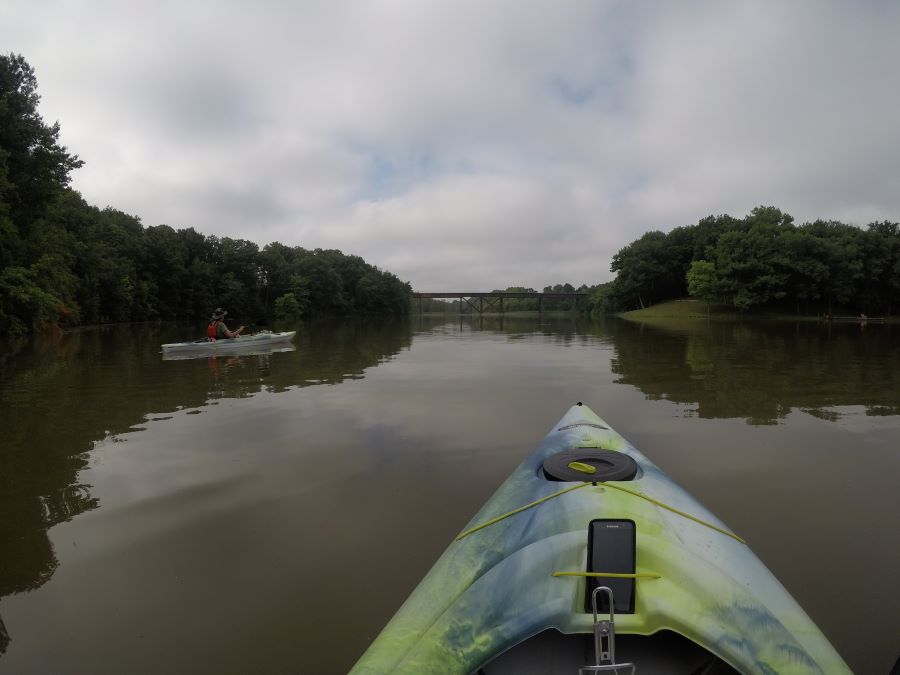
    Photo caption: Master’s Candidate, Meredith DeCock and Lincoln resident, Brian Jaworsky discussing bank stability of 16 Mile Creek despite significant climatic events and human influence (such as the building of the QEW).


    You may have noticed that a number of municipalities—such as Hamilton, St. Catharines, Toronto and Kingston—have recently declared climate emergencies. One of the reasons for doing so was to make changing environmental conditions a priority and plan the best way to build resilience at the local level. But what exactly is resilience, and how can it help us adapt to the risks posed by climate change?

    The easiest way to think of resilience is by comparing it to a rubber band: you can stretch the band to just before its breaking point, but when you let go, it returns to its previous shape fully intact. That’s resilience. Alternatively, if you pull too hard, the elastic breaks and can no longer be used for its original purpose. In that case, we have to consider transformation, meaning the system is no longer sustainable and must change to another one.

    Resilience is the ability to return to a normal state after some sort of disruption. For the sake of this article, we are referring to events or situations caused by climate change: floods, drought, heat waves, etc.

    Resilience strategies can involve enhancing the natural ecosystem, the social make-up of communities or modifying the physical environment. Being resilient means protecting your home against flooding, building parks and green spaces that maintain the natural buffering capacity of the land, developing emergency response plans, and re-designing roads and bridges to withstand increased freeze-thaw cycles and extreme wind. In some cases, resilience may also mean moving assets far away from hazards, such as coastline vulnerability. We also often talk about “remove, retreat or restore”: a few strategies that can help our communities become more resilient and sustainable.

    Our communities, businesses and homes can all be made more resilient to the hazards and risks of climate change. So, when you think of resilience, think of the rubber band: flexible and adaptable.


    Categories: MEOPAR-Lincoln Blog, Updates of the Chair

  • MEOPAR Blog: Risks and Hazards

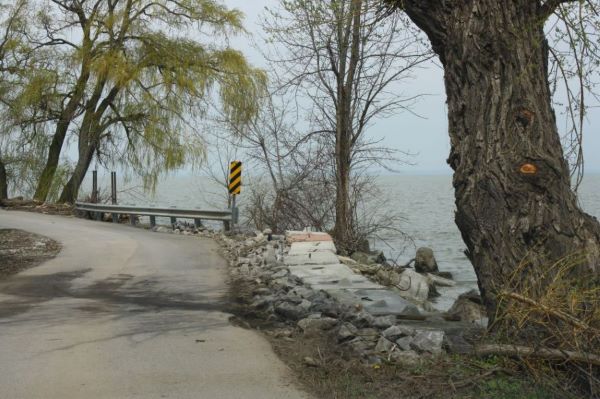
    Photo Caption: Living along the shore has its risks. This section of Lakeshore Road was patched and a stacked armour stone wall was installed after the 2017 floods.


    Risks and hazards are two similar, but often confused terms. A hazard is classified as anything that can cause adverse effects or harm to someone or a community. There are three different types of hazards: occupational or safety hazards (which most people are familiar with), including equipment malfunctions or slippery floors; health hazards, such as work stress, air pollution, or bacteria exposure; and natural hazards, such as earthquakes, heatwaves, hail or tornados.

    The chance that a hazard will cause harm is considered the risk—a low risk translating to a low possibility of being hurt. A hazard could also be low risk when the severity of the harm caused is minimal. Your level of risk is also dependent on your likelihood to be exposed to a specific hazard. For example, residents living on top of the Niagara Escarpment are at a lower risk of being flooded by Lake Ontario than those living along the shoreline.

    When we think about natural hazards, we used to be talking about events that occurred once in 100 years. But with climate change—this is no longer the case. Heat waves, freezing rain and heavy rainfall are occurring more frequently , often classified as disasters.

    Understanding hazards and their associated risks plays an important role in the development of climate change adaptation strategies. Some disasters, like hurricanes, cannot be avoided. It is at this point thatdisaster risk reduction becomes the only option. In the case of hurricanes, the best long-term risk reduction strategy may be to avoid building close to the coastline. In the case of existing structures that lay in the path of the storm, the best course of action is to hurricane-proof the dwelling and evacuate.

    Although it’s not always possible, we can reduce our chances of being harmed by natural hazards. Risk reduction strategies have saved lives, which is why it’s crucial that we gain a better understanding of the hazards that can affect us and properly assess their risks.


    Categories: MEOPAR-Lincoln Blog, Updates of the Chair

  • MEOPAR BLOG: A new way to look at us and our environment

    Stacked armour stone walls along Charles Daley Park are an example of a location that may benefit from using ecosystem-based adaptation techniques. 


    There are various types of climate change adaptation strategies: technological, structural or those that are determined by policies and governmental decisions.

    Technological or structural adaptations are those that are related to any type of manipulation or intervention — such as the construction of a protection wall, infrastructure improvement, or even structural relocation. While some of these strategies can be simple and inexpensive to enact, others may be complex and potentially cost-prohibitive. What’s more, when we focus only on structure, technology or policies, we can sometimes forget other important factors: overall well-being, enjoyment of nature and the benefits that the natural environment gives us, such as clean air, shade and heat reduction, and clean water.

    That’s where ecosystem-based adaptation comes in. Often referred to as ‘EbA,’ this form of adaptation can be defined as any strategy or action that employs the use of nature-based solutions to ensure humans and the natural environment can adapt to climate change. It considers that we, as humans, are also part of this ecosystem and uses the natural environment and the services/benefits it provides to adjust to climate changes. EbA has also been promoted by many international organizations, such as the International Union for Conservation of Nature (IUCN), the United Nations and the United Nations Environment Program (UNEP).

    There are many possible strategies in EbA, and many of which are less costly than technological or structural adaptations. Techniques utilizing soft protection of the shoreline (such as planting more vegetation) are less expensive and usually can last a lot longer than constructing a concrete retaining wall, for example. Adding more trees along the street can also help mitigate climate change, as well as providing shade and reducing heat waves and wind turbulence. Restoration of wetlands is another example of an EbA and can reduce the danger of flooding in a flood-prone neighbourhood.

    With a little imagination and lots of discussion with everyone at the table, we can discover many possible adaptations that will help our ecosystem while contributing to our overall quality of life in the process.

    These posts are written by the MEOPAR research team, comprised of Liette Vasseur, Meredith DeCock, Bradley May and Alex Marino. For more information about the project, contact us via email at [email protected].

    Categories: MEOPAR-Lincoln Blog, Updates of the Chair