News

  • Film crew joins Crawford Lake research efforts

    When a group of researchers returned to Crawford Lake to continue the search for evidence of a possible new geological era, they came with a film crew to document the occasion.

    Toronto-based Mercury Films joined the team of scientists, led by Brock’s Department of Earth Sciences, shooting footage during last month’s trip to the Milton site to collect samples.

    Brock Professors Mike Pisaric and Francine McCarthy, Brock undergraduate student Brendan Llew-Willams and Carleton Professor Tim Patterson discussing the stratigraphy visible in sediments. (Photo courtesy of Conservation Halton)

    The team is studying the lake as a possible location to define a new geologic epoch called the Anthropocene. It is one of 10 sites being captured by Mercury Films.

    The production company’s most recent film,Anthropocene: The Human Epoch, premiered at the Toronto International Film Festival this past September and is part of a multimedia project that includes a major travelling museum exhibition of photographs, short films and augmented reality. It has been featured at the Art Gallery of Ontario and National Gallery of Canada, and will be on display in Bologna, Italy, in April.

    In addition to the field work, Mercury Films will visit Brock to obtain footage of the laboratory analysis component of this research effort. As part of a project, contracted through the German government, they will highlight each site’s candidacy for type section — a location where evidence of a time period shift can be seen — and cover all the steps leading to the formal proposal of the Anthropocene epoch.

    In order to receive this ‘golden spike’ designation, a proposal must be submitted to the Anthropocene Working Group (AWG) for evaluation. If the AWG approves of this proposal, it will then be evaluated by the International Subcommission on Quaternary Stratigraphy, chaired by Brock University Professor of Earth Sciences Martin Head.

    While the world is technically in the Holocene epoch, the group researching Crawford Lake, which also includes researchers from Carleton and McMaster universities as well as Conservation Halton, hopes their findings can convince fellow scientists around the globe to establish the start of the latest geological age.

    Researchers suggest the Anthropocene began around 1950. While it hasn’t been officially adopted as a geological epoch, Brock Professor of Earth Sciences Francine McCarthy and her team are attempting to build a case for Crawford Lake.

    Annually laminated freeze core recovered from the deep basin of Crawford Lake. (Photo courtesy of Conservation Halton)

    To get a better understanding of the history that exists within Crawford, annually laminated sediments called varves are recovered through freeze-coring — a process that involves dropping a dry ice and ethanol filled-metal sampler into the lake.

    “Over the next year or so, various types of analysis of the varves and the overlying water will be conducted, including radionuclide analysis to look for the ‘bomb spike’ and evidence of the Great Acceleration since the Second World War,” McCarthy said. “If a good radionuclide signature, including plutonium, is present in the sediments of Crawford Lake, the site will be a strong contender as the type section, with a ‘golden spike’ at around 1950.”

    Faculty of Math and Science Dean Ejaz Ahmed commended team members for their efforts.

    “I would like to send my congratulations to the team for their work on this matter,” he said. “They should be both proud of their research and excited by the attention it is receiving.”

    There is still plenty of work to be done before the Anthropocene is recognized as a geological era. Progress reports from 10 candidate sites will be presented in April at the upcoming European Geophysical Union Meeting in Vienna. Additionally, supporters from each site will travel to Berlin in May to discuss the next steps that need to be taken to establish the Anthropocene epoch.

    Nick de Pencier of Mercury Films Inc. filming Brock Professor Mike Pisaric and graduate student Joe Viscek as they prepare to core Crawford Lake. (Photo courtesy of Conservation Halton)

    Story reposted from The Brock News.
    Tags: , , , ,
    Categories: News

  • Event to shine light on innovative GIS uses

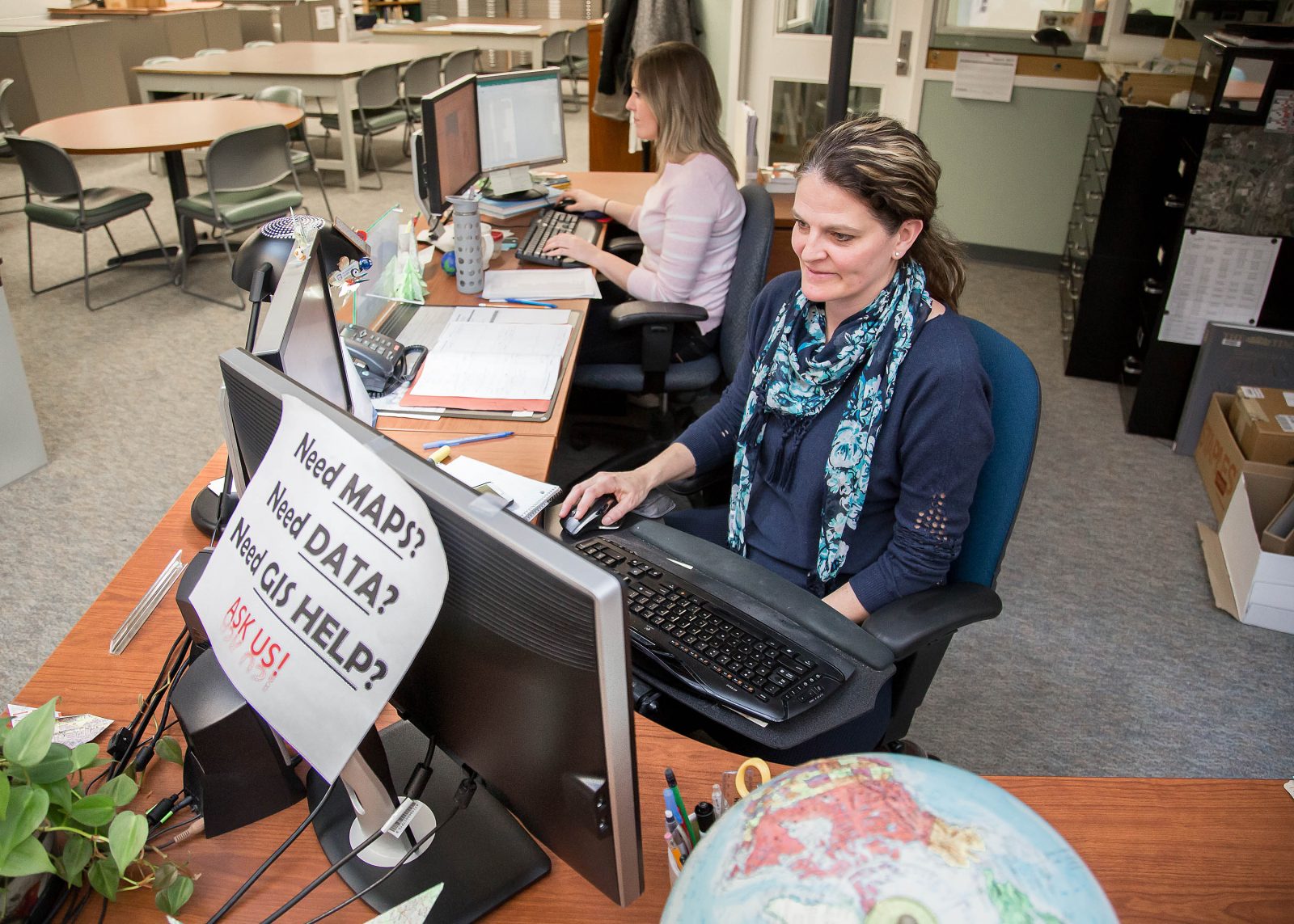
    Whether you realize it or not, geographic information systems (GIS) are part of your everyday life.

    When you plan a trip in Google Maps, you’re using GIS. When news outlets use maps to add visuals to stories, they are made through GIS.

    But the software’s value doesn’t end there.

    GIS is used for spatial analysis, city planning, viticulture research, environment research and sport analysis. Last year’s Esri Canada Scholarship winner from Brock, Kyle Rankin, used GIS to analyze hockey, investigating shots on goal to determine the best place to shoot from in hopes of scoring.

    In an effort to help inform the Brock community of the innovative uses of GIS, the University’s Map, Data and GIS Library is hosting an event on Thursday, March 7.

    Esri Canada, from whom Brock licenses its GIS software, will be at the map library (MCC 306) from 10 to 11:30 a.m. to detail various GIS uses and to answer questions from the University community.

    Esri representatives will discuss both the researcher side of the software for students and faculty, looking at how GIS can support their work, and the administrative side, looking at how GIS can be used for areas such as recruitment and facilities management.

    Register for the event on ExperienceBU.

    Story reposted from The Brock News.

    Tags: , , , ,
    Categories: News

  • Department welcomes visiting scholar from Huaqiao University, China

    Professors shaking hands

    Dr. Michael Ripmeester welcomes Dr. Leon Lian Dong to Brock.

    The Department of Geography and Tourism Studies is pleased to welcome Dr. Leon Lian Dong to Brock. Dr. Dong will be with our Department as a visiting scholar from February – August 2019.

    Dr. Dong is a professor of Landscape Architecture, and the Director of the Center for Sustainable Landscape Research, School of Architecture, Huaqiao University, China. Dr. Dong obtained his PhD in Building Science, from Chongqing University, China, in 1992, and then did his post-doctoral research at Purdue University, Iowa State University and University of Illinois at Urbana-Champaign, USA. Dr. Dong has thirty years of teaching and research experience, multi-disciplinary background. He has completed more than 30 research projects and 40 consulting projects, published 6 books, and nearly 100 research papers.

    Dr. Dong’s current research areas include:

    1. Sustainable site planning and landscape design for tourist destinations
    2. Landscape microclimate design
    3. Human-environment interactions

    Tags: , , , , ,
    Categories: News

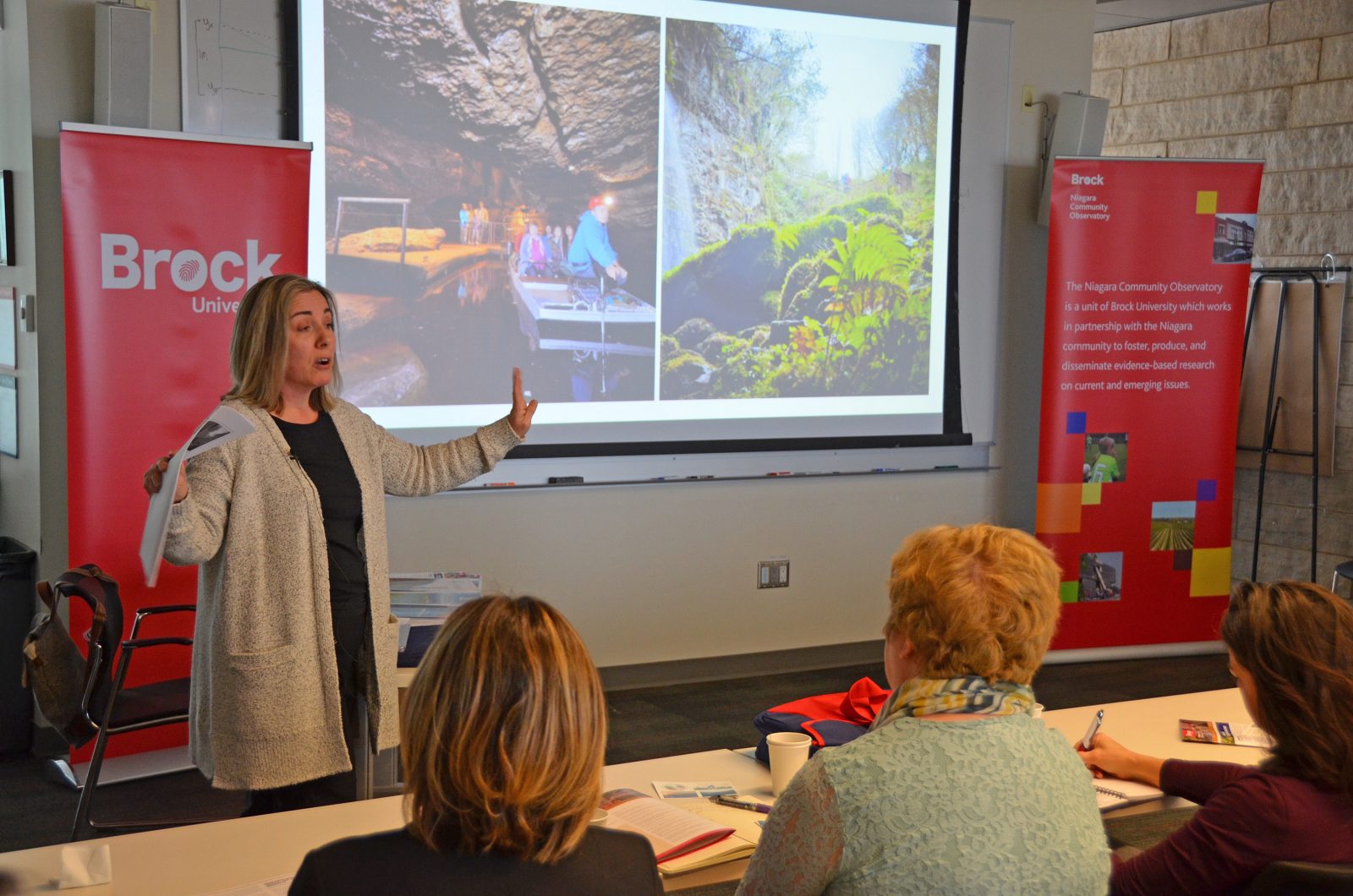
  • Brock research encourages Niagara to explore becoming a UNESCO Global Geopark

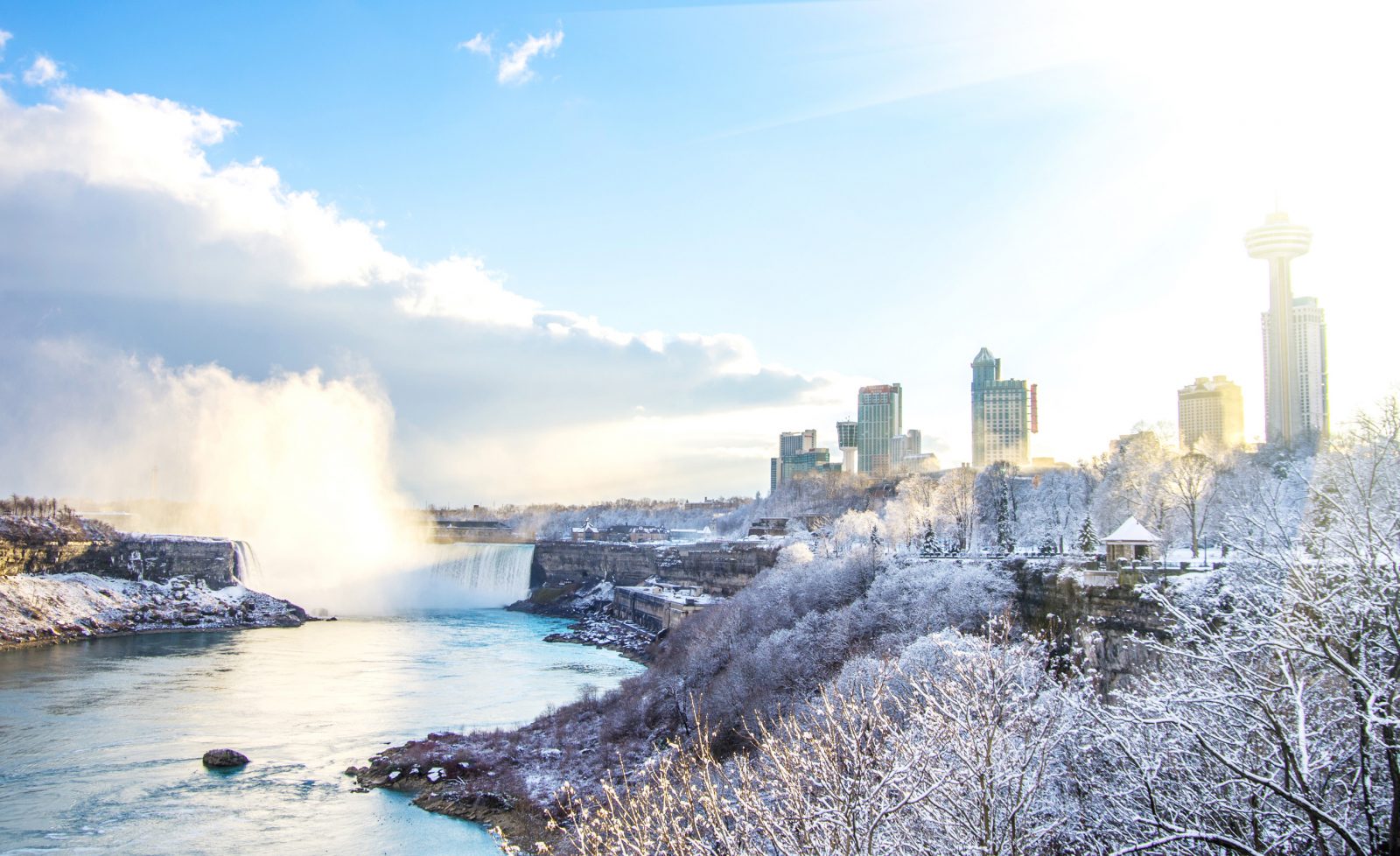
    With the mighty cataracts, vineyards producing critically acclaimed wines and vast networks of bicycle paths, tourists coming to Niagara have many options of what to see and experience. There’s also a world of rocks, canyons, waterfalls and other land features that even many locals don’t know about.

    Niagara’s unique, rich geology — and the economic and cultural activities connected to these features — might be better known if the region was to become a UNESCO Global Geopark, says new research from Brock University’s Niagara Community Observatory (NCO).

    “Being designated a UNESCO Global Geopark allows Niagara to brand itself internationally as a destination for geotourism,” says Carol Phillips, author of the NCO policy brief Ohnia:kara: An Aspiring Global Geopark.

    “Niagara has a fascinating Earth history that has created so many beautiful sites, culminating in Niagara Falls,” says Phillips. “And this brand allows us to showcase those sites as well as the history and culture that has developed around them.”

    The United Nations Educational, Scientific and Cultural Organization (UNESCO) describes a Global Geopark as being a “single, unified geographical area where sites and landscapes of international geological significance are managed with a holistic concept of protection, education and sustainable development.”

    Spearheading efforts for Niagara to become a UNESCO Global Geopark is the geographic educational non-profit group called Geospatial Niagara. The NCO policy brief says the group has identified more than 78 geosites in the region that are of geological, environmental or cultural interest.

    These include the Welland Canal, the Wainfleet Bog, Beamer Falls, Balls Falls, the Mewinzha Archaeology Gallery in Fort Erie and historical sites from the War of 1812, among others.

    The NCO policy brief says, under a geopark system, Niagara Falls would still remain the major draw for visitors to the area. But the tourism industry could be expanded by creating a niche for geotourists interested in seeing Earth history and the historical and cultural sites that have evolved from these unique and significant land features.

    The brief notes that the Niagara Escarpment, on which Brock University sits, has been a UNESCO World Biosphere Reserve since 1990. A geopark designation with infrastructure such as visitor centres and plaques with QR codes “can help the Biosphere Reserve tell its story by guiding people to lesser known geosites as the escarpment winds to its greatest asset, Niagara Falls,” says the brief.

    Darren Platakis, Executive Director of Geospatial Niagara, says another big advantage of Niagara being designated a UNESCO Global Geopark is that it could provide a strong educational component for Niagara students from kindergarten to Grade 12.

    “A Geopark will provide opportunities for students to not only learn and begin to understand our geology and how it is so interdependent with our environment, culture and history, but they can also gain a deeper understanding and appreciation of the 12,000 years of Indigenous history in Niagara,” says Platakis.

    “This Indigenous history is an extremely important element to the overall development of the application and programming for the Geopark,” he says. “Students, local residents and tourists will see Niagara with a new set of eyes.”

    Platakis says the designation could also attract researchers and students to the area, with programs and services connecting into a wide range of studies at Brock and Niagara College.

    Geospatial Niagara submitted an expression of interest to the Canadian National Committee for Geoparks and is in the process of applying to UNESCO to become a Global Geopark.

    The NCO’s policy brief looks at the costs and benefits of geoparks in China, the United Kingdom and France and concludes that a UNESCO Global Geopark designation could benefit all 12 municipalities in Niagara.

    “This policy brief encourages all levels of government and sectors of society in Niagara to consider the benefits of a UNESCO Global Geopark and how they may each play a part to make it a reality,” says NCO Director Charles Conteh.

    “The vision behind the Global Geopark initiative in Niagara is closely aligned with the sociocultural and economic advancement of the region,” he says. “Leveraging and promoting this initiative should be a fundamentally community-driven effort if it is to be sustainable.”

    The NCO brief lays out a number of “next steps” in making the UNESCO Global Geopark a reality in Niagara, emphasizing that it will take a broad community effort across the environment, education and tourism sectors.

    Story reposted from The Brock News.
    Tags: , , , ,
    Categories: News

  • Global geopark promises ‘potential and opportunity’

    Brock University releases policy brief on initiative

    REPOSTED FROM THE ST. CATHARINES STANDARD
    February 07, 2019 | By: Allan Benner

    Geopark

    Carol Phillips from the Niagara Community Observatory at Brock University discusses the potential held by establishing a UNESCO Geopark in Niagara. – Allan Benner , The St. Catharines Standard

    Niagara’s tourism potential should not be limited to Niagara Falls.

    And an initiative launched about five years ago by Geospatial Niagara should help the region boost its potential for drawing visitors to some of the more remote attractions the peninsula has to offer.

    Niagara Community Observatory research co-ordinator Carol Phillips presented a new policy brief Thursday morning that focuses on the potential that developing a UNESCO Global Geopark could hold for Niagara — such as bringing more tourists to the area and giving them reasons to stay longer.

    Phillips said a proposed geopark, to be called Ohnia:kara, would encompass the entire Niagara Region and highlight at least 78 attractions in all 12 local municipalities — “from Beamer Falls in Grimsby to Niagara Falls, from the Wainfleet Bog and Welland Canal, all the way on down.”

    She described it as an “international geo-tourism brand” that can be used by communities to promote natural and heritage resources while focusing on sustainable economic development and fostering conservation and education.

    For a tourism-focused region such as Niagara, she said being designated a UNESCO Global Geopark “is a way to advertise to potential visitors that this is a geography that you need to see and experience, and that includes everything from its geology through to its cultural history and its economic character.”

    She said there were 12.9 million person visits to Niagara in 2017, of which 8.4 million were visitors from elsewhere in the province, and those visitors spent $2.36 billion during their stays.

    “But less than half of those visitors stayed overnight, and of those who did the bulk of them only stay one night, maybe two,” Phillips said.

    A geopark designation, she added, will help promote Niagara “as more than just the day trip.”

    Phillips stressed that there is no regulatory limitations associated with the UNESCO designation that would further limit land use planning in the region.

    The initiative was first proposed about five years ago by Geospatial Niagara founder Darren Platakis, who first learned about a geopark in southern New Brunswick called Stonehammer.

    “When I stumbled upon the Stonehammer geopark site, all I saw was potential and opportunity,” Platakis said.

    He said the initiative is “all about creating those opportunities and living up to the potential that Niagara has, globally — beyond Niagara Falls and Niagara-on-the-Lake.”

    “We have such a wealth of sites to see, opportunities,” he added.

    Platakis said the initiative holds a great deal of educational potential, too.

    Although a mandate of Geospatial Niagara is promoting geo-literacy, he said many Grade 12 students can’t identify all the municipalities within Niagara Region.

    “That’s because they’re not invested in their communities. They don’t learn about their communities.”

    The global geopark initiative is “a way to attract students to Niagara to do research, to keep students here, for students that are from Niagara that go away to university it’s a stronger pull factor for them to come back to their communities if they become involved,” he said.

    Geospatial Niagara secretary Ian Lucas said funding will be needed to continue moving the project forward.

    “We have lofty goals and realistic expenses,” he said, responding to a question from an audience of about 40 people.

    “We will be coming to the point very soon where we will be actually coming out and saying, here’s our ask. This is what we would like in terms of financial support, idea support, in-kind support.”

    Lucas said the organization will continue meeting with municipal councils to discuss plans and potential.

    Phillips said much of the preliminary work has been completed by Geospatial Niagara.

    For instance, she said a formal expression of interest has been submitted to the Canadian National Committee for Geoparks, allowing Ohnia:kara to officially be identified as an aspiring geopark.

    Platakis struggled with emotion while reflecting on the progress that had been made towards making a project he started five years ago a reality.

    “If you would have said to me last year at this time we’d be here today doing this, I probably wouldn’t have believed it.”

    But thanks to the work of Geospatial Niagara members, Niagara Community Observatory and community support, Platakis said efforts to establish the geopark have reached “the end of one chapter and the beginning of another one.”

    Story reposted from The St. Catharines Standard.

    Tags: , , , ,
    Categories: News

  • Brock research explores potential new tourism niche in Niagara through UN designation

    Visitors coming to Niagara have lots to see and do thanks to the region being a top tourism destination.

    New research by Brock University’s Niagara Community Observatory (NCO) says there’s potential to enhance Niagara’s vibrant tourism industry if the region were to become a UNESCO Global Geopark.

    A Global Geopark is an area containing “sites and landscapes of international geological significance,” according to UNESCO.

    “Being designated a UNESCO Global Geopark allows Niagara to brand itself internationally as a destination for geotourism,” says Carol Phillips, author of the NCO’s policy brief Ohnia:kara, An Aspiring Global Geopark.

    “Niagara has a fascinating earth history that has created so many beautiful sites, culminating in Niagara Falls,” she says. “This brand allows us to showcase those sites as well as the history and culture that has developed around them.”

    The policy brief discusses the concept of a geopark in more detail, describes the efforts of the geographic educational non-profit Geospatial Niagara to apply to become a geopark, offers case studies from other areas of the world and outlines “next steps” in the application process.

    The NCO will launch the policy brief Ohnia:kara, An Aspiring Global Geopark Thursday, Feb. 7 at Brock University. A panel will discuss the brief and the way forward for Niagara.

    What: Launching of NCO policy brief Ohnia:kara, An Aspiring Global Geopark
    When: Thursday, Feb. 7 from 9 to 11 a.m.
    Where: Room 207, Cairns Family Health and Bioscience Research Complex, Brock University
    Who: Carol Phillips, Research Co-ordinator, Niagara Community Observatory
    Panelists: Darren Platakis, Geospatial Niagara, Ohnia:kara Steering Committee; David Fennell, Professor, Geography and Tourism, Brock University, Ohnia:kara Steering Committee; Walter Sendzik, Mayor, St. Catharines; Phil Davis, Indigenous Culture Liaison, Ohnia:kara Steering Committee.

    Story reposted from The Brock News.
    Tags: , , , , ,
    Categories: News

  • Congratulations to Khuram Farrukh on the successful completion of his MA in Geography thesis

    The Department of Geography and Tourism Studies would like to extend congratulations to Khuram Farrukh and his committee for the successful defense of his Master of Arts in Geography thesis entitled ‘Social Media Representations of Gilgit-Baltistan, Pakistan, and their Relation to Metropolitan Domination: The Case of Attabad Lake’ on February 4, 2019.

    Khuram’s research was supervised by Drs. David Butz (Supervisor, Geography & Tourism Studies), Nancy Cook (Committee Member, Sociology), and Jeff Boggs (Committee Member, Geography & Tourism Studies). Many thanks to Ebru Ustundag (GPD Designate, Geography & Tourism Studies), and External Examiner, Shafqat Hussain (Department of Anthropology, Trinity College, Connecticut, USA).

    We wish Khuram all the best for his future endeavours!

    Tags:
    Categories: News

  • Social Sciences celebrates outstanding faculty and staff

    REPOSTED FROM THE BROCK NEWS
    February 01, 2019 | by 

    How people engage with their families, communities, governments and environments, as well as each other, helped inspire the exciting and diverse research recognized at the annual Celebration of Excellence in the Social Sciences.

    Held at Pond Inlet on Jan. 29, the event was an opportunity to recognize achievements on both sides of the education spectrum, celebrating both teachers and learners.

    “Although the Celebration of Excellence is focused on individual accomplishments, I want to acknowledge the collective effort that goes into supporting each of those individuals,” Ingrid Makus, Dean of the Faculty of Social Sciences (FOSS), told the crowd of students, staff, faculty members and supporters who gathered for the event.

    Makus was delighted to recognize the outstanding student research and writing happening within the Faculty and to formally announce two faculty honours.She thanked the many staff and faculty within FOSS, members of Brock’s service departments and the University’s senior administration for their support.

    Professor Rebecca Raby from the Department of Child and Youth Studies was presented with the Distinguished Researcher award. Raby serves as the Director of Brock’s Social Justice Research Institute (SJRI) and is affiliated with master’s programs in Social Justice and Equity Studies and Sociology.

    “It is an honour to receive this award,” Raby said. “It reflects the shared creativity, commitment and hard work of incredible faculty and student collaborators that I have been able to work with, as well as excellent mentorship, most notably from Jane Helleiner in Sociology and from all of the past and present members of the SJRI’s Faculty Steering Committee.”

    Nicole Goodman, Assistant Professor in the Department of Political Science, received the Untenured Researcher of the Year award.

    Goodman was humbled by the honour.

    “I’m very grateful for the opportunities and support provided to me by the Department of Political Science and the Faculty of Social Sciences at Brock, which has allowed my research to have a bigger impact in the communities it serves.”

    The two faculty awards were created to recognize FOSS members with consistent records of outstanding research achievements as reflected in the quality and quantity of refereed publications, grants awards and other research activities.

    The Distinguished Researcher award for tenured faculty considers accomplishments from the last five academic years. The Untenured Researcher of the Year award considers accomplishments within the previous academic year.

    Associate Dean Graduate and Research Dawn Zinga presented certificates to graduate students in the Faculty who exhibited exceptional research or writing skills in the past year.

    Alexandra Perna, a master’s student in Geography, was among the recipients of a Graduate Student Research Excellence award.

    Perna said the faculty and staff in Geography and Tourism were a big factor in her success.

    “As much as it’s my award, this is really a reflection of my whole department,” she said. She credited her “amazing” supervisor, Associate Professor Ebru Ustundag, with “making me feel that I can accomplish anything.”

    Perna is now thinking of pursuing a PhD, something she said she wouldn’t have considered without Ustundag’s encouragement.

    According to Perna, the most significant benefit of the award may be the feedback from the adjudication committee.

    “Getting feedback was so awesome,” she said. “It shows their dedication in reading all these proposals. They aren’t just skimming through them. They’re actually helping the students learn in a different way and become better.”

    Lisa Michelle Whittingham, who calls herself a community-based researcher, also received a Research Excellence award. The master’s student in Child and Youth Studies was grateful to have her work validated by the Faculty.

    “I feel this shows they have faith that my research can make positive impact on the community,” she said.

    During the event’s closing remarks, Tim Kenyon, Vice-President Research, marvelled at the breadth and depth of the research represented in FOSS.

    “What particularly impresses me is that your research and scholarship address a range of challenges we face as individuals, a society and a global community,” he said.

    I would like to congratulate those who were recognized today and extend my appreciation to all faculty, students and staff for creating such a dynamic community that makes a difference.

    The Celebration of Excellence program listing all award recipients is posted on the Faculty of Social Sciences website along with a PDF of the Powerpoint presentation that accompanied the event. Photos of the event are available on the BrockUFOSS Facebook page.

    Story reposted from The Brock News.

    Tags: , , , ,
    Categories: News

  • Department celebrates successes of 2018 with inaugural newsletter

    In January 2019, the Department of Geography and Tourism Studies published its inaugural annual newsletter highlighting departmental successes in 2018. The newsletter is available to download on our Departmental Publications page.

    Newsletter cover page. Brock campus with students

    Tags: , , , , , , , ,
    Categories: News

  • Julia Baird and Marilyne Jollineau awarded SSHRC Insight Development Grant

    On January 30, 2019, Drs. Julia Baird (GeoTour), Marilyne Jollineau (GeoTour), and Ryan Plummer were awarded an Insight Development Grant from the Social Sciences and Humanities Research Council for their project “A comparative analysis of approaches to evaluating ecological outcomes from environmental stewardship”. Read more about this project on Dr. Baird’s Water Resilience Lab website.

    Tags: , , , , ,
    Categories: News