Articles from:November 2022

  • Brock community mourns passing of Val Fleming

    FROM THE BROCK NEWS | THURSDAY, NOVEMBER 24, 2022 | by 

    Val and Art Fleming. (Photo supplied by Grimsby Lincoln News/Niagara this Week)

    The Brock community is saddened by the loss of Val Fleming (BA Geography ’72; LLD ’10), a long-time supporter of the University who passed away Wednesday, Nov. 16 at the age of 94.  

    Fleming received a Bachelor of Arts in Geography from Brock in 1972 and provided vision and leadership to the University by serving three terms on the Board of Trustees from 1998 to 2006. She was a member of the Capital Projects and Facilities, Development and Community Relations and Nominating committees. 

    Fleming and her late husband Art have supported numerous University initiatives, programs and spaces through the Fleming Foundation. The couple’s generosity began with an original gift to help build Taro Hall, which has since been redeveloped as the Goodman School of Business.  

    In the early 2000s, the Fleming Foundation provided support to build a new student and community health and fitness centre, now called the Walker Sports Complex. The gift was recognized by naming a lobby in Academic South the ‘Art and Val Fleming Commons.’ 

    The foundation’s most recent gift to the Marilyn I. Walker School of Fine and Performing Arts reflected the Flemings’ interest in supporting the humanities at Brock.  

    In 2010, the University presented Fleming with an honorary degree in recognition of her contributions to the Brock and Niagara communities. 

    A celebration of life will be held Sunday, Dec. 4 at 2 p.m. at the Beamsville Church of Christ at 4900 John Street, Beamsville. Brock’s flags will be lowered to half-mast on the day of the celebration of life in remembrance of Fleming and her service to the University.  

    REPOSTED FROM THE BROCK NEWS
    Tags: , , ,
    Categories: News

  • Brock researchers seek to educate on animals and entertainment

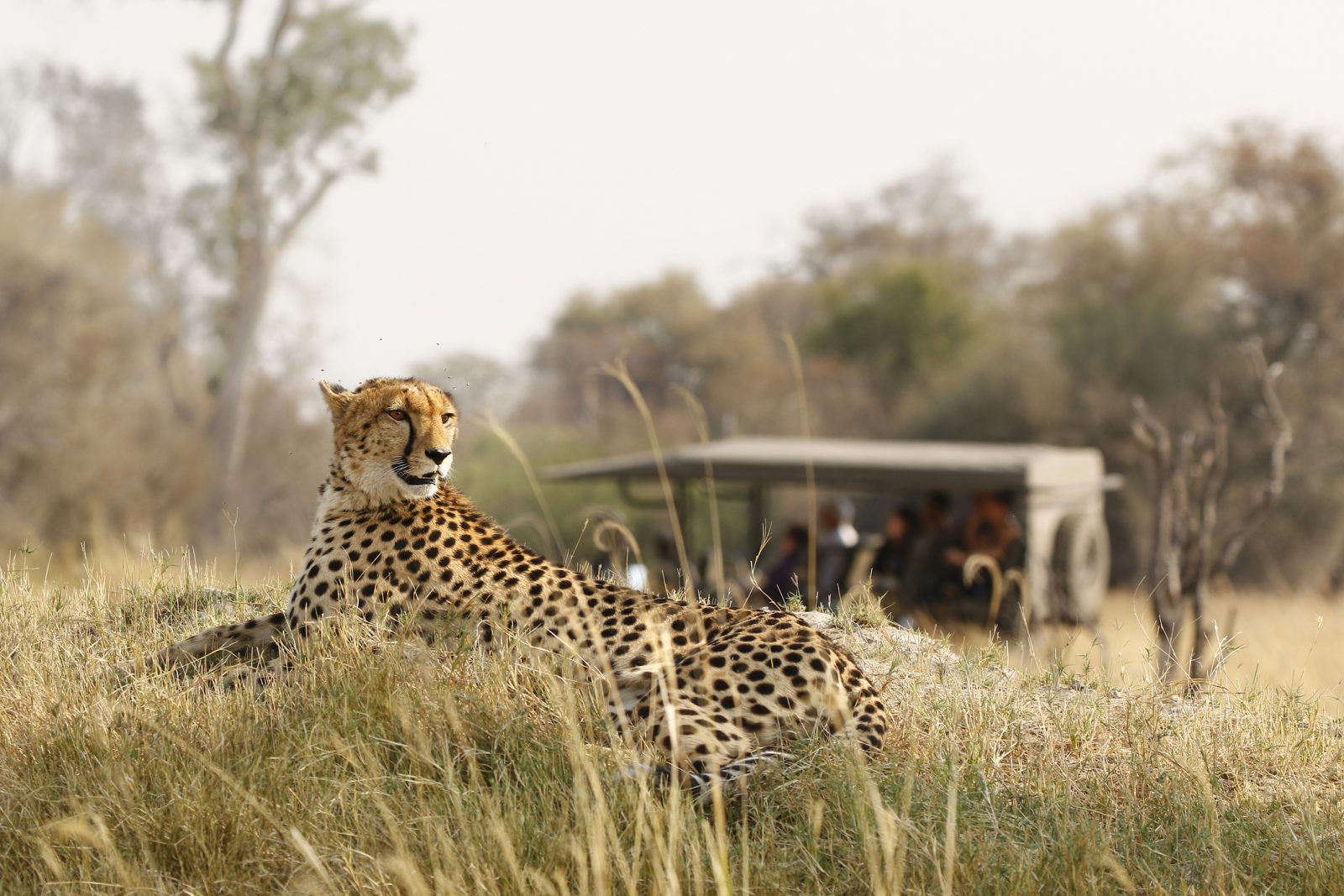
    A cheetah in the savannah with a safari van in the background

    Professor David Fennell and Sarah Coose, a graduate student in the MA in Geography, wrote about animals and entertainment for a new book on animal welfare.

    Humans using animals for entertainment is the subject of a recent collaboration between Professor David Fennell and Master of Arts (MA) student Sarah Coose in Brock’s Department of Geography and Tourism Studies.

    The researchers recently contributed a chapter entitled “Animals in Entertainment” to The Routledge Handbook of Animal Welfare looking at the role of animals in tourism and media industries, from wildlife viewing to sport to advertising, which shows how animals are used for human profit and how the social cost of mistreating animals can be one of the biggest drivers of change in inconsistently regulated fields.

    Science, agriculture and some areas of entertainment, such as film locations, set rules or follow legislation around animal welfare, but tourism venues are often unregulated. Fennell says tourism is “generally perceived as simply an act of leisure or recreation — but we need to recognize that it is arguably the world’s largest industry.”

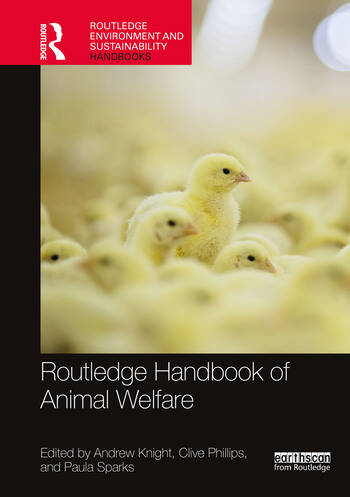
    book cover for The Routledge Handbook of Animal Welfare features several yellow chicks

    The Routledge Handbook of Animal Welfare was published as part of the Routledge Environment and Sustainability Handbooks series earlier this year.

    Fennell and Coose believe education is the key to improving this situation, because while research in the area is growing worldwide, teaching, classroom learning and public awareness has not kept pace.

    “The United Nations World Tourism Organization (UNWTO) has a global code of ethics for tourism, but grassroots initiatives are required to build capacity for changes at broader levels,” says Fennell. “What we are trying to do here at Brock, and now more widely, is establish normative change at different scales and in different contexts to map out a more responsible industry.”

    Coose, who studied Ecology, Evolution and Behaviour in her undergraduate degree at Boise State University, is currently undertaking research about ethics, animal welfare and the efficacy of conservation related to animals and ecotourism under Fennell’s supervision.

    “My MA thesis is aimed at assessing to what degree the preconceived beliefs that tourists hold on animal ethics colour their perceptions of the ethicality of the animal tourism venues they visit,” says Coose. “Collaborating on this chapter allowed me the opportunity to do a deep dive into the literature on animal ethics and to get to know the topics of discourse and terminology used in the field, which is incredibly useful.”

    One of the key takeaways from the chapter is that tourists themselves hold much of the power to effect change, since in the absence of laws and fines, consumer attitudes toward a venue’s care for animals is a key motivator.

    “Tourists vote with their dollars and their views,” says Coose. “If you think someone is providing an unethical product, don’t give them your money or exposure.”

    Fennell adds that he has worked with Tourism Studies undergraduate student Val Sheppard (BTS ’03, MA ’05) to develop “a framework that encourages tourists to assess and then rate wildlife tourism attractions, not unlike TripAdvisor, on aspects of governance, conservation and welfare,” which would increase public awareness and accessibility of information.

    While the chapter presents examples of public and activist pressure resulting in the decline of unethical treatment of animals, such as elephant rides, the authors say there is more work to be done.

    “The industry has responded by refusing to use some animals, but long-standing cultural practices and economic realities continue to deny the welfare, rights, agency and interests of animals,” says Fennell.

    He is clear that education “has to be the driving force” of a change in attitudes.

    “If we want a more responsible and sustainable tourism industry when it comes to animals, education is the key,” says Fennell. “Much of my research is now dedicated to animal ethics literacy, social contract theory and curriculum development to work against the anthropocentrism and speciesism in our field.”

    STORY REPOSTED FROM THE BROCK NEWS

    Tags: , , , , ,
    Categories: News

  • In-person, online events planned to mark GIS Day

    Geographic information systems (GIS) are everywhere, with many people not understanding the extent of their use. 

    In recognition of Geography Awareness Week Monday, Nov. 14 to Friday, Nov. 18 and GIS Day on Wednesday, Nov. 16, Brock University’s Map, Data and GIS Library (MDGL) has planned several initiatives in partnership with the Tourism and Geography Society (TAGS) student group to engage the Brock community and bring awareness to the beneficial geographic tool.  

    “GIS is critical to our society and it’s important to recognize its significance in our everyday lives,” says Sharon Janzen, Map Library Associate and Geospatial Data Co-ordinator with the MDGL. “We use GIS to map directions and find hotels close to our destination. Satellite imagery helps us track storm paths of hurricanes and tornadoes and analyze changes in landscapes over time. GIS is also used in city planning, for example, to visualize the distribution of sports facilities, and in communicating public engagement, for example, by plotting online voting results by district. The uses are endless.” 

    To kick off the week, TAGS is hosting a scavenger hunt that will have participants searching for five locations across campus. Two of the spots will include geocaching, which involves participants using their mobile device as a GPS to find containers called ‘geocaches.’ Participants can enter a contest to win a prize by taking a photo of each of the five locations, sharing them via Instagram stories and tagging @brocktags by 5 p.m. Wednesday, Nov. 16. More details are available on Instagram.  

    On Wednesday, Nov. 16 for GIS Day, the Brock community is invited to the MDGL in Mackenzie Chown Complex C306 for a pizza lunch from 1 to 2 p.m. Pizza slices, pop and chips will be sold for $2 each (cash only). At 2 p.m., complimentary cake will be served featuring a map created by Master of Sustainability student Baharak Razaghirad, titled “The Distribution of Trees within the Town of Lincoln.” Geography and GIS-related games will be available, such as map-themed board games and jigsaw puzzles and a geography-related word scramble called ‘Where in Niagara?’ 

    Also taking place is a free weeklong GIS Days virtual conference hosted by Western University Libraries packed with events open to Brock students and employees. Two representatives from the Brock community will be leading presentations as part of the conference.  

    Brock alumna Jessica Linzel (BA ’18, MA ’20), Director of Community Engagement for The Brown Homestead and past Esri Canada GIS Scholarship recipient, will give a seven-minute lightning talk Tuesday, Nov. 15 at 11 a.m. about using StoryMaps to present complex ideas about history in a more accessible way. Linzel created a series of web maps that outline the boundaries of The Brown Homestead and show how the land evolved from its Indigenous origins and then Loyalist settlements to several generations of Brown family and new owners who partitioned and sold or purchased land. 

    Janzen will be leading a one-hour tutorial Thursday, Nov. 17 at 11 a.m. that will introduce participants to ArcGIS Online, a web-based dynamic mapping software. She will use the story of Laura Secord’s famous walk from Queenston to Thorold as a topic for participants to create a map. No experience is necessary, but curiosity is an asset. A valid login for the website is required (public or organizational accounts welcome). Visit the ArcGIS website to sign up for a public account. 

    Registration is required to access the presentations; however, there is no registration fee or deadline. The interactive program can be used to search by presenter, presentation title or location. 

    Questions about events planned for GIS Day can be directed to Janzen at [email protected].

    STORY REPOSTED FROM THE BROCK NEWS

    Tags: , , , , , , , ,
    Categories: News

  • David Fennell makes global list of top scientists

    Nearly three dozen Brock University researchers appear on Stanford University’s recently updated list of the world’s top two per cent of scientists with the most citations.

    First created in 2019 by Stanford University health researcher John P. A. Ioannidis, the list rates scientists globally on metrics that measure the types and numbers of citations they have.

    Citations, which appear in academic papers, are references made to earlier research. The number of times a researcher’s work is referenced in other peer-reviewed work is one important indicator of their research impact and reputation.

    The latest update to this list includes a career-long database containing 195,605 researchers globally, or about two per cent of researchers worldwide. Though billed as a list of scientists, the ranking includes social sciences and humanities scholars.

    Thirty-five of these researchers are from Brock University.

    “This ranking shows the strong place that Brock researchers hold among the most influential and high-impact scholars worldwide,” says Vice-President, Research Tim Kenyon. “It is a powerful illustration of the world-class inquiry happening at Brock every day, in every discipline.”

    The Brock University researchers who are among the top two per cent of scientists with the most citations are:

    • Stephen Anco, Professor, Mathematics, Faculty of Mathematics and Science
    • Michael Ashton, Professor, Psychology, Faculty of Social Sciences
    • Anthony Bogaert, Professor, Health Sciences, Faculty of Applied Health Sciences
    • Uwe Brand, Professor, Earth Sciences, Faculty of Mathematics and Science
    • Ian Brindle, Professor Emeritus, Chemistry, Faculty of Mathematics and Science
    • Katrina Brudzynski, Adjunct Professor, Faculty of Mathematics and Science
    • Stefan Brudzynski, Emeritus Professor, Psychology, Faculty of Social Sciences
    • Stephen Cheung, Professor, Kinesiology, Faculty of Applied Health Sciences
    • Vincenzo DeLuca, Professor, Biology, Faculty of Mathematics and Science
    • Ivo Düntsch, Professor Emeritus, Computer Science, Faculty of Mathematics and Science
    • Bareket Falk, Professor, Kinesiology, Faculty of Applied Health Sciences
    • Thomas Farrell, Professor, Applied Linguistics, Faculty of Social Sciences
    • Maurice Feldman, Professor, Applied Disabilities Studies, Faculty of Social Sciences
    • David Fennell, Professor, Geography and Tourism Studies, Faculty of Social Sciences
    • Martin Head, Professor, Earth Sciences, Faculty of Mathematics and Science
    • Gordon Hodson, Professor, Psychology, Faculty of Social Sciences
    • Herbert Holland, (late) Professor, Chemistry, Faculty of Mathematics and Science
    • Tomas Hudlicky (late) Professor, Chemistry, Faculty of Mathematics and Science
    • Princely Ifinedo, Professor, Information Systems, Goodman School of Business
    • Frans Koffyberg, Professor, Physics, Faculty of Mathematics and Science
    • Neil McCartney, Faculty of Applied Health Sciences (no longer at Brock)
    • Cheryl McCormick, Professor, Psychology, Faculty of Social Sciences
    • Donald McCreary, Adjunct Professor, Psychology, Faculty of Social Sciences (no longer at Brock)
    • Catherine Mondloch, Professor, Psychology, Faculty of Social Sciences
    • Georgii Nikonov, Professor, Chemistry, Faculty of Mathematics and Science
    • Gary Pickering, Professor, Biological Sciences and Psychology, Faculty of Mathematics and Science
    • Piers, Faculty of Mathematics and Science (no longer at Brock)
    • Ryan Plummer, Professor, Environmental Sustainability Research Centre, Faculty of Social Sciences
    • Peter Rand, Emeritus, Biological Sciences, Faculty of Mathematics and Science
    • Andrew Reynolds, Professor, Faculty of Mathematics and Science (no longer at Brock)
    • Kirill Samokhin, Professor, Physics, Faculty of Mathematics and Science
    • Sidney Segalowitz, Professor Emeritus, Psychology, Faculty of Social Sciences
    • Martin Tammemägi, Professor Emeritus, Health Sciences, Faculty of Applied Health Sciences
    • Peter Tiidus, Professor, Kinesiology, Faculty of Applied Health Sciences
    • Teena Willoughby, Professor, Psychology, Faculty of Social Sciences

    The Stanford-based list of top researchers uses a number of methods to create a single ranking, in spite of large differences in the customs and practices of citation across disciplines.

    Citation indices do not universally capture the impacts of all research types, Kenyon also notes, including work published in books rather than in journals.

    “No single type of measure tells the whole story of great research,” he says. “A great deal of excellent, high-impact research and creative inquiry leads directly to policies, community practices, live performances or works of art, rather than to other academic publications.”

    Brock’s representation in the Stanford University list has grown substantially from the original 2019 list.

    “This as a valuable sign of Brock’s continued development of research excellence and intensity across disciplines,” says Kenyon.

    STORY REPOSTED FROM THE BROCK NEWS

    Tags: , , , ,
    Categories: News