Articles from:April 2022

  • Virtual tourism study seeking Brock students for short survey

    Master’s student Abigail Mensah has questions about the future of sustainable tourism — and she is hoping to get answers from fellow Brock University students.

    With supervisor and principle investigator Professor David Fennell in the Department of Geography and Tourism Studies, Mensah has developed a survey that can be completed in about 15 minutes online to explore the use of technology to facilitate remote tourism.

    The project, “Rethinking Consumerism, Innovation and Tourism Sustainability in a Post-Viral World: A Case of Virtual Tour Innovation Usage in Niagara’s Geoparks,” supports Mensah’s thesis research in the Master of Arts in Geography program.

    Mensah, who holds a Bachelor of Science in Hospitality and Tourism Management from the University of Cape Coast in Ghana, says her research connects “the influence of the COVID-19 crisis on people’s future travel preferences and the role of virtual tour innovations, such as Personalized Interactive Real-time Tours (PIRTs), in meeting tourism needs while promoting sustainability.”

    Once completed, results of the study will be shared with the Brock community as well as the board of the Niagara Peninsula Aspiring Geopark.

    Mensah says that PIRTs are an “ethical and responsible alternative” to high-emission travel because they allow tourists to stay home and connect with local tour guides in a live, interactive, virtual experiences facilitated by technology.

    She adds that safe and accessible tourism opportunities for those with restrictions on mobility, transportation or costs for travel and revenue to support local employment, conservation and environmental protection are additional benefits to the model.

    All Brock students are invited to complete the survey.
    Tags: , , , , , , , , ,
    Categories: News

  • Brock students studying climate change plant tree on campus

    Brock University students capped off a course on the climate crisis with a commitment to positive change on Earth Day, Friday, April 22.

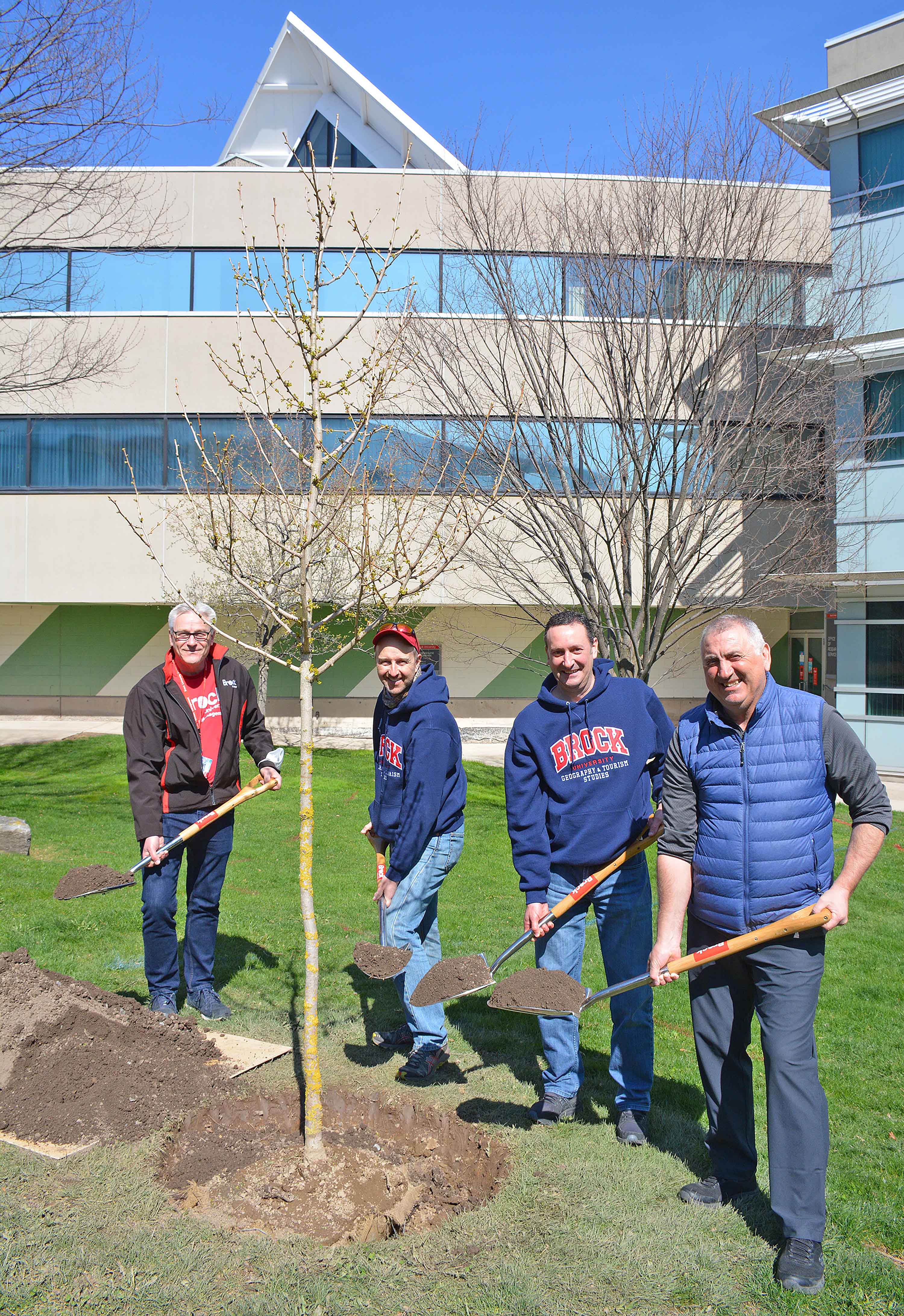
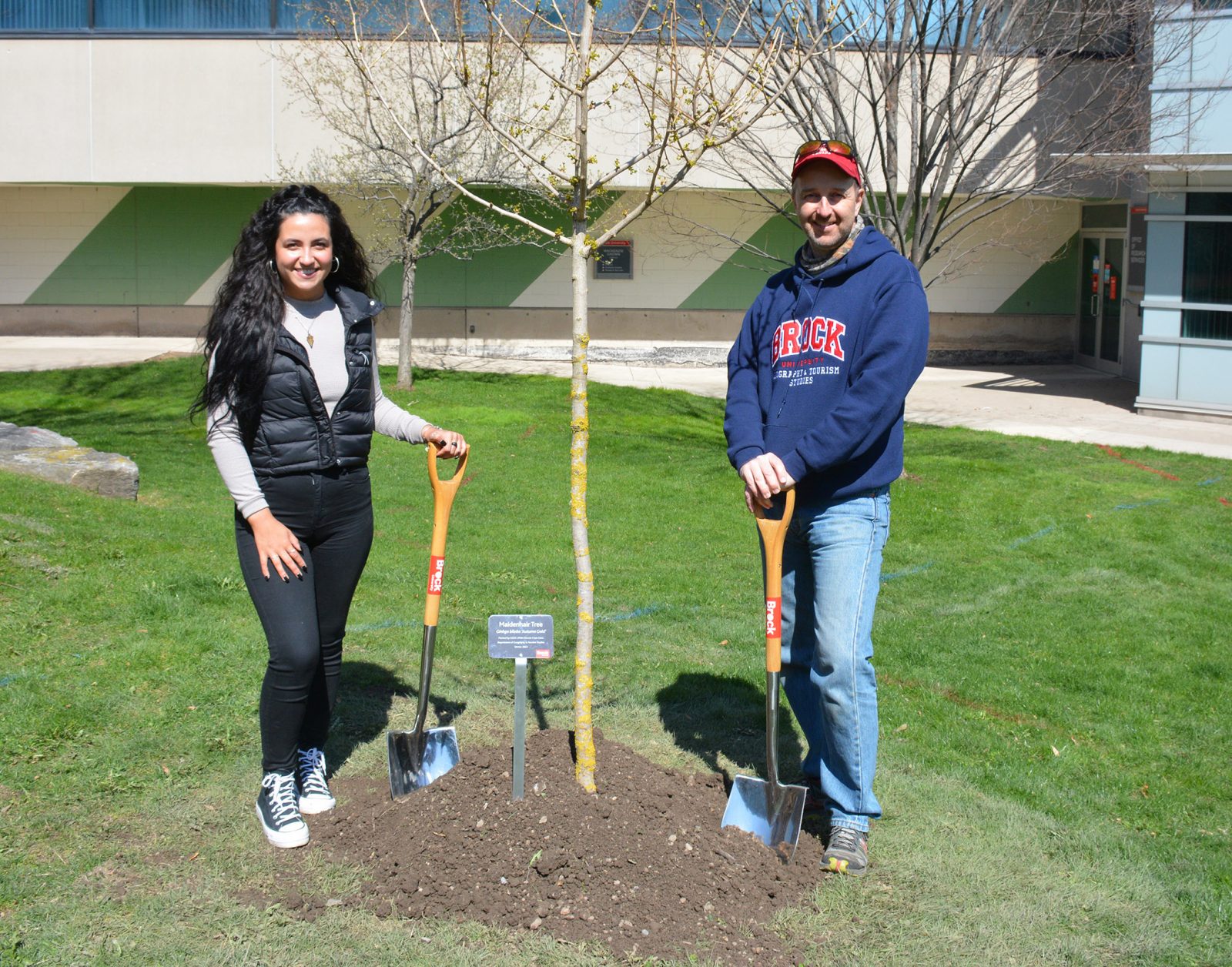
    A small group joined their instructor, Adjunct Professor Jayson Childs, and Professor and Chair Michael Pisaric to plant a tree outside the offices of the Department of Geography and Tourism Studies.

    Childs says the idea to raise money to plant a tree arose from an awareness of how much time students and scholars spend using computers.

    Four men holding shovels with dirt stand around a tree being planted on a sunny day

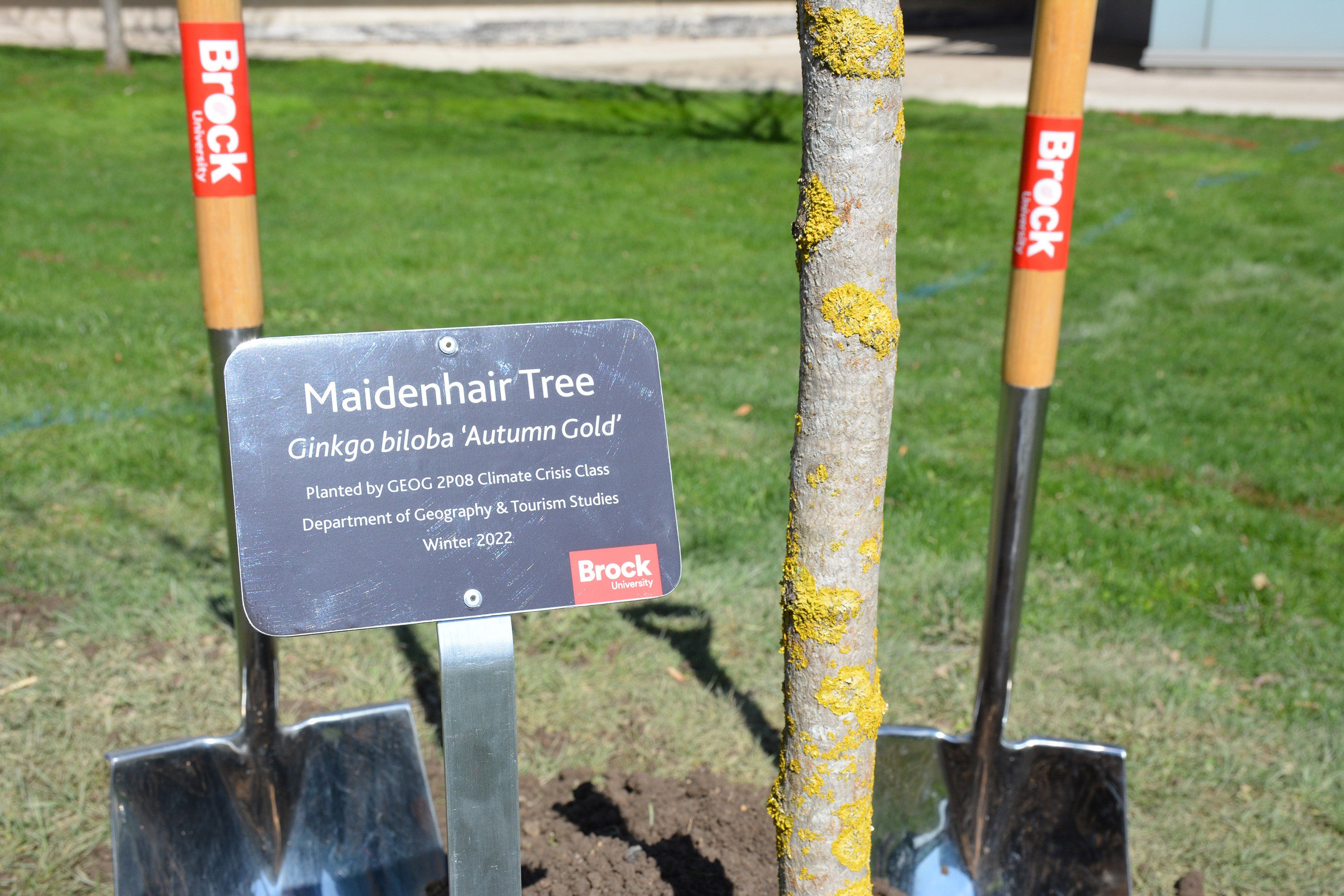
    The students of GEOG 2P08, Climate Crisis, along with instructor Jayson Childs and Professor Michael Pisaric, pooled their resources to donate a new Ginkgo biloba to Brock’s campus for future generations, which was planted to celebrate Earth Day on Friday, April 22. From left: John Dick, Manager of Ground Services, Childs, Pisaric and Dimitre Iankoulov of the Department of Geography and Tourism Studies.

    “I thought perhaps we could do an optional, voluntary fundraising drive to purchase a tree to plant on campus to try to mitigate some of the emissions associated with all of us sitting on our computers, while also bringing a variety of other benefits to campus,” he says.

    At Pisaric’s suggestion, they selected a Ginkgo biloba tree, which is known for dropping all its leaves at once when the first frost strikes. The species has been planted on other university campuses to help researchers track the date of the first frost from year to year, creating a specific, local data set.

    John Dick, Manager of Ground Services, says his team tries to keep plantings as diverse as possible, but as there are only a few other Ginkgo biloba trees on campus, they were more than happy to accommodate this request.

    “This was an initiative of the class, which is awesome,” Dick says. “We certainly appreciate when someone wants to add to the campus landscape.”

    Childs says planting trees is one of the “simple activities anybody can do to help sequester carbon and mitigate climate change” but outlines several other benefits, too:

    • Trees planted in yards act as a buffer for warm temperatures by providing shade and cooling neighbourhoods up to 5o
    • Trees absorb precipitation, which then helps reduce overland runoff and soil erosion.
    • Urban forests play an integral role in improving air quality and the psychological and social well-being in a community.
    • Planting trees can improve local biodiversity by providing habitat.

    Second-year Concurrent Education student Juanita Ayerbe Lozano says an early course assignment that required her to assess how many trees would be needed to offset her own carbon footprint got her thinking about the emissions of a class with almost 500 students. Reflecting on that impact, she jumped at the chance to get involved in the tree planting initiative.

    “Starting local, that was the biggest take away for me,” says the Niagara-on-the-Lake resident. “It’s not really in my control to fix everything and completely stop climate change, but if I just start small, start local, it can go a long way.”

    Pisaric looks forward to seeing the tree donated by this year’s Climate Crisis students thriving for decades to come.

    “This initiative led by Dr. Childs provides the students in our Climate Crisis course with a practical experience directly related to the content they learned,” says Pisaric. “Using the concept of carbon offsets, he taught the students that everyday activities such as enrolling and participating in their course work can have ecological impacts, but at the same time, showed them that there are mechanisms to lessen those impacts.”

    Tags: , , , , , , , , , , , ,
    Categories: News

  • Future educators share ideas for nature learning with community

    A class of Brock students recently took in the fresh air at Ball’s Falls Conservation Area — all while sharing ideas that will help local children to do the same.

    Students in CHYS 2P16: Principles of Community Engagement in Education spent the last day of Winter Term classes sharing their research and enjoying the natural wonders at the Niagara conservation site.

    The event marked the completion of a term project that saw students in the Department of Child and Youth Studies second-year course research two key areas in support of the education-related programs offered by the Niagara Peninsula Conservation Authority (NPCA).

    Working in groups, students examined how the NPCA’s nature school, day camps and field trips could provide children and youth with improved and more equitable access to green spaces and new ways to promote the development of environmental stewardship among children and youth.

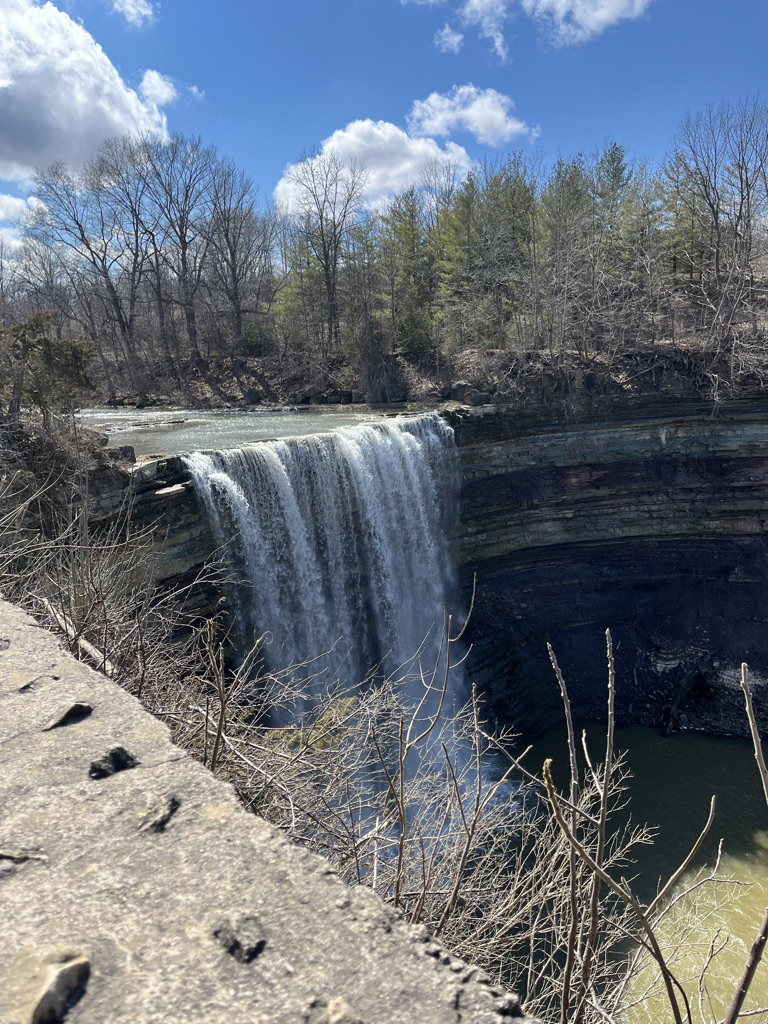
    Water falls over curved rock at Ball’s Falls

    Brock students recently spent the day at Ball’s Falls Conservation Area, where they shared their ideas for nature learning with the community.

    Students then compiled posters outlining their research findings and suggesting possible innovations. On April 8, the class gathered at Ball’s Falls to display their posters, observe the findings of their colleagues and soak in the natural surroundings.

    Assistant Professor Heather Ramey says the poster presentation allowed for the students’ work to be shared not only among their peers but also with NPCA educators and stakeholders as well as other members of the public who took in the display over the following weekend.

    “Looking at both accessibility and how we build environmental stewardship made for really good research, and then students connected the research to education and to the community,” says Ramey. “These two research questions were a beautiful melding of what’s needed in the community and what’s needed from an educational perspective.”

    Alicia Powell, Manager of Conservation Area Services at the NPCA, says she was excited to work with Ramey and her students on the project, which aligns with many of the priorities laid out in the NPCA’s strategic plan released earlier this year.

    “One of the things the NPCA recognizes in our outdoor education program is the importance of alternative education opportunities to get students, children, youth and adults outside and active,” says Powell. “The class looked at equity and improving access to green spaces to environmental and outdoor education and at the benefits not only in terms of health and well-being, cognition and learning for children but also the benefits to our environment and to stewardship now and in the future.”

    Allison Serrao, a second-year French major in the Concurrent Education program, says learning about opportunities for children to engage in natural environments opened her eyes to the importance of outdoor activity.

    “From working on the project, my biggest takeaway was learning how much of an impact nature has on adolescents’ development and growth,” she says. “Being surrounded by nature has many benefits.”

    The students flagged a range of issues and opportunities, from developing take-home and classroom kits to improved transportation options for accessing conservation areas.

    “The work generated some phenomenal concrete and tangible suggestions for ways that organizations like the NPCA and some of our other partners can work together to improve the opportunity for folks to connect to nature,” says Powell. “Some suggestions from the posters around working with the municipalities to improve transportation to green spaces are right in line with a recently published provincial report. Access for those in concentrated settlements is limited in Niagara compared to other municipalities — so doing this research and looking at what we offer across Niagara is really important.”

    Ramey says the posters were all captured in a digital format so that both students and the NPCA can keep them for future reference.

    Both Ramey and Serrao commented on how pleasant their on-site experience at Ball’s Falls was, although Serrao did get startled by one of its slithering inhabitants.

    “It was amazing to see the different posters that were there, and the weather was beautiful so I enjoyed the hike — it was not too long to the falls and the water was beautiful as well,” says Serrao. “The only downside was I saw a snake, which scared me, but I did end up having a laugh afterwards. Overall, I loved the experience.”

    Tags: , , , ,
    Categories: News