Articles from:August 2018

  • Brock-led team collects samples at Crawford Lake to explore possible Anthropocene reference site

    It’s like taking a photograph of Earth every year for a thousand years.

    The difference is that the ‘camera,’ in this case, is a freeze core, a long, hollow aluminum tube filled with a mixture of dry ice and ethanol to cool it to minus 80 degrees Celsius.

    On Tuesday, Aug. 14, a group of researchers from three universities and led by Brock University Professor of Earth Sciences Francine McCarthy used a freeze core to gather layers of sediment spanning the last millennium from the bottom of Crawford Lake in Milton.

    Master’s student Autumn Heyd (left) and PhD student Andrea Krueger were among a Brock University-led research team studying Crawford Lake in Milton to be a possible location to define a new geologic epoch called the Anthropocene.

    The professors and student researchers from Brock, Carleton and McMaster universities used the freeze cores to collect layers of sediments from the bottom of the oxygen-free depths of the lake, creating ‘tree rings’ of sorts.

    They collected the samples in the hopes of confirming a new episode in the world’s geological time scale known as the Anthropocene.

    Sediment and rock layers give scientists clues about the Earth’s plant and animal life, human activity, and other details within the planet’s geological time scale. Earth is officially in the Holocene, but the scientific community has identified the mid-20th century as being the start of the Anthropocene.

    “Because we have those annual layers of sediment in Crawford Lake, we can tell exactly when 1950 is. We can point to a layer and say, ‘That’s 1950,’ then we have the ideal location,” says McCarthy. “Hundreds of years from now, people will be able to come here to find 1950 and that’s the important thing.”

    Gesturing to the raft, McCarthy explains what lies ahead for the research.

    “Over the next year or two, my colleagues and I, along with students, are going to be analyzing and comparing what went on before 1950 and after,” says McCarthy.

    She points out that an obvious example of time stamping would be more lead in the sediment from before gasoline went unleaded.

    If they find what they’re looking for in these sediments, the research team will make a submission to the Anthropocene Working Group (AWG), an international group charged with evaluating proposals on where evidence of the Anthropocene can be best seen.

    If the AWG were to vote in favour of using Crawford Lake, the proposal would then be evaluated by the International Subcommission on Quaternary Stratigraphy, chaired by Brock Professor of Earth Sciences Martin Head.

    Head, who is also a member of the AWG, says that the Anthropocene is distinctive from the Holocene in that that human activities have shifted the way our planet is now behaving as an integrated system.

    This shift is known as the Great Acceleration, a mid-20th century phenomenon associated with global industrialization, commercialization and a huge increase in energy use.

    “Since the beginning of the Anthropocene, we may have actually exceeded the ability of the Earth’s system to self-regulate in ways that it did before, so that’s why the Anthropocene is important on a number of different levels,” he says.

    Brock researchers at Tuesday’s sediment collection included McCarthy, Head, Professor of Geography and Tourism Studies Michael Pisaric, Biological Sciences PhD student Andrea Krueger and master’s student Autumn Heyd.
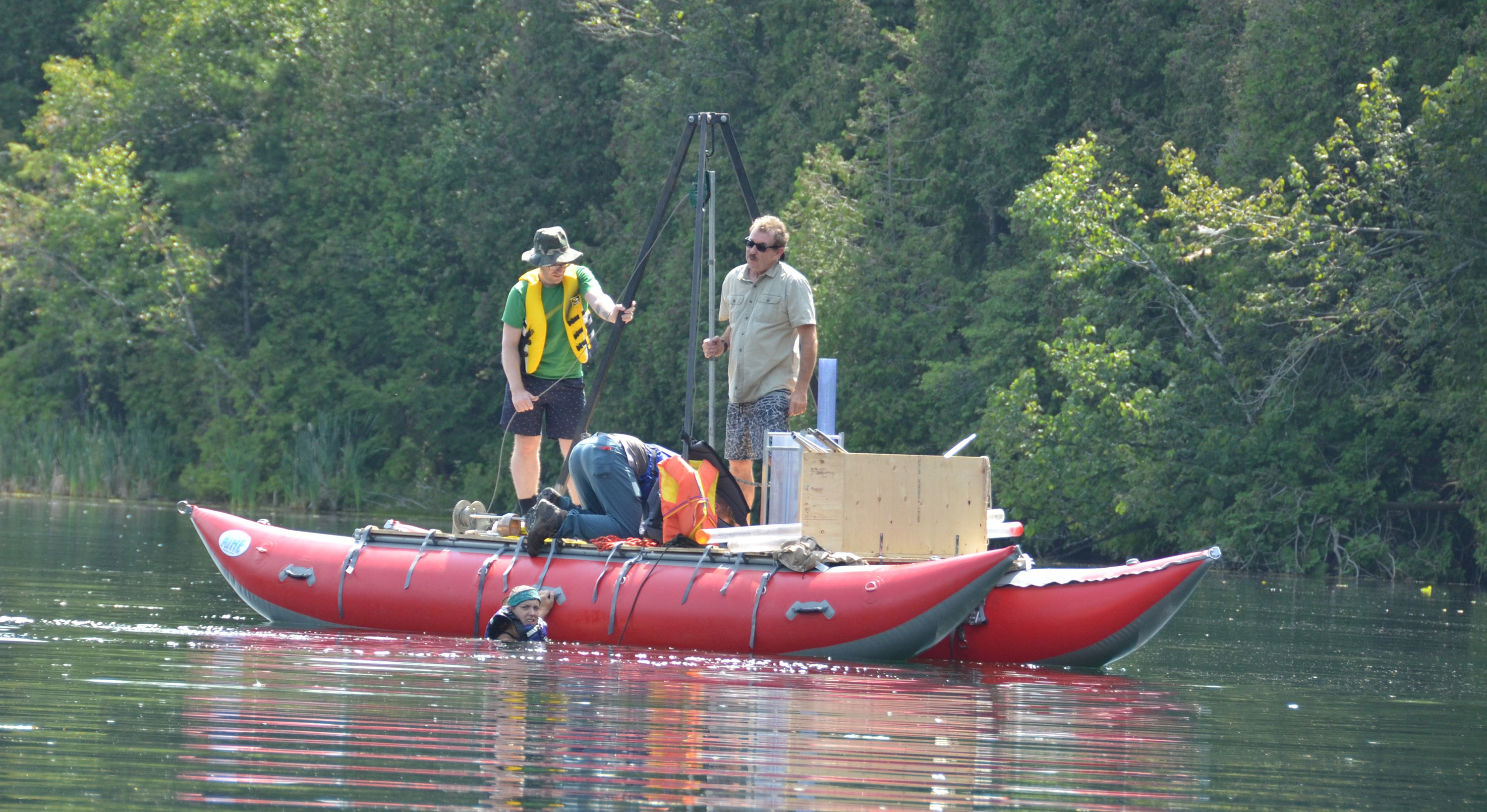
    A Brock University-led research team lowers the freeze core into Lake Crawford to collect sediments as part of an effort to identify the lake as being a possible location to define a new geologic epoch called the Anthropocene.
    Tags: , , ,
    Categories: News

  • MACKINTOSH: Death by street – Toronto’s ongoing problems with the automobile

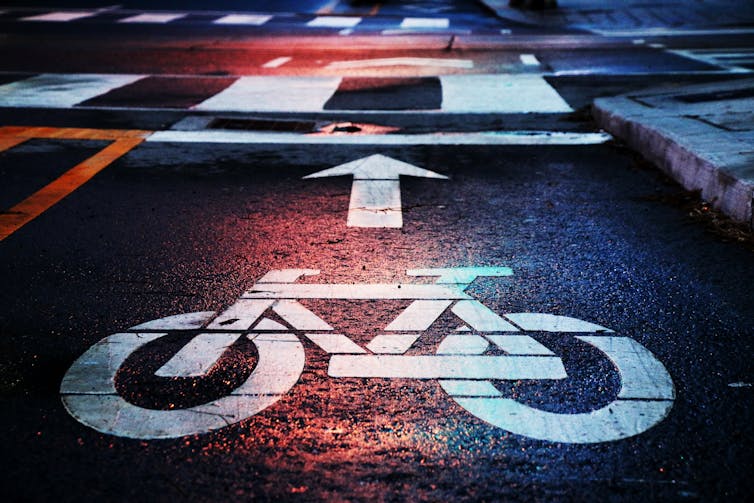
    Bicycle road sign. Photo by Andrew Gook/Unsplash

    Banning cars is one way to ensure pedestrian and cyclist safety on city streets. Andrew Gook/ Unsplash

    Phillip Gordon Mackintosh, Associate Professor of Geography and Tourism Studies at Brock, wrote a piece recently published in The Conversation about pedestrian and cyclist deaths and injuries in Toronto’s busy streets.

    Mackintosh writes:

    It seems every day, another pedestrian or cyclist is injured or killed in Toronto. In this respect the city is living a historical déjà vu: interwar Toronto (1919-1939) witnessed similar numbers of walkers and bikers — especially children — dying on its streets by the same cause: Automobiles.

    Yet, like their earlier cousins, today’s Torontonians hear the same platitudes voiced by police and community leaders: Cyclists and pedestrians must actively defend their own self-interests. In other words, cyclists and pedestrians must ultimately construct ways to protect themselves — by themselves — on thoroughfares full of dangerous motor vehicles.

    How odd that in 2018 the best Toronto’s policymakers and enforcers can do is to rehash a century-old idea that in practice failed catastrophically in the past? Historical fatalities involving children give us a glimpse into Toronto’s remarkably unimaginative approach to the street.

    Toronto’s leaders alone created this intolerable street-policy circumstance. Their virtual indenture to the car since the 1910s effectively renders them policy-impotent.

    Continue reading the full article here.

    Tags: , , ,
    Categories: News

  • Students and professor off to Montréal to participate in feminist geography conference

    This long weekend, three Geography and Tourism Studies students and Associate Professor, Dr. Ebru Ustundag, are off to the University of Montréal to participate in a feminist geography conference.

    Co-organized by Dr. Ustundag, this two-day conference is hosted by the Canadian Women and Geography (CWAG) specialty group of the Canadian Association of Geographers (CAG) and the International Geographical Union (IGU) Commission on Gender and Geography.

    The conference theme this year is Feminist Geographies in/during Troubled Times: Dialogues, Interventions and Praxis, a theme that fits well with the research interests of Geography and Tourism Studies students Jennica Giesbrecht, Katelyn Pierce, and Jennifer Williamson. All three will be presenting in sessions this Sunday, August 5.

    Querying ‘the future of work’ 3: Rethinking Care and the future of work (Jennica Giesbrecht, Master of Arts in Geography Candidate; 1:30 – 3:00pm in room B-3245)

    Bodies and Embodiments (Katelyn Pierce, Master of Arts in Geography Candidate; 10:45am – 12:15pm in room B-3255)

    Spaces and Places 1: Cities (Jennifer Williamson, Bachelor of Arts in Geography Candidate; 1:30 – 3:00pm in room B-3255)

    In addition to these presentations, Dr. Ustundag will be participating in and moderating three roundtable discussions:

    • Geo-humanities, Intimate Narrations and Art Praxis 1: Conceptual Interventions (Roundtable participant; Sunday, 1:30 – 3:00pm in room B-3260)
    • Geo-humanities, Intimate Narrations and Art Praxis 2: Dialogues on Art Praxis (Roundtable moderator; Sunday, 3:15 – 4:45pm in room B-3260)
    • Dialogues in Feminist-Queer Geographies Panel (Roundtable organizer/moderator; Monday, 10:45am – 12:15pm in room B-3255)

    The feminist geography conference precedes the 2018 International Geographical Union and Canadian Association of Geographers meetings, which will be held in Québec City from August 6-10.

    For more information, please visit: https://feministgeography.org/.

    Tags: , , , , ,
    Categories: News

  • Policy-makers tune out Toronto’s human roadkill

    From The Toronto Star
    Sunday, July 29, 2018

    By PHILLIP GORDON MACKINTOSH
    Opinion

    To read relentless news of pedestrian and cyclist deaths and injuries in Toronto is to relive the city’s early 20th century past.

    We see the same cause of the tragedy (motor vehicles), hear the same heartfelt condolences, and note the same bromide from constable, politician or lobbyist: cyclists and pedestrians must attend vigorously to their self-interest on hazardous streets.

    Crossings at Maclennan Ave. were labelled death traps when this picture was taken in 1937. Traffic officers were stationed at the bottom and top of the hill to make sure schoolchildren crossed — or dashed across — safely.Crossings at Maclennan Ave. were labelled death traps when this picture was taken in 1937. Traffic officers were stationed at the bottom and top of the hill to make sure schoolchildren crossed — or dashed across — safely. (EI SCAN)

    It never occurs to anyone that such platitudes have been rehearsed by civic leaders for over a century.

    To be fair, they have no other words. Automobilization in Toronto since the 1910s has rendered the city’s community leaders virtually speechless. Why? Because there is only one — impossible — public policy to effect pedestrian and cyclist safety on streets dominated by motor vehicles: automobile prohibition. With prohibition as a workable policy left permanently “off the table,” what else can our leaders say?

    Torontonians have long felt the threat posed by automobilization, watching the slaughter on roadways and sidewalks. A century ago, children died by the dozens at the wheels of motorists (90 were killed between 1919 and 1921).

    The pedestrian and cyclist carnage continued through the 1920s and 1930s. Children especially were imperiled. City newspapers gruesomely described how motor vehicles flayed, crushed and dragged children to death.

    It wasn’t always thus. Before the First World War, street traffic consisted primarily of walkers, slow-moving streetcars and horse traffic. Yet, by the end of the war, as motor vehicle ownership increased, collision statistics had risen precipitously.

    Drivers ran through intersections, failed to yield to streetcars and riders, jumped curbs, drove on both sides of the road and cut off or bumped cyclists. Importantly, pedestrians could not yet accurately assess the time and space compression of fast-moving cars, or the emerging danger of an automobilizing environment.

    Throughout the 1920s, the city’s irresistible opportunities for work attracted migrants, further swelling the numbers of pedestrians on the streets. Alas, pedestrian populations and automobile ownership ballooned simultaneously, neither constrained by countervailing public policy.

    Compounding the situation, the automobile was seen as an excellent “vehicle” (as it were) for economic prosperity, enlivening the urban imaginations of Toronto’s politicians and business people.

    Newspapers promoted it as the “perfect machine” and “the chariot of prosperity.” The car “had achieved its rightful prerogative over all other methods of transportation.” Such hyperbole propelled the automobile into an actual, lethal conflict with traditional street users, including carefree children on their ancestral playground.

    So, what did policy-makers do to stop cars from killing children on the streets? Nothing, despite deputations to City Council by the Toronto Playground Association in 1920, and a 1928 motion by Alderman Pearce to ban automobiles from streets where children played. In every year between 1927 and 1934, dozens of toddlers died horribly in the streets.

    The closest that leaders came to policy was encouraging drivers to be careful, and admonishing pedestrians that “The Game of Walking Has Been Speeded Up.” This meant persuading children (including preschoolers who simply strayed onto streets chasing butterflies, blowing whistles or pushing doll prams) of “the necessity of guarding against accidents by abstaining from contributory negligence,” as the Ontario Safety League put it.

    This is why we look both ways before crossing the road — a solitary “policy” legacy of a history that systemically privileged automobiles above pedestrians and cyclists in the urban hierarchy.

    Closely connected to looking “up and down before crossing the road” is an official predilection to blame pedestrians, cyclists and children for the horrors that befall them. To blame automobiles would be to confront them in policy. That won’t happen.

    Call this what it is: political negligence. Any pedestrian or cyclist can tell you how to save lives in Toronto. Put severe restrictions on automobile use in pedestrian- and bicycle-heavy city neighbourhoods. This won’t happen, either.

    A century ago, Toronto wouldn’t enact policy to prevent “the needless mangling of little ones,” those innocent “little tots of the streets” who died by the hundreds. Don’t expect policy-makers in 2018 to protect our adult bicyclists and pedestrians, equally precious, yet regarded by many as wilful and intrusive nuisances.

    Phillip Gordon Mackintosh is associate professor of Geography at Brock University, and author of Newspaper City: Toronto’s Street Surfaces and the Liberal Press, 1860-1935.

    Article reposted from The Toronto Star.

    Tags: ,
    Categories: News