Articles from:January 2021

  • Brock mourns the passing of first female faculty member

    Brock University was an important part of Josephine Meeker’s life for far longer than the three decades that she worked here.

    Believed to be the first woman ever hired as a Brock faculty member, Meeker started as an Assistant Professor of Geography on July 1, 1965 and retired 30 years later on June 30, 1996. In between those two dates, Meeker played a significant role in the development of the Department of Geography and the University as a whole. She was the first Director of Continuing Education, the first president of the Brock University Faculty Association and had tenures as a member of both the Board of Trustees and Senate, for which she served a term as Chair. She was also influential in the creation of the Women’s Studies program, and in 1995 received the Rosalind Blauer Award for improving the position of women at Brock.
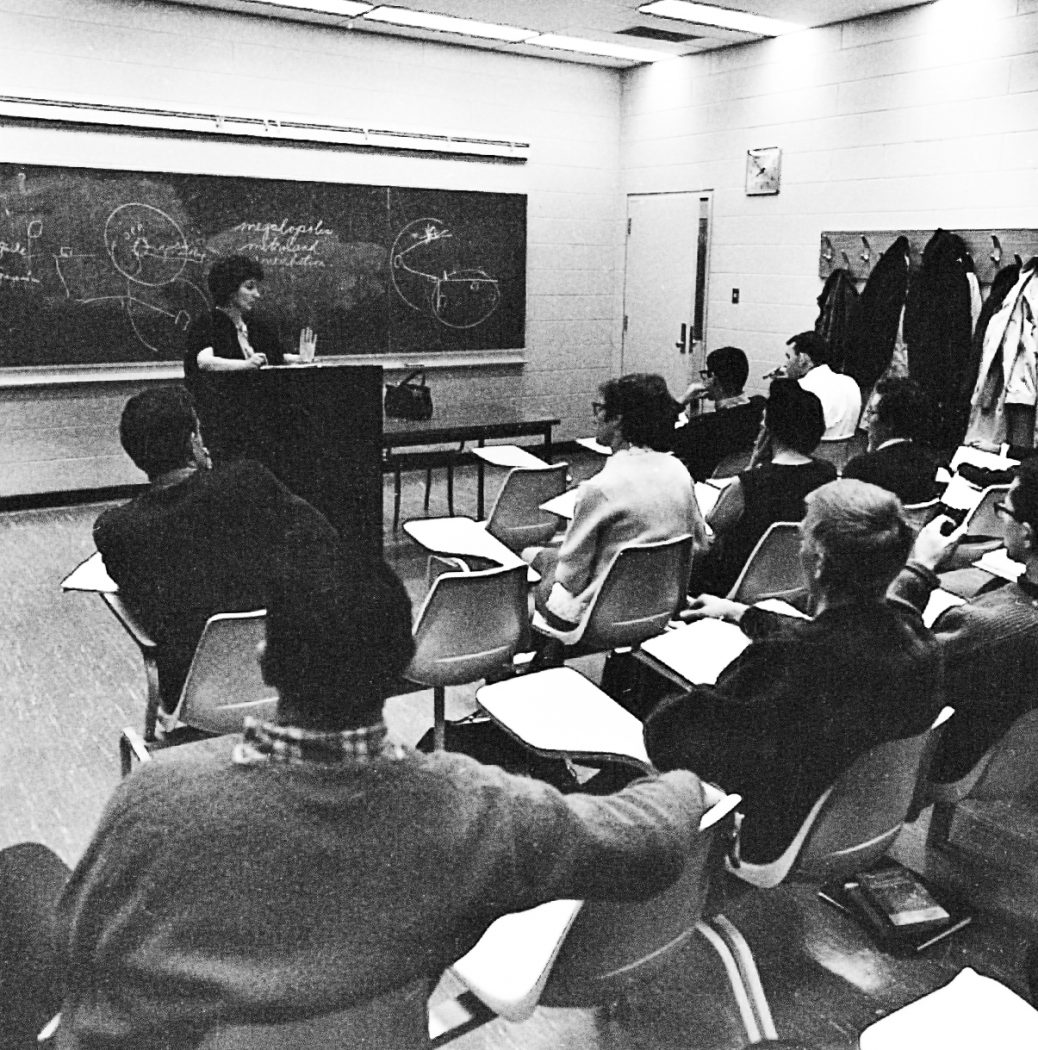
    Josephine Meeker, who began her time at Brock as an Assistant Professor of Geography in 1965, is shown leading a class in 1968.

    Meeker, born in Hamilton in 1930, passed away Monday, Jan. 11 in St. Catharines at the age of 90.

    “Josephine brought a commitment to Brock, never ceasing to put Brock first,” said John Menzies, Professor of Earth Sciences and Geography. “Her commitment to students was incredible, not only in helping them in their studies, but also in their whole life here and afterward.”

    After graduating from McMaster University in 1953, she began a teaching career in Hamilton, where she was responsible for the United Nations Club, which led her to oversee multiple trips to Washington and New York. That led her to graduate studies at Indiana University and Columbia University in New York City, where she met her future husband Donald, and started working with the United Nations.

    After completing her graduate studies, she returned to Canada to start her academic career at Brock.

    Meeker’s niece, Wendy Nelson, said Brock held a very import place in her aunt’s heart.

    “My Aunt Jo cherished her role as ‘Professor Meeker’ and the chance to teach and mentor students at Brock University,” Nelson said. “She was so proud of the University and its development over time. Throughout her lifetime, her highest praise of individuals was reserved for graduates of Brock. In her eyes, a degree at Brock was Josephine’s ‘seal of approval.’”

    In lieu of flowers, the family asks that donations be made in memory of Meeker to either Brock University or McMaster University. A virtual celebration of life for students, colleagues, friends and family will take place Sunday, March 7 at 2 p.m. To participate, contact the family via Nelson at [email protected]

    An online book of condolences can be found at turnerfamilyfuneralhome.ca

    Read the full obituary in The Globe and Mail here.

    STORY FROM THE BROCK NEWS

    Tags: , ,
    Categories: News

  • New book chapter explores the historical micro-geography of liberal urbanism in Toronto’s Brunswick Avenue neighbourhood

    Book cover Book Micro-geographies of the Western City, c.1750–1900Dr. Phillip Mackintosh has published a new chapter in the book Micro-Geographies of the City, 1750-1900 titled “Liberalism underfoot: A micro-geography of street paving and social dissolution – Brunswick Avenue, Toronto, Ontario, 1898–99”.
    This chapter defines liberal urbanism in the context of Toronto’s paving problem and the universally unpopular local improvements by-law, devised to rehabilitate and ultimately capitalise the modern city. It focuses on the particular case of Brunswick Avenue and how Brunswickers’ perturbations of choice dismantled community good will. The four blocks of Brunswick Avenue between College and Bloor underwent two phases of pavement installation from 1880 to 1900. The first stretch, from College to Ulster, laid a cedar block roadway in 1882, which had an expiry date of 1892. Property owners tolerated their spent cedar roadway for four years and then purchased an asphalt surface in 1896, built by contractor David Chalmers in October 1896. Curiously given the snooty reputation of the homeowners in that section of Brunswick the same neighbourhood wanted only a plank sidewalk on the west side of their new asphalt pavement despite the city engineer recommending brick.

    Read the chapter and full book here.

    Citation:

    Phillip Gordon Mackintosh (2021) Liberalism Underfoot: Paving and Social Paradox—Brunswick Avenue, Toronto, Ontario, 1898. In Alida Clemente, Jon Stobbart & Dag Lindstrom eds, Micro-Geographies of the City, 1750-1900. Research in Historical Geography Series, London: Routledge.

    Tags: , , , , , , ,
    Categories: News

  • New research uses leading-edge methods to track a retrogressive thaw slump in Old Crow Flats, Yukon

    Remote sensing graphics from research paper showing research location in Old Crow Flats, Yukon

    A new paper authored by Geography and Tourism Studies Associate Professor, Dr. Kevin Turner, and Geography alumni Michelle Pearce and Daniel Hughes titled “Detailed Characterization and Monitoring of a Retrogressive Thaw Slump from Remotely Piloted Aircraft Systems and Identifying Associated Influence on Carbon and Nitrogen Export” has been published in Remote Sensing. This paper is open-access and available to download here.

    Abstract:
    Ice-rich permafrost landscapes are sensitive to ongoing changes in climate. Permafrost retrogressive thaw slumps (RTSs) represent one of the more abrupt and prolonged disturbances, which occur along Arctic river and lake shorelines. These features impact local travel and infrastructure, and there are many questions regarding associated impacts on biogeochemical cycling. Predicting the duration and magnitude of impacts requires that we enhance our knowledge of RTS geomorphological drivers and rates of change. Here we demonstrate the utility of remotely piloted aircraft systems (RPAS) for documenting the volumetric change, associated drivers and potential impacts of the largest active RTS along the Old Crow River in Old Crow Flats, Yukon, Canada. RPAS surveys revealed that 29,174 m3 of sediment was exported during the initial evacuation in June 2016 and an additional 18,845 m3 continued to be exported until June 2019. More sediment export occurred during the warmer 2017 summer that experienced less cumulative rainfall than summer 2018. However, several rain events during 2017 were of higher intensity than during 2018. Overall mean soil organic carbon (SOC) and total nitrogen (TN) within sampled thaw slump sediment was 1.36% and 0.11%, respectively. A combination of multispectral, thermal and irradiance (derived from the RPAS digital surface model) data provided detailed classification of thaw slump floor terrain types including raised dry clay lobes, shaded and relatively stable, and low-lying evacuation-prone sediments. Notably, the path of evacuation-prone sediments extended to a series of ice wedges in the northern headwall, where total irradiance was highest. Using thaw slump floor mean SOC and TN values in conjunction with sediment bulk density and thaw slump fill volume, we estimated that 713 t SOC and 58 t TN were exported to the Old Crow River during the three-year study. Findings showcase the utility of high-resolution RPAS datasets for refining our knowledge of thaw slump geomorphology and associated impacts.

    Citation:
    Turner K.W., Pearce M.D., and Hughes D.D. (2021). Detailed Characterization and Monitoring of a Retrogressive Thaw Slump from Remotely Piloted Aircraft Systems and Identifying Associated Influence on Carbon and Nitrogen Export. Remote Sensing, 13(2):171. https://doi.org/10.3390/rs13020171

    Tags: , , , , , ,
    Categories: News

  • New book chapter examines the changing ecology of the Arctic from a paleoenvironmental perspective

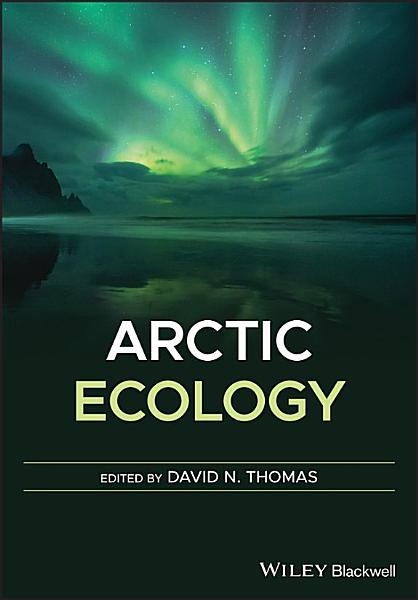
    Arctic Ecology Book Cover

    Dr. Michael Pisaric has published a new chapter in the book Arctic Ecology titled “Arctic Ecology – A Paleoenvironmental Perspective”.

    In the absence of measured climate and ecological data records, paleoecology, and paleoclimatology provide unique opportunities to examine ecological and climatic conditions across long timescales and provide much needed long‐term context. Across the Arctic there are numerous ecological problems affecting the biota and landscapes of this environmentally sensitive region. Climate change is chief amongst these. This chapter examines the changing ecology of the Arctic from a paleoenvironmental perspective. Using examples from studies throughout the circumpolar Arctic, the changing ecology of the Arctic is examined across longer timescales than typically considered in ecological studies. While instrumental records of climatic change in the Arctic are generally short, dendrochronology can provide key insights into climate variability during the past several centuries to millennia. There are many types of natural archives of ecological and environmental change from marine terrestrial environments in the Arctic.

    Citation:

    Pisaric, M., & Smol, J.P. (2021). Arctic Ecology – A Paleoenvironmental Perspective. Pages 23-55 in D.N. Thomas (Ed.) Arctic Ecology. Wiley. https://doi.org/10.1002/9781118846582.ch2

    Tags: , , , , , , ,
    Categories: News