Associate Professor, Kinesiology, Canada Research Chair in Tissue Re-modelling and Plasticity throughout the Lifespan
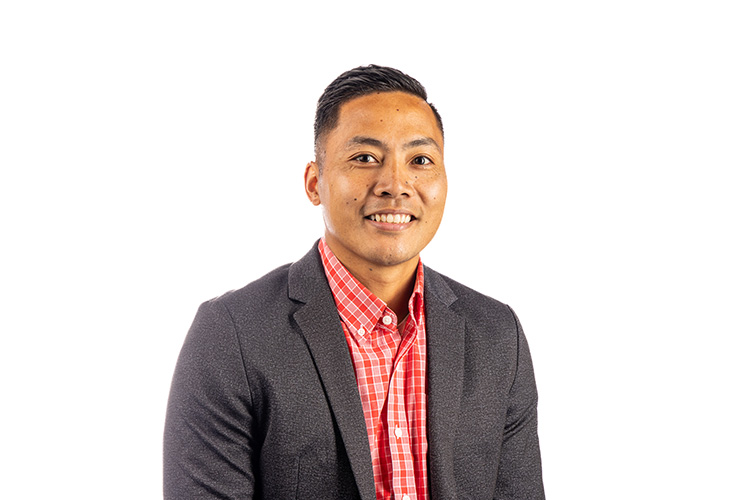
Dr. Val Fajardo is a Canada Research Chair (Tier 2) in Tissue Plasticity and Remodelling and an Associate Professor in the Department of Kinesiology at Brock University. He directs the Muscle Physiology in Health and Disease (MPHD) Laboratory and the Centre for Bone & Muscle Health, where his research focuses on promoting healthy aging by understanding how skeletal muscle adapts to exercise, disease, and environmental stressors. His laboratory investigates molecular pathways that regulate muscle plasticity in response to exercise and disuse, with a particular emphasis on glycogen synthase kinase-3 (GSK3) and the sarco(endo)plasmic reticulum calcium ATPase (SERCA). His research spans healthy aging, obesity, muscular dystrophy, menopause, Alzheimer’s disease, and the physiological effects of spaceflight. Through multidisciplinary collaborations, he aims to translate fundamental discoveries into therapies that improve muscle health and whole-body function across the lifespan.
- Skeletal muscle plasticity and physiology
- Healthy aging and healthspan
- Exercise mimetics and therapeutic development
- Glycogen synthase kinase-3 (GSK3) signalling
- Calcium handling and SERCA regulation
- Muscle metabolism and thermogenesis
- Muscular dystrophy
- Obesity and insulin resistance
- Menopause and musculoskeletal health
- Skeletal muscle–brain communication in Alzheimer’s disease
- Spaceflight-induced muscle dysfunction
- Muscle regeneration and tissue remodelling
- Director, Centre for Bone & Muscle Health, Brock University
- Member, Canadian Society for Exercise Physiology
- Member, American Physiological Society
- Editorial Board Member, Physiological Reports
- Canada Research Chair (Tier 2), Tissue Plasticity and Remodelling
Dr. Fajardo has authored more than 100 peer-reviewed publications in leading journals spanning skeletal muscle biology, metabolism, aging, neuromuscular disease, and exercise physiology. His research has been cited extensively and contributes to understanding how molecular signalling pathways regulate muscle adaptation in health and disease. Pubmed list.
Dr. Fajardo teaches undergraduate and graduate courses that focus on the intersection between exercise physiology and disease pathophysiology. His undergraduate course, KINE 3P97, focuses on exercise as medicine throughout the lifespan, and his graduate course emphasizes the role of exercise mimetics as an alternative or adjuvant option for health. His teaching emphasizes critical evaluation of scientific literature, experimental design, and translational research. He is currently positioned as the Director for the Centre for Bone and Muscle Health.
Undergraduate students are encouraged to participate in research through independent study courses, thesis projects, and summer research experiences (i.e., NSERC Undergraduate Student Research Awards, USRAs). Students gain experience in molecular biology, physiology, microscopy, metabolic phenotyping, exercise testing, animal models, data analysis, and scientific communication. Prospective students with interests in muscle physiology, aging, metabolism, neuroscience, or exercise science are encouraged to contact Dr. Fajardo with a CV and transcript.
Graduate students investigate mechanisms regulating skeletal muscle adaptation in health and disease using cutting-edge molecular, physiological, and translational approaches. Current research areas include healthy aging, exercise mimetics, muscular dystrophy, obesity, menopause, Alzheimer’s disease, and spaceflight physiology.
Students receive interdisciplinary training in:
- Molecular and cellular physiology
- Muscle function and contractility
- Metabolic phenotyping
- Histology and imaging
- Transcriptomics and bioinformatics
- Scientific writing and grant development
- Conference presentations and knowledge translation
Prospective MSc and PhD students interested in joining the MPHD Laboratory are encouraged to contact Dr. Fajardo with a CV, unofficial transcripts, and a brief statement of research interests.

Recent Comments