Articles from:April 2021

  • The Sustainable Development Goals and Gender Inequality

    Blog Contributor: Shannon Ruzgys
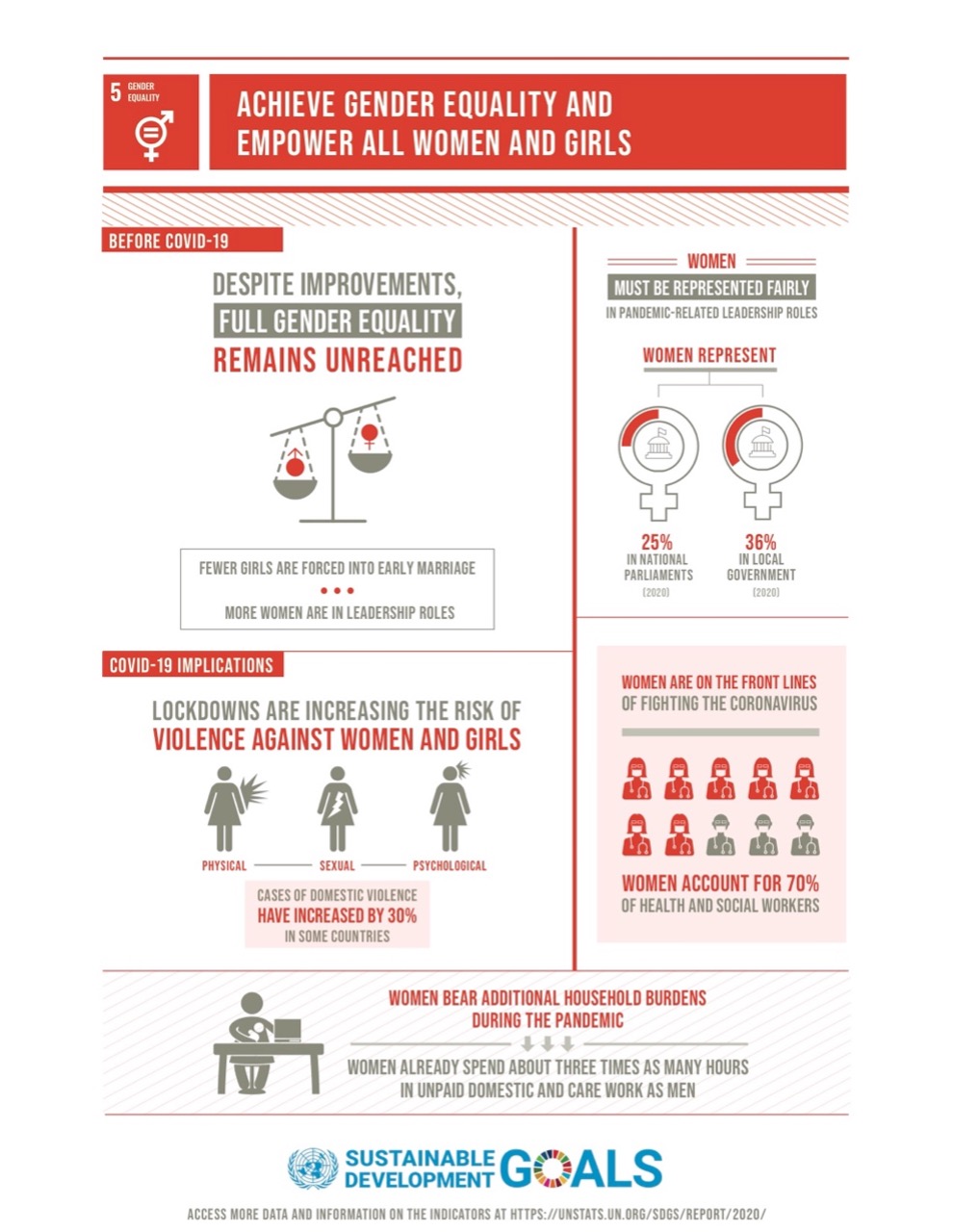
     

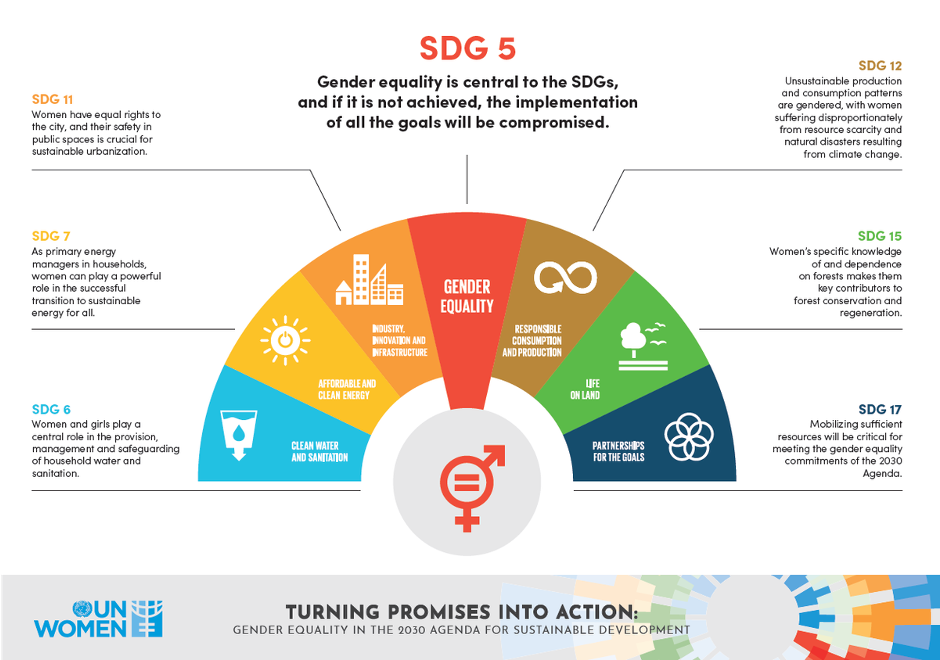
    Goal number 5 of the Sustainable Development Goals (SDGs) is focused on gender equality and empowering women and girls. However, we can see the theme of gender equality riddled throughout many of the SDGs, highlighting how important equality is for achieving the goals.

    There have been improvements in recent years, like the fact that fewer girls are forced into early marriage and more women are in leadership roles. However, despite those improvements, equality still remains unreached throughout the globe. In 2020, women still only represented 25% of national parliaments and 39% of local government roles, despite the fact that women are disproportionately on the front lines of one of the largest global crises in recent times – COVID-19. In fact, recent surveys have found that women account for 70% of all health and social workers globally, demonstrating the importance of women in fighting crises (United Nations, 2020).

    Aside from front line workers, COVID-19 has negatively impacted a large number of women, mainly by increasing vulnerability and household burdens. Lockdowns have increased the risk of violence against women and girls, with some countries reporting up to a 30% increase in cases of domestic violence.
     

    Source: UN Women

    Goal 5 focuses on aspects such as ensuring women’s political leadership, and reproductive health rights, as well as eliminating violence, trafficking, and discrimination. However, we see gender equality in a number of the goals such as No Poverty, Zero Hunger, Health and Wellbeing, Clean Water, Education, and Economic Growth.

    When looking at economic growth, factors such as pay gaps can have large impacts on gender equality and the economy. Research from 2017 revealed a 19% gender pay gap globally, which has far reaching economic impacts. Research has shown that closing this pay gap can have a multitude of benefits. On one hand, closing the gap could cut the poverty rate of working women in half. Others have estimated that equal pay would boost women’s earnings in developing countries by $2 trillion. Beyond raising wages, increasing female economic participation can have massive benefits, with estimates stating that if an equal number of men and women were in the job force, GDP could increase by 5% in the US, 9% in Japan, and 27% in India (Schulze, 2018). With COVID-19 pushing the world into the worst economic crisis since the Great Depression, integrating more women into the workforce and reducing pay gaps can be a vital tool in post-COVID recovery.

    Further, we can again see how interconnected the SDGs are when we look at the role education has to play in achieving these economic goals for women. In 2018, two thirds of the 773 million illiterate adults were women, with the majority of them residing in low-income countries. Young women in developing countries still face massive barriers towards education, including menstruation, social pressures to engage in family care over education, violence, child marriage and early pregnancy (Gender Inequality Is Keeping Girls Out of School, 2017). All of these barriers, and more, continue to keep girls from pursuing education.

    When looking at Goal 1 for no poverty it is obvious how many of these factors affecting women contribute to global poverty. For example, we know educating women is one of the most effective things we can do to reduce global poverty. The economic theory of fertility suggests that more educated women are better able to support themselves and have more bargaining power, including choices such as family sizes. Studies have also shown that increasing female education significantly reduces the number of children born per woman (Ali & Gurmu, 2018).

    Overall, while Gender Equality is its own goal, we can see just how essential achieving gender equality is for so many of the SDGs through research showing how beneficial reducing things such as the pay gap and increasing female education can be for the entire globe on multiple scales and with several impacts.

    Categories: Student Contributor, Sustainable Development Goals

  • Earth Day 2021

    Blog Contributor: Mikellena Nettos

    Today, Thursday, April 22nd, 2021, is Earth Day. The world’s first Earth Day was celebrated in 1970 and it is now regarded as a global initiative to promote the protection and care of our planet. If you’re looking for a way to celebrate Earth Day from your own home, join us virtually at one of our events.  

    Brock will be hosting a virtual event tonight at 7pm, as part of the ESRC’s Environmental Stewardship Speaker Series where Dr. Robyn Bourgeois will be presenting “Land, Body, and Sovereignty: An Indigenous Perspective”. This is a great opportunity to learn more about how environmental destruction directly affects Indigenous women and girls and Indigenous ways of knowing.  

    In addition, Sustainability at Brock is hosting a virtual clean up, in partnership with Niagara College until April 25th. The institutions are also providing the community with a virtual clean-up toolkit that can be found here. Today, you can use this opportunity to participate in the virtual clean up and help take care of our planet. This clean up initiative can also be included as volunteer hours toward the WWF Living Planet Leader Certification!  

    Students can support Earth Day by learning more about sustainable ways of living and use this day to kick start a more sustainable lifestyle for the rest of the year. There are also additional virtual events to take part in at earthday.org.  

    Make sure to check our sustainability social media pages on Instagram, Twitter, and Facebook to find more resources on how to lead a more sustainable life through our highlights and posts. Have a safe and sustainable Earth Day, Badgers! 

    Categories: Student Contributor

  • Brock University and Niagara College Team up to Host a Virtual Spring Clean-Up 

    Blog Contributor: Shannon Ruzgys

    Brock University and Niagara College have joined forces to host a virtual spring clean–up from Saturday, April 17th to Sunday, April 25th, 2021. The institutions have also created a virtual clean–up toolkit in order to engage and empower the community to join along.  

    With global issues such as climate change, it is easy to feel a sense of hopelessness about the environment. Taking action by cleaning up your local community is a way to be an advocate for sustainability, while also creating a sense of hope that small actions can help target big issues. The goal of the toolkit is to empower individuals to make a difference within their communities by providing them with resources to safely host their own virtual clean-up anywhere, anytime!   

    How do I sign up for the virtual clean-up?

    Click this link to sign up via Experience BU and participate anytime between Saturday, April 17th to Sunday, April 25th 

    Why should I join or host a virtual clean-up?

    • Spending time outdoors and engaging in conservation activities can help foster a connection to local communities and ecosystems. 
    • There is a strong connection between time spent in nature and reduced negative emotions including anxiety, depression, and irritability as well as headaches and indigestion (Ontario Parks, 2020) 
    • You can help better your own local community and make a difference for the environment. 
    • Become aware of the garbage that is most common in your own community and help spread awareness. 
    • Students can help fulfil volunteer hours for the WWF-Canada Living Planet Leader Certification. 

    What is in the virtual clean-up toolkit?

    There are currently three guides available: for students, for community members, and for organizations. Each guide provides unique resources for the respective group.  

    The Student Guide Includes:

    • Resources about how your participation in the virtual clean-up can contribute towards your Living Planet Leader Certification.   
    • A list of tips to help you get started with your own virtual clean-up.  
    • COVID-19 health and safety guidelines.  
    • A virtual clean-up checklist.  

     If you have any questions about how to join or host a virtual clean-up, please reach out to [email protected]  

    Categories: Events, Niagara, Student Contributor, Sustainability at Brock