Articles from:April 2018

  • $7.9 million in provincial funding means green light for Brock’s green energy project

    The second phase of a massive project to upgrade Brock University’s co-generation power facility is moving forward after an Ontario government funding announcement made Tuesday, March 27 in Toronto.

    The Ministry of Advanced Education and Skills Development (MAESD) announced $85.2 million in funding for eight Ontario universities through its Greenhouse Gas Campus Retrofits Program (GGCRP) Innovation Grant Fund. The GGCRP is designed to help post-secondary institutions reduce their greenhouse gas emissions and improve energy efficiency.

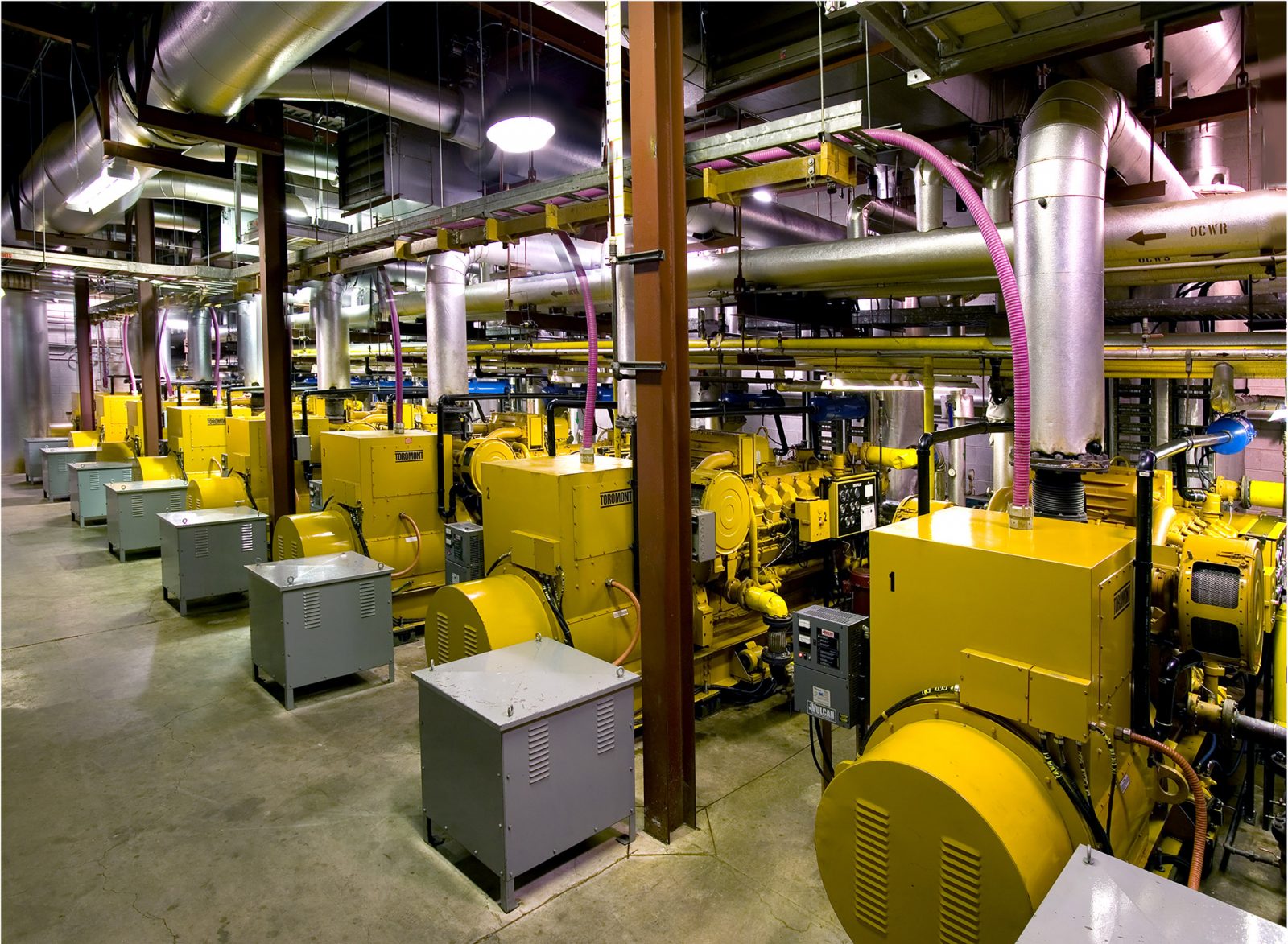
    Brock will receive $7.9 million to complete Phase 2 of its District Energy Efficiency Project (DEEP), which will upgrade and modernize the University’s co-generation facility, a reliable and energy-efficient source of electricity, cooling and heating on campus.

    The first, $10.8-million phase of the DEEP project started 18 months ago and is replacing half of the existing natural gas-powered co-gen engines with state-of-the-art, high efficiency, electronically controlled units. That project is expected to be completed this summer.

    DEEP Phase 2, which is being funded entirely through the Ontario government’s $7.9-million investment, will replace the remaining co-gen engines and install a new high-efficiency electric chiller unit. Work got started earlier this month and will be wrapped up by March 2019. No power interruptions are anticipated on campus as a result of the work.

    “Phase 2 is fully focused on carbon reduction and efficiency,” said Scott Johnstone, Associate Vice-President of Facilities Management. “The existing plant is about 25 years old. We’re replacing it with the latest technology that will make the entire co-gen facility more efficient.”

    The completed DEEP project will result in Brock’s annual NOx (nitrogen oxide) gas emissions dropping from 55 tonnes to just 8 tonnes and non-methane hydrocarbons reducing from 15 tonnes to four. The new co-generation engines will also consume 26 per cent less fuel and result in hundreds of thousands of dollars in utility cost saving each year.

    “This project isn’t just about saving money, it’s about making Brock University more environmentally friendly and reducing our carbon footprint,” said Johnstone.

    St. Catharines MPP Jim Bradley said the province and Brock University share a common goal of significant carbon reduction.

    “This investment by the Ontario government reaffirms its commitment to reducing greenhouse gas emissions on university campuses. This will allow the province of Ontario and its post-secondary institutions to lead by example when it comes to being energy efficient,” said Bradley.

    Brian Hutchings, Brock’s Vice-President, Administration, said the government’s investment in the co-generation facility will have a positive effect elsewhere in the University.

    “What’s unprecedented for Brock with this project is that it’s 100 per cent funded by the province,” Hutchings said. “The upgrades will result in significant utility cost savings, which will allow us to keep those costs flat during a period of inflation.”

    With the completion of the second phase of the DEEP project, all of the equipment in the co-generation facility will be new, which Johnstone said “will set the University up for another 25 or 30 years of service.”
    Story originally published in The Brock News

    Categories: Energy, Net-Zero, Sustainability, Sustainability at Brock

  • Brock unveils a new showcase and a new era for environmental sustainability

    It was built nearly two centuries ago, but the oldest structure on Brock’s campus has been given new life and a new purpose as a focal point for the University’s sustainability efforts.

    Theal House, an original farm cottage that dates to 1837, has been transformed into the home of Brock’s Environmental Sustainability Research Centre (ESRC), which produces world-class research and educates students in topics relating to environmental sustainability.

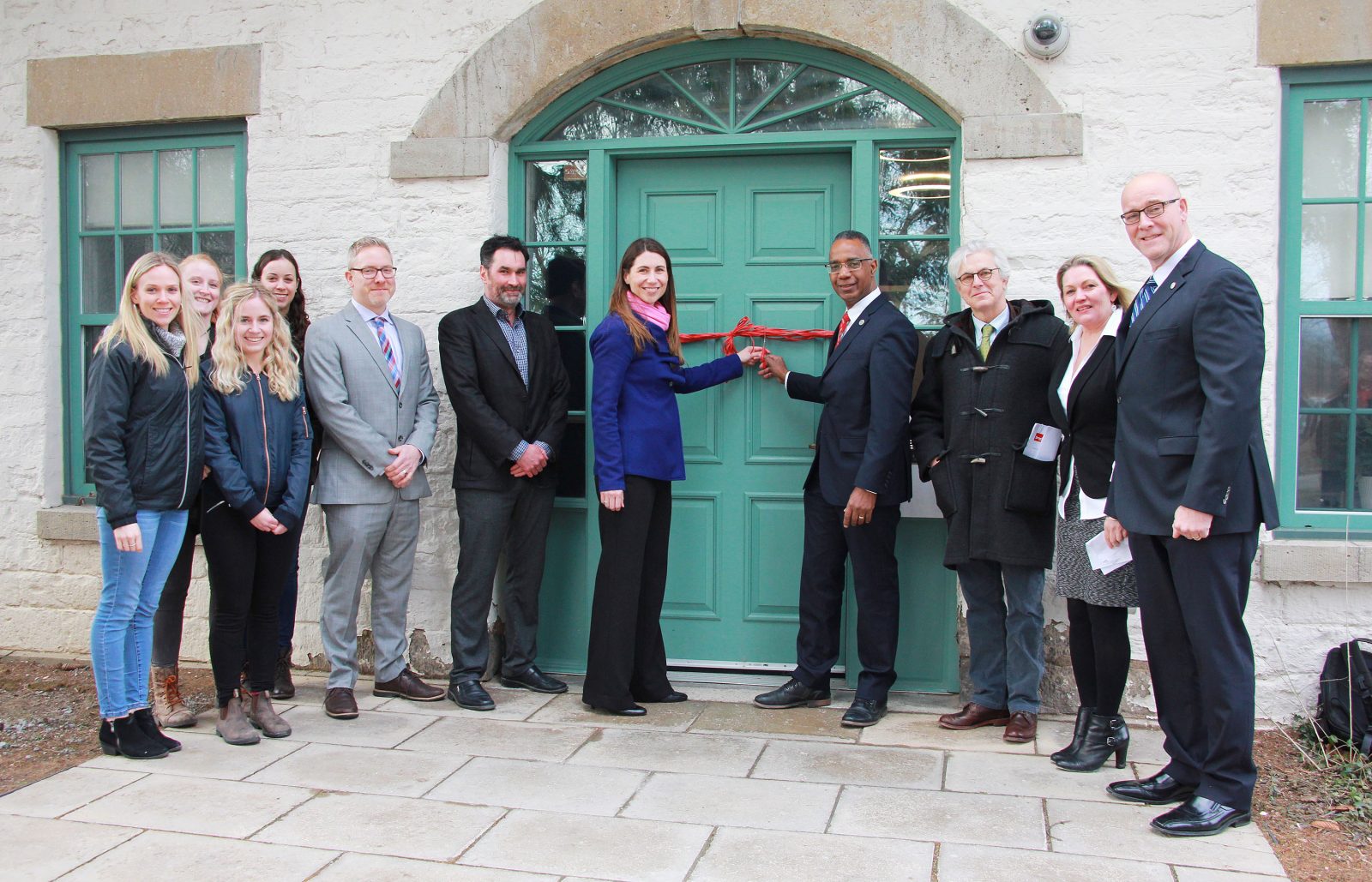
    Unveiled during a ribbon-cutting ceremony Wednesday, Feb. 28, the revamped space features sustainable flooring and furniture, as well as an integrated system that controls heating, cooling and lighting, and monitors real-time energy use for the entire campus.

    Environmental Sustainability Research Centre Director Ryan Plummer, left, reads over a new project charter with Tom Dunk, Interim Provost and Vice-President, Academic, and Brian Hutchings, Vice-President, Administration. The agreement will see the ESRC work with Brock’s Facilities Management team on upcoming sustainability initiatives.

    LED lighting has also been installed throughout the heritage building, with dimmer and daylight harvesting switches in place to reduce energy consumption.

    In addition to highlighting the space, Wednesday’s ceremony was an opportunity to solidify a new collaboration between the ESRC and Brock’s Facilities Management team. The collaboration is enshrined in a formal charter that brings together the academic and operations units on various sustainability initiatives on campus. It is also an important step forward for Brock’s new integrative approach to environmental sustainability, and deepens the University’s commitment to sustainability — one of the seven core values listed within its strategic plan.

    Also announced Wednesday was $5,000 in new scholarship funding provided by Toromont CAT that will support students studying sustainability.

    Professor and ESRC Director Ryan Plummer said the partnership signals a new era in the University’s journey to be a national leader in sustainability.

    “The charter enables rich opportunities for experiential education relating to environmental sustainability, and the scholarships recognize as well as support excellence in this area of study,” said Plummer. “They will have a profound and positive impact by enhancing student experience, promoting innovative approaches for learning excellence and furthering engagement with sustainability.”

    Brock has been dedicated to improving energy and operational efficiency on campus with dozens of energy projects and green initiatives completed over the years, said Scott Johnstone, the University’s Associate Vice-President, Facilities Management.

    “Moving forward, we want to further our partnership with staff, students, faculty members and the larger Brock community to enhance, challenge and maintain a campus culture of sustainability.”

    Sean Goodman and Ron Cocking, of Toromont CAT, presented Scott Johnstone, Brock’s Associate Vice-President, Facilities Management, and Ingrid Makus, interim Dean of the Faculty of Social Sciences, with $5,000 to support students in sustainability programming at Brock.

    Hands-on experiential learning opportunities that contribute to sustainability at the University will be made available to students through co-op placements, research assistant opportunities, independent research and course-based projects.

    This week’s announcements reinforce the University’s values around sustainability, while also taking into consideration Brock’s role in a global context, said President Gervan Fearon. “We’re part of the broader ecosystem and as such, we need to think about the impact our footprint has and what our actions in support of sustainability mean.”

    Brock recognizes its distinction as one of only a few universities within a UNESCO World Biosphere Reserve and intends to continue pushing forward with its environmental sustainability initiatives, he said.

    Brock’s programs concentrating on sustainability are growing quickly. The Master of Sustainability program was introduced in 2014 and continues to receive considerable uptake from across Canada and around the world. In 2017, the ESRC launched the Minor in Environmental Sustainability and early signs suggest it is following a similar positive trajectory.

    Theal House is now the home of Brock’s Environmental Sustainability Research Centre.


    Story originally published in The Brock News

    Categories: Sustainability, Sustainability at Brock