Articles from:March 2020

  • Pledging Towards Environmental Sustainability  

    Blog Contributor: Erica Harper

    To kick off the new year, we asked students to make pledges to be more environmentally friendly and sustainable in 2020. Students who participated finished the following sentence “I pledge to…” and were encouraged to choose to commit to a big or small change to implement in their lives for the new year. Some examples (as seen below) include shopping local, talking to friends about sustainability, and taking the bus whenever possible. These pledges were (and continue to be) posted to the @BUSustainable social media accounts in hopes to reach more people. By doing so, it provides a network of followers (including students, faculty, staff, and community members) with ideas to implement sustainability into their lives in a way that works for them. This initiative many people from the Brock University community who wanted to learn more about sustainability or wanted to further their commitment to sustainability in their personal lives. It was a great opportunity to further the dialogue about the environment and sustainability at the individual level, which can influence friends, family, and even strangers. Participants were then automatically entered into a draw to win a $100 campus store gift card.  

     Our two winners are Michela, a kinesiology student, and Isamaris, a child health student. These two friends split the winnings as they pledged together to share tips with friends on how to be more sustainable. Congratulations! Keep an eye out for more pledges from the Brock community coming soon to the @BUSustainability social media pages, including Facebook, Twitter, and Instagram.  

    Categories: Recycling, Student Contributor, Study Sustainability at Brock, Sustainability, Sustainability at Brock

  • How to Recycle Like a Pro in the Niagara Region 

    Blog Contributor: Erica Harper

    Did you know that Canada’s first blue box recycling system was tested in 1981 in Kitchener, Ontario? This program was so successful that the program was implemented citywide and now the blue bin recycling system is all over Canada and the world (with variation). Many of us grew up with recycling and rarely question whether to do it or not because it has become such a habit ingrained in our daily lives. For others, it may seem like a chore to even try to begin to understand how to recycle and what to recycle properly. Even some people who have been recycling for years can remain confused or doubtful about what can and cannot be recycled. This may be because unlike composting (which is also very important), there are two different recycling boxes to choose from depending on the material of your items. This article will give you a clear guide on how to recycle like a pro in the Niagara Region!  

    Before we get started, it’s always a good idea to remember the 3 Rs: reduce, reuse, and recycle. Reducing your consumption of products with unnecessary packaging and reusing containers whenever possible should be a priority whenever possible. If you can focus on reducing and reusing before recycling, you will have a lot less waste to manage which makes learning how to recycle properly even easier!  

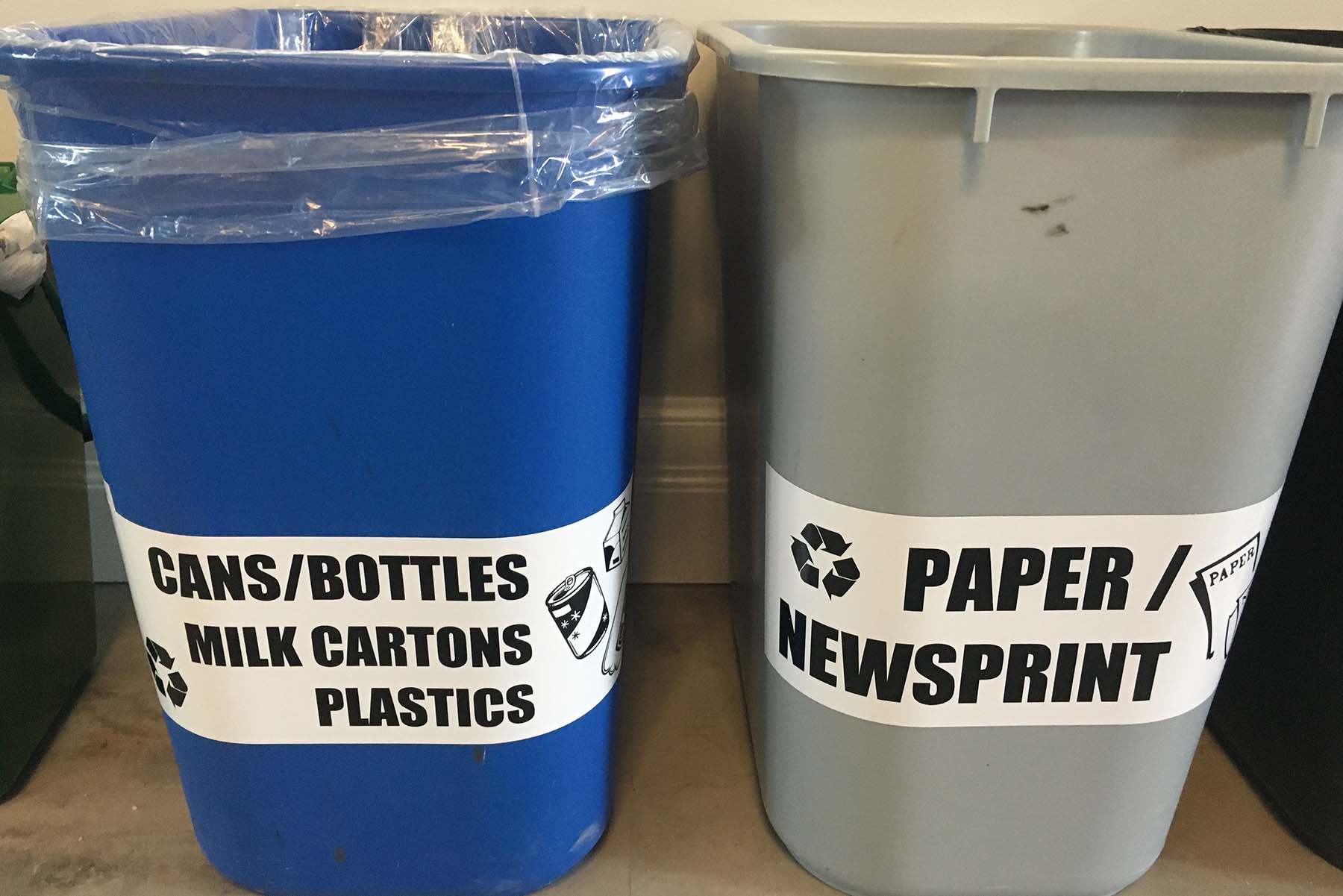
    The first thing you need to know is that the Niagara region has two types of recycling boxes – grey and blue. They are both collected weekly and there is no limit to the amount of recycling bags or items that are placed at your curb. Residents are allowed to use any rigid and reusable containers for their curbside collection as long as it fits within the Region’s size limitations. Alternatively, you can purchase blue and grey boxes in your municipality for $6 at these locations near you.  

    Before we get into the list of acceptable items in each recycling box, it’s important to know the first general rule of recycling: rinse and clean your items before throwing them away! For example, have a bit of milk left in your milk bag or hummus left in its plastic container? Rinse it and let it air dry before you recycle it so it doesn’t contaminate the rest of your recyclables. 

    Accepted in the Grey Box: 

    • Carboard (flattened) 
    • Pizza boxes (remove food residue, oily patches and place in green bin first) 
    • Catalogues 
    • Coffee cup sleeves 
    • Plastic grocery bags (all bags must be placed into one bag and tied up to ease recycling efforts) 
    • Milk bags (rinsed) 
    • Hard cover books 
    • Magazines 
    • Paper towels (can also be placed in green bin) 
    • Plastic wrap  
    • Receipts from the store 
    • And much more, which you can find on the Niagara Region’s Waste Disposal website here 

    Accepted in the Blue Box: 

    • Aerosol cans that are empty (make sure to remove the lid) 
    • Coffee cup lids from disposable cups (the cup should be placed in the garbage) 
    • Styrofoam coffee cups 
    • Aluminum tins 
    • Empty detergent jugs 
    • Hard plastics (e.g. the ones used to make cups or plates) 
    • Egg cartons 
    • Food and beverage cartons 
    • Plastic fruit cup containers 
    • Glass bottles and jars 
    • Ice cream tubs and lids 
    • Juice boxes 
    • Plastic bottles 
    • Steel cans 
    • Shampoo and conditioner bottles 
    • And much more, which you can find on the Niagara Region’s Waste Disposal website here

    Not Recyclable – Place in Garbage: 

    Some items seem recyclable, but because they may be difficult to identify during the recycling process, they are not. For example: 

    • Loose plastic water bottle caps (too small) 
    • Items that cannot be cleaned of food and liquid residue 
    • Hand lotion “squeeze tubes” (only the plastic containers for hand lotion can go in the blue box) 
    • Plastic seal from ice cream tubs 
    • Outer plastic packaging of a cookie box  
    • Water bottle filters 

    As you can see, there is a lot to learn about what can and cannot be recycled in the Niagara Region as well as which bin recycles must be disposed in. Thankfully, the Region’s website is extremely helpful and even allows you to type in the name of an item to find out how to dispose of it. Click here to learn more about recycling and the waste disposal services offered to you from large item collections to hazardous waste disposal. Make sure to recycle responsibly to make sure that your items are in a condition that ease the recycling process and happy recycling!  

    Categories: Recycling, Sustainability, Sustainability at Brock

  • Building a Way to Environmental Sustainability: LEED 

    Blog Contributor: Nolan Kelly 

    We spend the majority of our lives in buildings, yet we often give very little thought when it comes to the design, construction, or impact that these buildings have on our lives and the environment. Leadership in Energy and Environmental Design or as it’s commonly known “LEED” is the most widely used green building rating system in the world, available for virtually all building, community, and home-project types. LEED has proven to be a pathway towards addressing climate change and creating buildings that are more resource-efficient, healthy, and resilient. LEED projects emphasize the importance of sustainability in all buildings, whether it is in the design, construction or operation. LEED projects can also take form in many different shapes, sizes, and purposes ranging from a small local building, to university campuses to NHL sized arenas (CGBC, 2019). Energy and water savings, recycling, greenhouse gas reductions, and green roofs are just some of the ways in which following LEED standards can improve new and existing buildings. This is important because there is no denying the impact that buildings have on the environment. It is estimated that buildings generate nearly 30% off all greenhouse gas emissions, up to 35% of all landfill waste comes from construction and demolition of buildings, and up to 70% of all municipal water is consumed in and around buildings (LEED, 2020).  

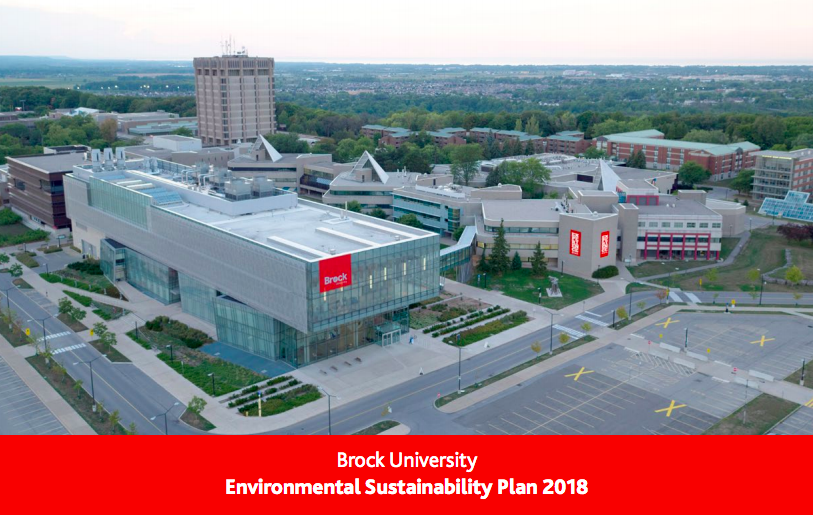
    The Plaza and International Centre building at Brock University are both Silver LEED certified. The Plaza Building, built in 2006, incorporated a unique system of heating and cooling by utilizing the precast hollow core concrete floor slabs for stored thermal mass and fresh ventilation air as part of the ThermoDeck System. This system has resulted in a higher degree of indoor air quality through this ventilation system as well a 33% energy cost savings. The Plaza Building also uses Xeriscaping and rainwater harvesting which has led to 60% water savings. Xeriscaping is used for all the landscaping around Plaza Building which minimizes irrigation, pest control, and fertilization. The incorporation of drought resistant native species also eliminated the need for outdoor watering! The rainwater harvesting on the roof of Plaza is used to for non-potable uses such as toilet flushing and outdoor water watering. During the building of Plaza over 75% of all the construction waste was diverted from landfills due to a rigorous construction waste management plan that kept sustainability at the forefront of the entire process (Sustainability Initiatives, 2020).  

    The International Centre building built in 2010 was designed to achieve 41% in energy cost reduction compared to the Model National Energy Code for Buildings. One of the advanced water conservation features of this building is the rainwater harvesting from roof. Between the 50, 000 litre underground cistern that collects the water from the roof and the installation of water efficient plumbing fixtures, the building has an 89% wastewater reduction and 41% water use reduction. The material used in the building and furnishing of the building were also carefully selected to ensure the highest level of indoor quality was achieved (Sustainability Initiatives, 2020). If you want to learn more about LEED certification or the LEED certified buildings at Brock, visit the links below! 

    Canadian Green Building Council – LEED 

    LEED Certified Buildings at Brock University  

    References 

    Image retrieved from: https://brocku.ca/facilities-management/planning-construction/major-projects/plaza-building/

    Canadian Green Building Council – Rogers Place. (2019). Retrieved from https://www.cagbc.org/Archives/EN/CaGBC_Green_Building_Case_Studies/rogers_place.aspx 

    LEED: the international mark of excellence. (2020). Retrieved from https://www.cagbc.org/CAGBC/LEED/Why_LEED/CAGBC/Programs/LEED/_LEED.aspx?hkey=01b3d086-d0a4-42cf-9e61-7830d801c019 

    Sustainability Initiatives: Buildings. (2020). Retrieved from https://brocku.ca/sustainability/initiatives/buildings/ 

    Categories: Student Contributor, Sustainability

  • Brock’s Commitment to Environmental Sustainability Continues with Completion of DEEP 

    Blog Contributor: Nolan Kelly 

    On Friday February 21st Brock University celebrated the completion of Brock’s District Energy Efficiency Project (DEEP). This project was a multiyear process that took extensive planning, collaboration, an effort in order to reach completion. The aim of the project was to reduce Brock’s carbon footprint and increase sustainability on campus by replacing the 25-year-old co-generation engines with state-of-the-art energy efficient units. These units provide a reliable source electricity, cooling and heating on campus. This project was made possible through federal and provincially funded upgrades to the co-generation plant that consisted of replacing eight engines with four new high-efficiency models as well as the installation of a new lithium-bromide absorption chiller and new magnetic-bearing electric chiller.  

    The first phase of the DEEP project saw Brock receive nearly $5.2 million in funding from the Government of Canada’s Post-Secondary Institutions Strategic Investment as well as $5.4 million from Brock University. In Phase 1, Brock replaced half of the existing natural gas-powered co-generators with state-of-the-art, high efficiency electronically controlled units. DEEP Phase 2 started in March of 2018 and was entirely funded by the Ontario government’s $7.9-million investment as part of the Greenhouse Gas Campus Retrofits Program (GGCRP) Innovation Grant Fund, which was designed to help post-secondary institutions reduce their greenhouse gas emissions and improve energy efficiency. In this second phase the remaining co-gen engines were replaced, and a new high-efficiency electric chiller unit was installed. Through the completion of the DEEP project Brock University has significantly improved its energy efficiency, lowered its carbon emissions, and assists Brock in continuing in its commitment to meeting environmental sustainability targets. 

    The new engines are roughly 20 per cent more fuel efficient than their older counterparts and will consume roughly two million cubic metres less fuel to power the campus. The reduction is the equivalent of removing 720 small passenger cars from the road! The now completed project will result in Brock’s annual NOx (nitrogen oxide) gas emissions dropping from 55 tons to just eight tons, and non-methane hydrocarbons reducing from 15 tons to four. These new co-generation engines also consume 26 per cent less fuel per kWh produced, resulting in hundreds of thousands of dollars in utility cost savings each year. 

    This a huge step forward for Brock in its efforts to become more environmentally sustainable and be a leader amongst universities in reducing carbon emissions. To read more about the completion of the project or to learn more about the savings associated check out the Brock News article and the Energy Conservation and Demand Management Plan below!  

    Completion of DEEP Project articles 

    Brock LINC opening signals new era of community engagement for Brock University  

    $7.9 million in provincial funding means green light for Brock’s green energy project 

    Brock University Energy Conservation and Demand Management Plan 

    Energy Conservation and Demand Management Plan 

    Reference made to article originally published in the Brock News which was written by Dan Dakin. 

    Photos: DEEP Project Launch – February 2020

    Categories: Electricity, Energy, Student Contributor, Sustainability at Brock