Articles from:November 2020

  • How to Reduce Waste During Online School

    Blog Contributor: Mikellena Nettos

    Waste reduction is difficult and becomes increasingly more difficult when paired with a global pandemic. Being home all day without a routine can bring out old and unsustainable habits. Therefore, here are five tips on how to reduce waste during online school or even working from home. Keep in mind these are only suggestions, and it’s okay if you are unable to follow them. Don’t be too hard on yourself, everyone is only doing what they can in hard times like these.  

    Invest in reusables  

    If you don’t already have one, invest in a coffee maker instead of ordering delivery Starbucks delivery every day. This will not only save you money long term, you can help reduce the amount of non-reusable coffee cups that go into the landfill because they can be difficult to recycle. 

     Did you know that it takes 17 trees and 20,000 gallons of water to make one ton of paper towels?. Instead of buying paper towels, buy reusable/washable cloths. Since you are home more often, you might use more paper towels than you used to. However, since you have the extra time why not invest in cloths that you can wash instead?! If you want to go the extra mile, just you can make cloths out of old tattered clothing, or if you don’t want to do the extra laundry, try to only buy paper towel made from 100% recycled paper!   

    Try and reduce food waste  

    Bulking buying can save money, but it can also waste money if the food isn’t eaten before it expires. A way to combat this is to buy more non-perishables or freezer items; examples are canned foods, dried meats, or grains. Additionally, you can put the food that is close to expiry at the front of your fridge to remind yourself to eat it first! Another food saving tip is learning how to properly store fresh produce. Also, don’t forget to compost when you are done with food scraps! 

    Unplug 

    Leaving your phone or laptop chargers plugged in all the time can end up using a lot of energy over time. Additionally, it can be a safety hazard in the case of power surges. A quick solution to this is a power-bar with an on/off switch if you don’t want to go through the trouble of unplugging all the time.  

    Additionally, not only does unplugging save energy, it can also increase mental health. Instead of watching Netflix or mindlessly scrolling through social media between classes, go on a walk or bike ride! Research shows that exercise (especially exercise within/around nature) increases perceived mental well-being, so don’t skip the walk!  

    Go for walks instead of drives 

    As previously mentioned, walks outside can significantly increase mental well-being. So, when you need a change of scenery from being stuck in your house, opt for a walk instead of aimlessly driving around. It’s better for your body and the planet because walks thankfully don’t require the combustion of greenhouse gases.  

    Make food with loved ones instead of ordering take-out 

    Making food can be particularly hard as a student, especially if you share the kitchen with multiple people. Instead of all creating individual meals, or all ordering takeout, try and cook meals together. This can increase well-being because you are spending quality time with roommates or family and creating a dish for you all to share. Eating together can also reduce the sense of isolation that some can feel due to this new virtual world. If you do order takeout, remember to opt out of receiving plastic cutlery, and use utensils from home instead!  

    Don’t forget little changes go a long way! We hope everyone if adjusting well and staying safe during this difficult time.  

    References 

    Canadian Produce Marketing Association. (2020, June 30). How to Store Fruits and Veggies. Half Your Plate. https://www.halfyourplate.ca/fruits-and-veggies/store-fruits-veggies/ 

    Kender, D. U. T. (2020, January 29). Myth vs. fact: Unplugging devices when you leave the house. USA TODAY. https://eu.usatoday.com/story/money/columnist/2019/11/27/unplugging-devices-when-not-use/4192100002/ 

    Hasselberger, L. (2015, January 6). 13 Facts about Home Paper Products that May Inspire You to Hug a Tree. DrGreene.Com. https://www.drgreene.com/perspectives/13-facts-about-home-paper-products-that-may-inspire-you-to-hug-a-tree 

    Maas, J. (2006). Green space, urbanity, and health: how strong is the relation? Journal of Epidemiology & Community Health, 60(7), 587–592. https://doi.org/10.1136/jech.2005.043125 

    Reducing Waste: What You Can Do. (2020, September 4). US EPA. https://www.epa.gov/recycle/reducing-waste-what-you-can-do 
    Categories: Electricity, Student Contributor, Waste

  • 5 Netflix Documentaries for the Eco-Conscious

    Blog Contributor: Shannon Ruzgys

    Documentaries are a great way to educate and inspire yourself and there is no shortage of wonderful documentaries about the environment. These 5 Netflix documentaries are a must watch for anyone who has hope for a better future.  

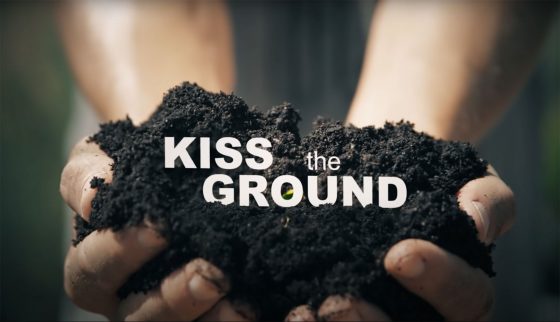
    Kiss the Ground  


    Modern day industrial agriculture is degrading our environment through tillage, heavy pesticide use, and mono-cropping (just to name a few). These practices lead to soil erosion, which not only immediately threatens global food security, but is also irreversible. This documentary proposes a solution, regenerative farming, an ethical practice that prioritizes animal health, restoring degrading lands, and drawing down carbon. Told from the perspective of scientists, farmers, activists, and politicians; this documentary provides hope for a better farming system that can heal the soil, balance our climate, and feed people all at the same time. 

    Our Planet  


    This documentary contains all the things we’ve grown to love from nature docs such as Planet Earth and Blue Planet, while also choosing to focus more on how humans are altering the natural world around us and the impact that we’re having on biodiversity worldwide. There are 8 episodes that each focus on a different ecosystem, while highlighting how climate change uniquely impacts each of these environments. In David Attenborough’s words “[This] series will explore the Earth’s most important habitats and celebrate the life they still support. We will reveal what must be preserved if we are to ensure a future where humans and nature can thrive” 

    Rotten


    While this is not explicitly an environmental documentary, this Netflix show, which currently has two seasons, focuses on the problems in our food supply chain. Each episode focuses on a different food product, exposing the corruption, waste, and social impacts of the foods we choose to eat. The issues with our global food supply chain run deep but as consumers we have the power to choose what we want to support by what we put on our plates three times a day. This series is a great tool for educating yourself on how to be a more ethical grocery shopper (even if that means leaving avocados off your morning toast).  

    The Biggest Little Farm

    This documentary follows a couple and their dog on their journey to restore 200 acres of dry, nutrient depleted farmland into a healthy farmable ecosystem using nature-based regenerative solutions. Viewers follow them on their journey as they turn 200 acres of desert into a utopia that utilizes the power of a healthy ecosystem to farm with nature. Throughout almost a decade of work they plant 10,000 orchard trees, over 200 crops, and bring in animals of every kind. It is an inspirational documentary that demonstrates how farming can be done in a way that benefits animals, people, and the environment.  

    David Attenborough: A Life on Our Planet


     This documentary is David Attenborough’s witness statement where he states his concern for the state of our planet and his hopes for a better future. Throughout the documentary he narrates key moments in his life all the while showing human population growth, carbon in the atmosphere, and the percentage of intact wilderness within the scale of his own lifetime. He emphasizes that nature currently faces two great challenges: climate change and a massive loss of biodiversity. This documentary is not only a testament of Attenborough’s life’s work but also carries a dire warning for the future and a hopeful way forward through the restoration of the natural world.  


    Categories: Film, Student Contributor, Sustainability

  • Brock Cares Event with WWF-Canada Showcases the Impact of Student Action

    Blog Contributor: Shannon Ruzgys

    On October 27th Brock Cares hosted an event called “Conserving our Environment and Increasing Biodiversity Through Student Action” where viewers were joined by Kathy Nguyen, Specialist of Engagement at WWF–Canada and Connor Thompson,  graduate of Brock’s Master of Sustainability program.  

    The presentation started with an overview of the current state of the environment and wildlife in Canada, which is unsurprisingly grim. Canada is currently warming at a rate 2x faster than the rest of the world, and that rate rises to 3x faster in Canada’s arctic. However, there were hopeful notes about Canada’s vast amount of untouched wildness and our duty to ensure it stays that way.  

    From there, Kathy and Connor launched into Brock’s exciting new partnership with WWF-Canada called the “Living Planet @ Campus Program”, where through volunteering and academics, students can earn the Living Planet Leader certification. This is a nationally recognized self-guided certification that includes 4 requirements to receive the certification: personal application of sustainability, volunteerism, application of sustainability in academics, and leadership and teamwork. 

    Brock graduate Connor Thompson was one of the first students to receive the Living Planet Leader certification in Canada. He explained that when he was entering the job force, he was looking for something that would differentiate himself from other candidates and that being a Living Planet Leader was extremely useful in doing so. He also talked about how completing the certification was an enriching experience that provided him with useful skills and experiences.  

    This certification is meant to enrich your overall academic experience and you have up to three months after graduation to complete it. If you want to learn more about WWF-Canada and how to get involved in the Living Planet @ Campus Program through the Living Planet Leader certification, click here.

    Categories: Community, Student Contributor, Sustainability at Brock