Articles from:June 2018

  • Fair Trade Campus!

    Blog Contributor: Kaitlin James

    Did you know that Brock University is a Fair-Trade Campus? Brock became Canada’s sixth Fair Trade Campus in 2013 and is the second university in Ontario to be designated by Fairtrade Canada after Guelph.

    In fact, in 2015 Brock was named Fair Trade Campus of the Year.

    So, what is fair trade? Fair trade aims to create a relationship between producers and consumers that is mutually beneficial. It uses support from consumers to influence and drive business towards increased social and environmental sustainability.

    Dining Services at Brock is dedicated to building these relationships by providing fair trade products such as coffee, tea, dairy milk chocolate and Camino products in campus stores and vending machines. They also integrate sustainability into their daily operations by supporting local businesses; providing cage free eggs, buying locally, using recyclable and biodegradable packaging and provide biodegradable take-out containers.

    Every year starting at the end of May until the end of summer, Brock holds a weekly farmers’ market in Jubilee Court every Thursday. This provides students and staff with access to produce, farmers and bakeries, while supporting local vendors and economy.

    As you can see Brock provides various fair-trade products across campus!

    To find out more, check out the Brock website in the link below!

    https://brocku.ca/sustainability/initiatives/fair-trade/

  • Waste Not, Worry Not—Brock’s Got it Covered

    Blog Contributor: Shelby McFadden

    Battery Recycling

    Sitting in the basement of Mackenzie Chown’s G-Block, I scribbled like crazy, trying to document all of the current initiatives and associated numbers for waste collection here on campus. Sitting next to me was Kevin Lawr, supervisor of the day-to-day operations of the Central Shipping/Receiving, Maintenance Stores, and Mail Services departments.

    Though initially confusing to find the office tucked away in the belly of Mackenzie Chown, the meeting was extremely interesting and enlightening, and I ended up walking away with a hopeful feeling.

    The fact is that there are already a lot of great opportunities for recycling and diverting waste on campus, managed by a skilled team of staff and faculty who are enthusiastic about sustainability at Brock.

    But there is still a lot of room to increase our usage of these programs, and it begins by becoming aware of existing opportunities, and spreading the word on to our friends, roommates, and fellow Badgers.

    Batteries, ink cartridges, cell phones, and other electronics are all collected and recycled at Brock, helping to reduce waste and keep dangerous toxins out of our landfill.

    In 2017, Brock recycled approximately 4800 pounds of used batteries! Many departments already have pails, but if you are looking to order a pail for your department, make sure to contact Kevin at [email protected]

    Students can also participate by accessing a pail in the nearest department or the North and South Service desks in Decew and the Lowenberger lobby.

    Another opportunity for recycling is with ink cartridges, of which an estimated 500 pounds were recycled last year.

    Faculty and staff can place their cartridges in a box labelled “used cartridge,” and send it to Central Shipping and Receiving through interoffice mail. Students can make use of the pail on the help desk in Computer Commons or in the Campus Store.

    No discussion on recycling programs would be complete without addressing electronics, as they play an increasingly large role in our lives.

    An overwhelming number of items are accepted, from cell phones, tablets, laptops, computer cables and monitors, routers, cameras, speakers, gaming consoles, fans, power tools, etc. Make sure to check Sustainability at Brock’s website to view the list of all accepted items.

    Departments can fill out the following form to send to [email protected], before contacting custodial services to pick up the desired item(s). At this time, there are no collection points for e-waste, but students are encouraged to bring their items down to Central Shipping and Receiving (MC G207). It’s a little bit confusing to find at first, but let’s face it—as students, sometimes we need a mini adventure and excuse to wander around.

    To make it easier, if it’s a cell phone you’re looking to recycle, they can be dropped off at the ITS desk.

    There’s definitely room for improvements in waste management at Brock, but we have to start somewhere, and it’s important to support the existing programs that are already working to do good work. By taking an extra few minutes out of our day, we can demonstrate our commitment to waste reduction, and do a little bit of good.

    To do a lot of good, share this with other Brock students, staff, and faculty, so we can all do our part!

    Look forward to a future blog article on food waste initiatives at Brock!

    Categories: Student Contributor, Sustainability at Brock, Waste

  • Brock’s tunnel bikes find new home

    After years of dedicated service to the University, a fleet of subterranean bicycles are finally seeing the light of day.

    Due to a new water main installation that will cause height restrictions, Facilities Management staff at Brock are no longer able to ride bikes through the tunnels running underneath the University.

    The bikes had been used to speed up staff members’ ability to travel throughout the lengthy tunnel system (restricted to staff only) as they completed various maintenance projects around campus.

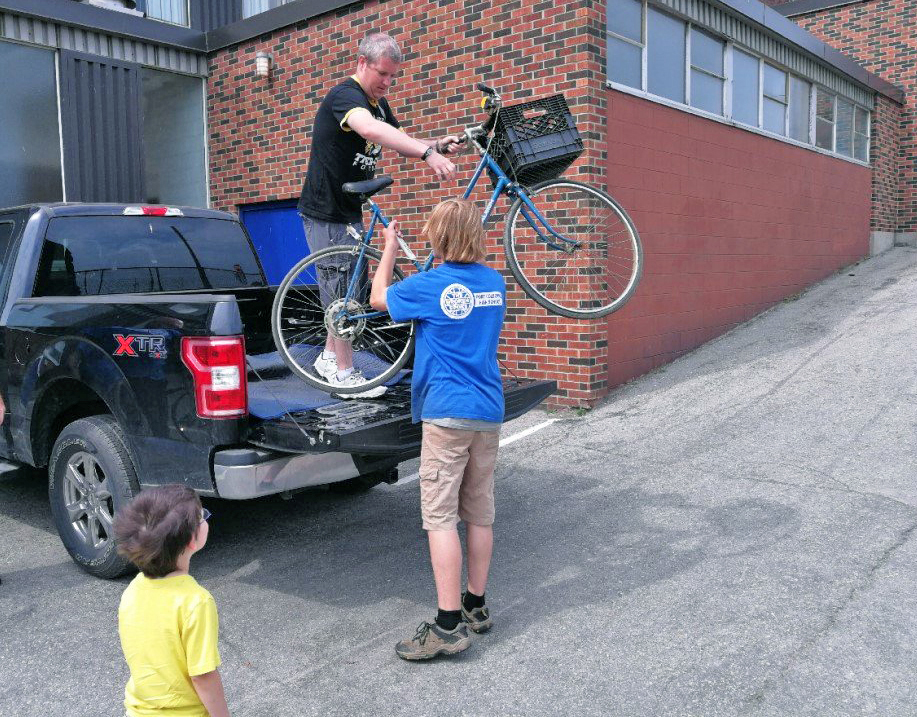
    Rather than send the bikes to a landfill, the Facilities Management and Campus Security teams were able to find a more acceptable way to pass along the two-wheeled treasures.

    On Friday, June 15, more than 20 of the bikes were donated to Port Colborne High School’s Broken Spoke program.

    The program aims to engage students in the understanding and benefits of refurbishing bicycles to provide enjoyment and transportation for themselves and those less fortunate while also reducing landfill waste.

    Once the bikes have been refurbished, they will be donated to those in need, and have, in the past, been sent to places as far away as Haiti, Cuba and Africa.

    Story from The Brock News

    Categories: Student Contributor, Sustainability

  • Walking Trails located around Brock University!

    Blog Contributor: Kaitlin James

    Bruce Trail - Brock University

    Did you know that Brock is located in the Niagara Escarpment UNESCO Biosphere Reserve?

    UNESCO Biosphere Reserves are ecosystems worldwide that have been recognized by UNESCO (the United Nations Educational, Scientific, and Cultural Organization) as important, and are communities committed to conservation, education, and sustainable development among other things (Georgian Bay Biosphere Reserve, n.d). Brock University falls within the Niagara Escarpment Biosphere reserve which stretches over 725 km, one of the 18 found within Canada (UNESCO, 2015).

    Within the beautiful Niagara escarpment that surrounds Brock, is the Bruce Trail, which is the longest and oldest hiking trail in Canada. There are so many different trails, short and long, that surround main campus. Perfect for a break between classes or lunch!

    I personally walk the trail that connects to the bottom of Lockhart Drive, right by the Brock University Research and Innovation Centre, which brings you right outside of Market! Just a quick 10-minute hike up the hill to class. What a great way to see some wildlife and get some fresh air!

    There are many access points to the Bruce Trail from the top of the escarpment! To find out more about the Bruce Trail, and the many access points found across campus, click the link below!

    https://brucetrail.org

    References:

    Georgian Bay Biosphere Reserve. (n.d) UNESCO Biospheres. Retrieved from https://www.gbbr.ca/about-us/unesco-biospheres/

    UNESCO. (2015).  Niagara Escarpment. Retrieved from http://www.unesco.org/new/en/natural-sciences/environment/ecological-sciences/biosphere-reserves/europe-north-america/canada/niagara-escarpment/

    Categories: Outdoors, Student Contributor, Study Sustainability at Brock, Sustainability at Brock

  • Exciting Scholarship Opportunity for Brock’s Environmental Sustainability students!

    By: Shanen D’Souza

    Toromont CAT Scholarship Presentation

    Photo: Cheque presentation by ToromontCAT representatives to Scott Johnstone, AVP Facilities Management and Dr.Ingrid Makus, Dean of FOSS at the reopening of Theal House in February 2018.

    The Environmental Sustainability Research Centre (ESRC) along with Brock Facilities Management is offering $5,000 in scholarships for the upcoming year! ToromontCAT Construction donated these funds to the University to encourage and foster sustainability education and research at Brock.

    For students enrolled in the Master of Sustainability program, three scholarships of $1,000 each will be awarded to students in good academic standing. The three designations are as follows: one current student in Scheme A, one current student in Scheme B and one incoming student who will begin studies in the Fall of 2018. For students who have declared a Minor in Environmental Sustainability, two scholarships of $1,000 each will be awarded to students in good academic standing.

    For more information on the scholarships and applications please visit our website.

    This scholarship is another indicator of the quality research and education that is carried out through these Environmental Sustainability courses. It also displays Brock’s commitment to becoming a national leader in sustainability, while striving to create beneficial educational opportunities for its students. According to Ryan Plummer, Professor and Director of the ESRC, these scholarships recognize as well as support excellence in Environmental Sustainability.

    Applications include an essay question to be answered in 1500 words or less and the applicant’s unofficial transcripts. All completed applications must be submitted via email by August 22, 2018 by 11:59pm to [email protected]. Successful recipients will be notified via email by September 7, 2018.

    Categories: Student Contributor, Study Sustainability at Brock, Sustainability at Brock

  • Milestones achieved by Facilities Management at Brock!

    Blog Contributor: Shanen D’Souza

    Brock Engine Room at the CUB

    Photo: Engine room at the Central Utilities Building, Brock University

    Facilities Management (FM) is the department responsible for all activities related to the maintenance, operations and development of Brock’s facilities and grounds. The department is heavily focused on sustainable development and the functioning of the campus. FM is always looking to reduce its impact on the environment and community around us. The recent grant of $75,000 awarded to Brock by the Ontario government to install 10 new electric vehicle charging stations is a testament to FM’s continued work towards Brock becoming a more sustainable campus.

    In the past year, the efforts of Facilities Management have reduced the energy consumption of the university as well as its greenhouse gas emissions. These efforts have also created thousands of dollars of yearly savings for the university. Installing new Variable Frequency Drives to two return fans in the Schmon Tower has led to over $86,000 in savings and 456,000 kWh in energy saved! These frequency drives coupled with a new high efficiency motor reduce the energy consumption of the Tower, the most used building on campus. Even a simple change in the LED lighting in both the 1st and 5th floors of the Tower have resulted in annual savings of over $3,000 and 17,000 kWh in energy.

    Another notable initiative by FM was the recommissioning of the Chiller in the Plaza building. A chiller is a machine that is used to cool the various buildings on campus. By using the Central Cooling Loop on campus instead, FM was able to shut down the Plaza chiller, as the Central Loop provided the necessary cooling on its own using innovative engineering methods. This has resulted in over $82,000 in annual savings and 435,000 kWh saved of energy. Subsequently, recommissioning the electric boilers in Decew Residence is now saving the university $140,000 annually and reducing energy consumption by 75,000 kWh!

    These proactive projects, along with several others in the last year, have cumulatively saved 1,750,000 kWh of energy and $332,000 on an annual basis! As the Facilities Management department leads Brock’s structural initiatives towards sustainability, the campus as a whole, can reduce its environmental impact and continue to be a good social citizen in the community.

    Categories: Student Contributor, Sustainability at Brock

  • Ready, Set, Charge!

    Blog Contributor: Shelby McFadden

    Electrical Vehicle Charging Station - International Centre, Brock University

    Photo: Electric vehicle charging station located at the Brock University International Centre.

    We have exciting news to share, as Brock was just approved for the installation of 10 new level 2 electric vehicle charging stations, which are to be installed by November 2018. Brock was generously given $75,000 through the Ontario Government’s Workplace Electric Vehicle Charging Incentive Program to carry out the project.

    To date, Brock has three electric chargers on campus, all of which are used frequently. The first charging station was installed at International Centre in 2013, through the partial gifting from Sun Country Highway. Then in 2016, two additional stations were added. There is one charger at the Central Utilities Building, and one in Lot H behind the tower.

    These chargers are available to be used by the Brock community, but also by people in the community and visitors to the Niagara Region. Currently, these chargers are free to use for permit holders, with non-permit holders only needing to pay a small amount for parking.

    With the student population sitting at around 18,000 students, and electric vehicles rising in popularity, these new charging stations will make it easier to accommodate electric vehicles on campus.

    This is really exciting, especially as someone who hopes to buy her own electric vehicle one day soon.

    While not perfect, electric vehicles have less impacts on the environment, as the only emissions are associated with electricity production, which is less of an issue with coal having been phased out in Ontario. By driving an electric vehicle, the average Canadian can reduce their car’s gas emissions by 60 to 90% (Plug ‘N Drive, n.d).

    This is a step in the right direction for helping to reach Brock’s emission reduction target of 20% by 2023.

    I am personally quite excited to see these chargers pop up around campus in the upcoming months, and am looking forward to future initiatives contributing to sustainability on campus.

    References:

    Plug ‘N Drive. (n.d). Electric vehicle benefits. Retrieved from https://www.plugndrive.ca/electric-vehicle-benefits

    Categories: Electricity, Energy, Student Contributor, Sustainability

  • Sustainability Committee Workshop

    Blog Contributor: Kaitlin James

    The Brock Sustainability Coordinating Committee serves as a forum for discussion of sustainability related information, practices, actions and initiatives, with a goal to enhance and promote sustainability at Brock.

    Today we had our first sustainability committee workshop of the new year. It was great to meet everyone and hear about all of the different initiatives going on across the university campus. Bringing together such a diverse group of individuals is integral to be able to facilitate and sustain sustainability campus wide, and allowed for an all-encompassing, active discussion of what we would like the future of sustainability to look like at Brock, including potential challenges in implementation.

    Myself and the other summer interns were excited to share with the group what we have been doing over the last couple of weeks and engaged in meaningful conversation to help build our list of current initiatives taking place across campus, ensuring that our list is as comprehensive as possible. It was great to see all that is being done across the school to make steps towards a more sustainable campus. I’m excited to see what the future of sustainability at Brock has in store for us!

    To learn more about Sustainability at Brock visit: brocku.ca/sustainability.

    Categories: Student Contributor, Sustainability, Sustainability at Brock

  • In our backyard: ESRC playing a part in Brock’s Community Garden

    Shelby and Shanen in the Brock community garden.

    Brock’s Community Garden, located opposite Theal House, has received tremendous support and involvement by the Niagara community in recent years. Every year people are encouraged to adopt a plot and grow different plants, whether it is colourful flowers or vegetables for supper. The 12 initial plots were so high in demand that the grounds crew had to make 8 additional plots, and now all 20 plots are assigned.

    The Environmental Sustainability Research Centre (ESRC) has adopted one plot and will be maintaining it over the summer months. I, along with the other summer interns as well as the staff at the Centre, will be growing various plants this summer. Being an international student who grew up in a desert, I never had the opportunity to plant and watch flowers grow and bloom, so this is a very exciting opportunity for me.

    We will be planting cardinal flowers, a native red flower of the Niagara region. The Centre is working to promote sustainability on campus and aims to be an environmentally-friendly community member. Planting a native species promotes the unique flora of Niagara, and the red colour signifies the signature Brock red colour. We will also be planting some red vegetables like tomatoes and red peppers, and hopefully even some cucumbers.

    I am excited to watch these plants grow and bear fruit over the next couple of months. I have heard that deer and bunnies do feast upon fruits of the Brock Garden, but hopefully we will get to enjoy some too!

    Brock Community Gardens

    Categories: Outdoors, Student Contributor, Sustainability at Brock

  • Brock-Lincoln Living Lab research project to examine Lake Ontario shoreline flooding

    The flooding of coastal communities along Lake Ontario last year caused major damage and made people realize that century floods aren’t nearly as rare as the name implies.

    A new research collaboration between Brock University and the Town of Lincoln is aimed at helping the community understand how to deal with the impacts of climate and environmental changes and examining potential avenues of solutions for future development along the shore. It’s the first externally funded project as part of the Brock-Lincoln Living Lab partnership announced in October 2017.

    Brock UNESCO Chair in Community Sustainability Liette Vasseur is leading the three-year research study for the Ontario component of a larger project by Université du Québec à Rimouski, which is examining how various coastal communities can deal with and share ideas on the impacts of climate and environmental changes.

    Brock UNESCO Chair in Community Sustainability Liette Vasseur

    “Communities are becoming more and more exposed to different hazards,” said Vasseur, who has been involved in similar research initiatives in other communities in Atlantic Canada and Ecuador. “With climate change, these types of events are coming faster and more often.”

    The project has received $280,000 in funding from the Marine Environmental Observation Prediction and Response Network (MEOPAR), with additional support from the Town of Lincoln and Brock. MEOPAR is an independent, not-for-profit organization funded by the federal government as a National Centre of Excellence that supports research and trains students in the area of marine risk and resilience.

    Lincoln suffered around $1 million in damage as a result of back-to-back spring storms in 2017 that caused massive flooding from Lake Ontario. The storms led to the Town’s first-ever voluntary evacuation notice for residents living near the Lake Ontario shoreline, and caused significant damage to Charles Daley Park and sewer systems in Jordan Station and Campden.

    Vasseur said climate change scenarios over the next decade are projecting continuous sea level rise and increases in extreme weather events. This will amplify the severity and frequency of flooding in coastal communities like Lincoln, which is continually growing with more people living near the Lake Ontario waterfront.

    “People were always talking about 100-year events. Now it’s more like one every five years,” she said. “It shows that we need to be more prepared. When we’re planning things like residential developments, we need to plan in a way that we’re going to survive with these types of events.”

    For the Town of Lincoln, the research will provide crucial information about current and future risks.

    “In 2017, Lincoln experienced the real and harsh effects of severe weather on critical infrastructure in our community,” said Lincoln CAO Mike Kirkopoulos. “As another benefit of the Brock-Lincoln Living Lab, this research is grassroots to our community, helping us better understand the conditions for collective ownership of adapting to climate change as an organization and community.”

    Vasseur said the research team will include a postdoctoral fellow and a master’s student, who will collect data in Lincoln, and share information and ideas with other researchers and communities along the St. Lawrence Seaway.

    “It will be a very good learning experience for the students, while helping the communities at the same time,” she said. “We’re hoping that by the end, the data we’re going to get can be used by communities all along the coastline.”

    Lincoln Mayor Sandra Easton said municipalities like hers are learning that more frequent smaller floods — not just rare major flooding events — can have a big impact on resources.

    “Climate change and the impact on municipal infrastructure is top of mind for our council,” Easton said. “With the growing municipal infrastructure funding gap, municipalities have a responsibility for long-term planning and mitigation of the effects of climate change. This research is critical for council to understand how we can better identify actions toward climate change adaptation.”

    Story originally published in The Brock News.

    Categories: Education, Student Contributor, Sustainability