Articles tagged with: community engagement

  • Brock grad raising awareness of trans identities through film

    Image caption: Roy Wol (BA ’06), former student in the Departments of Communication, Popular Culture and Film and Dramatic Arts, at the South by Southwest premiere of The Garden Left Behind, a film he recently brought to a Brock audience.

    Originally posted in The Brock News MONDAY, MAY 17, 2021 | Written by 

    Brock alumnus and award-winning filmmaker Roy Wol (BA ’06) is starting important conversations about trans identities through his work.

    And earlier this spring, he brought that meaningful discussion virtually to the Brock community.

    In March, Brock’s Pride Week kicked off with a special screening of Wol’s film, The Garden Left Behind. The 2019 release won the Audience Choice Award when it premiered at South by Southwest (SXSW) and has gone on to screen at more than 70 festivals and 50 community events.

    The Brock screening was followed by a panel discussion, which can be viewed online here, featuring Wol, the film’s producer, alongside actresses Carlie Guevara and Ivana Black.

    The event was sponsored by Gender and Sexual Violence Support and Education, Human Rights and Equity (HRE), the Marilyn I. Walker School of Fine and Performing Arts and the Faculty of Social Sciences.

    The Garden Left Behind tells the story of Tina (played by Guevara), a Mexican trans woman, and her grandmother, both living as undocumented immigrants in New York City (NYC).

    Wol, a former double-major in Film Studies and Dramatic Arts (DART), describes bringing the film and industry panel to Brock as “the greatest feeling ever.”

    He was encouraged by the interest in the film he experienced right from his initial meeting with event organizers.

    Carlie Guevara, who stars in The Garden Left Behind, recently participated in a virtual Brock discussion panel.

    “I was expecting only to meet with a single person, but I found myself meeting seven people from different departments asking about the film and chatting about possibilities,” Wol says. “Personally, I felt so welcomed but more importantly, I felt that Brock saw the mission of the film. The impact was aligned — I feel and see the hunger for these types of projects at Brock and I was so honoured to share our work with the Brock audience.”

    Guevara also enjoyed participating in the panel.

    “I’m thankful I was able to enjoy a Friday evening with Brock,” she says. “University communities are super interesting for me, because the audience is within my peer group and I’m exposed to new ideas and experiences whilst sharing my stories.”

    Guevara felt “immediately akin” to Tina’s character after first reading the script, noting there is much to unpack about her story and the themes it touches on.

    “I was drawn by the story and the badass transness of it all,” she says. “I felt happy to read a script and be a part of a film that gave depth, light and breadth to a trans-POC(Person of Colour)-immigrant-NYC narrative.”

    Supporting actress Ivana Black says spending time with the Brock community was “freeing.” She emphasizes that the film requires its audience members to consider their own responsibility.

    “I am hopeful the conversation will open minds and help people see the history of trans identities as a positive and important part of the Two-Spirit, lesbian, gay, bisexual, transgender, queer, questioning, intersex and asexual (2SLGBTQQIA+) history,” says Black. “I think the film has reinforced the plight that trans women have and still face, and it questions how far the community has moved when one part of the community is still suffering.”

    Mackenzie Rockbrune, one of the event organizers from HRE and a co-host of the panel discussion, says the team wanted to “create an event to bring awareness to the trans community and the intersectional issues they face every day.”

    Showing a film made by a Brock grad, she adds, made it all the more special.

    “The event had a wide range of attendees from the 2SLGBTQ+ community and Roy Wol’s former departments,” says Rockbrune. “The film allowed for an entry point for students to join the conversation about intersectionality and transgender rights, and inspired students by highlighting an alumnus who used his degree to cultivate activism.”

    Hamed Karaghi, also an organizing committee member and panel co-host, says the intersectionality of the film made it an ideal way to kick off Brock Pride Week.

    “Our audience was informed of the many sacrifices the trans community have made so that queer people can experience liberty and freedom here in North America,” says Karaghi. “The movie was especially valuable for Applied Health Sciences students at Brock, since we got an overview of the challenges that trans people experience while navigating the health-care system to get their gender confirmation surgery.”

    According to Wol, community screenings like the one at Brock have laid bare a great need for conversation and sharing.

    “At some point, we had seven simultaneous community screenings with our team spread around the globe as representatives creating opportunity for discussions,” he says. “The film became larger than itself, a catalyst to share our wounds with each other — it provided a platform to bridge communities.”
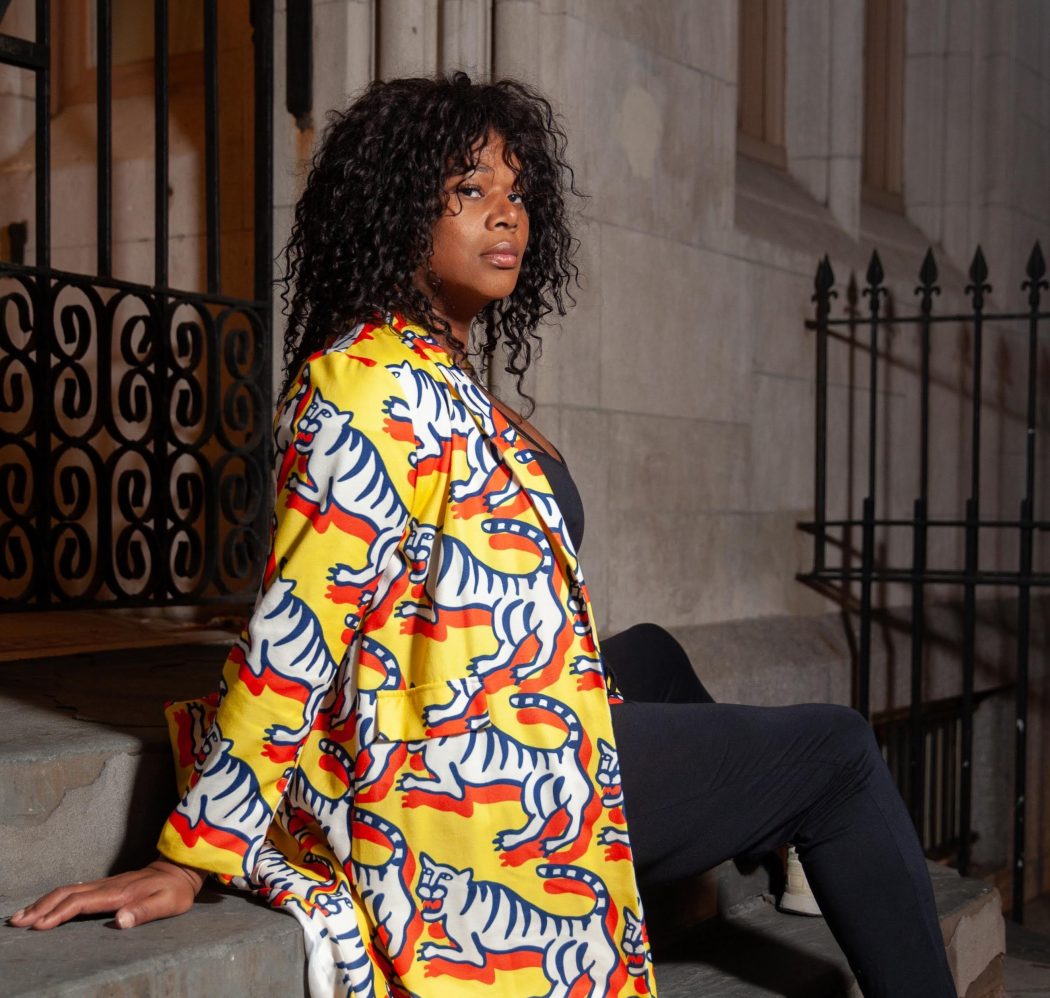
    Ivana Black, a supporting actress in The Garden Left Behind, recently participated in a virtual Brock discussion panel.

    Wol says he makes film because he wants to learn about life. With The Garden Left Behind, he learned not only from the film’s main character, but also from the community building that went into both the making and the marketing of the film.

    He notes that some 48 people from the trans community worked on the film, and more from the broader 2SLGBTQQIA+ rounded out the cast and crew. For many, it was their first job in film — but not their last.

    “More than a handful have since landed jobs at HBO, New York Film Festival Lincoln Center’s Artist Academy, POSE creator Ryan Murphy’s Half Initiative directing fellowship, and jobs in commercials and plays,” says Wol. “I am proud to say we were at the forefront of the trans representation movement in cinema, giving maximum visibility to the community behind and in front of the camera as actors, producers and crew staff.”

    Wol, who came to Brock as an international student and a third-culture kid (an individual raised in a culture other than their parents’), says his experiences at Brock gave him the courage to become his best self.

    “In the DART department, I was encouraged to be playful, to experiment with my art, and in Film Studies, the course options were fundamentally very inspiring and helped me narrow down what I wanted to pursue,” he says. “Communication, Popular Culture and Film courses and instructors made me question everything beyond film — my existence and how narratives impact our lives.”

    Wol says he spent a long time finding his own voice and navigating the challenges of being a “serial immigrant” unable to access government funding through bodies like Telefilm or to work on union productions, which were limited to permanent residents of Canada.

    “This pushed me to be completely independent and create my projects outside of the insular industry, which was a blessing in disguise,” he says. “Within the film industry there are many pockets of sub-industries, and I got in and out of most of them, which gave me a good understanding of the overall picture and grew my network.”

    Wol believes that “storytellers can create bridging opportunities instead of parallel universes,” and builds his art around this belief.

    “We are as good as our community is,” he Wol. “It is more important than ever to do our best to tolerate and create a dialogue with people from experiences that might be conflicting with our core beliefs.”

    Tags: , , , , , , , , , , , , , , ,
    Categories: Alumni, Announcements, Events, Faculty & Instructors, News, Uncategorised, Visiting Artists

  • Online symposium celebrates new publication on theatre pedagogy and climate crisis

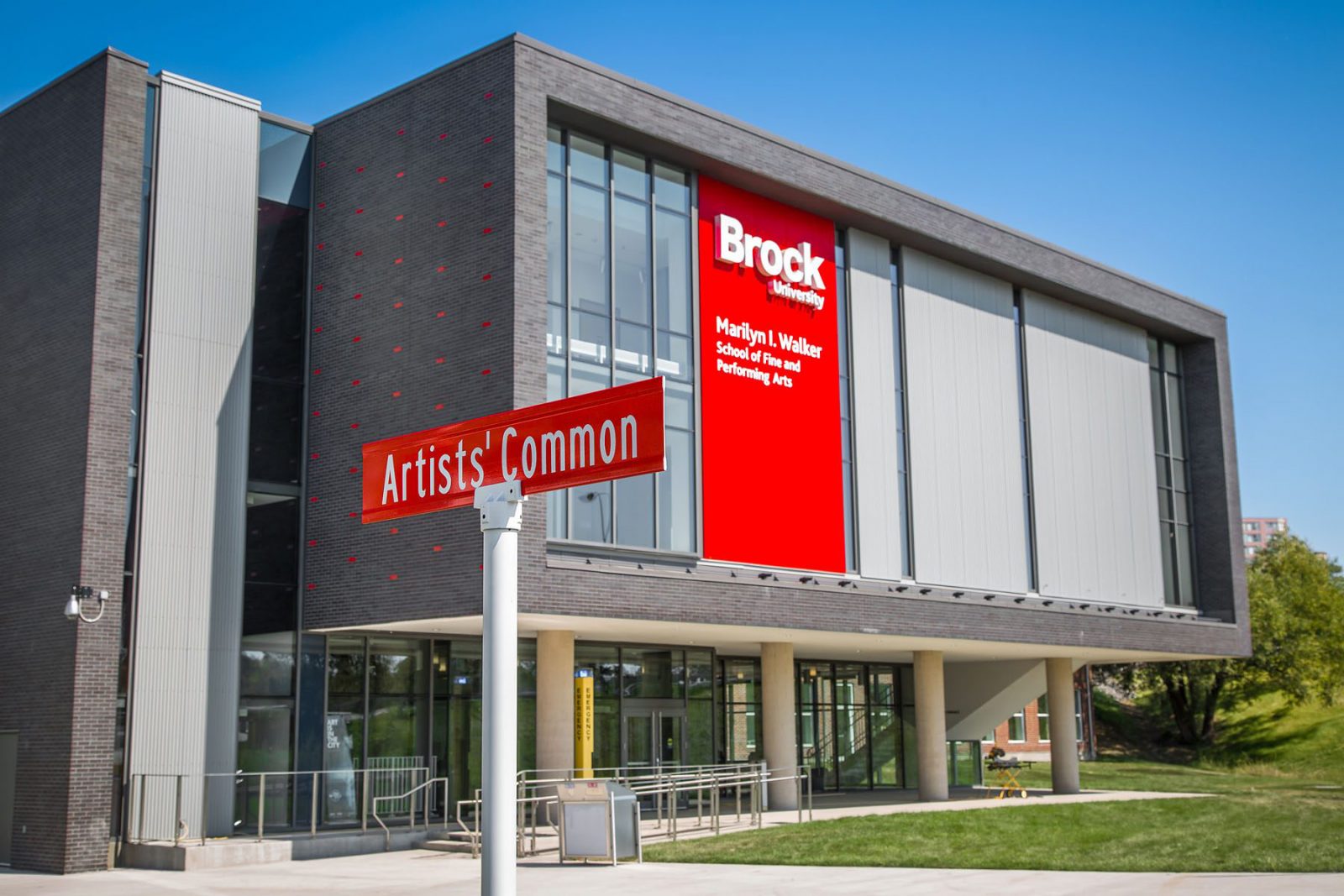
    Image caption:The Marilyn I. Walker School of Fine and Performing Arts in downtown St. Catharines.

    An upcoming weekend of online events will explore the role that theatre education plays in relation to climate crisis.

    To launch the new Routledge publication Theatre Pedagogy in the Era of Climate Crisis, the Marilyn I. Walker School of Fine and Performing Arts (MIWSFPA) is hosting a two-day online symposium featuring historians, theatre practitioners, playwrights, designers, professors and activists.

    Presented as part of the 2020-21 Walker Cultural Leader’s Series program, the online symposium “Theatre Pedagogy in the Era of Climate Crisis” runs Saturday, March 20 and Sunday, March 21 and will be livestreamed free on the MIWSFPA YouTube channel.

    Convened by volume co-editors David Fancy, Professor and Chair of the Department of Dramatic Arts at Brock University, and Conrad Alexandrowicz, Associate Professor of Theatre at the University of Victoria, the event features four online panel discussions with contributing authors of the volume, each a theatre scholar and/or practitioner.

    Through these panel discussions, volume contributors will answer the question of how theatre pedagogy can be transformed in response to the global climate crisis. Panelists are purposely divided into groups that mix their different expertise, encouraging a rich and invigorating discussion.

    “Nothing could be more pressing than understanding how to evolve our theatre training and pedagogy to address the climate crisis,” says Fancy.

    The volume’s authors, he adds, also “unpack how supremacy thinking informing the climate crisis — that humans are more important than nature — is echoed across racial and gendered violence in contemporary societies.”

    Each panel is based on a theme in the anthology: Intersectionality and the Body of the Earth; Eco-Aesthetics in Performance and Design; Eco-literacies in Teaching Theatre; and Theatre Pedagogy and the Climate Crisis.

    A summary of the volume can be found in a manifesto signed by all contributing authors in the epilogue of the book.

    Upcoming Walker Cultural Leaders events:

    Saturday, March 20

    1 to 2:15 p.m. — Theatre Pedagogy and the Climate Crisis
    Moderated by David Fancy with Lara Aysal, Derek Davidson, Katrina Dunn and Beth Osnes.
    Watch the livestream.

    3 to 4:15 p.m. – Eco-Aesthetics in Performance and in Design
    Moderated Conrad Alexandrowicz with Tanja Beer, Rachel Bowditch, Joan Lipkin and David Vivian.
    Watch the livestream.

    Sunday, March 21

    1 to 2:15 p.m. – Eco-Literacies in Teaching Theatre
    Moderated by Sasha Kovacs with Mary Anderson, Dennis Gupa and David Fancy.
    Watch the livestream.

    3 to 4:15 p.m. – Intersectionality, Solidarity and the Body of the Earth
    Moderated by Rachel Rhoades with Gloria Akayi Asoloko, Soji Cole and Conrad Alexandrowicz.
    Watch the livestream.

    More event information, including full biographies of each panelist, can be found online at brocku.ca/tpcc

    Tags: , , , , , , , , , , , ,
    Categories: Alumni, Announcements, Current Students, Events, Faculty & Instructors, Future students, In the Media, Media Releases, News, Performance Season, Uncategorised, Visiting Artists

  • Brock students and newcomers to Canada unite online to create socially conscious theatre

    Originally published in The Brock News TUESDAY, DECEMBER 15, 2020 | by 

    The shift to online learning has not stopped Brock Dramatic Arts and Faculty of Education students from connecting with newcomers, educators and theatre makers around the globe.

    While in-person activities are limited or non-existent due to the pandemic, students in Social Issues Theatre for Community Engagement (DART 3F93) are virtually meeting with newcomers to learn about their journey to Canada.

    The result is meaningful collaboration and the creation of applied theatre pieces rooted in issues of social justice.

    Half of the students taking the course are studying Dramatic Arts. The other half are pursuing dramatic arts as a teachable subject through their Concurrent Education program, which allows students to earn both their undergraduate degree and a Bachelor of Education concurrently.

    The Social Issues Theatre for Community Engagement course builds on a long history between the Department of Dramatic Arts (DART), Niagara Folk Arts Multicultural Centre (NFAMC) and Brock University.

    In August 2019, a Memorandum of Understanding between Brock and the NFAMC was signed, solidifying a partnership between the two organizations aiming to address challenges for newcomers to Niagara and provide them with support through community-based actions. It was part of Brock’s ongoing community engagement efforts which create meaningful, mutually beneficial relationships that support social and economic development.

    Over a number of years, DART has had many collaborations with the NFAMC that have enriched the educational and creative experiences of Brock students and community members.

    This community engagement and scholarship continues to thrive online during the pandemic, offering students an experiential learning opportunity to gain valuable skills developed through the teachings of Dramatic Arts.

    The year-long course is taught by Rachel Rhoades, Assistant Professor of Applied Theatre, Dramatic Arts. Rhoades has worked as an applied theatre practitioner, educator and researcher for 12 years in community- and school-based settings in Boston, Toronto and now at Brock.

    Rhoades describes applied theatre as a creative tool for social change that is often mounted in non-traditional performance spaces and says different communities can come together to exchange stories of their lived experiences and create art based on these exchanges.

    The outcome is evocative theatre that promotes learning and healthy discussion around strategies for change and social justice in marginalized communities.

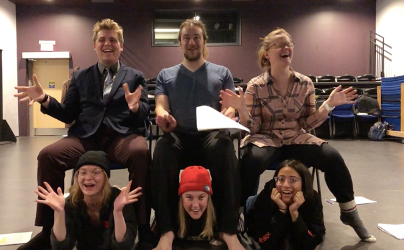
    In a photo taken prior to the COVID-19 pandemic, Brock students from Social Issues Theatre for Community Engagement (DART 3F93) rehearse their applied theatre play Identities Relocated at the Marilyn I. Walker School of Fine and Performing Arts.


    Applied theatre techniques can assist communities in articulating issues, enhancing understanding of their complexity and planning future actions.

    As learning shifted online this fall, Rhoades organized the “Global Guest Speaker Series” as part of the course. Each week, a guest artist facilitated virtual workshops.

    As a result of these workshops, students and volunteer newcomers from Sudan, Saudi Arabia, Kuwait, Colombia, Jamaica, Mexico, Angola and China created theatre scenes together that were performed virtually as part of the course work.

    Guest speakers have included: Brisa Areli Muñoz, Artistic Director of the Applied Theatre Collective, and Manager of Community Partnerships for The Public Theatre in New York City; Varshini Pichemuthu, co-founder of the RootPrints Theatre company in London, England; Taiwo Afolabi, Canada Research Chair in Theatre and many more from India, Singapore and Toronto.

    Inviting guest speakers from the arts and education field is a way Rhoades is using online platforms to the classes’ advantage and embracing the opportunity to promote global connections during a time of isolation.

    “The community members (newcomers) have expressed gratitude for the opportunity to share their stories and opinions on how to resolve major issues through their experiential knowledge,” Rhoades says.

    Rhoades’ academic background in education and applied theatre is connected to her ongoing research. She is guiding young people to develop relationships with marginalized communities so there can be a mutually beneficial experience.

    In this model, students listen to the experiences of newcomers allowing them to learn from a cross-cultural context. In turn, this process can help newcomers feel affirmed and valued, recognizing and honouring their strength through adversity.

    “The students have gained much inspiration from hearing the stories of resilience from the community members, and the collaboration has really opened their eyes to the struggles of peoples around the world,” Rhoades says, adding that the students are improving as educators and artists, and also acquiring knowledge on strategies to demand and develop a more just society. Now, more than ever, these community collaborations are vital to a bright and inclusive future, she says.

    Tags: , , , , , , , , , , ,
    Categories: Alumni, Current Students, Faculty & Instructors, In the Media, News, Visiting Artists

  • Our commitment to you

    Beginning in June, in part prompted by feedback from students and alumni, as well as in observation of momentum of Black Lives Matter, DART faculty and staff began meeting regularly with Brock’s Office of Human Rights and Equity (HRE).

    With the support of HRE staff, our goal is to examine and identify the department’s contributions to white supremacy and all oppressive structures and practices, whether inside or out of the classroom, in the curriculum, in our productions, in our community engagement, and in our relationships with other offices we collaborate with or who represent us.

    Read about the Department’s commitment to you.

    See also: scholarstrikecanada.ca

    Tags: , , , , , , , , , , , , , , , , , , , , , , , , , , , , , , , , , , , , , ,
    Categories: Alumni, Announcements, Current Students, Faculty & Instructors, Future students, In the Media, News, Uncategorised