In 2025-26 DART sat down with our faculty and staff and asked them about their teaching, research and experiences at DART.
Five Minutes with Professor Mike Griffin!
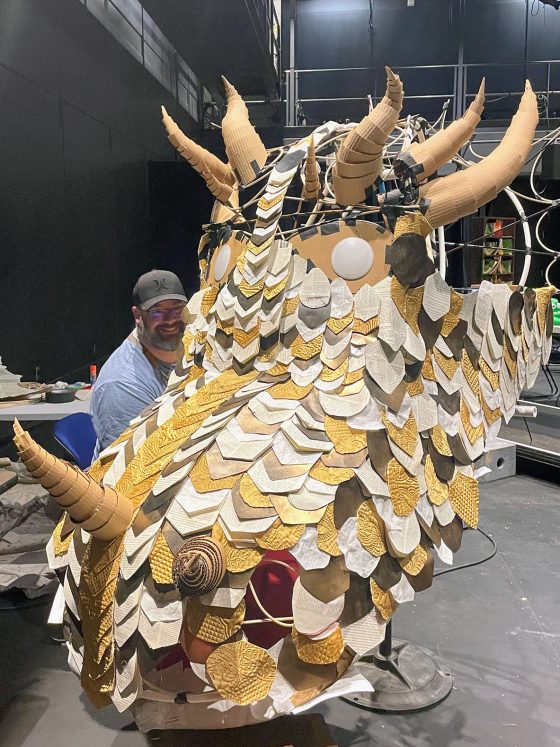
Mike Griffin with his puppet creation Pendamire Dragonius for ESCAPE TO ILKANOR: A Fantasy Play in Nine Chapters, in 2026.
Writer and director Mike Griffin is Assistant Professor at DART, teaching acting, directing, devising, movement, mask and Commedia dell ‘Arte. He has worked across Canada as theatre educator, director, and playwright.
Tell us about one of your most interesting recent creative or scholarly projects and why it is meaningful to you:
ESCAPE TO ILKANOR: A Fantasy Play in Nine Chapters is a current project that I am writing, directing and designing/building the masks and puppets. It is a project that examines common tropes in the fantasy genre, investigates escapism and why we like to escape to other worlds, and gives me an opportunity to create new types of bizarre characters. I am really challenging myself with the scale of masks and puppets for this project which is both invigorating and terrifying, two essentials for an artist.
What excites you most about teaching and working with the students in our department?
I love the relationship building that I get to do with the students. Getting to know my students as people and artists and see them grow in both areas throughout their time in the program is so rewarding. I get really excited about developing mentor relationships with students on projects and show courses where we can dive into the work in a way that is driven by passion, interest, and curiosity.
What do you think makes our theatre program special or unique?
I love this program because of the type of students it draws. Our students often hold a balance of being passionate and driven artists who are hungry to learn and get practical experience and great human beings. You can’t forget that artists are humans first and DART attracts great individuals who enjoy the celebration of individuality, community, and collaboration.
Please share a moment when you were especially proud of or impressed by one of our students or graduates:
Working with a student designer who used every opportunity as an assistant to share their creativity. They were always prepared, advanced ideas from meeting to meeting, and could riff on ideas as they shifted and changed. They approached the project with care, ownership, and flexibility in a way that I had never seen an assistant designer bring to the table before.
How does your work as a scholar/artist/educator engage with the larger community — locally, nationally, or internationally?
I am in the early stages of a project that explores bringing movement educators together to discuss movement pedagogy in Canadian institutions. We see this as an opportunity to collect information about how teaching movement is changing/has changed in the last decade, in response to the ever-changing student body.
Bravo, Mike!
Five Minutes with Dr. Priya Thomas!
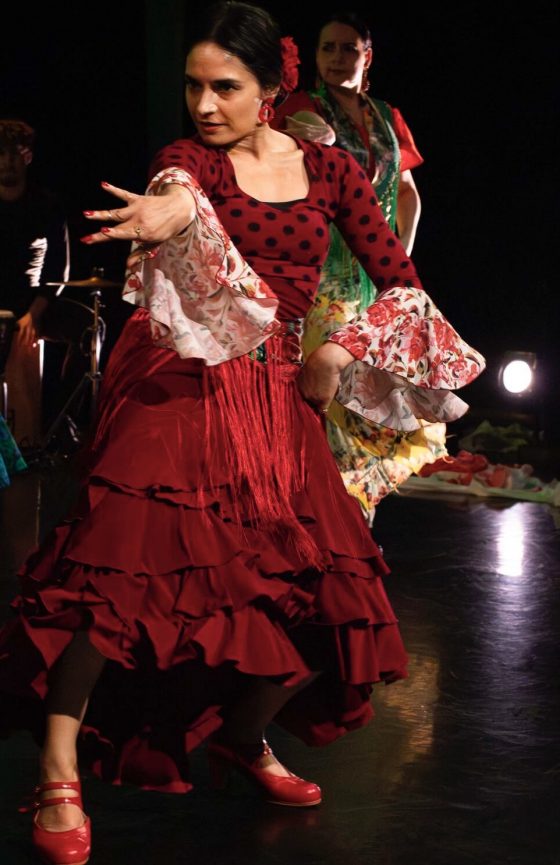
Dr. Priya Thomas doing one of her favourite things.
Dr. Priya Thomas is a dance/theatre historian, musician, and dancer/choreographer. Her scholarly and creative activities reflect a multidisciplinary critical practice that questions changing historical understandings of the ‘human’ in dance and performance practices. Her work is recognized through publications in leading peer-reviewed journals, book chapters, international conferences, and a number of prestigious research awards, grants, and fellowships.
Tell us about one of your most interesting recent creative or scholarly projects and why it is meaningful to you:
I’d say my forthcoming Blood Heron record (Pleasure Pier), has been one of the more meaningful projects recently. While on the surface it’s a musical project, it exposes geography as dramaturgy. It brings together many strands of my practice (movement, sound, storytelling, and research), into one long-form creative gesture.
What excites you most about teaching and working with the students in our department?
Never a dull moment! Our students are gifted, imaginative, and deeply attuned to one another, which means they often create work that is both ambitious and collaborative. Being able to nurture a space where they can envision the impossible, stretch creatively, and take meaningful artistic risks is one of the real joys of teaching here!
What do you think makes our theatre program special or unique?
Our people! Our faculty, staff, and administrators are exceptionally well-trained, gifted at what they do, generous with their time, collegial with one another, and genuinely attentive to the needs of students.
Please share a moment when you were especially proud of or impressed by one of our students or graduates:
If I had to name just one, I would recall the final creative projects submitted in my first year of teaching in DART. One group wrote, directed, shot, and edited a short film related to course content on multiple locations around St. Catharines, recruiting classmates to act and help with production. Watching them collaborate so generously, and then seeing the brilliance of their carefully executed (and intellectually provocative) finished film screened was beyond moving… . It was a reminder of how lucky I am to witness the vivid inner worlds of students dramatized.
What is one word or phrase you would use to describe the spirit of our department? Why?
Vibrant!
and vibrant = transformative…
How does your work as a scholar/artist/educator engage with the larger community — locally, nationally, or internationally?
The interdisciplinary nature of my work and my culturally hybrid practice (I was trained across Eurowestern and South Asian performance forms), connects with a diverse range of communities through performance, archival research, creative activity, and public-facing scholarship. This summer Priya will be presenting a paper entitled “Tidal Intimacies: Sound, Itineracy, and Epistolary Performance (A Drift Score in 3 Currents)” at PSi #31: Archipelagic Flows, in Djakarta. (PSi is an annual conference of Performance Studies international). The project grows out of ongoing thinking about sound, itinerancy, and epistolary forms of performance.
Bravo, Priya!
Five Minutes with Dr. David Fancy!
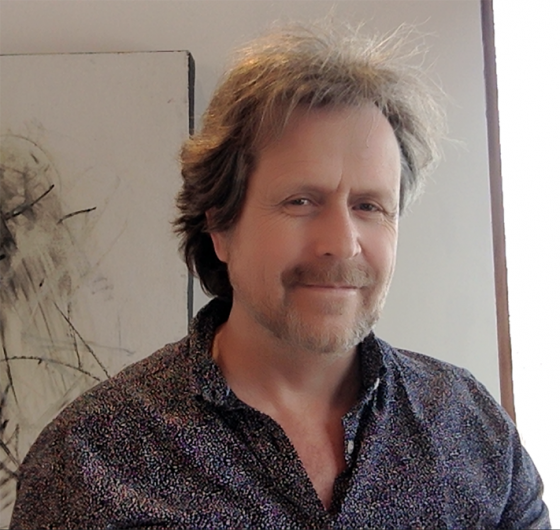
Dr. David Fancy
Dr. David Fancy has a long-term commitment to theatre, performance, and anti-supremacy. Since 2009 he has co-organized national conferences on theatre training and diversities (race, class, gender, sexuality, ability, and anthropocentrism), collaborated professionally with Indigenous colleagues since 1999, and published and created extensively in these areas. His website on acting training and diversities has been used in classrooms and studios across Canada, the US, the UK, and New Zealand.
His research explores performance and philosophy, particularly performance and ontology in relation to performativity, training, technology, and the climate crisis. He is completing two monographs: Resonance: Biopolitics and Entrainment in Contemporary Technocapital (2025) and Posthumanism and Therapy (2026). David also maintains an active creative practice as a playwright and director.
Tell us about one of your most interesting recent creative or scholarly projects and why it is meaningful to you:
I’ve been developing a long-term philosophical and creative research project on resonance — exploring how living systems, art, and ideas unfold through vibratory relations rather than fixed identities. The work spans scholarship, performance creation, and teaching, grounded in the conviction that theatre can attune us to subtle connections across human and more-than-human worlds. It’s meaningful because it bridges art, philosophy, and affirmation, offering ways of thinking and creating that resist isolation and foster collective imagination.
What excites you most about teaching and working with the students in our department?
Our students bring curiosity, courage, and a willingness to take creative risks. What excites me most is witnessing the moment when a student realizes that theatre isn’t only representation but transformation of self, community, and world.
What do you think makes our theatre program special or unique?
DART balances rigor with openness. Students are encouraged to bring intellect, emotion, politics, and imagination into their work. Actors, designers, playwrights, and scholars learn alongside one another in a collaborative artistic ecosystem.
Please share a moment when you were especially proud of or impressed by one of our students or graduates:
I’m continually moved by graduates who carry collaborative and socially engaged values into the world. One former student began a theatre project with newcomers and refugees in Niagara — a beautiful example of creative training becoming community transformation.
What is one word or phrase you would use to describe the spirit of our department? Why?
Resonant. Teaching, learning, and creating here generate conversations that vibrate outward, sustained by generosity and attentive listening.
How does your work as a scholar/artist/educator engage with the larger community — locally, nationally, or internationally?
My work often sits at the intersection of art and social practice. I collaborate with artists, activists, and researchers across Canada and internationally to explore how performance engages urgent social, ecological, and political questions. Locally, I’ve worked on community theatre and environmental health initiatives linking creative practice to place and people.
Any concluding thoughts?
I feel fortunate to work in a department that understands theatre not only as an art form but as a way of thinking and being together. Creative practice can also be a form of inquiry, transformation, and shared becoming.
Bravo, David!
Five Minutes with Dr. Jennifer Roberts-Smith!
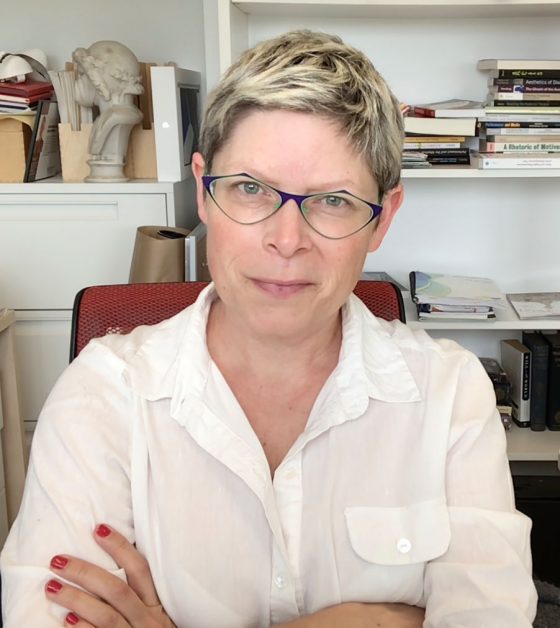
Dr. Jennifer Roberts-Smith
Dr. Jennifer Roberts-Smith (JRS) is an artist-researcher, whose transdisciplinary work in performance, digital media, design, education, and social justice has appeared in theatres, exhibitions, and scholarly publications internationally. She is interested in the ways that theatre offers people with differing perspectives opportunities to work together toward better futures.
JRS co-directs Staging Better Futures/Mettre en scène de meilleurs avenirs, a cross–Canada, industry-academic partnership focused on equity in post-secondary theatre education, funded by a $2.5M SSHRC Partnership grant.
She was an actor and director in Canadian theatres and taught at the Universities of Ottawa, Toronto, Windsor, and Waterloo before joining Brock in 2022.
Tell us about one of your most interesting recent creative or scholarly projects and why it is meaningful to you:
I co-lead a cross-Canada research partnership focused on equity in post-secondary theatre education called Staging Better Futures/Mettre en scene de meilleurs avenirs. The research question I wrestle with every day is how to co-ordinate, support, and measure the work of over 30 universities, colleges, theatre companies, and arts organizations – with over 100 individual project members – in a way that centres the perspectives of the minoritized people who should be benefiting from the project’s work. Recently, the research team has been thinking through how “allyship” can be something that institutions (not just individuals) can do. I’m interested in how allyship can be integrated into some of the formal processes of university departments like ours – for example in planning what courses we will offer, how we make decisions in meetings, or creating our major productions.
What excites you most about teaching and working with the students in our department?
DART students live up to their reputation as the best theatre students to work with in Canada! Before I joined DART, I heard this from everyone I talked to about our program, and I couldn’t believe it until I experienced it myself. Starting with the Invitational and continuing throughout the program, DART students embrace collaboration and co-creation, thoughtful creativity, honest and generous exchange of ideas, passionate commitment to making great theatre, and deep care and respect for each other.
What do you think makes our theatre program special or unique?
DART has an unusually clear understanding of its mission and its values, because our faculty, staff, part-time instructors, guest artists, and students all devote a lot of energy to thinking about those things and implementing them in all our activities. We don’t just say that the pillars of our department are praxis, ant-supremacy, and experiential learning; we do those things in every course, and we talk about them in all our meetings and activities. My current favourite event is our monthly Pizza with the Chair, where I get to hear from students about their ideas and concerns (and we all get to indulge in trashy pizza – with vegan and gluten and dairy free options!).
Please share a moment when you were especially proud of or impressed by one of our students or graduates:
It’s really hard to pick just one! There are so many impressive individual accomplishments, but I think I’m proudest of the ways our DART student council has grown over the three and-a-half years I’ve been here. When I arrived, there were two elected student representatives on our Departmental Committee, and now the students have established their own independent student council.
What is one word or phrase you would use to describe the spirit of our department? Why?
I think “flourishing”. This is the word that describes what we hope to achieve through virtuosity, creativity, inter-relationality, and a commitment to process over product. When we say flourishing, we mean both human and more-than-human flourishing – the flourishing of the planet, for example. It’s also what we hope to support in each other.
How does your work as a scholar/artist/educator engage with the larger community — locally, nationally, or internationally?
In my role as Chair, I get to work with the many regional and national theatre artists and companies who teach in our program, participate in creative teams for our productions, and co-develop work with us DART Walker Cultural Leader and DART Performance Research residencies. I’m especially excited right now about a new program DART is developing with the University of Portsmouth.
Bravo, JRS!
Five Minutes with Chelsea Mahon!

Chelsea Mahon
Chelsea Mahon is a professional arts manager who enjoys supporting artistic creation from behind the scenes. Chelsea is currently the Production Coordinator for DART and the Financial Manager for Punctuate! Theatre. She has worked as General Manager, Production Manager, Stage Manager, Technical Director, Administrative Assistant, Production Assistant, Lighting Designer, Sales Manager, Scenic Carpenter and Technical Operator. Chelsea has worked with nearly all the local theatre companies in Niagara region, as well as Niagara-on-the-Lake’s classical music presenter, Music Niagara, and across Ontario at the Drayton Entertainment theatres.
What do you think makes our theatre program special or unique?
The people. Everyone at DART truly wants to see students succeed. Staff and instructors are very approachable and are always happy to discuss ideas and share knowledge. It’s clear staff and faculty are enjoying the work they do at DART just as much as the students.
Please share a moment when you were especially proud of or impressed by one of our students or graduates:
One of my favourite moments in working with students is when you get to witness a moment of inspiration. For me, that happens a lot in working with crew on One Acts. For many crew members, the OneActs (or Mainstages) are their first crew experience in DART and it is always exciting reflecting back on the conversations we had and the seeds that were planted in this crew moment when I see them working as designers and managers for similar roles a year or two down the road.
Bravo, Chelsea!
Five Minutes with Ed Harris!
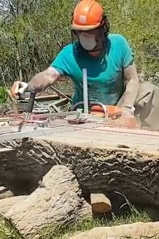
Ed doing one of his favourite things.
Ed Harris is the Head of Scenic Construction for Dramatic Arts. He was previously a Scenic Carpenter and built scenery, special effects, construction electrics and automation for The Shaw Festival Theatre and has been a Professional Stage Technician since 1992, touring most of the East Coast in the 1990s and 2000s. Ed also teaches the Carpentry section of 1F40 Scenography and Stagecraft, 3Y49 Scenic Carpentry, as well as 2P42 Stage Production and 2P43 Stagecraft.
In harmony with being a carpenter, Ed is also an arborist, sawyer, turner and drummer. Creating with wood is his passion, and stresses the need for tree preservation, planting, sustainable forestry and re-using, re-purposing and recycling. He feels that passing on this awareness to the students can be as important as the building techniques themselves.
Tell us about one of your most interesting recent creative or scholarly projects and why it is meaningful to you:
Solving physics problems with each Mainstage is meaningful to me. To be the bridge between a Designer’s vision, a director’s whims and the math needed for those to exist in the physical world and on stage. Showing students how to do that is very fulfilling.
What excites you most about teaching and working with the students in our department?
I enjoy presenting the world to them in a way that they may not have seen it before. Materials, construction, composition, physics: why are things the way they are? I like to show them how things are made, not just the way they are presented.
What do you think makes our theatre program special or unique?
I think having a wide range of professionals teaching a myriad of skills for students to have in their toolbox, gives them a much better leg up after graduation, to continue to make theatre. Our students become important assets to other theatre companies.
Please share a moment when you were especially proud of or impressed by one of our students or graduates:
Several times I have had a student in full panic, a full-blown anxiety attack in the Scene Shop when I start a saw for the first time. Each time, in baby steps, we have been able to work through that and get to the source of that fear. Once identified, it could be isolated and contained. Then they found the ability to move past that crippling fear and begin to build with saws. Watching this happen is by far the most impressed I could ever be with a student. From tears of fear, to tears of delight and discovery.
What is one word or phrase you would use to describe the spirit of our department? Why?
Artists creating, but outside the box.
How does your work as a scholar/artist/educator engage with the larger community — locally, nationally, or internationally?
As an artist that works in wood, that work follows me everywhere as a Carpenter and Arborist. As a freelance Entertainment Technician, I am never very far from a stage of some kind.
Any concluding thoughts?
“Making people laugh and cry through theatre. Striking it, building another, and doing it again – but different…”
Bravo, Ed!
Five Minutes with Sandra Marcroft!
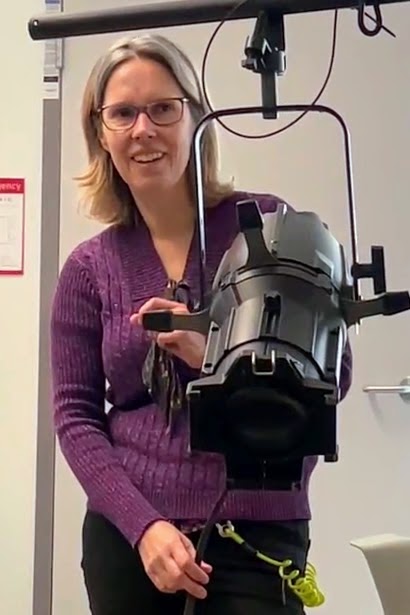
Sandra Marcroft
Sandra Marcroft is an award winning lighting designer, theatre technician and educator. With 30 years experience as a lighting designer for theatre and dance. Sandra has spent several years lighting new shows for new works including at the Rhubarb Festival (Buddies in Bad Times Theatre) with Hillar Liitoja (DNA theatre) as well as many, many independent productions. Her work has appeared in theatres and theatre festivals around the world, including Dailes Teatris (Riga, Latvia) and the Dialog Festival (Wroclaw, Poland). Sandra joined the Department as the staff Theatre Technician in 2021 and also teaches courses about theatrical lighting and projection.
What excites you most about teaching and working with the students in our department?
For many students coming from high school, their first experience working with lighting and sound equipment will be here in Dramatic Arts. I like to guide the discovery of how we use lighting to tell a story. Some of the students get very excited about being able to program lighting cues on the lighting console.
What do you think makes our theatre program special or unique?
There are many opportunities in our program for students to practice what they are learning in classes. Not only do our students act in our theatre productions, but our mainstage productions are crewed by our students, as well. This is great practical experience to learn and practice skills.
Please share a moment when you were especially proud of or impressed by one of our students or graduates.
Wow, I am very proud of so many of our graduates! Many are working in theatre, some in Niagara at wonderful theatre institutions such as the Shaw festival, Suitcase in Point. Some have taken their skills to film and television, and others have been accepted to prestigious grad programs.
Bravo, Sandra!
Five Minutes with Bobbi Pidduck!
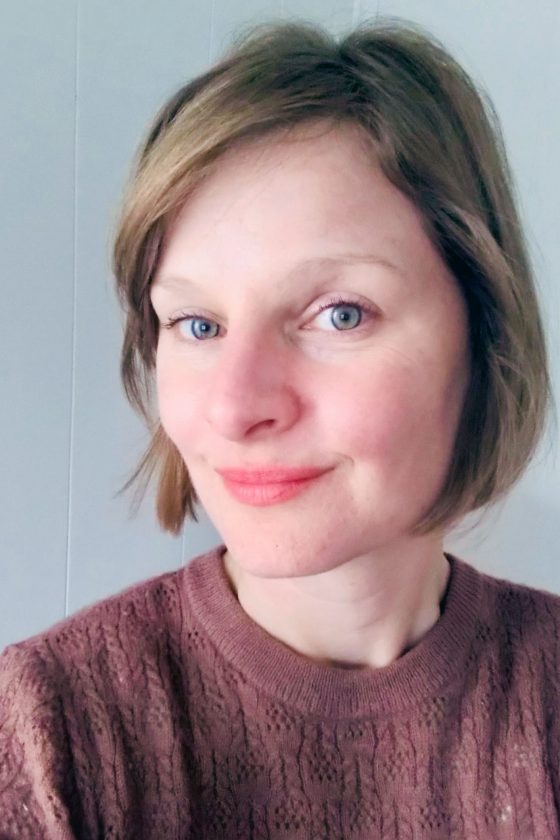
Bobbi Pidduck, Head of Wardrobe
Bobbi Pidduck started as a professional costume maker at The Shaw Festival Theatre twenty-six years ago. Throughout her career, she’s had the pleasure of working as a seamstress, pattern drafter, first hand, milliner assistant and dresser in a variety of theatre companies across the country.
In 2022, Bobbi joined the Department of Dramatic Arts as the Head of Wardrobe. She is thrilled to share the knowledge she’s gained from so many of her generous mentors.
What excites you most about teaching and working with the students in our department?
I’m most excited to see the beginnings of the next generation in our theatre community starting here at DART.
What do you think makes our theatre program special or unique?
This program encapsulates so many aspects of theatre making. Students graduate with a diverse set of skills.
Please share a moment when you were especially proud of or impressed by one of our students or graduates:
I feel most proud when I witness a student’s level of confidence grow. Something that can seem so daunting becomes a real boost in confidence when they’ve overcome a challenge.
What is one word or phrase you would use to describe the spirit of our department? Why?
Enthusiasm! The students’ joy for theatre making is infectious.
Bravo, Bobbi!