Essential Information for Undergraduate Psychology Majors at Brock University.
Introduction
This website includes essential information for Brock undergraduate Psychology majors about registration processes, degree options and degree requirements. It is also an excellent resource for students who have questions about university life in general, and the types of careers that you might pursue after graduation. However, it is important to be aware that the complexity of university programs means that this website cannot cover every possible issue or situation that a student might encounter. It is not intended to be a comprehensive guide. You should take advantage of academic advising regularly — doing so will allow you to make sure that you are on track in your program and discuss your individual progress in more detail.
Please note that past versions of this material are available on the Internet as pdf files. The information on this website is the most current; do not rely on information provided in older documents. Processes and requirements change from year to year, and if you are reading an outdated version, there is a chance that you will be making decisions based on the wrong information.
Table of Contents
- Book an Advising Appointment
- Guidelines for Effective Communication
- How to Read Course Codes
- Full vs. Partial Credits
- Context and Elective Credits
- Lectures, Seminars, Tutorials and Labs
- Delivery Methods
- PSYC F190 (Intro Psyc)
- PSYC 2P22 and 2P23 (Statistics)
- PSYC 3P01 (Intro Psyc TA Course)
- PSYC 4F91 (Thesis)
- Directed Readings and Independent Study Courses
- When can I register?
- Step-by-step how to register
- Overrides
- Conflicts, Dropping Courses and Automatic Deregistration
- Tips and Resources
- Registration Information for Students Entering Year 2
- Registration Information for Students Entering Year 3
- Registration Information for Students Entering Year 4
- Degree Options Chart
- Bachelor of Arts or Science?
- Combined Majors, Minors and Co-op
- Exchange Programs
- Blank Program Plans
- Year 1 and 2 Bachelor of Arts
- Year 3 and 4 Bachelor of Arts
- 3 Year Pass BA with Major
- 4 Year Honours Comprehensive
- 4 Year Honours Research Bachelor of Arts
- Year 1 and 2 Bachelor of Science
- Year 3 and 4 Bachelor of Science
- 4 Year Honours BSc
- 4 Year BSc with Major
- Research Experience
- Request a Program Plan
- FAQ
- Beyond the Bachelor
- Contacts and Resources
- Professional Development/Post Graduate Program
Academic Advising
Our Academic Advisors can help Psychology majors with:
- Degree options
- Program requirements/Program plans
- Careers in Psychology
- Supporting students in their transition to university
- Course registration
- Accessing resources at Brock
- General support
In-person and virtual appointments are booked using the portal.
- Visit your Applicant and Student Self Serve page on your Brock portal and choose “Appointment Bookings”
- Choose “Advising Services”
- Choose “Psychology”
Email: [email protected]
Our Academic Advisors receive a large volume of email daily, and especially during peak times like registration. To streamline communication and provide the best possible support for students, we have developed some guidelines that students must follow to improve response times.
- When you email [email protected], use your Brock account and include your FULL name and STUDENT NUMBER in every email.
- Emails should be succinct but include all the information (and context) that we need to answer your question. For example, if you are asking why you have been restricted from registering for a course, be sure to include the course code in your email. Please do not treat email like texting. Proofread your email to be sure that you have provided enough information and the full context of your issue.
- Read the information in the Psychology Majors Manual before you email us. If the answer to your question is readily available in the Psychology Majors Manual, we will not reproduce that information in an email.
- Email is not appropriate for complex issues. We have a lot of availability with appointments and drop-in hours, so please use these for complex questions. If an email thread starts to look like a tennis match (a lot of back-and-forth messages), our Academic Advisors will ask you to book an appointment or come to walk-in advising.
- Do not send multiple emails. Our Academic Advisors respond to emails in the order they are received. Sending multiple emails will slow response times.
Course Basics
All courses at Brock are labeled the same way, with 4 letters, a number, a letter and 2 more numbers. For example, our Introduction to Psychology course is PSYC 1F90, which can be broken down like this:
| Element | Description |
|---|---|
| PSYC | The department in which the course is being offered. All Psychology courses start with the abbreviation PSYC. A full list of these abbreviations can be found in the Brock University Undergraduate Course Calendar - from the main page (under "Table of Contents"), click on "Course Anatomy" and scroll down. |
| 1 | The level of the course. This is a first year course; a second year course would have a ‘2’ here, and so on. |
| F | The credit value of the course. This is a full credit course; partial credit courses would have a ‘P’ (or, occasionally, a Q or a V) here. |
| 90 | The specific course identifier. We only offer one first year course, but have several different courses in second year and above. These last two numbers differentiate these courses from each other. For example, our second year cognition course is PSYC 2P20, while our second year learning course is PSYC 2P45. |
TIP: What Does 'Alpha' refer to in the degree requirements?
The Undergraduate Calendar lists requirements in a specific way, using precise language. For example, when requirements are to take a certain number of credits at a particular level, the calendar will read: “one PSYC credit numbered 2(alpha)00 to 2(alpha)89” (this is an example from 2nd year). Many students wonder what ‘alpha’ stands for.
Alpha is used in place of the letter in the course code (‘F’, ‘P’, or ‘Q’), so when you see this, it just means a course numbered between 200 and 289 (in this example). The requirement could be fulfilled with PSYC 2P21 and PSYC 2P27 or PSYC 2F87 (there are no such courses — this is just an example).
Brock offers both full (1.0) and partial (0.5) credit courses. Most full credit courses in the fall/winter session run from September to April (both terms, or D1). Most partial credit courses run from September to December (Term 1, or D2) or January to April (Term 2, or D3). Occasionally, you will see a full credit course (1.0) condensed into one term, or a half credit course (0.5) spread out over two terms.
Full credits are indicated with the letter ‘F’ in the course code. Partial credits are usually indicated with a ‘P’ in the course code, but in Psychology, partial credits can also be indicated with the letters ‘Q’ or ‘V’.
See the table below (but note that partial credits can be ‘Q’ or ‘V’ courses as well as ‘P’):
| Credit Value | Dates (Fall/Winter) | Code (Duration) |
|---|---|---|
| Full (F) = 1 | Sept-April | D1 |
| Partial (P) = 0.5 | Sept-Dec, Term 1 | D2 |
| Partial (P) = 0.5 | Jan-April, Term 2 | D3 |
Credits are additive and, as such, two ‘P/Q/V’ courses (that is, two half credit courses) equal an ‘F’ (a full credit course). For example, 3rd year Psychology students completing a 3 year Pass Degree must take 3 third-year Psychology credits, but because we have full and partial credit courses at the third year, they may take any combination of Year Three courses that adds up to 3 (e.g., 1x Full + 4x partial OR 2x Full + 2x Partial etc.).
TIP: Credits vs. Courses
Students occasionally get the words credit and course confused when reading about program requirements in the Undergraduate Calendar. The word ‘credit’ in this context refers to a full credit (the equivalent of an F course, or two P/Q/V courses). The word ‘course’ can refer to either a full or a partial credit course.
Context Credits
Students in the Faculty of Social Sciences (all Psychology students are in this Faculty) must take at least one full credit (or 2 half/partial credits) from both the Humanities and Science Faculties. Brock students also need a Social Science context credit, but PSYC 1F90 fulfills this requirement for you. Context credits are included in Brock University programs to ensure that students get some breadth while completing their degrees. The Humanities and Science context courses must be selected from an approved list (not just any courses from the Humanities and Science Faculties will count as a context credit). Additional details about context credit courses can be found here.
Electives
Elective courses are any courses offered in departments outside Psychology (but they must not be cross-listed with Psychology). We encourage students to take any electives that look interesting. Don’t worry about whether or not they are related to psychology or relevant to your long-term goals – if a course is interesting to you, then it’s relevant!
The majority of Psychology courses at Brock have two components.
The first is typically a lecture, and this part of the course might be quite large (our Psychology courses have enrolments that range from 30 to 1300 students). During lectures, an instructor will often provide information at the front of the room (often with PowerPoint slides), and students are usually expected to take notes.
The second component of Psychology courses is either a seminar, lab or tutorial. One of the best features of Brock’s undergraduate program is our seminar system because seminars offer students a place to engage in more active learning in small groups (generally 15-20 students).
When you are registering for your courses, make sure you sign up for both a lecture (called the primary component in the registration system) and a seminar, lab or tutorial (the secondary component). If the system does not prompt you to register in a secondary component, it means that course does not have one.
We offer several different delivery methods at Brock. Some examples include: in-person, online asynchronous (unscheduled), online synchronous (scheduled), and online with an in-person exam. Courses can have more than one type of delivery method. For example, a course can be fully online, but have a synchronous lecture and asynchronous seminars. Or, a course might have an online lecture and in-person seminars. The combinations are numerous, and it can be confusing.
TIP: In-person Components
It is important to pay attention to the delivery methods for your courses when you register, so you are prepared to fully participate and engage in course material. If a course has an in-person component (lecture, lab, seminar or tutorial), attendance is expected. Faculty members will be providing important instruction during this time and may schedule in-class quizzes or assign grades for participation. Attendance for in-person components is not optional; it is crucial to being successful in the course.
Psychology Courses
PSYC 1F90: Foundations of Psychology
What is PSYC 1F90? Should I take it?
PSYC 1F90 is the first year psychology course. It is a survey course, which means you will have the opportunity to learn a little from lots of different areas of psychology. PSYC 1F90 can be used as a Social Science Context Credit (learn more about Context Credits). PSYC 1F90 is required for all Psychology majors and for some programs other than Psychology. Please check your program requirements or consult your Academic Advisor if you have questions about whether you are required to take this course.
PSYC 1F90 is full but I need to take it for my program! What do I do?!
Send an email stating your major and your student number to our Department Coordinator for PSYC 1F90 at [email protected] and they will process an override to allow you to register.
PSYC 1F90 is full; I don’t need it but I’d really like to take it. Now what?
Keep checking the system. If a space opens up, it will show up on the system and you can register. The more often you check, the better your chances of getting a space. We keep some spaces on hold for people who need the course for their programs. If those aren’t filled by the last week in August, we will open them up for everyone, so that is a particularly good time to keep an eye on the registration system.
What are the required materials for PSYC 1F90?
In August, we will send an email to students with the information about the required course materials and they will also be listed on the Brock Bookstore website.
Who do I contact if I have questions about the course?
Our Department Coordinator for PSYC 1F90 ([email protected]) can answer most of your questions about the course. Once the course begins, we will let you know how you can contact our senior tutors and the course professors if you have questions about course content.
Where can I find more information about PSYC 1F90 (details about assignments, readings, deadlines, etc.)?
On the course Sakai site, you will find the course syllabus, assignment descriptions, and lecture and seminar schedules. Before each lecture, we will post guided notes that are designed to assist with your note-taking. We also use Sakai to post updates about things that are happening in the course, so be sure that you are logging into Sakai and checking the information there regularly. The PSYC 1F90 site should be available to you by the end of August.
PSYC 2P22 and 2P23: Psychology Statistics and Research Design I and II
Many students wonder why they are being forced to take a course in statistics and worry that they will not succeed in the course. As odd as it may seem to you at the beginning of your academic career, a person really cannot understand psychology at all unless they have a basic understanding of statistics. Even if statistics doesn’t seem relevant to your career goal, you need to understand statistics to understand psychology.
As for doing well in the course, anyone can! You don’t have to know a lot about math, because the math in statistics doesn’t get much more complicated than order of operations (remember BEDMAS?). Besides, your professor will start the course with a review of the math you need to know, and then move onto the very basics of statistics. You’ll be fine (even if you haven’t taken data management at high school or don’t consider yourself a ‘math person’) as long as you do the work. Staying on top of the workload is more important in this course than any other.
TIPS To Succeed in Stats
- It’s a stats class, not a math class! Lots of ‘non math’ people do well in stats! You don’t need to know how to do any complicated math to understand statistics.
- Don’t allow yourself to get behind. You need to understand early concepts to understand what’s coming next.
- Go to lecture and seminar. This stuff is hard to learn on your own.
- Do your homework. In stats, practice makes perfect!
- Ask for help the moment you don’t understand. Chances are you aren’t the only one who doesn’t understand something. Go to seminar and ask your teaching assistant!
- Go to office hours. Professors and Teaching Assistants have office hours for a reason, and that time can be very lonely when students don’t come with questions. This is your chance to get one-on-one help from a qualified professional – take advantage of it!
PSYC 3P01: Facilitating Communication and Critical Thinking in Groups
Students who are interested in leading seminars for PSYC 1F90 must apply to PSYC 3P01, which is an experiential learning course designed to provide upper-year students with the skills and support they need to be successful facilitating group-based discussion. Seminar leaders must be in their third or fourth year of study; consequently, people apply for the position at the end of their second or third year. We accept applications from students in any undergraduate program at Brock.
Why Take PSYC 3P01?
Though it is closely connected to the introductory psychology course, PSYC 3P01 is intended to foster several broadly transferable skills, including:
- Clear and effective oral communication, as well as active listening
- Creating and implementing strategies for engaging diverse groups
- Critical thinking
- Conflict resolution
- The ability to think on your feet and adapt to a changing environment
Former 3P01 students tell us that these skills have been critically important to them as they moved on to graduate school or the workforce. We asked former 3F01 student Lewis Lau to tell us a bit about how his experience in the course was beneficial:
PSYC 3P01 Class Time and Course Work
PSYC 3P01 is a half course that includes between 55-60 hours of class time, broken down according to the table below. Please note that, though 3P01 is a half course, class time will be spread across the full academic year (September to April).
| Course Component | Time Allocated | Notes |
|---|---|---|
| Orientation | 8 hours | This session is mandatory, and will take place in early September |
| Instructor-led preparation for 1F90 seminars | 22 hours | 1 hour/week for 22 weeks across D2 & D3 (during scheduled class time) |
| Peer Observations | 4 hours | Observing 4 peers’ 1F90 seminars (two each during D2 and D3; times TBD) |
| D2 3P01 classes | ~12 hours | approximately 2 hours/week for 6 weeks in D2 (during scheduled class time) |
| D3 3P01 classes | ~12 hours | approximately 2 hours/week for 6 weeks in D3 (deliver TED-Ed talks during scheduled class time) |
There are no exams or major papers in 3P01. Course work will vary from year to year, and will typically include:
- Class preparation (readings; assignments), attendance, and participation
- Orientation before the start of classes in September
- Peer assessment of seminar facilitation skills and written report detailing feedback
- Reflection papers
- In-class presentation (Ted-Ed talk)
Teaching Assistantship (Paid Position)
PSYC 3P01 students will hold a paid contract as a PSYC 1F90 Teaching Assistant. The rate of pay for this position is determined by the current CUPE 4207 Collective Agreement. Paid duties vary from year to year, but typically include:
- Leading group discussions for 4 PSYC 1F90 seminars per week
- Reading all seminar materials prior to the weekly instructor-led discussion
- Attending PSYC 1F90 lectures (2 hours per week)
- Proctoring exams in December and April
- Attending grade collation meetings (this requires being on campus until as late as Dec 22 in D2 and April 30 in D3)
- Tracking student attendance and participation and assigning seminar grades
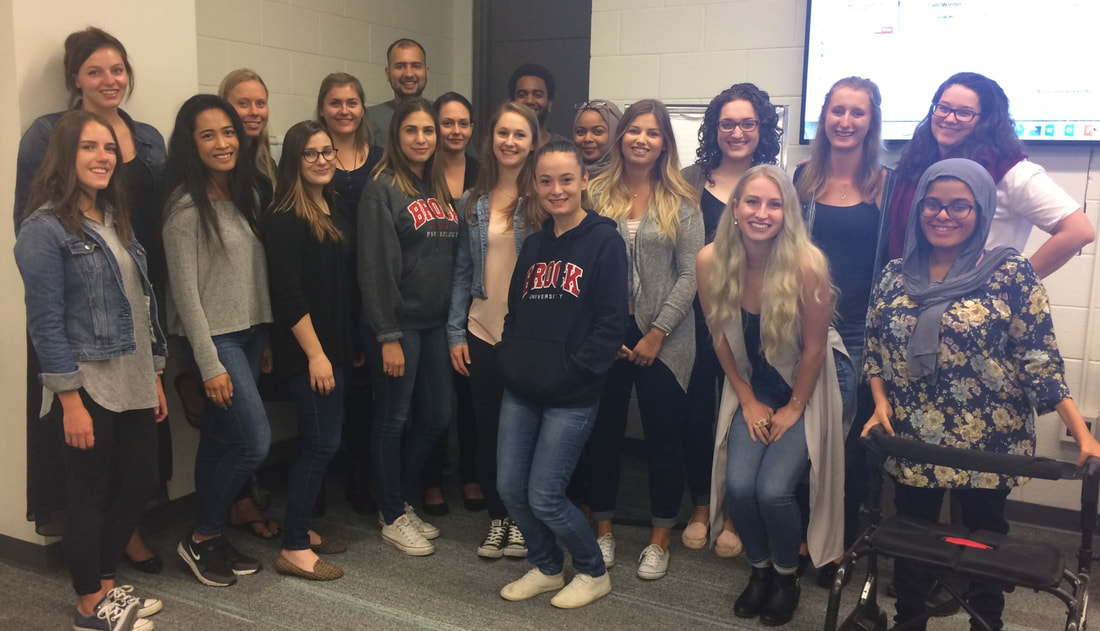
Who Should Apply?
Applicants who are Psychology majors will be given priority for positions in the course, but applications from strong students in other majors are welcomed. Successful non-Psychology applicants will be given an override into 3P01 if they do not meet all of the course requirements noted in the calendar.
You should not apply for this position if you cannot commit to the time that will be needed (typically about 10-12 hours per week), nor should you apply if you have a required course that conflicts with PSYC 3P01.
How To Apply
If you are interested in applying to PSYC 3P01, please follow the steps below:
1. Complete the online application form using the following link:
2. Submit the following three documents to [email protected].
- Your cover letter in .doc, .docx, or .pdf format.
- Your resume in .doc, .docx, or .pdf format.
- A copy of your grades in .pdf format: The grades file should be downloaded from Brock’s self serve so that your name is printed by the system at the top of the document. Use the following instructions:
- Load your current marks screen.
- Choose the “Print” option from the top right as the screen.
- Choose “print to PDF” in your print options.
- Note: If you have a lot of courses you may need to load the second page of courses and repeat this process.
Please note: The filenames for each of the documents must include your surname (e.g., SMITHresume.docx, SMITHgrades.pdf).
APPLICATIONS SUBMITTED WITHOUT EMAILING THESE THREE REQUIRED DOCUMENTS WILL NOT BE CONSIDERED.
Please email questions to [email protected]
PSYC 4F91: Honours Thesis
Please note that thesis application information will be distributed in PSYC 3F40. Below is some general information about the thesis application process.
January: Our Academic Advisor visits PSYC 3F40 in January to discuss the process of finding a thesis supervisor with students.
January-April: Prospective Honours thesis students contact potential supervisors to arrange meetings. When students email potential supervisors asking to meet, they should attach an unofficial transcript (PDF of current course marks) and a current resume.
May 1st: Students submit their application which includes their ranking of their top 4 potential supervisors and indicates their research interests (using a standard checklist).
May 15th: Faculty members submit their ranking of up to 4 prospective thesis students that they wish to supervise and how many students they are interested in supervising.
June 1st: Our Academic Advisor begins the matching process. Matches will be based on student rankings and faculty rankings following this approach (student: faculty) 1:1, then 1:2, 1:3, 1:4. If several faculty members list the same student as their first choice, then student preference will be the tie breaker. If there are unmatched students, then our Academic Advisor will circulate a list to faculty to give them the opportunity to express interest in supervising an unmatched student. After this process, our Academic Advisor will communicate with unmatched students informing them that they have not been matched and allowing them to proceed with approaching other faculty members.
June 15th: All unmatched students must have found a supervisor by this date; otherwise unmatched students will be switched to the Honours Comprehensive degree stream.
5 business days before registration (typically late June): Students will be informed of who their thesis supervisor will be and can then proceed with Registration in July.
Directed Readings, Independent Study Courses
The Psychology department offers third and fourth year directed readings courses. These are independent study courses supervised by individual faculty members and are an excellent way to get research experience and learn more about very specific topics in Psychology.
Finding a Supervisor
The first step to registering is to find a supervisor. You can review faculty research interests on the Psychology website here (click on their names for more information) and here. Once you have found a faculty member you whose research is interesting to you, you may contact them by email to ask if they will consider supervising a directed readings course.
Co-Supervision is an Option
Students are allowed to work with faculty members from other departments, as long as the project is psychological in nature AND they have a co-supervisor in Psychology. Co-supervision requires less of a time commitment for faculty and some PSYC faculty members are happy help in this way. The process is the same, except that you would first find a primary supervisor (outside os PSYC) and then ask a Psychology faculty member if they will co-supervise you. The Primary supervisor may have an existing relationship with a Psychology member and may be able to suggest who you can ask to be your co-supervisor.
How to Register
If a faculty member agrees to supervise you, forward an email where the faculty member agrees to supervise you to [email protected] and include the following information: Your name, student number, the course code for the course you have chosen and the duration you would like to complete it in. Once our Academic Advisor has that information, an override will be processed that will allow you to register in the course.
Exactly what you will do to complete the directed readings course will be up to your supervisor. It is a good idea to clarify their expectations before you begin. You might want to ask questions about how often you will be expected to meet with them, approximately how many hours a week you should expect to work on the course, how you will be evaluated, and anything else that comes to mind.
Course options include: PSYC 3P48, PSYC 3P49, PSYC 4F05, PSYC 4P10 and PSYC 4P11
Degree Options
Degree Options Chart
We offer four different degree options for Psychology majors in our Bachelor of Arts (BA) and two different options in the Bachelor of Science (BSc). Which degree you choose to complete will depend on what you want to do when you’re finished at Brock. All of the four degree options within the BA program are the same for first and second year. Both BSc options are also the same in the first two years, so once you have decided between the BA and BSc, you have until the end of second year to decide which degree is right for you.
Bachelor of Arts or Science? How do I decide?
Although it is possible to move between the BA and BSc after first year, that process can be complicated and switching might extend the length of time it takes to complete a degree. Because of the potential complications, we encourage students to think carefully about which program is best for them when they apply.
You may be wondering about the difference is between a Bachelor of Arts in Psychology and a Bachelor of Science in Psychology. This may be somewhat surprising, but the major distinction is not what students learn about Psychology. Instead, the real differences involve the training students receive outside of Psychology. Specifically, BSc students must take biology and chemistry courses in addition to their Psychology requirements. BSc students are also required to take more Psychology courses from our natural sciences lists, but it is important to note that these courses are also available to students in the BA program on an optional basis.
Note that BA and BSc students get the same training in research methods and are equally prepared for post-graduate studies. Students hoping to apply to Medical School may have a slight advantage with the BSc (because the required Biology and Chemistry training is embedded in the program requirements) but students with a BA can also apply to Medical School as long as they take those science courses as electives.
The admission requirements are different and reflect the background that BSc students need for their non-Psychology requirements in the natural sciences. You may still be wondering how to decide which option is best for you. Generally, if you love the natural sciences (biology, chemistry, and physics), you would probably be best suited to the BSc. If you are more interested in the arts and social aspects of human behaviour, you are probably a good fit for the BA program.
Degree Options: Combined
Students have the option to complete a combined major with Bachelor of Arts Psychology and another discipline (e.g. Philosophy, English, Linguistics). Students completing a combined major will take the same number of credits that straight Psychology students do (i.e., 20 credits for the 4 Year BA with Major and Honours programs, 15 credits for the 3 Year pass degree); however, their major credits will be divided between Psychology and the second discipline. This means students in combined degrees take fewer Psychology courses to complete their degrees. This process can be somewhat complicated and it is important to seek academic advising from both disciplines before pursing this option.
Tip: Combined Majors with Biology or Child and Youth Studies
These combinations of degrees are unique in that they are ‘owned’ by the Biology and CHYS departments. Make an appointment with the advisor of the relevant department for information about the degree and requirements. Psychology advisors have very little information about these degrees.
Degree Options: Minors
Students may also wish to major in Psychology and minor in another discipline. Again, these students take the same number of major and elective courses that straight Psychology majors do; however, a number of their elective courses will be taken from their minor discipline. Not all departments offer a minor so it is important to check with individual departments to see whether this is an option and to check the academic requirements.
Degree Options: Co-op
We are fortunate to have a very successful co-op program at Brock. Students can complete any of our 4 year degree options with a co-op (4 yr BA with Major, Honours Comprehensive, Honours Research) in a little more than 4 years. Students in the co-op program complete exactly the same courses as straight Psychology majors, but also have 3 terms (4 months each, for a total of 12 months) of work placements and non-credit co-op training courses. These placements give students an opportunity to gain some applied skills in the workplace while completing their degree.
Tip: Program Plans
Make sure you make an appointment for academic advising in second year if you are in the co-op program. The sequence of your work placements will depend on which degree you are completing and will affect your course options in 3rd year.
Useful Websites and Contact Information Regarding Combined Majors, Minors, and Co-op
Exchange Programs
Psychology students have exciting opportunities to take their learning overseas! PSYC majors can participate in the Student Exchange Program and spend one term or a full academic year at one of our partner universities. Have you thought about studying your courses halfway across the world in Australia? Or perhaps spending a year at Maastricht University, in the Netherlands? Maastricht offers psychology courses taught in English, in a problem-based learning environment that will only enhance your Brock psychology degree. The courses you take at our partner institutions will transfer back to your Brock degree. As well, you continue to pay Brock tuition, so you do not have to worry about the cost of being an international student.
Over the last few years, Psychology students have gone to the UK, Australia and Europe. Adding an international learning program to your degree may help you achieve your personal, academic and professional goals. There are many short- and long-term study opportunities for you to add to your Psychology degree – email [email protected] to learn more about your options.
Useful Websites and Contact Information
Blank Program Plans
Choose the program plan according to your program (e.g., 4 YR BA with Major, Honours, Pass Degree, Combined).
Combined Program Plans
Students completing combined majors with Child and Youth Studies or Biology need to contact advisors in those departments for program plans.
Bachelor of Arts
Years 1 & 2 Bachelor of Arts (BA)
We offer four different degree options for Psychology majors in Bachelor of Arts. Which degree you choose to complete will depend on what you want to do when you’re finished at Brock. All of the four degrees are the same for first and second year, so you have until the end of second year to decide which degree is right for you.
Year 1
First year students who wish to take a full course load (5 full credits; see here for a description of full vs partial credits) and who are accepted to full-time studies should enroll in the following classes:
- PSYC 1F90
- Humanities Context Credit (1 full credit, or 2 partial credits)
- Science Context Credit (1 full credit, or 2 partial credits)
- 2 Elective Credits (any combination of full and partial credits that adds up to 2 full credits)
What are Context Courses?
All students in the Social Sciences are required to complete one full “context” credit from the Faculty of Humanities and a second full credit from the Faculty of Science. Context credits are included in Brock University programs to ensure that students get some breadth while completing their degrees. Context courses must be approved — not just any course from the Humanities and Science Faculties will be accepted as a context credit. Context credit requirements not taken in Year 1 must be taken in Year 2.
A list of eligible context courses can be found in the current undergraduate calendar.
What are Electives?
Any course offered by a different department is considered an elective. In first year, students must take electives from outside Psychology, but in upper years, many students ask about the possibility of taking Psychology courses to fulfill elective requirements. We strongly encourage students to take electives outside of Psychology throughout their degree to gain some exposure to the diverse perspectives that other disciplines offer. These courses provide a useful context for your knowledge of Psychology. In fact, we feel so strongly about this that students completing a 3-Year Pass Degree are required to take at least 5 credits from other departments and students in either of our 4-Year Degrees are required to take 8 credits from outside Psychology before they graduate.
Choosing your electives may seem like a daunting task, but it is really quite simple. First, spend some time reading through the Undergraduate Calendar to find courses in other departments that you find interesting. Once you have a list of possibilities, make sure that you are eligible to register in the courses, and that they do not conflict with your required courses (e.g., PSYC 1F90 in first year; PSYC 2P22 and PSYC 2P23 in second year). Don’t forget to use the online timetable to confirm that a course is being offered and when it is scheduled. You can also read course descriptions and check the prerequisites for courses using the timetable — just click on the course code!
Tip
Your electives don’t have to correspond to your year of study. The rule is that when you apply to graduate you cannot have more than 8 first year credits. So, at least a few of your electives will have to be second year courses (or above).
What Does ‘Alpha’ refer to in the degree requirements?
The Undergraduate Calendar lists requirements in a specific way, using precise language. For example when requirements are to take a certain number of credits at a particular level, the calendar will read: “one PSYC credit numbered 2(alpha)00 to 2(alpha)89” (this is an example from 2nd year). Many students wonder what ‘alpha’ stands for.
Alpha is used in place of the letter in the course code (‘F’, ‘P’, or ‘Q’) so when you see this, it just means a course numbered between 200 and 289 (in this example). The requirement could be fulfilled with PSYC 2P21 and PSYC 2P27 or PSYC 2F87 (there are no such courses, this is just an example).
Year 2
Once you have completed the Introduction to Psychology course (PSYC 1F90), you will have a better idea about all of the different areas of Psychology. In second year, students have the opportunity to learn about these different areas of Psychology in more detail.
Second year students who wish to take a full course load (5 full credits) should enroll in:
- PSYC 2P22 and PSYC 2P23 (Psychology Statistics and Research Design I & II)
- *PSYC 2P01 (Roadmap to Careers in Psychology) or PSYC 0N90 (for Co-Op Students)
- 5 x second year Psychology courses (these are .5, or partial, credit courses; see here for more information about full vs partial credits)
- Either PSYC 2P25 or PSYC 2P30 (you are welcome to register in both as part of your 5 courses)
- One course from this list: PSYC 2P20, PSYC 2P36, or PSYC 2P49
- 1.5 PSYC credits numbered 200-299
- among these options students can choose a maximum of .5 from PSYC 2P90, 2P92 or 2P95. If you register for more than .5 of these the additional course(s) will contribute to your 3rd year requirements.
- 1.0 Elective Credits for students completing PSYC 2P01, 1.5 Elective Credits for students completing PSYC 0N90
*Is PSYC 2P01 Required?
PSYC 2P01 is a required course for all PSYC majors who are not in co-op. Co-Op students are required to take a similar, not-for-credit course through the co-op office (PSYC 0N90). Because there is some overlap between PSYC 2P01 and PSYC 0N90, we have made PSYC 2P01 optional for Co-Op students. If you are a Co-Op student and you are completing PSYC 0N90, you can choose to take PSYC 2P01 OR an elective course.
If you withdraw from the co-op program at any time in your degree you will not be required to complete PSYC 2P01, as long as you have successfully completed PSYC 0N90.
Given PSYC 2P01 is required for some students but not for all students, it does not contribute to your major average.
Choosing your Second Year PSYC Courses
In second year, you will register in five half (or partial) credit Psychology courses (plus PSYC 2P22 and PSYC 2P23). Your choices will be based largely on what you found interesting in first year; however, we do encourage you take courses from different areas (e.g., not all social/personality courses, or all cognitive/neuropsych courses) to ensure that you have a well-rounded Psychology degree when you graduate. Your undergraduate degree is not the time to specialize in specific areas of Psychology. If you wish to specialize, plan on doing an honours Psychology degree at Brock and continuing on in a more specialized graduate degree in Psychology (that is, a specialized master’s degree).
Tips
- PSYC 2P90, 2P92 and 2P95 can count as either 2nd or 3rd year courses. You are only allowed to use one of those course (an .5 credit) to fulfill your second year requirements. If you register for more than one during your second year, the additional course(s) will contribute to your 3rd year requirements.
- To be eligible to register in PSYC 2P37 (offered in D3) students must complete PSYC 2P36 in D2. You will be deregistered from the D3 course if you don’t have the D2 prerequisite.
- Be sure to look ahead at our 3rd and 4th year courses and take any 2nd year courses that are listed as prerequisites for those upper-year courses that you think you might want to take in the future.
Years 3 & 4 Bachelor of Arts (BA): Which Degree is Right for You?
Plan to make an appointment with an Academic Advisor before you go home at the end of second year. You should go to the appointment prepared to talk about which degree you are going to pursue. Academic Advisors in psychology cannot easily have this conversation over the telephone or by email because a program plan must be completed in order to make a decision about the most appropriate degree for you. A program plan must be completed in person.
The chart below provides you with a broad overview of the paths that each degree will prepare you for. Reading this carefully will help you decide which degree is right for you.
Information on the requirements for yr 3 and 4 for each of our four Bachelor of Arts degree options can be found here:
3 Year Pass BA
Year 3, the end!
Congratulations, you’ve made it to the final year of your degree! Time flies, doesn’t it?
Average Requirements
Students must maintain at least a 60% average in their Psychology courses and in their electives to graduate with a 3 year BA in Psychology.
Year 3 Course Requirements
- 3x PSYC credits numbered 300-399
- 2x Elective credits
Tip: Electives
When you apply to graduate you cannot have more than 8 first year credits (including PSYC 1F90 and your context credits; see here for more information about context credits). Students completing a 3 year BA must have at least .5 elective credit at the second year level (or above).
What Does This Degree Prepare Me For?
Wondering what you can do with a 3 year BA in Psychology? A university degree in Psychology prepares students to move directly into a job and find work in a variety of areas. Not only do Psychology students have an understanding of human behaviour (and when wouldn’t that come in handy?), they also have useful skills in data management, written communication, and presentations, along with the ability to organize, condense, and disseminate complex information in the workplace. Students might also choose to attend a post-graduate college program that complements the skills and knowledge they gained at university with applied skills for the workforce.
A few of the popular post-graduate options for Psychology graduates are:
- Entering the workforce in a variety of disciplines (e.g., business in human resources, marketing or sales, social work, human services)
- Attending a post-graduate college program
- Teachers college
Tip: Post-Graduate College Programs
You might wonder about the logic behind going to college after university, but actually this path makes a lot of sense. Colleges and universities are designed to teach students different skills. You will graduate from university with a lot of theoretical knowledge and skills in many areas, but universities don’t focus on hands-on training. Post graduate college programs are designed to do just that – they honour the work you’ve already done at the university level, and provide students with very specialized applied skills training. Students who complete a degree and a post-graduate program are very employable.
4 Year BA With Major
Brock offers a 4 year, non-honours degree option called the Four Year BA with Major. This degree is designed for students who want to complete a 4 year degree, but who aren’t especially interested in the research training that students in the honours research stream receive or the data management training students in the honours comprehensive stream receive. If research/data management aren’t for you, and if you aren’t considering applying to graduate school in Psychology, you might prefer the flexibility of the 4 year BA with Major.
But Doesn’t Honours = Smart?
Some people make the mistake of thinking that they need to do the honours program so that others will think that they’re “smart” — in other words, they want other people to know that they had high grades in university. In fact, this connection between grades and the honours program is a bit of a myth. It’s true that the people who complete an honours degree usually have high grades, because we restrict entry to the program based on students’ PSYC GPA. However the designation that really tells people you’re “smart” (that is, that you got high grades) is graduating from Brock “with distinction”. Students who graduate with distinction have an average that is 80% or above, and this will be noted on their Brock transcript. We have a number of people who graduate from Psychology with distinction but who chose not to complete an honours degree. Instead, they opted for a 3 Year Pass or a 4 Year BA with Major degree because they were not interested in the research requirements or data management training that are included in the 4 Year Honours options.
Tip
If you aren’t sure how you feel about research training and graduate school, and if you have a 77% PSYC average, you may want to take the required Year 3 courses for the 4 Year Honours Research degree. Doing so will allow you to examine more carefully whether you enjoy research; if you find that it’s not for you then it is really easy to switch from the honours degree into the Honours Comprehensive or the 4 year BA with Major in your fourth year. If you complete PSYC 3F40 (the Research Methods course for the honours degree), you won’t be required to take PSYC 3P30 (the Research Methods course for the Honours Comprehensive Stream and the 4 Year BA with Major) — in fact, they replace each other, so don’t register in both!
Average Requirements
Students must maintain at least a 60% average in their Psychology courses and in their electives to complete a 4 yr BA with Major in Psychology.
Year 3 Course Requirements
- PSYC 3P30
- 2.5 PSYC credits numbered 300-399
- 2 Electives
Year 4 Course Requirements
- 1.5 PSYC credits numbered 300-499 (that means either 3rd or 4th year credits!)
- PSYC 4P07
- 1.0 PSYC credits numbered 400-499 (these courses must be 4th year)
- 2 Electives
Tip: Electives
When you apply to graduate, you cannot have more than 8 first year credits (including PSYC 1F90 and your context credits). Students completing a 4 yr BA with major must have at least 2.5 elective credit numbered 200 or above (that is, at the second year level or higher).
What Does This Degree Prepare Me For?
- Applying to some graduate programs outside of psychology. There are several Masters of Social Work (MSW), Counseling, Occupational Therapy and Masters of Business Administration (MBA) programs that will consider your application with a 4 yr BA with Major.
And…
- Entering the workforce in a variety of disciplines (e.g., business in human resources, marketing or sales, social work, human services)
- Attending a post-graduate college program
- Teachers college
4 Year Honours Comprehensive
The Honours Comprehensive Stream (Bachelor of Arts) is a very good option for students who want to graduate with an honours degree, but who are not interested in, or have not been accepted to write a thesis. Students in the Comprehensive Stream have the option to take more variety of content courses in Psychology and will complete an applied Data Management course in their final year.
Please note, most graduate programs in Psychology require that students have research experience, and some prefer students who have completed a thesis; however, few graduate programs list a thesis as an absolute requirement. Most programs we reviewed used language like ‘thesis or equivalent’ and ‘research experience’ on their admissions websites.
This means that if you are planning to apply to graduate programs in Psychology, the research stream is ideal, but the comprehensive stream is also appropriate, as long as you have research experience. There are several ways to gain research experience outside the research stream including volunteering or working in research labs and taking directed readings courses.
Learn more about research in the department, research experience and directed readings.
Average Requirements
Students must have a 70% PSYC average to be allowed to register in PSYC 4P08 in 4th year. They must maintain at least a 60% PSYC average in years 1, 2 & 3 to stay registered as PSYC majors. Students must have a 70% PSYC average at the time of graduation to graduate with honours.
Year 3 Course Requirements
- PSYC 3P30
- **2.5 PSYC Credits 300-399
- 2 Elective Credits
Year 4 Course Requirements
- PSYC 4P07 or 4P92
- PSYC 4P08
- **2 PSYC Credits 390-499
- 2 Elective Credits
** of the total number of 3rd and 4th-year PSYC credits, students must take at least one ½ credit 3rd or 4th year course from each of three lists: an Applied list, Social Processes list, and a Brain and Cognition list.
Applied
PSYC 2P90, 2P92, 3P31, 3P46, 3P53, 3P72, 3P75, 3P94, 4P18, 4P20, 4P25, 4P27, 4P28, 4P29, 4P30, 4P72, 4P79
Social Processes
PSYC 2P90, 3P18, 3P21, 3P22, 3P25, 3P31, 3P32, 3P37, 3P77, 4P15, 4P18, 4P30, 4P50, 4P71
Brain and Cognition
3P06, 3P20, 3P38, 3P46, 3P59, 3P60, 3P65, 3P68, 3P72, 3P87, 4P20, 4P28, 4P55, 4P56, 4P60, 4P63
4 Year Honours Research Bachelor of Arts
Most, if not all, graduate programs in Psychology require that students have an Honours Bachelors degree in Psychology to be considered for admission. Most programs also list some kind of research experience as a requirement and some programs prefer students whose research experience includes a thesis. While students completing any of our degree options can gain valuable research experience, only students who are accepted into the 4th year of the research stream (meaning their application to write a thesis was accepted) write a thesis.
Many students aren’t sure if graduate studies will be necessary to achieve their long-term goals, but until you have ruled out graduate studies, we suggest that you continue with the honours program (provided that you meet the average grade requirements). However, you should know that you will receive a lot of research training in the honours research program, and if you are confident that research and graduate studies are not in your future, you might be happier completing either the 4 yr BA with Major or the Honours Comprehensive stream.
Average Requirements
Students must have a 77% average in Psychology to register for third year courses in the honours program. Students must have an 80% average in Psychology (and successful in their thesis application) to complete the required thesis in fourth year. Students must also maintain a 60% non-major average to graduate with an Honours BA.
Applying to Write a Thesis
Students with an 80% PSYC average at the end of Year 3 can apply to write a thesis. Students must meet the minimum average requirements AND must have secured a thesis supervisor to be allowed to continue in 4th year of the research stream and write a thesis.
Learn more about finding a thesis supervisor.
Applications will be due at the end of the fall winter term in students’ 3rd year. Not all students who meet the minimum requirements will be approved to write a thesis; those who are not will be encouraged to switch over to the Honours Comprehensive stream for their final year.
Does Honours = Smart?
Some people make the mistake of thinking that they need to do the honours program so that others will think that they’re “smart” — in other words, they want other people to know that they had high grades in university. In fact, this connection between grades and the honours program is a bit of a myth. It’s true that the people who complete an honours degree usually have high grades, because we restrict entry to the program based on students’ PSYC GPA. However, the designation that really tells people you’re “smart” (that is, that you got high grades) is graduating from Brock “with distinction”. Students who graduate with distinction have an average that is 80% or above, and this will be noted on their Brock transcript. We have a number of people who graduate from Psychology with distinction but who chose not to complete an honours research degree. Instead, they opted for a 3 Year Pass, 4 Year BA with Major or now the honours comprehensive degree because they were not interested in the research requirements that are included in the 4 Year Honours research option.
Tip: What happens if I don't meet the average requirements for required honours PSYC courses?
You have several options if you do not meet the requirements:
- Switch into one of our other degree options
- Re-do courses to bring up your average
- Submit an appeal to be allowed to register in the required honours courses.
All of these options can be complicated, and you should see academic advising before pursuing any of them.
Year 3 Course Requirements
- PSYC 3P39 and 3F40
- 1.5 PSYC Credits numbered 300-399
- 2 Electives
Year 4 Course Requirements
- PSYC 4F91; PSYC 4P92; PSYC 4P93
- 1 PSYC Credit numbered 390-499 (PSYC 4P95 is recommended)
- 2 Electives
Tip: What is a Thesis?
A thesis is a major research project that you will develop and carry out under the close supervision of a faculty member. The process includes reviewing existing literature, designing an ethically sound study, gathering and analyzing data, recording the results, and writing a manuscript that describes the project. Don’t worry if you don’t have a research idea — you will work on that with your supervisor.
What Does This Degree Prepare Me For?
- Graduate programs in Psychology, either clinical or experimental
And…
- Graduate programs outside of psychology including: Master of Social Work (MSW), Medical School, Law School, Counseling, Occupational Therapy, and Masters of Business Administration (MBA) programs will consider your application with a 4-Year Honours degree in Psychology.
- Entering the workforce in a variety of disciplines (e.g., business in human resources, marketing or sales, social work, human services)
- Attending a post-graduate college program
- Teachers college
Bachelor of Science
Years 1 and 2 Bachelor of Science Programs
We offer two different degree options for psychology majors in the Bachelor of Science program. Which degree you choose to complete will depend on what you want to do when you’re finished at Brock. Both degrees are the same for first and second year, so you have until the end of second year to decide which option is right for you.
Year 1
First year students who wish to take a full course load (5 full credits; see here for a description of full vs partial credits) and who are accepted to full-time studies should enroll in the following classes:
- PSYC 1F90
- BIOL 1P91 and BIOL 1P92
- CHEM 1P91 and CHEM 1P92
- MATH 1P97
- Humanities Context Credit (1 full credit, or 2 partial credits)
- 0.5 Elective Credit
What are Context Courses?
All students in the Social Sciences are required to complete one full “context” credit from the Faculty of Humanities and a second full credit from the Faculty of Science. Context credits are included in Brock University programs to ensure that students get some breadth while completing their degrees. Context courses must be approved — not just any course from the Humanities and Science Faculties will be accepted as a context credit. Context credit requirements not taken in Year 1 must be taken in Year 2.
A list of eligible context courses can be found in the current undergraduate calendar.
What are Electives?
Any course offered by a different department is considered an elective. In first year, students must take electives from outside Psychology, but in upper years, many students ask about the possibility of taking Psychology courses to fulfill elective requirements. We strongly encourage students to take electives outside of psychology throughout their degree to gain some exposure to the diverse perspectives that other disciplines offer. These courses provide a useful context for your knowledge of psychology. In fact, we feel so strongly about this that students completing a 3-Year Pass Degree are required to take at least 5 credits from other departments and students in either of our 4-Year Degrees are required to take 8 credits from outside Psychology before they graduate.
Choosing your electives may seem like a daunting task, but it is really quite simple. First, spend some time reading through the Undergraduate Calendar to find courses in other departments that you find interesting. Once you have a list of possibilities, make sure that you are eligible to register in the courses, and that they do not conflict with your required courses. Don’t forget to use the online timetable to confirm that a course is being offered and when it is scheduled. You can also read course descriptions and check the prerequisites for courses using the timetable — just click on the course code!
Tip
Your electives don’t have to correspond to your year of study. The rule is that when you apply to graduate you cannot have more than 8 first year credits. So, at least a few of your electives will have to be second year courses (or above).
Year 2
Once you have completed the Introduction to Psychology course (PSYC 1F90), your Biology and Chemistry you will have a better idea about all of the different areas of psychology and more background in the natural sciences. In second year, students have the opportunity to learn about these different areas of Psychology and Biology in more detail.
Second year students who wish to take a full course load (5 full credits) should enroll in:
- PSYC 2P22 and PSYC 2P23 (Psychology Statistics and Research Design I & II)
- *PSYC 2P01 (Roadmap to Careers in Psychology) or PSYC 0N90 (for Co-Op Students)
- PSYC 2P36 and PSYC 2P37
- 1.0 from 2P12, 2P20, 2P49 (choose two courses)
- 0.5 Credit from 2P15, 2P25, 2P30 (choose one course)
- 0.5 credit from BIOL 2P02, 2P03, 2P05 (choose one course)
- 0.5 Elective for students completing PSYC 2P01, 1.0 Elective for students completing PSYC 0N90
*Is PSYC 2P01 Required?
PSYC 2P01 is a required course for all PSYC majors who are not in co-op. Co-Op students are required to take a similar, not-for-credit course through the co-op office (PSYC 0N90). Because there is some overlap between PSYC 2P01 and PSYC 0N90 we have made PSYC 2P01 optional for Co-Op students. If you are a Co-Op student you and you are completing PSYC 0N90, you can choose to take PSYC 2P01 OR an elective course.
If you withdraw from the co-op program at any time in your degree, you will not be required to complete PSYC 2P01 as long as you have successfully completed PSYC 0N90.
Given PSYC 2P01 is required for some students but not for all students, it does not contribute to your major average.
Choosing your Second Year PSYC Courses
In addition to the required courses, students in second year have the opportunity to choose courses from different lists of Psychology and Biology courses. Your choices will be based largely on what you found interesting in first year; however, we do encourage you take courses from different areas to ensure that you have a well-rounded Psychology degree when you graduate. Your undergraduate degree is not the time to specialize in specific areas of Psychology. If you wish to specialize, plan on doing an honours degree at Brock and continuing on in a more specialized graduate degree in Psychology (that is, a specialized master’s degree).
Tip
Be sure to look ahead at our 3rd and 4th year courses and take any 2nd year courses that are listed as prerequisites for those upper-year courses that you think you might want to take in the future.
Years 3 & 4 Bachelor of Science (BSc): Which Degree is Right for You?
Plan to make an appointment with an Academic Advisor before you go home at the end of second year. You should go to the appointment prepared to talk about which degree you are going to pursue. Academic Advisors in Psychology cannot easily have this conversation over the telephone or by email because a program plan must be completed in order to make a decision about the most appropriate degree for you. A program plan must be completed in person.
Information on the requirements for yr 3 and 4 for each of our Bachelor of Science degree options can be found here:
4 Year BSc with Major
Brock offers a 4 year, non-honours degree option called the Four Year BSc with Major. This degree is designed for students who want to complete a 4 year degree, but who aren’t especially interested in the research training that students in the honours stream. If research/data management aren’t for you, and if you aren’t considering applying to graduate school in psychology, you might prefer the flexibility of the 4 year BSc with Major.
But Doesn’t Honours = Smart?
Some people make the mistake of thinking that they need to do the honours program so that others will think that they’re “smart” – in other words, they want other people to know that they had high grades in university. In fact, this connection between grades and the honours program is a bit of a myth. It’s true that the people who complete an honours degree usually have high grades, because we restrict entry to the program based on students’ PSYC GPA. However, the designation that really tells people that you’re “smart” (that is, that you got high grades) is graduating from Brock “with distinction”. Students who graduate with distinction have an average that is 80% or above, and this will be noted on their Brock transcript. We have a number of people who graduate from psychology with distinction but who chose not to complete an honours degree.
Year 3 Course Requirements
- PSYC 3P30
- 2.0 Credits from: PSYC 2P92, 3P06, 3P18, 3P19, 3P34, 3P37, 3P38, 3P45, 3P46, 3P59, 3P60, 3P65, 3P67, 3P68, 3P72, 3P75, 3P87 (choose four courses)
- 0.5 Credit from: BIOL 2P02, 2P03, 2P05, 2P92, 2P97, 3P03, 3P60, 3P64, COSC 1P02, PHYS 1P21, 1P91, 2P02 (choose one course)
- 2.0 Electives
Year 4 Course Requirements
- PSYC 4P07
- 1.0 Credit from: 4P20, 4P34, 4P55, 4P57, 4P58, 4P60, 4P63 (choose two courses)
- 1.0 Credit from: PSYC 2P92, 3P06, 3P18, 3P19, 3P34, 3P37, 3P38, 3P45, 3P46, 3P59, 3P60, 3P65, 3P67, 3P68, 3P72, 3P75, 3P87 (choose four courses)
- 0.5 Credit from: BIOL 2P02, 2P03, 2P05, 2P92, 2P97, 3P03, 3P60, 3P64, COSC 1P02, PHYS 1P21, 1P91, 2P02 (choose one course)
- 2.0 Electives
4 Year Honours BSc
Most, if not all, graduate programs in psychology require that students have an Honours Bachelors degree in psychology to be considered for admission. Most programs also list some kind of research experience as a requirement and some programs prefer students whose research experience includes a thesis. While students completing any of our degree options can gain valuable research experience, only students who are opt for (and are eligible or) the Thesis Option will have a thesis. Students who opt for the Library Research option will have research experience, but not a thesis.
Many students aren’t sure if graduate studies will be necessary to achieve their long-term goals, but until you have ruled out graduate studies, we suggest that you pursue the Thesis Option. However, you should know that you will receive a lot of research training in that program, and if you are confident that research and graduate studies are not in your future, you might be happier completing either the Library Research Option or the 4 yr BSc with Major.
Average Requirements
Students must have a 77% average in Psychology to register for third year courses in the honours program. Students must have an 80% average in Psychology (and successful in their thesis application) to complete the required thesis in fourth year. Students must also maintain a 60% non-major average to graduate with an Honours BSc.
Applying to Write a Thesis
Students with an 80% PSYC average at the end of Year 3 can apply to write a thesis. Students must meet the minimum average requirements AND must have secured a thesis supervisor to be allowed to continue in 4th year of the Thesis Option and write a thesis.
Learn more about finding a thesis supervisor.
Applications will be due at the end of the fall winter term in students’ 3rd year. Not all students who meet the minimum requirements will be approved to write a thesis; those who are not will be encouraged to switch over to the Honours Comprehensive stream for their final year.
Does Honours = Smart?
Some people make the mistake of thinking that they need to do the honours program so that others will think that they’re “smart” — in other words, they want other people to know that they had high grades in university. In fact, this connection between grades and the honours program is a bit of a myth. It’s true that the people who complete an honours degree usually have high grades, because we restrict entry to the program based on students’ PSYC GPA. However the designation that really tells people you’re “smart” (that is, that you got high grades) is graduating from Brock “with distinction”. Students who graduate with distinction have an average that is 80% or above, and this will be noted on their Brock transcript. We have a number of people who graduate from psychology with distinction but who chose not to complete an honours degree. Instead, they opted for a 4 Year BSc with Major.
Tip: What happens if I don't meet the average requirements for required honours PSYC courses?
You have several options if you do not meet the requirements:
- Switch into one of our other degree options
- Re-do courses to bring up your average
- Submit an appeal to be allowed to register in the required honours courses.
All of these options can be complicated, and you should see academic advising before pursuing any of them.
Year 3 Course Requirements
- PSYC 3P39 and 3F40
- 1.5 Credits from: PSYC 2P92, 3P06, 3P18, 3P19, 3P34, 3P37, 3P38, 3P45, 3P46, 3P59, 3P60, 3P65, 3P67, 3P68, 3P72, 3P75, 3P87 (choose three courses)
- 0.5 Credit from: BIOL 2P02, 2P03, 2P05, 2P92, 2P97, 3P03, 3P60, 3P64, COSC 1P02, PHYS 1P21, 1P91, 2P02
- 1.5 Electives
Year 4 Course Requirements
Thesis Option
- PSYC 4F91; PSYC 4P92; PSYC 4P93
- 1.0 Credit from: 4P20, 4P34, 4P55, 4P57, 4P58, 4P60, 4P63, 4P95 (choose two courses, PSYC 4P95 is recommended)
- 0.5 Credit from: BIOL 2P02, 2P03, 2P05, 2P92, 2P97, 3P03, 3P60, 3P64, COSC 1P02, PHYS 1P21, 1P91, 2P02 (choose one course)
- 1.5 Electives
Library Research Option
- PSYC 4F97; PSYC 4P92; PSYC 4P93
- 1.0 Credit from: 4P20, 4P34, 4P55, 4P57, 4P58, 4P60, 4P63, (choose two courses, 4P95 is NOT an option for students in this stream)
- 0.5 Credit from: BIOL 2P02, 2P03, 2P05, 2P92, 2P97, 3P03, 3P60, 3P64, COSC 1P02, PHYS 1P21, 1P91, 2P02 (choose one course)
- 1.5 Electives
Registration
When can I register?
The date that you will be allowed to register for the Fall/Winter session is based on the number of credits you have as of June 30 that year. You can find this number on your Program Status, Overall Credits. Incoming students (students entering their first year) register first followed by students with 15 credits (students entering their 4th year), then students with 10.0 credits, then students with 5.0 credits and finally students with fewer than 5.0 credits register.
Step-By-Step: How to Register
Step 1: Assess the Program Requirements
The first thing you should do when you are thinking about which courses to take is to check your program requirements. The requirements for each of our three degree programs are outlined under the “Degree Options”. You should also seek academic advising once each year to review your transcript and requirements. If you don’t have time to do that, then before registering for classes you can request a program plan. You can also look up the requirements for all of our programs in the Brock Undergraduate Calendar. You will find blank program plans here.
Step 2: Checking Current Course Offerings
All of the courses that exist are listed in Undergraduate Calendar but we never offer all of these courses in a given year. You should always refer to the current course timetable to confirm that a course is being offered in the current year. The timetable is actually a very handy website – you will find a list of all of the courses offered (organized by department) along with when it is, where it is, and who is teaching it. Using this website you can even begin to craft a conflict-free schedule before you start to register! Furthermore, clicking on the course code will take you to the course description. The timetable is posted on the Registrar’s Website.
Step 3: Choosing Your Courses
After confirming the requirements for your program, you will want to start the process of choosing your courses. There are a few factors to consider at this stage:
- Look ahead to upper year courses that look interesting to you to find out if they have specific pre-requisites. If so, make sure you register in those pre-requisite courses.
- Read all of the information available to you and choose courses that you find most interesting. There are several ways of accessing information about courses. You can view course descriptions in the Undergraduate Calendar and on the timetable that is accessible on the Brock Registrar’s website (see step 3, below).
- Important! Check the pre-requisites and restrictions for courses that you are interested in taking to make sure you are eligible to register for them (see information about automatic de-registration here).
- Think ahead about any post-graduate work that you want to do and make sure that you are taking courses that meet those requirements. For example, if you are planning to go to teachers college, you will want to make sure you register for the required elective courses.
Tip
You need to be able to sign onto Student Self Serve to access the registration system. You should receive information about your user name and password with your admission package, but if you are having any difficulty, call the Information Technology Service Help Desk at (905) 688-5550 ext 4357.
Step 4: Accessing the Online Registration System
Brock uses an online registration system. You can access the system by signing into Applicant & Student Self Serve (from brocku.ca, follow Quick Links to the portal at my.brocku.ca)
There is a registration tutorial at the very top of this page followed by a description of the specific steps involved in the registration process.
After reviewing the tutorial and instructions click on ‘Register’ within the portal to start the process.
Tip
If you don’t see a link to ‘Register’ on your student self serve page, chances are you haven’t updated your address yet – students must do this each once during each academic session. If you see a list of courses, but no button to add the course, it is likely that you are in ‘Course Planning’ instead of ‘Register’.
If you are having technical problems with the registration system, email the registration help line [email protected] or call ext. 3099.
Overrides
Students who do not meet the requirements for a course may request an ‘override’ which will allow them to register for the course. Every department has a different procedure for requesting overrides into courses; in Psychology, you must contact the course instructor directly to request an override.
The most efficient way to request an override is by email. Be sure to use your Brock email account when making these requests to the instructor and include the reason for your request, your full name, and your student number. You can speed up the process by copying [email protected] on your email to the instructor. This way the instructor can simply ‘reply all’ and if your request is approved, our Academic Advisors will know to process the override right away. Please note that our Academic Advisors need to see an email verifying that you have permission to register in a course; they cannot take your word for it.
Overrides are not intended to give students access to courses that are full; once a course is full we cannot override you into it.
Please note that overrides are not possible for students who do not meet the average requirements for PSYC 3F40 and 3P39. Please contact your Academic Advisor to discuss your options.
Conflicts, Dropping Courses & Automatic Deregistration
Dropping a Course and Getting Money Back
As long as the registration system is open, you can drop courses online. After the system closes, follow these instructions to withdraw (as long as the last day to withdraw has not passed). Click here for more information on withdrawing from courses. Be aware that Brock now has a flat fee structure and whether or not you will be eligible for a refund depends on how many credits you are registered in. The amount of refund (if applicable) will depend on the date you withdraw. The longer you wait, the smaller the refund. It is important to check with the Finance office about these issues before making the decision to drop a course. You must drop a course before the last day to withdraw without academic penalty to avoid having the course and whatever grades you have earned show up on your transcript. This date will be different for D1, D2 and D3 courses and will be listed on your course outline or syllabus. You can also find these dates in the Undergraduate Calendar.
How to Deal with Conflicts
It is each student’s responsibility to create a conflict-free schedule. There is a University regulation that students cannot register in courses that conflict.
***NEW THIS YEAR*** Students Cannot Register in Courses that Conflict
The registration system will no longer allow students to register in courses that have a scheduling conflict. This rule applies to all course components, for example, lectures, seminars, labs and tutorials.
Faculty members in Psychology feel strongly that attendance in courses is essential to student success and engagement and have therefore decided that they will not approve any requests for students to register in courses that conflict.
PSYC 1F90 Lectures:
The only exception to this rule is for students in PSYC 1F90 who have a conflict between their lecture section and another course. If you are trying to register in PSYC 1F90 and the lecture section that has space conflicts with another course, please email [email protected]. Please note that this exception ONLY applies to lectures in PSYC 1F90, not to seminars.
Please note that the Academic Advisor cannot help you resolve conflicts or make seminar changes for you.
Automatic Deregistration
Students who do not meet the requirements for a Psychology course will be automatically deregistered from that course unless they are issued an override. Automatic deregistration begins early in the registration period for all courses (D1, D2 and D3). The system will not de-register you for a D3 class if you are registered for the pre-requisite course in D2.
Tip: Courses Disappearing from Your Schedule?
If courses keep disappearing from your schedule the day after you register for them, you are being automatically deregistered! Automatic deregistration usually begins early in the registration period for D1 and D2 courses and once it does, the system will deregister you every night at midnight — it won’t help to just keep adding the same course each day!
Tips & Resources
Registration Date
Your registration date is based on the number of credits you have accumulated as of June 30. You can find this number on your Program Status, under Overall Credits.
When your date arrives, do not delay registering; courses will fill up quickly this year.
How to Deal with Conflicts
It is each student’s responsibility to create a conflict-free schedule. There is a University regulation that students cannot register in courses that conflict.
***NEW THIS YEAR*** Students Cannot Register in Courses that Conflict
The registration system will no longer allow students to register in courses that have a scheduling conflict. This rule applies to all course components, for example, lectures, seminars, labs and tutorials.
Faculty members in Psychology feel strongly that attendance in courses is essential to student success and engagement and have therefore decided that they will not approve any requests for students to register in courses that conflict.
PSYC 1F90 Lectures:
The only exception to this rule is for students in PSYC 1F90 who have a conflict between their lecture section and another course. If you are trying to register in PSYC 1F90 and the lecture section that has space conflicts with another course, please email [email protected]. Please note that this exception ONLY applies to lectures in PSYC 1F90, not to seminars.
Please note that the Academic Advisor cannot help you resolve conflicts or make seminar changes for you.
What Does ‘Alpha’ refer to in the degree requirements?
The Undergraduate Calendar lists requirements in a specific way, using precise language. For example when requirements are to take a certain number of credits at a particular level, the calendar will read: “one PSYC credit numbered 2(alpha)00 to 2(alpha)89” (this is an example from 2nd year). Many students wonder what ‘alpha’ stands for.
Alpha is used in place of the letter in the course code (‘F’, ‘P’, or ‘Q’) so when you see this, it just means a course numbered between 200 and 289 (in this example). The requirement could be fulfilled with PSYC 2P21 and PSYC 2P27 or PSYC 2F87 (there are no such courses, this is just an example).
Course Offerings
Refer to the timetable for a complete list of PSYC courses that are offered this year. Remember that all the courses that exist are listed in the undergraduate calendar, but we do not offer all of those courses in any given year. Refer to the timetable for courses that are offered this year.
Full Courses with Seminars on Reserve
We will open more space in courses as they fill up, until we reach our target enrolment. If you see an interesting course that is currently full, keep checking to see if more space is made available.
Various Methods of Delivery Explained
We offer several different delivery methods at Brock: online, in-person, asynchronous (unscheduled) and synchronous (scheduled). Courses can have more than one type of delivery method. For example, a course can be fully online, but have a synchronous lecture and asynchronous seminars. Or, a course might have an online lecture and in-person seminars. The combinations are numerous, and it can be confusing.
When you are looking at the course on the timetable, look at the last column called Type, you will see the following abbreviations:
LEC = In-person Lecture
ASY = The course is fully Asynchronous, online (primary and secondary components will be online)
ASO = The course is Asynchronous, online (primary and secondary components will be online) BUT will have in-person exams
SYO = The course is fully online, but is scheduled (e.g., you have to be online at a specific time for lectures and seminars)
BLD = One component of the course is online, the other is scheduled in person.
ONM = Both components are online, but one is Synchronous and one is Asynchronous.
SEM = Seminar, refer to the abbreviation beside the primary component for the course to know if it is Online or In person. If in person or synchronous online there will be a time associated with the seminar.
TUT = Tutorial, refer to the abbreviation beside the primary component for the course to know if it is Online or In person. If in person or synchronous online there will be a time associated with the seminar.
LAB = Lab, refer to the abbreviation beside the primary component for the course to know if it is Online or In person. If in person or synchronous online there will be a time associated with the seminar.
A full Glossary with explanations is available here.
Is PSYC 2P01 Required?
PSYC 2P01 is a required course for all PSYC majors who are not in co-op. Co-Op students are required to take a similar, not-for-credit course through the co-op office (PSYC 0N90). Because there is some overlap between PSYC 2P01 and PSYC 0N90 we have made PSYC 2P01 optional for Co-Op students. If you are a Co-Op student you and you are completing PSYC 0N90 you can choose to take PSYC 2P01 OR an elective course.
If you withdraw from the co-op program at any time in your degree you will not be required to complete PSYC 2P01 as long as you have successfully completed PSYC 0N90.
Given PSYC 2P01 is required for some students but not for all students it does not contribute to your major average.
**REMINDER** No Waiting Lists for Full Courses
The department has decided not to use waiting lists again this year. This impacts how you manage the registration process, so please read carefully.
Without waiting lists spaces in full courses will become available for registration immediately when another student drops the course. Given there is a fair amount of movement in courses during registration, students who check the registration system regularly will have the best chances of getting into preferred courses.
How to Manage Registration Without Waiting Lists:
- Register on Time: Maximize your chances of getting into preferred courses by registering on time. Be sure that you are eligible for the courses that you register for. If you register for a course you are not eligible to take, you will be de-registered at midnight. If you are de-registered, you will need to replace the course you were de-registered from the following day and your options might be limited.
- Register in Alternative Courses: If you miss out on a preferred choice, register for an alternative course (or courses) so that you have enough credits to progress through your degree.
- Check For Space Regularly: Keep checking the registration system to see if space opens up in the preferred course. We might be opening more space as the course fills and there is a lot of movement in courses up until the first few days of classes. Because we do not use waiting lists, when a student drops a course, it will open up a spot for another student to add that course immediately. Students who are most active on the registration system have the highest likelihood of getting into their preferred courses.
Missing courses that You Need to Progress or Graduate?
If you have diligently tried to register for courses that meet your degree requirements (not just preferred courses) but were not able to register in enough courses to progress or graduate, we can help. The department is saving a few spaces in a few courses for students in emergency situations.
Students need to fill out an online form by July 21 to be considered for overrides into emergency spaces. While you wait for the form to become available, you should monitor the registration system for space to become available in courses that will fulfill your requirements.
Requests for Overrides
Students who do not meet the requirements for a course must have permission from instructors to register in the course, requirements include a pre-requisite courses and credit restrictions. Individual Professors/Instructors make decisions about overrides, please contact them directly for permission to register in a course that you are not eligible for but wish to register in.
The best way to request an override is to email the instructor directly and copy [email protected] on the email (instructor’s names are on the timetable and their email addresses on our website). That way the instructor can ‘reply-all’ and our Academic Advisor will know that you have permission.
If the instructor is listed as TBA (To Be Announced) it means that we have not yet hired the instructor for that course. In that case you will have to wait until there is an instructor listed on the timetable (their email address will be added to the Psychology website as quickly as possible after they have been hired) to request an override.
Please note that if you are missing a pre-requisite the system will allow you to register for the course but you will be automatically de-registered unless you have permission and an override on the system. See below for more information about automatic deregistration.
Overrides are not a mechanism for students who meet the requirements to get into full courses, once a course is full it is full, our Academic Advisors cannot register a course past the course maximum. If you meet the requirements for a full course your only option is to register in an alternative course and monitor your preferred course to see if space becomes available.
Automatic Deregistration
You will be automatically de-registered from courses if you are missing a pre-requisite (and there is no override on the system). Automatic de-registration will begin immediately after the registration system opens for all courses – D1 (Full year), D2 (Term 1) and D3 (courses).
Average Requirements
All students must maintain at least a 60% average in PSYC courses to remain in Psychology.
- BA with Major and Pass programs: 60% PSYC average throughout
- Honours Comprehensive Stream: 70% PSYC average by 4th year
- Honours Research: 77% PSYC average by 3rd year, 80% PSYC average by
- 4th year, and permission to write a thesis
Helpful Resources
Registration Guide/ Course Timetable
Information Technology Services Help Desk
(905) 688-5550 ext 4357
Registration Issues
(905) 688-5550 ext 3099
[email protected]
Tips for Students Entering Year 2
- Check Your Registration Date and Register On Time
- Know Your Requirements
Electives
Students can have a maximum of 8.0 first year credits; feel free to register in year 1 courses as electives as long as you haven’t exceeded that limit (if you are a transfer student, check your transfer credits – those count!).
Choosing your Courses
When you are choosing your second year courses, be sure to look at the courses we offer in 3rd and 4th year to see if any that you find interesting have a second year prerequisite. Otherwise, focus on taking courses that are interesting to you.
Is PSYC 2P01 Required?
PSYC 2P01 is a required course for all PSYC majors who are not in co-op. Co-Op students are required to take a similar, not-for-credit course through the co-op office (PSYC 0N90). Because there is some overlap between PSYC 2P01 and PSYC 0N90, we have made PSYC 2P01 optional for Co-Op students. If you are a Co-Op student you and you are completing PSYC 0N90, you can choose to take PSYC 2P01 OR an elective course.
If you withdraw from the co-op program at any time in your degree, you will not be required to complete PSYC 2P01, as long as you have successfully completed PSYC 0N90.
Given PSYC 2P01 is required for some students but not for all students, it does not contribute to your major average.
Balancing Your 2nd Year Courses
PSYC 2P01 is unusual in that it is a D1 (full year) half credit course. Because of this, your course load will appear to be unbalanced (you will be enrolled 6 courses one semester, and 5 courses in the other), but you should make sure you register for a total of 5.0 credits.
Tips for Students Entering Year 3
- Check Your Registration Date and Register On Time
- Know Your Requirements
Please Note: 3F40 and 3P39 Overrides
The department will not consider requests for overrides into PSYC 3F40 and 3P39 for students who do not meet the 77% average requirement (70% for NEUR students). Psychology students who do not meet the average requirement for these courses may switch to the Honours Comprehensive Stream, the 4 Yr BA with Major, or take an extra year to try to raise their average. Please contact our Academic Advisors at [email protected] to discuss your options in more detail.
Did You Know?
290-99 and 390-99 courses are special!
Courses that are numbered 290-299 can count as either 2nd or 3rd year credits, but students may only use a 0.5 PSYC 29x towards their second year requirements; any others will be applied to your 3rd year requirements. Courses numbered 390-499 can count as either 3rd or 4th year credits.
Electives and limits on Yr 1 Courses
Students can have a maximum of 8.0 first year credits; feel free to register in year 1 courses as electives as long as you haven’t exceeded that limit (if you are a transfer student, check your transfer credits – those count!).
Tips for Students Entering Year 4
- Check Your Registration Date and Register On Time
- Know Your Requirements
Please Note: PSYC 4P92 is optional for students in the Comprehensive stream
Comprehensive students can take PSYC 4P07 OR 4P92 along with PSYC 4P08. Because this course is required for students in the research stream, we need to let them register first. Once those students have registered, we will allow comprehensive students to register. Email our Academic Advisors at [email protected] if you are a comprehensive student hoping for a spot in PSYC 4P92. Comprehensive students will be given space on a first come first served bases, until the course is full to capacity.
Did You Know?
290-99 and 390-99 courses are special!
Courses that are numbered 290-299 can count as either 2nd or 3rd year credits, but students may only use a 0.5 PSYC 29x towards their second year requirements; any others will be applied to your 3rd year requirements. Courses numbered 390-499 can count as either 3rd or 4th year credits.
Electives and limits on Yr 1 Courses
Students can have a maximum of 8.0 first year credits; feel free to register in year 1 courses as electives as long as you haven’t exceeded that limit (if you are a transfer student, check your transfer credits – those count!).
More
Research Experience
Psychology is the scientific study of brain and behaviour. Understanding how psychologists conduct research is integral to learning about psychology as a discipline. Students will receive training in statistics and research methods as part of their degree requirements, but many students also want to augment their degree requirements with research experiences outside of the classroom. These experiences often help students to explore the discipline of psychology, to develop transferable skills, to interact more closely with faculty members, and to identify possible goals for their later career or post-graduate training.
Having research experience outside of the degree requirements can contribute to the success of students applying to graduate programs as well as students entering the workforce.
Who Should Participate?
Students in all of our undergraduate programs and streams benefit from gaining research experience outside of the classroom. Students who are in first and second year may find that being a research participant is a fun and effective way to gain exposure to different areas of psychology. This exposure will help them make decisions about which stream to pursue and their long-term goals. Participating in research is an excellent way for everyone to explore the wide variety of topics that psychologists study and the variety of methodologies that they use.
In third and fourth year, students may wish to volunteer in research labs or complete directed readings courses. These experiences add to the already rich research training built into the Honours Research Stream and give students in the Honours Comprehensive Stream options to gain experience required for graduate school applications.
Learn more about degree options.
What Options Are Available and When Should I Start?
Students can participate in research studies, complete Directed Readings/Independent Study courses, and volunteer or work in a lab.
Research Participation – Starting in First Year
In several courses, extra credit can be earned by students who serve as research participants in various studies being conducted in our department. Students do not have to limit themselves to completing the minimum number of hours/studies required for a course; it can be fun to try out different studies to learn more about Psychology and research in general.
View available studies on our website.
Directed Readings/Independent Study Courses – Third and Fourth Year
The Department of Psychology offers 5 different options for directed readings courses: PSYC 3P48, 3P49, 4F05, 4P10 and 4P11. Depending on the particular course, a student may undertake a review of research literature or conduct an empirical research study. Students who are interested in a directed readings course are encouraged to meet with an Academic Advisor to talk about which course would be best suited to them. Note, however, that enrollment in a directed readings course requires the approval of a faculty member who is willing to supervise the student. Therefore, the first step to completing a directed readings course is to find a supervisor who is doing research that you find particularly interesting.
Learn more about faculty research interests (click on a name for more information) and research labs.
Students can contact faculty members directly to ask if they would be willing to supervise a directed readings project. If a faculty member indicates willingness, then the student and faculty member will discuss exactly what the course will entail.
Learn more about how to register for directed readings courses.
Do Volunteer or Paid Work in a Psychology Research Lab – Normally Third or Fourth Year
Many faculty members have volunteer opportunities and some even have paid positions available to undergraduate students. Students who volunteer or do paid work in research labs will help with such tasks as recruiting research participants, conducting literature searches, conducting data collection sessions with participants, and helping to analyze data. Through this activity, students can gain valuable transferable skills in project management, organization, teamwork, and collaboration. They can also gain experience directly related to research ethics, research methods and procedures, and data analysis, as well as an in-depth knowledge of specific topics in Psychology.
Students can review the information about faculty research interests and contact any faculty members whose research they find interesting to ask about volunteer or paid opportunities. Although students are encouraged to do a moderate amount of volunteer or paid work in research labs, they are also reminded to allocate enough time for their coursework.
Request a Program Plan
Please fill out this form to request a program plan. Although every effort will be made to ensure the accuracy of the program plan, ultimately, it is the student’s responsibility to confirm that they are eligible to complete the courses they are registered for and that they are meeting departmental and university requirements.
Prerequisites and Exclusions
Students must read course descriptions carefully to ensure that they have the pre-requisites for courses (or permission) and that courses they are registered in will not replace grades and credits in courses they have already completed (this information is included in the course descriptions under “Exclusions”). Advisors will not assess for these issues when preparing the program plan.
Recent Changes
Please note that students should also be mindful of any recent changes they have made to their registration. Our database does not update continually and will not capture changes made after midnight on any given day.
How do I…
Book an academic advising appointment for Psychology?
Book your appointment online.
Declare Psychology as my major?
Fill out a Declare/Change Major form (available at the Registrar’s office or online at their website) and submit it to the Registrar’s office. Students must have completed PSYC 1F90 and have at least a 60% Psychology average.
Declare a minor?
Check with the department you want to minor in to see what the requirements are. Fill out a Declare/Change Major form (available at the Registrar’s office or online at their website) with your major (e.g. PSYC) and your minor. Submit this form to the Registrar’s office. They will send it to both departments for approval.
Find out if my request to change majors/declare a minor has been approved?
Keep checking Student Self Serve.
Find out which courses are offered this year, who is teaching a course and when it is scheduled?
We never offer all of the courses listed in the undergraduate course calendar. Refer to the course timetable (posted on the registrar’s office website) for a complete list of course offerings for the current year. The schedule for lectures and seminars and course instructor are also listed here.
Request an override into a course?
Overrides are intended for students who do not meet the requirements to complete a course (are missing a pre-requisite or restriction), but who feel that they have alternative appropriate background to be successful in the course. Overrides are not granted for full courses. If you would like an override into a course because you do not meet the requirements to register, email the professor from your Brock account (you will find out who is teaching the course on the course timetable). Other people in the department cannot approve override requests into specific courses.
Drop a course after the registration system has closed?
Here are instructions for dropping a course after the registration system has closed (but before the last day to withdraw). Pay close attention to the last date to withdraw from courses without academic penalty. After that date you cannot drop the course and your grade in the course will reflect any work that you complete in the course.
Add a course after the registration system has closed?
Fill out an Add form (available at the registrar’s office) and take it to your professor for their signature. Submit the signed form to the registrar’s office. Note that there may be a late registration charge.
Apply to do a course at another university?
Students may wish to complete a course at another university for a variety of reasons; this process is called completing a course by Letter of Permission (LOP).
Step 1: Get an LOP application form from the registrar’s office
Step 2: Choose your courses at another university and print the course descriptions from the website.
Step 3: Take the course descriptions and your application form to the Academic Advisor in whichever department the course belongs to (if you are taking a psychology course, bring the paperwork to the psychology department; if it is a geography course, take the paperwork to the geography department).
Step 4: If the department approves your course, take the signed paperwork to the registrar’s office for their approval.
Step 5: If you are approved to complete the LOP (by the registrar’s office) register for the course and make sure that you arrange to have your transcripts sent directly to Brock.
Deal with conflicts in my schedule?
If you have a conflict between seminars or a seminar and a lecture you will have to try to switch seminars using the online registration system (see the link to ‘Change Secondary’). If you cannot switch seminars using the registration system right away, keep checking to see if a spot opens up for you. If a suitable spot does not open up for you, talk to your professor when classes begin to see if there is a process in place to manually change seminars.
If you have two lectures conflicting, you will either have to switch into a different lecture section (if there is more than one) or drop one of the courses. You cannot register in conflicting classes.
Register for a Directed Readings Course?
The Psychology department offers third and fourth year directed readings courses. These are independent study courses supervised by individual faculty members. The first step to registering is to find a supervisor. Most students contact faculty members by email to ask if they will consider supervising a directed readings course. Once you have a supervisor, you need to email our Academic Advisors at [email protected] with the following information: Your name, student number, the course code for the course you have chosen and the duration you would like to complete it in. Once our Academic Advisors have that information, an override will be processed that will allow you to register in the course.
Exactly what you will do to complete the directed readings course will be up to your supervisor. It is a good idea to clarify their expectations before you begin. You might want to ask questions about how often you will be expected to meet with them, approximately how many hours a week you should expect to work on the course, how you will be evaluated, and anything else that comes to mind.
What happens if…
A course I really want to take is full?
If the course is full, keep checking to see if spaces become available. We try to open more spaces in courses as they fill up, but sometimes there is a lag between a course filling and being able to open more spaces. If the course is full and there are no seminars on reserve (reserve seminars will have an ‘a’ beside them on the timetable), keep checking to see if a spot opens up for you. Now that we aren’t using waiting lists, the moment a student drops the course, it will open up a spot for another student to add the course. This means that a spot *could* become available at any time.
I don’t meet the average requirements for required honours courses in 4th year OR if my application to write a thesis is denied?
You have a couple of options. Book an academic advising appointment to discuss your options and the best strategy for you moving forward. Some students decide that they will stay an extra year and re-do courses to try to bring up their average and others decide to switch into one of our other degree options. Talk to your Academic Advisor about what you would need to do to bring your average up to the minimum requirement, and if the honours program is really the right one for you.
My registration is delayed because of my credit count and I cannot register in the courses I’d like to take?
This is a natural consequence of being behind in your credit count. The department will not give you special consideration in full courses if you miss out on preferred courses because of your registration date. If a required course (e.g., PSYC 2P22, 2P23, 3F40, 3P30, 3P39 etc.) is full and you meet the requirements for it, contact our Academic Advisors at [email protected] to discuss your situation.
We guarantee eligible students places in required courses as long as it is necessary for you to take the course this year to progress through your degree. However, if it is simply a course you would like to take, or a course you require for a post-graduate program, the department cannot give you any special consideration.
The first thing to do is to register for courses that you are eligible to take which will fulfill your degree requirements, even if they are not preferred courses.
Once you have registered in courses that are available to you, you can start the process of trying to get into the courses you prefer. Keep checking the registration system to see if a spot becomes available in a preferred course. When a space becomes available in a preferred course, you can drop the less preferred course to add the preferred course.
I am missing courses I need to progress or to graduate?
If you have diligently tried to register for courses that meet your degree requirements (not just preferred courses) but were not able to register in enough courses to progress or graduate, we can help. The department is saving a few spaces in a few courses for students in emergency situations. Our Academic Advisors will issue overrides to students in need if you email by July 14. We cannot save these spaces indefinitely, so it is absolutely imperative that you email our Academic Advisors if you need help ([email protected]).
When you email, send a complete list of all courses that are offered this year that meet the following criteria:
- that you are eligible to take
- that fit your schedule
- that will fulfill your program requirements or allow you to progress
Include a note about exactly how many credits you are missing at what level (2nd, 3rd, or 4th year). You must use your Brock email account and include your full name and email address in the email.
**Note, this process is not a way to manage preferences. Our Academic Advisors will not offer overrides into specific courses based on preference, only based on need. You must register yourself for all available courses that have space and that you are eligible to take before asking our Academic Advisors for overrides. **
I fail a course?
Don’t panic! This is not an ideal situation, but it’s important to think about ways that you can recover instead of focusing on what has already happened. If the course is a required course you will have to re-do it. When you re-do a course, the grade you get the second time (either higher or lower) is the one we use to calculate your average. Both grades will continue to show up on your transcript but the first attempt will be marked ‘Duplicate’.
If the course is not required, you have the option to re-do it or you can take something else in its place. If you choose not to re-do the course, we will use your failing grade when calculating your average. The only way to remove the failing grade from your average is to re-do the course.
Important: Students are limited to two attempts at a course – if you fail a required course twice, you will not be allowed to continue in Psychology. If you are in danger of failing a required course for the second time, you should drop it before the last day to withdraw.
I’m put on academic probation?
Meet with your Academic Advisor to talk about what is going on for you academically. Your advisor may be able to help you figure out how to do things differently in the future to help you get back on track. Don’t worry, you aren’t the first person to be put on probation and you won’t be the last. The important thing is not to dwell on the past, but to look ahead to the future and make sure you do what you can to stay on track.
Students on academic probation must do the following to avoid suspension:
- Pass all the courses they are registered in
- Get at least 60% overall average in the courses they are registered in
And the following to be taken off of probation:
- Raise their overall average to at least 60%
I don’t meet the progression requirements for my probation?
Students who do not meet the requirements outlined above will either be offered a spot in the BOOST program or they will be suspended for one calendar year. Contact the registrar’s office for more information about the BOOST program.
I fall behind in the number of credits I’m taking?
If you don’t want to stay an extra year, you will have to take Spring/Summer courses to catch up. It is important to remember that your registration date is based on the number of credits you have as of June 30, so if you are behind in credits, you will register later than other students in your year (only D2 courses in the spring session will contribute to your credit count before June 30). This could potentially limit your options, as the most popular courses might fill up before you have a chance to register. For this reason, think carefully before allowing yourself to fall behind in the number of credits you are taking.
I am told I can no longer major in Psychology?
If your Psychology average falls below 60%, you will be adjudicated out of the program. Don’t worry, this doesn’t mean that you can never be a Psychology major again! All you need to do is bring your Psychology average up to a minimum of 60%.
How to accomplish this goal depends on many factors so be sure to seek academic advising right away to talk about the best course of action for you. Some students re-do courses to bring their average up while others may be able to accomplish this by continuing to register in new Psychology courses.
If you have earned 5.0 (or close to 5.0) PSYC credits, you must be very careful about how you proceed. You should not take more PSYC courses to try to raise your average; instead, you should only re-take courses with low grades, and only if you are confident you will be able to raise your PSYC average to 60%. The reason for this is that students can only use 5 credits from any single discipline towards a General Studies Degree, and if you aren’t able to achieve the required average to re-declare PSYC as your major, your only option will be to switch majors or switch into the General Studies program.
Keep in mind that once you have been adjudicated out of the program, you will have to register in Psychology courses as a non-major, which means you will have to wait for the date for non-majors to register. Courses may fill up with majors before this date so you may not have your first choice of courses.
Beyond the BA
This section of the website is meant to help you get started thinking about possible careers in Psychology. It is not intended to be a comprehensive guide or to limit the options you might be considering.
An excellent resource for students who would like more information about careers in Psychology is the Career Services office at Brock. They offer a number of supports and services related to career exploration and planning, as well as resume preparation and interview tips. Visit their website or drop by their office in the Learning Commons (first floor of the library). Plan to start the process of exploring your options and researching careers early in your degree so that you don’t miss important deadlines.
Contacts and Resources
Academic Advising
Our Academic Advisors can answer your questions about courses, registration, and academic requirements. You can book academic advising appointments online through the student portal (ensure you are logged in, look for the tab ‘Appointments’ and follow the links to Psychology). You can also email [email protected]
Our Academic Advisors will also be able to point you in the right direction if you have questions about other resources available to Brock students (e.g., workshops at the Student Development Centre), general university policies (e.g., fees) or other departments (e.g., finding the advisor in Sociology).
PSYC 1F90
If you have any questions related to our first year Introductory Psychology course (PSYC 1F90), you can reach our PSYC 1F90 Department Coordinator by email at [email protected]
Brock University Psychological Society
Another great way to become connected, make friends and find information about Brock is to join the Psychological Society. The Brock University Psychological Society is a student-run organization that organizes and sponsors events or functions designed to supplement members’ understanding and enjoyment of the field of psychology. Find more information about the PSYC Society on the PSYC department website.
Other Important Psychology Contacts
Brock Psychology Homepage and General Information about the Undergraduate Psychology Program
Main Psychology Office
(905) 688-5550 ext 5050
Psychology Faculty and Lab Websites
People in the Department
Research Labs
TIP: Emailing Staff & Faculty
Always use your Brock email account when you are trying to reach faculty and staff at Brock. It is university policy not to respond to student requests from other accounts. Don’t forget that this is a professional environment and, as such, you should use full sentences with appropriate grammar in your emails (no text messaging short cuts)! Be sure to include your full name and student number as well — there is little we can do to help you without that information.
Academic Advising
Book an appointment.
Social Media
Psychology Department Instagram.
Psychology Department/Student Monitored Email (for general inquiries): [email protected]
Brock University Resources
Student Life and Success
Visit the Student Life and Success website for more information about Student Life on and off campus. You will find a link to A-Z Learning Services here as well.
Student Wellness and Accessibility Services
Brock University students have access to services provided by the Student Wellness and Accessibility Centre (SWAC) as part of their ancillary fees paid annually. These services include Personal Counselling, Health Services and Accessibility Services.
Faith & Life Centre
The Faith and Life Centre provides opportunities for friendships, education, spiritual counseling, and personal growth. You can get involved in several groups associated with the Centres or participate in educational, social, or spiritual events supported or led by a Campus Chaplain. The Faith and Life Centre is located in Alphie’s Trough.
Brock Gibson Library
The Library offers an abundance of services and help options. Visit the Help page for a full listing. Students are encouraged to visit the Psychology Library Research Guide for subject-specific resources and help.
Student Awards and Financial Aid
Student Awards and Financial Aid Office helps students fund their education through government and university assistance programs, including OSAP, scholarship and bursaries.
Finance/Student Accounts
The Student Accounts Finance Office administers student accounts, including the assessment of fees, processing of payments, and preparation of receipts and tax documents. The Student Accounts Office serves as the collection point for most university fees and charges. This office, however, cannot make adjustments to any fees without the permission of the appropriate department. Our service counter, located on the 12th floor of the Schmon Tower, is open to answer student inquiries Monday to Thursday from 8:30 AM to 4:30 PM and Friday from 9:00 AM to 4:00 PM.
Co-Op, Career and Experiential Education
Career Services offers a variety of helpful information and resources to support students and alumni with their career planning and job search goals. Services include career and job search resources, skill-building programs, employer networking events, and job opportunities.
Human Rights and Equity Office
This office manages issues related to promoting diversity and preventing harassment and discrimination. They coordinate between university departments to promote diversity, inclusion and accessibility, and they administer the Respectful Work and Learning Environment Policy.
Ombudsperson
The University Ombudsperson is a confidential, independent and impartial service for students, faculty, staff, prospective students and persons connected to Brock University. The Ombudsperson can support people who have complaints or concerns by providing resources and advice, facilitating communication, assisting with informal problem solving, assisting with appeal procedures and investigating concerns. When appropriate, the Ombudsperson may also make recommendations on changes to University policies or procedures.