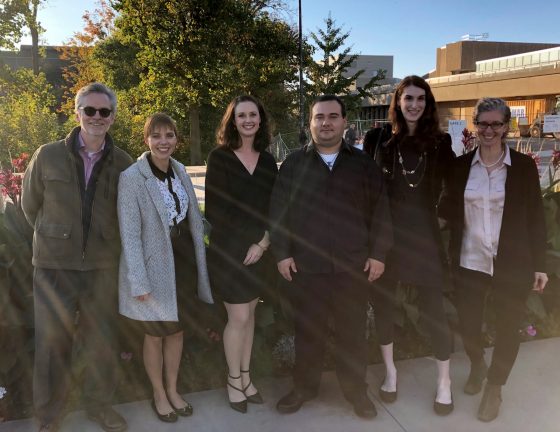
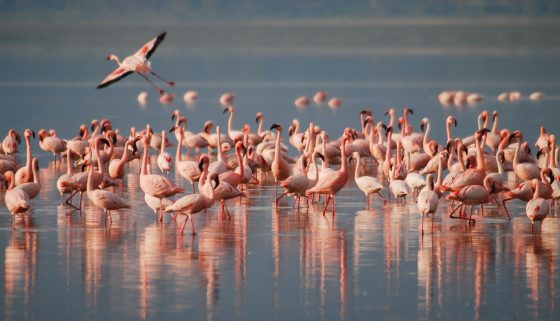
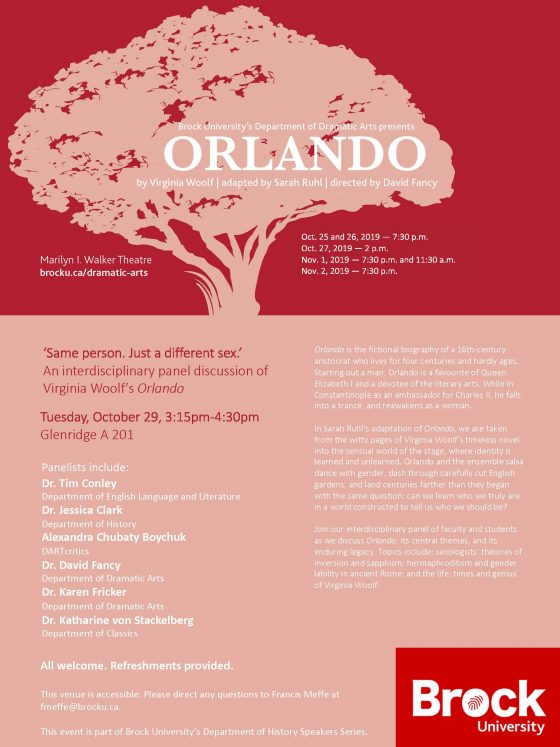
On Thursday 14 November, Katharine von Stackelberg delivered a Brock Talk at the St Catharines Public Library titled, “How to Eat a Flamingo: What Ancient Rome Can Teach Us About Our Relationship with Food.” In the talk she addressed the food of ancient Rome as a byword for excess and the grotesque: dormice coddled in honey, geese drowned in wine, red mullets boiled alive in glass bowls. But the cuisine of ancient world Rome offers more than feelings of pleasurable disgust, it also prompts questions about what foods represents to the people who consume it. In Apicius’ cookery book from the 2nd century CE, a recipe for braised flamingo provides an opportunity to explore the social, cultural and economic underpinnings of “taste” and examine our own relationship with food, dining, and the holidays.
Click here to hear von Stackelberg discuss the topic with Matt Homes of the One O’Clock Talk on 610 CKTB.
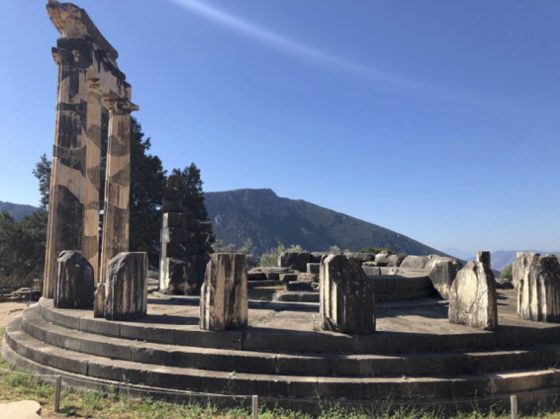
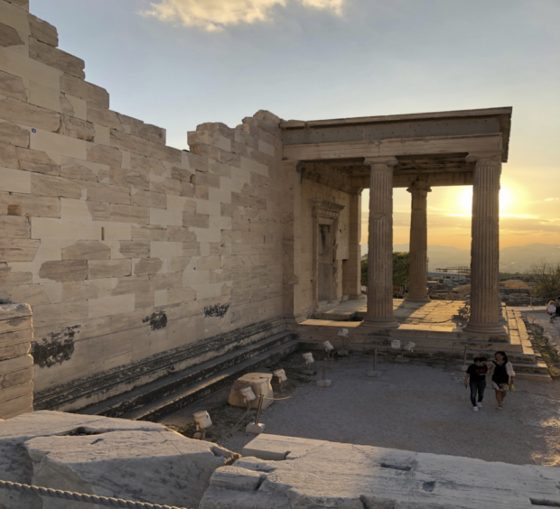 What was strange about Delphi was the abandoned part of the site. The gymnasium was inaccessible, having been closed off with a padlock and chains at both entrances, but the temple of Athena Pronaia remained open. I suppose that means I will just have to go back, visit another time and hope that area is open then.
 Lake Vouliagmeni was a hidden gem an hour outside Athens — hidden from my knowledge anyway. The lake itself was refreshing, moderately warm and did not require travel by ferry — so it was an easy yes when Hilary suggested we go. I figured it would be a popular tourist site and there would be few Greeks there, but to my surprise, we tourists made up only a handful of the crowd. It seems that a lot of Greek families spend their time tanning by the water and having the little fish peck at their toes as a spa treatment. Personally, I did not enjoy the fish, although the swimming was nice.