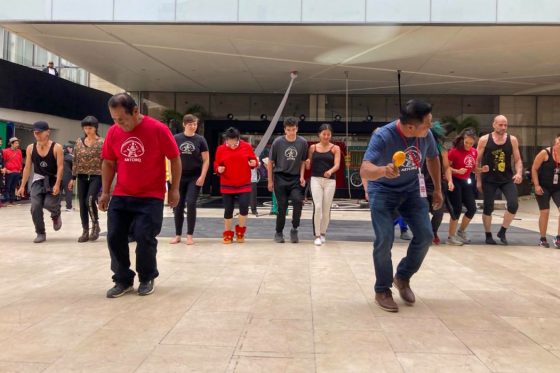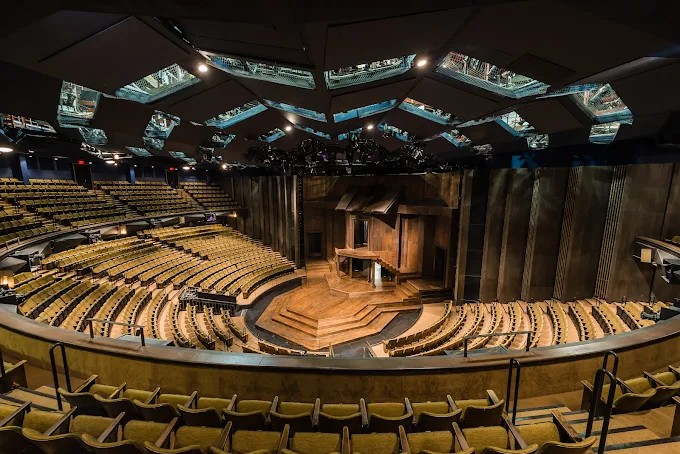
Seen above: The Festival Theatre at Stratford. Having begun performances in 1953 under a tent, the Festival moved into its first permanent theatre in 1957.
Every year, students at Brock University participate in a unique immersive and stimulating two weeks of study at Canada’s preeminent festival of theatre, the Stratford Festival of Theatre in Stratford, Ontario. Whether in the performance studios, rehearsal halls, seminar rooms or the four theatres of the Festival, our students are the leading participants in a diverse community from Guelph, Western, Waterloo and Windsor universities.
To learn more about the courses Shakespeare: Voice & Text, Shakespeare in Performance, and the Stratford experience, we spoke with Dramatic Arts (DART) students Colby Code (Dramatic Arts BA(HONR)/BED Concurrent Education 2028), Lu Charters (Dramatic Arts BA(HONR)/BED Concurrent Education 2027), Emma Marcy (Dramatic Arts BA(HONR) 2026) and Professor Danielle Wilson of the Department of Dramatic Arts. Danielle is a specialist in voice, performance, and devised theatre. She also directs mainstages for the Dramatic Arts and creates and performs in original new plays that tour the festival circuit. In June 2024 Danielle hosted the inaugural National Voice Association/Association Nationale De La Voix (NVA/ANV) conference at Brock University. She is the Stratford Festival program liaison for Brock University.

2026 Season promotion for The Tempest.
The studio-based course Shakespeare: Voice & Text is an intensive immersion that focuses on acting the language of Shakespeare. The work is practical in its philosophy and its application, wholly designed to give the aspiring actor a handful of tools with which to explore, personalize and perform Shakespeare’s text. Combining tools to decipher Shakespeare’s language and make it their own along with exercises in voice, the course experience encourages and enables the actor to develop those facets of their vocal instrument, opening new access, experience and communication in Shakespeare’s language.
Reflecting on the Voice and Text course, Colby emphasized the unique opportunity to learn about the textual understanding, analysis and proper use of the voice with Stratford’s voice and text coaches. “I gained deep insights into the work that Stratford performers put into their craft and much deeper knowledge about understanding Shakespeare text.”
Emma remarked that “as an aspiring actress, the coaching I received from Martha Farrell and Tim Welham allowed me to grow as a performer, layering my action work with specificity and detail while learning new techniques and strategies.”
Noting that this course deepened his understanding of heightened, Shakespearean language, Lu added that he feels “more confident than ever in my ability to perform Shakespeare’s text in fresh and honest ways.”
From the perspective of a faculty specialist, Danielle remarked that for almost 20 years she has witnessed students returning from the Stratford Shakespeare intensive with a new appreciation and love for language. “It is an invaluable experience for a young person to immerse themselves in learning about and speaking the words of Shakespeare within a professional theatre context.”

2026 Season promotion for Othello.
The course Shakespeare in Performance invites students to explore both academic and experiential learning about three of Shakespeare’s plays in the current season. The course consists of intensive classroom study and discussion, visits with renowned artists in the Festival Company, as well as talkbacks and discussions with cast members of shows. Together the students see performances of three plays and engage with the productions through the lens of stage history, performance choices, changing reception and social contexts.
Danielle remarked that the success of the Stratford program rests on the students’ opportunity to take full advantage of their learning in an immediate way by watching shows at night and speaking with the artists who are involved in bringing the plays to life. “I have seen them become more passionate about their learning and understanding of the world they live in as they discover that Shakespeare is grappling with the same themes that we continue to grapple with today.”
With both a classroom and experiential approach to the study of Shakespeare, Emma noted that “having the opportunity to see the shows we were studying live immersed me in the stories and text in a way that could not be achieved in a classroom setting. After each show, we had the opportunity to meet actors in a talk-back setting which would not be possible without the festival’s amenities.”
What makes this two-week intensive such a stimulating learning experience and an important part of our students’ degree portfolio they carry forward to teacher training, graduate or conservatory studies?
Lu appreciated how much he will be able to incorporate his learning at Stratford into his own emerging career as an educator. “The courses give you a real opportunity to experience Shakespeare’s work in both personal (monologue performance) and external (performance viewing and play analysis) ways. Having such in-depth knowledge of how to break down and analyze Shakespeare’s text will help me teach my future students how to build the same skills,” he added.
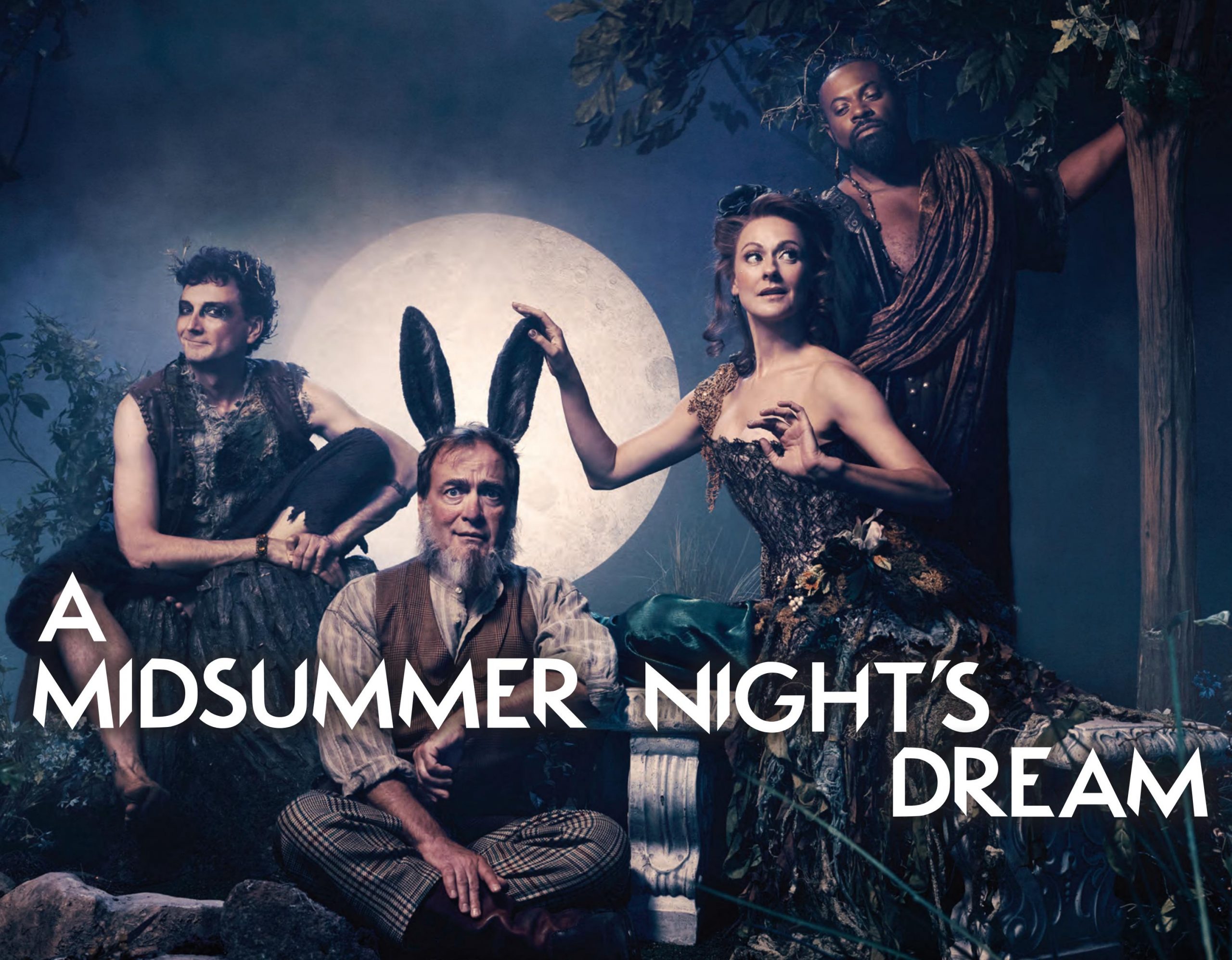
2026 Season promotion for Midsummer Night’s Dream.
Emma offered that her participation in these courses strengthened her understanding of Shakespeare’s work, allowing her to view plays with new eyes, discovering hidden meanings and nuances where she never had before.
She also exclaimed how many other students were involved. “This was a great experience to meet theatre-makers and students from the province that shared similar goals and interests to me. I also found myself surprised at the amount of curriculum that was covered, specifically in the performance portion of the class. Even though the course was only 2 weeks, I felt myself grow immensely as a performer. We broke Shakespeare’s text into manageable, digestible pieces, playing close attention to detail, we completed work surrounding vowels, consonants, punctuation, etc. and every day I left class feeling like a stronger actor.”
Asked if she would recommend these courses to future students, Emma enthusiastically described her learning in Stratford as a truly once-in-a-lifetime experience. “The opportunity to work closely with Tim and Martha is one that should not be passed up. They are highly experienced and knowledgeable. Reading and analyzing Shakespeare’s plays with a highly knowledgeable professor made me a better theatre-maker as I understand how text is purposeful, and how performance can challenge tradition in remarkable ways.”

Facade of the Stratford Festival Theatre.
Colby summed it up: “Overall the experience is incredible and definitely something to consider taking if you’re passionate about Shakespeare. The Stratford courses are one-of-a-kind experiences. Getting to work so closely with the Stratford professionals is an opportunity not to be missed.”
In 2026 the two-week session runs from June 1 through June 13. The Festival season will feature Shakespeare’s The Tempest, A Midsummer Night’s Dream, and Othello.
Other productions to see at the Festival include Guys and Dolls, Something Rotten!, Waiting for Godot, Death of a Salesman, The Hobbit, The Importance of Being Earnest, Saturday, Sunday, Monday, The King James Bible Play, and the world premiere of The Tao of the World.
For more information about Brock’s program at Stratford and how to register, contact Professor Danielle Wilson at [email protected].