Articles by author: egreene

  • Michael Carter explains the “Thucydides trap”

    In an interview with the Financial Post, Michael Carter explains the “Thucydides trap” referenced in the recent summit between U.S. President Donald Trump and Chinese President Xi Jingping.

    President Xi asked President Trump, “Can China and the United States transcend the so-called ‘Thucydides trap?’ and forge a new paradigm for major-power relations?”

    As the Post writes, “The term ‘Thucydides trap’ was popularized by political scientist Graham Allison in “Destined for War,” his 2017 book about China–U.S. relations. It the idea that conflict is the likely outcome when a rising power threatens to challenge a ruling one (in the 16 historical examples Allison cites, only four avoid it).

    The theory is derived from a line in the “History of the Peloponnesian War”: “It was the rise of Athens and the fear that this instilled in Sparta that made war inevitable,” according to a common translation.

    “That’s what Graham Allison’s argument is, that the United States is the hegemon or the leader of the world and then there’s China as a rapidly rising power,” Carter said. “And at one point, something is going to happen and there’s going to be a break.”

    Carter continued, “The remarkable thing is Thucydides knew that, because he understood human nature. And that’s one of the very first things he says in the book is that, ‘I’m writing this as an example, for all time, because people don’t change, and this will happen again.’”

    Read the full article here: https://financialpost.com/news/who-was-thucydides-the-ancient-greek-general-referenced-by-carney-and-xi

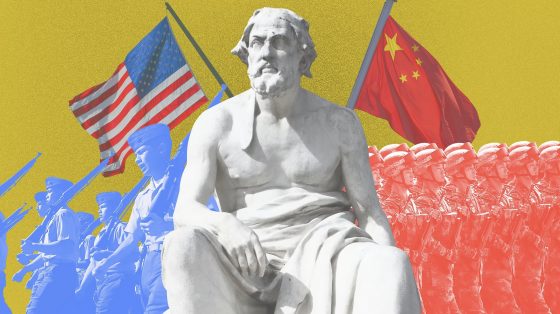
    Thucydides with America and China backdrop

    From The Atlantic: https://www.theatlantic.com/international/archive/2015/09/united-states-china-war-thucydides-trap/406756/


  • Corrigan Legacy Fund supports student fieldwork

    Thanks to the generous donation of Jane and Patrick Kieran we are pleased to announce the first awards made through the Corrigan Legacy Fund. Created to honour the spirit of travel and study of the ancient world exemplified by the late John Corrigan, this fund provides significant financial assistance to students who elect to travel abroad by participating in archaeological practica or study tours. This year, the fund offered support to three MA students and nine undergraduates for their upcoming participation in excavation and museum research at Murlo (Italy) and Gournia (Crete). The students are: XinFan Gazzola, Sarah Grenier, Carys Hernden, Carter Jansen, Sophia Kelly, Madeleine Macdonald, Julia Miller, Luna Nikolic, Lydia Scheunemann, Katie Snyder, Andrea Szpika, and Katherine Titishova.

    The Department expresses its gratitude to the Kierans for their generous support of our students and their passion for experiential opportunities in the field!

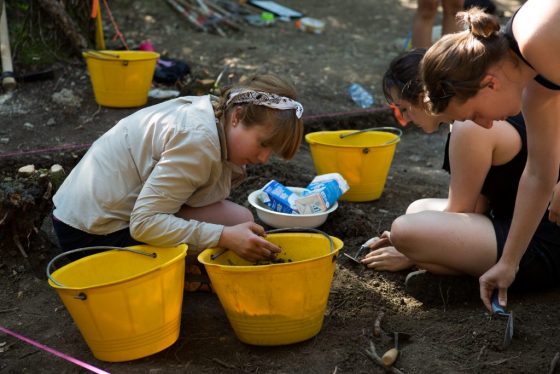
    Students excavate at Murlo

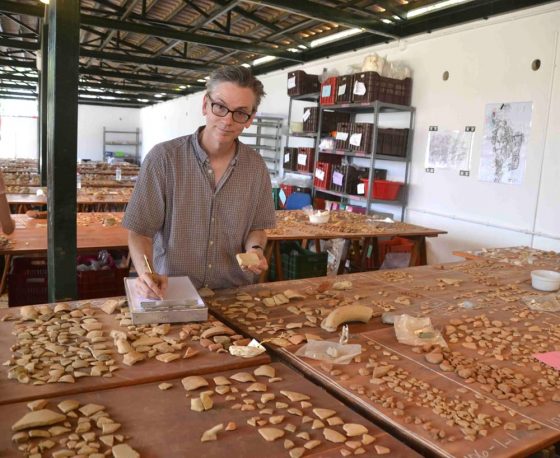
    Angus Smith works on ceramics from Gournia

  • Brock at the CAC

    CAC Conference Flyer image

    The Department of Classics and Archaeology will be well-represented at the Annual Meeting of the Classical Association of Canada, hosted by Queen’s University, May 5-7.

    Panel 15, “Women in Greek Society,” features two Brock papers: Madison Poole, “Adorning the Female Symposiast: Using Comparative Analysis to Explore Female Identity, Sexuality, and Agency in Sympotic Red Figure Vase Paintings” and Allison Glazebrook, “Nikarete’s Girls: Sex Trafficking and Sexual Grooming in the Athenian Sex Trade.”

    In Panel 23, the Graduate Student Caucus Panel titled “Sing it, Muse! Ancient Stories for Modern Audiences,” Sarah Grenier and Madison Poole will present their collaborative paper, “Mythbusting History One Monument at a Time: How to Use Interactive Maps to Debunk Pseudoarchaeology.”

    Carol Merriam considers “Dido’s Power: Love Magic and Witchcraft” in Panel 30, “Female Figures in Latin Literature.”

    The CAC Annual meeting offers an amazing opportunity to bring together scholars of classical antiquity from across Canada. Next year’s event will be hosted by Memorial University in St John’s, NL.

  • Greene receives Faculty of Humanities Award for Excellence in Research and Creative Activity

    How Humanities research is reimagining the human experience

    During the Faculty of Humanities’ spring research celebration on April 14, Professor Elizabeth Greene received the Faculty of Humanities Award for Excellence in Research and Creative Activity. Drawing on archaeological fieldwork on shipwrecks, harbour sites and maritime landscapes from the Iron Age to the present in regions like Turkey and Sicily, Greene’s research traces long term processes of trade, cultural exchange, fishing traditions and the displacement of peoples. Department Chair, Professor Michael Carter noted, “Dr. Greene’s work has shifted both how we understand and model interaction on the ancient Mediterranean and, even more importantly, how we view, value and challenge ourselves and the broader global community through heritage in the present,” The HRI Research Symposium also featured a paper by second-year M.A. student Connor O’Rourke, “Containers of Connectivity: Pithoi and Exchange Networks in Bronze Age Gournia.”


  • Celebration of Students at the Floralia

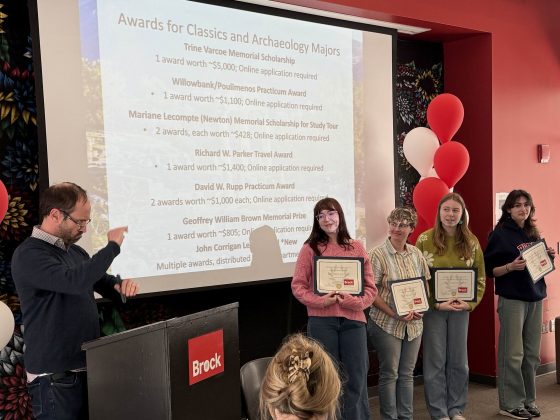
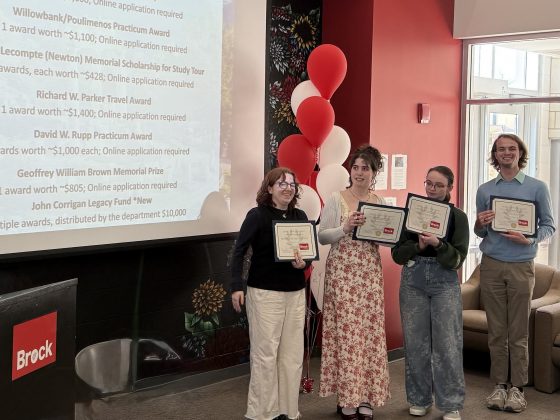
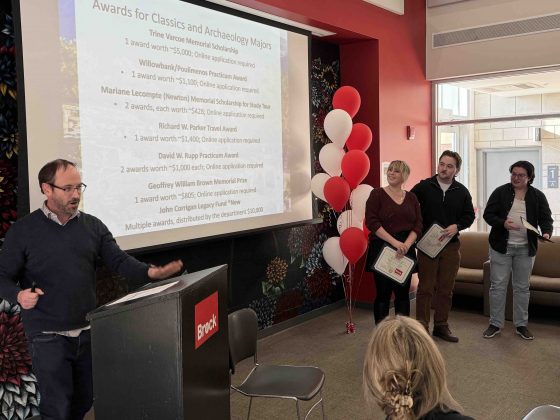
    At the annual April Floralia Celebration, marking the end of spring term classes, the Department of Classics and Archaeology was delighted to honour our students with a wide range of awards to celebrate their achievements.

    Undergraduate Award Winners
    Trine Varcoe Memorial Scholarship: Kathryn Snider
    Richard W. Parker Travel Scholarship: Carter Janzen
    David William Rupp Archaeological Practicum Scholarship: Lydia Scheunemann and Katherine Titishova
    School of Restoration Arts at Willowbank Vasilios and Kostas Poulimenos Book Prize: Emma Consoli
    Geoffrey William Brown Memorial Prize: Madeline Macdonald
    Department of Classics and Archaeology Book Prize in Ancient Art and Archaeology: Lauren Henderson
    Department of Classics and Archaeology Book Prize in Classical Literature and History: Josiah Straatsma
    Studium Book Prize in Classics: Summer Hradsky
    Society for Classical Studies (SCS) Distinguished Student Award: Lauren Henderson and Derek Tam
    Classical Association of the Middle West and South (CAMWS) Outstanding Accomplishment Award: Andrea Szpika
    Ontario Classical Association (OCA) Award for Outreach and Leadership in Classics: Dawson Magis
    Ontario Classical Association (OCA) Award for Achievement in Ancient Languages: Laura Muller-Bot

    Graduate Award Winners
    Society for Classical Studies (SCS) Distinguished Student Award: Madison Poole
    Classical Association of the Middle West and South (CAMWS) Outstanding Accomplishment Award: Connor O’Rourke
    Classical Association of Canada (CAC) Outstanding Student Award: Léo Beaudoin

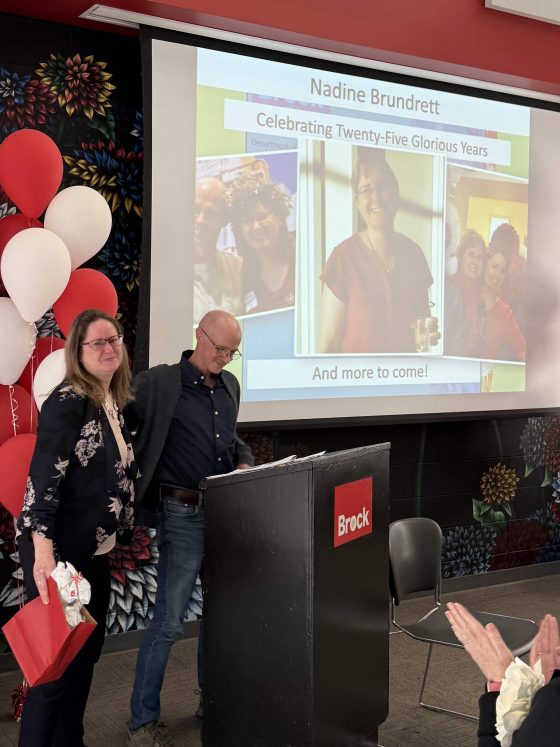
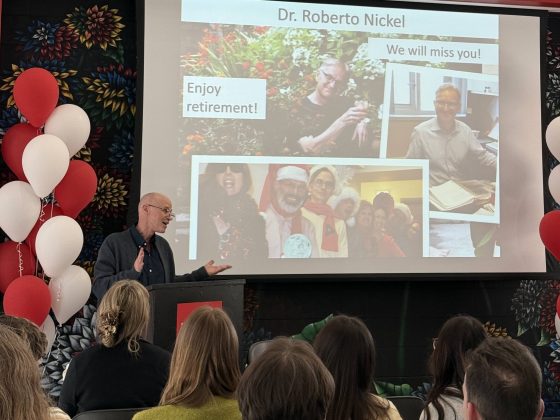
    The event also offered an opportunity to celebrate Nadine Brundrett’s 25 years of teaching in the Department, and the bittersweet announcement of Roberto Nickel’s retirement. As always, the return of graduate alumni speakers provided a chance for reflection on the value of our field for future career paths.

    three undergraduates receive awards at the Floralia

    three undergraduates receive awards at the Floralia

    three graduate students receive awards at the Floralia

    Nadine Brundrertt and Michael Carter

    Retirement of Roberto Nickel

  • Classics and Archaeology Students Shine at Mapping the New Knowledges

    Mapping New Knowledges shines light on grad student research

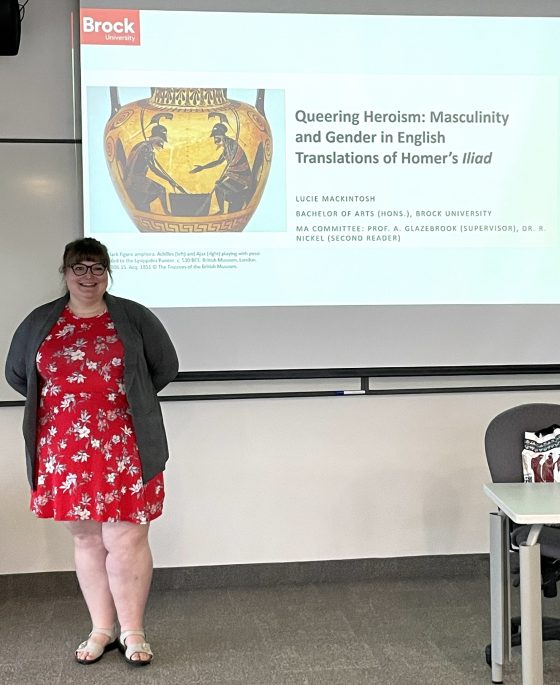
    Classics and Archaeology students made a splash at the 21st annual Mapping the New Knowledges Conference! The day opened with the presentation of awards, where 2nd year M.A. student Lucie Mackintosh received the Jack M. Miller Excellence in Research Award. Five students presented papers or posters on their research: Léo Beaudoin, Kiera Lang, Katie Mazurkiewicz, Madison Poole, and Connor O’Rourke. The conference gave Classics and Archaeology students a chance to engage in dialogue about their research with M.A. students across the University. Congratulations to all!


  • Engaged Leadership in Classics

    (contribution by F. Dolansky)

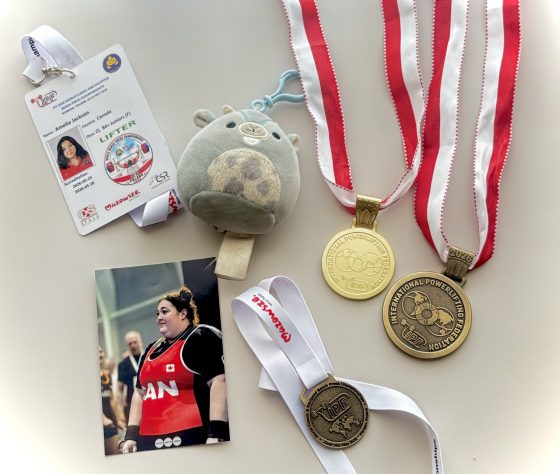
    The 2025-26 academic year has seen three majors in the Department of Classics and Archaeology share their passion for the ancient Mediterranean world with diverse audiences beyond the university through unique projects in the Engaged Leadership in Classics course (CLAS 3P98). Last month, Amelia Jackson completed her final blog post in a series titled When in Rome, Lift Heavy that explores ancient athletic practices and applies them to her own involvement in competitive powerlifting. Two other exciting outreach projects have also been taking place: Brianne Bousfield’s lead organization of the upcoming Heritage and Culture Networking Fair to be held on March 12, and Teagan Ross-Johnson’s monthly lessons at a Beamsville elementary school where she teaches students about different aspects of ancient Roman life.

    Over the last few months, Bousfield has been busy planning the second annual BUAS (Brock University Archaeology Society) Heritage and Culture Networking Fair which will be held in the atrium of the Rankin Family Pavilion. The event is an opportunity for students to meet with industry professionals from over a dozen companies to learn about summer employment and volunteer experiences, as well as future career paths. After taking a leadership role in planning the event last year, Bousfield has relished the chance to build on that experience, especially to make changes and improvements with the goal of turning the fair into the club’s flagship event. Planning and hosting a successful event involves a significant commitment of time and learning how to juggle many small tasks at once. Bousfield notes how the supportive environment of the department and the BUAS community has given her more confidence in her abilities and encouraged her to try again when she hasn’t succeeded at first. She takes pride in being able to contribute positively to current Brock students’ experiences, commenting “I feel good that I can help other students advance their careers and network.” And since part of Bousfield’s project includes writing a guide so that future BUAS executives can plan the fair as an annual event, it’s clear that Bousfield’s leadership will make a lasting contribution.

    Ross-Johnson’s efforts have been directed at a much younger group of learners with the hopes of showing them the value – and pleasure – of learning about the past. Each month, Ross-Johnson has taught a lesson on a different aspect of Roman life to students in grades three through five. Topics have included gods and heroes, families and households, Roman cities, and the Latin language and Roman numerals. She follows each formal lesson with interactive activities that allow students to demonstrate what they have learned while practicing skills related to the curriculum and also reflecting on the similarities and differences between Roman society and their own. Students have created their own Roman gods, heroes, or superheroes; designed their own cities complete with essential infrastructure; and “minted” their own coins, inscribing the date in Roman numerals. Doing the research for her lessons has enabled Ross-Johnson to delve more deeply into topics of interest she hasn’t been able to explore as fully in her classes. Preparing age-appropriate content and designing activities that will be educational but also engaging has helped her appreciate the challenges of adapting to students’ learning levels and individual needs. The course has also helped her think further about plans after graduation and has ultimately highlighted her interest in sharing historical information with others. She remarks that, “seeing how much the students enjoy the activities has been the most rewarding,” along with fielding questions, some of which have been particularly interesting and impressed her for the depth of the students’ thinking.

    Students in a classroom learn about the Roman world

    According to Prof. Michael Carter, Chair of the Department of Classics and Archaeology, the Engaged Leadership courses “offer students a unique opportunity to explore topics relating to the ancient world that they are passionate about. The point is to bring this passion to the wider community somehow. In doing so, the students learn so much more than they might in traditional classroom settings.” Students largely work independently but their projects are guided by faculty mentors. Carter has served as faculty mentor (with Nadine Brundrett) for Jackson’s blog and Bousfield’s organization of the heritage fair, while Ross-Johnson has been working with Dr. Fanny Dolansky.

    Introduced in 2022-23, the Engaged Leadership courses reflect the diverse learning experiences available to students in Classics and Archaeology. “The department is proud of the range of courses and formats that we offer,” Carter stresses, “which include traditional classroom-based learning, online courses, but also field courses and unique opportunities, such as those offered by the Engaged Leadership course.”


  • Julia Miller profiled in the Brock News

    Horizon Scholarship recipient connects ancient athletics to modern wellness

    The Brock News featured first-year M.A. student, Julia Miller, as part of a series of articles on Brock’s 2025-26 Horizon Graduate Student Scholarship recipients:

    “Miller recently received a Horizon Graduate Student Scholarship in recognition of her dedication to learning and research as well as her strong desire to build and foster community everywhere she goes.

    Coming from an athletic background, Miller grew up practicing judo, kendo, taekwondo, competitive aerobic gymnastics and Olympic weight training — a barbell workout featuring intense full body movement — all embodied experiences that inform her research.

    “I am particularly interested in training programs of ancient athletes including their diets, the intensity of their workouts and the consumption of possible sport performance enhancements,” she said.

    Miller is also fascinated with how ancient traditions such the Olympic Games and Gladiator games have shaped historical understandings of physical excellence and how they continue to inspire modern ideas of fitness and idealism.”

    We look forward to hearing more about Julia’s research and are delighted to have her as a member of the Department community!

  • Prof. Carter speaks about ancient and modern democracy in the Brock News

    Why ancient lessons cited by Carney remain relevant to today’s shifting world order


    The Brock News covered Michael J. Carter’s thoughts on Prime Minister Mark Carney’s use of ancient parallels in his recent speech at the World Economic Forum in Davos, Switzerland.  “The Brock University Professor of Classics and Archaeology immediately clocked the nod to ancient historian Thucydides’ work — and its relevancy to today. Thucydides wrote an account of the Peloponnesian War fought between Athens and Sparta — the two hegemons, or leading powers, of the ancient Greek world — from 431 to 404 BCE. There was a strong contrast between the two cities, with Athens viewed as open, tolerant, wealthy and democratic, and Sparta considered closed and intolerant.”

    Carter concludes, ““They had abandoned all the values — justice, morality, a sense of right and wrong, even hope — that once made Athens worth celebrating. It is the tragedy of Athens,” Carter says. “That’s why it was so heartening to hear the Prime Minister speak of the need for ‘values-based realism,’ in place of the old ‘might is right’ aphorism.”

  • Department Posters at the AIA Annual Meeting

    Brock’s red logo was on display in four posters at the AIA Annual Meeting in San Francisco, CA this month, with student and faculty projects ranging from female symposiasts on Athenian vase painting (M.A. student Madison Poole)  to iron nails from an ancient shipwreck (Robert Muniz, Andrea Gobbi, Elizabeth S. Greene, and Justin Leidwanger), the archaeology of contemporary displacement (Michelle Heeman, Elizabeth S. Greene and Justin Leidwanger), and the problem of plastic pollution in the Mediterranean (Sophia Wu, Nicole Constantine, Elizabeth S. Greene, and Justin Leidwanger). Congratulations to all of the presenters for representing the Department so well!

    Madison Poole presenting her poster at the AIA Annual Meeting Student presenting poster at the AIA Annual Meeting Student presenting poster at the AIA Annual Meeting Students presenting poster at the AIA Annual Meeting