Articles from:August 2019

  • CCOVI tackling climate change challenges with research vineyards

    28 August 2019
    R00136

    Two research vineyards filled with thousands of grapevines are being used by Brock University’s Cool Climate Oenology and Viticulture Institute (CCOVI) to help Canada’s grape growers and wineries.

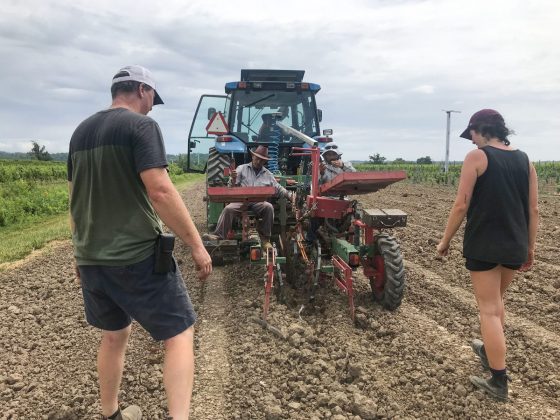
    CCOVI partnered with two commercial grape growers to plant the St. Catharines and Niagara-on-the-Lake vineyards that are being used for a clone and rootstock evaluation program of the main VQA grapevine varieties in Ontario.

    “We are looking at the best plant material for Ontario’s industry, not only now, but moving forward with climate change uncertainties,” said Jim Willwerth, CCOVI Senior Scientist. “Cold hardiness, fruit composition, wine quality and general vine performance will be examined, so that the industry knows the best combinations to use for our core grape varieties.”

    Since July 2018, more than 4,000 vines have been planted between the two vineyards. One vineyard has a heavier clay soil and the other sandy soil to represent different vineyard conditions found in Ontario. There are five different grapevine varieties and up to 16 clone and rootstock combinations for each grape variety.

    Planting was initially delayed because it was difficult to get certified disease-free and true to type grapevines in Canada. Starting with healthy, clean plant material is critical for this project to evaluate the best performing plant material under Ontario conditions.

    “For the research we are doing there is no sense planting dirty or infected vines. Clean vines are difficult to get, so we had to wait an extra year to make sure we had clean vines to plant,” said Bill Schenck, one of the commercial grape growers involved. “When you are planting a vineyard, the initial cost of grapevines is rather cheap compared to costs to manage the grapevines in the years that follow. Considering the length of time the grapes are in the ground, you want to make sure you are starting off on the right foot.”

    After an exhaustive search, certified clean plant material was sourced three years ago from outside Canada. Half of the certified grapevines were planted in July in collaboration with Huebel Grapes Estates and the support of Schenck and another grape grower, Erwin Wiens, who are each allowing the use of two acres of their land. The other half were planted last July.

    Planting and management of the research vineyards was funded through the Natural Sciences and Engineering Research Council of Canada Collaborate Research and Development grant program in partnership with Ontario Grape and Wine Research Inc.

    “The material is all certified, so we know these vines are true to type and are healthy,” said Willwerth. “The Canadian Grapevine Certification Network (CGCN) is now working tirelessly to establish a domestic clean plant program and this is extremely important so that growers can access clean materials from nurseries so they know the vines they are planting are the healthiest and are going to be as productive as possible.”

    Plant performance outputs from this research trial will inform CGCN of the grapevine combinations that should enter the domestic clean plant program.
    Categories: Media releases

  • Record crowd for Triggs Lecture Series

    15 August 2019
    R00130

    It was an opportunity to talk about key issues in the wine industry in two provinces.

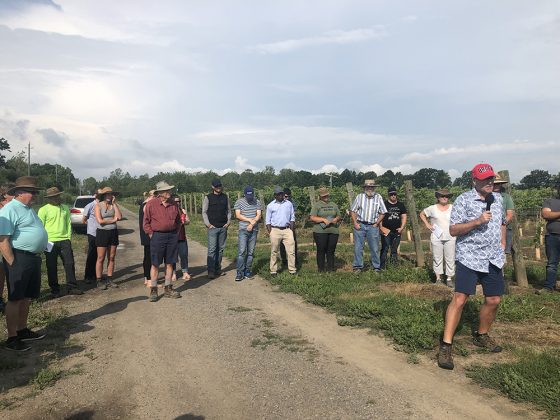
    The Triggs International Premium Vinifera Lecture Series, held every two years and organized by Brock University’s Cool Climate Oenology and Viticulture Institute (CCOVI), took place over two days last week in Ontario’s Niagara region and again on Tuesday, Aug. 13 and Wednesday, Aug. 14 in B.C.’s Okanagan Valley.

    More than 200 grape growers and wine industry professionals attended over the four days to discuss disease pressures and attend a lecture with Vaughn Bell, Senior Scientist at the New Zealand Institute for Plant and Food Research.

    “Hosting an international viticulture expert in key winemaking regions in Ontario and British Columbia allows our growers and winemakers to collaboratively discuss strategies to further advance and grow the industry on a national level,” said CCOVI Director Debbie Inglis. “Vaughn shared a wealth of knowledge about vineyard health and insect vector management strategies taking place at home and abroad.”

    Bell said he was honoured to be selected as the featured speaker and said it was clear the researchers, and the specialized equipment and technology at their disposal, have made many positive advances toward helping the wine sector achieve economic sustainability goals.

    “I was impressed with the spirit of co-operation that exists between CCOVI and the wine sector,” said Bell. “From my experience in New Zealand, positive collaborations inevitably deliver the best results in the shortest possible timelines to those with a financial stake in the wine sector.”

    Bell visited three vineyards in Niagara-on-the-Lake on the first day of the series, discussing vineyard health and disease pressures. The next day, he summarized the discussions held during the vineyard tours in a public lecture at Brock’s Pond Inlet.

    After his stop in Ontario, he headed to B.C. for the second leg of the series.

    “The level of awareness around the interaction between vineyard disease and the insects that spread it has developed significantly since my last visit in February 2018,” Bell said. “That’s all credit to your sector leaders and those funded by the sector to bring about positive change.”

    To ensure the national lecture series continues to be held in two key wine-producing regions, BASF Canada, a company that provides crop protection products, again sponsored the event.

    “BASF is pleased to be able to continue our support of the Triggs Lecture Series and to give it its national scope,” said Tom Clarke, Horticultural Specialist at BASF Canada for the Niagara region. “It is important for all of us to work together and I think the discussions between Dr. Bell and the growers who attended were very productive when it comes to further developing our industry.”

    Launched in 2004, with a generous donation from Donald and Elaine Triggs, the lecture series was created to provide industry stakeholders, researchers and students access to the most current developments in the field of viticulture.

    The lecture series is further supported by the Grape Growers of Ontario, Lakeview Vineyard Equipment, VineTech Canada, British Columbia Wine Grape Council, Summerland Research and Development Innovation Centre, and the following wineries: Henry of Pelham Family Estate, Andrew Peller Ltd., Tinhorn Creek, Quails’ Gate Estate Winery and Mission Hill Family Estate.

    For anyone unable to attend, the Ontario and B.C. public lecture slides, as well as a video of the Ontario public lecture, are available on CCOVI’s website.

    Categories: Media releases