Articles by author: Brock University

  • OSCIII BLOG: The importance of supporting local consumption and research

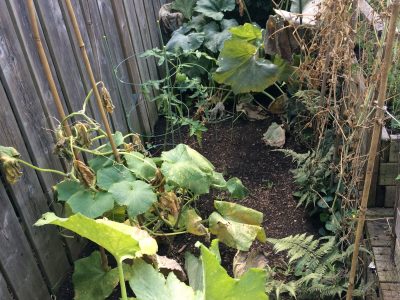
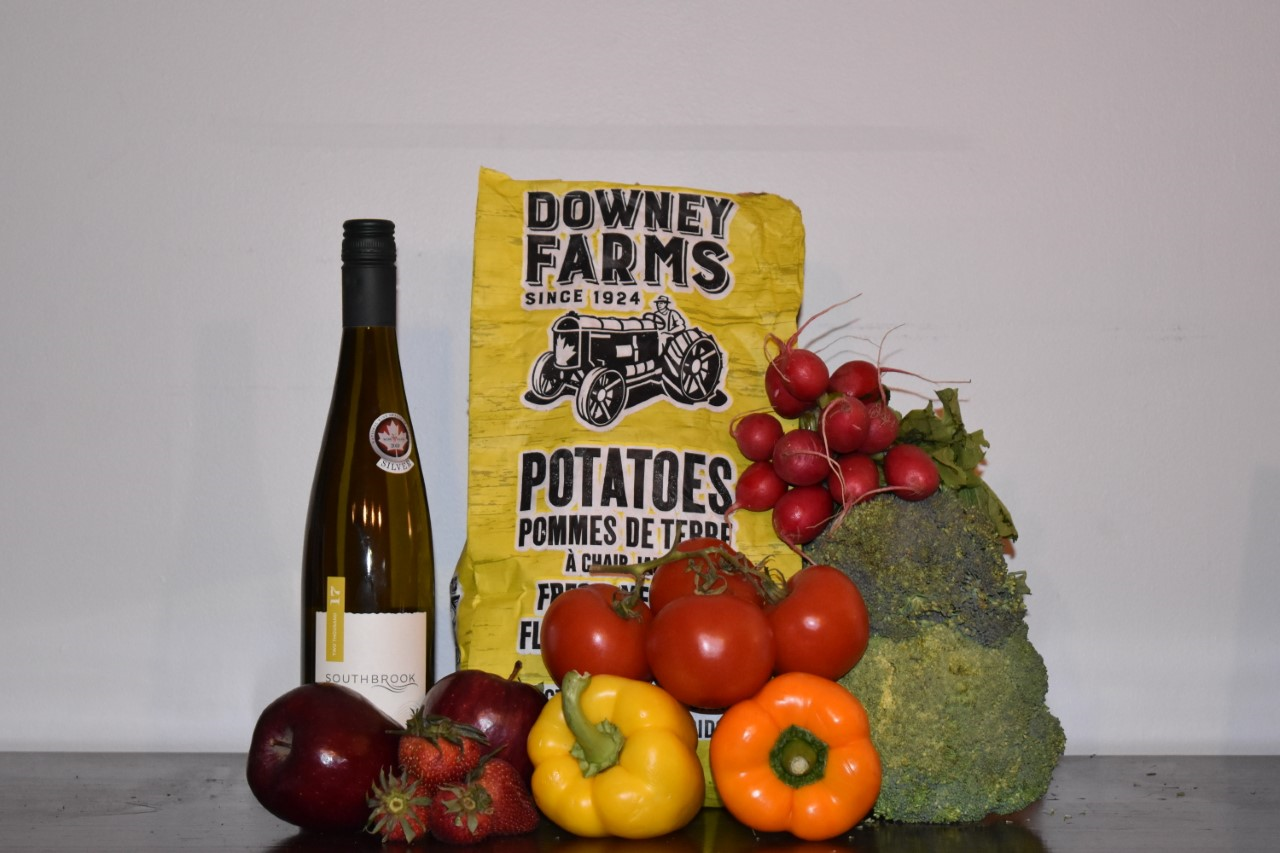
    Locally sourced produce grown here in Ontario, May 2020 (Photo: Abby VanVolkenburg).


    Where does our food come from? If your answer was the local grocery store, think again! As we talked about in last week’s blog, much of the food found in grocery stores comes from somewhere other than Canada. This causes challenges such as heightened emissions, attributed to shipping, as well as food chain supply disruptions, especially in times of  uncertainty, such as during the current COVID-19 pandemic. Now, more than ever, we need to consider supporting our local farmers to allow them, in turn, to support us. The relationship is reciprocal, with both parties standing to gain a great deal from one another’s support. Supporting local growers means supporting their livelihoods as well as our overall quality of life. There are also countless environmental benefits of supporting local.

    So how does one support local growers? At first the answer may seem obvious: We need to educate ourselves on where our food comes from and try  to buy locally sourced products whenever possible. Yet, there is so much more to it than that! Aside from selling what they produce, farmers are also faced with many uncertainties in terms of how they produce. Extreme weather events that result from climate change, such as temperature and wind fluctuations and more intense periods of heavy rain or prolonged dry periods, present challenges for farmers. In addition, they also face increasing pressure from pesticide/herbicide resistant organisms, depleted soil fertility, and dwindling (not to mention expensive) synthetic fertilizer options. Farmers need management options that utilize approaches to farming that are more sustainable.

    Sustainable farm management options already exist; many of which have been utilized in the past, before industrialized agriculture became a dominant figure on the landscape. From supporting beneficial organisms, to utilizing non-synthetic fertilizers and increasing cropland diversity, there is no shortage of alternate management options. What is missing, however, is guided research that investigates those different options, and combinations of options, to help farmers apply the best option to suit their own unique situations. Research is not only an important part of understanding farm management techniques, but also in policy making decisions, as well. Policy can either support or work against management choices that are connected to our food supply chain.

    In many ways, farmers are supported by policy and policy is created based on current research data. Anecdotal information is not enough to dictate or change policy (which often works against more sustainable farming practices). There is a need to support both our farmers  and local research efforts to ensure that solutions to today’s sustainable agriculture challenges, both environmental and social, are possible. The OSC3 here at Brock is one such research project that embraces farmers’ knowledge, sustainable practices and the investigation of novel crop management strategies for the future of Canadian food security.

    This blog will be ongoing throughout the duration of the project with bi-weekly updates provided by Liette Vasseur, Heather VanVolkenburg, Kasia Zgurzynski, Habib Ben Kalifa, and Diana Tosato (see research team). We will be providing research activity updates as well as informative pieces that delve into agricultural concepts and important global issues as they relate to agricultural sustainability and climate change. Stay tuned for regular updates!

    Categories: Organic Science Cluster 3 Blog, Updates of the Chair

  • OSCIII Blog: Farming—an essential service

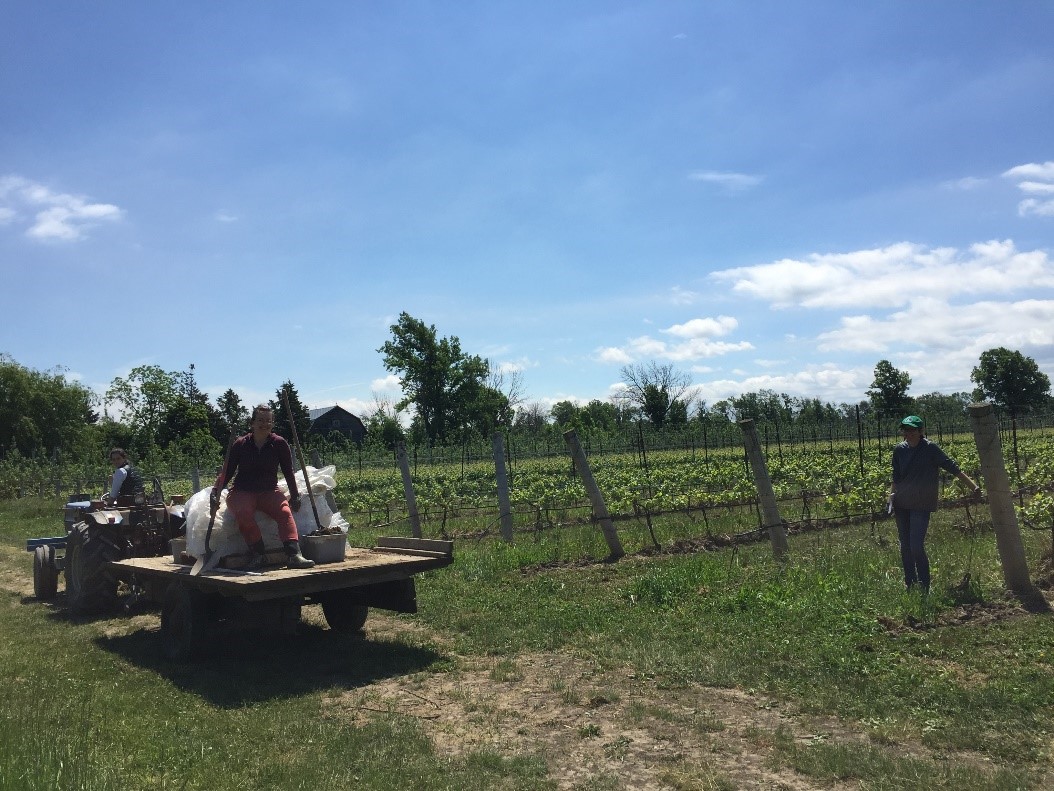
    Spring soil amendment application in a Niagara vineyard, May 2018 (Photo: Heather VanVolkenburg).


    The term “essential service” is one that most of us have become acutely aware of in the past few months. An essential service refers to an occupation that a government or governing body deems to be necessary for preserving life, health and basic societal functioning. These services are determined to be needed during an emergency as well as when job action is taken in a labour dispute (such as during strikes). Such services must maintain operations during a crisis in order to ensure that society can still function during and after that crisis. Services deemed essential usually include hospitals and healthcare, law enforcement, firefighting, garbage collection, utilities (i.e. water and electricity), and food services connected to the food supply chain.

    Determining what qualifies as an essential food service can be complicated. From a consumer’s perspective, we are often only concerned with the availability of food in the grocery store. Some may also think of food services as the prepared salad on the shelf at your local grocery store or a meal purchased from a fast food joint. While these businesses are indeed essential, there is one essential food service that is perhaps the most important: farming. Farming forms the foundation of all food services, providing us with the food and ingredients necessary to survive from day to day. Without farmers, the grocery store where you bought your salad or the fast food joint that served you a hamburger would not exist.

    So, before you finish unpacking those groceries or sitting down with that take-out container, take a moment to thank the farmers and those directly connected to agriculture. Also remember that thinking of terms like “farm” or “grocery store” is far too simplistic to truly understand the nature of being essential. Think not only of the farms, but also the workers, fuel providers, truckers, packaging suppliers, grocery clerks, and countless other people that have been involved in the food supply chain along the way. Without these essential food services, and the many intricate pieces involved, we would be a pretty hungry lot!

    This blog section will be ongoing throughout the duration of the project with bi-weekly updates provided by Liette Vasseur, Heather VanVolkenburg, Kasia Zgurzynski, Habib Ben Kalifa, and Diana Tosato (see research team). We will be providing research activity updates as well as informative pieces that delve into agricultural concepts and important global issues as they relate to agricultural sustainability and climate change. Stay tuned for regular updates!

    Categories: Organic Science Cluster 3 Blog, Updates of the Chair

  • MEOPAR BLOG: Sustainability Rating Systems/Certifications for Buildings

    The Ball’s Falls Conservation Centre in Lincoln, Niagara Region, ON is an example of a LEED ‘Gold’ Certified Building


    While we spend a majority of our time indoors, we might not consider the environmental impact and sustainability of the buildings where we are spending all of that time. In previous posts, we discussed the potential that green buildings and green infrastructure have to increase sustainability in the Niagara Region. In today’s post, we’ll explore several popular building sustainability certifications.

    LEED – ‘Leadership in Energy and Environmental Design’

    LEED is internationally recognized and one of the most widely used building rating systems in the world. Here in Canada, it is administered by the Canada Green Building Council (CaGBC). The LEED certification is holistic in nature and assesses the sustainability of buildings according to these criteria: water efficiency, energy efficiency, material selection, indoor environmental quality, innovation in design and sustainable site development.

    The Plaza Building at Brock University has been certified LEED Silver.

    Buildings are evaluated using a tiered point system to score green building design and construction out of 100 points. The more points awarded, the higher the level of certification. There are four levels of certification: Certified (40-49 points), Silver (50-59 points) , Gold (60-69 points) and Platinum (80-89 points).

    The LEED certification has been instrumental in creating cost efficient and environmentally sustainable buildings in communities worldwide. LEED-certified buildings have been proven to be healthier for people, and a range of buildings and projects—from local apartment buildings to university campuses—can become certified. The Rogers Place arena in Edmonton, for example, became the first National Hockey League (NHL) facility in Canada to achieve a LEED Silver certification.

    LBC – ‘Living Building Challenge’

    A living building is defined as a structure that can produce its own energy, capture and treat all of its own water and operate efficiently while being aesthetically appealing. LBC was conceptualized and launched by the International Living Future Institute (ILFI), which was founded in Seattle, Washington in 2006. It is also regarded as one of the most advanced and comprehensive green building certifications in the world.

    LBC examines whether buildings can function like plants—maintaining self-sufficiency and giving more than they take. To complete the LBC certification process, a builder must meet standards in seven focus areas, called “petals”. These are: materials (regenerative and non-toxic), health (good interior air quality and natural light), a sense of place (develops a relationship with nature), water conservation, energy efficiency (produces 105% more energy than consumed), equity/accessibility and beauty.

    The Bill Fisch Forest Stewardship and Education Centre in Whitchurch-Stouffville, Ontario, is the first LBC certified building in Canada.

    Once builders achieve the standards in all seven petals (demonstrated through performance data over a period of 12 consecutive months), the ILFI awards a Full Living Building certification. An example is

    LEED and LBC rating systems have promising potential to contribute towards boosting Niagara’s local economy and lending momentum to climate change mitigation and adaptation programs in the future.

    The researchers involved with the MEOPAR project are working to raise awareness about the impacts of climate change and how communities can effectively adapt, and increase resilience, to these changes. Follow along with our blog every week (written by researchers Liette Vasseur, Meredith DeCock, Bradley May, Pulkit Garg, Sam Gauthier and Jocelyn Baker) to learn more about the project and how you can get involved. You can also visit our website at brocku.ca/unesco-chair or email us at [email protected]


    Categories: MEOPAR-Lincoln Blog, Updates of the Chair

  • MEOPAR Blog: Transformation: The Next Level of Climate Change Adaptation

    We talk a lot in the academic world about transformation—climate change adaptation on steroids! But what does it mean and how would we go about it? At its most basic level, transformation is thinking about how we move from where we are now, toward a more sustainable future. It is not so much about reacting to changes as they happen (reactive adaptation) but rather about thinking of adaptation and resilience-building as a proactive and long-term planning process. The movie “The Current War” (about Thomas Edison, George Westinghouse and Nikola Tesla’s race to bring convenient and easy access to power and light to the masses), is a great example of the technological, societal and behavioural changes needed for large scale transformation.

    Transformation means that we may have to do things in fundamentally different ways. Transformation, or transformative adaptation, as some people call it, may need to occur when gradual or incremental adaptation may not be enough. For instance, rebuilding infrastructure year after year after extreme weather events is considered adaptation. But what if that becomes too cost-prohibitive and more innovative solutions are needed? Transformation often happens when changes take place faster than expected. Transformation requires a long-term vision of what is more sustainable, while, at the same, also time planning for short-term gains. When we look at a community, it also means ensuring strong engagement and communication among partners and stakeholders, and removing barriers to change by empowering citizens and communities to take action. It may sound like a tall order, but think what things would be like if we began to use a transformation mindset.

    For example, think about a field of vacant land in your neighbourhood. What is its history? Who owns it? Why does it exist the way it does and Is it okay the way it is? Does someone have future plans for it and, if so, what are they and what could they use the land for? All of these great questions lead us to envision the many positive uses for this land: greenspace, a playground, community garden, or organic farm, for example.

    Now think even bigger. Increase the scale from one vacant lot to an entire waterfront where flooding is occurring more frequently with increased storms. As the size of the area changes, so does the complexity, but the questions remain the same. In previous blog posts we have focused on a number of ideas, such as the global sustainability goals, tree planting, biodiversity protection, swales, agricultural ditches, greenspace, and shoreline protection. All of these areas could be used as a focus for transformation. Innovation and innovative thinking are key ingredients for transformation to happen. So ask yourself this: Are you an innovator?

    The researchers involved with the MEOPAR project are working to raise awareness about the impacts of climate change and how communities can effectively adapt, and increase resilience, to these changes. Follow along with our blog every week (written by researchers Liette Vasseur, Meredith DeCock, Bradley May, Pulkit Garg and Sam Gauthier) to learn more about the project and how you can get involved. You can also visit our website at brocku.ca/unesco-chair or email us at [email protected]

    Categories: MEOPAR-Lincoln Blog, Updates of the Chair

  • MEOPAR Blog: Rooftop Solar: A Ray Of Hope For Canada’s Environmental Sustainability

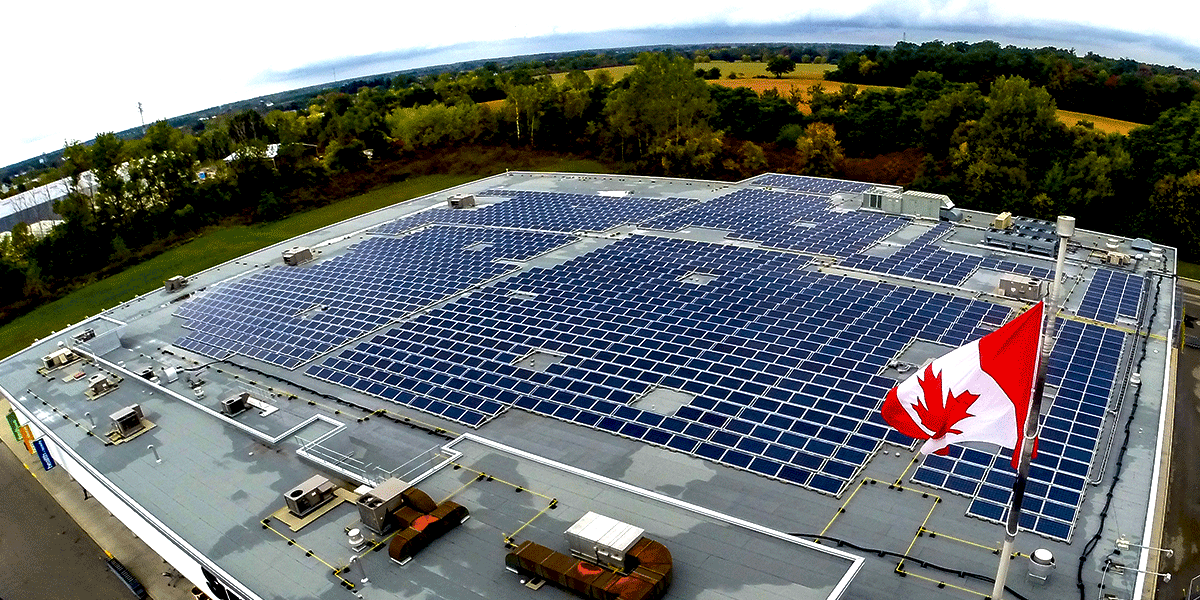
    Investment in rooftop solar systems might be an attractive proposition to meet our energy demands in the future


    Have you ever noticed solar panels mounted on buildings of neighbours’ houses and wondered how they work? Or have you considered installing them at your own home?

    Rooftop solar systems are composed of a few parts. The main component is the solar panel or a series of solar panels. The panels convert the rays from the sun into electricity, which can be stored in batteries or be used directly in the house for things like heating water in the boiler. Interestingly, in the summer, the same rooftop solar panels can also reflect some of the rays of the sun, cooling down the house an average of 2o C.

    There has been an increase in uptake in many countries, and that increase in demand has driven the cost of these systems down and made them more affordable. This growing solar energy industry is also generating new employment opportunities in Canada, with the potential to generate employment for 65,000 people annually in the manufacturing, operation, and maintenance of solar panels.

    In Canada, solar energy currently represents one per cent of the country’s total energy production. However, it is still significant as it removes approx. 1.5 million tonnes of greenhouse gas (GHG) emissions per year from the atmosphere (the equivalent of removing 250,000 cars and trucks off the road each year).

    Canada’s latitude and climatic conditions can pose some challenges to solar power generation in northern regions where there is less solar potential. The farther north you go, the sharper the angle the sun’s rays hit the panels, so the system can’t utilize the sun’s full potential. Canada also does not have a solar energy policy at the federal level which means that prices vary significantly among provinces and territories. Challenges aside, solar panels can represent a sustainable renewable source of energy in the years to come, especially for us in the Niagara region. They show promising potential as an effective climate change mitigation and adaptation plan when utilized for homes and industry.

    The researchers involved with the MEOPAR project are working to raise awareness about the impacts of climate change and how communities can effectively adapt, and increase resilience, to these changes. Follow along with our blog every week (written by researchers Liette Vasseur, Meredith DeCock, Bradley May, Pulkit Garg and Sam Gauthier) to learn more about the project and how you can get involved. You can also visit our website at brocku.ca/unesco-chair or email us at [email protected]


    Categories: MEOPAR-Lincoln Blog, Updates of the Chair

  • 2020 Sustainability Poetry Contest winners announced


    The winning entries for this year’s Sustainability Poetry Contest have been chosen. Hosted annually by Brock University’s United Nations Educational, Scientific and Cultural Organization (UNESCO) Chair, the contest invites Niagara poets to submit original written works, in English or French, that celebrate sustainability. This theme of this year’s contest was the International Year of Plant Health, which drew the most entries the contest has received since it first began in 2015.

    The winners of the contest are typically announced during an annual World Poetry Day Celebration in St. Catharines, but given the evolving COVID-19 pandemic, this year’s event has been postponed. While the event will be rescheduled for a future date, Brock UNESCO Chair Liette Vasseur decided to congratulate the winners in advance.

    “We were so pleased to see so many members of the Niagara community participate in this year’s contest and thoroughly enjoyed reading all of the wonderful entries,” said Vasseur. “While we are disappointed that we couldn’t celebrate World Poetry Day in person this March, we look forward to coming together to share poetry and honour the winners as soon as it is safe to do so.”

    This year’s winning entries include:

    • Un monde tout vert by Brock Concurrent Education student Alexander Emmitt Yap
    • Help the Plants by Harry Byun, Grade 3 student at Kate S. Durdan Public School in Niagara Falls
    • Terra by Elizabeth Grace Tomaino, Grade 12 student at Blessed Trinity Catholic Secondary School
    • The Active Agent by Diana Vasu, English Language and Literature Student at Brock University
    • Adam and Eve Recall the tree by Franco ON Cortese, of Thorold, Ontario

    All of the winners have been contacted and will be notified when a new event date has been selected.

    Vasseur also extended a special thanks to her Brock colleagues who served as this year’s judging panel: Catherine Parayre, Associate Professor and Director of the Centre for Studies in Arts and Culture; Gregory Betts, Professor with the Department of English; Adam Dickinson, Associate Professor of English and award-winning poet; and Neta Gordon, Associate Dean, Undergraduate Student Affairs and Curriculum in the Faculty of Humanities.

    The forthcoming poetry celebration will be free and open to the public. Those interested in attending are encouraged to monitor the UNESCO Chair’s website for updates on when a date is selected. An e-book compilation of all of this year’s entries will also be published on the website in the coming months.

    Categories: Updates of the Chair

  • MEOPAR BLOG: The Importance of Niagara’s Wetlands

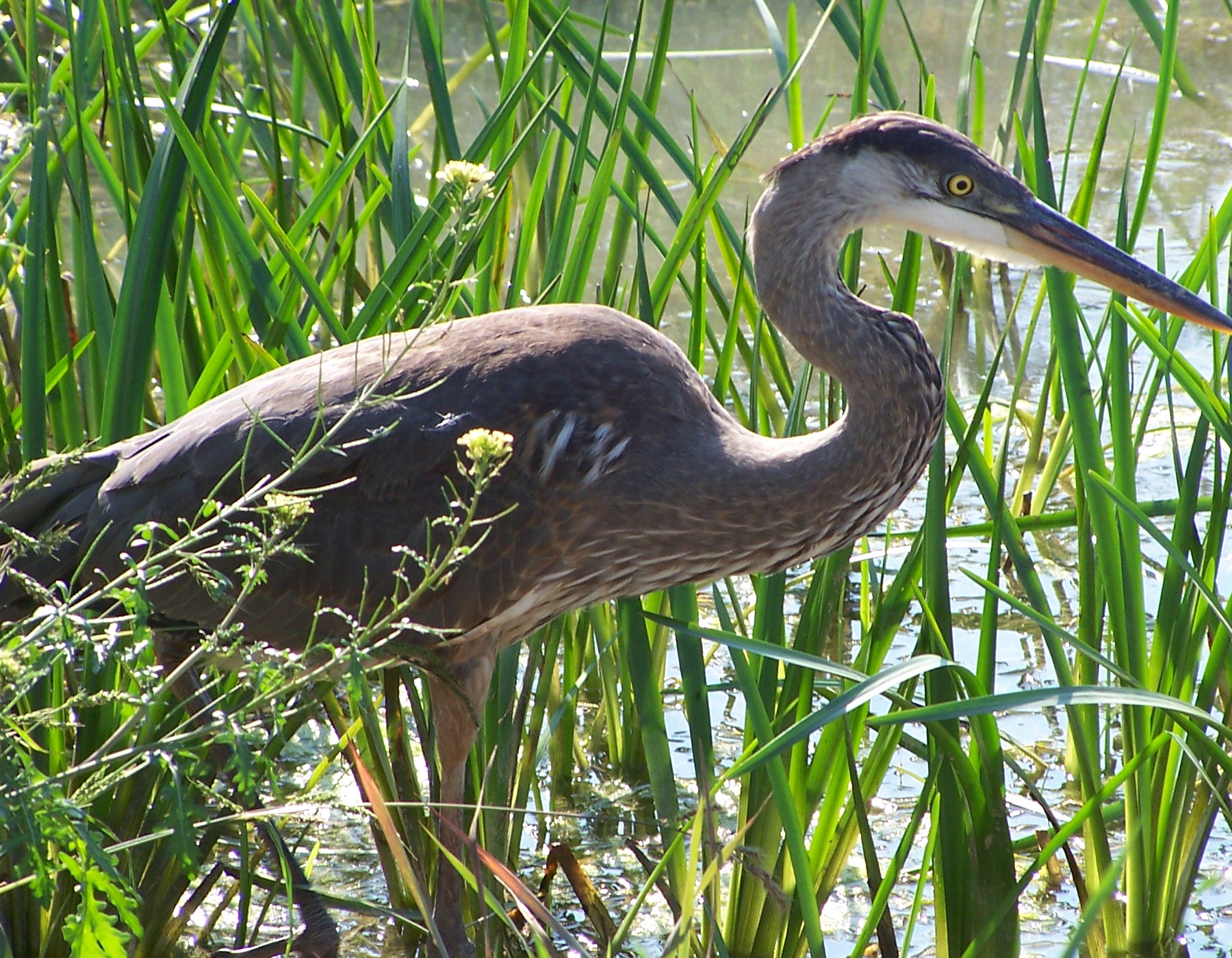
    The Great Blue Heron is one of the many diverse species that rely on Niagara’s wetlands for survival.


    Access to clean, healthy water is critical for life. With more surface water than any other country in the world, Canada is also home to 25 per cent of the world’s wetlands. Canadian wetlands include fresh and saltwater marshes, wooded swamps, bogs, seasonally flooded forest, sloughs and any land area that can hold water long enough to let wetland plants and soils develop.

    Wetland ecosystems are important to the social, economic and ecological health of Canadians, providing a wide range of leisure opportunities including fishing, hunting, boating, and swimming; purifying and filtering nutrients, sediments and other pollutants from surface water; and protecting the country’s drinking water systems.

    Often referred to as vital lifelines of nature, wetlands provide links between water and land habitats, making them one of the world’s most productive and biologically diverse ecosystems.

    Wetlands support over 100,000 freshwater species globally, providing food and habitat for a large variety of species — including humans. Rice — the most important source of nutrition of nearly half of all human-kind — is grown in wetland complexes, for example. Not only that, but most commercial fisheries depend on wetlands for part of their lifecycle, with fish providing almost half of the world’s population with a significant portion of their nutritional protein needs.

    Habitat loss and degradation are recognized as the single greatest threats to plants and animals (biodiversity) in Canada. Despite the important contributions that wetlands provide, over 87 per cent of our global wetlands have been lost, primarily to land conversion, invasive species and climate change. A quarter of all wetlands in Canada are found in Ontario, and Southern Ontario has lost over 90 per cent of its original wetlands due to urbanization (housing and businesses) and, to a lesser degree, agriculture.

    People and nature have co-existed for thousands of years and now, more than ever, people are understanding the role that nature plays in both mental and physical health and well-being. Residents of the Niagara Peninsula are incredibly fortunate as this region has highest diversity of plants and animal species in all of Canada. In fact, the Niagara Region is one of the most biologically diverse life zones in all of North America. Its local climate is moderated by the Great Lakes and the Niagara Escarpment, which supports the existence of plants and animal species that are not found anywhere else in Canada. An example is the ancient white cedars, which can only be found within the Niagara River gorge and along parts of the Niagara Escarpment. Many of these species, such as the endangered Northern Dusky Salamander, are dependent on wetlands for survival. Ensuring the sustainability of wetland ecosystems is therefore of great concern — not only for the species they contain, but also for the well-being of the humans that cohabitate these regions.

    The researchers involved with the MEOPAR project are working to raise awareness about the impacts of climate change and how communities can effectively adapt, and increase resilience, to these changes. Follow along with our blog every week (written by researchers Liette Vasseur, Meredith DeCock, Bradley May, Pulkit Garg and Sam Gauthier). Visit our website at brocku.ca/unesco-chair or email [email protected].


    Categories: MEOPAR-Lincoln Blog, Updates of the Chair

  • Brock professor earns co-editor role with scientific journal Botany

    From The Brock News, Monday, April 20, 2020 | by 

    Biological Sciences Professor Liette Vasseur recently accepted a five-year co-editor appointment with the acclaimed scientific journal Botany, including an option to renew it for an additional five years.

    “It’s certainly an honour to be involved,” says Vasseur, who began working with the journal in 1998. “I first became an associate editor; at the time, it was called the Canadian Journal of Botany.”

    Her current research for Brock University’s Faculty of Mathematics and Science is in plant science.

    “My main focus is on examining how plants adapt to climatic and environmental changes,” says Vasseur. “The research is mainly conducted in rural communities, in vineyards, vegetable farms or pastures. In addition, I continue examining how we can better understand the population ecology and genetic of species at risk in order to restore their populations.”

    Co-editors differ from associate editors by being asked to read submissions from a wider range of topics. Vasseur says she’s looking forward to reading various types of article in her role.

    “As associate editor, you tend to be focused on your expertise only,” she says. “This will allow me to read other subjects and also meet the associate editors.”

    She believes she was selected for the honour likely because she’s “been with the journal for quite a long time and I tend to be rigorous in the reviews. The area of ecology is also a very popular component of the journal.”

    Vasseur also credits her bilingualism as being a strong point for the journal, which is also bilingual. She hopes to help bring an even higher profile to the journal by “having more people submitting quality manuscripts and knowing more people are reading the articles in the journals.”

    The fields of research featured in the journal have a lot to offer.

    “It goes from mycorrhizal inoculation mitigation and plant biomechanics to pollination and microbial interaction and plant species migration,” she says. “In fact, it is a vast field and many new discoveries are found on a regular basis.”

    Mathematics and Science Dean Ejaz Ahmed is “pleased to hear about the appointment and happy to hear a faculty member will be representing the team as co-editor of a well-respected journal. Congratulations to Vasseur for her many years of research and contributions to the field.”

    During the COVID-19 pandemic, many areas of research are challenging to complete, but Vasseur is looking for the roses among the thorns.

    “Studying plants in an agricultural setting means I am especially encouraging people at home to think about starting their own gardens,” she says. “It’s not too complicated and brings joy, as well as education for kids.”

    Categories: Updates of the Chair

  • MEOPAR Blog: What is the MEOPAR – Lincoln project?

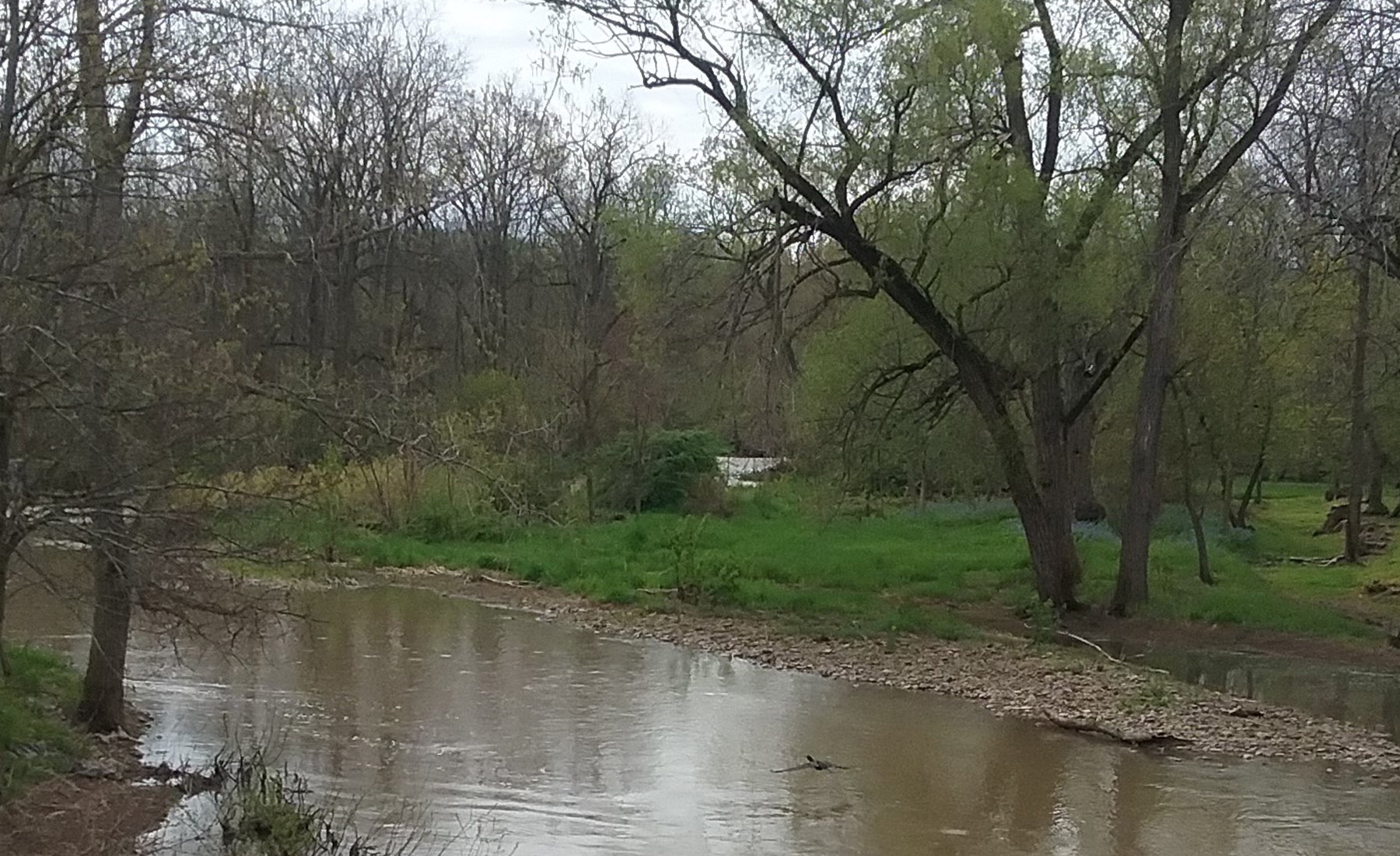
    View from the mouth of Sixteen Mile Creek, looking North towards Lake Ontario.  July 2019.


    November 2018 marked the launch of the new MEOPAR-Lincoln Community Sustainability Project in the Town of Lincoln. Although the study is now approaching the one-year mark, there may still be uncertainty about what it is, and how it will help you and your community deal with the impacts of severe weather and environmental changes.

    That’s why we, the researchers involved in the project, have launched this weekly blog series to educate the public on the work we are doing and the ways they can get involved.

    The study launched in November 2018, one year after two back-to-back storms in Lincoln caused massive flooding and prompted the Town’s first-ever voluntary evacuation order for residents living along the Lake Ontario shoreline.The study is a joint venture between Brock University, The Town of Lincoln and the Marine Environmental Observation Prediction and Response Centre (MEOPAR).

    Based at Dalhousie University in Nova Scotia, MEOPAR is federally funded through the Network of Centres of Excellence and supports interdisciplinary research and development in Canadian universities, provides training to students, and helps mobilize the knowledge gained by research to communities and institutions across Canada.The project in Lincoln is part of a larger one that also includes multiple communities in Quebec. Steve Plante, of the Université du Québec à Rimouski, is the principal investigator in Quebec and Brock University’s Liette Vasseur is the investigator for the Ontario portion. The goal here in Niagara is to support the community of Lincoln as it defines and acts on climate and environmental changes that may affect its development in the future.

    How do we plan to do this? The first step was to create a profile of the town (which will be available online soon), and to interview residents in Lincoln as well as staff at the Town and the Niagara Region. With a better idea of where we’re starting from, the next steps will come this summer and fall, when we will be establishing working groups to examine the specific climate-related issues that people are facing. We will also discuss possible solutions and strategies to reduce the risks associated with changing climate and environmental conditions.

    The project is meant to be very participative and iterative. We hope that everyone can participate and gain a better understanding of the various aspects of climate change, ways to adapt and to be better prepared now, and in the future.Stay tuned to our weekly blog posts that will cover the goals and progress of the study, how to get involved, and broader discussion about climate change and its impacts on not just the Town of Lincoln, but the entire Niagara region.

    Continue to monitor this page to read new blog posts every Tuesday. These posts are written by the MEOPAR Research Team, comprised of Liette Vasseur, Meredith DeCock, Bradley May and Alex Marino. For more information about the project, contact us using this form, or, via email at [email protected]

    Tags: ,
    Categories: MEOPAR-Lincoln Blog, Updates of the Chair

  • Deadline nearing for Sustainability Poetry Contest

    Brock’s UNESCO Chair has declared the theme of its annual Sustainability Poetry Contest to be aligned with the ‘International Year of Indigenous Languages.’ Poems are being accepted from everyone in the Niagara region until Feb. 15.


    There’s still time to enter the 2019 Sustainability Poetry Contest, presented by Brock University’s UNESCO Chair in Community Sustainability, Liette Vasseur.

    Poets are encouraged to submit their English and French poems that relate to this year’s theme, International Year of Indigenous Languages, until Friday, Feb. 15 at 5 p.m.

    The contest is open to all residents of Niagara (inclusive of members of First Nations, Métis and Inuit communities and Six Nations), and will operate in co-operation with Indigenous groups and stakeholders across the region.

    Poems can be submitted online by visiting the UNESCO Chair’s website or via email to [email protected]

    Prizes such as books and gift cards will be awarded in each of four categories: elementary student; high school student; college/university student; and general public.

    Winners will be announced at the UNESCO World Poetry Day celebration at 6:30 p.m. on Friday, March 21 at Mahtay Café in downtown St. Catharines.

    The event is free and open to the public, but registration will be required as space is limited. Register onEventbrite.


    Tags: , , , , ,
    Categories: Updates of the Chair