News

  • Gormenghast: An interview with Director Mike Griffin, and actors Jonah McGrath, Candice Burn and Caroline Coon

    (Source: The Brock Press, Tuesday, November 8, 2016 | by Shannon Parr

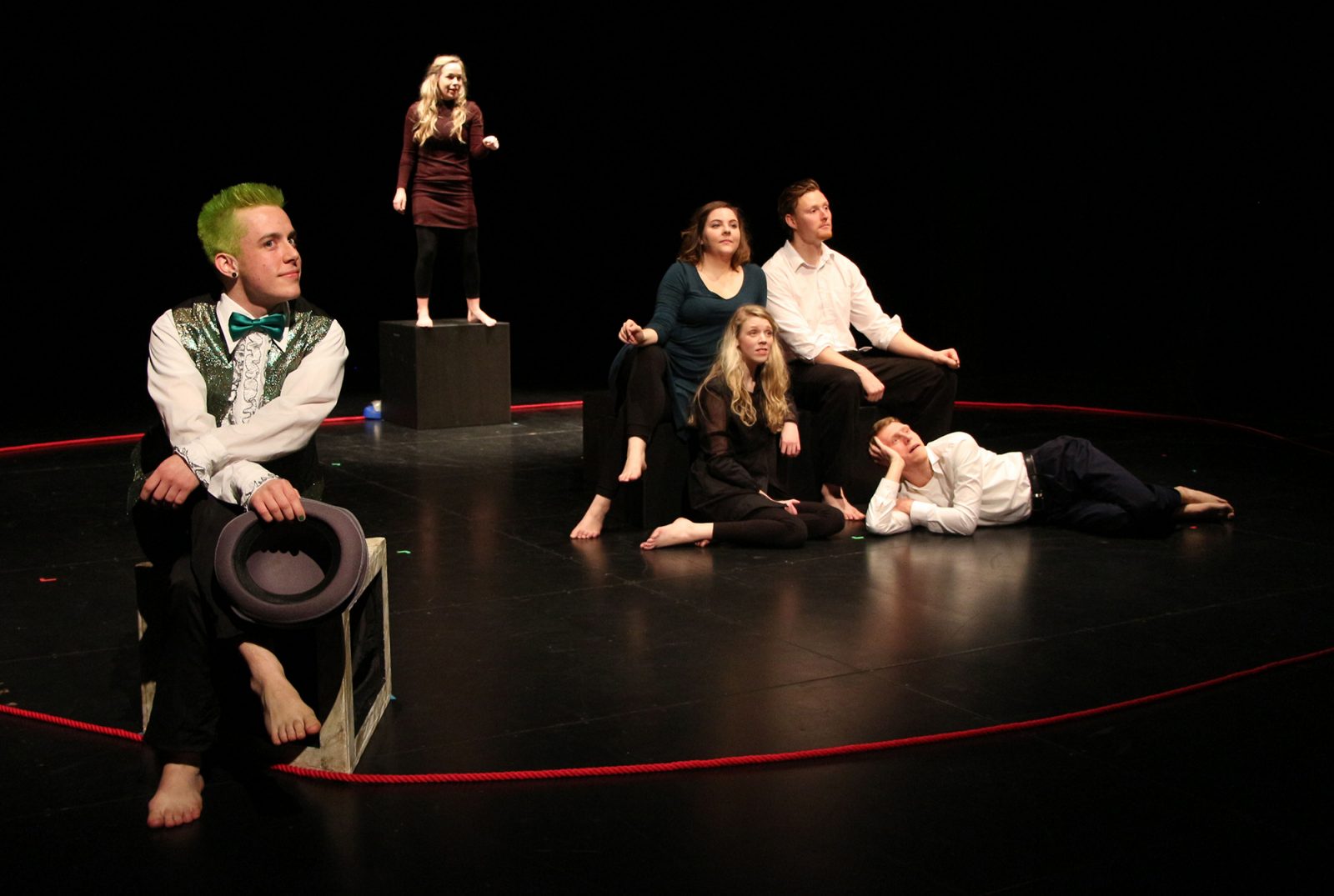
    davidvivianBrock University’s Department of Dramatic Arts is putting on Gormenghast this week, a play deemed “haunting and hilarious” by its director, Professor M. Griffin. I was able to sit down with him and some other members of the cast to ask a few questions about the “grotesque” production.
    Q: You’ve commented that this play is haunting and hilarious — why?

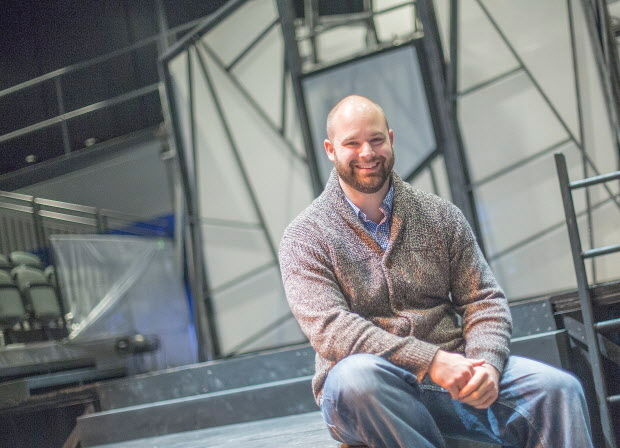
    Mike Griffin; Director

    Griffin: One of the things that this play really brings together is a number of different styles. On one hand you’ve got comedy and some really over the top characters, but within the gothic nature of the play there are a lot of dark things that are happening. There’s a lot of murder and a lot of horrific events. So, we’ve really tried to embrace that, through the blending of these different styles. One of the things we have been researching on is the style of Grand Guignol, which is the theatre of horror. We’ve been looking at the moments of violence in the play and looking at how we can do that stylistically versus realistically, because the show is an elevated style.

    We’re looking at melodrama and physical theatre, and a collage of different styles of theatre. When I say something is elevated or heightened style, I mean that it is something larger than life and bigger than realism, different than how we interact normally today.

    Q: Physical theatre?

    Griffin: Most of my research as a professor is in styles of physical theatre and mask, and so a lot of the work that we’re doing is stemming from my research. There are elements of gesture and ritual, and looking at characters that have bigger physicalities. We’re not necessarily normal humans in this play. Everyone’s quirky and different, so when we started to explore the physical nature of this play we started looking through different inspirations so we can look at what motivates or where this character comes from in a physical basis. Everyone walks and stands in a different way.

    Q: How does this play explore physical theatre?

    Griffin: This play overall has a lot of challenges. It’s a very epic play and it all takes place in a castle, and there are towers and motes, and when we start to add things like cats and ravens then we’ve got to ask the question, ‘how do we do that?’

    Rather than making the choice of actors playing cats or ravens, we decided we wanted to do it with puppets. Our puppets are really fantastic, they’re created by a puppeteer in Calgary named Juanita Dawn and the Long Grass puppet studio.

    This is a distorted, grotesque and strange world. Things are distorted and there are a lot of connections to animals and humans. One of the explorations that we did to find the physical characterization is looking at what your character might be as an animal and evolving a physicalization out of that.

    Q: Why Gormenghast?

    Griffin: For me, it’s been a play that I’ve been interested in for a long time. I wanted to do something a bit darker, a bit stranger, and so when I was deciding on what show I wanted to do with these particular students, I wanted to do something that was going to push them out of their normal bodies, something that was big in characterization, big in physicalization, and so this sort of just came up as the play that I think would really challenge them. I felt it would also give them an opportunity to learn about techniques of physical theatre and different styles of theatre, too.

    It’s really rare to see this kind of a production on stage; professional theatre companies don’t often do this kind of thing. First of all, it’s a large cast. We’ve got a cast of 16 and a lot of theatre companies don’t necessarily have a mandate that would fit the fantasy of this kind of play. What better place to do it than in a university setting? Especially when we look at things like the popular TV — Game of Thrones and all these kind of fantasy worlds that are created. There’s such a huge interest in that. For me, I love Game of Thrones and I love Lord of the Rings, and I love the works of Tim Burton.

     Jonah McGrath as Steerpike

    Q: What is your role in Gormenghast?

    McGrath: I am playing the role of Steerpike. He begins his journey in Gormenghast as a lowly kitchen servant, but he has aspirations to become more. Through his Machiavellian way of approaching conversations and interactions with the various people of Gormenghast, he’s trying to claw his way up the social ladder.

    Q: What was your process like?

    McGrath: We began over the course of the summer. We wouldn’t take the more conventional way of memorizing something and just sitting and reading it; it was recommended that we do it while we’re doing everyday errands, activities like washing the dishes — just repeating lines and getting them into our body. We took a very physical approach in tackling this play. We began with a three day physical workshop; a rigorous experimentation where we played around with many different styles. We looked at our characters through the lenses of different animals and did some cast and ensemble-building exercises.

    Q: For one of your exercises I hear you all had to bring in pictures that you felt related to your character. What did you bring in?

    McGrath: I brought in a picture of fog setting on a dead forest. I did that because I think Steerpike is a new presence in Gormenghast and is very otherworldly. He comes upon this old place that is bound by ritual and is so firmly held within tradition, and he completely changes the atmosphere.

    Q: Do you like your character?

    McGrath: I love my character. He’s so much fun to play. He’s a real challenge because I find there are so many different faces to Steerpike depending on who he’s talking to. He’s got a lot of layers to him. As much as we’re pushing the melodrama of it all, there’s also a very three-dimensional layer which we’re experimenting with in regards to everybody’s character. I’ve discovered a lot about him and I’ve really grown to love him. I’m sure for some people it would be more of a love-to-hate kind of thing, but I love Steerpike. I think he is so sharp and so quick, and ambitious, that it really is unparalleled. In this world I think he has such a way of working people. A master manipulator.

    Q: Why is this play seen as grotesque and haunting?

    McGrath: In a very goosebumps kind of way, there are a lot of unsettling moments. We’re trying to gross you out a little bit. It’s not completely different than horror film or imagery; we really draw on that in the show. We want people to, at times, feel uncomfortable.

    In regards to the physicality, everybody’s character is over the top and unrecognizable if we’re looking at them in regards to our world. In Gormenghast, everything is huge, everything is over the top and anything goes.

    Candice Burn and Caroline Coon as twins Cora and Clarice

    Q: What are your roles in the play?

    Burn: I play Cora and she’s one of the twins of Sepulchrave. She and her sister have been isolated from everyone. Our back story is that they were actually sick with a disease and they were separated so they would’t cause each other to become more sick. Then, when it seemed all hope was lost, they brought them together again and our characters eventually got better. That’s why we always stick together. We feel like we are one body. Our movement reflects that; our thought process allows us to move to one side and then the other, in synchronicity.

    Coon: I play Clarice. We are the younger twin sisters of Sepulchrave, who is the Earl of Gormenghast. They’ve been isolated and so they’ve always felt like they were on the outskirts of everything. In the play, you’re going to see them using Steerpike to try and climb to power, and regain the place they feel they should be. While they’re trying to use Steerpike, Steerpike is also trying to use them.

    Q: You move in unison – what was that process like?

    Coon: Every head move, every look and every step is choreographed. That was really difficult — it took a lot of going over to make sure we were on the same page for each movement we made. We can’t even turn our head without the other one doing it.

    Burn: It’s a very collaborative process. We went through our lines with what our intentions were, and how we found each other moving naturally when we said our lines. We fed off of each other and choreographed those movements. In perspective of who else is in the scene, it’s very heavily influenced by the blocking of other people. We follow Steerpike in many scenes, which really shows how he manipulates us and has that control over us.

    Coon: We practiced a lot in front of the mirror to get it right, and to make sure that we were walking symmetrically.

    Burn: It took us a while to figure out our walk. We used those intensive and research days on what kind of animal physicality we see in our characters, and we found a combination of bird and cat movements. We definitely use that in our head movements — the characters are even described as bird brains. People perceive them to be mad or not all there.

    Q: So, who is really using who? Do you feel that your characters are aware of what’s going on?

    Burn: I don’t think they feel like they’re using Steerpike. I think they actually trust him because he made such a large gesture towards them and no one else has. The characters are almost in shock — they’re surprised that someone wants to help them at all. He gains their trust and gives them all these promises, and they don’t have anyone else other than each other. The twins don’t manipulate Steerpike the way he does to them.

    Coon: I looked at the analogy of the frog in boiling water. Steerpike as a character is very good at manipulating people and I think they brought their walls down for him because no one has reached out to them in so long or shown them any type of respect. They really latch onto that. He uses their trust and molds them into what he needs them to be.

    Q: Why do you feel the play is seen as grotesque?

    Coon: There are physicalities and events that happen on stage that are unsettling. There is definitely some gore in this show. There are some props and moments that make even us uncomfortable.

    Burn: Even the soundtrack of the show. There are things that, every time in rehearsal, we just can’t listen to. It wakes up your senses and makes you go to an uncomfortable place. That’s what makes it grotesque, in a way.

    Coon: The world is so out of anything in this realm. We use the term “Gormenghasty”. The end result is stuff that you’ve never seen before, which is why we’re really excited about performing this.

    Gormenghast is being performed at the Marilyn I. Walker Theatre at the Marilyn I. Walker School of Fine and Performing Arts, 15 Artists’ Common, St. Catharines. The performances take place on November 11, 12, 18 and 19 at 7:30 p.m., Nov. 13 at 2:00 p.m. and Nov. 18 at 11:30 p.m.

    Tags: , , , , ,
    Categories: In the Media, News

  • Plan your future now!

    Ontario Universities’ Fair is September 23-25, 2016

    Plan your future now! If you’re thinking about attending Brock University and any of the four programs of the Marilyn I. Walker School of Fine and Performing Arts, don’t miss the Ontario Universities’ Fair!

    The OUF is September 23-25, 2016, at the Metro Toronto Convention Centre and admission is free.

    You can talk personally with students, professors and senior university reps, get answers about programs, admission requirements, student life and much more. Don’t miss out on the largest educational fair in Canada!

    https://www.facebook.com/events/187862678234277/

    http://www.ouf.ca/

    Tags: ,
    Categories: Future students, News

  • Reflective Practice & Book Launch

    Join us to celebrate the launch of three new books that focus on the role of reflection for professional development, research and teaching. Meet co-editors Joe Norris, Dramatic Arts, Brock University, Rick Sawyer, Education, Washington State University, Vancouver and Hilary Brown, Faculty of Education, Brock University for discussion and Q & A.

    Registration is now closed

    Questions? [email protected] or 905.688.5550 x3933

    Open to the Brock University community.

    Reflective Practice with Colleagues and Students: Collaborative Approaches
    Tuesday October 18
    12:00 pm-1:00 pm
    TH 253

    Tags: , , , ,
    Categories: Announcements, Faculty & Instructors, News

  • The Ash Mouth Man leaves audience with a bitter reality in comedic form

    Stolen Theatre Collective’s Ash Mouth Man – stolentheatrecollective.ca

    (Source: The Brock Press, Tuesday, September 20, 2016 | by Kat Powell)

    The Ash Mouth Man, a brand new original play written by Brock Dramatic Arts (DART) faculty and Stolen Theatre Collective’s (STC) Gillian Raby and Danielle Wilson, opened Thursday September 15 at the Marilyn I. Walker Theatre in partnership with the FirstOntario Performing Arts Centre. Prior to any acting, those attending are participants in the experience of the show; the Ash Mouth Man brings audiences into an interactive and “up close and personal” space; audience members are asked to contribute names, landmarks, and interact with objects from the start. The show, inspired by the short story Dead Sea Fruits by Australian author Kaaron Warren, takes audiences back to the 1950s where we find Lorna (played by Danielle Wilson), a progressive female dentist who works almost exclusively on Pretty Girl Street ‘where the girls don’t eat’.

    Throughout the show, we see Lorna undergo somewhat of a transformation. Her equal-parts blissful and frustrating marriage to Harry (played by STC co-founder and co-artistic director Fede Holten) acts as somewhat of a catalyst to her vulnerability. We observe as Lorna struggles with self-doubt, trust and her worth. We watch as Lorna changes from someone who takes pity on the ‘Pretty Girls’ (played by Colin B. Anthes and Sean Aileen McLelland) whose teeth are falling out from malnourishment and have delusional dreams of a mythical (or so we think) figure called the Ash Mouth Man, to one who puts herself on the same level as them.

    One can definitely appreciate the production’s set design and interactive and captivating style, and applaud the fairly seamless application of the dark comedic style to somewhat of a heavy underlying topic. This show without a doubt leaves audiences with something to think about. Nearing the end of the show, audiences are left with a ‘story’ to bring home to their families and their friends. The Ash Mouth Man is not just a show, but a conversation starter.

    The Ash Mouth Man is currently playing at the Marilyn I. Walker Theatre at the Marilyn I. Walker School of Fine and Performing Arts until September 25. Tickets are available through the FirstOntario Performing Arts Centre Box Office online, in person, or by phone at (905) 688-0722.


    Tags: , , , , ,
    Categories: Faculty & Instructors, In the Media, News

  • Stolen Theatre back on the scene

    (Source: Niagara Falls Review, Wednesday, September 14, 2016 | by John Law. Photo caption: Danielle Wilson co-wrote and stars in Stolen Theatre Collective’s The Ash Mouth Man, opening Sept. 15. PHOTO: John Law /Postmedia network)

    The small, immersive company is back Sept. 15 with a brand new play written by Wilson and director Gyllian Raby, the “film noir comedy” The Ash Mouth Man. Nine shows are scheduled for the Marilyn I. Walker School of Fine & Performing Arts, and as always, things will get intimate. At just 48 seats per performance, it’ll feel like an up close and personal play.

    It’s a style Wilson loves – the company’s previous show, Harold Pinter’s The Dumb Waiter, was limited to just 28 seats.

    “We really enjoy playing with the atmosphere of a piece, and giving the audience a different experience,” she says. “It’s hard to disengage when you’re that (close). It gives you a much more visceral experience when you’re that close.”

    Wilson, a teacher with Brock University’s Department of Dramatic Arts, and husband Fede Holten – a playwright and Niagara winemaker – formed Stolen Theatre Collective in 2007 as a way to do original and unique material in different ways. They managed three shows in four years before tight schedules forced the four-year layoff.

    “We were super happy to be back,” says Wilson. “We had great attendance for the show (and) got a lot of good press. A lot of people didn’t know who we were, and I felt we put (ourselves) back in people’s minds.
    “We’re all so busy, we all have other jobs and things to do.”

    The Ash Mouth Man is a blending of two short stories Wilson and Raby wrote separately. Once combined, it formed an odd, comical tale about a female dentist named Lorna in the ’50s – Canada’s 31st female dentist, to be precise – who works in a ward for people with disorders. The patients share an urban legend about a figure named the ‘Ash Mouth Man,’ whose kiss will make everything taste like ashes afterwards.

    “It took us awhile to figure out, what is the genre? We’re dabbling in aspects of film noir but there’s also a lightness to it.”

    The show stars Walker, Holten, Colin Bruce Anthes and Sean McClelland.

    Opening a regular show is hard enough – for Wilson, staging and starring in her own play is next level stress.

    “It definitely feels like a bigger risk,” she says. “We’re putting our own work out there that nobody’s seen before, and we don’t know how it’s going to be received.”

    [email protected]

    • WHAT: The Ash Mouth Man
    • WHO: Stolen Theatre Collective
    • WHERE: Marilyn I. Walker Theatre; 15 Artists’ Common; St. Catharines
    • WHEN: Sept. 15 to 25
    • TICKETS: $20; student/seniors/arts worker $15  www.firstontariopac.ca

    Tags: , , , , ,
    Categories: Faculty & Instructors, In the Media, News

  • Stolen Theatre Collective and Brock University’s Department of Dramatic Arts present The Ash Mouth Man

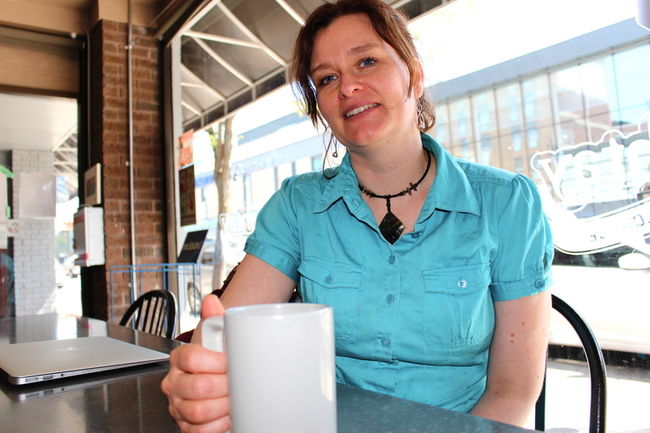
    16r10_the_ash_mouth_manFor those who enjoy comedy with a dark undertow, plan to join us for the world premiere of The Ash Mouth Man, an original theatre work to be held in the Marilyn I. Walker Theatre at 15 Artists’ Common.
    Meet Lorna, who in the ‘50’s, is the 31st lady dentist in Canada. A bit of a social misfit, Lorna works on Pretty Girl Street, treating people with all kinds of disorders. Gradually, she discovers the dark forces lurking beneath the too perfect fantasy of her life – where even the Royal Mail Canada Man might carry a threat. She survives a sex scandal, discovers unusual and groundbreaking therapies, and with some help from her friends in the audience, confronts the timeless mythic figure of the Ash Mouth Man…Betty Crocker’s smile has never been so frightening.

    Inspired by Australian short story writer Kaaron Warren, director Gyllian Raby, and actor Danielle Wilson created the script, with the assistance of Wilson’s and Federico Holten-Andersen’s Stolen Theatre Collective company. The acting ensemble, led by Wilson, features Federico Holten-Andersen, Colin Bruce Anthes and Sean McClelland. Original music is by Max Holten-Andersen, set and lighting design is by Nigel Scott, costume design is by Genevieve Habib and stage management is by Dramatic Arts student Kaitlyn Séguin.

    The Marilyn I. Walker Theatre will be transformed into an intimate theatre space, which allows seating for 48 people per performance, running approximately 70 minutes in length.

    Danielle Wilson and Gyllian Raby are grateful for the community support for Stolen Theatre Collective’s endeavor. The City of St. Catharines Cultural Investment, the Walker Cultural Leader Foundation, The Match of Minds program and the Humanities Research Institute match the investment of the company members in creating original work out of our city. Wilson states, “Gyllian and I are very excited to be collaborating on an original Canadian piece after our production of Twelfth Night which we co-directed in 2013.”

    Presented by Stolen Theatre Collective and Brock University Department of Dramatic Arts
    September 15-18 & 23-25, 2016
    Evening shows (Thurs., Fri. and Sat.) at 8 p.m. (no Thurs., Sept. 22nd show); Sat. & Sun. matinees at 2 p.m.
    Marilyn I. Walker Theatre, Marilyn I. Walker School of Fine and Performing Arts, 15 Artists’ Common, St. Catharines
    Limited seating, only 48 seats available per performance with a total of nine performances
    Tickets: $20† adult/senior; $15† student/art worker; $5 eyeGo program
    †Applicable fees and taxes are extra.
    Order tickets from the FirstOntario Performing Arts Centre Box Office: 905.688.0722 or Toll Free: 1.855.515.0722; online: firstontariopac.ca

    Limited paid parking is available on-site, however, there are more than 1,000 spots available in nearby parking garages, surface lots and on city streets within a five-minute walk to our address at 15 Artists’ Common. Visit www.stcatharines.ca/en/livein/ParkingLotsGarages.asp for a list of parking locations.

    For interviews please contact: 
Marie Balsom, Communications Coordinator, Marilyn I. Walker School of Fine and Performing Arts
 T: 905-688-5550, ext. 4765 | E: [email protected]  | W: www.brocku.ca/miwsfpa

    For all other inquiries, please contact: Danielle Wilson 

    Tags: , , ,
    Categories: Events, Media Releases, News, Plays

  • Brock students on the Royal Botanical Garden stage

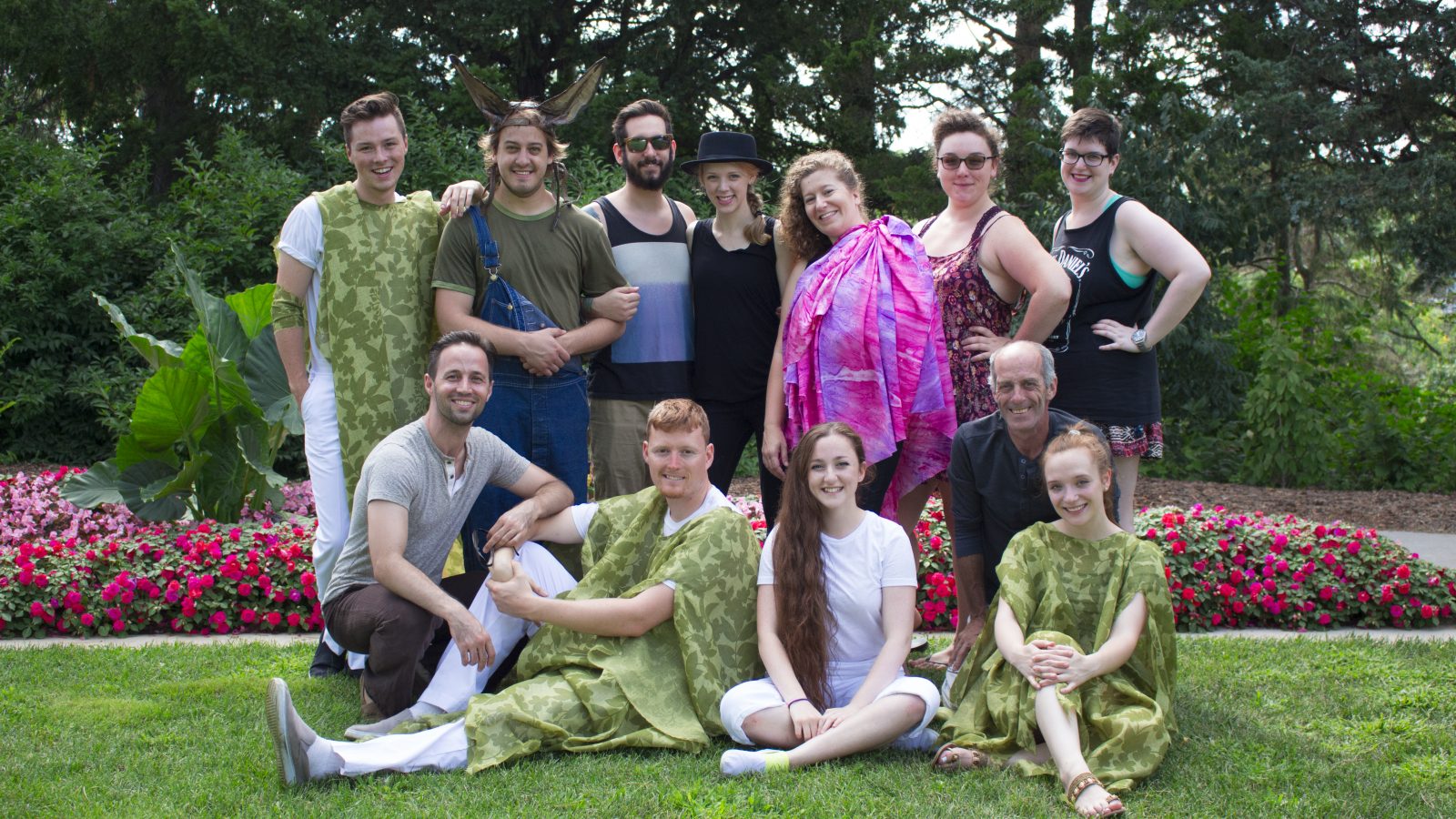
    (Source: The Brock NewsMONDAY, AUGUST 15, 2016 | by . Photo: “Performers in Midsummer Night’s Dream playing at the Royal Botanical Gardens in Hamilton. Back left: John Wamsley, Zach Parsons, Jesse Horvath, Sean McLelland, Caitlin Popek, Nicole James and Dana Morin. Front left: Trevor Copp, Sean Rintoul, Claudia Spadafora, Michael Hannigan and Alma Sarai.”)

    A troupe of Brock University students is putting their dramatic arts talents to work this summer.

    Tottering Biped Theatre’s production of Shakespeare’s “A Midsummer Night’s Dream” – on now at the Royal Botanical Gardens in Hamilton – features a number of familiar Brock faces.

    The production, held at the newly opened David Braley and Nancy Gordon Rock Garden, has been three years in the making. Director and Brock drama instructor Todd Copp says his goal is to offer local opportunities to recent theatre grads.

    “We’ve noticed the difficulty emerging artists have here in getting off the ground and we lose artistic talent to Toronto and further cities every year as a result,” he says on the production’s Facebook page. “In casting this piece, we searched this area’s post secondary theatre programs for the most talented senior students/recent graduates – and offered them paid theatre work. It’s unprecedented in our area.”

    The production links young actors with more experienced ones, teaching the next generation of actors that they don’t need to move away to pursue their passion.

    A number of recent and current Brock drama students are involved on the stage and behind the scenes including Sean McClelland, Sean Rintoul, Caitlin Popek, Nicole James and Dana Morin.

    Nicole James, who is pursuing her BA in dramatic arts with a concentration in production and design, is the production’s stage manager and embraces the challenge of managing a nine-person cast. She works with assistant stage manager and fellow Brock student, Dana Morin.

    James credits Carolyn Mackenzie’s stage management course for giving her the skills she needs for the job.

    “I have the privilege to work professionally in the theatre,” she says. “It’s so obvious that the instructors at the Marilyn I. Walker School of Fine and Performing Arts Dramatic Arts department actually care and are invested in the education of every single student.”

    Copp was an instructor with Brock’s Dramatic Arts program in 2016 and is the artistic director of Burlington’s Tottering Biped Theatre. Founded in 2009, the company is inspired by social justice. They have toured regionally and internationally.

    “A Midsummer Night’s Dream” runs August 10-14 and 17-21 at RBG Rock Garden 1185 York Blvd, Hamilton. Performances start at 7 p.m.; tickets are available at http://tickets.rbg.ca/PEO/default.asp.

    Tags: , , , , , , , , , , , , , , , , , ,
    Categories: Alumni, Current Students, In the Media, News

  • Brock research team studies the evolution of circus performers

    bromance-220(Source: The Brock NewsTuesday, July 12, 2016 | by )

    Flying trapeze artists, elephants standing on one foot while balancing a ball, jugglers, sword swallowers, bearded ladies: these are among the images of the traditional travelling circus.

    The circus is still going strong today and has gone mainstream. Think Cirque du Soleil, the Montreal-based entertainment company that has become a worldwide phenomenon.

    “This positive news for circus companies, artists and audiences with a taste for thrilling entertainment also raises questions about circuses’ historic status as site for the celebration and exploitation of differences, from stagings of exceptional performing bodies to the display of ‘freakery,’” says Assistant Professor of Dramatic Arts Karen Fricker.

    Fricker is part of an international team of academics, artists and producers researching the relationship of contemporary circus to the widespread practice in traditional circus of featuring people with unusual physical features, such as Siamese twins, women who grow beards, and in extreme cases, people living with a disease or condition that exaggerates certain body parts.

    The team is interested in the ways in which today’s circus artists relate to this “freak show” tradition. Fricker is one of three leaders of the project, called “Circus and its Others,” along with Charles Batson of Union College, in New York and L. Patrick Leroux of Concordia University.

    This month, they are co-organizing a conference about this subject as part of the Montreal Complètement Cirque Festival, with the assistance of two Brock graduate students, Hayley Rose Malouin and Taylor Zajdlik.

    “There’s a large history of profound racism, sexism and ableism that I don’t think is present in contemporary circus in the same way, mostly because contemporary ideologies are very transformed,” says Malouin. “However, it’s interesting to see how some of those elements of sideshow ‘freakishness’ and how we view those born bodies finds its way into contemporary circus.”

    Fricker explains that circuses are, in essence, “variety shows” that feature highly-trained people with extraordinary skills performing daring, risky and spectacular feats.

    These acts are very physical; as a result, a lot of attention is focused on performers’ bodies. In traditional circuses, this focus extended to viewing bodies that were born unusual or made different from diseases or other factors beyond someone’s control.

    But societies eventually became more aware of the struggles and rights of people living with physical challenges, and also increasingly became more sensitive to animal exploitation. For example, after 145 years of featuring elephants in its circus acts, Ringling Bros. and Barnum & Bailey announced that it has plans to retire its elephant herd by 2018.

    The creation of Cirque du Soleil was a turning point in circus history. In the early 1980s, a troupe “juggled, danced, breathed fire and played music” for audiences in Baie-Saint-Paul near Quebec City, says the group’s website.

    One of the performers, Guy Laliberté, took the show on the road in 1984 to celebrate the 450th anniversary of Jacques Cartier’s discovery of Canada.

    “The show was a striking, dramatic mix of circus arts (without animals) and street performance that featured wild, outrageous costumes, magical lighting, and original music,” according to the website. Notably, one of the key features that distinguishes Cirque du Soleil from traditional circus is that it does not include animal acts, and rarely puts born difference on display in its shows.

    Zajdlik says contemporary circuses such as Soleil largely feature “achieved bodies,” bodies “transformed into these powerful vessels that become circus performers” through intensive physical training.

    “Are we gazing upon these spectacular bodies because they represent something that we nostalgically long for in what the freak once gave us?” says Zajdlik. “From aerial feats to contortions, these bodies are doing extraordinary things that you would not normally get to see. In a way, that kind-of represents what the ‘freak’ once represented for circus.”

    The researchers note that there are circuses that feature unusual bodies, but in a very different way than in the past.

    The keynote speaker at this month’s conference is Jennifer Miller, who founded Circus Amok in New York City and is also a professor at the Pratt Institute in Brooklyn.

    Miller has had a beard since her early 20s. She is known as the “Bearded Lady,” who uses her performances to “ask people who look at her to think critically about what they understand as normatively female or male, masculine or feminine,” says Fricker.

    “She challenges those boundaries,” says Fricker. “We’re in the age of gender fluidity. I think she speaks from, and to that, culture in an interesting way.”

    The Circus and its Others conference was held in Montreal July 15 to 17, 2016.

    Tags: , , , , ,
    Categories: Alumni, Current Students, Faculty & Instructors, In the Media, News

  • Dramatic Arts alumna feature documentary to be broadcast July 09

    (Source: The Brock NewsWednesday, June 15, 2016 | by )

    It was the people and their stories that captivated Nicolina Lanni. What they lost. What they found. How they connected.

    In her first feature documentary film Lost & Found, the Brock University grad shares the stories of Japanese people who survived a devastating tsunami and the beachcombers half a world away who helped pick up the pieces.

    “It’s about people and very personal, human stories,” says Lanni (BA ’05). “It was so clearly such a beautiful story and once it was in front of us, there was no way we were not going to tell it.”

    An estimated 25-million tonnes of wreckage from Japan’s 2011 earthquake and tsunami is drifting across the Pacific Ocean, often washing up on North America’s shores. Filming took Lanni and her creative partner John Choi to Alaska, Washington, British Columbia and Japan.

    Lanni says the debris is more than just trash, it’s remnants of the lives of the 20,000 people lost to the waves and the loved ones they left behind.

    The film follows the stories of beachcombers, scientists and government officials coming together to collect all that was lost, and reunite the items with their rightful owners in Japan.

    “We didn’t really focus on the disaster or the aftermath,” Lanni says. “Our film really focuses on the specific stories of friendship and these really unlikely relationships forged in the aftermath.”

    One of the friendships the film explores is between Alaskans David and Yumi Baxter and a woman they met in Japan after finding a yellow buoy wash up in Alaska. Sakiko Miura lost everything in the tsunami including the restaurant she ran with her late husband Keigo.

    The Baxters reunited Miura with a buoy with the character for Kei (short for Keigo) painted on it, which used to hang outside of her restaurant in a coastal town called Minamisanriku.

    “The fact that the Kei buoy came back makes me think that my husband’s soul is in it,” Miura says in the documentary.

    The meaning of objects and our connection to them is explored throughout Lost & Found.

    The filmmakers made links that will last a lifetime, Choi says.

    “The people in our film are all incredibly close to us still. It’s a family,” he says. “Lost & Found is really about taking that leap of faith and the unlikeliness of people coming together from around the world and connecting.”

    Lanni says the work she did while making the film is drawn from her experiences at Brock, where she studied theatre and women’s studies.

    It was at Brock that she started interviewing people and storytelling as part of a form of verbatim theatre called Collective Creation – when a group comes together, writes, collaborates and performs. She did it in Africa after graduation.

    “We would go into a town, talk to people and create a show and perform it for the community,” she says.

    After working in journalism for a time, Lanni switched to filmmaking and works as a director and producer in film and broadcast television including programming for The History Channel, Discovery Channel and Shaw Media.

    Lost & Found was commissioned by Shaw Communications alongside NHK Enterprises in Japan and SBS in Australia.

    Lanni says they also received the Hot Docs Shaw Completion Fund and the film had its theatrical premier at the Hot Docs Bloor Cinema in March for the fifth anniversary of the tsunami.

    For more information on the film and where to see it visit www.lostandfoundthefilm.ca. Global is showing the movie July 9 at 9 p.m.

    Lanni and Choi, who have a company called Frank Films, are currently working on a documentary about sinkholes.

    Tags: , , , ,
    Categories: Alumni, In the Media, News

  • Dramatic Arts graduating student writes about her experiences at Brock University

    goodnight-desdemona60ed07-1600x900crHello future DART students (and those still deciding):

    My name is Elizabeth and I am a graduating student from the Dramatic Arts program at Brock University.  I know you are all facing the important decision of where to go for school next year and wanted to write you all and let you know a bit about why I chose Brock, and the amazing opportunities I’ve had as a result.

    After my invitational experience at Brock I knew it was the place for me.  I left the invitational convinced that this would be a program in which I would be valued and appreciated for what I had to offer as an individual.  I also got the feeling that this would be a program focused on building community rather than competition.  I was right; DART is filled with some of the most supportive people I have ever worked with — professors and peers alike.

    The ability to get a truly well-rounded theatrical education was one of the most important factors in my decision.  Although I was in the performance concentration and therefore had plenty of studio classes and performance opportunities, I benefitted the most from being exposed to all aspects of theatrical production and study.  Crew courses gave me an appreciation for those who work backstage, as well as valuable skills that performers may need when starting their own small companies; critical theory and theatre history courses gave me a strong foundation of theatrical knowledge that I continuously draw on; directing and devising courses allowed my to develop who I want to be as an artist; and a theatre criticism course with Prof. Karen Fricker — who is also the Toronto Star’s new theatre critic — allowed me to discover a passion I was able to further as a writer and editor for dartcritcs.com.  That passion for theatre criticism began my interests in writing and dramaturgy, interests that I am now pursuing in graduate studies at Harvard University and the American Repertory Theater Institute — indicative, I believe, of the quality of education and scope of opportunities DART offers its students.

    If you have a theatre-related interest you want to explore, Brock is the place to do it.  In my time here I have acted in numerous MainStage and student-run productions, directed a one act play and assistant directed last year’s Fall MainStage, coordinated five seasons of the GimmeTwo short scene festival, attended classes at the Stratford and Shaw festivals, learned technical skills ranging from designing lighting plots to building sets, been employed by the university as a stage hand and as a theatre critic, and am currently working as a summer intern at the Shaw Festival. (I write a blog for DART students about this experience which you can find at shawandtell.wordpress.com).  I believe that this program offers students the support and resources to achieve and experience anything they desire.

    DART is a program that allows you to pursue your interests with instructors who not only are some of the best in the business, but who respect and build lasting friendships with their students.  This is a program to explore and gain confidence in new interests in a safe and encouraging environment.  Even better, that environment is now gorgeous and better equipped than ever thanks to the recent move to the brand new arts building.

    I hope that you seriously consider the Dramatic Arts program at Brock.  This program made all the difference in allowing me to become a confident and competent artist, and I know that my future is brighter because of the decision I made when I was in your place.  Please feel free to email me with any questions you may have about the program, I will be so happy to hear from you and will help in any way I can.  Hope to see you on (or behind) the DART stage in the coming years!

    Best of luck,

    Elizabeth Amos
    DART Class of 2016

    Tags: , , , , , , ,
    Categories: Alumni, Current Students, Future students, News