Contributors: Mike Hallé and Liette Vasseur
The following is a blog related to an ongoing Urban biodiversity project.
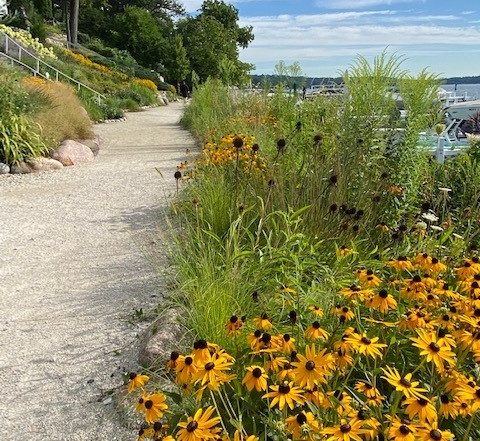
When we think about climate change, biodiversity loss, and the daunting scale of ecological crisis, it is easy to feel powerless. What difference could one backyard possibly make? Yet all across North America, quiet revolutions are happening in the very places we often overlook: our gardens, our lawns, the patches of green just outside our doors. The Geneva Lake Conservancy (GLC), based in Wisconsin, offers a compelling reminder that small, local choices ripple outward into powerful collective change. Their Conservation@Home program demonstrates how ordinary homeowners—by planting native species, removing invasives, and creating pollinator-friendly spaces—can turn fragmented yards into thriving ecological corridors. What begins with a single milkweed plant or a small wildflower patch becomes part of a much larger story of resilience.
The strength of the Geneva Lake Conservancy model lies in its simplicity and accessibility. Homeowners who participate are not expected to overhaul their properties overnight or master complex ecological science. Instead, they are invited into a relationship with their land that is gradual, tangible, and affirming. The Conservancy provides guidance, celebrates achievements, and most importantly, recognizes each participating household as a valued steward in a wider community of care.
Through this approach, fragmented yards and gardens begin to weave together. A row of native coneflowers in one backyard connects with a neighbor’s milkweed patch, which links to another’s rain garden. Over time, the mosaic expands—forming living corridors that support bees, butterflies, birds, and countless other species whose survival depends on connected habitat.
One of the most compelling elements of the program is its ability to turn isolation into community. Homeowners who once felt that their efforts were “just a drop in the bucket” discover that they are part of a movement. The recognition they receive—whether through signage, newsletters, or community gatherings—provides a sense of belonging and accountability. Their gardens are not only beautiful; they are meaningful contributions to a larger ecological story.
The measurable outcomes are striking. Participating properties show increases in pollinator presence, reduced chemical use, improved soil health, and greater water retention. More importantly, the human outcomes are equally significant. Families begin to see their yards not as isolated parcels but as living classrooms. Children learn where butterflies come from. Neighbors share seeds and stories. A sense of pride and stewardship grows alongside the plants.
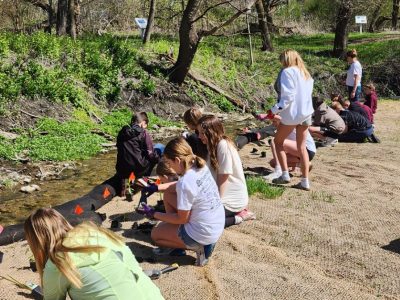
Why does this matter for us here in Niagara? Because our region faces many of the same challenges and opportunities. Like Wisconsin, we have a patchwork of suburban neighborhoods, small towns, and rural edges where biodiversity has been fragmented by development, lawns, and invasive species. At the same time, Niagara is rich in ecological history—forests, wetlands, and pollinator pathways that once thrived here. If we can empower homeowners at the residential scale, we can begin to stitch those ecological threads back together.
Imagine a Niagara street where five or six neighbors each plant a handful of native species. Over time, their front yards and backyards become stepping stones for pollinators. A corridor begins to form—not designed by governments or institutions, but grown by citizens. Schools could join in by planting butterfly gardens. Faith communities could dedicate small plots of land to native plantings. Municipalities could provide incentives for removing invasives. In this way, the Geneva Lake model offers not only inspiration but also a practical roadmap for how Niagara might adapt.
Equally important is the mindset shift it fosters. Conservation@Home reframes sustainability as something that begins with what is most familiar—our own soil, our own choices, our own communities. It reminds us that ecological restoration is not an abstract project for specialists; it is a living practice accessible to everyone.
The Geneva Lake Conservancy teaches us that sustainability doesn’t begin in institutions—it begins at home. Every native plant we choose, every patch of lawn we transform, every neighbor we invite into the journey adds to a shared legacy of resilience. For Niagara, the opportunity is clear: by adapting the lessons of Conservation@Home, we can cultivate not just gardens but networks of belonging.
The next step is simple. Start small. Plant one milkweed. Add one rain barrel. Talk to one neighbor. Each act is a thread in the larger tapestry of renewal. Together, we can create a Niagara where biodiversity thrives—and where the land remembers us, too.
