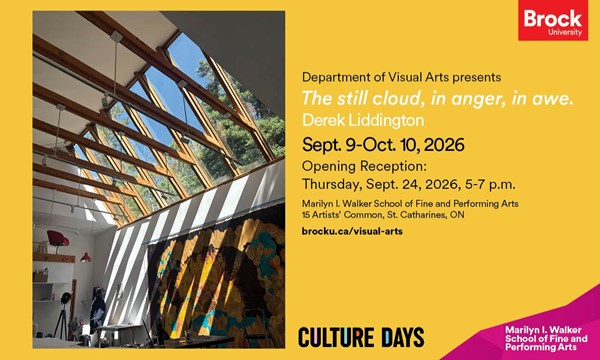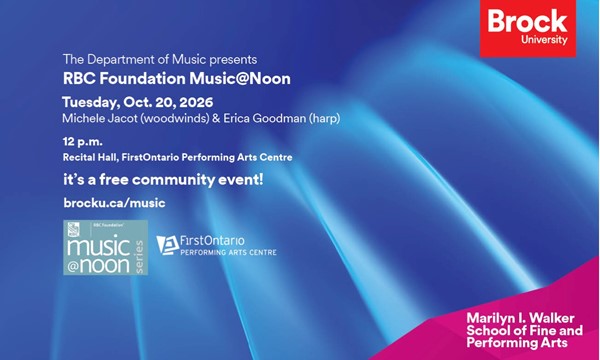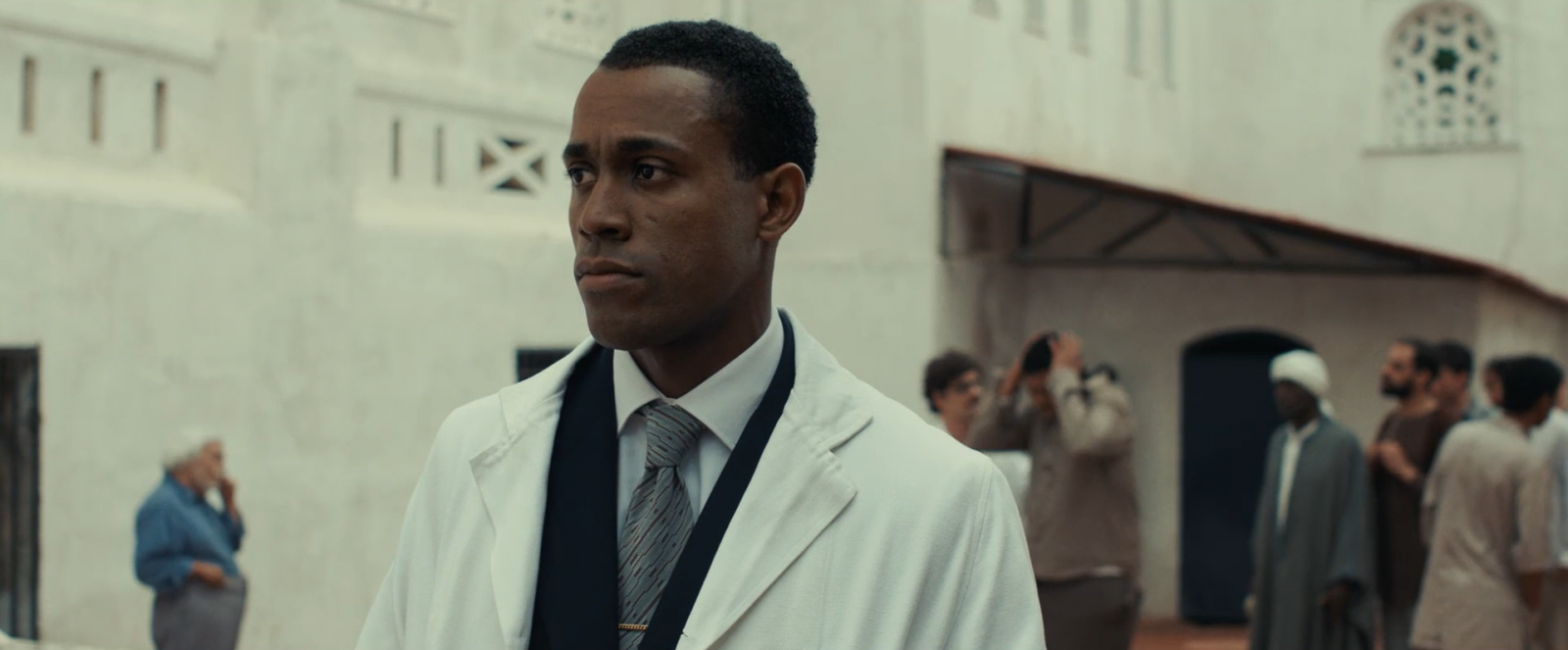
Image caption: An upcoming film screening and Brock University art exhibition will bring community together in honour of Black History Month/African Heritage Month. FANON, a 2024 film about Black French Caribbean psychiatrist and freedom fighter Frantz Fanon, will be screened at FirstOntario Performing Arts Centre on Friday, Feb. 13 followed by a masterclass with the film’s director Jean-Claude Barny.
Tuesday, February 10, 2026 | by Gillian Minaker
For Jean Ntakirutimana, cultural moments that connect scholarship to community are more important than ever.
As Brock University honours Black History Month/African Heritage Month (BHM/AHM), the Associate Professor of Modern Languages, Literatures and Cultures (MLLC) is reflecting on the deep impact of culturally immersed learning.
“Gathering in community to learn and collectively experience culture, past and present, brings depth to our academic work and offers a critical hands-on opportunity for students — indeed everyone — to expand their world views,” he said.
The Brock and wider communities will have the opportunity to do just that at a BHM/AHM screening of the film FANON at the Film House, FirstOntario Performing Arts Centre on Friday, Feb. 13. The screening will be followed by a masterclass led by the film’s director, Jean-Claude Barny, addressing the history and impact of colonial violence.
The biopic, which premiered in Canada at last year’s Toronto International Film Festival (TIFF), follows the experiences of Frantz Fanon, a Black French Caribbean psychiatrist and freedom fighter who worked in Algeria at the beginning of the country’s fight for independence.
Attendees will hear first-hand from the celebrated director about the making of the movie, his career and French/Caribbean cultural background.
Ntakirutimana said in today’s context of attacks on anti-racism initiatives and the erasure of equity, diversity, inclusion and decolonization (EDID) models, FANON offers a history that sheds light on colonial systems and how they can be dismantled.
“Fanon used innovative methods to help treat mental illness in patients caused by colonial violence. To Fanon, patients were human during a time when many considered colonized people to be ‘animals’ or sub-human,” he said.
For Ntakirutimana, having Brock students, staff and faculty gather with community members to experience the film together and engage in critical discussion is significant.
“It is a sign of our strength and collective desire to grow together, strengthening a vital bridge between academia and community,” he said.
The evening is presented in partnership with Brock University’s Social Justice Research Institute, the Human Rights and Equity Office and community partner SOFIFRAN (Solidarité des femmes et familles interconnectées francophones du Niagara).
David Vivian, Associate Professor and Scenographer, Department of Dramatic Arts, echoes Ntakirutimana that collaboration between many on-campus partners and community organizations speaks to the power of working together.
“This opportunity brings us contemporary scholarship, critical thinking and cultural production that works against the maintenance of supremacist models and systems of suppression and control. It will be meaningful for many in our community and of special interest to our students interested in film, pop culture, psychology, psychiatry, political philosophy, post-colonial studies, social justice and the arts,” Vivian said.
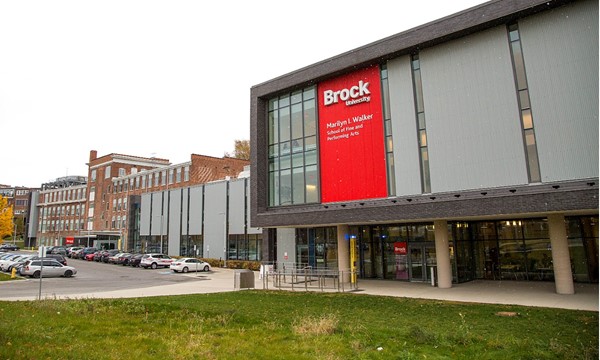
Building on the partnership with SOFIFRAN, an exhibition at Brock’s Marilyn I. Walker School of Fine and Performing Arts (MIWSFPA) will open the same day as the screening celebrating BHM/AHM.
Presented by Centre for Studies in Arts and Culture (STAC), Voix du Milieu/Voices In-between: La Francophonie Plurielle du Niagara will run from Friday, Feb. 13 to Saturday, Feb. 28.
The exhibition, curated by Vivian and local artist, author and SOFIFRAN member Nafée Nelly Faïgou, will feature small sculptures, images and material culture from West Africa and the African Great Lakes regions, drawing from the collections of Faïgou and Fété Ngira-Batwaré Kimpiobi to celebrate BHM/AHM.
“It is a privilege to host this very special exhibition at MIWSFPA and share extraordinary masks, richly decorated headpieces, musical instruments, textiles, pottery and more displayed throughout the first two floors of the school,” Vivian said.
Ntakirutimana and Vivian agree that immersive social justice learning is transformative during months of significance — and all year round.
“Whether through the magic of cinema, experiencing art or sparking thoughtful discussion, we are growing in our understanding of social justice by engaging with living culture,” Ntakirutimana said.









 role in the planning and development of this major event. You can contact her directly at the following email address: