Conserve and sustainably use the oceans, seas and marine resources for sustainable development.
Life below water recognizes the vital importance oceans have in maintaining a habitable earth. The oceans, seas, lakes and rivers worldwide provide and regulate rainwater, drinking water, weather, climate, coastlines, large amounts of food, and the oxygen in the air needed to breathe. It is, therefore, crucial to promote and protect the conditions needed for marine ecosystems to thrive.
Taking Action
Initiatives at Brock University
Water Resilience Lab
Brock’s Water Resilience Lab is a research collective branching off of the Environmental Sustainability Research Centre. It is formed by professors and PHD students on campus, and the studies focus on the human aspects of water resilience. The five members work together to identify how humanity impacts water, and vice versa.
World Water Day at Brock
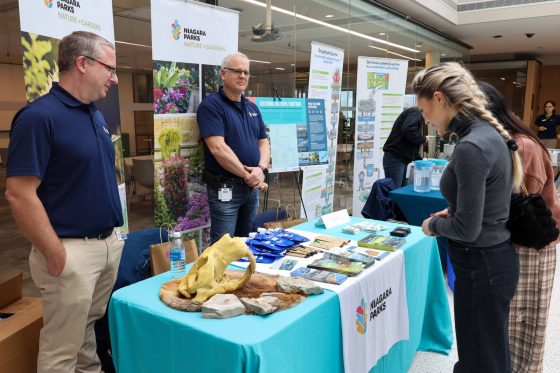
World Water Day has now become a part of Brock’s yearly event schedule! Every March 22nd (or the closest school day to it), The Water Resilience Lab partners with the Department of Geography and Tourism Studies to take over the Rankin Pavilion – setting up informational booths and reading material to help students learn more about the great impact water has on our lives.
Research Team Investigates International Policy to Preserve Marine Environments
The Brock-led research team by Dr. Jessica Blythe investigated a policy called Other Effective Area-based Conservation Measures (OECMs). Their study describes challenges and opportunities in marine conservation locations.
Initiatives in the Niagara Region
Niagara River Remedial Action Plan (RAP)
The Niagara River was once considered the most polluted area in North America, that led Canada and the United States to sign a Great Lakes Quality Agreement that included cleanup of the Niagara River. RAP aims to provide localized cleanup as necessary to remove the Niagara River off the Areas of Concern listing.
Niagara Peninsula Conservation Authority
The Niagara Peninsula Conservation Authority has strong water management responsibilities. They work on analyzing watershed by monitoring streamflow, establishing mater plans, testing water quality, and developing report cards.