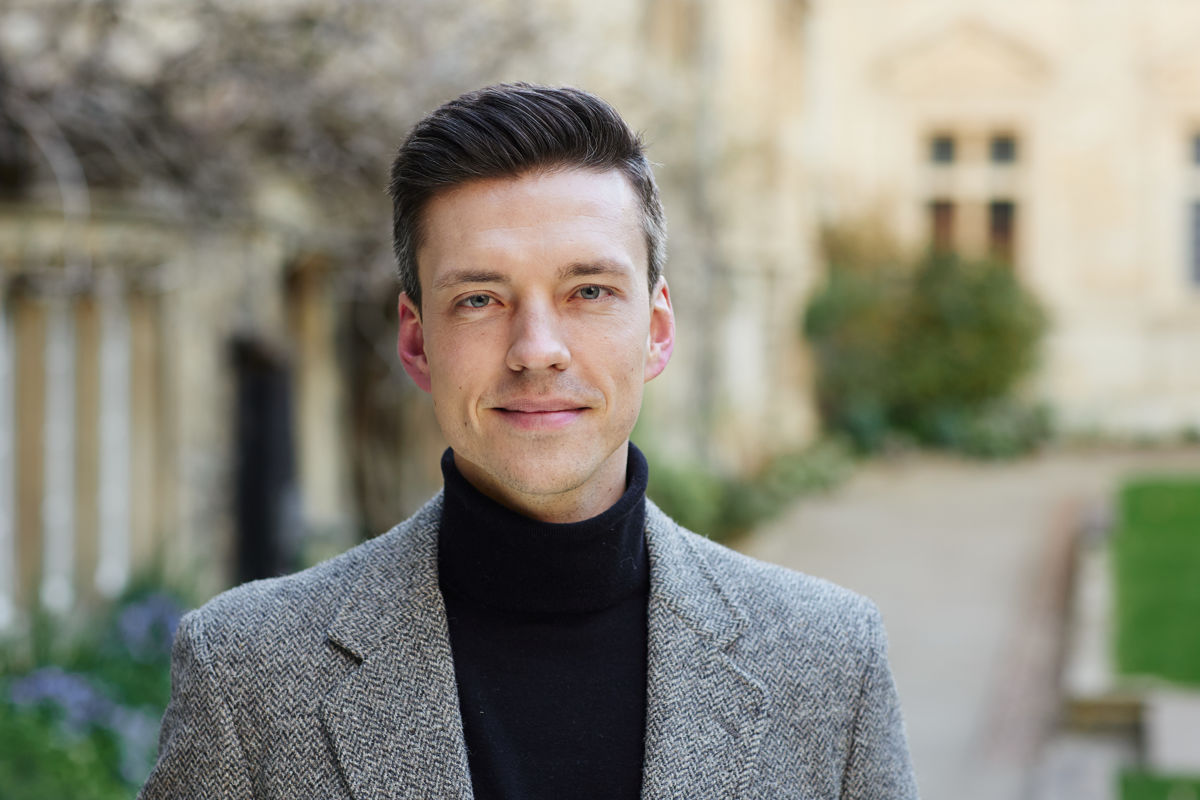
For Travis Fuchs, building a sustainable future begins with teachers and the young students who will live out classroom lessons in their daily lives.
Fuchs, who holds a Social Sciences and Humanities Research Council (SSHRC) Postdoctoral Fellowship at Brock funded by the Government of Canada, is making waves through impactful research exploring climate change education.
The international researcher and University of Oxford Honorary Norham Fellow is exploring how justice-oriented environmental education can be advanced in kindergarten to Grade 12 classrooms around the world.
Fuchs’s approach is grounded in his teaching experience, work in climate change litigation and sustainability, and graduate thesis research on environmental education.
“What is the role of teachers in moving this critical work forward? How do educators, Indigenous leaders, students and community collectively push ahead to advance how climate change education is effectively delivered to the next generation?” he says.
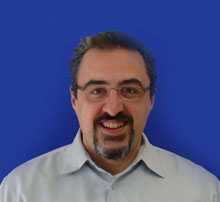
Professor of Educational Studies Xavier Fazio, whose research broadly focuses on science and environmental sustainability education, teacher education and development and curricular innovation, is conducting research with Travis Fuchs to enhance environmental education.
Working with Professor of Educational Studies Xavier Fazio at Brock, Fuchs is exploring the emotions of teachers relating to climate change.
“Students feel very intense emotions about this topic, and teachers must not only contend with their own feelings and anxieties but also have a professional obligation to be able to support their students,” Fuchs says.
Through their research, Fazio and Fuchs advocate that the emotions of teachers are an important dimension of the climate change conversation that needs to be heard.
Fazio, whose research and teaching focuses on science education, environmental sustainability and curriculum innovation, says climate change education is naturally interdisciplinary.
“To address environmental education at the roots, we must keep a wide perspective. This complex topic has implications in political and economic contexts and in natural and social sciences, to name just a few areas,” he says.
Fazio says Fuchs’s interdisciplinary postdoctoral work, and focus on the emotions of teachers, is pushing the research narrative “beyond the classroom and into the community.”
Fuchs’s work champions the idea that teachers play a vital role in creating social change and must be at the table for conversations to expand impact in environmental education.
“I am thrilled to be working in the Faculty of Education where research and scholarship is rooted in practice. In schools, school systems and in teachers’ lives — that’s where we can have the most impact,” Fuchs says.
“The Government of Canada is deeply committed to advancing environmental education in classrooms and in community. The work of Dr. Fuchs and Dr. Fazio is a shining example of what can be achieved when research and social responsibility unite, transforming how future generations view our world,” said Chris Bittle, Member of Parliament for St. Catharines.
Fuchs and Fazio will share their research with the Brock and wider community at the launch of the second annual FOE Speaker Series on Tuesday, Nov. 18 from noon to 1:30 p.m. in PL 600 F and online.
Their talk, “Reimagining Environmental Sustainability Education: Emotions, Pathways, and Partnerships,” will explore how addressing teacher emotions and understanding policy realities can enhance the effectiveness of environmental education in an era of climate urgency.
The second instalment in the FOE Speaker Series is scheduled for Wednesday, Feb. 25 and will feature author and Professor of Educational Studies Nancy Taber, whose research explores how learning, gender and militarism intersect with daily life.
The Brock community is encouraged to register through ExperienceBU. More information can be found on the FOE website.