Articles by author: jtalsma

  • Brock earns recognition for energy conservation

    By: Kerri Stoakley

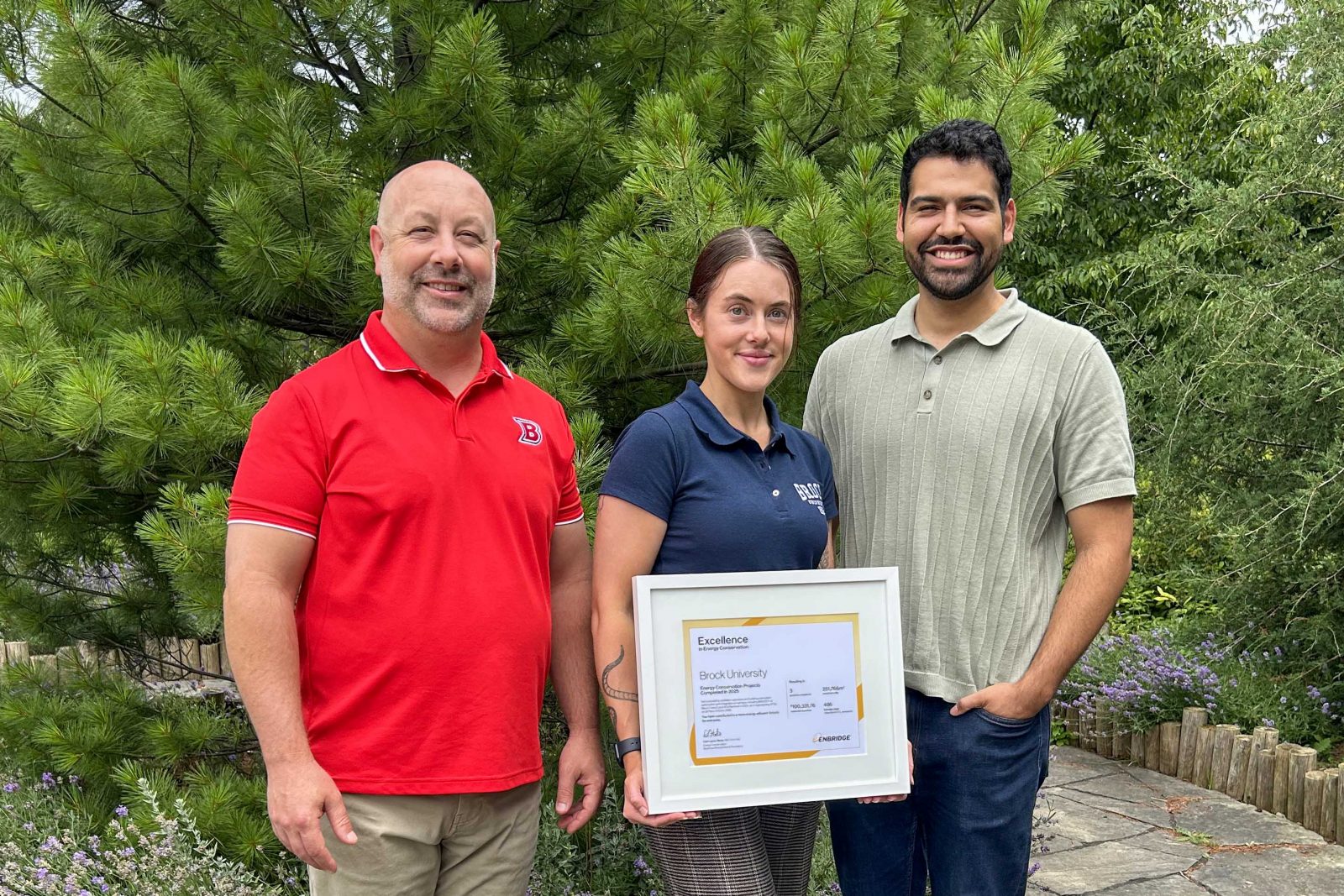
    Brock University was recently recognized by Enbridge Gas at the Ontario Association of Physical Plant Administrators Energy Meeting for its leadership in energy conservation.

    Through a series of energy efficient projects such as building controls optimization and variable frequency drive installations completed in 2024 and 2025, the University has conserved an estimated 251,766 cubic metres of natural gas — which is similar to the amount of natural gas used by approximately 114 homes each year in Canada.

    These projects also qualified for incentives through the Independent Electricity System Operator Save on Energy program, reducing the University’s electricity use by an estimated 213,477 kilowatt hours, or about enough electricity to power 24 Ontario homes each year.

    Combined, these projects earned the University more than $120,000 in incentive funding.

    “Awards recognize results, but lasting impact comes from people who challenge themselves to do better every day,” says Director, Utilities and Services Drew Cullen. “Our Facilities Management team has made energy conservation part of how we think, plan and operate. This award celebrates that commitment and I’m incredibly proud of what we’ve accomplished together.”

  • New designation has campus buzzing

    By: Cathy Majtenyi

    Brock University is taking steps to ensure its busiest residents are feeling at home on campus.

    Now officially recognized as a Bee Campus, Brock is committed to supporting the humble pollinators and their vital role in the environment.

    For Brock bee expert Miriam Richards, the University’s new designation — and the education and environmental activities associated with it — make Pollinator Week from June 22 to 28 particularly sweet.

    “Pollinator Week is a good time to stop and think about the myriad tiny creatures that we usually don’t even notice but which have an enormous, positive impact on people and the landscapes that they live in,” says the Professor of Biological Sciences and principal investigator of the Brock Bee Lab. “Also, it’s nice to have projects linking the University to the UNESCO biosphere in which we’re located and to interface more with nature right on campus.”

    Bees carry pollen grains from one flower to the next, which starts the process of producing seeds, fruits and the next crop of plants.

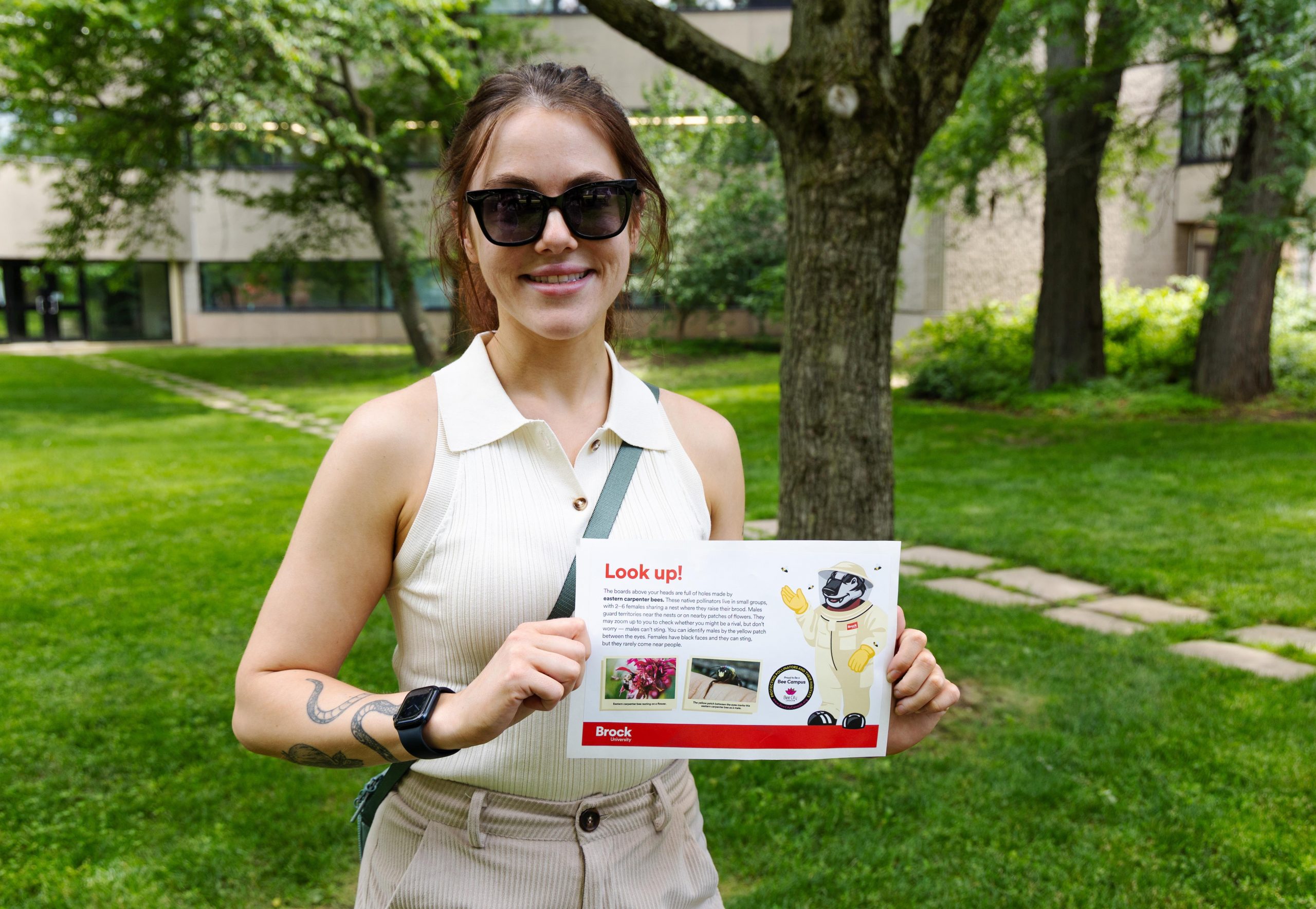
    A woman stands outside holding a sign that talks about Brock's designation as a Bee Campus.

    Rebecca Anderson, Facilities Management Sustainability Co-ordinator, helps install new signage now found on campus that shares information on bees.

    Bee Campuses cultivate native flowers, shrubs and other plants that attract bees and other pollinators, supporting their natural habitat.

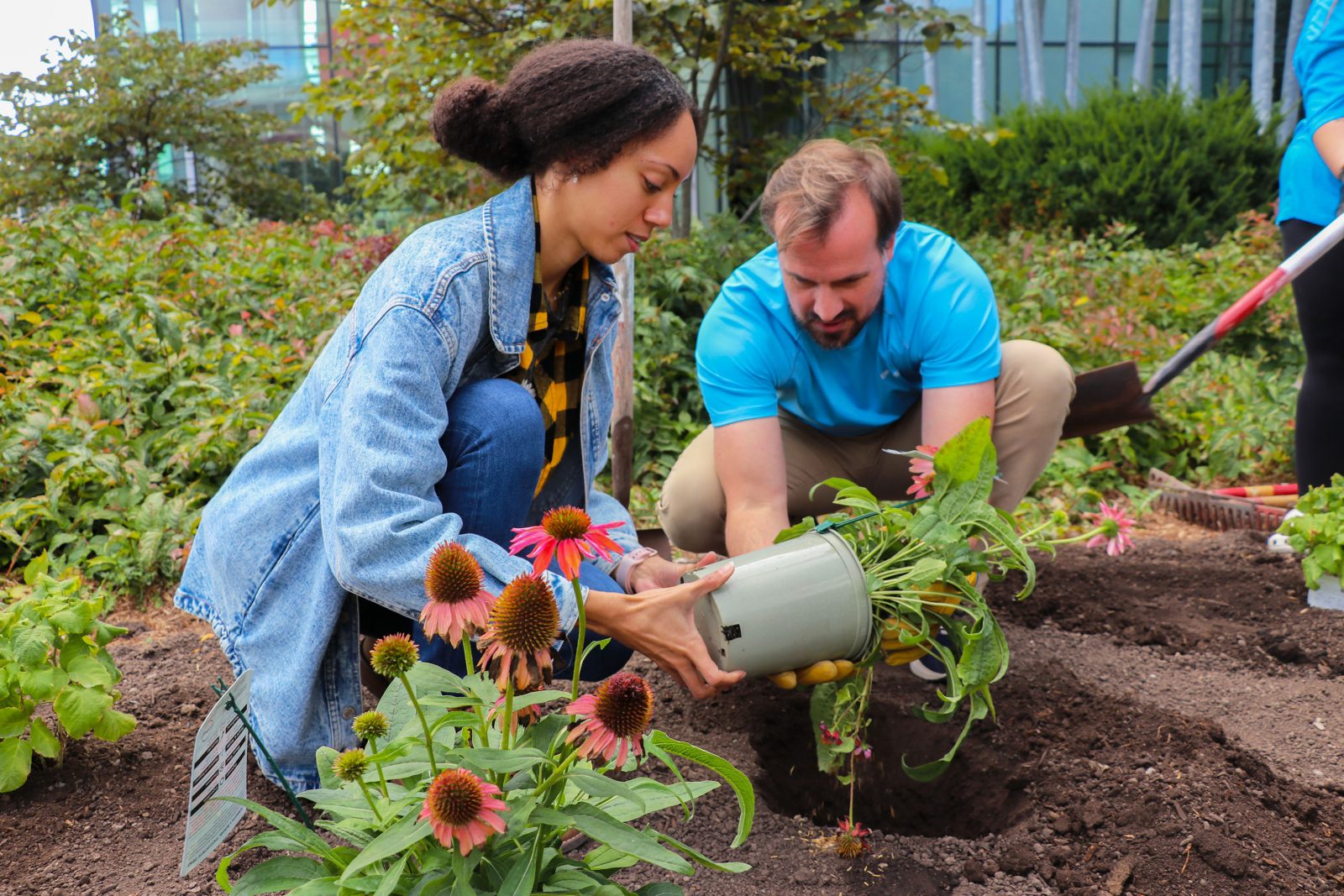
    To that end, Brock faculty, staff and students from across campus came together this past September to plant a pollinator garden near the Glenridge entrance of the Roy and Lois Cairns Health and Bioscience Research Complex.

    The combination of native plants — coneflower, milkweed, bee balm, yarrow and raspberry — were chosen with great care, says Rebecca Anderson, Facilities Management Sustainability Co-ordinator.

    “We have a responsibility as stewards of this land,” she says. “Being here, we have a responsibility to respect the land by increasing biodiversity and managing the planting of native species.”

    Bee Campuses also work to raise awareness about bees and how to protect them from human activity.

    Richards and her students provide knowledge and insights about bees through their many research projects. These include male eastern carpenter bee behaviourhow hormones influence egg maturation in adult female eastern carpenter beesrare bumble bees on campushow to increase bee populations in Niagara, and threats to bees’ survival.

    Richards and her team conduct much of their research in the nearby Glenridge Quarry Naturalization site. Between campus and the site, they have found 160 species of bees — “way more than the number of bird species,” she says.

    Most bees live in burrows they dig in the ground or in hollow sticks, with mason bees building little nests out of mud and resins, Richards says.

    Bees arrive in two “waves” in the spring and early summer. Before overwintering in their burrows, they reproduce, with the babies emerging the following spring.

    Brock’s Bee Campus Pollinator Team developed a Pollinator Habitat Action Plan that supports the initiative by installing signage across campus giving information about native bees and habitats, offering guided tours around campus, bringing students to campus to learn about bees and other pollinators and setting up “bee hotels” where bees can build their nests.

    Plans are underway to create two pollinator planter gardens at the Marilyn I. Walker School of Fine and Performing Arts in downtown St. Catharines.

    Brock’s Bee Campus Pollinator Team includes Richards; Anna Lathrop, Special Advisor, Office of the Provost, and Professor of Kinesiology; John Dick, Manager of Grounds Services; Lyllian Corbin, PhD student; James Mesich (MSc ’24), Master of Science graduate; and Tomas Flecker, Executive Director, Strategic Projects in the Office of the Provost.

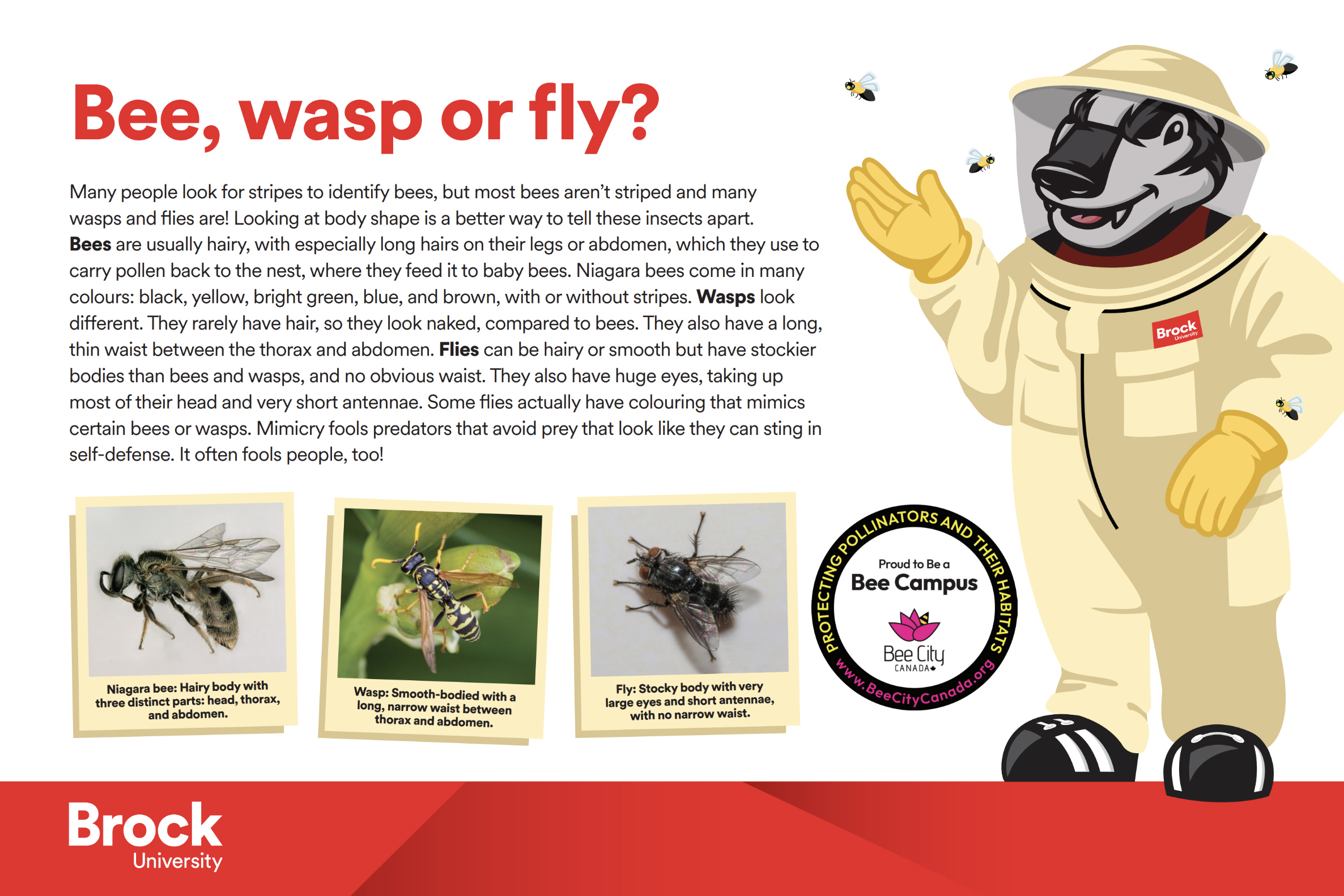
    A graphic explains how to identify if an insect is a bee, wasp or fly.

    Signs have been installed on campus sharing helpful information on bees.

  • Brock research farm marks new chapter for sustainable agriculture in Canada

    By: The Brock News

    Innovation is being cultivated at Brock University.

    The institution marked a milestone moment on Friday, May 29, welcoming supporters and industry partners to the Brock University Norris W. Walker Research Farm and signalling the next step in the Clean Agriculture for Sustainable Production (CASP) project that will strengthen Canada’s roots in sustainable farming.

    The expansive green space on Merrittville Highway just south of Brock’s main campus will allow researchers to expand on the University’s existing Clean Plant Program, which is critical to supporting Canada’s $11.6-billion grape and wine industry.

    Healthy vines provide the foundation for the industry to thrive, beginning with rootstocks and vine material that growers receive from nurseries.

    But these materials must be free from viruses to ensure strong, productive and sustainable vineyards.

    That’s where Brock comes in.

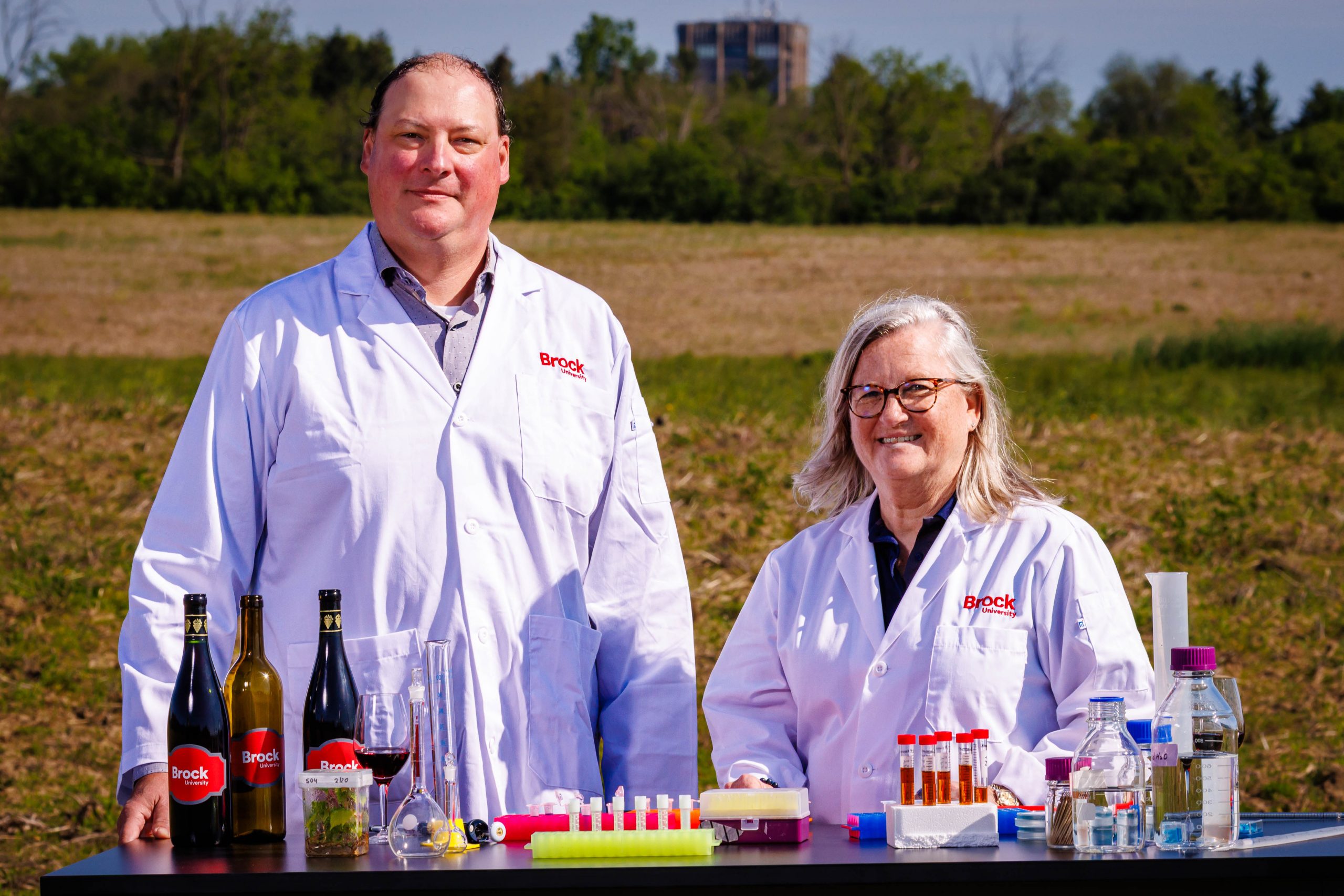
    Two people in lab coats pose for a photo behind a table in a field.

    Jim Willwerth, Associate Professor of Biological Sciences and Cool Climate Oenology and Viticulture Institute (CCOVI) Researcher, joins Debbie Inglis, Professor of Biological Sciences and CCOVI Director, at the Brock University Norris W. Walker Research Farm.

    Working alongside the Canadian Food Inspection Agency and Canadian Grapevine Certification Network, among other partners, Brock is one of only two facilities in the country helping to test and produce certified virus-free grapevines.

    “Through our Clean Plant Program, we use advanced tools and techniques to protect plant health,” said Associate Professor of Biological Sciences Jim Willwerth (PhD ’11, OEVC ’04), a Cool Climate Oenology and Viticulture Institute Researcher who is leading the CASP initiative. “Now, with the development of our research farm, we will be able to expand this work into a natural setting — accelerating innovation at a time when agriculture faces growing challenges from climate change, plant disease and rising costs.”

    The unique living laboratory will foster the development of more resilient grape varieties and the exploration of innovative technologies to improve efficiency, including energy-smart greenhouses, early warning systems for growers and artificial intelligence-driven solutions.

    “Just as importantly, we will study how plants and ecosystems interact, helping us develop sustainable practices that strengthen biodiversity and soil health, both in agriculture and in urban environments,” Willwerth said.

    The Clean Agriculture for Sustainable Production initiative demonstrates Brock’s commitment to shaping tomorrow through research, discovery and knowledge, said President and Vice-Chancellor Lesley Rigg.

    “CASP reflects the kind of applied, community-connected research that creates real-world impact while strengthening partnerships across sectors,” she said. “It also advances our priority of building sustainable futures by helping address critical challenges facing agriculture and climate resilience.”

    Friday’s event marked an opportunity to recognize the many people and organizations whose support has helped bring the project to life.

    “Initiatives of this scale and significance are only possible through strong partnerships across government, industry, philanthropy and the post-secondary sector,” Rigg said.

    The project was supported by transformative investment, with Canada Foundation for Innovation and Ontario Research Fund each committing $3.5 million — matched by a more than $7-million gift from Norris Walker, a dedicated champion of Brock and the Niagara region who passed away in January 2024.

    “Norris Walker’s extraordinary generosity and enduring belief in Brock University continue to shape the future of research, innovation and sustainability at our institution,” Rigg said. “His legacy will be felt here for generations to come.”

    Walker’s daughter Sheila Bonapace was among members of the family who came together for the celebration Friday.

    “My father would be proud to see his commitment to the Niagara community continuing to grow through this innovative living lab and the opportunities it will provide to researchers, students and the region as a whole,” she said. “We look forward to seeing the Brock University Norris W. Walker Research Farm blossom and flourish, creating meaningful change that will be felt in Niagara and beyond.”

    The CASP initiative will strengthen Canada’s position as a leader in sustainable agriculture, supporting its competitive edge on the global stage, said Chris Bittle, Member of Parliament for St. Catharines.

    “CASP will not only benefit the Canadian economy but also help to shape the future of the agricultural sector that Canadians rely on each day to live,” Bittle said. “This project demonstrates the significant impact universities like Brock have in advancing the health and vitality of their local communities and the country as a whole.”

    Sam Oosterhoff, Member of Provincial Parliament for Niagara West, said, “the Clean Agriculture for Sustainable Production Project at the Brock University Norris W. Walker Research Farm will not only support local growers and farm families in Niagara, but drive economic growth for the entire region.”

    “By leveraging cutting-edge research and industry expertise, we will create a stronger, more resilient agricultural sector that will help protect Ontario jobs today and into the future.”