Applied Research

  • Shaping the Agenda: An Early Career Researcher’s Experience at the Heart of East African Conservation Science

    Blog Contributor: Editrudith Lukanga
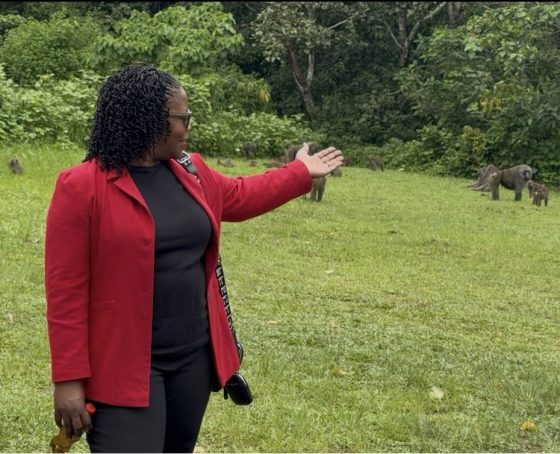
    Editrudith Lukanga with olive baboons on the grounds of Makerere University Biological Field Station, Kibale National Park, Uganda — a daily reminder that the nature-society interface is not abstract.

    “Conservation is not just a biological problem. It is a social one — and East Africa needs its own scholars to lead the science that proves it.”

    Something remarkable happened in Kibale National Park, Uganda, in the last week of March 2026. Twenty-six researchers, early career scholars, practitioners, and senior academics gathered inside a tropical rainforest field station with a shared and ambitious purpose: to write the first conservation social science research agenda for East Africa, led by Africans, grounded in African realities.

    I was one of those twenty-six. Selected from a competitive pool of more than 200 applicants across the region, I traveled from Tanzania, where I was preparing for my PhD fieldwork, to take part in five days that have already reshaped how I think about my research, my role as a scholar, and the possibilities ahead for conservation on this continent.

    This article is my attempt to share what we built together, what it felt like to participate in that process, and why I think moments like this matter not just for conservation but for every early-career researcher who wonders whether their voice belongs at the table where big ideas are made.

    The Gap That Brought Us Together

    For decades, the literature on conservation social science, the field that asks how people, power, culture, governance, and livelihoods intersect with the natural world, has been dominated by scholars based in the Global North. The questions asked, the frameworks applied, and the agendas set have too often reflected priorities that are distant from the lived realities of East African communities, ecosystems, and governance systems.

    My own PhD research sits squarely within this tension. I examine how conservation and blue economy interventions interact with gender norms, power relations, and social structures in small-scale fisheries and coastal social-ecological systems in Tanzania. What I find, again and again, is that policies designed primarily with ecological goals produce uneven and sometimes harmful social outcomes, particularly for women. These are not marginal questions. They are central to whether conservation works at all.
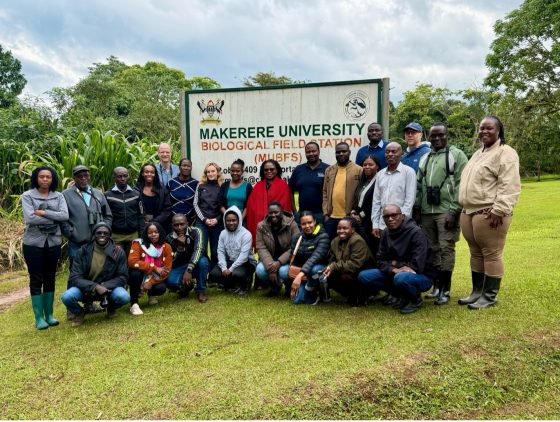
    A group photo of participants during the workshop to develop the conservation social science Research Agenda for East Africa.

    The workshop, co-convened by Professors Chris Sandbrook (University of Cambridge) and David Mwesigye Tumusiime (Makerere University), and funded by the Mastercard Foundation through the University of Cambridge Climate Resilience and Sustainability Research Fund, was designed precisely to address this gap. Not to import a framework from elsewhere, but to build one here, with scholars who know this region, its histories, its politics, and its people.

    Applying When You Are Mid-PhD and Mid-Doubt

    I applied to this workshop while I was preparing to conduct fieldwork in Tanzania, working with fishing communities in Lake Victoria. My supervisor at Brock University, Associate Professor Jessica Blythe of the Environmental Sustainability Research Centre, wrote my reference letter and backed my application with conviction. Her support, as a scholar who deeply understands the nature-society interface, gave me the confidence to submit and to believe that my mix of practitioner experience and emerging academic work was precisely what the organizers were looking for.

    I want to say something plainly to other early career researchers who may be reading this: apply, even when your timing feels imperfect. I was in the field. I was stretched thin. The pool of applicants was formidable. But my background, a decade working with civil society organizations, government institutions, and fishing communities across Tanzania and the wider region, combined with a PhD research focus on governance, gender, and justice in inland and coastal social-ecological systems, turned out to be exactly the blend of experience and emerging scholarship the workshop was designed to bring together. You will not always know when you are the right fit. Submit the application and let the committee decide.

    What Happens When 26 Researchers Build Something Together

    The workshop was held at the Makerere University Biological Field Station, a research campus nestled within Kibale National Park, one of Africa’s most biodiverse tropical forests. Baboons moved through the grounds. Rain fell hard on some afternoons. The setting was not incidental; it anchored us in exactly the kind of nature-society interface we were there to discuss.

    What made the process work was that it never felt like a conference. There were no passive audiences, no lecturers at the front of the room while the rest of us took notes. From the first evening, we were in structured conversation, in pairs, breakout groups, and plenary, generating ideas together and building on each other’s thinking. The facilitators trusted the group, and the group rose to it.

    We began by asking ourselves what a research agenda for conservation social science in East Africa should even contain and for whom. The answers were not obvious. Should it target government agencies? International NGOs? Funders? Local communities themselves? Academic journals? Intergovernmental bodies? We identified all of these as audiences, and recognised that different outputs might be needed for different groups. We also wrestled with something more fundamental: is what we are producing a research agenda, or an agenda more broadly, or perhaps even a manifesto?

    “People and nature thriving together — not as competing priorities, but as inseparable ones. That was the vision the group converged on, almost instinctively.”

    The question of vision was one we returned to throughout the week. Imagining a future in which our research agenda had been fully adopted and implemented, we asked: what would success look like? The responses were strikingly coherent. Success would mean equity and justice, not just as outcomes but as the organizing logic of conservation itself. It would mean African-led research, with local knowledge formally integrated into decision-making. It would mean conservation organizations that genuinely, not rhetorically, center people. And it would mean power structures within the field are more evenly distributed, including who designs the research, who is listed as an author, and who holds the funding.

    A field trip to Bigodi, a community at the edge of Kibale National Park, produced the single most clarifying moment of the week. We visited KAFRED (Kibale Association for Rural and Environmental Development), a community-based conservation and tourism initiative, and spent time with Byaruhanga, a long-term member and secretary of the organization. When we raised the topic of social science research, he paused. He associated ‘research’ with biology i.e. frogs, reptiles, species inventories. The idea of research that focuses on people, governance, and power was genuinely new to him. That gap between what social scientists know matters and what communities understand research to be is not a footnote. It is itself a research agenda item.
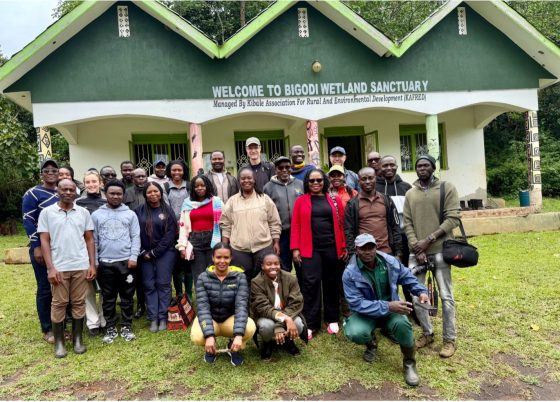
    Group photo at Bigodi Wetland Sanctuary (KAFRED); the field visit that produced the week’s most clarifying moment
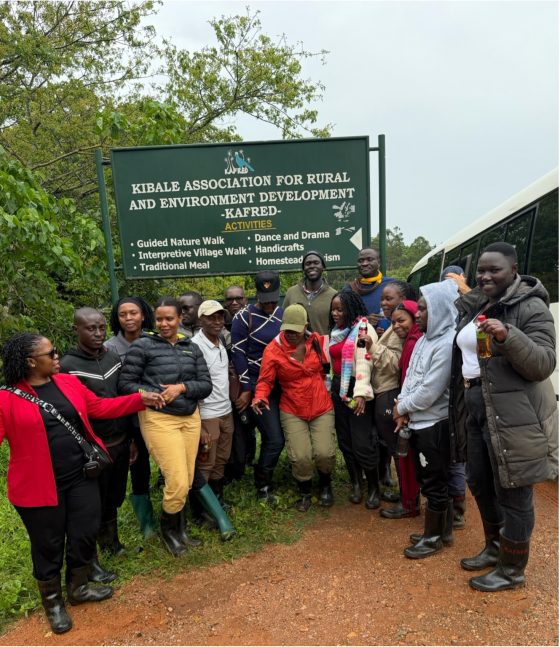
    Participants at the KAFRED entrance sign, the community visit that sparked the conversation about what “research” means

    By the final days of the workshop, the group had mapped a rich terrain of priority research themes covering history and power, conservation governance and tenure, human-nature interactions, and indigenous knowledge and marginal identities, and had turned its attention to a harder question: what do we actually do next?

    We voted. Each participant had five votes to allocate across a long list of possible actions. Three emerged as the group’s clear priorities and became the focus of dedicated breakout groups on the last day.

    The first: writing up the research agenda and publishing it. A group committed to producing two documents, a formal agenda paper and a journal article, likely targeting People and Nature. Sections were allocated to specific authors, with zero drafts due by April 15th and a first full draft by April 30th. I am part of the team working on the Big Picture and Framing section.

    The second: capacity building through short courses. A dedicated group mapped out what this would require, beginning with a Training Needs Assessment across the region, followed by a Training of Trainers process to develop and contextualize materials for East African institutions. The audience for these short courses is broad: researchers, practitioners, academics, from lecturers to undergraduates, and Ministry of Education actors. The group identified specific points of contact and began discussing budget requirements.

    The third: establishing a regional network for conservation social science in East Africa. This was perhaps the most architecturally ambitious of the three. The group designed a CSSR Agenda-EA Network with thematic groups organized around the research priority areas, an open-source repository of research by members, a membership structure open to individuals, students, and conservation organizations, and a resource mobilization strategy linking online presence, mailing lists, and social media.

    Cutting across all three actions was a fourth commitment that the full group adopted together: promoting narrative change. This means actively contacting deans and departments at universities and research institutions across the region, offering guest lectures and seminars on conservation social science, and challenging the persistent institutional bias that positions STEM as the default language of conservation.

    We also agreed, collectively, on two things that belong not in any working group but in each of our individual practices: actually doing conservation social science research, and modeling inclusive, ethical, and community-engaged research in how we do it. These are not strategies. They are commitments.

    What Kibale Changes About a PhD in Sustainability Science

    My doctoral research is rooted in sustainability science, a field grounded in the conviction that understanding the world’s most pressing problems requires crossing disciplinary boundaries, taking local context seriously, and asking who bears the costs and who holds power. Kibale compressed all of that into five days of unusually honest conversation.

    The debates about indigeneity and recognition, the SWOT-B analysis of what is holding conservation social science back across the region, the walk through a selectively logged forest with researchers who could explain the social history behind every cleared patch, these did not give me new data points. They gave me a sharper sense of the landscape my research is part of. They made explicit the political and institutional forces that shape which questions get asked, which voices get cited, and which communities get studied versus consulted.

    I return to Brock with something more than notes. I return with co-authors, collaborators, and colleagues. I return as a contributor to a document that will shape the direction of conservation social science Research in East Africa. And I return with a clearer understanding of what it means to position research not just as knowledge production, but as a form of advocacy for more just and inclusive ways of living with nature.

    To the Early Career Researcher Wondering Whether to Apply

    I want to end with something direct, because it is what I wish someone had said to me more clearly earlier in my career.

    Apply to things that stretch you. Not the things you are perfectly positioned for, but the ones that are one step further than where you think you currently stand. The selection committees for workshops like this one are not looking for finished scholars. They are looking for emerging ones, researchers who bring genuine curiosity, field experience, real questions, and the intellectual courage to sit in a room with people who know more than they do and contribute something anyway.

    Ask for the reference letter. The support of a supervisor who believes in your work matters enormously, not just to the application, but to your own sense of whether you belong in the room. I am grateful to Prof. Jessica Blythe, whose letter highlighted my strengths with specificity and whose encouragement made the application feel worthwhile.

    Be in the field. Some of the most important things I know about conservation and society, I learned not from journal articles but from spending time with fishing communities on the  Tanzanian coast. That knowledge, qualitative, contextual, and relational, is not a lesser form of expertise. At a workshop like Kibale, it is exactly what is needed.

    Let the experience change your questions. I came to Kibale with a research agenda. I left with a sharper one. The conversations, the field visit, the disagreements, the surprising consensus, all of it refined what I think matters and why. That kind of recalibration is worth more than any single paper.

    The Conservation Social Science Research Agenda for East Africa will be published later this year. It will be African-led, community-grounded, and theoretically ambitious. When it arrives, I hope it opens doors for researchers across the region, for communities who have long been studied but rarely heard, and for a generation of early-career scholars who have been waiting for a seat at the table where the questions are set.

    That table now exists. Pull up a chair.


    Editrudith Lukanga is a PhD Candidate in the Sustainability Program at the Environmental Sustainability Research Centre (ESRC), Brock University, supervised by Associate Professor Jessica Blythe. Her doctoral research examines governance, gender, and justice in small-scale fisheries and coastal social-ecological systems in East Africa. She participated in the Nature-Society Research Workshop, Makerere University Biological Field Station, Kibale National Park, Uganda, 23–27 March 2026.

    The workshop was co-convened by Makerere University and the University of Cambridge (Professors David Mwesigye Tumusiime and Chris Sandbrook), with funding from the Mastercard Foundation through the University of Cambridge Climate Resilience and Sustainability Research Fund.

    Categories: Applied Research, Blog, SSCI Student Contributor

  • Starting my time at Brock with an adventure

    Blog Contributor: Hannah Lübker

    Artwork Credit: Rachel Derrah (https://listendraw.ca/)

    During my second week of the SSCI programme, my supervisor Dr. Julia Baird and I flew to New Brunswick to attend the annual Wələstəq/ Saint-Jean/ St. John River Summit.

    After an extended breakfast with our colleagues from WWF-Canada, with whom we are collaborating in a partnership for freshwater resilience, we went on a little road trip along the river. I was very excited to finally see the river that my research will be centered around – it is beautiful in pictures, but truly stunning in person. As we drove through the countryside, we took breaks to take in the scenery, buy handmade pottery, or drink tea at a village bakery. As someone who is new to Canada, I was quite surprised by the friendly and talkative nature of the people we met, who showed interest in our project and immediately recommended people we should contact to talk about it.

    The summit began on Friday morning at the Nashwaak Meadows Centre for Ecology, which consists of two cozy barns, surrounded by nature. The event kicked off with a welcome from Simon Mitchell (leader of WWF-Canada’s Resilient Habitats team), who stressed that the UN Decade of Restoration should not only focus on ecological restoration, but on the restoration of language, culture, and relationships as well. Before we got too comfortable and sleepy in our chairs, we were led to the Nashwaak Meadows restoration site, to experience the restoration efforts, instead of just hearing about them. I really enjoyed this part, as it reminded me of the practical “getting your hands dirty” spirit of my undergraduate studies. There is something so satisfying about being in nature and seeing the tangible results of your work (for example the growth of the trees you planted), which is sometimes missing from my life in academia.

    The summit continued with presentations from the Canadian Rivers Institute, the Nashwaak Watershed Association, ACAP Saint John, the NB Invasive Species Council, WWF-Canada, and members of the Wolastoqey Nation in NB. While it was fascinating to learn about barriers to re-forestation on wetlands, how to identify invasive zebra mussels or how the indigenous value system applies to restoration, my favorite aspect of the summit was the atmosphere. The prolonged coffee and lunch breaks offered plenty of opportunities for informal conversation (and an impressive selection of food and drinks) and people were generally approachable, interested and kind.

    Unfortunately, our travels were cut short by an approaching hurricane, which lead to the cancellation of all summit activities on Saturday, and to us opting for an early-but-safe return home. Needless to say, I am already planning my return to New Brunswick to explore more places along the Wələstəq and connect to even more future friends and colleagues in the area.

    Why do we use the name Wələstəq? Visit https://gem.cbc.ca/absolutely-canadian/s22e06 if you’re interested in learning more about this.

    Categories: Applied Research, Blog, Conferences, SSCI Student Contributor

  • A Lunch and Learn on Climate Readiness at Niagara Parks

    Blog Contributor: Shannon Heaney

    On November 24th, 2022, the Excellence in Environmental Stewardship Initiative (EESI), a partnership between the Environmental Sustainability Research Centre (ESRC) and the Niagara Parks Commission, held a lunch and learn at the Legends on Niagara Golf Course. The lunch and learn afforded an opportunity to share information about the Niagara Parks Climate Readiness Plan, developed by the EESI, and discuss implementation actions for the future.

    Ryan Plummer welcomed everyone and Steve Barnhart, Senior Director for Planning, Environment, and Culture, opened the event with a land acknowledgment. Ryan Plummer and Shannon Heaney then presented an overview of the Niagara Parks Climate Readiness Plan. Their presentation described the development of the plan, illustrated climate scenarios in the Niagara Region, and identified climate related threats specific to Niagara Parks.

    The presentation also set out the three overarching goals which are the foundation of the plan. The three goals are to: 1) ensure public safety, 2) minimize risk to infrastructure, and 3) reduce net environmental, human and infrastructure costs of climate impacts.

    Corey Burant, Project Manager for Forest Health Parks, Planning and Properties, shared information about the many current initiatives by Niagara Parks which address climate change such as native shoreline rehabilitation, the completion of the Feast on Certificate, and incentivizing sustainable travel among others.

    Following the presentation, the EESI team next posed the following open-ended questions to over 25 attendees:

    1. How can you implement the climate readiness plan in your individual role?
    2. How can you implement the climate readiness plan in your business unit?
    3. How can Niagara Parks implement the climate readiness plan on an organization level?
    4. What can Niagara Parks do to build capacity to support implementation of the climate readiness plan?

    Members of Niagara Parks carefully considered these questions and discussed them with their colleagues and were invited to record their ideas on sticky notes.

    The discussion resulted in various interests and ideas from attendees. The first three questions, which asked about implementation of the Climate Readiness Plan, yielded similar themes. These themes included an interest in continual education and knowledge sharing about the Climate Readiness Plan, identifying ways to integrate and implement the Climate Readiness Plan including actions at the individual, business unit, and organizational level. Further, there was a strong interest regarding collaboration within Niagara Parks, as well as with external partners, and fostering motivations and ideas at all levels related to climate readiness. The discussion also generated excellent ideas on specific actions that could be implemented across Niagara Parks related to climate readiness.

    The final question asked attendees to reflect on how Niagara Parks could build capacity to support implementation of the Climate Readiness Plan. Attendees echoed the themes above, identifying education and awareness as an important way to build capacity, as well as expanding collaboration both internally and externally, with partnerships that align with Niagara Parks mandate and mission.

    Steve Barnhart, Senior Director for Planning, Environment and Culture, concluded the event by discussing next steps related to the Climate Readiness Plan within Niagara Parks. As participants left the event with an infographic in hand, requests were made for similar events in the future. The lunch and learn was a huge success, and sparked conversations about the Climate Readiness Plan which will continue beyond the 1-hour lunch and learn event.

    Categories: Applied Research, Blog, Conferences, Environmental Stewardship Initiative, Innovative Partnership, SSAS Student Contributor

  • Encouraging Master of Sustainability Student Participation in Conferences

    Once per term, the Environmental Sustainability Research Centre offers a travel award to assist Master of Sustainability students who wish to present their research at conferences with expenses, such as conference registration fees. This term, two SSAS students received the award and presented at two different online conferences before they complete their studies.

    Pulkit Garg (second from bottom left row) presents his research at the FOSS Research Colloquium.

    Pulkit Garg presented at Brock University’s Faculty of Social Sciences Research Colloquium in December 2020. His presentation, “Reviewing the Options for the Agricultural Sector to Adapt to Climate Change: Case Study of the Niagara Region, ON” consisted of MRP research he completed in the SSAS program under the supervision of Dr. Liette Vasseur. This was the second conference Pulkit has participated in, with the first being the International Conference on Sustainable Development that was held virtually in New York City in September 2020.

    Pulkit said of his presentation at the colloquium, “I couldn’t have asked for a better learning experience during this pandemic. The colloquium gave me an ideal platform where I could present my findings and lend impetus to my work while learning from other presenters in the process”. He also described “the feeling of pride and honour I experienced in representing my supervisor, the sustainability program and the ecology lab” as a highlight of the experience.

    Jessica Zugic presents her research at the European Geosciences Union General Assembly.

    At the end of April, Jessica Zugic presented her research at the European Geosciences Union (EGU) General Assembly. The conference took place during the last two weeks of April, with Jessica’s presentation session taking place on April 27th, 2021. Jessica’s presentation about the short-term impacts of a partial harvesting technique on carbon sequestration and growth of a red pine plantation in southern Ontario, was based on thesis research she completed (and successfully defended) under the supervision of Dr. Michael Pisaric. This was Jessica’s fourth conference during her time in the SSAS program.

    Both Jessica and Pulkit mentioned the positive influence the SSAS program had as they prepared for their presentations. Jessica mentioned the weekly emails sent by the SSAS program as being influential in her decision to attend this conference, and added, “The SSAS program has always promoted different conferences and meetings that students could attend, thus encouraging students to present their research and get involved in the academic community”. Pulkit echoed these statements and added “the blend of field projects coupled with course work [in the SSAS program] taught me resilience and the importance of openness to feedback and continuous learning, along with research/analytical capabilities”.

    We are very proud of these students, both of whom will be graduating from the SSAS program in June 2021.

    Categories: Applied Research, Blog, Conferences, SSAS Program

  • Assessing Higher Education Institutions (HEI) – Community Partnerships Performance, Monitoring & Evaluation

    Blog Contributor: Erica Harper

    Partnerships between HEIs and communities are becoming increasingly important worldwide. More focus is therefore being placed on how these partnerships are created, how they transform over time, and they can achieve. Assessing the performance of HEI-community partnerships is essential for understanding their value (social, economic, and environmental value), accountability and transparency.

    Brock researchers carried out a national study to understand HEI-community partnerships and their performance in Canada. All HEIs in Canada with an explicit mandate related to community relationships were identified. A questionnaire was distributed to their offices, with the results illuminating the present state of partnership efforts. The key findings of this first part of this study include:

    • 25% of HEIs do not employ any monitoring or evaluation of their community partnerships
    • 67% of HEI community-focussed offices have an operating budget of $50,000 or more
    • 67% reported having over 30 active partnerships at their institutions

    A second questionnaire, sent to individuals at HEIs who are involved in HEI-community partnerships, as well as community partners, looked at how performance of partnerships should be assessed. A three-fold framework (inputs, process, outcomes) of indicators and measures was validated. The key findings of this second part of the study include what the most important inputs, processes, and outcomes are for effective partnership performance:

    • Motivation is the most important input
    • Communication is the most important process
    • Learning is the most important outcome

    These results bridge an important gap in the literature and you can learn more by accessing the Assessing Partnership Performance, Monitoring, & Evaluation webpage or by the reading the most recent publication by the ESRC research team in the Journal of Higher Education Policy and Management, The issue of performance in Higher education institution – Community partnerships: A Canadian perspective.

    To learn more we included some helpful links below:

    Categories: Applied Research, Blog, Collaborations, Innovative Partnership

  • EESI Partnership Roundtable Event

    Blog Contributor: Allison Clark

    Greenspaces, such as those found within Niagara Parks, have great ecological and social importance. For example, connecting with nature can provide benefits to physical and mental health. ThCovid-19 pandemic has increased the need for people to get outside and connect with nature. As a result, human activity in greenspaces has increased substantially, which has in turcreated challenges for parks management. To ensure ecological integrity is being upheld while also protecting visitor safety, new trail management strategies should be considered. 

    To discuss how Niagara Parks can navigate the increased use of greenspaces, a roundtable event was held on October 20th, 2020. This event brought together individuals from the Niagara Parks Commission (NPC) and Brock University. This event was made possible by the Excellence in Environmental Stewardship Initiative (EESI) – a partnership between NPC and Brock. During this event, Brock University’s master’s students, Samantha Witkowski and John Foster, presented their research pertaining to greenspaces within Niagara Parks. Implications of these research findings were discussed with regards to the management of greenspaces. 

    Samantha’s presentation was titled: Examining Stakeholder Perceptions in Monitoring and Evaluation of Environmental Management. Samantha presented two different studies. The first study examined inter-group differences in the perceptions of key performance indicators (KPIs) for viewpoints. Results showed that stakeholders, tourists, local residents, and environmental managers perceived KPIs differently in Niagara Parks. For example, stakeholders perceived view quality and vegetation as the most important KPIs, whereas environmental managers perceived viewpoint KPIs more critically. The second study explored the influence of engaging in a collaborative, or participatory monitoring and evaluation process on stakeholder perceptions of KPIs for trails. For this study, Samantha had stakeholders rank KPIs from what they perceived as most important to least important in terms of trail management. Stakeholders were then required to take a KPI workshop and re-rank KPIs. Results from this study showed that stakeholders perceptions of important KPIs for trail management differed significantly following the KPI workshop. Furthermore, it was noted that discussion, communication, and learning opportunities contributed to perception change. A main takeaway from Samantha’s research was that the NPC should move away from strictly expert-led, ecologically focused trail management approachesand move towards the inclusion of stakeholder perceptions in environmental management, monitoring and evaluation. 

    John’s presentation was titled: Niagara Glen Trails Assessment, Summer 2020. John’s research highlighted some challenges associated with increased human traffic in the Niagara Glen, as well as some short-term and long-term solutions to address increased traffic along the trail. John outlined challenges associated with social trails (networks of unauthorized trails), and visitor safety and communication. To protect ecological and human health at the Niagara Glen, John proposed that the NPC implements visitor education sessions, increases signage, and creates effective trail maps. 

    Overall, this roundtable event worked to successfully discuss how the NPC should navigate increased usage of greenspaces. The research findings presented by Samantha and John were received very well by members of the EESI, and the NPC were very receptive to suggestions for improved environmental and trail management.  

    Categories: Applied Research, Blog, Environmental Stewardship Initiative, Event, SSAS Student Contributor

  • Meet the Post-Docs: Janani Sivarajah

    Janani Sivarajah

    Dr. Janani Sivarajah joined the ESRC in July as a post-doctoral fellow with the Prudhommes Project working with Dr. Ryan Plummer. Janani’s transdisciplinary research explores the ecosystem services of urban trees and public green spaces, and finds greening solutions to improve the socio-ecological resilience of cities.

    What are your research areas of focus, and what was your journey like in getting to that area of focus?

    My research focus is based on urban ecology and finding greening solutions to improve the socio-ecological resilience of cities. I am particularly interested in building multifunctional landscapes and proposing nature-based solutions to global environmental and urban challenges. My journey here is a long road.  I started in Forestry and completed my Master of Forest Conservation at UofT and then went on to do a Ph.D. in Forestry at UofT.  My Ph. D. dissertation paved my way into transdisciplinary research to understand urban trees’ environmental services for human well-being.  While completing my Ph.D., I worked in non-profits and urban forest consulting, and these experiences further shaped my research focus. 

    As a sustainability scientist, how do you view the world?

    As a sustainability scientist, I believe we have a unique ability to use a transdisciplinary lens to see the future and find solutions to evolving and challenging problems.  We also have a responsibility to communicate science with the broader community and work together with other stakeholders to solve problems.

    What excites you the most about working with the Environmental Sustainability Research Centre?

    The most exciting aspect is the people at ESRC.  Even during unprecedented times, I felt welcomed and greeted warmly by all faculty and staff. I am excited to build friendships, foster a supportive environment, and collaborate on exciting projects. They are all superstars in their fields, and I’m eager to learn from their expertise and share my experiences.

    Categories: Applied Research, Blog, Innovative Partnership

  • Meet the Post-Docs: Jennifer Holzer

    Dr. Jennifer Holzer joined the ESRC in February 2020 as a post-doctoral fellow in the Water Resilience Lab working with Dr. Julia Baird and has recently been appointed as an Adjunct Professor in the ESRC. Jen’s doctoral work evaluated the research-implementation gap in social-ecological research in Europe using case studies in Spain, Scotland, and Romania, and provided recommendations that fed directly into enhancing European research infrastructures.

    What are your research areas of focus, and what was your journey like in getting to that area of focus?

     In my current position, I am developing the following areas of focus:

    • Developing and applying a decision support framework for ecosystem services governance at the landscape level
    • Designing effective participatory processes for environmental governance
    • Using social network analysis to understand knowledge flows, decision-making processes, and power dynamics of environmental governance
    • Using agent-based modeling to uncover links between attitudes about resilience and pro-environmental behaviors
    • Developing a tool to assess ‘sense of place’ globally

    My previous (and ongoing) research focused on:

    • Evaluation of transdisciplinary environmental research
    • Bridging the gap between environmental / sustainability science and policy
    • Integration of social sciences with natural science research

    It’s been a winding road from being a teenage environmental activist to where I am today. After some years as an environmental project manager, I returned to academia for a PhD that I hoped would bring me closer to conservation. As a project manager, I had become focused on energy efficiency, which is a crucial aspect of climate work, but I wanted my focus to be closer to the natural world.

    My PhD project was linked to a four-year EU grant to audit social-ecological research platforms in Europe. So the project was an interesting confluence of social ecology, conservation, sustainability, and science and technology studies. I had the opportunity to work with scientists from the European Long-Term Ecological Research network, and to be hosted by some of these colleagues for field research in Europe. It was fascinating, and I was hooked! I also learned a lot about what it means to manage an international environmental research network, so when the opportunity came up to work within a similar research network in Canada (ResNet) – in its startup phase — I jumped at the opportunity.

    As a sustainability scientist, how do you view the world?

     Everything is connected. A person’s mood or outlook can influence whether they decide to spend time in nature, and whether they spend time in nature can influence whether they want to help protect nature. Also, I’m a book person and I love learning for the sake of learning, but it’s important to me that what we learn be applied in the real world. The gap between science and practice is a deep concern, especially in these strange times where there is a strong anti-science movement.

    I also worry about whether taking care of the environment is a luxury. We are human first, paying bills, taking care of our families, and safety and security will always come first. Sometimes I lament that as long as we don’t feel completely reliant upon and intertwined with the natural world, we’ll never be able to prioritize taking care of it.

    Perhaps most importantly, I think optimism is a prerequisite to being a sustainability scientist. The bad news about environmental degradation and predictions about the future can be overwhelming. So, there is a moral aspect to a sustainability view of the world. I do believe that we, as humans, are obligated to care for our planet, both as a collective and as individuals. What this looks like is going to be different for everyone, depending on where and how you live and the resources available to you.

    What excites you the most about working with the Environmental Sustainability Research Centre at Brock University?

    I am excited about working in a context where ideas like sustainability and resilience are the starting point! And I’m excited about working with such great people — both in terms of their scholarship and being enjoyable to work with. Everyone seems to have their own quirky sense of humor!

    This is my first time working at a dedicated centre for environmental sustainability, so there are built-in applications to our research. The ESRC has made great efforts to build partnerships with local governments and environmental organizations. I’m looking forward to having results from my first studies and figuring out if we can take it a step further and find a way to apply our findings in the real world. Finally, it’s fascinating for me to work in Canada. From an environmental perspective, the Middle East (where I did my PhD) is a place of scarcity when it comes to water and other key natural resources, and Canada is so rich in natural resources that it’s bound to imbue me with quite a different perspective.


    Categories: Applied Research, Blog, Faculty Contributor

  • Understanding Public Perceptions of Niagara Parks

    Blog Contributors: Bani Mani & Dr. Jessica Blythe 

    (L-R) Samantha Witkowski, Seyi Obasi, Angela Mallette, and Dr. Jessica Blythe get ready to collect research in Summer 2019

    Public perceptions of Niagara Parks – the project is being led by Dr. Jessica Blythe. Her research aims to understand how residents and visitors value Niagara Parks. This project emerged from the ongoing Excellence in Environmental Stewardship Initiative (ESSI), which is a five-year partnership between ESRC and Niagara Parks that aims to use expertise and resources from both organizations to increase environmental stewardship. During a team meeting, both NPC and ESRC teams realized that there was an opportunity to explore how people value Niagara Parks. The research part of the project is being conducted by Dr. Jessica Blythe, Dr. Julia Baird, Dr. Ryan Plummer and Dr. Gillian Dale.  The communication side of the project is being led by Amanda Smits and Erin Daly. Here is a brief interview with her on the progress of the project: 

    Please tell us more about the project  

    The project aims to provide park managers and decision-makers with data on the ways that residents, domestic and international tourists value and connect with Niagara Parks ecosystems.   

    Could you highlight the importance of the project? 

    Effective management of iconic ecosystems – like Niagara Parks – requires more than a comprehensive understanding of ecological components of the system.  Understanding the human dimensions is also essential for long-term planning, adaptive management and successful environmental stewardship.  Through this project, we hope to highlight some of the human dimensions of Niagara Parks. 

    Could you briefly outline your approach?  

    In the late summer and early fall 2019, more than 220 people were surveyed by myself, Angela Malette, Seyi Obasi, and Samantha Witkowski. Using tablets, we survey people in Niagara Parks.  We talked to a range of visitors from residents to international tourists. 

    What are the implications of research outcomes for the NPC? 

    We hope that this research will support park managers and decision-makers in incorporating the human dimensions of Niagara Parks into their planning and management. We also aim to contribute to ongoing research about the importance of people’s connections to nature for leveraging sustainability outcomes. 

    Click to view an infographic of this research

    Categories: Applied Research, Blog, Environmental Stewardship Initiative, Innovative Partnership, Student Contributor

  • Researchers Investigate the High Seas with the help of Virtual Reality

    If you walked through the newly opened Rankin Family Pavilion on March 10th and 11th, you likely noticed Virtual Reality stations that were set up in the atrium. What you may not have realized is that these stations were part of an ongoing research project led by Brock professors Dr. Jessica Blythe, Dr. Gary Pickering and Dr. Julia Baird.  Their research is enabled by a Social Sciences and Humanities Research Council (SSHRC) Insight Development Grant they received in 2019 worth $74,970.

    With colleagues from around the world, Drs. Blythe, Pickering and Baird are exploring whether virtual reality can shape knowledge of and attitudes towards the high seas (which refers to the open ocean beyond national boundaries). The idea, Dr. Blythe mentioned, is to see whether being immersed in a future scenario, that shows what the ocean might look like in the year 2050, changes how people feel about the issues that are currently affecting the high seas, including overfishing, pollution and inequitable access to marine resources (including genetic material and oil).  Ultimately, they aim to understand if virtual reality can boost public support for oceans that are normally “out of sight and out of mind”, which might encourage better protection of what has been called Earth’s final frontier.

    As virtual reality becomes increasingly popular for a wide variety of purposes, the ESRC is honoured to have home unit faculty members Drs. Blythe, Baird, along with ESRC Faculty Affiliate, Dr. Gary Pickering, leading this cutting edge research!

    Categories: Applied Research, Blog, Collaborations