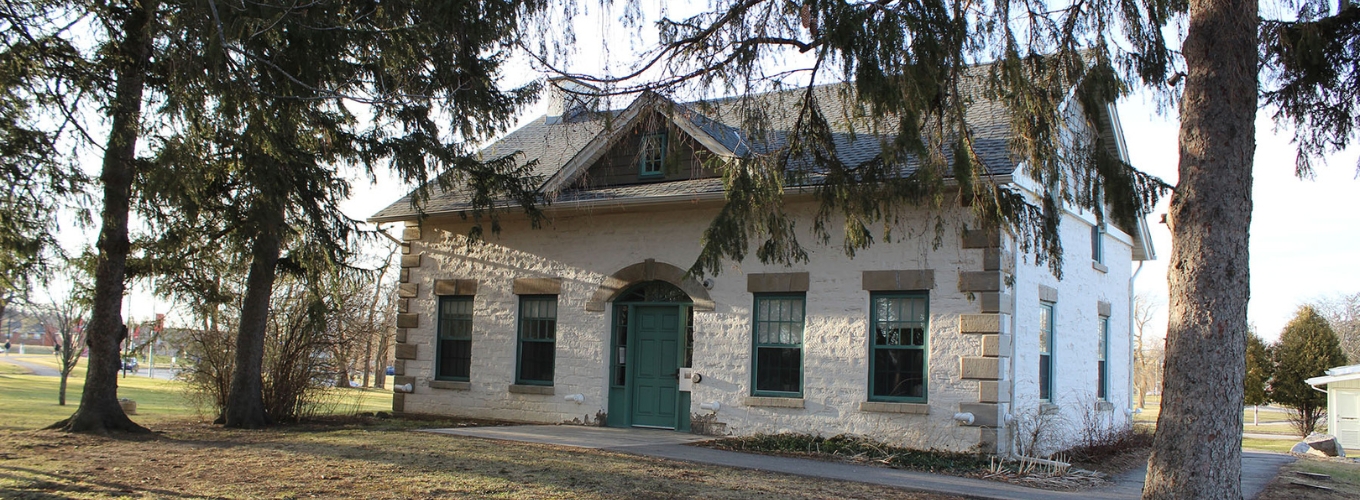
Established in 2011, the Environmental Sustainability Research Centre (ESRC) has served as a focal point for environmental sustainability research, education, and community engagement at Brock University, within Niagara, and beyond.
Transdisciplinary research
Academic programming
Engaging with community
Embracing intersectionality
Acknowledging lands and impacts of settler colonization
Focusing on equity, diversity, inclusion and accessibility (EDIA)
Transdisciplinary research
Research at the ESRC adopts a sustainability science approach. We prioritize transdisciplinarity (defined as collaboration across academic disciplines and with partners outside of the university), close connections between the social and ecological, and solutions-oriented approaches. Faculty Affiliates join the ESRC from across all seven Faculties at Brock.
Academic programming
The ESRC offers undergraduate and graduate programs, including a Minor in Environmental Sustainability (ENSU) launched in 2017, a Master of Sustainability (SSAS) program inaugurated in 2014, a PhD in Sustainability Science (SSCI) introduced in 2022, as well as professional and continuing studies programming launched in the Fall of 2023. The SSAS program offers three learning pathways: a course-based option (12 months), a major research paper and co-operative education experience (16 months), and a thesis (24 months). The SSCI program was introduced in 2022, providing advanced research training via dissertation (4 years).
Engaging with community
The ESRC’s activities are underpinned by research, education, and community engagement. Formal agreements with leading research institutes, government agencies, and organizations enhance our impact. We aim to mobilize and share knowledge by engaging with diverse audiences including research users, students, policy makers, scholars, and local communities through a range of mediums.
Embracing intersectionality
Our Centre is committed to embracing the principles of intersectionality in all facets of our work. Intersectionality acknowledges that individuals hold multiple identities, shaped by various social factors such as race, gender, sexuality, class, and ability, and that these identities intersect to create unique experiences and perspectives (Crenshaw, 1991).
By centering intersectionality in our research, teaching, and community engagement activities, we aim to promote equity and social justice in addition to advancing knowledge and innovation. This Strategic Plan is a living document underpinned by the belief that by recognizing and addressing the complex interplay of power dynamics and identities, we can create a more inclusive and impactful research, teaching, and learning community that reflects the diversity in our society. Maintaining this strategic plan as a living document acknowledges our commitment to continuous learning, and as we do, are open to revising this document to reflect those learnings.
Acknowledging lands and impacts of settler colonization
While Indigenous Peoples and Black people in Canada have distinct yet interconnected experiences with colonization and racism, we acknowledge their history of enduring systemic oppression while actively resisting and challenging colonial forces.
Brock University and the ESRC acknowledge that the land on which we gather, work, teach, and learn is the traditional territory of the Haudenosaunee and Anishinaabe peoples, many of whom continue to live and work here today. This territory is covered by the Upper Canada Treaties and is within the land protected by the Dish with One Spoon Wampum Agreement. Today this gathering place is home to many First Nations, Métis and Inuit and acknowledging reminds us that our great standard of living is directly related to the resources and friendship of Indigenous people. We recognize the role we can take in advancing the Truth and Reconciliation Commission’s Calls to Action, focusing on those which address education for reconciliation and advocating for others such as number 43 which calls for Canada’s adoption of United Nations Declaration on the Rights of Indigenous Peoples framework for reconciliation and commitments to e.g., recognizing that respect for indigenous knowledge, cultures and traditional practices contributes to sustainable and equitable development and proper management of the environment (UNDRIP, 2007, pg. 4).
We acknowledge those who came here as settlers — as migrants either in this generation or in generations past — and those of us who came here involuntarily, particularly those brought to these lands as a result of the Transatlantic Slave Trade and enslavement. We pay tribute to ancestors of African origin and descent and thank them for their contributions towards transforming systems in ways that promote everyone’s sense of belonging and safety.
Focusing on equity, diversity, inclusion and accessibility (EDIA)
Our Centre’s work in equity, diversity, inclusion, accessibility (EDIA), reconciliation, and decolonization is predicated upon the Ontario Human Rights Code that prevents discrimination based on the code grounds that are outlined in the Ontario Human Rights Code (e.g., gender identity, ethnic origin, ancestry, race, colour, etc.).
We will uphold and adhere to the Accessibility for Ontario Disabilities Act, the Employment Equity Act, and Accessible Canada Act and align with their requirements internally within our Centre and in the ESRC’s activities more broadly. We also align our actions with the Scarborough Charter, to which Brock University is a signatory, and sets out principles to address anti-Black racism and promote Black inclusion in Canadian Universities, as well as the objectives and actions related to EDIA, reconciliation, and decolonization set out in Brock’s Strategic Plan 2018-2025, the Faculty of Social Sciences Strategic Plan 2021-2026, Brock’s Strategic Research Plan, and the Brock University Faculty Association’s (BUFA) Collective Agreement 2023-2026. Finally, we align our work with Brock’s commitment to the San Francisco Declaration on Research Assessment (DORA) that promotes transparent and inclusive hiring, promotion, and research assessment procedures.
Objective One:
Foster impactful research through transdisciplinary, community-engaged approaches by faculty, staff, and students.

- Advocate for a new core faculty position for an individual who identifies as Black and/or African and/or of Caribbean, that expands the breadth of expertise by current faculty and acknowledges “the ethical responsibility to give voice to alternative ways of knowing” frrom historically excluded groups. (Scarborough Charter, 2021, p.4)
- Invite faculty from across Brock University to become affiliated with our Centre, creating opportunities for expanded research perspectives represented by the ESRC with a specific focus on inviting affiliates who are Indigenous and who identify as Black and/or African and/or of Caribbean descent.
- Invite others (e.g., research fellows, community members) to participate in our Centre as affiliates. In turn, this creates opportunities for mutual support and collaboration on research activities.
- Commit to continuous improvement through learning and skill building, and holding ourselves and others accountable for “supporting fulsome, transformative inclusion” in the ESRC and at Brock University. (Scarborough Charter, 2021, p. 9)
- Identify opportunities within and beyond the institution to recognize and amplify research achievements by faculty, staff, and students.
- Actively nominate individuals for awards and other forms of recognition, as well as explore additional ways of celebrating impactful research (media segments, community-based presentations, etc.).
- Support faculty research with letters of support for grant applications and administrative support for research assistantships.
- Advocate for funding to support ESRC awards (travel award, etc.) for student research, and prioritize student funding in grant applications.
- Make students aware of funding opportunities beyond the ESRC and institution and focus on ensuring students of equity-deserving groups are made aware of grant and funding opportunities.
Objective Two:
Advance meaningful educational experiences in environmental sustainability.

Over the past five years, the Minor in Environmental Sustainability has given students an opportunity to study foundational concepts, fields of application, and contemporary issues in environmental sustainability. Students have shown a strong interest in this minor with steady enrollment in the minor across faculties at Brock since its inception in 2017. As of 2023, there were 29 students registered for the minor according to figures provided by Institutional Analysis. These figures also indicate that most students who declare the minor come from the Department of Geography & Tourism Studies and the Goodman School of Business.
The ESRC plans to:
- Explore opportunities to collaborate with these Departments to expand offerings for undergraduate students.
- Explore the opportunity to develop an undergraduate program in Environmental Studies in collaboration with the Earth Sciences and Geography & Tourism Departments at Brock.
These efforts are being made based on empirical evidence of strong student as well as institutional priorities regarding transdisciplinary programs.
In Spring of 2023, the ESRC undertook a review of the Sustainability Science and Society graduate program.
There were several recommendations from that review which include:
- improving the co-op experience;
- possible enhancements to Scheme C, including course-based/professional options;
- expansion of Indigenous content, students and faculty;
- virtual course options; and
- making better use of Faculty Affiliates.
We aim to explore these possibilities by liaising with others at Brock and exploring opportunities for collaboration. In all cases, we will pursue what is feasible through evidenced-based decision making.
The ESRC is also adding a graduate micro program to our offerings to create an accessible option for working professionals and a pathway for students interested in obtaining their masters in the future.
In Fall of 2023, the ESRC launched the first of its professional and continuing studies programming, the Leadership in Environmental Sustainability Certificate program. The purpose of this certificate is to provide opportunities for learners of all educational levels and backgrounds. As part of this offering, we have already developed elective credits that address topics such as intersectional environmentalism and sharing knowledge and are developing an additional elective around sustainability transformations.
The environment and sustainability are areas of focus for several units across campus, including the Brock University Students Union, Facilities Management, Goodman School of Business, the Department of Earth Sciences, the Department of Geography & Tourism Studies, and the Yousef Haj-Ahmad Department of Engineering.
The ESRC has and will continue to:
- Connect with academic and administrative partners across to explore synergies for events (seminars, recruitment activities, etc.) and course/program offerings.
- Participate in experiences that support our graduate and undergraduate students, such as visiting stewardship sites at Niagara Parks to support the recently renewed MOU with Brock University, on-campus experiential opportunities with partners such as Facilities Management and interactions within the UNESCO Biosphere.
We will also invite new opportunities, such as exploring possible visits to organizations in the region to deepen understanding of Indigenous perspectives.
Objective Three:
Seek and nurture collaborations that enable solutions-oriented research and strengthen the student experience.

Meaningful partnerships within and beyond academia are foundational to the ESRC’s mission. In the past, we have engaged in innovative partnerships with Brock’s Facilities Management, the Niagara Parks Commission, the Ontario Trails Council, the Freshwater Division of World Wildlife Fund-Canada, seven municipalities within Niagara including the Town of Lincoln, and the Government of the Northwest Territories. Going forward, we will continue to seek these types of collaborations and cultivate partnerships with Indigenous communities and organizations, and those who identify as Black and/or African and/or of Caribbean descent. This objective emphasizes the critical, ongoing role of collaboration in creating meaningful research and practical experiences for students, and in contributing to co-creating contextual, holistic solutions to sustainability issues.
The ESRC will continue to engage in high-impact research that crosses disciplinary boundaries and includes partners from outside the academy, such as members of the Niagara Escarpment Biosphere Network, Plenty Canada, and the Niagara Climate Change Action Network. ESRC understands transdisciplinarity as a process that engages partners from research idea and design through to implementation and impact evaluation, rather than merely in data collection or verification. ESRC operates under the assumption that sustainability research and practice is most effective when it is co-produced by academics and non-academics.
From student research to experiential education, collaborations with academics from multiple disciplines and non-academic partners such as those listed above present endless opportunities for undergraduate and graduate students. Continued provision and exploration of these opportunities remains a top priority for the ESRC.
Objective Four:
Foster a more equitable, diverse, inclusive, and accessible environment while committing to reconciliation and decolonization.

- Engage with the Centre for Pedagogical Innovation to identify opportunities for pedagogical tools and strategies to decolonize, diversify, and increase accessibility of ESRC programs and courses. Invite those with expertise on equity, diversity, inclusion, decolonization, and accessibility to participate in the ESRC’s transdisciplinary seminar series. We will connect with the Human Rights and Equity Office, the Centre for Pedagogical Innovation, and the VP Indigenous Engagement as a starting point for this work.
- Provide professional development opportunities for ESRC faculty and staff, to undertake advanced anti-racism training (e.g., through the Human Rights and Equity Office) to be able to implement initiatives and highlight Human Rights and Equity training opportunities for students in our programs.
- Review and revise existing Centre policies and procedures to align with core principles of human rights.
- Advocate for institutional activities that promote effective human resource practices, policies, and philosophies that improve EDIA, reconciliation and decolonization.
- Update the ESRC’s Employment Equity Plan annually to ensure that it is consistent with both Brock University and BUFAs’ commitments regarding employment equity.
- Execute the ESRC’s Employment Equity Plan to ensure that designated groups* are better represented in the ESRC and within the University more broadly.
- Prioritize opportunities to hire and retain Indigenous individuals and those who identify as Black and/or African and/or of Caribbean descent, including faculty, staff, and graduate students, post-doctoral fellows, and research associates/assistants.
- Prioritize collaborating with individuals across campus to attract and retain Faculty Affiliates and Adjunct Faculty.
- Prioritize attracting and retaining students from equity-deserving groups. In this strategic plan, we focus on Indigenous individuals and those who identify as Black and/or African and/or of Caribbean descent; however, we acknowledge there are many other equity-deserving groups and that often identities are intersectional. We recognize that in order to do this work we will need to connect with the Black Student Success Centre, the Student Justic Centre, and Hadiya’dagénhahs here at Brock.
*This includes women, Indigenous (First Nations, Métis, Inuit) peoples, Black people, persons with disabilities, members of visible minorities/racialized groups, and Two-Spirit, lesbian, gay, bisexual, transgender, queer, intersex, and additional sexually and gender diverse (2SLGBTQI+) persons, as per the Brock University Faculty Association Collective Agreement and the ESRC Rules of Procedure.
Objective Five:
Foster research and knowledge impacts by engaging in knowledge sharing, co-production, and mobilization to gain insights and advance sustainability research and findings.

The ESRC’s administrative staff will work with Brock’s Marketing and Communications team to update the ESRC’s webpages and published documents to meet, with the aim of exceeding, the requirements for compliance with the Accessibility for Ontarians with Disabilities Act.
Enhance efforts to showcase the work and accomplishments of the ESRC’s Faculty, Faculty Affiliates, staff, and students, by creating a streamlined process for sharing content (e.g., via the ESRC’s social media channels, website, and newsletters, etc.). This process is meant to provide all those affiliated with the ESRC opportunities to highlight their work and accomplishments to ensure all voices are amplified and heard.
The ESRC will continue to host regular events to showcase Faculty Affiliates, and student research. The ESRC will also continue to collaborate with others (e.g., departments, institutions, and organizations) on events and activities that are closely aligned with our mission and objectives.
We recognize the value of connectivity among those who have graduated from our programs, both in terms of their career development and as a mechanism to build wider recognition of the value of the ESRC’s programs.
We will undertake the following actions to create the ESRC alumni network:
- Collaborate with Brock’s Alumni Relations office and the Brock University Alumni Association (BUAA) on building an ESRC alumni network.
- Encourage alumni to engage with the BUAA and take advantage of their services and benefits.
- Designate an ESRC alum main point of contact to engage other alumni.
- Build an alumni network page on social media platform(s).
- Host an alumnus ‘’homecoming’ event each year.
- Encourage alumni to host their own networking events, showcasing their career development and opportunities, with logistical support from the ESRC.
- Maintain a database of alumni to support targeted communication and for marketing purposes.
- Participate in BUAA-related events, including their awards program.
Brock University became a signatory on the Scarborough Charter that sets out principles to foster Black inclusion in universities, including recognizing the role and legal obligation that faculty and staff have to be inclusive and “engage constructively with organizations of Black faculty, staff, and students,” like the Black Student Success Centre; to create spaces that “foster Black belonging, knowledge development and sharing”; to recruit faculty through cluster hires and support their advancement through the ranks; and, engaging in anti-Black racism education. Since that time, the Equity, Diversity, and Inclusion Brock University report (2023) was commissioned by the President’s Advisory Committee on Human Rights, Equity and Decolonization; these materials informed development of the ESRC’s actions.
One of the goals of the ESRC is to create a research, teaching, and learning environment that inspires members to undertake impactful work. To create this environment, we must become more equitable, diverse, inclusive, and accessible; while also committing to reconciliation and decolonization. In this strategic plan, we focus our efforts on building relationships and a safe (to the best of our ability) space for Indigenous individuals and those identifying as Black and/or African and/or of Caribbean descent, and continuing to work with the Centre for Pedagogical Innovation to enhance the accessibility of both training for course instructors (i.e. Intercultural Awareness and Competence Resource created by Tricia McLennon, Strategies for Inclusive Courses available from Penn State), and our course materials and the literature from which we draw to enhance representation of Indigenous authors (i.e. Decolonizing Methodologies by Linda Tuhiwai Smith) and those authors identifying as Black and/or African and/or of Caribbean descent. We will create a lending library of books by focused on equity, diversity, and inclusion written by Indigenous, Black, African and/or Caribbean authors.