News

  • Seen & Heard at the ESRC: Research Proposal Presentations

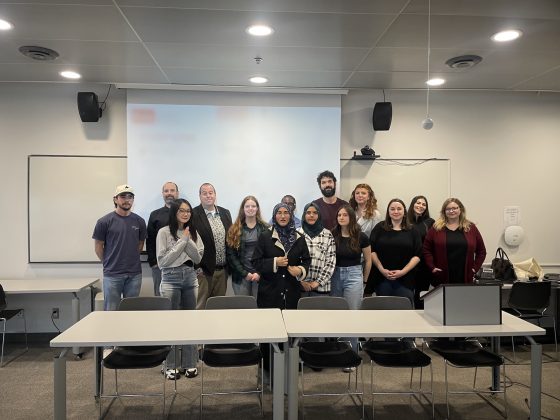
    Another cohort of SSAS and SSCI students have successfully completed their first year in the program – what a year it’s been!

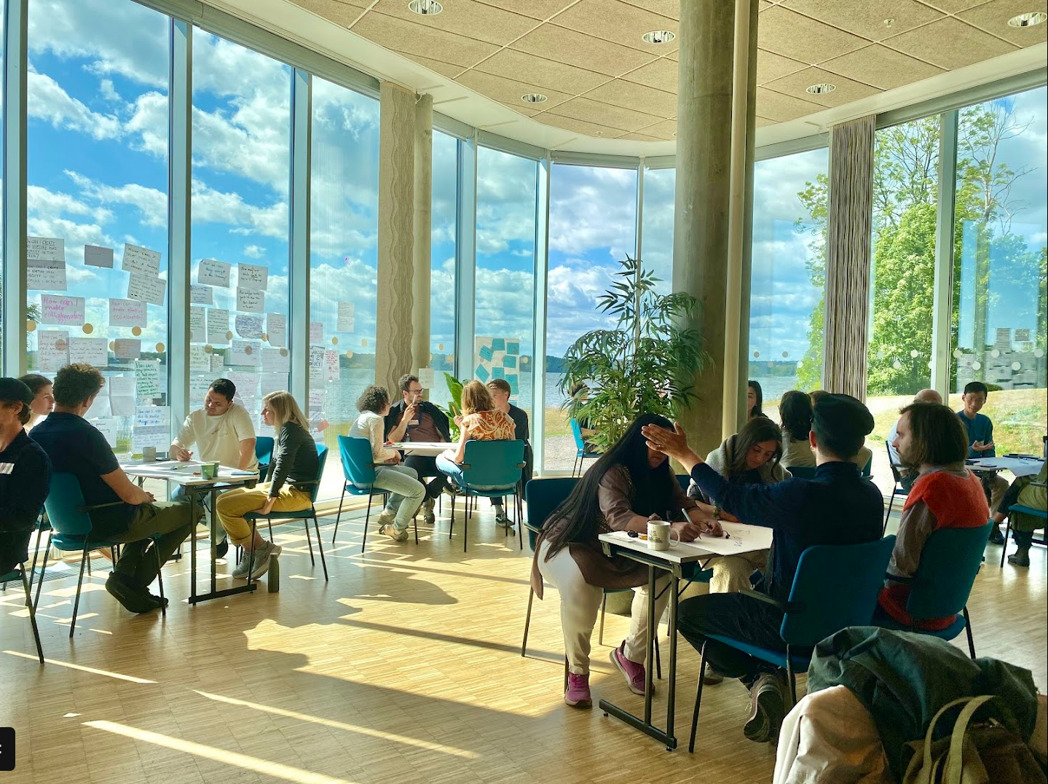
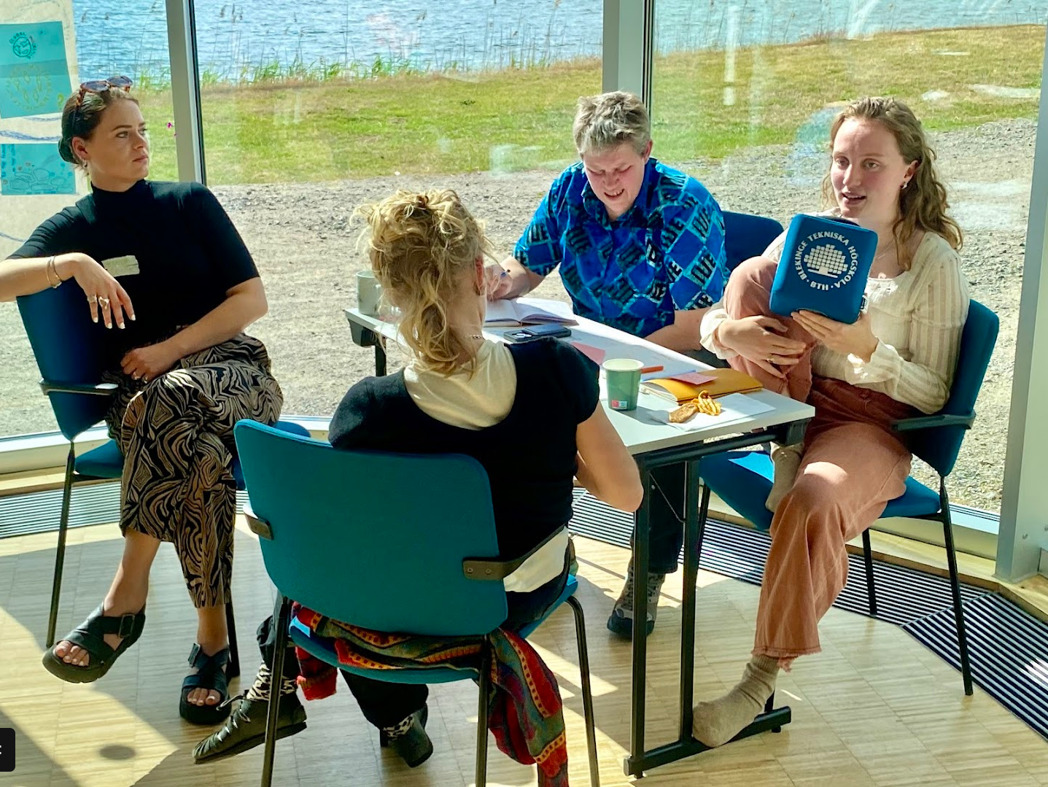
    We celebrated this important milestone with a social gathering on March 31, 2026 – but not before we heard from our students about the research projects they’ve been working on! As part of their Transdisciplinary Seminar course (SSAS 5P04/SSCI 7P03), our students presented on a wide range of topics, including augmented reality interventions, sustainable food systems, trauma-informed outdoor education, climate vulnerability in Caribbean states, and incorporating indigenous worldviews into viticulture practices. This year’s presentations also included video pitches for solutions to sustainability problems in the community that were prepared by SSAS students in the course-based pathway of the program.

    Course instructor Dr. Gillian Dale was pleased with the students and the success of the event. She said of the process, “the assignment benefited students by allowing them a safe space to talk about their initial research plans, gather feedback from their instructors and peers (critical at this stage!), and practice giving a formal talk. Additionally, it highlighted the sheer breadth of topics and research questions in sustainability science, reinforcing what we’ve talked about throughout the course”.

    After a successful Winter term, we are looking forward to seeing what these students accomplish over the Spring and Summer term – be it a co-op placement, the beginning stages of their thesis work, or more coursework!

    Study with us in 2026! We are still accepting domestic applications for all three pathways of the SSAS program – contact us at [email protected] to learn more!

    Categories: Blog, SSAS Program

  • Shaping the Agenda: An Early Career Researcher’s Experience at the Heart of East African Conservation Science

    Blog Contributor: Editrudith Lukanga

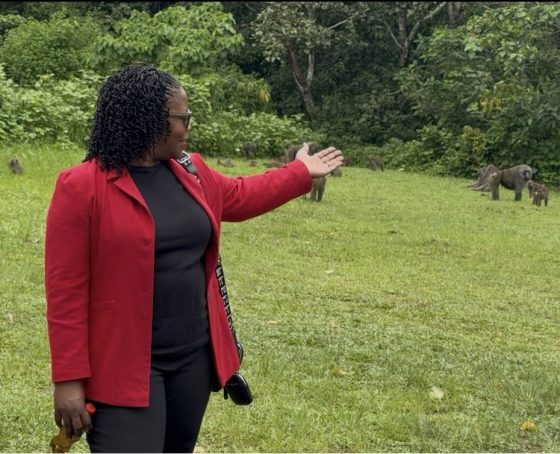
    Editrudith Lukanga with olive baboons on the grounds of Makerere University Biological Field Station, Kibale National Park, Uganda — a daily reminder that the nature-society interface is not abstract.

    “Conservation is not just a biological problem. It is a social one — and East Africa needs its own scholars to lead the science that proves it.”

    Something remarkable happened in Kibale National Park, Uganda, in the last week of March 2026. Twenty-six researchers, early career scholars, practitioners, and senior academics gathered inside a tropical rainforest field station with a shared and ambitious purpose: to write the first conservation social science research agenda for East Africa, led by Africans, grounded in African realities.

    I was one of those twenty-six. Selected from a competitive pool of more than 200 applicants across the region, I traveled from Tanzania, where I was preparing for my PhD fieldwork, to take part in five days that have already reshaped how I think about my research, my role as a scholar, and the possibilities ahead for conservation on this continent.

    This article is my attempt to share what we built together, what it felt like to participate in that process, and why I think moments like this matter not just for conservation but for every early-career researcher who wonders whether their voice belongs at the table where big ideas are made.

    The Gap That Brought Us Together

    For decades, the literature on conservation social science, the field that asks how people, power, culture, governance, and livelihoods intersect with the natural world, has been dominated by scholars based in the Global North. The questions asked, the frameworks applied, and the agendas set have too often reflected priorities that are distant from the lived realities of East African communities, ecosystems, and governance systems.

    My own PhD research sits squarely within this tension. I examine how conservation and blue economy interventions interact with gender norms, power relations, and social structures in small-scale fisheries and coastal social-ecological systems in Tanzania. What I find, again and again, is that policies designed primarily with ecological goals produce uneven and sometimes harmful social outcomes, particularly for women. These are not marginal questions. They are central to whether conservation works at all.

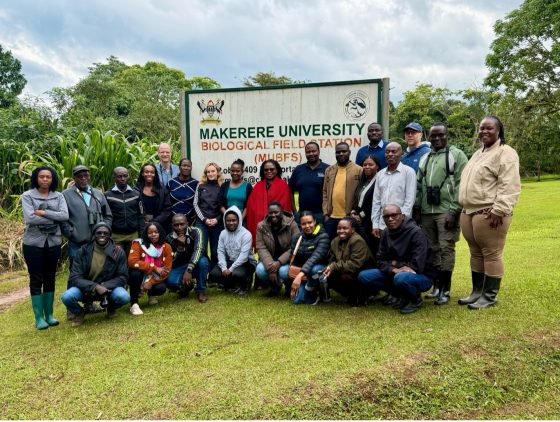
    A group photo of participants during the workshop to develop the conservation social science Research Agenda for East Africa.

    The workshop, co-convened by Professors Chris Sandbrook (University of Cambridge) and David Mwesigye Tumusiime (Makerere University), and funded by the Mastercard Foundation through the University of Cambridge Climate Resilience and Sustainability Research Fund, was designed precisely to address this gap. Not to import a framework from elsewhere, but to build one here, with scholars who know this region, its histories, its politics, and its people.

    Applying When You Are Mid-PhD and Mid-Doubt

    I applied to this workshop while I was preparing to conduct fieldwork in Tanzania, working with fishing communities in Lake Victoria. My supervisor at Brock University, Associate Professor Jessica Blythe of the Environmental Sustainability Research Centre, wrote my reference letter and backed my application with conviction. Her support, as a scholar who deeply understands the nature-society interface, gave me the confidence to submit and to believe that my mix of practitioner experience and emerging academic work was precisely what the organizers were looking for.

    I want to say something plainly to other early career researchers who may be reading this: apply, even when your timing feels imperfect. I was in the field. I was stretched thin. The pool of applicants was formidable. But my background, a decade working with civil society organizations, government institutions, and fishing communities across Tanzania and the wider region, combined with a PhD research focus on governance, gender, and justice in inland and coastal social-ecological systems, turned out to be exactly the blend of experience and emerging scholarship the workshop was designed to bring together. You will not always know when you are the right fit. Submit the application and let the committee decide.

    What Happens When 26 Researchers Build Something Together

    The workshop was held at the Makerere University Biological Field Station, a research campus nestled within Kibale National Park, one of Africa’s most biodiverse tropical forests. Baboons moved through the grounds. Rain fell hard on some afternoons. The setting was not incidental; it anchored us in exactly the kind of nature-society interface we were there to discuss.

    What made the process work was that it never felt like a conference. There were no passive audiences, no lecturers at the front of the room while the rest of us took notes. From the first evening, we were in structured conversation, in pairs, breakout groups, and plenary, generating ideas together and building on each other’s thinking. The facilitators trusted the group, and the group rose to it.

    We began by asking ourselves what a research agenda for conservation social science in East Africa should even contain and for whom. The answers were not obvious. Should it target government agencies? International NGOs? Funders? Local communities themselves? Academic journals? Intergovernmental bodies? We identified all of these as audiences, and recognised that different outputs might be needed for different groups. We also wrestled with something more fundamental: is what we are producing a research agenda, or an agenda more broadly, or perhaps even a manifesto?

    “People and nature thriving together — not as competing priorities, but as inseparable ones. That was the vision the group converged on, almost instinctively.”

    The question of vision was one we returned to throughout the week. Imagining a future in which our research agenda had been fully adopted and implemented, we asked: what would success look like? The responses were strikingly coherent. Success would mean equity and justice, not just as outcomes but as the organizing logic of conservation itself. It would mean African-led research, with local knowledge formally integrated into decision-making. It would mean conservation organizations that genuinely, not rhetorically, center people. And it would mean power structures within the field are more evenly distributed, including who designs the research, who is listed as an author, and who holds the funding.

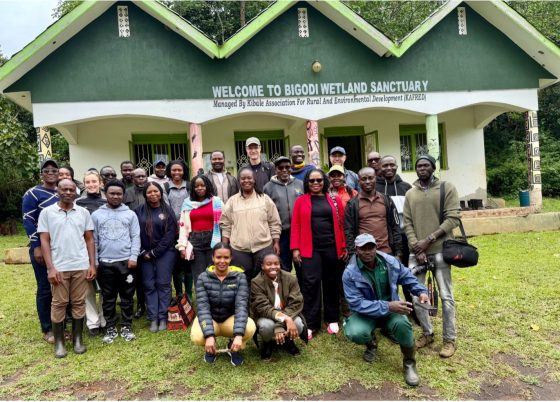
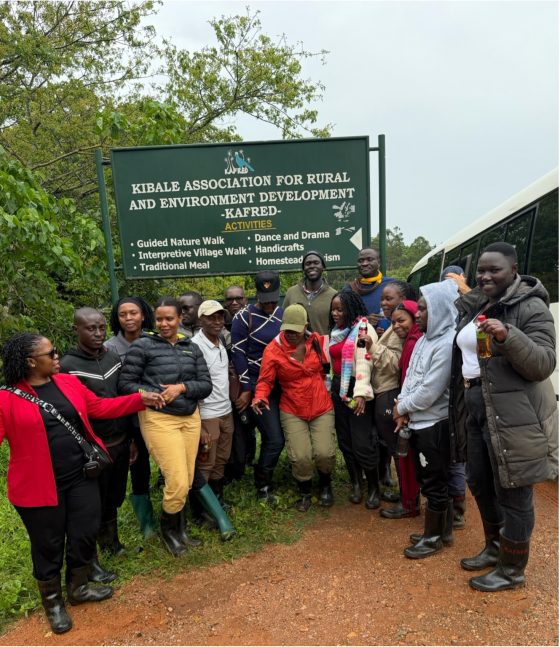
    A field trip to Bigodi, a community at the edge of Kibale National Park, produced the single most clarifying moment of the week. We visited KAFRED (Kibale Association for Rural and Environmental Development), a community-based conservation and tourism initiative, and spent time with Byaruhanga, a long-term member and secretary of the organization. When we raised the topic of social science research, he paused. He associated ‘research’ with biology i.e. frogs, reptiles, species inventories. The idea of research that focuses on people, governance, and power was genuinely new to him. That gap between what social scientists know matters and what communities understand research to be is not a footnote. It is itself a research agenda item.

    Group photo at Bigodi Wetland Sanctuary (KAFRED); the field visit that produced the week’s most clarifying moment

    Participants at the KAFRED entrance sign, the community visit that sparked the conversation about what “research” means

    By the final days of the workshop, the group had mapped a rich terrain of priority research themes covering history and power, conservation governance and tenure, human-nature interactions, and indigenous knowledge and marginal identities, and had turned its attention to a harder question: what do we actually do next?

    We voted. Each participant had five votes to allocate across a long list of possible actions. Three emerged as the group’s clear priorities and became the focus of dedicated breakout groups on the last day.

    The first: writing up the research agenda and publishing it. A group committed to producing two documents, a formal agenda paper and a journal article, likely targeting People and Nature. Sections were allocated to specific authors, with zero drafts due by April 15th and a first full draft by April 30th. I am part of the team working on the Big Picture and Framing section.

    The second: capacity building through short courses. A dedicated group mapped out what this would require, beginning with a Training Needs Assessment across the region, followed by a Training of Trainers process to develop and contextualize materials for East African institutions. The audience for these short courses is broad: researchers, practitioners, academics, from lecturers to undergraduates, and Ministry of Education actors. The group identified specific points of contact and began discussing budget requirements.

    The third: establishing a regional network for conservation social science in East Africa. This was perhaps the most architecturally ambitious of the three. The group designed a CSSR Agenda-EA Network with thematic groups organized around the research priority areas, an open-source repository of research by members, a membership structure open to individuals, students, and conservation organizations, and a resource mobilization strategy linking online presence, mailing lists, and social media.

    Cutting across all three actions was a fourth commitment that the full group adopted together: promoting narrative change. This means actively contacting deans and departments at universities and research institutions across the region, offering guest lectures and seminars on conservation social science, and challenging the persistent institutional bias that positions STEM as the default language of conservation.

    We also agreed, collectively, on two things that belong not in any working group but in each of our individual practices: actually doing conservation social science research, and modeling inclusive, ethical, and community-engaged research in how we do it. These are not strategies. They are commitments.

    What Kibale Changes About a PhD in Sustainability Science

    My doctoral research is rooted in sustainability science, a field grounded in the conviction that understanding the world’s most pressing problems requires crossing disciplinary boundaries, taking local context seriously, and asking who bears the costs and who holds power. Kibale compressed all of that into five days of unusually honest conversation.

    The debates about indigeneity and recognition, the SWOT-B analysis of what is holding conservation social science back across the region, the walk through a selectively logged forest with researchers who could explain the social history behind every cleared patch, these did not give me new data points. They gave me a sharper sense of the landscape my research is part of. They made explicit the political and institutional forces that shape which questions get asked, which voices get cited, and which communities get studied versus consulted.

    I return to Brock with something more than notes. I return with co-authors, collaborators, and colleagues. I return as a contributor to a document that will shape the direction of conservation social science Research in East Africa. And I return with a clearer understanding of what it means to position research not just as knowledge production, but as a form of advocacy for more just and inclusive ways of living with nature.

    To the Early Career Researcher Wondering Whether to Apply

    I want to end with something direct, because it is what I wish someone had said to me more clearly earlier in my career.

    Apply to things that stretch you. Not the things you are perfectly positioned for, but the ones that are one step further than where you think you currently stand. The selection committees for workshops like this one are not looking for finished scholars. They are looking for emerging ones, researchers who bring genuine curiosity, field experience, real questions, and the intellectual courage to sit in a room with people who know more than they do and contribute something anyway.

    Ask for the reference letter. The support of a supervisor who believes in your work matters enormously, not just to the application, but to your own sense of whether you belong in the room. I am grateful to Prof. Jessica Blythe, whose letter highlighted my strengths with specificity and whose encouragement made the application feel worthwhile.

    Be in the field. Some of the most important things I know about conservation and society, I learned not from journal articles but from spending time with fishing communities on the  Tanzanian coast. That knowledge, qualitative, contextual, and relational, is not a lesser form of expertise. At a workshop like Kibale, it is exactly what is needed.

    Let the experience change your questions. I came to Kibale with a research agenda. I left with a sharper one. The conversations, the field visit, the disagreements, the surprising consensus, all of it refined what I think matters and why. That kind of recalibration is worth more than any single paper.

    The Conservation Social Science Research Agenda for East Africa will be published later this year. It will be African-led, community-grounded, and theoretically ambitious. When it arrives, I hope it opens doors for researchers across the region, for communities who have long been studied but rarely heard, and for a generation of early-career scholars who have been waiting for a seat at the table where the questions are set.

    That table now exists. Pull up a chair.


    Editrudith Lukanga is a PhD Candidate in the Sustainability Program at the Environmental Sustainability Research Centre (ESRC), Brock University, supervised by Associate Professor Jessica Blythe. Her doctoral research examines governance, gender, and justice in small-scale fisheries and coastal social-ecological systems in East Africa. She participated in the Nature-Society Research Workshop, Makerere University Biological Field Station, Kibale National Park, Uganda, 23–27 March 2026.

    The workshop was co-convened by Makerere University and the University of Cambridge (Professors David Mwesigye Tumusiime and Chris Sandbrook), with funding from the Mastercard Foundation through the University of Cambridge Climate Resilience and Sustainability Research Fund.

    Categories: Applied Research, Blog, SSCI Student Contributor

  • 2026 ESRC Spring/Summer Courses

    Whether you want to jump on the fast track to graduation, reduce next year’s course load, satisfy a program requirement or pick up an elective, Brock’s Environmental Sustainability Research Centre (ESRC) is offering a wide array of Spring/Summer courses to help you advance your area of study and explore topics of interest.

    Spotlight: Micro-certificate in Environmental Sustainability

    ASY – ASYNCHRONOUS ONLINE

    Are you passionate about understanding and tackling pressing issues such as climate change, resource depletion and pollution? Add a competitive edge to your resume with a micro-certificate in Environmental Sustainability!

    • Study sustainability issues from a transdisciplinary perspective and think outside the traditional boundaries of your discipline.
    • Develop environmental awareness and fundamental skills that today’s employers seek and society needs.
    • Explore the practice of environmental sustainability in a variety of fields such as agriculture, transportation and tourism.

    Designed for anyone interested in environmental sustainability, to complement an existing degree pathway or as a standalone micro-certificate, the micro-certificate in Environmental Sustainability is awarded upon completion of ENSU 2P01: Introduction to Environmental Sustainability (offered in the spring) and ENSU 2P02: Environmental Sustainability in Practice (offered in the summer) with a minimum 60 percent overall average. Learn more about how you can apply for the micro-certificate as a new or returning Brock student.

    The micro-certificate in Environmental Sustainability can complement degrees in Political Science, Geography and Tourism Studies, Earth Sciences, Economics, Business and others.

    We are also offering SSAS 5V84: Pro-Environmental Behaviour this Spring! Registration opens March 3.

    For more information or to register for Brock’s Spring/Summer courses, visit brocku.ca/springsummer

    Categories: Blog, Micro-certificate in Environmental Sustainability

  • SSAS Field Journals: Cairns Tour with Facilities Management

    Blog Contributor: Ruth Horn

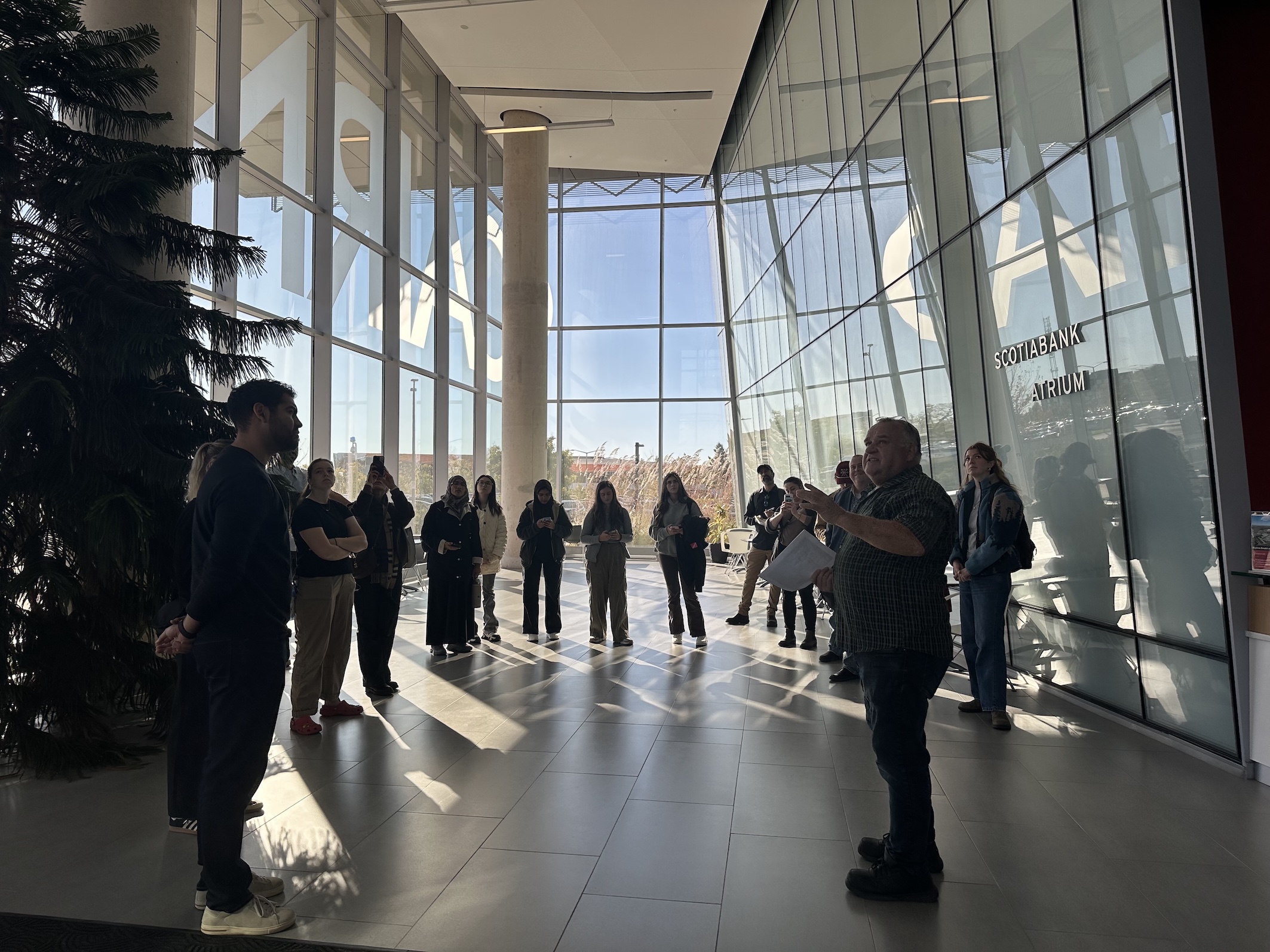
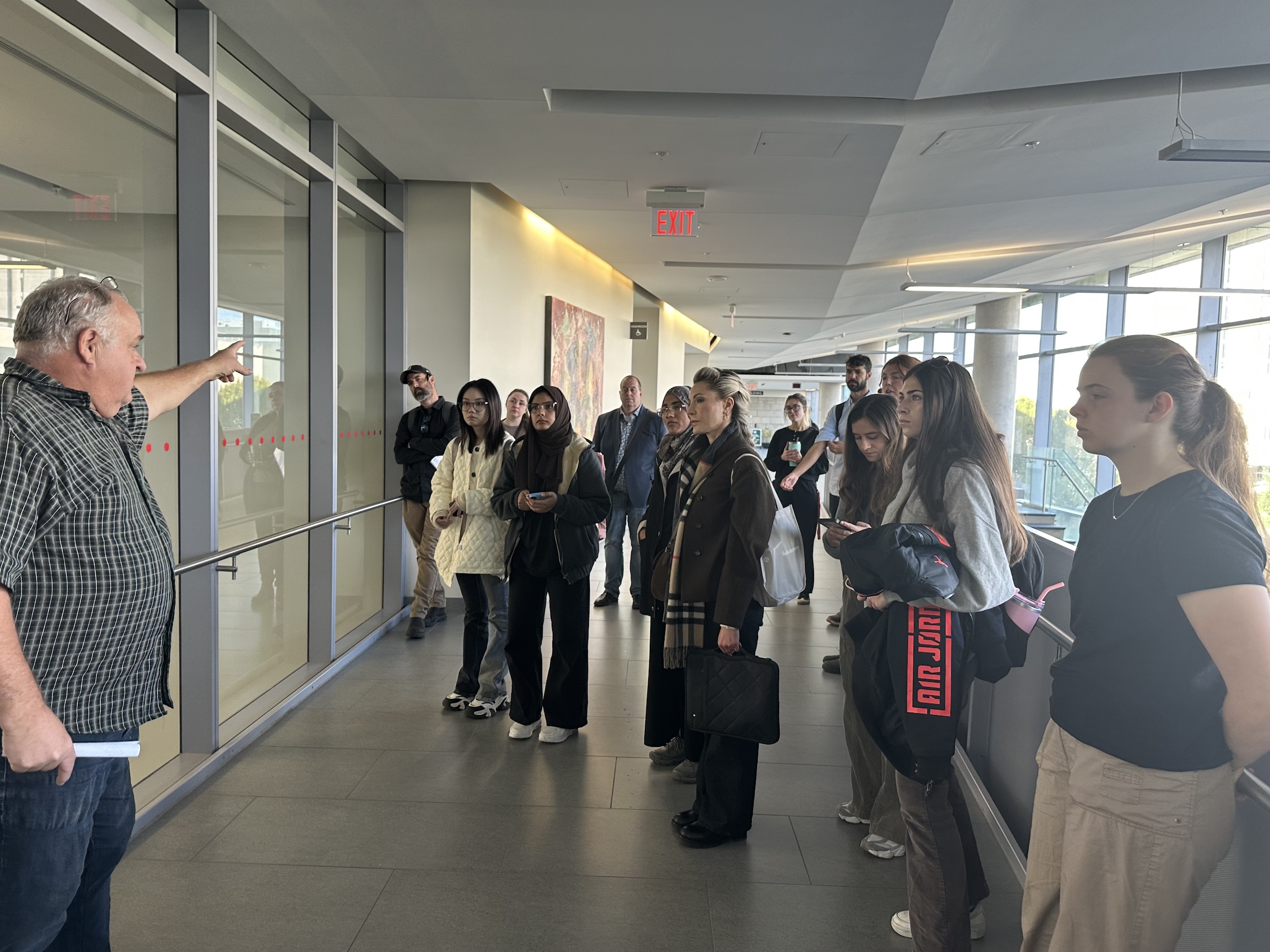
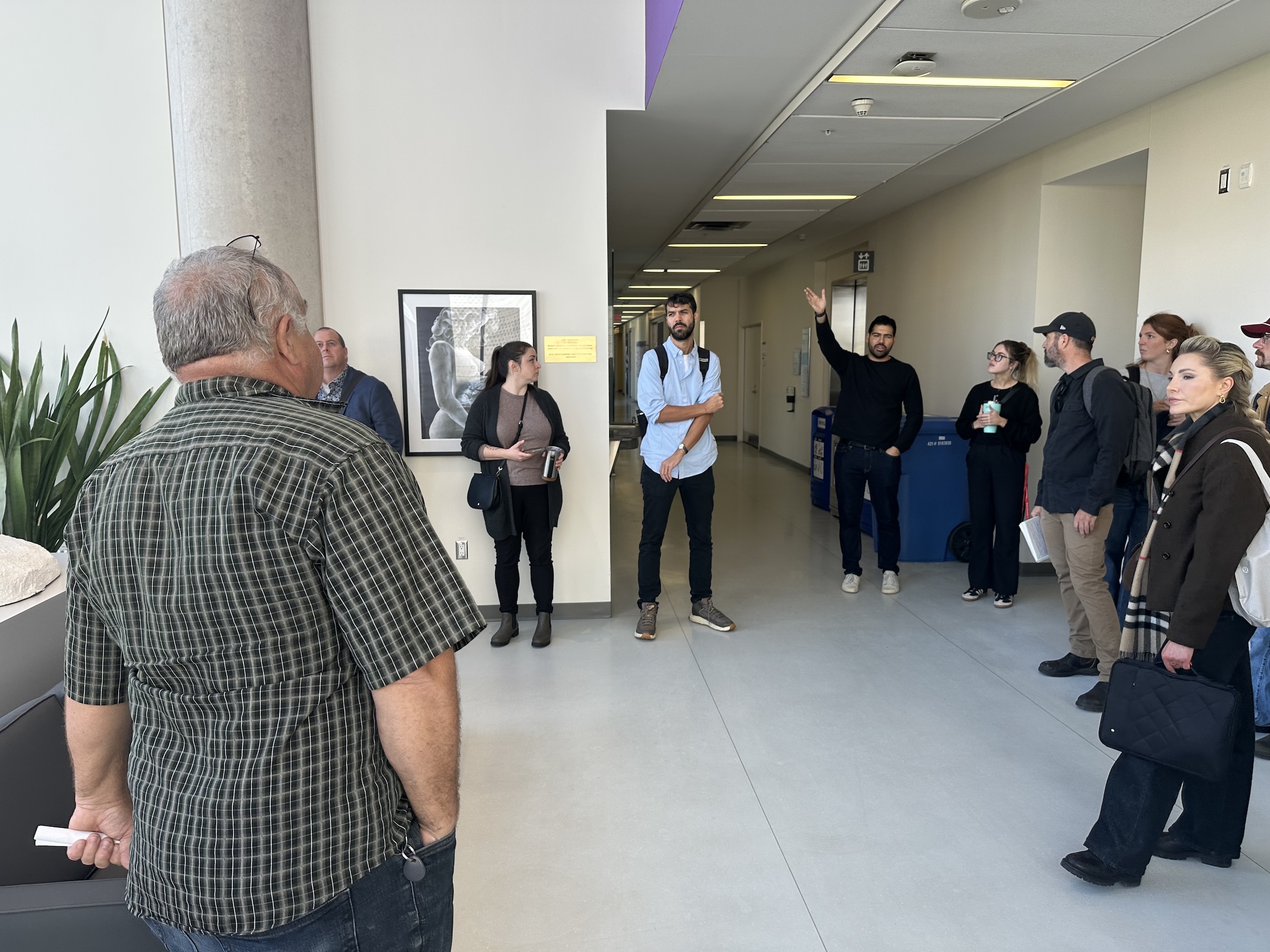
    Before touring the Cairns building, I’ll admit that I didn’t know what LEED certification really meant. I had heard the term before, but I couldn’t have explained what made a building “green” beyond maybe using less energy or recycling more. Walking through Cairns completely shifted that understanding. I realized that sustainability in architecture is far more complex and intentional than I ever imagined. It’s about designing every detail to serve a purpose for people, the planet, and even long-term economics.

    What impressed me right away was how the building integrates environmental and social sustainability together. For example, the overhangs and angled glass walls aren’t just aesthetic, they’re also designed to control light and heat, reducing the need for extra cooling while still making the space bright and inviting. Even something as simple as the main staircase was planned to encourage active living by drawing people to use it instead of the elevator. I’d never considered that architecture could influence behavior like that, but it made me see sustainability as something that connects to daily life, not just big systems.

    The technical parts of the tour were really interesting as well. The system that circulates air through the concrete floors to regulate temperature was something I never would have thought existed. It made me realize that sustainability can be incredibly innovative. It’s also about using the structure itself as a living system to save energy. I also found the huge fresh-air intake cool. I hadn’t thought about how buildings that include labs need 100% fresh air, or how that can be balanced with energy efficiency. The solutions built into Cairns showed that sustainability doesn’t mean sacrificing safety or performance. It’s about finding smart ways to meet both needs.

    The containment labs were another example of that balance. Hearing about the specialized materials, the hydrogen chloride-resistant caulking, and the acid-neutralizing glass pipes showed me how seriously safety and long-term durability are considered. It was also surprising to learn that the building uses a central steam plant and reverse osmosis water for temperature and humidity control. Every system seemed to be part of a bigger, connected network.

    One of the most unexpected things I learned was how much behaviour matters. The example of fume hoods left open wasting energy really stuck with me. It made me think about how even the most advanced sustainable building still relies on people making conscious choices.

    Overall, this tour turned sustainability from an abstract idea into something tangible and exciting. I came away seeing it as both an art and a science. It’s something that requires creativity, collaboration, and constant problem-solving. It also made me curious to keep learning, because I can now see how sustainability connects to almost everything: design, technology, health, and the way we live every day. 

    Categories: Blog, Experiential Education, SSAS Program, SSAS Student Contributor

  • SSAS Field Journals: Trails Tour with Facilities Management

    Blog Contributor: Ruth Horn

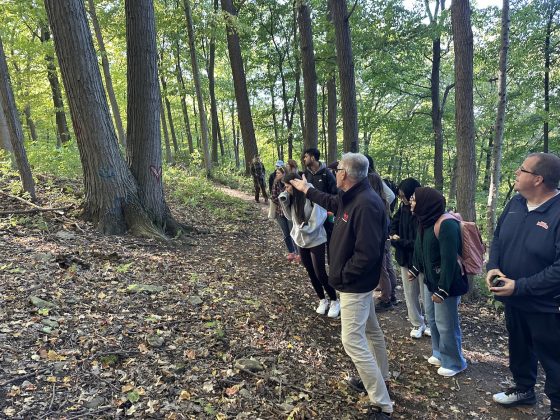
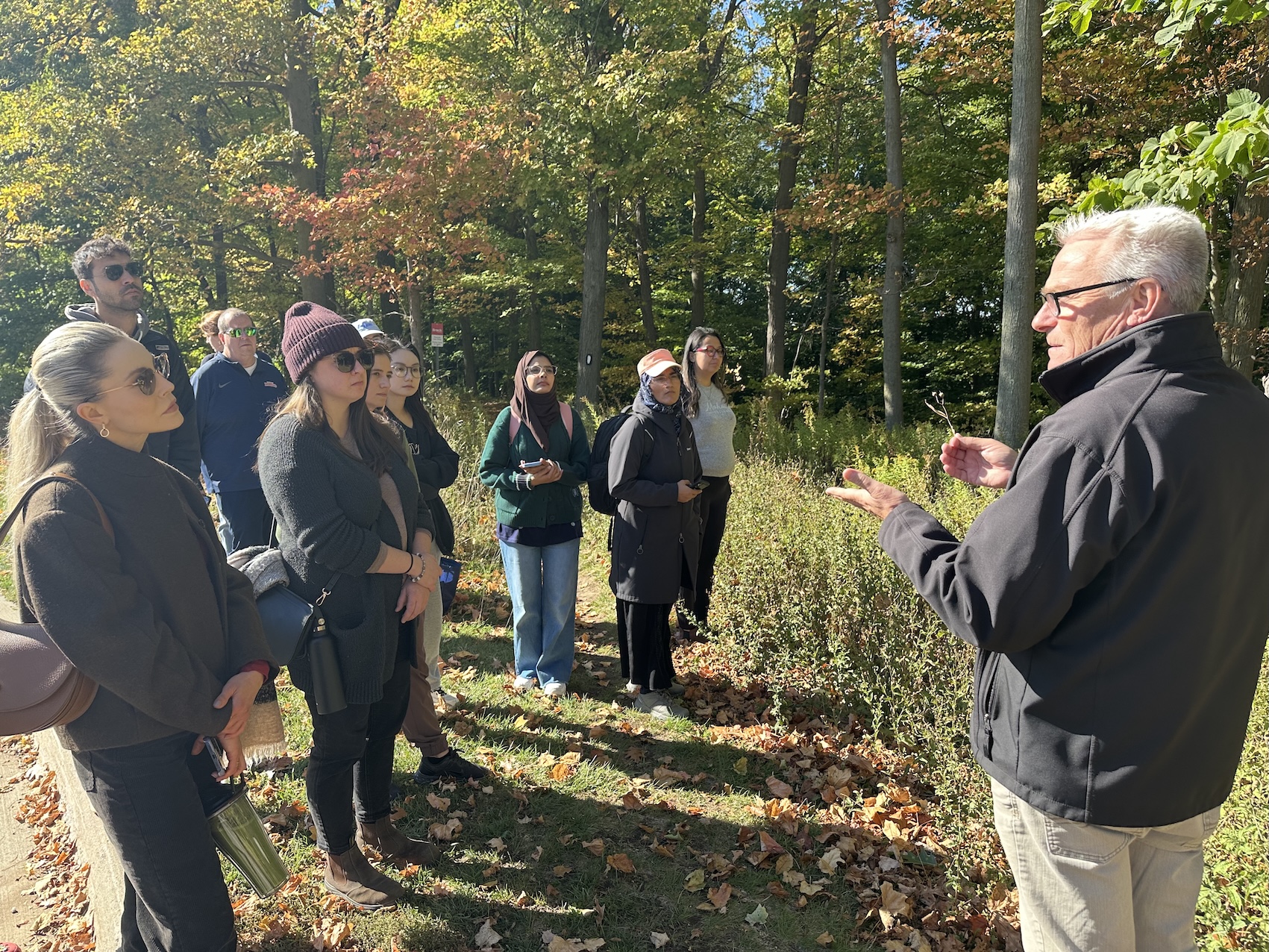
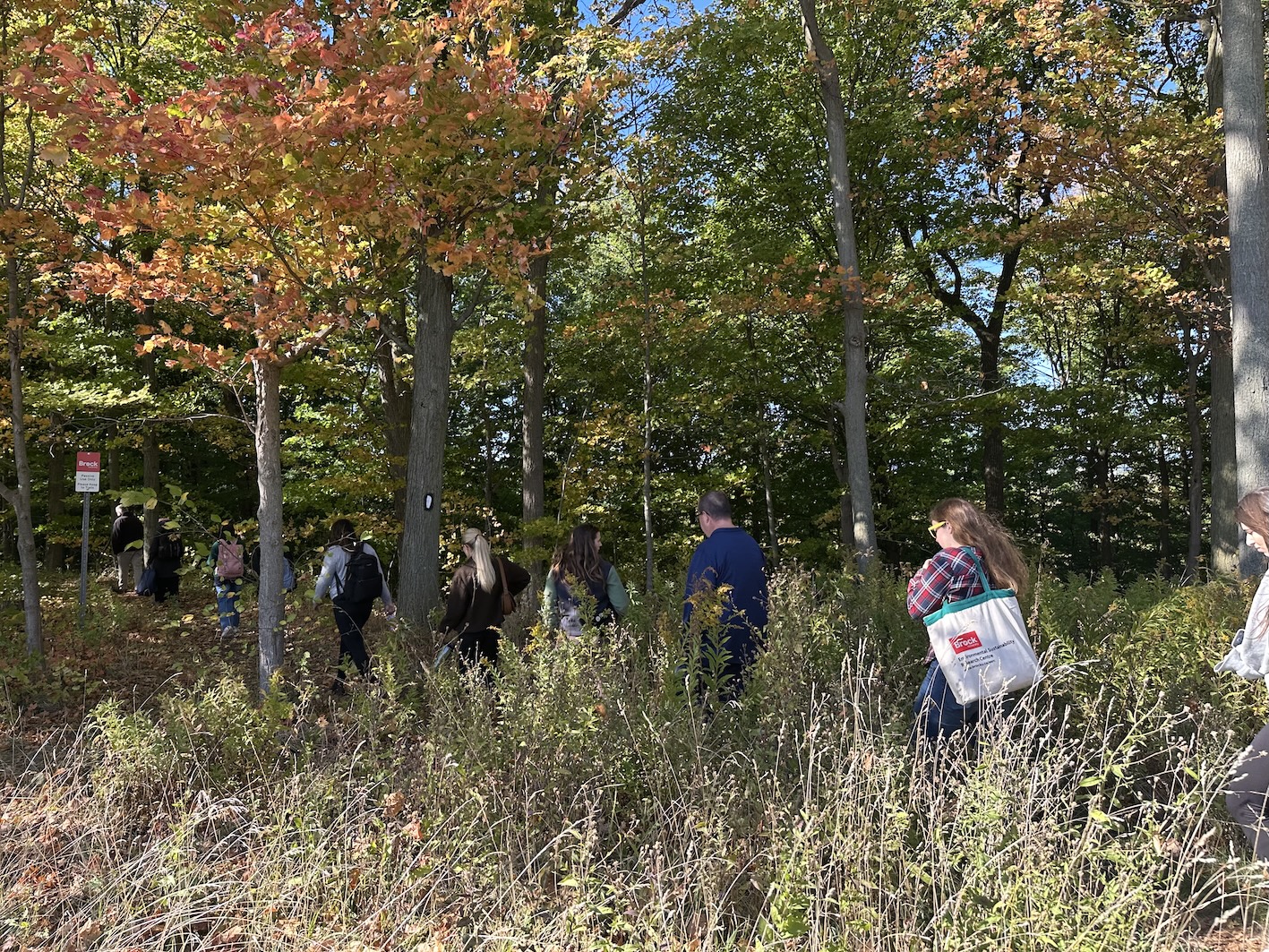
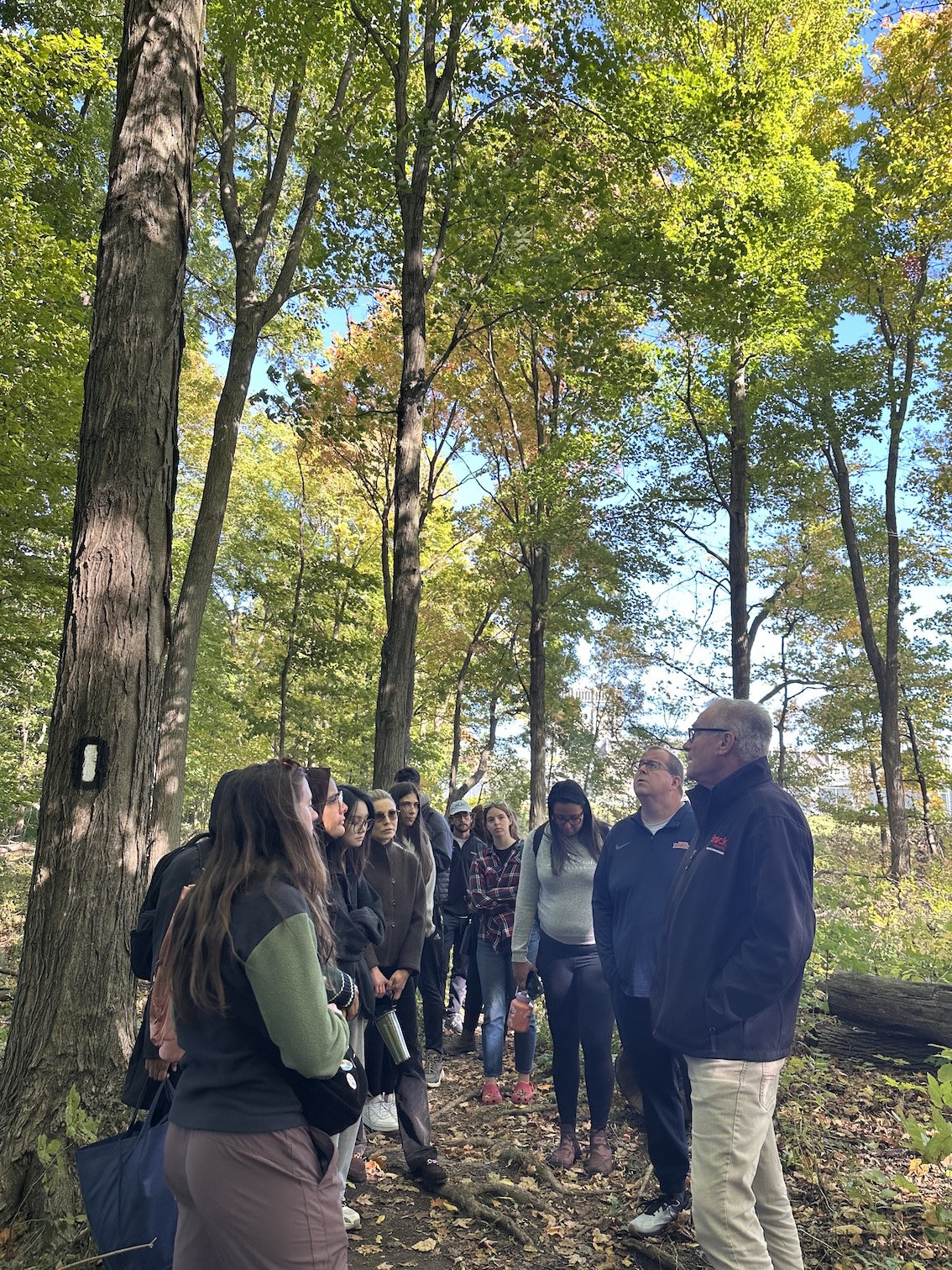
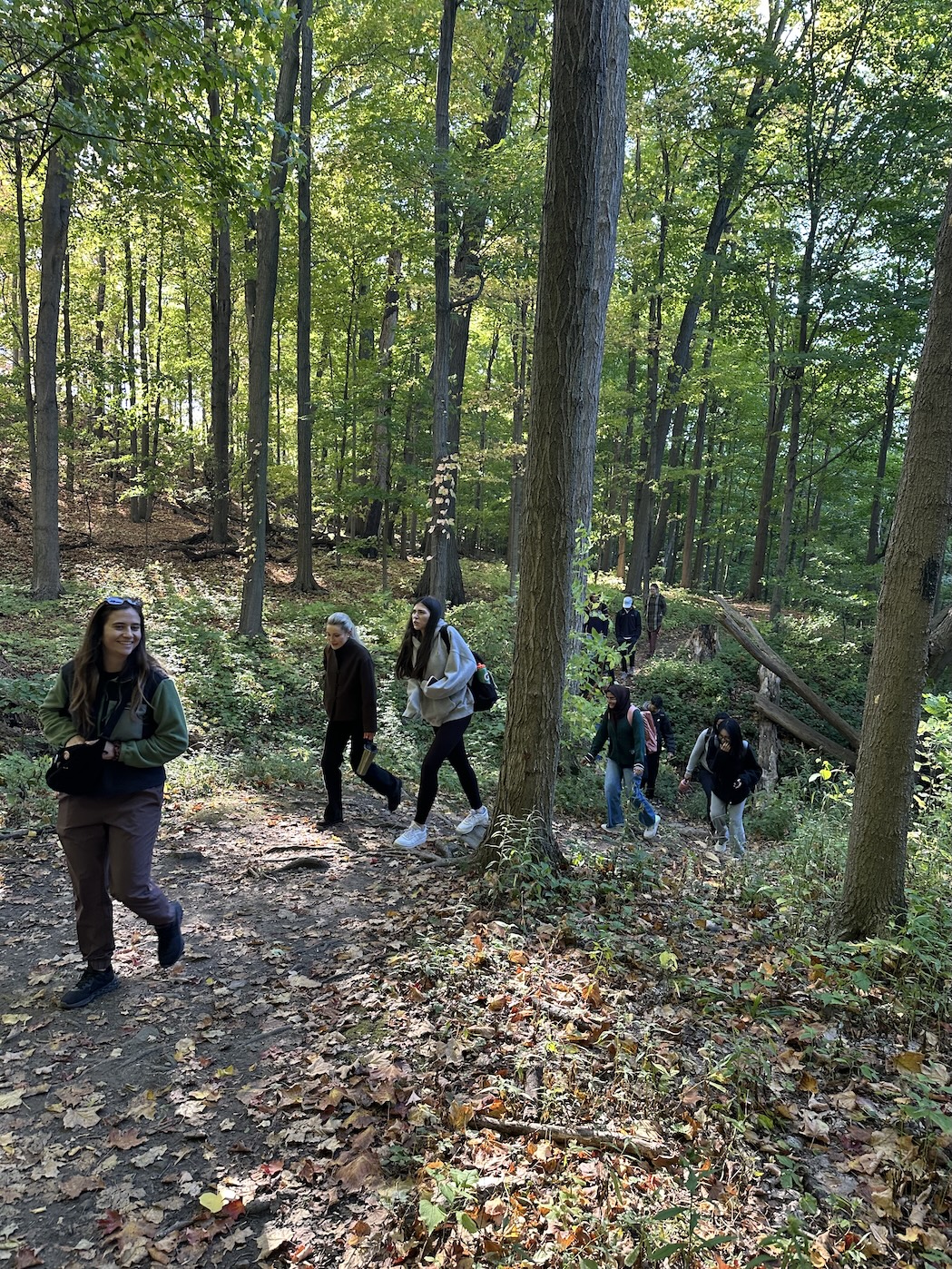
    The trails tour with Facilities Management was a completely different kind of sustainability experience from the other site visits and significantly more in my wheelhouse. Instead of high-tech systems and machinery, this one was all about observing how nature, infrastructure, and human use interact in real time. The tour opened my eyes to the small, often invisible ways that sustainability plays out in everyday landscapes.

    One of the first things I learned was about hedgerows and “utility mulch”. I’d never really thought about the idea of a hedgerow before. It’s such a simple feature, but it serves multiple purposes like providing habitat, acting as a buffer, and supporting biodiversity. The conversation about “no fire breaks” also got me thinking about how management decisions balance ecological value and safety. I realized that even what looks like an untouched natural area can actually be a carefully managed space shaped by both ecological and practical concerns.

    Hearing about the infrastructure beneath the trails was also fascinating. I was surprised to learn that three major water mains run underneath, carrying all the drinking water for St. Catharines and that the system will soon supply Niagara-on-the-Lake too. The idea that the forested area I was walking through was quietly sitting on top of a vital water system made me think about how much infrastructure is hidden in plain sight. It connected to the broader sustainability concept of systems thinking: how different networks (natural and human-made) overlap and rely on one another.

    One of the most memorable parts of the tour for me was learning about the effects of something as simple as mountain bike ruts. I had no idea that when people ride the trails in the rain, the tire tracks can change how water runs off, increasing erosion and even redirecting runoff. It was such a small detail, but it really stuck with me, especially as someone who bikes along those trails. It showed how small actions by individuals can have physical, lasting impacts on an ecosystem. It also made me think about shared outdoor spaces and how fragile they can be if not cared for properly.

    I found it interesting to watch our guide point out plants and trees as we walked. Seeing him notice trees and plants he hadn’t seen before and identify species in real time was helpful as this is something I would like to do in the future and it reminded me that I don’t need to know everything before sharing the information I do have. It gave me a better appreciation for the kind of ongoing observation and maintenance that goes into managing natural areas.

    Overall, the trails tour reminded me that sustainability isn’t just about new technologies or large-scale systems. It’s also about awareness, observation, and care for the environments we walk through every day. It made me notice how many layers of life and infrastructure coexist on campus, and how much we depend on both human effort and natural balance to keep them thriving.

    Categories: Blog, Experiential Education, SSAS Program, SSAS Student Contributor

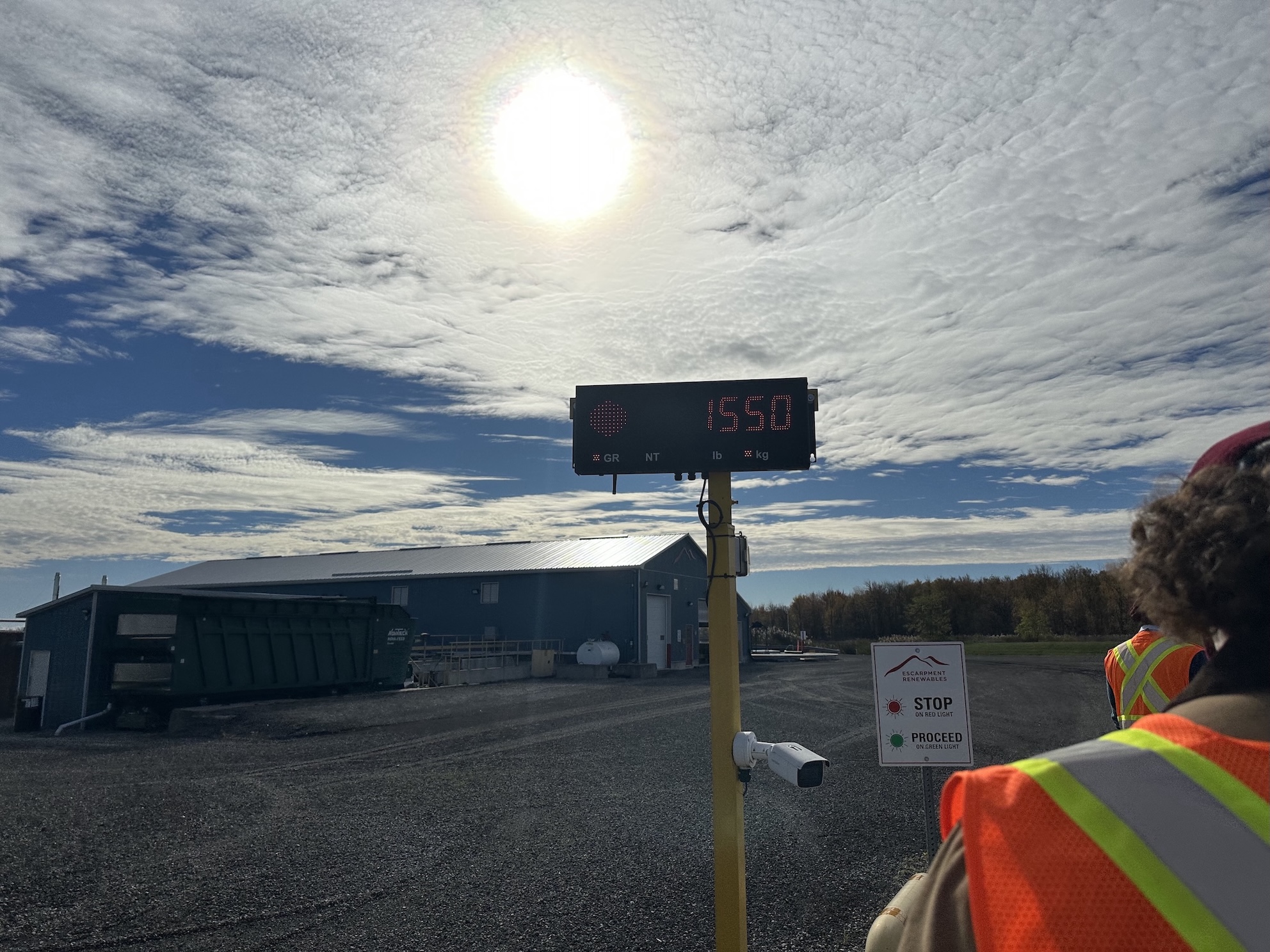
  • SSAS Field Journals: Escarpment Renewables

    Blog Contributor: Ruth Horn

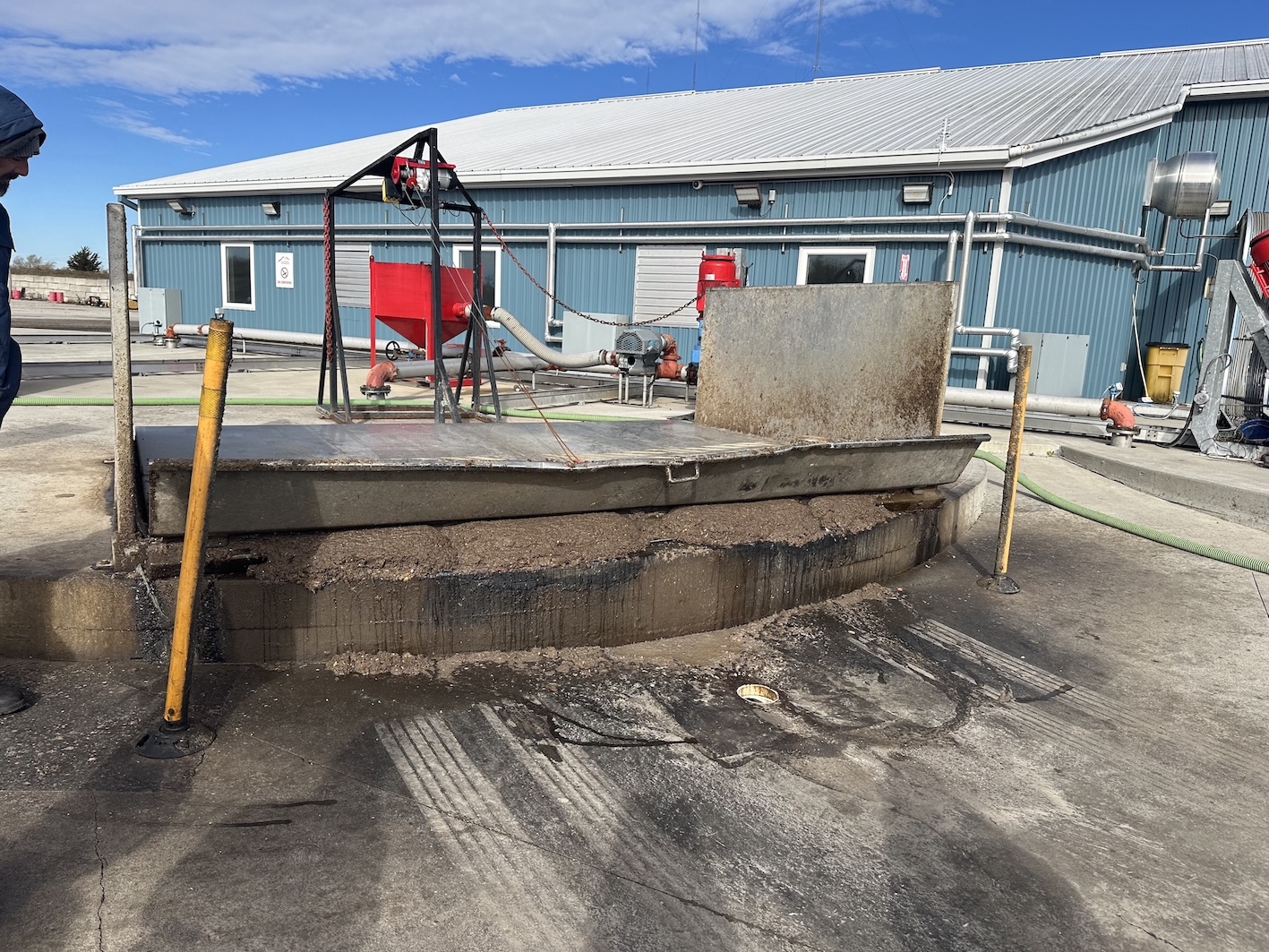
    When I arrived at Escarpment Renewables, I honestly thought we were visiting a coffee cup recycling plant. It was not at all what I was expecting which ended up being really neat. I learned a lot. I learned that the facility is part of a much larger, interconnected system that transforms organic waste into energy and that discovery completely changed the way I think about “waste” and what can be done with it.

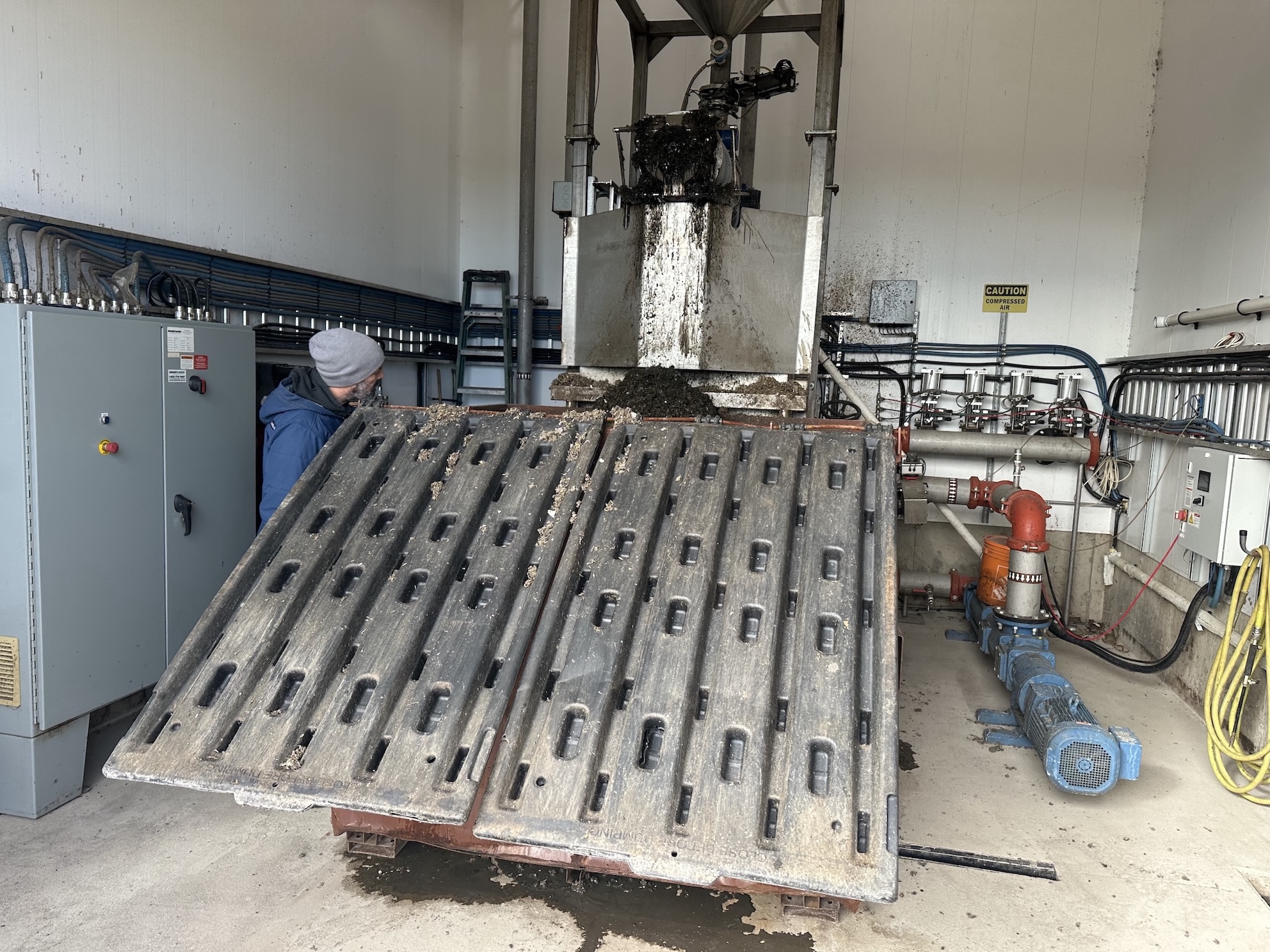
    The process starts before the waste even arrives. I learned that Davidson, and other companies like it handle the first step by separating the organic and inorganic parts of things like coffee cups. The organic sludge from that process is then sent to Escarpment Renewables, which is owned by Miller Waste. I found it fascinating to realize how many different players are involved in making one system of waste diversion work. Each part is specialized, yet dependent on the others. It made me appreciate the scale and coordination needed to make sustainability happen beyond the individual level.

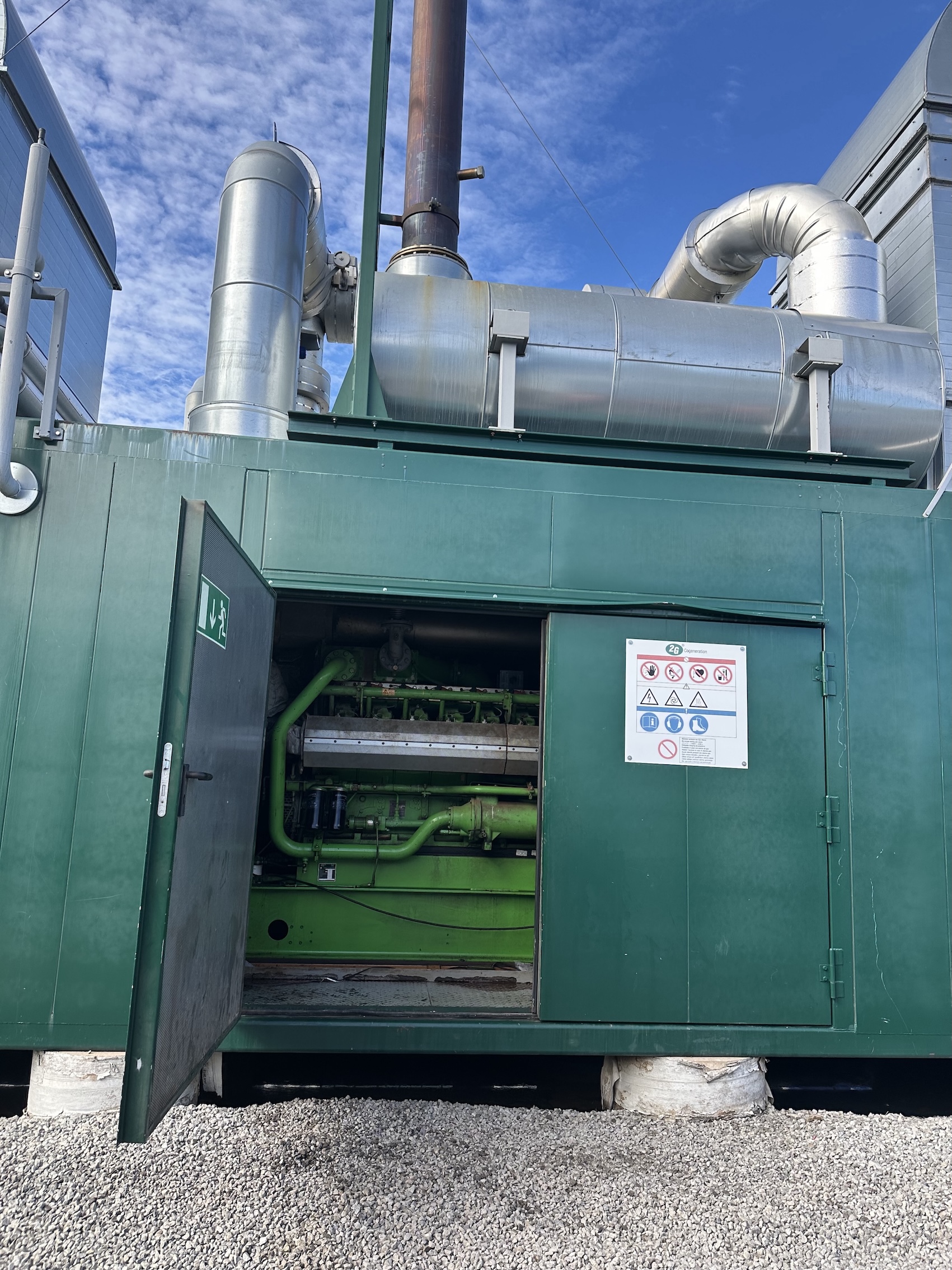
    The anaerobic digestion system itself was unlike anything I had seen before. The waste is heated to about 70°C with glycol to pasteurize it before spending around 40 days in massive digesters that are 20 feet deep. Inside, the material breaks down without oxygen, producing methane gas that’s collected in rubber bladders. That biogas is then used to generate about one megawatt of power per hour. That energy is used to power their own machines and then the extra energy is sold back to the grid. Learning that the heat used to maintain the system actually comes from the generator itself showed me how circular the process is. Nothing is wasted, not even the energy used to keep things running.

    I was also surprised to learn how carefully the system is maintained. There are weekly, biweekly, and monthly checkups for pumps, choppers, and pneumatic bulbs, and the digesters are fully cleaned every four to five years. It takes a whole month just to prepare for that process. That level of planning and care gave me a new respect for the people running these systems. The fact that there are just three operators, one engineer, and a manager is surprising. It’s a small team managing a massive operation that quietly supports sustainability for the entire region.

    What struck me most during this visit was how much of the waste process happens out of sight. When we throw things “away,” we rarely think about where “away” actually is. Seeing how 90 tonnes of waste a day can become biogas and organic fertilizer made me realize that sustainability isn’t just about recycling, but that it’s about innovation, chemistry, and constant problem-solving. Even the leftover solids that can’t be used are carefully handled and sent to landfill, while the liquid is turned into organic manure that goes back into farms.

    Leaving the tour, I felt like I understood the word “renewable” in a much deeper way. Escarpment Renewables isn’t just a waste facility. It’s also a reminder that with the right systems, waste can become a resource, and sustainability can literally power our communities, even if it started out as a failed project by the municipal government. 

    Categories: Blog, Experiential Education, SSAS Program, SSAS Student Contributor

  • Reflections on Field Work in New Brunswick

    Blog Contributor: Hannah Marlen Lübker

    Photo credit: Kalen Mawer

    (Hannah is currently working on the first study of her PhD, a photovoice project, with environmental stewards in New Brunswick. The study consists of two interviews and the taking of photographs and explores empathy with human and non-human others.)

    With my fieldwork almost completed and my time in New Brunswick coming to an end yet again, I found myself reflecting on the past three months, which were exciting, exhausting, and an overall transformative experience for me.

    I set out to interview 30 environmental stewards – using a fairly broad definition of stewardship – and travel around the province to visit them in a place of their choosing. I had hoped that my interviews would feel like conversations between friends, and that I would not only get answers to my questions, but learn something about the person, their non-human companions, and the place they are stewarding as well.

    My expectations were far exceeded, as many interviewees took me on little adventures: We went on an excursion guided by a horse, we hugged trees while praying to Jesus, we hiked various backyards, nature preserves, and national parks. Most days I came home covered in mud and mosquito bites, but with renewed hope that we can still make a change.

    Not only is empathy the main topic of my research, it is the guiding principle of my work and the way in which I perceive this environment, which is still pretty novel to me. Exploring a forest with someone who is intimately familiar with every tree, listening to their stories, following along in my imagination, attuning myself to their point of view, opened up entirely new ways of connecting to both people and place.

    While it is too early to report on results of this research, I can say with certainty that I have learned a lot, felt a lot, shared a lot, and that I am grateful for this community, who is not only fighting for nature, but doing so with unwavering love, care, humor, and creativity.

    Categories: Blog, SSCI Student Contributor

  • First Year Experience Blog: Madelaine Legault

    Blog Contributor: Madelaine Legault

    Madelaine Legault standing in front of trees.

    Madelaine Legault is a first year PhD in Sustainability Science student. She is currently working under the supervision of Dr. Liette Vasseur and her research interests are in sustainable agriculture, food systems resilience, food security, environmental justice, and seed sovereignty. In this blog, Madelaine summarizes her experience in the first term of her PhD program.

    What inspired you to pursue graduate studies in environmental sustainability? 

    Well, there are many things that led me to apply for this program, and I think I could go on about these things for hours. But for one, for as long as I can remember, I have always loved gardening. I have fond memories of learning from my grandmother and mom in their gardens, so I have been learning about (and in) nature all my life. My undergrad and first graduate degreewere in gender studies, which is a transdisciplinary field like sustainability science. During these studies, I tended to focus on the concepts of food security and environmental justice. After I finished my first graduate degree, I went to work in the field—literally. I was lucky to work in community gardens, at non-profits, and on commercial farms. These experiences helped push me towards the subject of food security, justice, and sustainable food systems. When I was looking at programs that would support this line of research, the Environmental Sustainability Research Centre seemed like the perfect fit. 

    Can you describe a typical day in your program? 

    Every day is a little bit different than the last. Some days, I have courses to attend, where I engage in the theories underpinning sustainability science and the research methods that support it. Our class sizes are small, so I feel like we have a great chance to really engage with the topics and each other. Everyone comes from a different academic background, so a multitude of perspectives are involved in our discussions. These courses are also built to be interactive and experiential, so we are really getting a good mix of theoretical and practical knowledge. 

    When I’m not in class or doing course work, I am working as a teaching assistant and as Graduate Student Ambassador. I am also meeting with my thesis supervisor, Dr. Liette Vasseur, who is an incredibly inspirational tour-de-force. She has helped me apply for scholarships and conferences, and is showing me how to do a scoping review. I have so much to learn, and I know that she is there to help me get the most out of my graduate education. 

    What program experiences have had the most impact on your thinking? 

    The more experiential aspects of the courses have been helpful in broadening my understanding of the scope of sustainability science. We’ve done field trips to parks and natural sites undergoing restoration, to biogas facilities, and around Brock to study green building design, energy systems, and the Escarpment biosphere. So much of our education is built around engaging with our community and surroundings. 

    I also think that my fellow students have challenged me in the best ways. Our discussions inside and outside of the classroom have opened my eyes to the world of sustainability-related careers and endeavors out there, and to the multitude of perspectives that are necessary to unpack the complicated subjects of climate crises and solutions. I have learned to considerdiffering opinions as opportunities to grow my capacity for empathy and understanding. 

    What opportunities have you had to develop your research skills, whether through fieldwork, publishing your work, etc.? 

    When I started this program a few months ago, I doubted my research abilities. It had been a while since I was in school, and the only other “real” academic research I had engaged in was for my graduate degree. I had never written with the aim of publishing, and had a bit of imposter syndrome, thinking that this lack of publications meant I was not as good as my peers or ready to be in a PhD program. My supervisor, Dr. Vasseur, has been instrumental in building my confidence while building my skills as a researcher. She has not only opened doors for me to present my work but has guided me in building skills through practice. For example, I am currently writing a scoping review with her guidance, for which I am developing my own data collection and analysis protocol. Once I am done with this review, I will be able to use it as part of my thesis and can revise it for publication. I no longer feel like I am out of my depth and am excited for the new opportunities that I know I will encounter under her supervision. 

    How do you stay motivated when facing complex environmental sustainability challenges? 

    I feel as though I am constantly riding waves of hope and grief. I grieve the losses we face due to overlapping crises, and I grieve the future that feels perilous. I try to balance that grief by tethering myself to hope. To hope is a radical act in a world shaped by oppression and fear. Some of the ways I balance these feelings are by seeking out “good” news stories on achievementsin sustainability and environmental justice, or studies on successes in the struggle for a more sustainable future. I also look to art and poetry to balance these feelings. Mary Oliver always seems to have the right words.  

    Ultimately, I am most motivated when I feel connected to others who are overwhelmed like me and who are trying to balance these feelings, too. We are each others’ tethers to hope. I look at the wonderful people in this program and know that we are connected in this feeling, and are all working on solutions—and that is absolutely cause for hope. 

    What advice would you give to someone considering graduate studies in sustainability science? 

    Do it! Please go for it. I hesitated for years, but when I finally applied and entered this program, I knew it is exactly where I need to be. We need all hands on deck, and as many perspectives as possible to address this wicked issue. Take what you are good at, what you are passionate about, and focus it on helping your fellow creatures weather this storm. You have so much to offer. We welcome you to the fight! 

    In terms of practical advice, I say make connections when you can. Attend workshops, have challenging discussions, introduce yourself to others in the field, apply for committee positions, and write as much as you can (even if it is in the notes app on your phone). 


    Categories: Blog, Program Reflections, SSCI Student Contributor

  • First Year Experience Blog: Kinza Qureshi

    Blog Contributor: Madelaine Legault

    Kinza Qureshi standing in front of trees.

    Kinza Qureshi is a first year student in the thesis pathway of the Master of Sustainability program at Brock University. She is working under the supervision of Dr. Marilyne Carrey and her research interests are in community resilience to climate change through nature-based solutions, sustainable development, and planning. She recently spoke to PhD in Sustainability Science student and graduate ambassador Madelaine Legault about her experience in her first term of the SSAS program.

    What inspired you to pursue graduate studies in environmental sustainability?  

     I decided to go into the field of environmental sciences for my undergrad, because in my country, I had seen a lot of issues regarding the environment, like flooding. There were not manyagencies in my country focused on the environment. There were a few that were working, but they were not getting the funding for that, so I decided to choose this pathway to help my people and to learn. I was studying environmental sciences broadly, and now I’m narrowing down to sustainability, because that’s the future. 

    How would you describe your typical day in the program? 

    Lately, I have been super busy with assignments, coursework, and TA work, so my days are honestly packed. I am also starting to work on planning my thesis with my supervisor. Right now, we are working on a topic. My focus is on the climate crisis and the communities that are directly affected by it. I want to build an empathy element by understanding their experiences, and I’musing geospatial data, remote sensing, and augmented reality to collect and present the impacts.  

    How do you think your research will contribute to sustainability science? 

    I had not previously considered the part that empathy plays in sustainability science. But now I realize that if we look at empathy and the way people have emotional connections with the subject, it could be an opportunity to engage with large audiences to let them know what the future would look like if we were all on the same page. It can shift people’s thinking towards sustainability and to work for the environment. Whenever we want to change something, we as a person need to change ourselves. And one thing that we all need to change is our empathy for nature and for the next generation. We are the last generation that has a chance to think about the future. We have to think about it. So, I think that empathy element in my research would look at the psychological connections to nature. And it could help bring a change in how we think of our future. 

    What program experiences have had the most impact on you? 

    Oh, I would say the field trips and like the “talking tree” project we are working on right now in SSAS 5V82 have really opened my mind. In my undergrad, I always wanted some practical experience, rather than just theory. So, these are opportunities for a different kind of learning rather than just pure theory. It’s a lesson that always stays in your mind. Like the tunnel tour we did, you can see that there’s a whole system underground that you didn’t know about before. 

    How has the program faculty and your peer group supported your academic journey? 

    My supervisor, Dr. Marilyne Carrey, has helped me a lot. She always encourages me to go to conferences and seminars, and she shares different opportunities inside and outside the university. She sees me and listens to what I want for my research. That’s really helped me because I’m from a different background, I have a different language, and I have to think before I speak. So, it’s really difficult for me, but she helps. Other than that, I would say my classmates are so friendly and help me whenever I need help. I just go and ask someone, and they’re always there to help.  

    How do you stay motivated when facing or when thinking about these complex and often very overwhelming crises? 

    One thing that motivates me is the idea that what I am facing today, I don’t want my future people to face. I have a connection with them. I don’t want my child to grow up in a world where they have no clean air to breathe, where they have issues like flooding and climate crisis or food insecurity issues. I think of future generations.  

    What advice would you give to someone considering graduate studies in sustainability science?  

    Oh, I always tell people to join this field because it’s growing and it’s the future. There are doctors that specialize in human beings, and people specialized in engineering, but students of the environment specialize in both nature and humans. I think this is an opportunity that is growing, and I would suggest that people come and explore. They would love this field! 

    Categories: Blog, Program Reflections, SSAS Program, SSAS Student Contributor, SSCI Student Contributor

  • First Year Experience Blog: Makenna Kollo

    Blog Contributor: Madelaine Legault

    Makenna Kollo standing in front of trees.

    Makenna Kollo is a first year student in the course-based pathway of the Master of Sustainability program. She recently sat down with PhD in Sustainability Science student and graduate ambassador Madelaine Legault to share her experience in the SSAS program as she finishes her first term.

    What inspired you to pursue graduate studies in environmental sustainability? 

    I completed my Bachelor of Recreation and Leisure Studies at Brock University, and through that, I did a lot of outdoor educational courses that were centered around our relationship with the environment. Climate change and climate action have been very important topics, especially with younger generations, and it was instilled in us that you cannot have a relationship with an environment or a natural space that no longer exists. So, my inspiration was trying to preserve, maintain and sustain environments for future generations to also have the same opportunities that I had as a child, like going to summer camp. I feel very passionate about it. I feel as though I can make a change. 

    How would you describe your typical day in the program?  

    I have four classes this term, so that leads me to be on campus three days a week for structured activity.  On Mondays, I have a biology course at night. Typically, I will do my readings and get everything done on Mondays and then go to class.  On Tuesdays and Thursdays, I also have classes. Those days involve me generating conversations with other students and faculty to broaden my perspectives and learn more about sustainability topics that are not within my scope of interest but expand my knowledge through conversations with my peers. And then I typically move on to a group meeting or work with my peers to work on projects together. It’s crucial in this role to try and think of other perspectives on sustainability. Overall, my days involve a lot of collaboration with faculty, staff, students, as well as other partners (both on and off campus) involved with the program. For example, this term we are working with Facilities Management at Brock and partners at Niagara Parks Commission. 

    What program experiences have had the most impact on you? 

    It almost feels like we’re doing an internship of sorts with different organizations in our courses with more experiential learning components. For example, right now we are working with the Niagara Parks Commission in SSAS 5P02 with Dr. Lina Taing. It feels as though we’re working directly with them towards a goal. Having the opportunity to work directly with an organization like that opens so many doors. It’s something I can speak about in interviews and in job applications. 

    I’m also thoroughly enjoying SSAS 5P82 with Dr. Marilyne Carrey. It is completely changing my perspective on what nature-based solutions are, because we are diving feet first into what they could be, rather than just learning the theory while sitting in a classroom. It is fully experiential, and she has developed this course where it is all to the beat of your own drum. We work collaboratively as a class towards a final goal. For example, we’re creating a “talking tree” tour right now. We’re choosing a tree, and we’re explaining how it’s impactful on the environment around it, and then also how we’re connected to the tree. We’re also talking about why you should care about it, and why it’s important. My tree is the eastern white pine, which is typically found within eastern Canada, and it is the provincial tree of Ontario. I have a tattoo of it, I’m super into it! 

    How has your understanding of sustainability science evolved since starting your graduate studies? 

    I’m embarrassed to admit it, but I was a small thinker before I came into the program. I thought of sustainability strictly in terms of environmental sustainability in natural landscapes. I was thinking of forests, mountains, fields, things like that. But for example, in one of our courses, we’ve done a tour of the energy system on campus, and through that I was able to understand that it’s not just cost effective when you turn off your light bulbs or your light switches or unplug something, it’s actually better for the environment.  

    In our courses, we talk a lot about international implications and sustainability sciences in our courses. It takes my understanding from a local to a global level. It’s broadening my horizons.  

    How has the program faculty and your peer group supported your academic journey? 

    There’s not a single time that I speak to my professors when they don’t have a smile across their face.  They are so welcome to new ideas about the program, about how they teach, even about what you have to say about a topic, which really makes it more intriguing and appealing to go to class. They are guideposts that I have definitely clung to. 

    As for my peers, I just love listening to people talk. We have backgrounds in chemistry and aviation, and water resource management, and then we have someone working in the wine industry, and then we have a politician. There’s just so many vastly different perspectives and somehow, we all care about the same things. It’s just so interesting. It’s making me a better person just to sit with them and hear why they care about sustainability. It’s amazing that we get to come together and all work towards a common goal while being such different people and still staying true to ourselves at the same time.  

    I think every vantage point is also so necessary in this field, because addressing this issue is arguably like the largest target that we will ever have. And it is not a solo job, and solutions do not come from one perspective but from a community of people that have banded together to make a change. And that’s what we’re seeing is happening here. 

    How do you stay motivated when facing or when thinking about these complex and often very overwhelming crises? 

    I’m going to share a story. Last year, maybe two years ago, I think it was an El Niño year, where we saw a lot of climate events happening. I was on a side of social media that was just full of doom. I would go on my phone and I would scroll, and I would see glaciers melting, a volcano in Iceland is blowing up, hurricanes, countries going underwater… I hated the fact that I could scroll past these news events and not think about it again. Part of me staying motivated comes from not wanting to see these things happen again. If I give up, I’m just one more person that’sconforming to the idea that someone else will fix it. So, I say, why not me? I’m so grateful that I get to have an education and that I get to be here, to have networking possibilities to advance into industries that can push for these changes. It’s not something that everyone can do in their lives. So, I take every day with grace.  

    What advice would you give to someone thinking about graduate studies in sustainability science?  

    Stay true to yourself. There’s a lot of people out there that don’t believe in sustainability science or have differing opinions about it. And I would say if this is where your heart lies, stick with it. You will be fruitful in any endeavor that you pursue when you are passionate about it. Also take every opportunity that comes to you. Someone asks you to volunteer? Do it. Someone asks you to join this class with them? Do it. If someone asks you to sit down for a coffee chat, absolutely do it. Because the best way to build and learn is to listen to other people. So, if you’re thinking about doing a masters in sustainability science, I say jump in, feet first. Take the risk. Take as many risks as you can but be true to you. 

    Categories: Blog, Program Reflections, SSAS Student Contributor, SSCI Student Contributor