Updates of the Chair

  • MEOPAR Project: Impact of Climate Change on Agriculture

    Vineyards in the Niagara region, like the one pictured above, taken in May 2019 by Liette Vasseur, are among are among those impacted by climate changes.


    When we think about the effects of climate change, we most often think about the planet becoming warmer, melting glaciers, biodiversity loss, flooding and drought. What many of us may not realize, however, is that the food we consume, and the way it is grown, is also impacted by climate change.

    Farming communities all over the world are bearing the brunt of climate change. Changes in precipitation, for example, means that there may be less water available for irrigation, and can lead to droughts during the growing season. With extreme rainfall, on the other hand, soils can become saturated, which delays crop planting and can lead to lower overall crop yields.  Warmer weather can also lead to increases of invasive pest species that can become a financial burden and drain on resources for farmers. Climate change can also result in increased cooling requirements and energy costs for greenhouse operators and inflict higher heat stress on animals and livestock.

    While farmers in some regions are struggling to grow crops due to droughts, the excessive rainfall and flooding experienced in other regions are wreaking havoc for others. The Niagara region has experienced both of these extremes (flooding in the spring, droughts in the summer). This can impact local farmers not only financially, but emotionally, as well. Under these conditions, it may become increasingly difficult to maintain production. Climate change adaptation is therefore an important step to ensure agricultural sustainability.

    Examining the possible strategies to adapt to climate change is a good first step and the  MEOPAR Research team will be holding focus group meetings on these issues. The first will focus on agriculture,and will be held on October 31 at 8:30 am in Beamsville. For details, contact [email protected]

    The researchers involved with the MEOPAR project are working to raise awareness about the impacts of climate change and how communities can effectively adapt, and increase resilience, to these changes. Follow along with these articles every week (written by researchers Liette Vasseur, Meredith DeCock, Bradley May and Pulkit Garg) to learn more about the project and how you can get involved. You can also visit the project website at brocku.ca/unesco-chair or contact the team via email at [email protected]


    Categories: MEOPAR-Lincoln Blog, Updates of the Chair

  • MEOPAR BLOG: Green Spaces and climate change

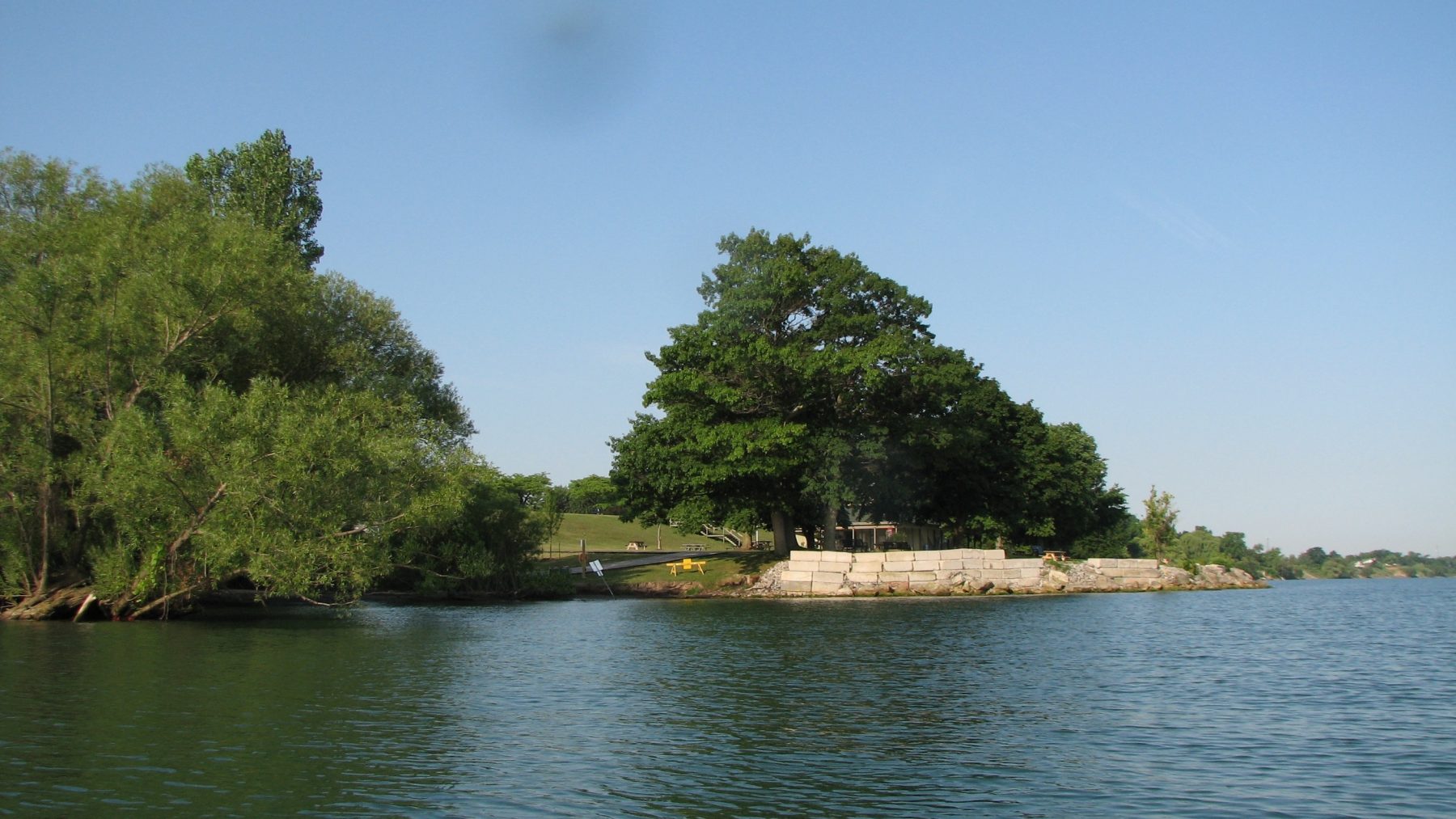
    An example of a green space in the Town of Lincoln is Charles Daley Park.


    Research has shown that cities with well-maintained green spaces are more sustainable and have citizens that are happier and healthier. But what exactly are green spaces and why are they so important?

    A green space is an umbrella term that refers to an open area such as a park, sports field, nature reserve, forested area, and natural meadow, that have been integrated into our built environment. They are rich in biodiversity as they are home to numerous animals and plants that would not normally exist in the built urban environment. Green spaces represent a fundamental component of any urban ecosystem to maintain various ecological, health-promoting, aesthetic, and recreational functions.

    For example, trees in green spaces help filter out harmful air pollutants and airborne particulates to keep our air clean. They also have aesthetic and recreational values. Green spaces serve as sites for social interactions and help build positive attitudes among people. They contribute positively to people’s physical and mental health by helping to reduce stress, anxiety and depression. Some cities have even transformed green spaces into gardens, where members of the local community can spend time planting and tending to vegetables and congregating and developing relationships with fellow gardeners. This is all in addition to harvesting the food they have grown.

    Trees and shrubs in green spaces contribute to climate change mitigation by capturing carbon dioxide, one of the major greenhouse gas emissions. Through shading buildings and people, trees keep the urban areas cooler by dissipating the heat accumulated in landlocked urban settings. Placed strategically around buildings, they can reduce sun and heat exposure during the day and reduce winds.

    Maintaining and utilizing green spaces and promoting plant diversity within them is important for communities seeking to reduce their footprint and enhance their resilience to climate change. Effective participation and involvement of everyone in the community is critical to maintaining these green spaces and reaping the associated benefits.

    The researchers involved with the MEOPAR project are working to raise awareness about the impacts of climate change and how communities can effectively adapt and increase resilience to these changes. Follow along with our blog every week (written by researchers Liette Vasseur, Meredith DeCock, Bradley May, Pulkit Garg and Sam Gauthier) to learn more about the project and how you can get involved. You can also visit our website at brocku.ca/unesco-chair or email us at [email protected]. For more information about the project, contact us using this form, or, via email at [email protected]


    Categories: MEOPAR-Lincoln Blog, Updates of the Chair

  • The importance of shoreline protection for nesting shorebirds

    In previous articles, we have discussed natural hazards and the effects they have on shoreline communities. What most people may not realize is that shorebirds are also affected by natural hazards and by the types of shoreline protection being used.

    Many species of birds rely on our Great Lakes’ shorelines to feed, rest or for nesting during the breeding season. These species rely on either the sandy beaches, rocky cliffs, or grasslands located close to these areas. Birds will choose to nest in those areas and will stay until their young are old enough to leave. The Niagara region is home to six sites that are designated as important bird areas. These sites include Beamer Conservation area, the west end of Lake Ontario, Twelve Mile Creek Headwaters, Port Colborne, Point Albino and the Niagara River Corridor.

    \Important bird areas are needed to ensure the survival of many bird species viable populations throughout the world. Many other shoreline areas, some that are likely on private properties, are also important for the breeding of migratory species of birds in Niagara. Some of the species of shorebirds located in the Greater Niagara Region include the piping plover, sanderling, bank swallows, semipalmated sandpiper and many waterfowl such as mallards or Canadian geese.

    Many shorebird species are considered to be migratory birds and temporarily rely on these shoreline areas for resources during their migratory route. Niagara region is located between Lake Ontario and Lake Erie, making it an ideal corridor for migratory birds. However, with urbanization, these areas are becoming increasingly threatened due to increased infrastructure along the coast. Climate change, including changes in storms, has affected the rate of erosion and water level fluctuations. These shoreline areas may become less accessible for shorebirds in the future, which will result in less areas for nesting, resting and accessing food. These hazards and changes are causing the shoreline area to recede and have led to declines in many shorebirds’ populations.

    Declining shorebird population results in a shift in biodiversity and can lead to a decline in economic activity such as bird watching. Indeed, shorebirds are an important economic activity in the region as it is considered a large tourist attraction. This is a popular hobby for many people and billions of dollars (over $12 million per year just in southern Ontario) are spent every year. Communities in this region can improve their economy by simply supporting conservation of shorelines through ecosystem-based adaptation to climate change. There are many strategies that can be used to help protect these shorebird populations, some have already been suggested, and there will be many more to come.


    The researchers involved with the MEOPAR project are working to raise awareness about the impacts of climate change and how communities can effectively adapt, and increase resilience, to these changes. Follow along with these articles every week (written by researchers Liette Vasseur, Meredith DeCock, Bradley May and Pulkit Garg) to learn more about the project and how you can get involved. You can also visit the project website or contact the team via email at [email protected]
    Categories: MEOPAR-Lincoln Blog, Updates of the Chair

  • Natural Shoreline Protection

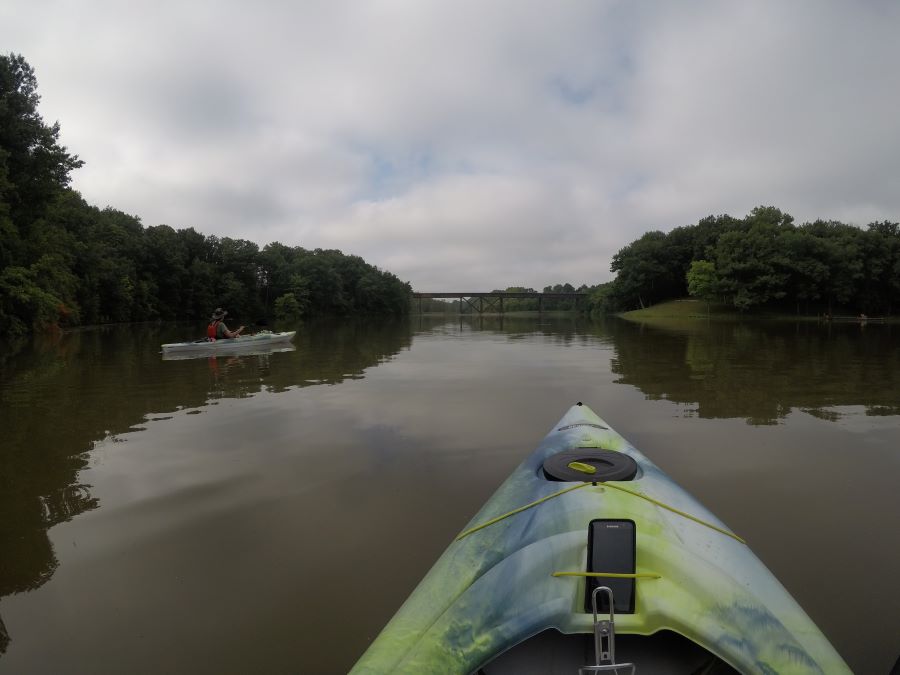
    An example of a waterway with natural shoreline protection.


    You may have found yourself wondering, “Do I have to replace my shoreline protection again?” Since shorelines are naturally dynamic and will gradually move, any investment made on a protection wall will not last for a long time.

    In our last article, we mentioned that there are two different types of adequate shoreline protection. Besides hardened infrastructure, which we discussed previously, another type of effective shoreline protection is called ecosystem-based adaptation. This is also sometimes known as nature-based solutions, living shorelines or green infrastructure. These are essentially just different ways of explaining the process of using the environment and natural vegetation as a buffer to wave action and other negative impacts of severe weather. It often involves restoration of the shoreline, where a more natural environment can also combine rocks or other natural elements, and can include the use of native ground vegetation, shrubs or trees, and be flexible in its design.

    So which type–hardened or natural–is best? As with anything, it depends on the specific circumstance. Hybrid solutions can also be effective in certain instances as they combine the best attributes of both protection models. The Federation of Ontario Cottagers’ Associations has a useful resource for managing waterfront property, if you want to do some further research. View the website here: https://foca.on.ca/managing-your-waterfront-property-in-a-changing-climate/

    You can also learn more by joining one of our focus groups, attending one of our events, or by contacting a MEOPAR project member to explore options further.


    Categories: MEOPAR-Lincoln Blog, Updates of the Chair

  • Traditional Shoreline Protection

    Seawall protection at Lakeshore Drive, Lincoln


    Appropriate shoreline protection is one of the best ways to protect our property and infrastructure from the impacts of climate change and extreme flooding events.

    When water levels are particularly high, shoreline protection gives us a resilient buffer from the encroachment of water and other debris onto our property.

    But what is shoreline protection?

    In the Southern region of the Great Lakes more generally, most communities and individual landowners have resorted to what is known as hardened infrastructure as a means of shoreline protection. This involves using structures (usually concrete or other impervious material) to protect the shore from extreme wave action. It is also sometimes referred to as armouring. The Town of Lincoln, for example, used large concrete blocks to protect high-risk roadways from the flooding events of 2015 and 2019.

    There are a number of different shoreline protection types that engineers will usually talk about: groynes, revetments, seawalls, and offshore breakwaters. For example, if you take a walk through Charles Daley Park, you will see an armour stone revetment that, if designed well, can serve well for individual property protection.

    Note that there are pros and cons of each type of protection, which require an assessment by a professional, and that they can also be a major investment. As natural causes and human development continue to cause shoreline changes, it is important to select the type of protection that provides the longest-term solution. And remember, hardened protection is only one type of adaptation option. You can also reduce impacts by using soft shore materials to protect the shoreline naturally, remove material that is increasing erosion (such as some retaining walls), and relocate infrastructure (such as at-risk buildings and shore structures) inland to a safe setback distance.

    If you’re interested in learning more about shoreline protection, The Island Trust’s A Landowner’s Guide to Protecting Shoreline Ecosystems is a great general reference to start with. You can also follow along with our upcoming articles, as we will be publishing more ideas and information about shoreline protection strategies you can put to use for your own property.

    Categories: MEOPAR-Lincoln Blog, Updates of the Chair

  • What shapes our coastlines? Causes and types of erosion

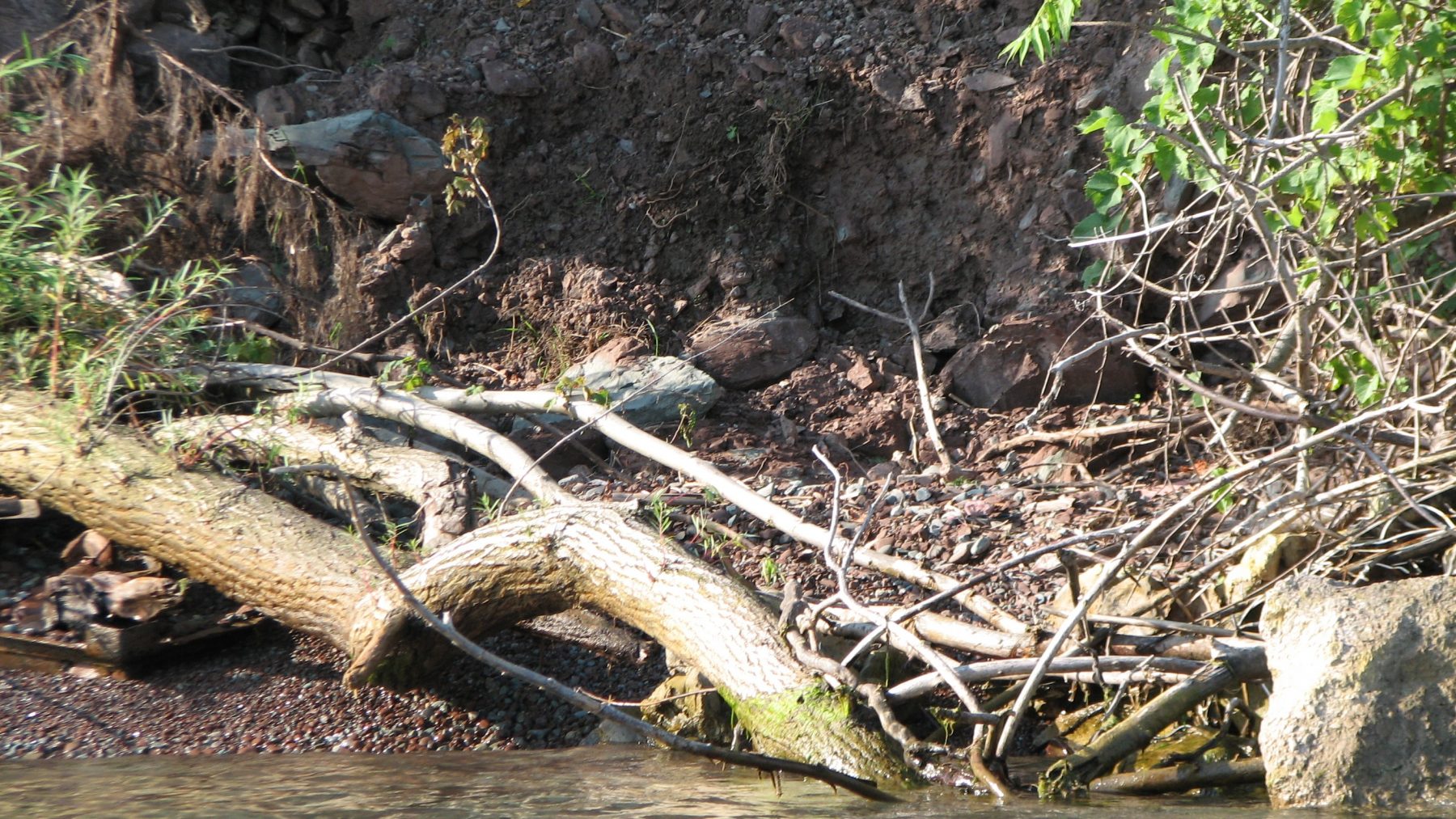
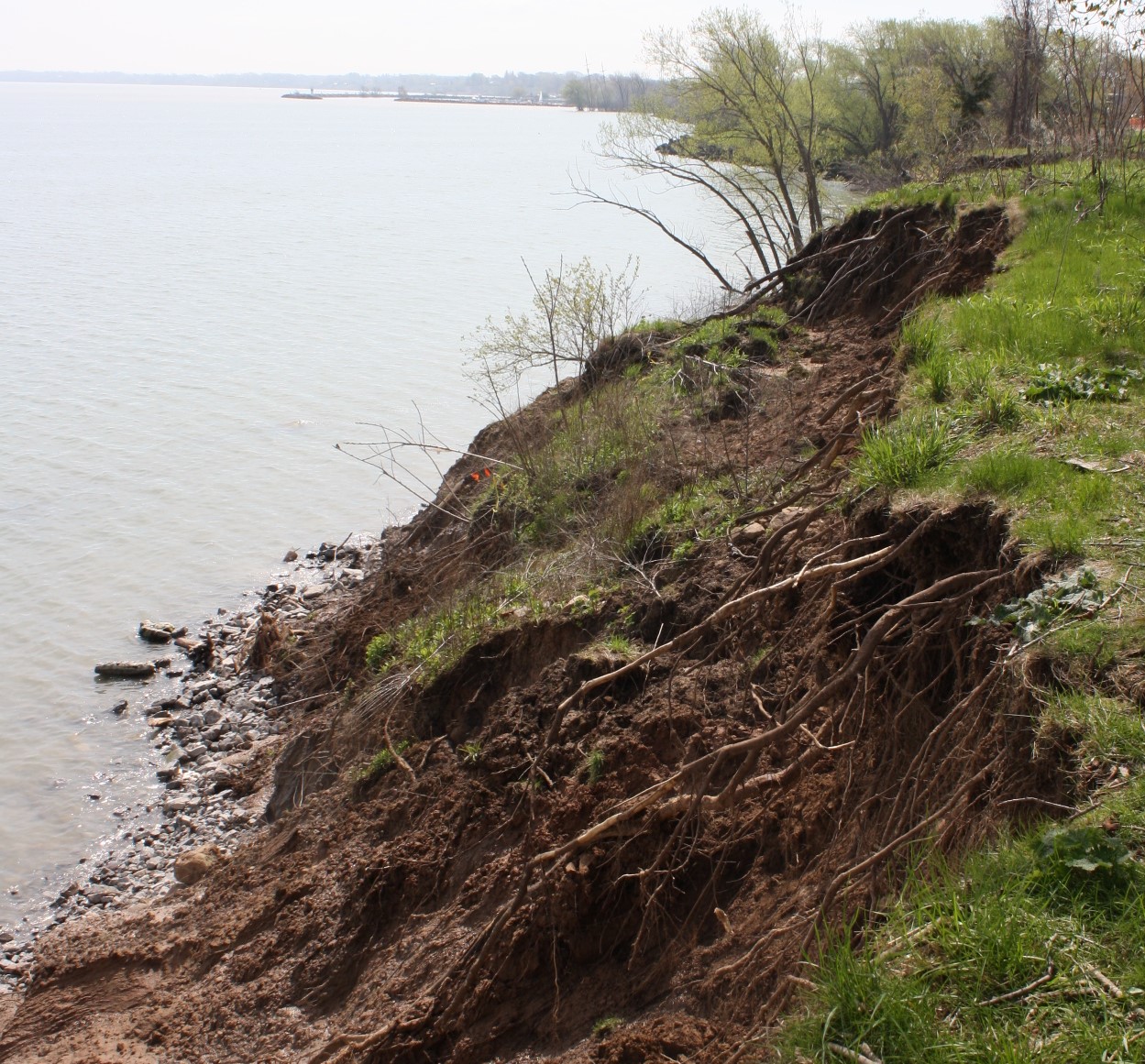
    Have you ever wondered why some areas of a coastline have eroded more than others? Or thought to yourself, “wow, that cliff does not look very stable.” The answer is that coastlines are naturally designed to move—whether we like it or not. Any water-land interface has a series of natural processes that cause it to be dynamic; sometimes eroding away, sometimes gaining material (in a process called accretion).

    Coastlines can take many shapes and forms. It depends on what type of material the coastline is made of (e.g., rock, sand, clay), what type of vegetation (and how much) is present, how much humans have encroached into the coastal zone, and where the coastline is located. The 20 kilometres of coastline within the Town of Lincoln, for example, comprises a range of materials including dynamic beaches, sandy loam cliffs, and clay till. The type of material that makes up the coastline also directly influences how it will stand up to different types of coastline changes which can be of natural, climatic (e.g., storms) or human origin.

    There are many different factors that can lead to erosion within our coastal zones, with some being more obvious than others. The high energy of wave action, particularly during storm events, physically breaks away the shore. If there is any debris or rocks in the water, that can further accelerate the physical breakdown of the coastline or may reduce the impacts of large waves. What’s more is that air can also get trapped between an incoming wave and a cliff, increasing the air pressure in the cliff face as that air gets pushed into holes, cracks or joints in the cliff. This decreases the integrity of the material over time, making it more vulnerable to damage and erosion.

    Heavy rainfall events, as another example, can lead to overland runoff that eventually makes its way to the lake. This can cause erosion channels (like little creeks or run-off channels) that grow deeper and wider with more storms. What’s also important to consider is the impact of water flowing below the surface on erosion. Groundwater will choose the path of least resistance—moving faster in sandier soils and slower in clay soils—resulting in more seepage points in areas that have more sand and causing faster erosion.

    The natural processes of coastal erosion are also often disrupted by the presence of humans. The fact that coastlines are naturally dynamic may not sit well with waterfront property owners and, in response, they may attempt to protect their shoreline and minimize the amount of coastal movement. There may be short- and long-term consequences of the various types of human activities on the coast.

    So, how does a homeowner or a city decide if there is a need for shoreline protection and what type of measure to use? Stay tuned over the next couple of weeks as we discuss different types of shoreline protection and which is most effective for certain areas.


    Categories: MEOPAR-Lincoln Blog, Updates of the Chair

  • MEOPAR Blog: SOILS: A Dynamic and Diverse Ecosystem and its relationship to agriculture and climate change

    Photo caption: Soil degradation is becoming a growing concern for the agriculture industry globally, and Niagara is no exception.


    For those of us who weren’t born and raised in a rural community, soil is often regarded simply as mud or dirt. The rise of urbanization and the rural-urban divide has led to a disconnect between humans and nature, and, especially, between humans and agricultural settings. Such a disconnect makes it difficult for people to understand how important soil actually is.

    Soil is a complex and dynamic ecosystem that hosts 25 per cent of the world’s biodiversity. In fact, one gram of soil contains one million organisms! Arguably even more important is the fact that the food that we eat also depends on those soils.

    Soil degradation is becoming a growing concern for the agriculture industry globally, and Niagara is no exception. Land-use change patterns like deforestation, and agricultural intensification can cause waterlogging and erosion and lead to release of greenhouse gases (like carbon dioxide, methane and nitrous oxide). Soils play a crucial role in climate change mitigation by acting as one of the largest terrestrial reservoirs of carbon. Healthy soils participate in the carbon and nitrogen cycles, which keeps our ecosystems healthy and contributes to agricultural productivity. Continued loss of productive soils will further amplify food-price volatility and could greatly affect the farming community.

    Changes to soil health as far north as the Arctic are also driving climate change. In northern regions such as the arctic, soils are frozen (a phenomenon known as permafrost) and represent a vast reservoir of carbon. When that soil thaws, due to climate change, carbon dioxide and methane are released in the atmosphere, which then further contributes to climate change. A vicious cycle indeed.

    The good news is that these impacts to soil health are avoidable. Careful soil management would not only increase our food supply but would also provide a valuable lever for climate regulation and a pathway for safeguarding ecosystem services.

    The researchers involved with the MEOPAR project are working to raise awareness about the impacts of climate change and how communities can effectively adapt, and increase resilience, to these changes. Follow along with our articles every week (written by researchers Liette Vasseur, Meredith DeCock, Bradley May and Pulkit Garg) to learn more about the project and how you can get involved. You can also visit our website at brocku.ca/unesco-chair or email us at [email protected].


    Categories: MEOPAR-Lincoln Blog, Updates of the Chair

  • MEOPAR Blog: Understanding Climate Change Resilience

    Photo caption: Master’s Candidate, Meredith DeCock and Lincoln resident, Brian Jaworsky discussing bank stability of 16 Mile Creek despite significant climatic events and human influence (such as the building of the QEW).


    You may have noticed that a number of municipalities—such as Hamilton, St. Catharines, Toronto and Kingston—have recently declared climate emergencies. One of the reasons for doing so was to make changing environmental conditions a priority and plan the best way to build resilience at the local level. But what exactly is resilience, and how can it help us adapt to the risks posed by climate change?

    The easiest way to think of resilience is by comparing it to a rubber band: you can stretch the band to just before its breaking point, but when you let go, it returns to its previous shape fully intact. That’s resilience. Alternatively, if you pull too hard, the elastic breaks and can no longer be used for its original purpose. In that case, we have to consider transformation, meaning the system is no longer sustainable and must change to another one.

    Resilience is the ability to return to a normal state after some sort of disruption. For the sake of this article, we are referring to events or situations caused by climate change: floods, drought, heat waves, etc.

    Resilience strategies can involve enhancing the natural ecosystem, the social make-up of communities or modifying the physical environment. Being resilient means protecting your home against flooding, building parks and green spaces that maintain the natural buffering capacity of the land, developing emergency response plans, and re-designing roads and bridges to withstand increased freeze-thaw cycles and extreme wind. In some cases, resilience may also mean moving assets far away from hazards, such as coastline vulnerability. We also often talk about “remove, retreat or restore”: a few strategies that can help our communities become more resilient and sustainable.

    Our communities, businesses and homes can all be made more resilient to the hazards and risks of climate change. So, when you think of resilience, think of the rubber band: flexible and adaptable.


    Categories: MEOPAR-Lincoln Blog, Updates of the Chair

  • MEOPAR Blog: Risks and Hazards

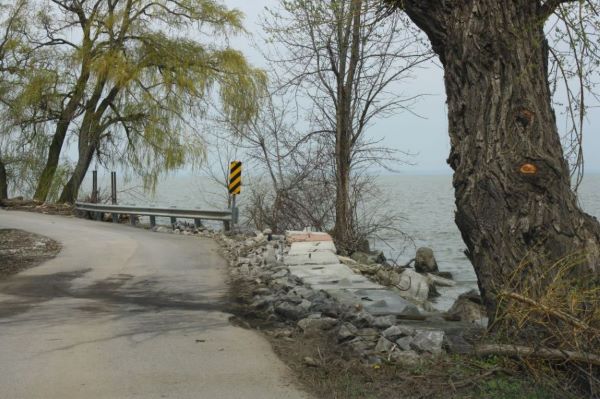
    Photo Caption: Living along the shore has its risks. This section of Lakeshore Road was patched and a stacked armour stone wall was installed after the 2017 floods.


    Risks and hazards are two similar, but often confused terms. A hazard is classified as anything that can cause adverse effects or harm to someone or a community. There are three different types of hazards: occupational or safety hazards (which most people are familiar with), including equipment malfunctions or slippery floors; health hazards, such as work stress, air pollution, or bacteria exposure; and natural hazards, such as earthquakes, heatwaves, hail or tornados.

    The chance that a hazard will cause harm is considered the risk—a low risk translating to a low possibility of being hurt. A hazard could also be low risk when the severity of the harm caused is minimal. Your level of risk is also dependent on your likelihood to be exposed to a specific hazard. For example, residents living on top of the Niagara Escarpment are at a lower risk of being flooded by Lake Ontario than those living along the shoreline.

    When we think about natural hazards, we used to be talking about events that occurred once in 100 years. But with climate change—this is no longer the case. Heat waves, freezing rain and heavy rainfall are occurring more frequently , often classified as disasters.

    Understanding hazards and their associated risks plays an important role in the development of climate change adaptation strategies. Some disasters, like hurricanes, cannot be avoided. It is at this point thatdisaster risk reduction becomes the only option. In the case of hurricanes, the best long-term risk reduction strategy may be to avoid building close to the coastline. In the case of existing structures that lay in the path of the storm, the best course of action is to hurricane-proof the dwelling and evacuate.

    Although it’s not always possible, we can reduce our chances of being harmed by natural hazards. Risk reduction strategies have saved lives, which is why it’s crucial that we gain a better understanding of the hazards that can affect us and properly assess their risks.


    Categories: MEOPAR-Lincoln Blog, Updates of the Chair

  • MEOPAR BLOG: A new way to look at us and our environment

    Stacked armour stone walls along Charles Daley Park are an example of a location that may benefit from using ecosystem-based adaptation techniques. 


    There are various types of climate change adaptation strategies: technological, structural or those that are determined by policies and governmental decisions.

    Technological or structural adaptations are those that are related to any type of manipulation or intervention — such as the construction of a protection wall, infrastructure improvement, or even structural relocation. While some of these strategies can be simple and inexpensive to enact, others may be complex and potentially cost-prohibitive. What’s more, when we focus only on structure, technology or policies, we can sometimes forget other important factors: overall well-being, enjoyment of nature and the benefits that the natural environment gives us, such as clean air, shade and heat reduction, and clean water.

    That’s where ecosystem-based adaptation comes in. Often referred to as ‘EbA,’ this form of adaptation can be defined as any strategy or action that employs the use of nature-based solutions to ensure humans and the natural environment can adapt to climate change. It considers that we, as humans, are also part of this ecosystem and uses the natural environment and the services/benefits it provides to adjust to climate changes. EbA has also been promoted by many international organizations, such as the International Union for Conservation of Nature (IUCN), the United Nations and the United Nations Environment Program (UNEP).

    There are many possible strategies in EbA, and many of which are less costly than technological or structural adaptations. Techniques utilizing soft protection of the shoreline (such as planting more vegetation) are less expensive and usually can last a lot longer than constructing a concrete retaining wall, for example. Adding more trees along the street can also help mitigate climate change, as well as providing shade and reducing heat waves and wind turbulence. Restoration of wetlands is another example of an EbA and can reduce the danger of flooding in a flood-prone neighbourhood.

    With a little imagination and lots of discussion with everyone at the table, we can discover many possible adaptations that will help our ecosystem while contributing to our overall quality of life in the process.

    These posts are written by the MEOPAR research team, comprised of Liette Vasseur, Meredith DeCock, Bradley May and Alex Marino. For more information about the project, contact us via email at [email protected].

    Categories: MEOPAR-Lincoln Blog, Updates of the Chair