Professor
905 688 5550 x5283
[email protected]
Ph.D., York University
Finalist for the 2026 PROSE Awards by the Association of American Publishers
Finalist for the 2018 Canadian Historical Association Wallace K. Ferguson Prize
Review of A History of Slavery and Emancipation in Iran, 1800-1929
Review of “Afro-Iranian Lives” and “The African-Baluchi Trance Dance”
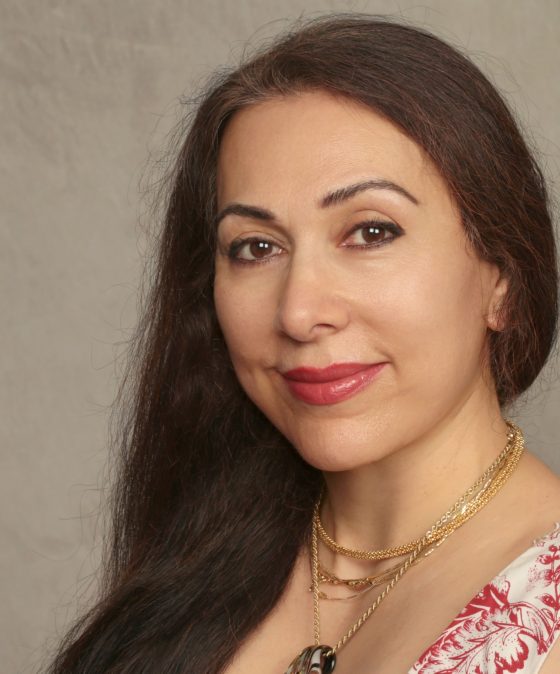
Behnaz Mirzai is Full Professor of Middle Eastern history at Brock University, Canada. From 2005 to 2006 she held teaching position at Southern Methodist University, Dallas, USA. She is a Senior Guest Researcher at the Bonn Centre for Dependency and Slavery Studies, University of Bonn, Bonn, Germany. In 2024 she was Visiting Professor at Indian Ocean World Centre, McGill university, Montreal, Canada, and in 2023 a Visiting Professor at Unité de recherches Migrations et société URMIS, Université Côte d’Azur, Nice, France. Dr. Mirzai is affiliated with many prestigious universities including University of Toronto, York University, Canada, and Bonn University and GIGA/Hamburg University, Germany.
She is the author of A History of Slavery and Emancipation in Iran, 1800–1929, Finalist for the 2018 Canadian Historical Association Wallace K. Ferguson Prize. The book has been translated into the Persian language twice by Andishe-yi Ihsan in 2024, and Nashr-i Tarkih-i Iran in 2017. It is the first systematic book and exploration wholly dedicated to slavery in Iran in the nineteenth and early twentieth centuries. Her recent book The Life of an Enslaved African in the Ottoman Empire and Iran: Autobiography of Mahboob Qirvanian was published by University of Toronto Press. The book is the first autobiography of an enslaved African and an important account and literary legacy written by a former African slave Mahboob Qirvanian, who was born and enslaved in Tunisia in 1894 and freed in Iran.
Relying on historical and anthropological methodologies, she has conducted fieldworks in Zanzibar, Tanzania, and Sistan and Baluchistan, and southern provinces in Iran and produced two documentary films, Afro-Iranian Lives, and The African-Baluchi Trance Dance. The former film won the prize Special Mention at the 10th annual Zanzibar International Film Festival. Her documentary films were screened in numerous academic international festivals including in the Documentary Category to commemoration the 200th anniversary of the abolition of slave trade supported by the United Nations Educational, Scientific and Cultural Organization (UNESCO) in Zanzibar. She also curated several photo exhibitions, including Eyes in the Desert and Baluchi Identity and Culture.
Dr. Mirzai has authored numerous articles on slavery and the African Diaspora in the Indian Ocean, and edited The Baluchi and Baluchistan, coedited Slavery, Islam and Diaspora, and Africa and Its Diasporas: Rethinking Struggles for Recognition and Empowerment.
Dr. Mirzai has been awarded numerous grants, including several from the Social Sciences and Humanities Research Council of Canada.
She currently serves as a member of the editorial advisory board of The Encyclopeadia Iranica and Slavery and Emancipation series, Amsterdam University Press.
Her work encompasses historical research, ethnographic and anthropological fieldwork, as well as film studies. Her research focuses on descendants of enslaved African communities and their relationships with other ethnic groups, as well as African-derived religious practices, various forms of African spirit-possession cults, and the transformation of these cults in Iran and the Middle East in the modern period. She has also examined the circumstances of various enslaved ethnic groups in Iran and around the Indian Ocean.
Online interview entitled “’We are Iranians’: Rediscovering the history of African slavery in Iran,” published by Middle East Eye, May 9, 2016.
http://www.middleeasteye.net/in-depth/features/they-are-iranian-discovering-african-history-and-slavery-iran-970665328
Behnaz Mirzai is an historian of modern Iran, who teaches Middle Eastern history at Brock University. Her areas of specialization include comparative and cross-cultural studies, ethnicity, slavery, gender, as well as social, economic and religious interactions in the Middle East. Her dissertation was entitled “Slavery, the Aboltition of the Slave Trade and Emancipation of Slaves in Iran 1829-1928”.
Undergraduate
HIST 2P72 Modern Middle East
HIST 2P70 The Middle East, 600-1800
HIST 3P86 Cultures and Societies of the Middle East
HIST 3P85 Minorities of the Middle East
HIST 4V64 Slavery in the Middle East
HIST 4V59 Women of the Middle East
Graduate
HIST 5V30 The Iranian Revolutions
HIST 5V11 Women and gender in the Middle East
Books
- Co-edited volume with Bonny Ibhawoh, Africa and Its Diasporas: Rethinking Struggles for Recognition and Empowerment, Trenton NJ: Africa World Press, forthcoming 2018.
- Bahnaz A. Mirzai. A History of Slavery and Emancipation in Iran, 1800-1929. Austin: University of Texas Press. 2017, 324 pp.
- Shortlisted for the 2018 Canadian Historical Association Wallace K. Ferguson Prize.
- Behnaz A. Mirzai ed. “The Baluchi and Baluchistan.” Special issue,
The Journal of the Middle East and Africa, 4:2 (2013). - Co-edited with Ismael Musa Montana, and Paul Lovejoy, Slavery, Islam and Diaspora, Trenton NJ: Africa World Press, 2009.
Book Chapters
- The Persian Gulf and Britain: The Suppression of the African slave Trade.” in Abolitions as A Global Experience. ed. Hideaki Suzuki. National University of Singapore. 2016. pp. 113-129.
- Identity Transformations of African Communities in Iran.” in The Persian Gulf in Modern Times: People, Ports and History. ed. Lawrence Potter. New York: Palgrave Macmillan. 2014. pp. 351-376.
- Qajar Haram: Imagination or Reality, In Behnaz A. Mirzai, Ismael Musah Montana and Paul E. Lovejoy eds., Slavery, Islam and Diaspora, Trenton NJ: Africa World Press, 2009. pp. 77-89.
- The Trade in Enslaved Africans in Nineteenth-Century Iran, In Kiran Kamal Prasad and Jean-Pierre Angenot, eds., TADIA – The African Diaspora in Asia: Explorations on a Less Known Fact, Bangalore: Jana Jagrati Prakashana, 2008,pp. 220-235.
- The 1848 Abolitionist Farmān: A Step Towards Ending the Slave Trade in Iran,” in Gwyn Campbell ed., Abolition and its Aftermath in Indian Ocean Africa and Asia, London: Routledge, 2005, pp. 94–102.
Journal Articles
- Baluchi Identity and Culture: An Introduction.” in The Baluchi and Baluchistan. ed. Behnaz A. Mirzai. Special issue. The Journal of the Middle East and Africa. 4:2 (2013). 121-125.
- Emancipation and its Legacy in Iran: An Overview. Cultural Interactions Created by the Slave Trade in the Arab-Muslim World. Paris: UNESCO, 2008.
http://portal.unesco.org/culture/fr/files/38502/124809720756.Emancipation_LegacyIran.pdf/6.Emancipation%2BLegacyIran.pdf - Le commerce des esclaves africains dans l’Iran du XIXème siècle, Les Cahiers des Anneaux de la Mémoire, 9, 2006, 29–40.
- The Slave Trade and the African Diaspora in Iran. ZIFF journal, 2, 2005, pp. 30–4.
- African Presence in Iran: Identity and its Reconstruction, Société française d’Histoire d’Outre-mer, no. 336-337, 2002, pp. 229-246.
- Documentary film “Afro-Iranian Lives,” Production, script, direction, and presentation, 2008, 45 minutes. http://www.afroiranianlives.com/index.htm
- Photography Exhibition, “Eyes in the Desert”.
- Workshop on Baluchi Identity and Culture
- Documentary film “The African-Baluchi Trance Dance,” Production,
narration, script and direction, 2012, 27 minutes.
http://www.afroiranianlives.com/index.htm - Conference on People of African Descent: Recognition, Empowerment and Equity, Sept. 22-23, 2014.
- SSHRC Connection Grants “People of African Descent: Recognition,Empowerment and Equity,” 2014
- SSHRC Connection Grants “Baluchi identity and culture”, 2012
- Brock SSHRC Institutional Grants (BSIG), 2011
- Brock Humanities Research Institute (HRI), 2011
- SSHRC Standard Research Grants “Iranian Borderland: Baluchi Identity and Culture”, 2010-2013
- Brock University Advancement Fund (BUAF), 2008
- Zanzibar International Film Festival, 2007
- Brock SSHRC Institutional Grant (BSIG), 2007
- Brock Humanities Research Institute (HRI), 2007
- The Stevenson Scholar in African Studies, York University, 1999-2000
Co-ordinator and member of the preparatory Committee for the Slave Route project, UNESCO.
Arabic, Turkish (Azari, Osmanli), Persian, English, French.
Books and publications


