Events

  • Join the History Department at Humanities Smart Start: July 23, 2026

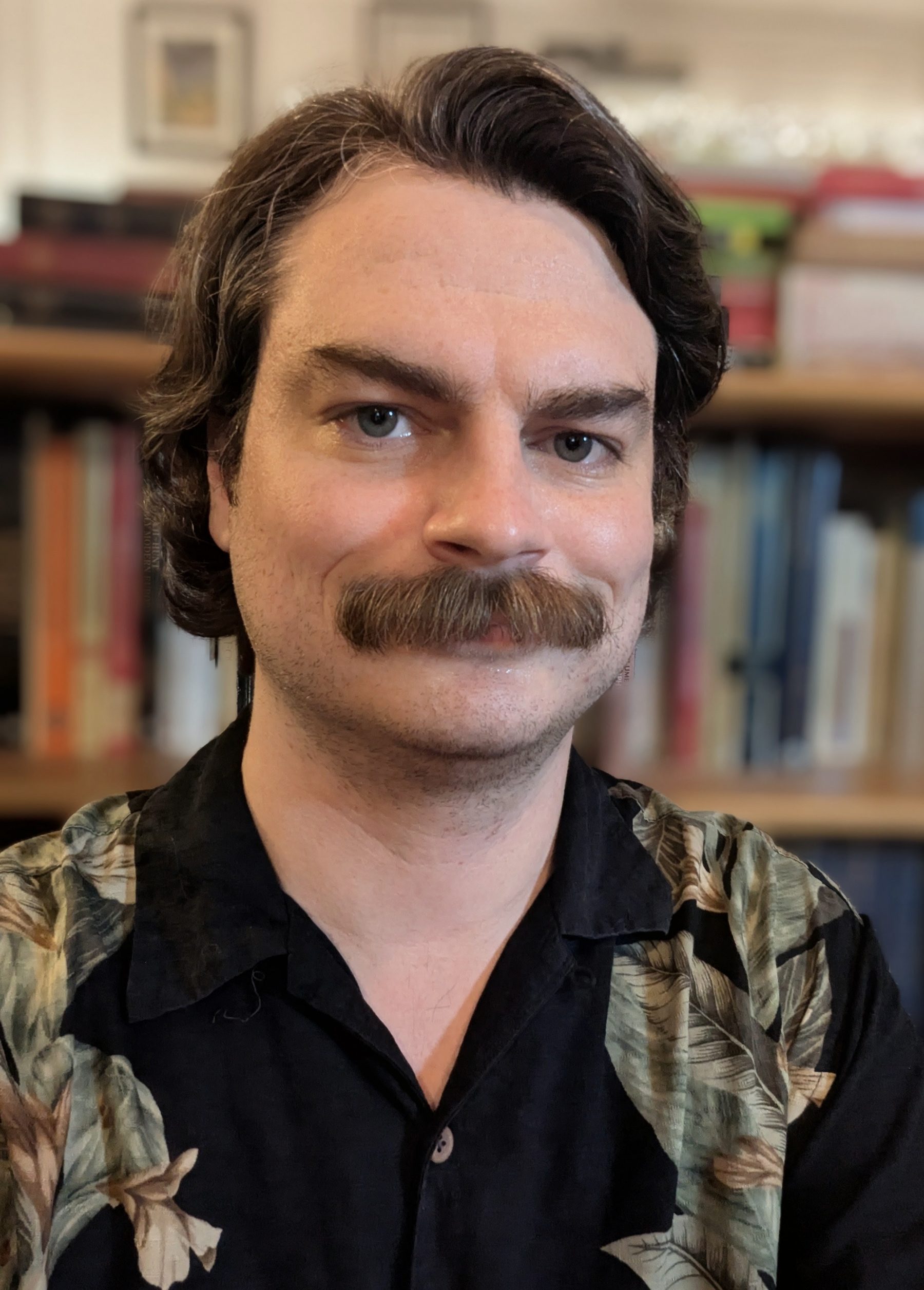
    (Above: Brock History Department faculty members Jessica Clark, Olatunji Ojo, and Tami J. Friedman [behind the camera] were on hand to greet Humanities students at Smart Start, July 31, 2025.)

    Are you starting school at Brock this fall? Connect with Department of History faculty members at Smart Start (Faculty of Humanities) on July 23. We’ll be staffing a table in Rankin Family Pavilion from 9-10 a.m. and again from 1-2 p.m.

    Don’t miss the Department’s own Dr. Jessica Clark at the Humanities panel, “The One Thing You Should Know: Tips for Humanities Students.” She’ll be speaking about communicating with your instructors. The panel will be held in Sean O’Sullivan Theatre from 10:30-11:30 a.m.

    Be sure to stop by! We’re excited to meet you.

    For the day’s schedule, click here: https://discover.brocku.ca/start/schedule/#july-23

    Categories: Events

  • Trudy Tattersall to defend Humanities doctoral thesis: July 14, 2026

    The Brock Department of History is pleased to announce that Trudy Tattersall, will defend her Ph.D. dissertation in Interdisciplinary Humanities on Tuesday, July 14.

    The defence will be held in Room 600F of the Plaza building on the Brock University campus from 12 noon to 3 p.m. Interested members of the public are welcome to attend.

    Trudy is a long-time teaching assistant and part-time instructor in the History Department. Her Ph.D. supervisor is Dr. Daniel Samson, a faculty member in the Department

    The thesis is entitled, “A Mingled Yarn”: Needlework, Emotional Communities, and Affective Experience in Settler-Colonial Maritime Canada.”

    Dissertation abstract

    This dissertation examines 18th- and 19th-century needlework – particularly schoolgirl samplers – as material and affective practices through which women’s emotional lives, identities, and social values were shaped in settler-colonial societies. Focusing on Maritime Canada, it places samplers and other forms of needlework in dialogue with women’s diaries, letters, school advertisements, and prescriptive educational literature to explore how emotion, discipline, and belonging were produced through tactile, bodily engagement with and reflection on material objects.

    The dissertation intervenes in a field dominated by British and New England scholarship that tends to frame samplers primarily as decorative, genealogical, or completed pedagogical texts. It reframes needlework as emotional practice, material literacy, and historical evidence. It approach needlework as a proprioceptive and embodied knowledge practice that required intimate encounters between body, tool, and textile.

    The study brings together feminist material culture theory, gender history, affect theory, and the history of emotions, drawing on the theoretical frameworks of Barbara Rosenwein, Sara Ahmed, Laurel Thatcher Ulrich, and Iris Marion Young to demonstrate that needlework functioned as a form of emotional governance.  Across its chapters, the thesis analyzes samplers as pedagogical exercises, visual and textual compositions, sensory objects, and intergenerational heirlooms. It demonstrates how the embodied act of stitching and the material qualities of textiles shaped emotional regulation, self-understanding, and community affiliation. The final chapter considers the preservation of samplers as family heirlooms and museum artefacts, arguing that female preservation practices constituted vital cultural and affective labor shaping family memory and institutional collections.

    Needlework produced shared ways of feeling and behaving that marked girls as properly socialized members of settler communities, linking emotional discipline and technical skill to respectability, legitimacy, and identity. By treating needlework as both historical evidence and emotional practice, this thesis challenges the idea that the domestic sphere was insignificant or apolitical. It demonstrates that everyday forms of making and preserving textiles played an important role in shaping women’s lives and sustaining colonial social values, and it places women’s material and emotional experiences at the center of the history of early Atlantic Canada. It reveals that the emotional worlds of girls and women, so often dismissed as private or apolitical, were in fact deeply constitutive of the social, moral, and ideological fabric of early Maritime Canada.

    Categories: Events

  • Owen McAllister to defend History MA thesis: July 9, 2026

    History MA candidate Owen McAllister will defend his thesis on Thursday, July 9, from 11 a.m. to 2 p.m.

    The defence will take place both in person, in Room 601C of the Plaza building on the Brock University campus, and on Teams. Interested members of the public are welcome to attend.

    Owen’s thesis is entitled, “A War of Words: Jacobitism as a Language of Dissent in England during the Reign of William III, 1688-1702.”

    Thesis abstract
    This thesis explores how Jacobitism became a significant framework for those opposed to the political settlement following the Glorious Revolution and how this movement functioned as a language of dissent utilized by those opposed to the new Williamite regime. In doing so, this thesis challenges the Whiggish historical narrative that William III’s Glorious Revolution enjoyed overwhelming popular support, was bloodless, and that the Jacobite movement had little support in England.

    The thesis explores this topic through deep biographical case studies to highlight the material and interpersonal interconnectedness of those involved in the Jacobite print trade: authors, printers, distributors, verbal supporters, and those who took part in censoring the movement. This thesis reveals a network of Jacobite supporters active in London who wrote and printed Jacobite works, as well as those who demonstrated support by distributing them or through verbal expressions. The censorship apparatus of the Williamite regime also features prominently, revealing connections between informers, spies, messengers of the press, common people who took the suppression of the Jacobite movement upon themselves, and the supporters of the Jacobite movement who they suppressed or attempted to suppress.

    In doing so, the thesis explores how the state weaponized sectarianism and the legal system to stabilize its rule and maintain its grip on power during the years of instability in William III’s reign.  England, unlike Scotland and Ireland, had no popular revolt against William’s rule; rather, this thesis highlights a war of words raging in England following the Glorious Revolution.

    Categories: Events

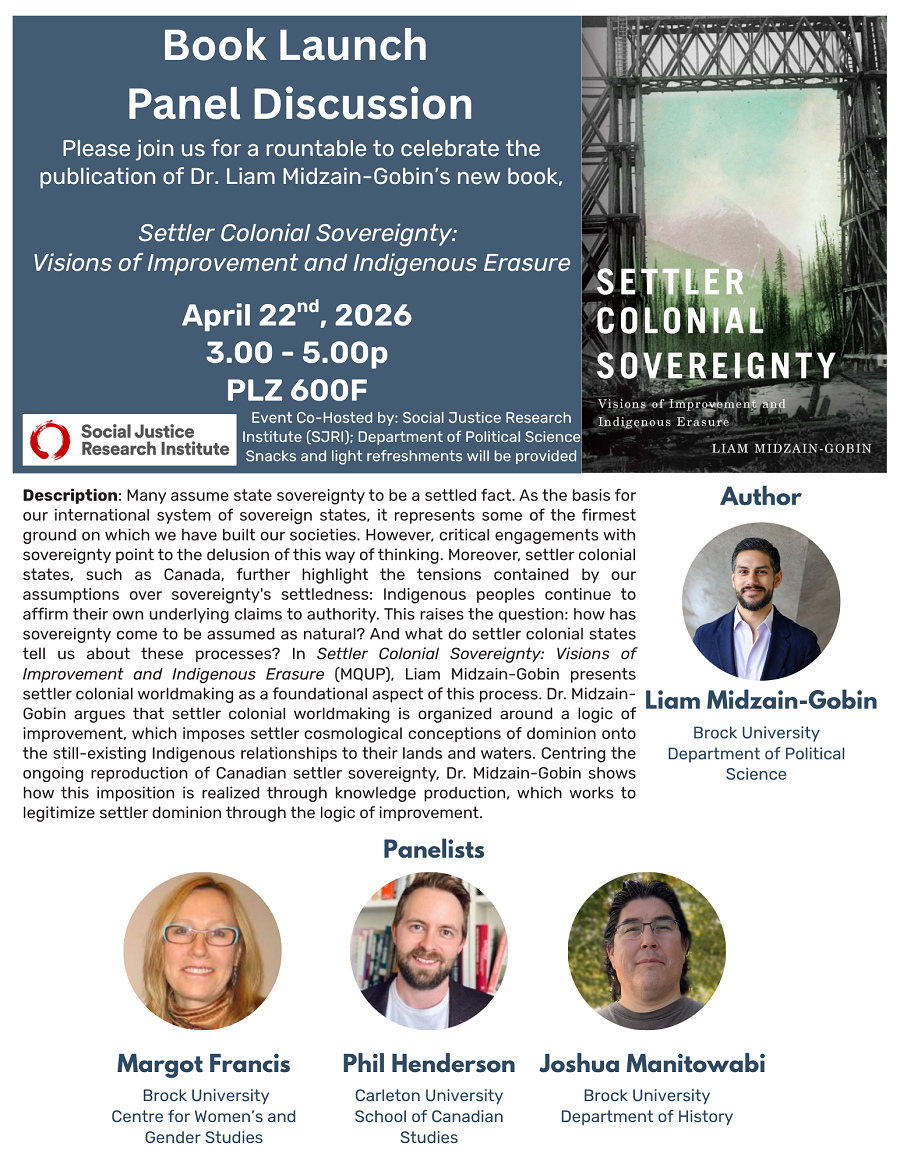
  • Josh Manitowabi to join panel on settler colonialism

    Categories: Events

  • History MA students to share food history research at symposium

    Two of our History MA students will present at Food: Production, Distribution, Access and Consumption, an interdisciplinary virtual symposium hosted by Brock’s Faculty of Social Sciences. The talks will be held on Tuesday, April 14, 2026, as part of a morning panel called Setting the Table.

    Ethan Moncion’s paper is entitled, “Provincial Provisioning: The Diet and Food Supplies of the Provincial Marine.” For the abstract, click here: https://brocku.ca/social-sciences/symposium-series/food/#1770920851814-f4fd4be4-b179

    Emma Craib’s paper is entitled, “Cooking Up Identity: Israeli Nation Building and Rationing Policy 1949-1959.” For the abstract, click here: https://brocku.ca/social-sciences/symposium-series/food/#1770920536167-ce239ea5-25ef

    All are welcome!

    Categories: Events

  • Mark Spencer to kick off Niagara Parks series on American Revolution, March 22

    Dr. Mark G. Spencer, the History Department’s own expert on Enlightenment thinking and the American Revolution, will be the first speaker in Niagara Parks’ Heritage Speaker Series at Old Fort Erie, commemorating the Revolution’s 250th anniversary.

    Join history enthusiasts for his talk, “1776: Events and Ideas in the American Revolutionary World,” on Sunday, March 22, at 2 p.m.

    Learn more about the series and reserve your ticket here.


    Categories: Events

  • 2026 Charles A. Sankey Lecture, March 22

    Join us at our annual Dr. Charles A. Sankey Lecture in Masonic Studies, featuring Dr. Susan Mitchell Sommers, Professor of History Emerita, Saint Vincent College, Latrobe, Pennsylvania, USA.

    Reserve your tickets today: Tickets – Sankey Lecture Series in Masonic Studies

    Learn more about the lecture series here.

    Categories: Events

  • Dr. Bryan Palmer to speak on history of colonialism and capitalism in Canada, Feb. 26

    Please join the History Department in welcoming the eminent historian Dr. Bryan D. Palmer (professor emeritus, Canadian Studies, Trent University) to Brock. Palmer will be speaking on the history of colonialism and capitalism in Canada, captured in his three-volume study published by James Lorimer & Co.

    Categories: Events

  • Trivia Night, March 10

    Categories: Events

  • Book and Plant Sale, March 3

    Categories: Events