Canada, in all its messy manifestations, is in transition, but where is it going? With foundational myths eroded, identities fragmented, allegiances contested, the idea of Canada in the hearts and minds of those who live there is under intense scrutiny and careful criticism. Canada’s place in the wider world is just as uncertain. Against a backdrop of Covid, decolonization, inflation, immigration, Indigenization and shifting global politics, what might Canada mean in five, ten- or fifty-years’ time?
Reimagining Canada seeks to understand the forces at work, and to ask what comes next. Taking a broad and inclusive approach to the study of Canadian culture, history and society, the series interrogates Canada’s past and present in order to suggest possibilities for the future. Relevant issues might include, but are not limited to: arts and culture, decolonization; digital spaces and media; the future of the Canadian constitution; globalization; healthcare and social services; immigration and multiculturalism; Indigenization; memory and memorialisation; and sovereignty.
The series is open to scholars and public intellectuals working in all areas of the humanities and social sciences and aims to be interdisciplinary or even post-disciplinary in its approach. The editors are committed to equity, diversity and inclusion and welcome contributions from scholars of marginalized groups and communities that tend to be disproportionately underrepresented within public discourses in Canada. As such, they strongly encourage scholars from these groups and communities to contribute to the series. Contributors are free to self-identify if desired.
Books in the series are aimed at a more general audience than the traditional academic monograph. Readers might include undergraduate students, academics working in other fields, practitioners, policymakers, and the public. The series provides a platform for authors to reach a larger audience than usual, or to speak to new audiences; to deliver bold new arguments; to write unencumbered by the usual obligations for referencing; and to be excited, provocative and even polemical.
Editors: Gregory Betts (Brock University), Carl Everton James (York University), and Ian McKay (McMaster University).
FOR MORE INFORMATION, OR IF YOU WOULD LIKE TO DISCUSS A PROPOSAL, PLEASE CONTACT PHILIP DUNSHEA, SENIOR ACQUISITIONS EDITOR, PETER LANG, INTERNATIONAL ACADEMIC PUBLISHERS AT [email protected]
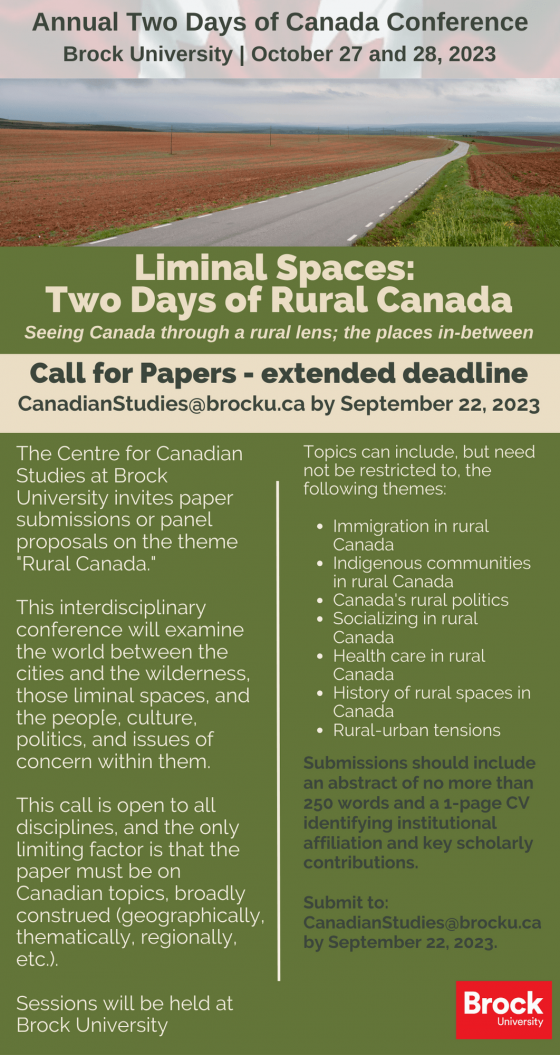

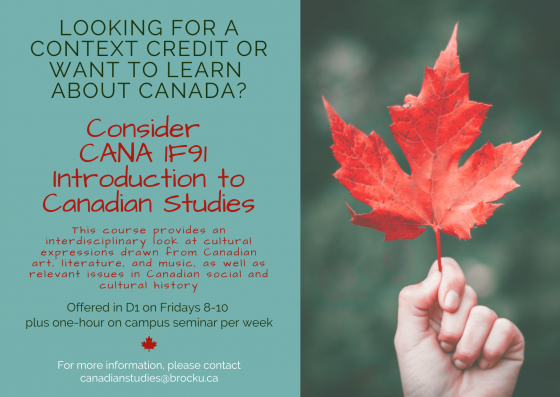
 Applications are now open for the 2024/2025 Fulbright Canada Research Chair in Transnational Studies hosted by Brock University.
 Laurier Centre for the Study of Canada will host the 33rd Canadian Military History Colloquium on May 26-27 2023.
 Call for Submissions – The United States, Canada, and Quebec
 The members of the Centre for Canadian Studies at Brock University express our profound sadness at the passing of Her Majesty Queen Elizabeth II. For most of us, she has been the only monarch we have ever had, and we admire her devotion and service to her country and the commonwealth. We also send our condolences to her family. No matter who you are, prince or pauper, rich or poor, royalist or republican, the death of a loved one can be a profoundly sad moment and reminds us all of our shared humanity. We wish them all well at this difficult time.
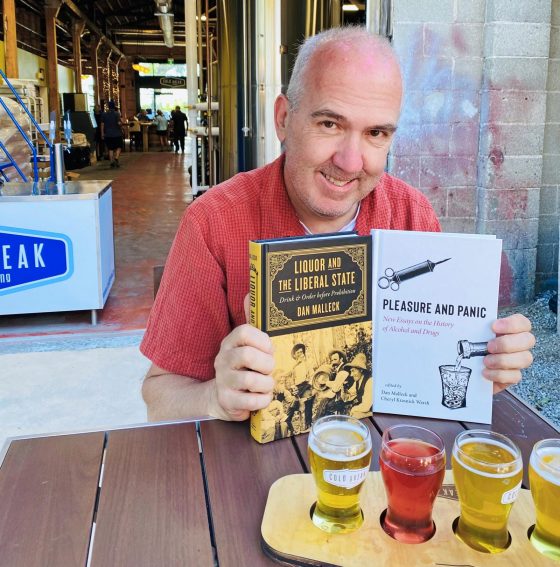 Dan Malleck is a Professor of Health Sciences and Director of the Centre for Canadian Studies, has published a new book, Liquor and the Liberal State: Drink and Order before Prohibition, as well as a co-edited volume, Pleasure and Panic: New Essays on the History of Alcohol and Drugs. Read the Brock News article