Uncategorised

  • Denys Arcand at the Mighty Niagara Film Fest

    In late October, the Director of the Centre for Canadian Studies, Anthony Kinik, had the rare opportunity to interview the acclaimed Québécois director Denys Arcand about his films On est au coton (1970/1976) and Gina (1975), and the connections between them, in advance of this year’s edition of the Mighty Niagara Film Fest.  This is what he had to say about his meeting with Arcand and the reasons behind it:

    Arcand, of course, is one of the most famous and celebrated Canadian directors of all time, best known for his films The Decline of the American Empire (1986), Jesus of Montreal (1989), and The Barbarian Invasions (2003), his sequel to The Decline of the American Empire, which won the Academy Award for Best Foreign Language film in 2004 (still the only Canadian film to have been recognized in this category).
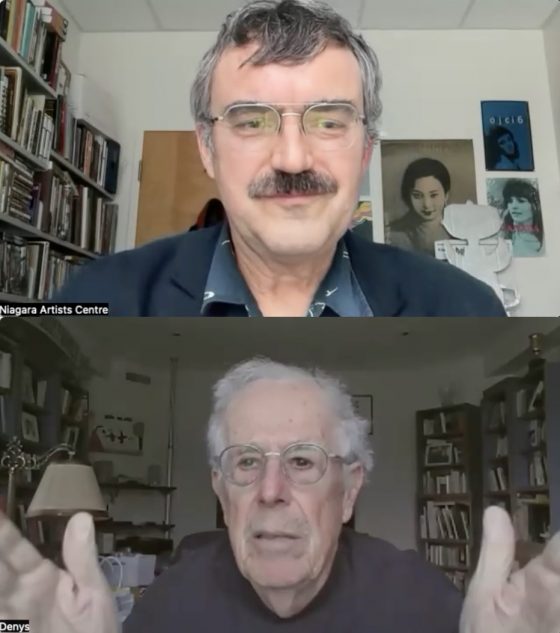
    Interviewing Arcand was a huge thrill and an enormous honour for me. I experienced my very first Denys Arcand film in 1986—40 years ago!—when I went to see The Decline of the American Empire at an art house theatre in Washington, D.C. as a teenager (and, yes, that title has become even more meaningful in recent years).

    On est au coton (1970/1976), a.k.a. Cotton Mill, Treadmill, is one of the most hard-hitting and brilliant labour documentaries ever made.  It’s a scathing study of the exploitation of Quebec’s working class at the hands of the textile industry in particular.  The film was completed in 1970, the year of a highly contentious provincial election in Quebec.  Already the executive class of the National Film Board of Canada (NFB), the film’s producer, was concerned that On est au coton (which plays on the word “cotton,” but translates as “We’re fed up!”) might be too incendiary, too dangerous for release.  Then the October Crisis of 1970 broke out, where a series of brazen and ruthless terrorist acts by the Front de libération du Québec (the Quebec Liberation Front) were met with the imposition of the War Measures Act and the lifting of civil liberties in Quebec and across Canada.  Within this highly charged climate, the NFB decided to suppress its own film, banning On est au coton in early 1971.

    Officially, On est au coton remained a banned film for the next five years.  However, videotape technology had entered the market by this point in time, and members of Arcand’s team at the NFB managed to bootleg the film.  Over the next few years, the underground version of On est au coton managed to reach an estimated 20,000 viewers—very likely more than the film would have reached had it been given a limited release in theatres—most of whom were professors, instructors, staff, and students at Quebec’s universities and colleges.

    Soon after Arcand completed his next documentary, Québec: Duplessis et après (1972) (Quebec: Duplessis and After)—his devastating account of the 1970 provincial election and the failure of the Quiet Revolution—he turned to making feature-length fictional films, beginning with his so-called “Crime Trilogy”:  La Maudite galette (Dirty Money, 1972), Réjeanne Padovani (1973), and Gina (1975).

    At the time that Arcand began work on Gina, On est au coton remained a banned film, and one that had reached a very limited audience, mostly of intellectuals.  Gina is a classic Canuxploitation film of the period based on the true crime story of an exotic dancer from Montreal who was the victim of horrific sexual violence when she travelled to a small town in Quebec to perform.  Here, in Arcand’s version, Gina gets her revenge on the rogue snowmobile gang who victimized her with the help of the Montreal mobsters who manage her career.

    Frustrated by the ongoing ban on On est au coton, Arcand decided to add a subplot to Gina about a documentary film crew from the “Office National du Cinéma” (a parody of the “Office National du Film,” the French name for the NFB) who are in town to shoot a hard-hitting documentary about the exploitation of the local working class at the hands of the textile industry.  Sound familiar?  Doing so allowed Arcand to re-stage key scenes from On est au coton and slip them into Gina, ensuring that at least some of this material would reach a wider audience.

    Arcand’s ploy worked.  Though highly controversial, Gina was a box office success in Quebec in 1975—Arcand’s most successful film to date.  By 1976, however, the tide had turned in Quebec.  Under the leadership of René Lévesque, the Parti Québécois won a landslide victory in the provincial elections.  That same year, the NFB finally released On est au coton, albeit in a censored version.

    50 years later, as part of the Mighty Niagara Film Festival’s opening day festivities, On est au coton will be screened on Wednesday, November 11, 2026 at the Cineplex Odeon Seaway Mall in Welland, Ontario at 7:00 pm.  Kinik will be in attendance to briefly introduce the film.

    More information about this screening can be found HERE.

    And on Thursday, November 12, 2026, Gina will be screened at the Landmark Cinema Pen Centre in St. Catharines at 7:00 pm.  Kinik will be in attendance here, too, to introduce the film.

    More information about this screening can be found HERE.

    Thank you to @niagaraartistscentre for making this interview possible.

    And THANK YOU to Denys for his generosity and for his phenomenal films.

    And while we’re at it, we’d like to thank the NFB for having turned On est au coton into a cause célèbre and an underground sensation.

    And you can find Kinik’s interview with Denys Arcand HERE.

  • 40 Years of Canadian Studies at Brock University

    The Director of the Centre for Canadian Studies, Dr. Anthony Kinik, recently wrote about 40 Years of Canadian Studies at Brock University – ‘The Centre for Canadian Studies at Brock University’, Journal of Australian, Canadian, and Aotearoa New Zealand Studies 6 (September 2026): 127-136, https://doi.org/10.52230/EVDH8573

    Read it here:
    anthony-kinik-40-years-of-canadian-studies-at-brock-university


  • Keynote speaker highlighted in Brock News

    The Centre for Canadian Studies at Brock has been preparing to host the annual Two Days of Canada focusing on Canadian Sovereignty, followed by the Comparative Borders student conference.  Professor Liam Midzain-Gobin from the Department of Political Science will be the third keynote speaker addressing both conferences on Friday March 27 starting at 5 p.m. in RFP 214/215.  This keynote address is open to the public and free of charge, and followed by a light reception.

    Professor Midzain-Gobin’s new book, titled Settler Colonial Sovereignty: Visions of Improvement and Indigenous Erasure, examines how Canada’s settler colonial governments have relied on narratives of productivity to justify harms to Indigenous communities, and was the focus of a recent Brock News article.

    Read the recent Brock News article here.

  • Keynote speakers announced for Two Days of Canadian Sovereignty

    Free events, all welcome!


  • Deadline extended for Two Days of Canadian Sovereignty – Keynotes announced

    *DEADLINE EXTENSION* *DEADLINE EXTENSION* *DEADLINE EXTENSION* *DEADLINE EXTENSION*

    CALL FOR PAPERS

    Annual Two Days of Canada Conference

    Brock University | March 26 and 27, 2026

    ____

    Two Days of Canadian Sovereignty

    NEW DEADLINE to submit – January 25, 2026

    https://brocku.ca/humanities/canadian-studies/two-days-of-canada-conference/

    The Centre for Canadian Studies at Brock University, in collaboration with the Departments of History, Political Science, and Communication, Popular Culture, and Film, invites submissions for Two Days of Canadian Sovereignty, to be held on March 26 and 27, 2026.

    This transdisciplinary conference, part of the Centre’s annual Two Days of Canada conference series, will bring together students, scholars, and researchers from diverse fields to deliver presentations, take part in workshops and roundtables, and attend events in an inclusive and collaborative atmosphere.  This year’s conference addresses the issue of Sovereignty in Canada and of Canadian Sovereignty.

    Two Days of Canadian Sovereignty will feature two keynote speakers:

      • P. Whitney Lackenbauer is a Tier 1 Canada Research Chair in the Study of the Canadian North and a Professor with the School for the Study of Canada at Trent University. One of Canada’s foremost experts on Arctic history and contemporary Northern policy, Professor Lackenbauer’s research explores the evolution of Canada’s domestic strategies for the North and its international relationships with other Arctic and non-Arctic states. “My research program seeks to offer highly original, empirically-grounded, and policy-relevant research that lies at the intersections of Arctic sovereignty, security, governance, socio-economic, cultural, and community resiliency issues. Blending historical and contemporary insights, this program is a natural extension and amplification of the research trajectories that I have been developing and pursuing over the past decade.” Together with his team, Dr. Lackenbauer is committed to “[encouraging] evidence-based policy-making that transcends traditional academic boundaries and disciplines and is animated by a strong commitment to social justice.” Dr. Lackenbauer has authored, co-authored, edited, and co-edited numerous books, book chapter, peer-reviewed articles, op-eds, and other publications, including The Joint Arctic Weather Stations: Science and Sovereignty in the High Arctic, 1946-1972 (with Daniel Heidt, University of Calgary Press, 2022), China’s Arctic Ambitions and What They Mean for Canada (with Adam Lajeunesse, James Manicom, and Frédéric Lasserre, University of Calgary Press, 2018), A Historical and Legal Study of Sovereignty in the Canadian North: Terrestrial Sovereignty, 1870-1939 (by Gordon W. Smith, ed. Lackenbauer, University of Calgary Press, 2014), and Canada and the Changing Arctic: Sovereignty, Security, and Stewardship (with Franklyn Griffiths and Robert Neill, Wilfrid Laurier University Press, 2011).
    • Liam Midzain-Gobin is an Associate Professor with the Department of Political Science at Brock University. His book Settler Colonial Sovereignty: Visions of Improvement and Indigenous Erasure  was published in 2025 by McGill-Queen’s University Press.  This monograph studies settler colonial world-making, and how the racialized, imperial, “logic of improvement” has become a “settler common sense” that is constitutive of international order. Dr. Midzain-Gobin argues this logic rests on cosmological assumptions about human dominion over the earth and its continued relevance is key in how settler sovereignty is continually remade. Dr. Midzain-Gobin has published numerous peer-reviewed journal articles and book chapters.  Employing community-engaged methods in research projects, Dr. Midzain-Gobin also works directly with Indigenous communities to support their self-determination. This includes researching the governance practices of Indigenous nations and local visions for a decolonized future. Dr. Midzain-Gobin has two ongoing projects using this approach: Building Inter-National Sovereignty: The Case of the Big Salmon River, funded by an Insight Development Grant from the Social Sciences and Humanities Research Council; and Indigenous Visions for Making Home in Niagara, funded by a David S. Howes Grant from the Niagara Community Foundation.

    It has been decades since Canada, Canadian identity, and Canadian sovereignty have been such hot topics among Canadians.  These issues have dominated our news cycle and been front and centre in our political discussions, they are visible at the grocery stores and other retail outlets, they have severely impacted our labour market, they have completely altered our border regions, and they are affecting how we travel and where we spend our time and money.  While there will surely be a great deal of interest in this topic in relation to current events, as well as the future of Canada, sovereignty has always been a thorny and fascinating issue in this country, one worthy of our sustained attention.  Canada is a pluralist society, and, accordingly, the issue of sovereignty has taken on a variety of forms, including Indigenous, French, British, and Canadian variations, among others.

    The topics we’re suggesting for this conference have been designed to be as broad and inviting as possible, in order to inspire wide-ranging and highly interdisciplinary work. We’re certainly open to other suggested topics as well. Our only restriction is that proposals should have a Canadian or Indigenous focus to them. Again, the following list of topics is not exhaustive, it is only meant to provide a sense of the kinds of research that might be carried out on the topic of sovereignty.

    • The issue of sovereignty in Canadian history
    • Sovereignty in Canada today
    • Sovereignty in the era of “borderless” digital media
    • Canadian media and the issue of sovereignty
    • Indigenous sovereignty within Canada as well as in a transnational context
    • Métis sovereignty and the legacy of Louis Riel
    • Canadian sovereignty in relation to issues of sovereignty and self-determination abroad
    • Sovereignty and the “Quebec Question”: then and now
    • Sovereignty movements in Canada’s regions
    • Arctic sovereignty and Canada
    • Environmental sovereignty
    • Sports, sports metaphors, and Canadian sovereignty
    • Sovereignty, industry and labour
    • Sovereignty and the environment in an age of global warming
    • Sovereignty and the arts
    • Sovereignty in theory and practice
    • Sovereignty and business in the era of “Liberation Day” tariffs
    • Sovereignty and healthcare in Canada
    • Canada’s national cinemas and the issue of sovereignty

    The program committee invites submissions for both individual presentations and for full panels of 3-4 presentations. We are also open to creative submissions that move beyond these two formats.

    Those submitting proposals for individual presentations should send an abstract of no more than 300 words, along with a brief CV or biography. Panel proposals should include a brief outline of the panel topic (maximum 300 words) and of individual presenters’ proposals (maximum 200 words each), along with brief CVs or biographies for the panelists. Panels should also ideally identify a chair or moderator. The committee also welcomes suggestions for round table discussions, given the richness and contentiousness of the topic at hand.

    In addition to faculty members and graduate students, we are also interested in proposals from community members and groups outside of the academic sphere.

    The deadline for submission is January 25, 2026. Successful applicants will be informed of the program committee’s decision by February 9, 2026.

    Please send any inquiries or session proposals to [email protected]

    *DEADLINE EXTENSION* *DEADLINE EXTENSION* *DEADLINE EXTENSION* *DEADLINE EXTENSION*

  • Canada Talks Event featuring Professor Gregory Betts

    Professor Gregory Betts
    Craig Dobbin Professor of Canadian Studies

    The Centre for Canadian Studies in partnership with the St. Catharines Public Library presents their third Canada Talks event featuring Professor Gregory Betts.

    “Unerasing Ourselves: St. Catharines, Canadian Literature, and the Past“
    Wednesday February 25 starting at 6:15 p.m.
    Central Library, Mills Room, Downtown St. Catharines
    This talk attends to the troubling question: what becomes of the nation when we decolonize, when we really take our conflicts head on? By looking at the history and counter-history of St. Catharines, we can start to imagine a strategy of reading Canada through its conflicts, without erasing any, while highlighting the various efforts to erase evidence of conflict. “Unerasing Ourselves” traces out a series of remarkable, improbably, and fascinating links between such authors are Frederick Douglass, John Richardson, Thomas D’Arcy McGee, and Harriet Tubman, amongst others. Provocatively, I argue that we must reconsider erasure as a central dynamic of the Canadian Social contract. For the sake of the future, it is time to think more consciously of the messy conflicts shaping this land.
    Light refreshments served.
    All Welcome.
  • Crossing Borders get a refresh and new name for 2026!

    The Centre for Canadian Studies will once again host the ever popular interdisciplinary student conference again in March 2026.  To better reflect border issues around the world, including those pertaining to Canada and the United States, the conference will now be known as Comparative Borders (formerly Crossing Borders).

    The Call for Proposals has now been released with a deadline of February 17, 2026 to submit an abstract.  For students interested in competing for the Best Paper Award, the deadline for submission of full paper is March 3, 2026.

    Click here to download the Comparative Borders CFP.


  • Call for Papers – Two Days of Canadian Sovereignty

    Click here to download the Call for Papers in text format.

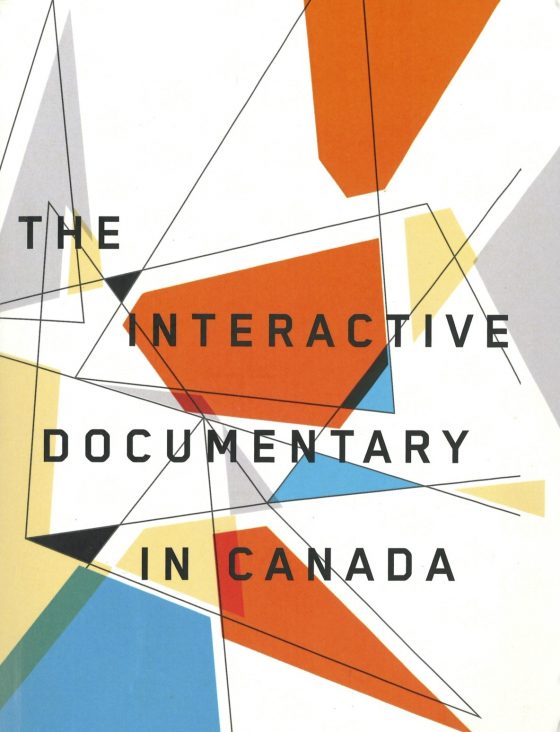
  • CANADA TALKS – An Incomplete History of the Interactive Documentary in Canada

    The Centre for Canadian Studies Canada Talks Series
    “An Incomplete History of the Interactive Documentary in Canada”

    A presentation and discussion with Dr. Michael Brendan Baker, Sheridan College,
    Co-editor and co-author of the book The Interactive Documentary in Canada (McGill-Queen’s University Press, 2024)

    Thursday November 27, 2025, from 6-8 p.m.
    Sankey Chamber
    Free event, all welcome

    In the early 2000s, Canada made a push to become a global leader in the developing field of interactive documentaries, or i-docs. This effort was led in large measure by the National Film Board of Canada (NFB), a state-funded film studio that had long been known for its commitment to three things:  1) nonfiction filmmaking and documentary representation; 2) advancing the state of the art through technical and technological sophistication; and 3) politically engaged and socially committed filmmaking. In many ways the launch of the NFB’s Digital Studio in 2008 was a continuation and an expansion of these traditions. It placed Canada at the cutting edge of the digital interactive documentary in all its many forms. This lecture will revisit this history, highlight some of its most significant projects, and discuss its contemporary relevance.

    Michael Baker is Professor of Film Studies in the Faculty of Humanities & Social Sciences at Sheridan College and President of the Film & Media Studies Association of Canada (FMSAC).  He specializes in documentary film and video, music and the moving image, and film history.  He holds a PhD in Communication Studies from McGill University and is author of numerous book chapters and journal articles on a range of subjects including documentary, popular music and film, and new media.

    Brought to you by the Centre for Canadian Studies in partnership with the Department of Communication, Popular Culture, and Film at Brock.

    Click here for event poster

  • CANA’s new director to give lecture at Wilfrid Laurier

    Professor Anthony Kinik teaches in Communications, Film, and Popular Culture at Brock and has been a long-standing advisory member of the Centre for Canadian Studies.  He took over the helm as Director of CANA on July 1 and has been busy organizing a new series titled Canada Talks, leading fundraising efforts for CANA’s Terry Fox team, and promoting the Centre.


    He is also scheduled to guest lecture at Sir Wilfrid Laurier University on November 4.  You can register for his talk titled “Expo is Celluloid City” Art, Commerce, Film, and Urbanism at Expo 67 by clicking this link.  Attendance can be in person or virtually via Zoom.  Admission/registration is free.