Program Reflections

  • First Year Experience Blog: Madelaine Legault

    Blog Contributor: Madelaine Legault
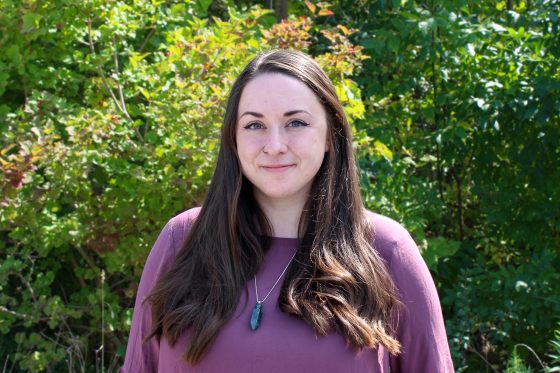
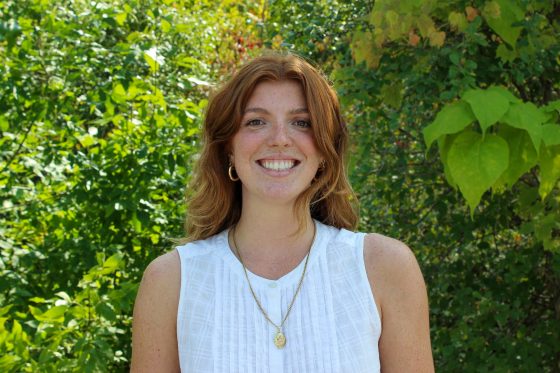
    Madelaine Legault standing in front of trees.

    Madelaine Legault is a first year PhD in Sustainability Science student. She is currently working under the supervision of Dr. Liette Vasseur and her research interests are in sustainable agriculture, food systems resilience, food security, environmental justice, and seed sovereignty. In this blog, Madelaine summarizes her experience in the first term of her PhD program.

    What inspired you to pursue graduate studies in environmental sustainability? 

    Well, there are many things that led me to apply for this program, and I think I could go on about these things for hours. But for one, for as long as I can remember, I have always loved gardening. I have fond memories of learning from my grandmother and mom in their gardens, so I have been learning about (and in) nature all my life. My undergrad and first graduate degreewere in gender studies, which is a transdisciplinary field like sustainability science. During these studies, I tended to focus on the concepts of food security and environmental justice. After I finished my first graduate degree, I went to work in the field—literally. I was lucky to work in community gardens, at non-profits, and on commercial farms. These experiences helped push me towards the subject of food security, justice, and sustainable food systems. When I was looking at programs that would support this line of research, the Environmental Sustainability Research Centre seemed like the perfect fit. 

    Can you describe a typical day in your program? 

    Every day is a little bit different than the last. Some days, I have courses to attend, where I engage in the theories underpinning sustainability science and the research methods that support it. Our class sizes are small, so I feel like we have a great chance to really engage with the topics and each other. Everyone comes from a different academic background, so a multitude of perspectives are involved in our discussions. These courses are also built to be interactive and experiential, so we are really getting a good mix of theoretical and practical knowledge. 

    When I’m not in class or doing course work, I am working as a teaching assistant and as Graduate Student Ambassador. I am also meeting with my thesis supervisor, Dr. Liette Vasseur, who is an incredibly inspirational tour-de-force. She has helped me apply for scholarships and conferences, and is showing me how to do a scoping review. I have so much to learn, and I know that she is there to help me get the most out of my graduate education. 

    What program experiences have had the most impact on your thinking? 

    The more experiential aspects of the courses have been helpful in broadening my understanding of the scope of sustainability science. We’ve done field trips to parks and natural sites undergoing restoration, to biogas facilities, and around Brock to study green building design, energy systems, and the Escarpment biosphere. So much of our education is built around engaging with our community and surroundings. 

    I also think that my fellow students have challenged me in the best ways. Our discussions inside and outside of the classroom have opened my eyes to the world of sustainability-related careers and endeavors out there, and to the multitude of perspectives that are necessary to unpack the complicated subjects of climate crises and solutions. I have learned to considerdiffering opinions as opportunities to grow my capacity for empathy and understanding. 

    What opportunities have you had to develop your research skills, whether through fieldwork, publishing your work, etc.? 

    When I started this program a few months ago, I doubted my research abilities. It had been a while since I was in school, and the only other “real” academic research I had engaged in was for my graduate degree. I had never written with the aim of publishing, and had a bit of imposter syndrome, thinking that this lack of publications meant I was not as good as my peers or ready to be in a PhD program. My supervisor, Dr. Vasseur, has been instrumental in building my confidence while building my skills as a researcher. She has not only opened doors for me to present my work but has guided me in building skills through practice. For example, I am currently writing a scoping review with her guidance, for which I am developing my own data collection and analysis protocol. Once I am done with this review, I will be able to use it as part of my thesis and can revise it for publication. I no longer feel like I am out of my depth and am excited for the new opportunities that I know I will encounter under her supervision. 

    How do you stay motivated when facing complex environmental sustainability challenges? 

    I feel as though I am constantly riding waves of hope and grief. I grieve the losses we face due to overlapping crises, and I grieve the future that feels perilous. I try to balance that grief by tethering myself to hope. To hope is a radical act in a world shaped by oppression and fear. Some of the ways I balance these feelings are by seeking out “good” news stories on achievementsin sustainability and environmental justice, or studies on successes in the struggle for a more sustainable future. I also look to art and poetry to balance these feelings. Mary Oliver always seems to have the right words.  

    Ultimately, I am most motivated when I feel connected to others who are overwhelmed like me and who are trying to balance these feelings, too. We are each others’ tethers to hope. I look at the wonderful people in this program and know that we are connected in this feeling, and are all working on solutions—and that is absolutely cause for hope. 

    What advice would you give to someone considering graduate studies in sustainability science? 

    Do it! Please go for it. I hesitated for years, but when I finally applied and entered this program, I knew it is exactly where I need to be. We need all hands on deck, and as many perspectives as possible to address this wicked issue. Take what you are good at, what you are passionate about, and focus it on helping your fellow creatures weather this storm. You have so much to offer. We welcome you to the fight! 

    In terms of practical advice, I say make connections when you can. Attend workshops, have challenging discussions, introduce yourself to others in the field, apply for committee positions, and write as much as you can (even if it is in the notes app on your phone). 
     

    Categories: Blog, Program Reflections, SSCI Student Contributor

  • First Year Experience Blog: Kinza Qureshi

    Blog Contributor: Madelaine Legault

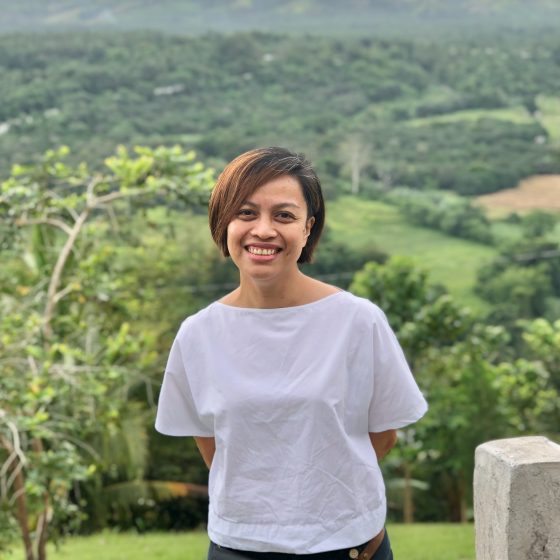
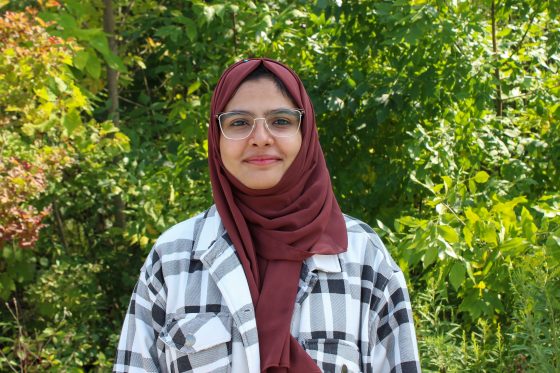
    Kinza Qureshi standing in front of trees.

    Kinza Qureshi is a first year student in the thesis pathway of the Master of Sustainability program at Brock University. She is working under the supervision of Dr. Marilyne Carrey and her research interests are in community resilience to climate change through nature-based solutions, sustainable development, and planning. She recently spoke to PhD in Sustainability Science student and graduate ambassador Madelaine Legault about her experience in her first term of the SSAS program.

    What inspired you to pursue graduate studies in environmental sustainability?  

     I decided to go into the field of environmental sciences for my undergrad, because in my country, I had seen a lot of issues regarding the environment, like flooding. There were not manyagencies in my country focused on the environment. There were a few that were working, but they were not getting the funding for that, so I decided to choose this pathway to help my people and to learn. I was studying environmental sciences broadly, and now I’m narrowing down to sustainability, because that’s the future. 

    How would you describe your typical day in the program? 

    Lately, I have been super busy with assignments, coursework, and TA work, so my days are honestly packed. I am also starting to work on planning my thesis with my supervisor. Right now, we are working on a topic. My focus is on the climate crisis and the communities that are directly affected by it. I want to build an empathy element by understanding their experiences, and I’musing geospatial data, remote sensing, and augmented reality to collect and present the impacts.  

    How do you think your research will contribute to sustainability science? 

    I had not previously considered the part that empathy plays in sustainability science. But now I realize that if we look at empathy and the way people have emotional connections with the subject, it could be an opportunity to engage with large audiences to let them know what the future would look like if we were all on the same page. It can shift people’s thinking towards sustainability and to work for the environment. Whenever we want to change something, we as a person need to change ourselves. And one thing that we all need to change is our empathy for nature and for the next generation. We are the last generation that has a chance to think about the future. We have to think about it. So, I think that empathy element in my research would look at the psychological connections to nature. And it could help bring a change in how we think of our future. 

    What program experiences have had the most impact on you? 

    Oh, I would say the field trips and like the “talking tree” project we are working on right now in SSAS 5V82 have really opened my mind. In my undergrad, I always wanted some practical experience, rather than just theory. So, these are opportunities for a different kind of learning rather than just pure theory. It’s a lesson that always stays in your mind. Like the tunnel tour we did, you can see that there’s a whole system underground that you didn’t know about before. 

    How has the program faculty and your peer group supported your academic journey? 

    My supervisor, Dr. Marilyne Carrey, has helped me a lot. She always encourages me to go to conferences and seminars, and she shares different opportunities inside and outside the university. She sees me and listens to what I want for my research. That’s really helped me because I’m from a different background, I have a different language, and I have to think before I speak. So, it’s really difficult for me, but she helps. Other than that, I would say my classmates are so friendly and help me whenever I need help. I just go and ask someone, and they’re always there to help.  

    How do you stay motivated when facing or when thinking about these complex and often very overwhelming crises? 

    One thing that motivates me is the idea that what I am facing today, I don’t want my future people to face. I have a connection with them. I don’t want my child to grow up in a world where they have no clean air to breathe, where they have issues like flooding and climate crisis or food insecurity issues. I think of future generations.  

    What advice would you give to someone considering graduate studies in sustainability science?  

    Oh, I always tell people to join this field because it’s growing and it’s the future. There are doctors that specialize in human beings, and people specialized in engineering, but students of the environment specialize in both nature and humans. I think this is an opportunity that is growing, and I would suggest that people come and explore. They would love this field! 

    Categories: Blog, Program Reflections, SSAS Program, SSAS Student Contributor, SSCI Student Contributor

  • First Year Experience Blog: Makenna Kollo

    Blog Contributor: Madelaine Legault

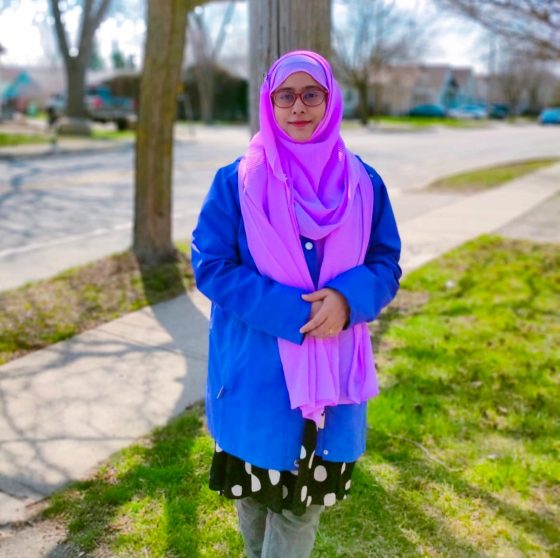
    Makenna Kollo standing in front of trees.

    Makenna Kollo is a first year student in the course-based pathway of the Master of Sustainability program. She recently sat down with PhD in Sustainability Science student and graduate ambassador Madelaine Legault to share her experience in the SSAS program as she finishes her first term.

    What inspired you to pursue graduate studies in environmental sustainability? 

    I completed my Bachelor of Recreation and Leisure Studies at Brock University, and through that, I did a lot of outdoor educational courses that were centered around our relationship with the environment. Climate change and climate action have been very important topics, especially with younger generations, and it was instilled in us that you cannot have a relationship with an environment or a natural space that no longer exists. So, my inspiration was trying to preserve, maintain and sustain environments for future generations to also have the same opportunities that I had as a child, like going to summer camp. I feel very passionate about it. I feel as though I can make a change. 

    How would you describe your typical day in the program?  

    I have four classes this term, so that leads me to be on campus three days a week for structured activity.  On Mondays, I have a biology course at night. Typically, I will do my readings and get everything done on Mondays and then go to class.  On Tuesdays and Thursdays, I also have classes. Those days involve me generating conversations with other students and faculty to broaden my perspectives and learn more about sustainability topics that are not within my scope of interest but expand my knowledge through conversations with my peers. And then I typically move on to a group meeting or work with my peers to work on projects together. It’s crucial in this role to try and think of other perspectives on sustainability. Overall, my days involve a lot of collaboration with faculty, staff, students, as well as other partners (both on and off campus) involved with the program. For example, this term we are working with Facilities Management at Brock and partners at Niagara Parks Commission. 

    What program experiences have had the most impact on you? 

    It almost feels like we’re doing an internship of sorts with different organizations in our courses with more experiential learning components. For example, right now we are working with the Niagara Parks Commission in SSAS 5P02 with Dr. Lina Taing. It feels as though we’re working directly with them towards a goal. Having the opportunity to work directly with an organization like that opens so many doors. It’s something I can speak about in interviews and in job applications. 

    I’m also thoroughly enjoying SSAS 5P82 with Dr. Marilyne Carrey. It is completely changing my perspective on what nature-based solutions are, because we are diving feet first into what they could be, rather than just learning the theory while sitting in a classroom. It is fully experiential, and she has developed this course where it is all to the beat of your own drum. We work collaboratively as a class towards a final goal. For example, we’re creating a “talking tree” tour right now. We’re choosing a tree, and we’re explaining how it’s impactful on the environment around it, and then also how we’re connected to the tree. We’re also talking about why you should care about it, and why it’s important. My tree is the eastern white pine, which is typically found within eastern Canada, and it is the provincial tree of Ontario. I have a tattoo of it, I’m super into it! 

    How has your understanding of sustainability science evolved since starting your graduate studies? 

    I’m embarrassed to admit it, but I was a small thinker before I came into the program. I thought of sustainability strictly in terms of environmental sustainability in natural landscapes. I was thinking of forests, mountains, fields, things like that. But for example, in one of our courses, we’ve done a tour of the energy system on campus, and through that I was able to understand that it’s not just cost effective when you turn off your light bulbs or your light switches or unplug something, it’s actually better for the environment.  

    In our courses, we talk a lot about international implications and sustainability sciences in our courses. It takes my understanding from a local to a global level. It’s broadening my horizons.  

    How has the program faculty and your peer group supported your academic journey? 

    There’s not a single time that I speak to my professors when they don’t have a smile across their face.  They are so welcome to new ideas about the program, about how they teach, even about what you have to say about a topic, which really makes it more intriguing and appealing to go to class. They are guideposts that I have definitely clung to. 

    As for my peers, I just love listening to people talk. We have backgrounds in chemistry and aviation, and water resource management, and then we have someone working in the wine industry, and then we have a politician. There’s just so many vastly different perspectives and somehow, we all care about the same things. It’s just so interesting. It’s making me a better person just to sit with them and hear why they care about sustainability. It’s amazing that we get to come together and all work towards a common goal while being such different people and still staying true to ourselves at the same time.  

    I think every vantage point is also so necessary in this field, because addressing this issue is arguably like the largest target that we will ever have. And it is not a solo job, and solutions do not come from one perspective but from a community of people that have banded together to make a change. And that’s what we’re seeing is happening here. 

    How do you stay motivated when facing or when thinking about these complex and often very overwhelming crises? 

    I’m going to share a story. Last year, maybe two years ago, I think it was an El Niño year, where we saw a lot of climate events happening. I was on a side of social media that was just full of doom. I would go on my phone and I would scroll, and I would see glaciers melting, a volcano in Iceland is blowing up, hurricanes, countries going underwater… I hated the fact that I could scroll past these news events and not think about it again. Part of me staying motivated comes from not wanting to see these things happen again. If I give up, I’m just one more person that’sconforming to the idea that someone else will fix it. So, I say, why not me? I’m so grateful that I get to have an education and that I get to be here, to have networking possibilities to advance into industries that can push for these changes. It’s not something that everyone can do in their lives. So, I take every day with grace.  

    What advice would you give to someone thinking about graduate studies in sustainability science?  

    Stay true to yourself. There’s a lot of people out there that don’t believe in sustainability science or have differing opinions about it. And I would say if this is where your heart lies, stick with it. You will be fruitful in any endeavor that you pursue when you are passionate about it. Also take every opportunity that comes to you. Someone asks you to volunteer? Do it. Someone asks you to join this class with them? Do it. If someone asks you to sit down for a coffee chat, absolutely do it. Because the best way to build and learn is to listen to other people. So, if you’re thinking about doing a masters in sustainability science, I say jump in, feet first. Take the risk. Take as many risks as you can but be true to you. 

    Categories: Blog, Program Reflections, SSAS Student Contributor, SSCI Student Contributor

  • Reflecting on my First Year Experience

    Blog Contributor: Natalie Seniuk

    In the fall of 2022, I stepped away from my career as an environmental planner and project manager to pursue a graduate degree. When I found the Master’s of Sustainability Science and Society program at Brock, I knew it was the fit I had been looking for: a program focused on sustainability and climate change but through a social sciences lens. Beyond the academic fit, Brock is also my hometown university, and I am the second generation in my family to attend, following in the footsteps of the women in my family.

    Coming into the program as a mature student with a background in the environmental field, I didn’t know what exactly I would be adding to my knowledge bank. To say I have learned new things during this past year would be an understatement. Beyond acquiring new knowledge, I have been challenged to think in a new way: to dig deeper and question the potential impacts of sustainability and climate actions when value isn’t placed on the interconnectedness of the social and natural systems we live within. Having access to research, knowledge, and perspectives that are generally inaccessible outside of academic environments has reminded me of all that is happening, not just in industry, but in knowledge development and research. Working to further connect these two worlds is where I see myself applying my education when I complete my thesis next year.

    As a mature student and parent to a tiny person, it was a challenging first year. Needing to juggle academic and parental responsibilities felt overwhelming at times and making choices to step back from participating in things at school and home often felt like a sacrifice. Looking back, I recognize the benefits of having a full academic and personal life at the same time, it just looks a little different than it did when it was only me. With the support of my family, and faculty and staff at the university I have been able to achieve so much…and with my second year approaching, I am looking forward to new opportunities that I’m sure will continue to challenge me both academically and personally.

    This coming year, I am hoping to make a trip out of province to support my thesis project, and will be participating a graduate student experiential learning program through the university of Guelph.

    Categories: Blog, Program Reflections, SSAS Program, SSAS Student Contributor

  • Survive and Thrive: Advice to my First-Year-PhD-self

    Blog Contributor: Norievill España

    Venturing outside of your comfort zone is said to be where the magic happens, and as an international student at Brock University, I can attest to this firsthand. It was a challenging journey, from complying with university requirements and immigration regulations to adjusting to a new environment, yet it was a period of tremendous growth and discovery! As I reflect on my first year, here are a few valuable pieces of advice I wish to offer my former self.

    Keep in mind the 3Cs

    The opportunity for learning is boundless, but so is the fear of the unknown. Embrace collaboration, communication, and cooperation to overcome obstacles. You are fortunate to learn this valuable lesson through the research assistantship with the Excellence in Environmental Stewardship Initiative, coursework, and networking with community partners and peers from outside the university. You will appreciate the value of building strong relationships, working towards common goals, and embracing diverse perspectives. Experiential learning will bring you an immense sense of fulfillment. Acknowledging that you don’t know everything and being humble is vital to the learning process. You’ll find constant support from your Environmental Sustainability Research Centre family, and you’ll never feel alone with a team that has your back.

    Self-management is the key

    You’ll come across an interesting perspective on time management that will shift your thinking. Remember that time is a constant and cannot be managed, but we can manage ourselves and our actions within the time we have. Shift your focus from busyness to intentionality and use your time effectively. Doing so lets you take ownership of your actions and avoid frustration over unfinished tasks. Remember that stepping away from busyness doesn’t necessarily mean being less productive.

    Strive for work-life harmony

    While work is important, it is equally important to take time to reconnect with yourself. Make sure to rest, turn off your computer, stretch, prepare and enjoy proper meals, meditate, and get enough sleep. These activities can help reduce stress and improve productivity when you return to work. Take time to unplug, go outside for fresh air, or watch that movie!

    Your adviser is your ally

    Regular check-in with your adviser is instrumental in keeping you on track with your research, providing constructive feedback on your work, and offering guidance in overcoming challenges. Establish a strong relationship with your adviser that is based on trust and mutual respect.

    Family and friends: your best source of positive energy

    Connect with your strongest support system, your family and friends, who are deeply committed to your happiness and success. They will keep you grounded, focused, and motivated.  They are always ready to lend a hand and an ear, offering fresh perspectives even if they don’t always understand your ramblings. Keep these people close and celebrate small or big wins with them.

    Remember your whys

    As part of the inaugural cohort in the PhD Sustainability Science program, you may experience moments of pressure and feel overwhelmed. Moving from natural to social science can be a challenge, but it’s important to remind yourself of the positive reasons why you started this journey. Your passion for helping vulnerable communities, learning the art of science communication, and the dream of creating a better and sustainable world is what drives you forward (and let’s not forget that you’re rooting for The Ministry for the Future!).

    Finally, stay persistent

    Remember that this journey is a marathon, not a sprint. Take it one step at a time, trust the process, and keep moving forward. It’s important to celebrate your progress, such as completing two semesters, and pat yourself on the back. As you continue on the next loops, hold that torch of motivation burning brightly to inspire others.  Always be excited and slightly terrified, and keep your eyes on the finish line!

    Categories: Blog, Program Reflections, Student Contributor

  • Reflecting on My First Year in the SSAS Program

    Blog Contributor: Sydney McIntyre

    Does time really fly when you’re having fun? I can confirm that indeed, it does. As this semester comes to an end, it is now time to reflect on my first year in the masters of sustainability program at Brock. I think specifically this year, our cohort was special because it was the first time in three years that school felt like school. Face to face learning, real time discussions and simply being able to laugh in person with  friends and colleagues was very special (and something I will never take for granted ever again!). I am so thankful that I got to have my first year back in class in the SSAS program! It’s hard to believe that it has been 8 months since I started my graduate degree and am quickly approaching my co-op work term this summer, followed by my MRP completion this coming fall.

    I would first like to address the relationships I have built with all faculty and students over the past 8 months. Since the very first day of orientation, the SSAS program surpassed all my expectations. I think I can speak for my entire cohort when saying the faculty are so welcoming and truly make you feel as though someone is always in your corner, consistently cheering you on. Every single professor went above and beyond their duties; making sure content was thought-provoking, communicating and critiquing when appropriate, as well as always ensuring our well-being was put first.

    In addition to my professors, my peers quickly became a huge part of my graduate experience as I built wonderful, life-time friendships that I will forever cherish. Everyone in my cohort came from different educational backgrounds with overall different academic interests; however, this brought forward so many diverse perspectives and insightful knowledge that I don’t think can be taught from reading books or listening to lectures.

    This brings me into my understanding and perspectives on sustainability science, and how they have changed since my first day in September. I went into this program with a heavy science background, a love for conservation, and general interest in saving the environment; and thought “yeah that sums up sustainability science”. Was I ever wrong! Although this program is perfect for my interests, it is also so much more. I have learned exactly what it means to really think like a sustainability scientist and widen my perspectives when looking to address the world’s most complex challenges; examples being incorporating social aspects, considering economic ties, and defending nature when it’s needed the most!

    The class content I received throughout my first year was like no other. There were field trips with community-partner collaborations, consistent discussions and idea sharing, as well as critical aspects such as presentations and forming mock climate action plans that really pushed for knowledge development. I think my favourite classes this year were SSAS 5P01 and SSAS 5P03. In 5P01: Foundations of Sustainability Science and Society, we were introduced to the main topics of sustainability. I really loved this class because Dr. Blythe and my fellow classmates really created a safe space for discussion, often bringing forward passionate opinions and encouraging active participation. Likewise, in 5P03: Problem Solving In the Environment, Dr. Plummer collaborated with Niagara Peninsula Conservation Authority (NPCA) to create a collaborative project, in which all of us gained project management and consulting experience. This class was great because it gave us real-life work practice, but also established connections with professionals in the field of sustainability.

    Lastly, I think it is important to leave a note for potential future students thinking of entering the SSAS program – do it! If you have ever thought about contributing to real world problems and making a true difference, this program will bring you one step closer in achieving your goals. I was never someone who even thought about applying for my masters, however, here I am 8 months in with a brain full of sustainability expertise, irreplaceable friends, amazing experiences and ½ a master’s degree – all with zero regrets!

    Categories: Blog, Program Reflections, SSAS Student Contributor

  • My First Year in the SSAS Program

    Blog Contributor: Sanjida Amin

    I still remember the sense of gratification I felt when I accepted the offer letter from Sustainability Science and Society (SSAS). I was looking forward to learning and enhancing my knowledge of sustainability while studying with a bunch of my peers from around the world. As an international student, I was nervous about moving across the globe and attempting to fit into the classroom of sustainability which is one of the most diverse classrooms in the entire world. However, I had no time to worry once my experience at SSAS started. I was able to find my groove and build my confidence with the help of my awesome supervisor, encouraging peer group, amazing faculty members and the supportive administration. It’s hard to imagine that I joined the Sustainability Science and Society (SSAS) programme only a few months ago and now I am almost done with my first year.  I must say that time surely flies! Since taking that very first class, I have learned a lot about sustainability, encountered with some amazing individuals, made some life-long memories, achieved valuable work experience, and successfully submitted my thesis proposal. Throughout this blog, I will be sharing my experiences which I have gathered through the completion of my first year of the program here at Brock.

    First and second term:

    I am in the thesis scheme and I had to take four courses in total throughout the academic year. The design of the SSAS masters course are truly appreciated since all those courses cover a variety of topics including basic sustainability concepts to research methodology. SSAS 5P01: Foundations of Sustainability Science and Society was one of my favourite classes which introduced the core ideas of sustainability science and society. I also really enjoyed SSAS 5P02: Methods for Environmental Inquiry since it provided me with opportunity to learn about the methods of research and explore my research methodology ideas, particularly in the context of sustainability science. SSAS 5P04: Transdisciplinary Seminar course was very helpful for me because every seminar discussion was full of relevant knowledge, information and practical experiences which illustrated the transition period along with the challenges and opportunities to become a sustainability graduate throughout the whole journey. I had another interesting course namely SSAS: 5P80 Directed Study which was taken under the direct supervision of my supervisor, specifically to explore the previous literature and to accumulate the knowledge in the field of my research areas. All of these courses provided me with a deeper understanding of the diversified dimensions of sustainability science and really highlighted the programme’s goal to be transdisciplinary.

    My thesis and research proposal presentation:

    Understanding my research interests and working on my thesis proposal took up a significant portion of my first year in the graduate program. My research is on “Predicting Consumers’ Sustainable Food Consumption Behaviour”. This proposal presentation session was the most interesting component of my SSAS masters journey. We the students from SSAS, 2022 cohort shared our preliminary research (Thesis/MRP) proposals and research ideas with the audience in the area of sustainability. I would like to express my heartfelt appreciation for this proposal presenting session, which was both exciting and nerve-wracking. Finally, after getting valuable feedback and great compliments from my peers, supervisors and faculty members, I felt relaxed. It was extremely impressive to see how faculty members, supervisors, former students, and ESRC staff members attended and took an interest in each issue that was discussed. I am grateful to my supervisor Dr. Todd Green to be extremely supportive, to motivate me to present my research proposal in a room full of scholars and to guide me to the right direction throughout my journey. Throughout my first year, I have come to realize how much I enjoy doing research. I am looking forward to finishing my thesis with some outstanding findings. I can’t wait to take on the challenge of research, even though it offers its unique set of challenges and I still have a lot to learn.

    Research Assistantship position:

    I have worked as a Research Assistant for The Brock University Project Charter in addition to taking classes and doing my thesis for this year. I have got an excellent team in this project to work with whom I developed social media contents, wrote blog posts, hosted multiple events, submitted data for Times Higher Impact Ranking, and worked on several initiatives to advance sustainability and awareness around the campus. Moreover, I worked on promoting, measuring and tracking the social media platforms for the Sustainability at Brock initiative as a part of this. I would like to express my heartfelt gratitude to Amanda Smits, Madison Lepp, Alexandra Cotrufo and Kassie Burns for their immense support and kindness while working for the project.

    People and Relationships:

    Last but not least, the relationships I have made with my cohorts, faculty members, my supervisor and administrative staffs here at the SSAS have been the most favourite part of this academic year. I have gathered a bunch of wonderful memories while studying, working, discussing and enjoying time with these amazing people of the SSAS program at Brock. I have had the pleasure of working with some of the loveliest people who are all passionately committed to advancing sustainability and making a positive difference for the environment. Each and every individual I have met through this programme has taught me something new, motivated me through their kind words and supported me in every single way. Coming abroad for study, moving away from home country for the first time, adjusting to new weather, copying with new academic, cultural and social challenges, and getting used to the unknown surroundings was not an easy journey for me initially. However, with the help and support of this people mentioned above, I made it to increase confidence and courage beyond my imagination. Wherever I will be, I believe that the strong bonding I have established with this group will stay with me for the rest of my life. I would love to cherish all these memories forever!

    Categories: Blog, Innovative Partnership, Program Reflections, SSAS Student Contributor

  • Reflection on My First Year

    Blog Contributor: Kassie Burns

    Seems only yesterday I was entering my first class, nervous and excited for what would come next. I knew I would be walking into an amazing journey, leading me to different learning experiences and opportunities, but I had not expected to be surrounded by such supportive and incredible individuals. Without a doubt the most memorable experience I will have from this program is the relationships I have built, (cliché but true!).

    Immediately I felt welcomed into the program by the faculty and staff and was delighted to get to know them better. It was clear from the beginning that they genuinely cared about student success and wanted to inspire future generations. I have never experienced such passionate, hardworking educators throughout my academic and professional career than the members of the Environmental Sustainability Research Centre (ESRC). They are leaders in sustainability and their respective fields that have given me the confidence, encouragement, and support I needed to progress through the program. I cannot stress enough how much of a comfort that gave me to help direct me in my graduate studies and sincerely thank them for their dedication to students!

    In addition to getting to know faculty and staff better, I was also able to meet some incredible peers! It did not take much time to learn of the sushi lovers and talented bowlers in the group. Their humour and personalities made the stresses of the academic year much easier, and everyone was eager to help one another. We would share resources, talk about our research ideas, practice presentations, work on projects together, and cheered when individuals secured co-op placements and research accomplishments that made my academic experience even more enjoyable. The people I have met here and the atmosphere they brought were dynamic!

    I could go on about the amazing journey I had in my first year of the program, but I will end with discussing the variety of learning opportunities that presented itself throughout the year. The traditional settings of listening to lectures went out the window. To my delight, there were several experiential learning occasions with field trips ranging from walking the Bruce Trail behind campus and experiencing the UNESCO Biosphere, to tours of the campus energy systems, and witnessing projects happening with Niagara Parks Commission. All of which pathed way to an immersive means to learn our studies in practice. Classes were flexible to incorporate student interests and followed opportunities that emerged. This led to a trip to the Town of Lincoln to learn more on tree canopies that was initially never planned but was an amazing way to experience community projects and benefits of using Global Positioning System (GPS) technologies. A highlight of the year was a course dedicated to evolving student project management skills, where we were tasked with an assignment aligning with the Niagara Peninsula Conservation Authority, a community partner. For the entire term we collaborated to complete the deliverables that were presented to many of the staff, including their CAO, and were able to see our work mobilized into practice. Not to mention the several professionals in the industry giving guest lectures on a variety of topics related to sustainability science that introduced new topics and perspectives to me. There were so many workshops and conferences I was able to participate in, with a never-ending list of incredible experiences that elevated my academic year.

    Overall, I am so pleased I was able to participate in this program, that not only gave me the opportunity to explore my research interests but also helped me grow as a professional!

    Categories: Blog, Co-Op, Program Reflections, SSAS Student Contributor

  • My First Year Reflection

    Blog Contributor: Madison Lepp

    Madison Lepp presenting her research at the Mapping New Knowledges Conference. Photo credit: Alexandra Cotrufo

    Imagine this: standing in a room full of academics waiting for you to give a presentation on your research. Apprehensively awaiting the commentary that will follow. Unsure of whether those listening will find your research topic intriguing. Now imagine the opposite, and that is what presenting at the Brock Mapping New Knowledge (MNK) Graduate Research Conference was like. Presenting one’s ideas can be a daunting task at any stage in their academic career, especially at the beginning of one’s academic journey. In April I decided to participate in Brock’s 17thannual MNK Graduate Research Conference. The conference is aimed at showcasing the different research happening on the Brock campus. The space was inclusive, welcoming, and ultimately allowed me to improve my skillset and thesis.

    A bit of a background: I just completed my second semester of the Masters of Sustainability Science and Society (SSAS) program at Brock. I am currently researching my thesis titled building climate resilience and climate equity in Canadian municipalities. For me, presenting at this conference was the first big step in my graduate degree where I would put my ideas on the line. Through the experience of both finishing my first two semesters of the program and presenting at my first conference I learned a few things…

    A level of uncertainty is okay.

    It can be easy to compare yourself to others, doubt your abilities, and feel like you are not good enough to be where you are – hello imposters syndrome. I would be lying if I said I didn’t have this feeling in the past year but, one thing that drew me to the SSAS program was the level of openness the program offers. Through countless discussions on the topic, I have concluded that feeling uncertain should not make you an imposter and is completely normal. The supportive culture of the program has helped me channel this self-doubt into positive motivation. When presenting at the MNK conference I used this positive outlook, knowing that many other students presenting at the conference were in the same place as I.

    Only practice makes perfect.

    Odds are the first time you present something it will not be perfect, but that’s okay. Preparing to defend my research by presenting at this conference was a great way for me to prepare. After two years of presenting online, the MNK conference provided opportunity to brush up on my in-person presentation skills. I can only hope that the next time I present it will go even better than the first. Being comfortable with being uncomfortable is important in improving performance. I am glad that my first experience of being uncomfortable in my masters was in such an inclusive space.

    Avoiding (constructive) criticism gets you nowhere.

    Let’s be honest, no one truly likes receiving criticism and although being confident in your work is important, accepting criticism is an opportunity to improve your work. Through multiple applications and presentations of my ideas to colleagues, the first draft of my thesis proposal has changed a great deal – and for the better. The MNK conference was yet another opportunity to get feedback on my thesis. Through the engagement of the audience, I came to improve my thesis proposal once again. Using critiques of your work can be an important step to improve ideas.

    Although daunting, the experience of presenting at the MNK conference was highly beneficial and gave me a chance to elaborate on my thesis research proposal while providing me with the space to enhance skills I will use in the future. I am excited to see how my work will evolve over the next year and am eager to participate in next year’s MNK conference.

    Categories: Blog, Conferences, Event, Program Reflections, SSAS Program, SSAS Student Contributor

  • My first year in the Sustainability Science and Society program

    Blog Contributor: Alexandra Cotrufo

    Master of Sustainability student Alexandra Cotrufo

    It’s hard to believe that only a few months ago, I logged onto (weird times!) my first class of the Sustainability Science and Society (SSAS) program. As cheesy as it is to say, time really does fly by when you’re having fun! Since that very first class, I have met some amazing individuals, made life-long memories, learned so much about sustainability, gained valuable work experience, and successfully completed my Major Research Paper (MRP) proposal. Whether you’re a student interested in applying to the SSAS program, a student who has been accepted into the program, a student who is currently in the program, or someone who is just interested in learning about it, I hope you enjoy reading this blog about my first year in the SSAS program.

    Let’s start with the courses. Since I am in the MRP and Co-op stream, I took a total of seven courses this school year which focused on a wide range of topics, from Geographic Information System (GIS) Mapping to Water Governance. These courses provided me with a deeper understanding of the many dimensions of sustainability and truly emphasized the program’s goal of being transdisciplinary. One of my favourite courses was SSAS 5P01: Foundations of Sustainability Science and Society. This course introduced me to the main concepts of sustainability science and highlighted ways that society can work to meet current and future needs for both people and the planet. I also really enjoyed SSAS 5P03: Problem Solving in the Environment, which introduced me to project management and provided me with the opportunity to work on an environmental sustainability communication strategy and interpretive plan for The Niagara Parks Commission.

    Alongside my course work, I was also a Research Assistant for The Brock University Project Charter. In this role, I worked on advancing sustainability and awareness on campus through creating social media content, writing blog posts, hosting events, and working on numerous projects. One of these projects included working on a submission for The Times Higher Education Impact Rankings, which ranks universities around the world on their progress toward achieving the Sustainable Development Goals. For the 2021/2022 submission period, Brock University ranked in the top 300 – a very exciting accomplishment! I was also fortunate enough to receive a WWF-Canada Go Wild School Grant with my colleague Madison Lepp, which we used to create The Brock University Seed Library. Working on this project has been one of the highlights of my year and I am so glad we are able to provide the community with free access to seeds and pollinator blends! I will be continuing to work with the charter during my co-op placement this summer.

    Another big part of my year was of course working on my MRP. My research is on the risk of greenwashing in Corporate Social Responsibility (CSR) communications. It aims to explore the extent to which marketers hesitate to communicate about CSR due to the increasing skepticism of greenwashing among consumers and stakeholders. I successfully defended my proposal in March, and I am looking forward to collecting and analyzing the data I receive from my questionnaire during the upcoming fall term. I am grateful to be supported in my research by my supervisor, Dr. Todd Green, and my second reader, Dr. Kai-Yu Wang.

    Finally, one of my favourite parts of this year is the relationships I have built with my classmates and the SSAS faculty. I have had the honour to work with some of the nicest folks who are all extremely passionate about advancing sustainability and contributing to a healthier environment. I have learned so much from each and every person I have met through this program, and I know the connections I have made will stay with me through the rest of my life. Although COVID-19 has made it difficult to build-in person relationships, I have had a lot of fun meeting with my peers for virtual coffee chats, game nights, and even a field trip to The Niagara Parks Commission!

    Categories: Blog, Program Reflections, SSAS Program, SSAS Student Contributor