Articles from:January 2020

  • ESRC Faculty, Staff and Students Honoured at Celebration of Excellence

    On Tuesday, January 28, 2020, the Faculty of Social Science at Brock University hosted their annual Celebration of Excellence to honour outstanding Social Science faculty, staff, and students. Among this year’s winners were several ESRC faculty and staff, as well as a number of SSAS students and alumni – all of whom are listed below. On behalf of ESRC Director Dr. Ryan Plummer, and SSAS Graduate Program Director Dr. Marilyne Jollineau, we would like to extend our congratulations to everyone who was recognized this year!

    SSAS Student Awards

    Bluma Appel Graduate Entrance Scholarship for Excellence in Social Sciences – Bridget McGlynn

    Distinguished Graduate Student Award – Emilie Jobin Poirier, Angela Mallette

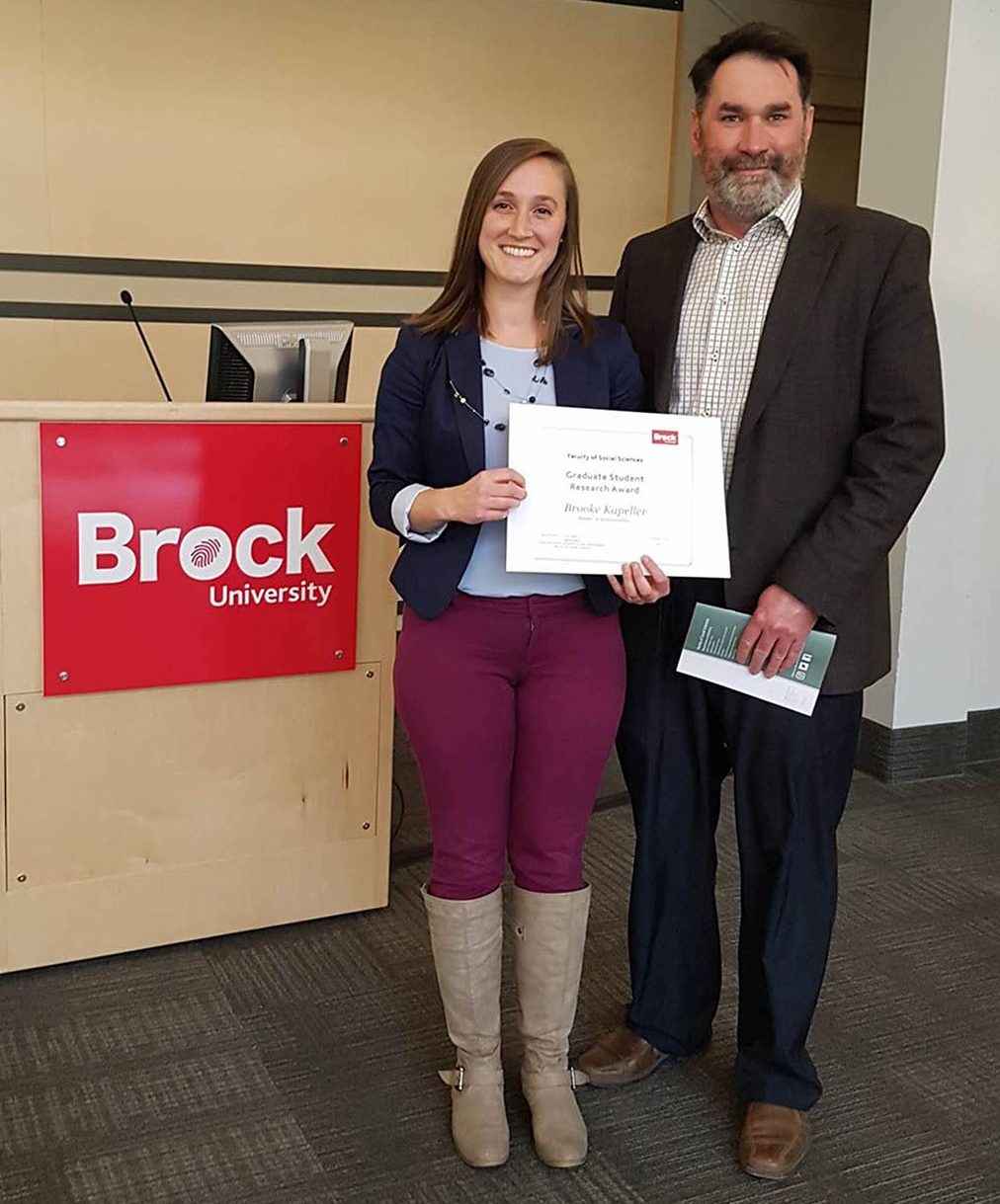
    Graduate Student Research Excellence Award – Brooke Kapeller

    Joan P. Nicks Graduate Scholarship – Nolan Kelly

    Joseph-Armand Bombardier Canada Graduate Scholarship (Masters) – Meredith DeCock, Angela Mallette

    Ontario Graduate Scholarship – Samantha Witkowski, Jessica Zugic

    Rovinelli Family Bursary in Environmental Sustainability – Meredith DeCock, Nolan Kelly

    Student Travel Award – Meredith DeCock

    Faculty and Staff Awards

    Brock SSHRC Explore/Exchange Program Grant – Tim Heinmiller

    Community Engagement Award – Amanda Smits, Centre Administrator

    CRISS Events Award – Michael Pisaric

    NSERC Discovery Grant – Michael Pisaric

    SSHRC Insight Development Grant – Jessica Blythe

    Water Canada’s 2019 National Water’s Next Award (Academic Category Finalist) – Julia Baird
    Categories: Awards, Event, SSAS Program

  • Leo LeBlanc Rowing Centre LED Lighting Upgrade

    Blog Contributors: Ryan Stewart, Energy Manager, Maintenance and Utilities Services & Nolan Kelly 

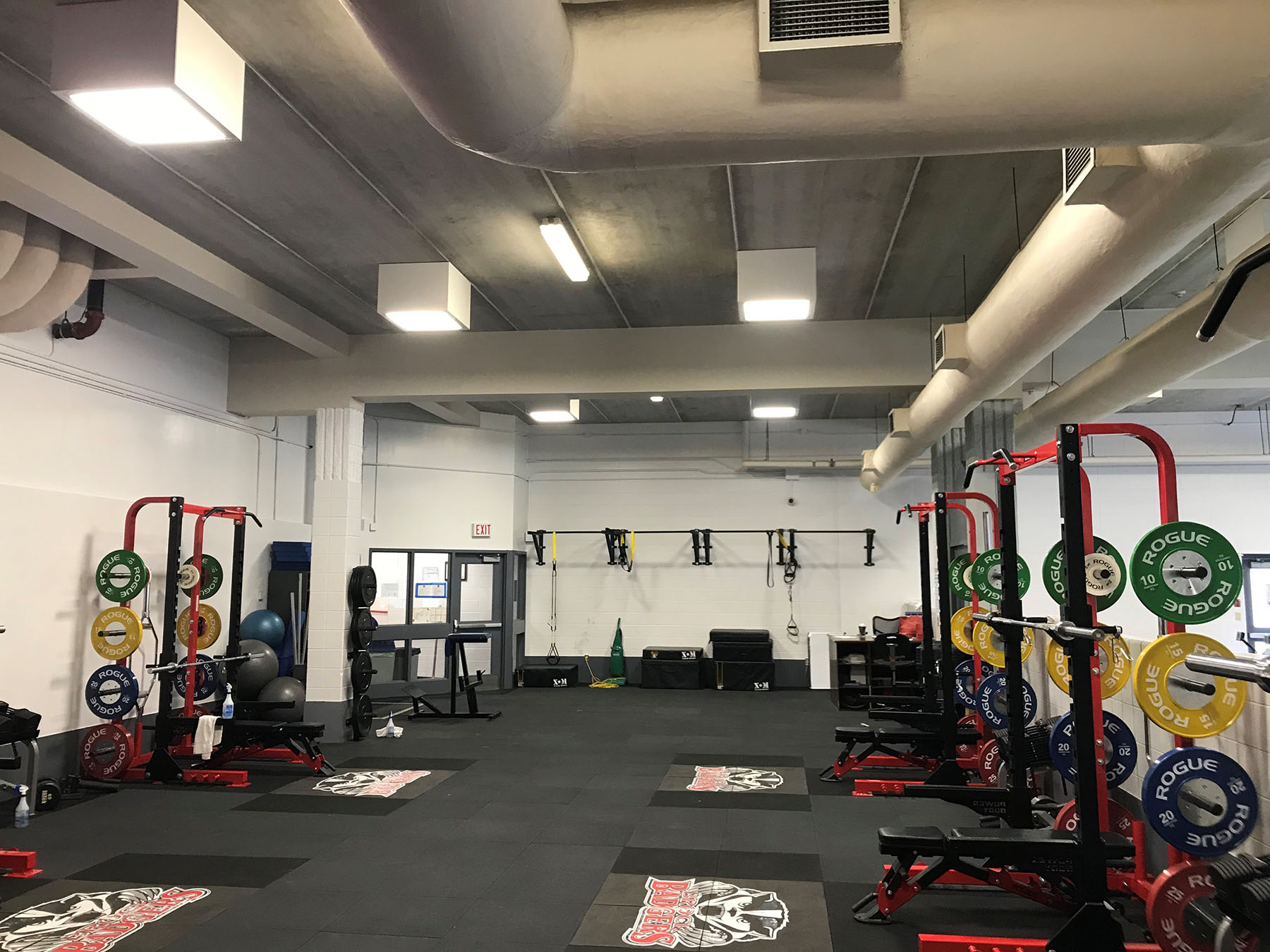
    Brock University’s commitment to become more environmentally sustainable and energy efficient continues with the most recent LED lighting upgrade in the Leo LeBlanc Rowing Center. The Leo LeBlanc Rowing Center is a high-performance rowing training facility that is home to Brock University’s rowing teams. The center allows the teams to combine conventional work out equipment with an eight-person tank to train as if they were out on the open water. The previous lighting fixtures in the center were energy intensive and caused operational issues for the occupants, as it would take up to 10 minutes to ramp up to full output. These lighting fixtures have since been replaced for a type of LED light that is brighter and that operates at a greatly reduced power requirement, which makes it more efficient. This LED lighting fixture also offers an instantaneous start-up to full output (no more 10 min wait for the fixtures to come up to full output) which makes the center more much accessible to the rowers. Within this new lighting fixture there also exists dimming capabilities and an increased rated life of 50,000 hours. The project was completed in December of 2019 and cost $6,772.20. The project qualified for an incentive from the Local Distribution Company of $1,680.00 and with an annual Energy Savings Projects Project Profile electrical savings of 23,695 kWh (equating to $4,620.50) the projects simple payback is just over 1 year. The project also results in a carbon savings of 16.75 eton CO2/per year, which is equivalent to taking approximately 6 cars off the roads 


    Project Details:  

    Project Cost: $6,772.20  

    Incentives/Grants: $1,680  

    Simple Payback: 1.07 years  

    Energy Savings: 23,695 kWh ($4,620.50)  

    CO2 Reduction: 16.75 eton  

    Project Completion: December 2019 

    Categories: Blog, Innovative Partnership, SSAS Student Contributor, Sustainability at Brock

  • Life in the Thesis Stream of the Sustainability Science and Society program at Brock

    Blog Contributor: Meredith DeCock

    I always assumed I would return to the academic world to pursue a master’s degree. But I resisted this urge for years as it felt like something I should do, not necessarily something I felt a passion to do. If I was going to do a master’s, I wanted it be for a specific purpose and mean something. That is when I found sustainability science.

    I chose Brock, not only because it seemed to be the best sustainability science program in Canada, but I was really interested in a lot of the research being conducted at the Environmental Sustainability Research Centre (ESRC). I reached out to my now supervisor, Dr. Liette Vasseur, as her work on ecosystem-based adaptation and ecosystem governance interested me. She was just starting a three-year long project with a neighbouring community that will help them co-generate adaptation strategies to combat the impacts of climate change. I was sold. I packed up my essentials and drove across the country to start the program in the fall of 2018.

    Being in either the thesis or MRP stream, your first semester is largely focused on just trying to figure out what grad school is all about. You are in a new school, and in my case, a new province, while trying to balance the seemingly never-ending work loads of classes and trying to understand your area of research.

    The second semester in the thesis stream you have a slightly lighter course load compared to your MRP peers; however, I found second semester busier than the first. I took on an extra course, held a research assistantship position with the ESRC, and took on a few other professional development opportunities that Brock offers such as presenting at the Brock Mapping New Knowledges (MNK) Conference, completing a certificate in Teaching and Learning in Higher Education, and submitting an article to a journal for peer-review. But to ensure I did not fall behind, I considered my research proposal its own class. I did not let a week go by without working on my research proposal. It is easy to let your research slide to the backburner in the first two terms of the program; however, if you schedule time into your week dedicated to your thesis, you will be successful.

    I am thankful that I am working with a supervisor on a specific project as I wanted to complete a master’s knowing that my research project is feeding into something larger. However, I know that is not the case for everyone. There is no right way to go about it, but it is great to know that there are options and that you will feel supported by the ESRC regardless of which route you choose.

    Categories: Blog, SSAS Program, SSAS Student Contributor, Sustainability at Brock

  • Life in the Master of Sustainability Program – Second Semester 2019

    Blog Contributor: Connor Thompson

    The second semester seemed to pick up right where the program left off in December. I think the cohort expected to ease into the winter term, but our hopes were immediately dashed thanks to a few quick deadlines. Such is life in grad school!

    Both of this semester’s courses were taught by Dr. Jessica Blythe. Jessica absolutely loves working in academia and that passion comes through clearly in her lectures. If you have the opportunity to take any of her courses I highly recommend it, her excitement is infectious and she makes coming to class an enjoyable experience every week.

    SSAS 5P03 – Problem Solving in the Environment

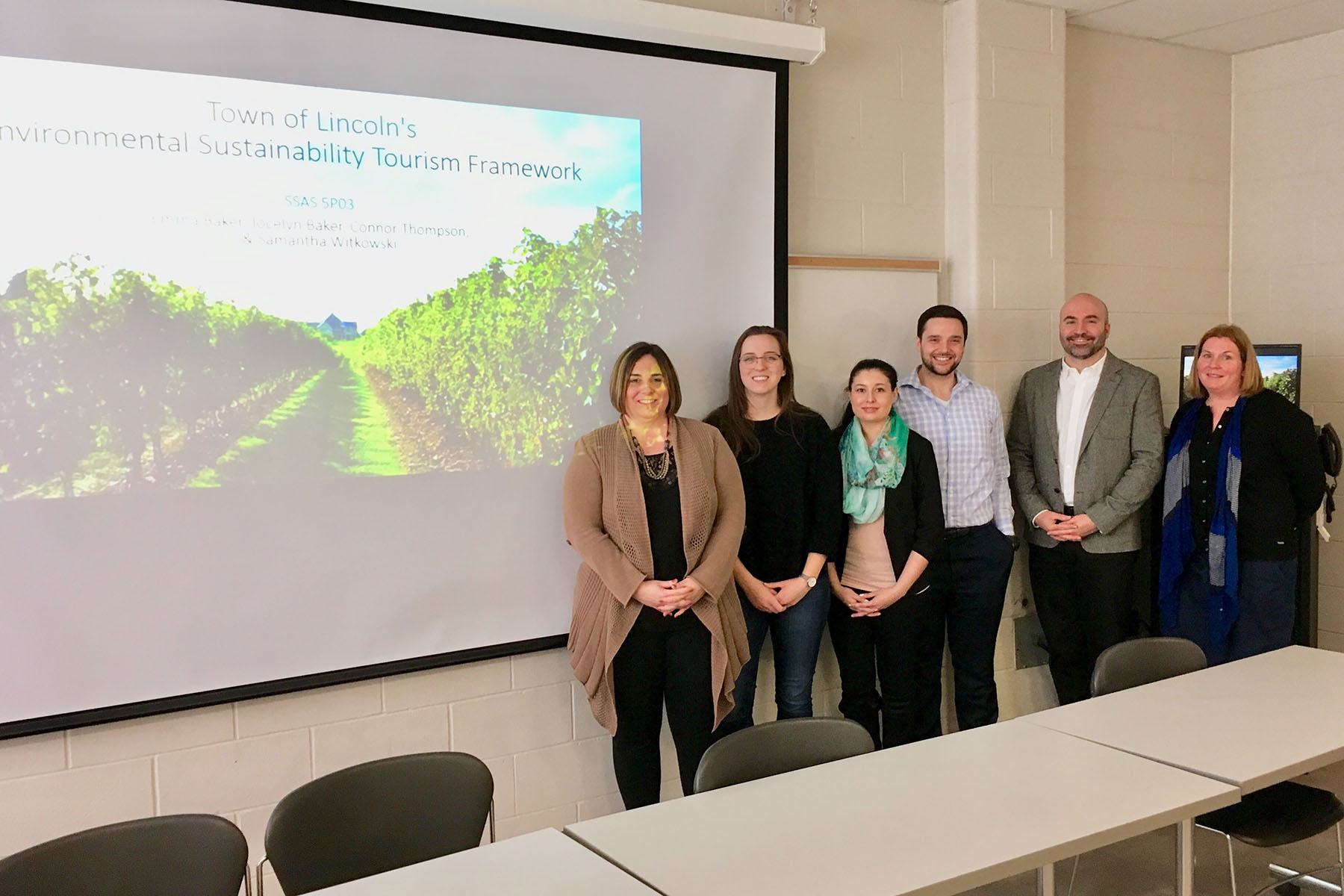
    This is the program’s project management course. Our class was kept as a single project team, tasked with creating a sustainable tourism framework for the Town of Lincoln through our Living Lab agreement. You can expect a few bumps along the way, but a strong group dynamic can overcome just about anything 5P03 throws at you.

    SSAS 5P04 – Transdisciplinary Seminar

    If this course sounds familiar it is because I wrote about it last semester too, 5P04 runs in both the fall and winter. The seminar brought researchers and professionals in to speak with us from across disciplines, which was incredibly useful in bridging sustainability research, policy, and practice. These events are open to the public and you can see past seminars here.

    SSAS 5P12 – Climate Change Adaptation & Transformation

    This course was steadily demanding throughout the semester, largely because we were required to read two articles and submit a 500 word critical response each week. We also created climate data projection reports for Walker Industries Inc. and many of their worksites across Canada, then we each read a book on climate change adaptation, wrote a review, and were given the option to submit it for hopeful publication in an academic journal. The weekly deadlines ensured that we had all completed and were able to speak to the readings with a high level of understanding, which lead to some fascinating conversations on how we communicate about climate change as sustainability scientists.

    The Co-op Job Search

    There is no formal course requirement for co-op students in the second semester, as the focus becomes putting those skills to work and securing a job. The co-op hunt is difficult so my only recommendation is to be prepared to search as soon as you start back at Brock in January. Expect to write a lot of cover letters, send many introductory emails, and spend an unreasonable amount of time on job boards. Look at it as preparation for life after the program!

    For more information about the Master of Sustainability program here at Brock, please visit: https://brocku.ca/esrc/ssas/

    Categories: Blog, SSAS Program, SSAS Student Contributor, Sustainability at Brock