Articles from:May 2019

  • Mapping the New Knowledges Graduate Student Research Conference: Oral Presentation Session

    Blog Contributor: Connor Thompson

    One of the early issues we discussed in the Master of Sustainability program concerned where we fit within the academic landscape. I contend that this degree is what you make of it, in the sense that we are all able to choose our areas of specialization as we see fit. Education, policy, and environmental science immediately come to mind, but the beautiful thing about sustainability science is that it can (and should!) be incorporated into every facet of modern life. I was reminded of that early discussion after seeing the program for Mapping the New Knowledges (MNK) 2019, Brock University’s graduate student research conference. I found myself delivering a presentation on motivations and barriers to living off-grid, in a session themed “intersections of power and identity negotiations”. It was not exactly a perfect fit but I did my best to keep an open mind.

    MNK was my first opportunity to share my research publicly and it really was a great learning experience. I chose to open with an icebreaker on how my research was substantially different than the presenters who came before me, which drew a laugh across the room and helped set the tone for an engaging 12 minute spiel. By committing my presentation to memory I was able to make eye contact with the audience and play to their non-verbal cues, making sure to emphasize important points and elaborate when confused looks washed over the crowd. Though I initially laughed at my misfortune in being literally the last presenter of the conference, I was enormously lucky to be in that final timeslot. My presentation had all of the academic rigor that this sort of event demands, but I was also able to inject some personality and life into the end of a very long day for everyone in the room. I was told early on at Brock that knowing your audience is critical to your success, and it was absolutely true at MNK. The most successful presenters I saw were those that thoroughly knew their material, engaged with the audience, and were able to smile while discussing their work. Should you find yourself in a presentation room at MNK 2020, leave your PowerPoint slide notes in your bag and really make an effort to show your passion. The audience is there to see you, so make it interesting for them!
    Categories: Blog, Conferences, SSAS Program, SSAS Student Contributor

  • Marilyn I. Walker – A Sustainable Gem in Downtown St. Catharines

    Blog Contributor: Connor Thompson

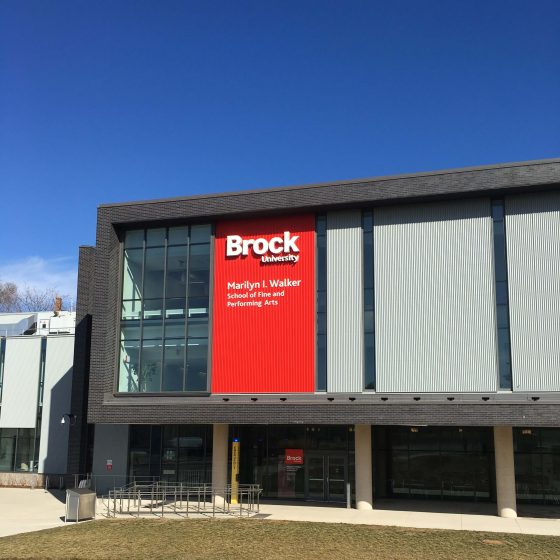
    Marilyne I Walker Building

    The Marilyn I. Walker School of Fine and Performing Arts(MIWSFPA) is an absolutely gorgeous building full of natural light and art, located off Brock’s main campus, in the downtown core of St. Catharines. Having been renovated from the Canada Hair Cloth Company building in 2015, its construction offered Brock University the ability to do what it does best – research! Facilities Management took the opportunity after renovations to install a piece of software called the Earthright Energy Dashboard. Earthright monitors water, gas, and electricity trends and charts them on a public-facing dashboard for all to see.

    Earthright serves two purposes, the first of which is to inform students, staff, and visitors about utility consumption rates at Marilyn I. Walker. There are a couple of screens that display statistics in relatable and interesting terms, like how many swimming pools worth of water have been saved from one month to the next. By showing people how utilities are consumed over time, it may influence them to change their habits as a group and see what impact they can make!

    The second function is to provide feedback to staff on how the building is operating. Facilities Management has been able to tailor automated systems around occupancy and seasonality requirements, which ensure that utilities are only used as they are actually needed. For example the lights are generally shut off at 11:00 pm and turned back on around 6:00 am, but there are also offices on motion sensor systems, and photocells are used to ensure that lights automatically dim as sunlight becomes available.

    The Earthright Energy Dashboard is a simple way to inform the public about how consumption habits impact the spaces where they learn and work. Newer buildings like MIWSFPA are sustainable by design, but we as occupants have the final say on how much water, gas, and electricity gets used. The next time you are walking along St. Paul Street, stop in and check out part of what Brock is doing to carry out its commitment to stewardship and environmental sustainability!

    Categories: Blog, Experiential Education, Innovative Partnership, SSAS Student Contributor, Sustainability at Brock

  • Student researcher explores future of electric buses in Canada

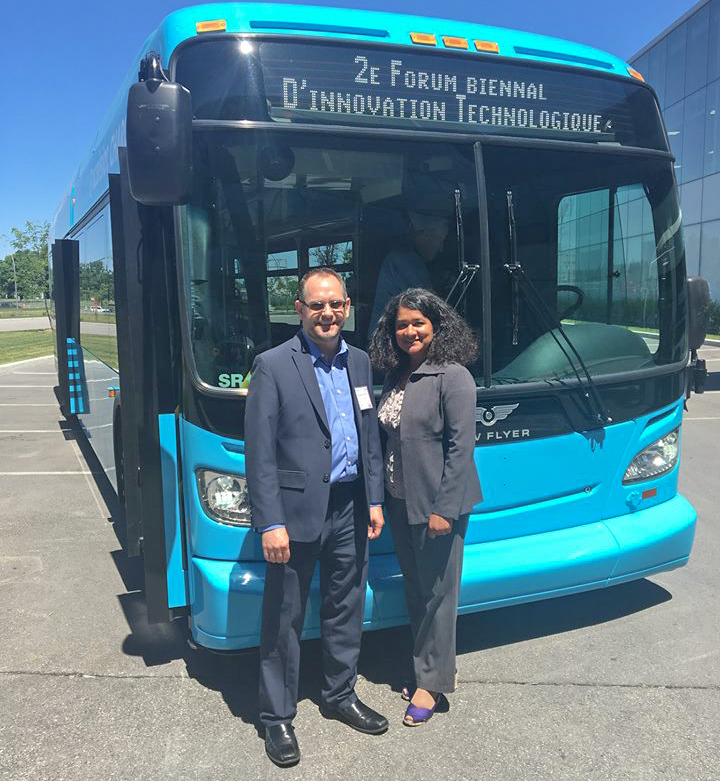
    Master’s student Tasnuva Afreen (right) and her supervisor, Associate Professor of Geography and Tourism Studies Christopher Fullerton (left), stand in front of a demonstration electric bus displayed at a conference. Afreen and Fullerton, along with the Canadian Urban Transit Research and Innovation Consortium, set up an internship with the non-profit funding agency Mitacs for Afreen to research the adoption of electric buses across Canada.


    It’s a simple, logical way to cut down on air and noise pollution.

    Electric buses don’t emit carbon or use fossil fuels, are low cost to maintain and, by the silent way they operate, reduce noise pollution compared to conventional buses.

    But replacing current buses with electricity-powered ones is easier said than done, says master’s student Tasnuva Afreen.

    Afreen recently wrapped up an eight-month internship with the Canadian Urban Transit Research and Innovation Consortium (CUTRIC) to collect and interpret information related to transit authorities’ transition to electric buses.

    “Now we’re trying to connect the dots,” says Afreen, who is in Brock’s Sustainability Science and Society program. “We hope to bring out what Canadians think of electric buses and identify the main barriers to bringing electric buses to transit authorities’ fleets.”

    Afreen, Associate Professor of Geography and Tourism Studies Christopher Fullerton and CUTRIC created the internship through the not-for-profit national research organization Mitacs.

    Mitacs partners with academics, private industry and governments to conduct research and training programs related to industrial and social innovation. The organization funds a number of research projects at Brock University.

    During her internship, Afreen organized consultations with industry representatives, transit authorities, government officials and academic researchers.

    She and her CUTRIC colleagues asked participants a series of questions about transit authorities’ experiences and challenges of experimenting with electric buses and the knowledge they need to acquire and integrate hydrogen fuel cell vehicles into their fleets.

    Afreen also asked transit riders to share their opinions on and experiences with electric buses.

    She then transcribed the consultation sessions and analyzed the comments. Afreen also gathered information on how to test electric buses in nine municipalities that expressed interest in becoming demonstration trial sites.

    Although she and Fullerton are still analyzing the data, Afreen says her preliminary results show that there’s much interest in putting electric buses on the road.

    But there are a number of barriers to overcome, she says.

    “Municipalities have to redesign their infrastructure to provide electric lines so that buses can recharge very quickly,” says Afreen. “Also, the upfront expense is huge — a lot of transit agencies don’t have the money in their pocket to go for this.”

    Fullerton, Afreen’s supervisor, says the research she conducted will lay the groundwork for CUTRIC’s efforts to encourage the adoption of electric buses across Canada.

    “While it has already demonstrated clear environmental, social and economic benefits in other parts of the world, electric bus technology is still relatively new and adopting it represents a major funding commitment,” says Fullerton.

    “Public transit agencies and other stakeholders, such as the various levels of government that provide subsidies for transit infrastructure, want to make sure that the technology is reliable and that their money is well spent,” he says, adding that Afreen’s work helps identify stakeholders’ concerns and information needs.

    Afreen will share her Mitacs-supported internship experience at Brock’s Shift Conference Tuesday, April 30 and the Launch Forum Wednesday, May 1. Mitacs Director Rebecca Bourque and Office of Research Services staff will be join Afreen at Launch in the 10 to 11:30 a.m. session in the Cairns Atrium to explore how faculty member and graduate student teams can navigate Mitacs internship opportunities.

    “Mitacs internships offer graduate students a valuable experience working with industry or community organizations,” says Industry Liaison and Partnership Officer Iva Bruhova. “It is a chance to apply their research skills and gain employment-ready skills.”

    In addition to the Mitacs session, the Launch event offers two other sessions on how faculty and staff can support graduate students through designing individual development plans.

    For more information, contact [email protected] or [email protected]

    Categories: Applied Research, Co-Op, Experiential Education, SSAS Program

  • Sustainability scholarship recipients meet with community donors to share impact of their support

    Through a combination of community backing and word spreading across campus, wind is picking up in the sails of Brock’s sustainability programming.

    The University’s minor in sustainability, launched in fall 2017 and offered through Brock’s Environmental Research Centre (ESRC), will see its first cohort of students graduate in June.

    Two of the soon-to-be grads, as well as three graduate students in the Sustainability Science and Society program introduced by the ESRC in 2014, received scholarships for their studies through a $5,000 donation from Toromont Cat

    .

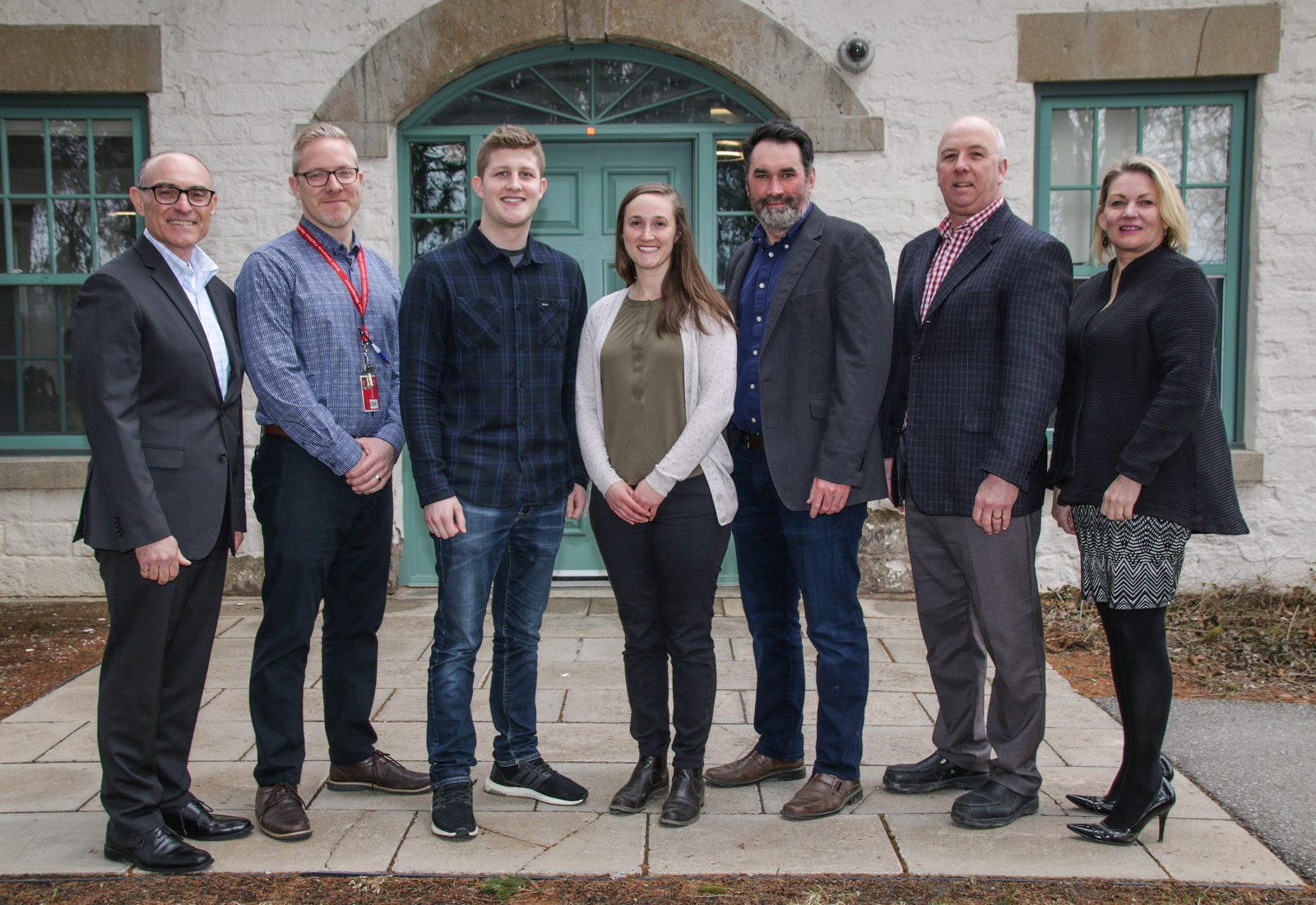
    Photo: Brock students who will soon graduate with a minor in sustainability were celebrated recently by the Environmental Sustainability Research Centre. Pictured is student Nolan Kelly, Faculty of Social Sciences Dean Ingrid Makus, ESRC Director Ryan Plummer, and students Mikayla Richards and Abbey Faris.

    Officials from the construction company were on campus last week to meet with students whose lives were impacted by their support.

    Providing funds for sustainability scholarships was a natural progression from the long-standing partnership Toromont has had with the University and its co-generation facility, said Lou Colangelo, the company’s General Manager.

    “We’ve been working with Brock for many years through its power plant and supporting students by giving them exposure to the industry,” he said.

    The company, he added, is pleased to provide financial support as well as mentorship opportunities that connect students with professionals who have decades of experience in the energy and sustainability field.

    “The industry is constantly evolving, so getting exposure to fresh thinking and to young minds that have not been focused on the path we’ve been looking at is also a huge benefit.”

    The financial boost allowed graduate student Meredith DeCock to begin pursing her sustainability studies at Brock last fall.

    “The scholarship enabled me to take on projects and an extra course in addition to focusing on my program requirements,” she said. “Providing me with the ability to focus on my full-time studies, the Toromont scholarship enriched my learning and research experience over the past year.”

    Other scholarship recipients included graduate students Brooke Kapeller and Leaya Amey, and undergraduate students Nolan Kelly and Kaitlyn James.

    ESRC Director Ryan Plummer said the partnership with Toromont “serves as a powerful illustration to students, faculty and staff of the innovation that can be achieved through meaningful collaboration.”

    The minor in environmental sustainability was created “to respond to pressing social and ecological challenges and opportunities in Niagara, nationally and globally,” he said. “Units across the University worked collaboratively with the ESRC to make this important program part of Brock’s curriculum. The enthusiastic response by students far exceeds our initial expectations. It is very rewarding to see our first cohort of students graduating with the minor and I am incredibly proud of them.”

    Brock has been collaborating with Toromont for more than 25 years to “provide reliable, cost-effective energy to our campus community,” said Scott Johnstone, Associate Vice-President, Facilities Management. “We’re now advancing this partnership with a new generation of high efficiency equipment. In addition, we are conducting research together to test new engine oils and additives to extend equipment life, all while making our plant more sustainable.”

    Story from The Brock News

    Categories: Event, Innovative Partnership, Minor in Sustainability